
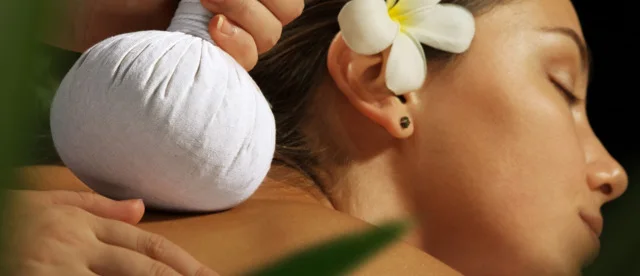
If you are looking for a unique and effective way to relax and rejuvenate your body and mind, look no further than Thai Herbal Compress Therapy. This ancient healing technique has been used in Thailand for centuries, and is now available at Loft Thai Spa in Bangkok. In this article, we will explore what Thai Herbal Compress Therapy is, how it works, and the benefits of this treatment.
What is Thai Herbal Compress Therapy?
Thai Herbal Compress Therapy, also known as Luk Pra Kob, is a traditional Thai healing technique that involves the use of herbal compresses. These compresses are made from a blend of therapeutic herbs and spices, including lemongrass, ginger, turmeric, and kaffir lime. The herbs are wrapped in a muslin cloth and steamed, then applied to the body in a rhythmic pressing and rolling motion.
How does it work?
Thai Herbal Compress Therapy works by combining the healing properties of herbs with the therapeutic touch of massage. The compresses are heated to a comfortable temperature and applied to the body, where the warmth and aroma of the herbs help to relax the muscles and calm the mind. The therapist uses a combination of pressing, rolling, and kneading motions to apply the compresses to different parts of the body, allowing the herbal blend to penetrate deep into the skin and muscles.
What are the benefits of Thai Herbal Compress Therapy?
Thai Herbal Compress Therapy offers a wide range of benefits for the body and mind. Some of the key benefits of this treatment include:
- Relieves muscle pain and tension: The warmth and pressure of the herbal compresses help to soothe sore muscles and reduce tension, making this treatment ideal for those with back pain, stiff joints, or muscle soreness.
- Improves circulation: The rhythmic pressing and rolling motion of the compresses helps to stimulate blood flow and improve circulation, which can help to reduce inflammation and promote healing.
- Reduces stress and anxiety: The aroma of the herbs, combined with the soothing touch of massage, can help to calm the mind and reduce stress and anxiety.
- Detoxifies the body: The herbs used in the compresses have natural detoxifying properties, helping to eliminate toxins and impurities from the body.
- Improves skin health: The heat and moisture from the compresses can help to open up pores and improve skin texture, leaving the skin feeling soft and smooth.
What to expect during a Thai Herbal Compress Therapy session
A typical Thai Herbal Compress Therapy session at Loft Thai Spa begins with a consultation with the therapist, who will assess your needs and recommend a treatment plan. You will then be asked to change into a comfortable robe and lie down on a massage table. The therapist will begin by using a combination of traditional Thai massage techniques to warm up the muscles and prepare the body for the compresses.
Once the body is warmed up, the therapist will apply the herbal compresses to different parts of the body, starting with the feet and working their way up to the shoulders and neck. The compresses are applied in a rhythmic pressing and rolling motion, and the therapist may use additional massage techniques to help the herbs penetrate deeper into the skin and muscles.
After the compresses have been applied, the therapist will continue with a full-body massage using a combination of long strokes, kneading, and stretching movements. The massage will help to further relax the muscles and promote healing.
Conclusion
Thai Herbal Compress Therapy is a unique and effective way to relax and rejuvenate the body and mind. Loft Thai Spa in Bangkok offers a variety of Thai Herbal Compress Therapy treatments that are designed to meet the needs of every client. Whether you are looking to relieve muscle pain,
UPDATED LOFT THAI GUIDE
Additional guidance and current information
The following editorial update expands on the original Loft Thai article with practical context, current treatment guidance and further reading.
What a Thai Herbal Compress Actually Is
A compress, often called luk prakob, contains chopped, dried or fresh botanical material tied securely inside cloth.
Steam heats and moistens the bundle; a therapist then applies it through short contacts, presses, rolls or glides according to temperature and body area.
The result combines heat, moisture, fragrance, pressure and the surrounding massage rather than isolating one herb as the sole active element.
The 2023 Article Is a Starting Record, Not a Protocol
The archived guide named lemongrass, ginger, turmeric and makrut lime and described a massage followed by rhythmic compress work.
It promised pain relief, better circulation, reduced inflammation, less anxiety, detoxification and improved skin health.
It did not document the exact formula, weight, temperature, product handling, practitioner qualification or current menu status needed to support those claims.
Traditional Context Deserves Precise Language
Herbal compress practice has a documented place within Thai traditional medicine and contemporary spa care.
UNESCO’s Nuad Thai inscription concerns the living heritage of traditional Thai massage; it does not certify every commercial compress formula or medical claim.
WHO training benchmarks treat consumer protection, practitioner competence, contraindications and safety as central to professional Nuad Thai practice.

A Name Is Not a Complete Ingredient List
Fresh, eucalyptus, lemongrass, or plai and camphor describes a direction, not necessarily every ingredient or its proportion.
A professional product record should identify the supplier or preparation source, formula, lot or preparation date, storage, intended use and relevant warnings.
Guests should disclose known botanical, fragrance, camphor or topical-product sensitivities before the compress is heated.
Fresh Herbal Compress: Verify Preparation and Storage
Fresh material can create a vivid aroma and moisture profile, but it is also perishable.
Ask when the bundle was prepared, how it was stored before steaming and whether it is made for one guest or managed under a documented reuse policy.
Fresh does not automatically mean organic, sterile, more potent or safer.
Eucalyptus: Aroma First, Not a Respiratory Claim
An eucalyptus-labelled compress may offer a recognisable aromatic profile when the guest enjoys it.
The name does not prove that the formula treats congestion, infection or another respiratory condition.
Strong fragrance may be unsuitable for some guests with asthma, migraine or scent sensitivity, so an alternative should be available.
Lemongrass: Bright Scent with Formula Questions
Lemongrass contributes a fresh citrus-herbal story to many Thai preparations.
Its presence does not establish detoxification, anti-inflammatory action or skin suitability for every guest.
The full mixture, contact method and individual sensitivity matter more than the familiarity of one ingredient.
Plai and Camphor: Traditional Ingredients Need Boundaries
Plai is a rhizome used in Thai traditional preparations, while camphor contributes a penetrating aromatic and cooling-warming sensory note.
Neither name permits the spa to promise treatment of an injury, chronic pain or inflammation.
The therapist should avoid unsuitable areas and follow the labelled formula, heat and contact instructions.
Research Does Not Isolate a Universal Herbal Effect
A 2015 systematic review included thirteen comparative studies involving 778 participants, but formulas, indications, comparators and study methods varied.
The review found no clear advantage over hot compress for muscle pain and noted that heat may explain a substantial part of the observed effect.
A later randomised trial in older adults with low-back pain did not establish that adding herbal compress to traditional Thai massage produced a superior universal result.
Step 1: Consultation and Heat Screening
Review sensation changes, neuropathy, diabetes-related concerns, fragile skin, active inflammation, recent injury, pregnancy, surgery, medication, allergies and heat tolerance.
Agree on clothed or oil-based stages, body areas, pressure and an immediate stop signal.
A guest who cannot reliably feel or communicate heat may need a different treatment plan.
Step 2: Steam the Bundle Evenly
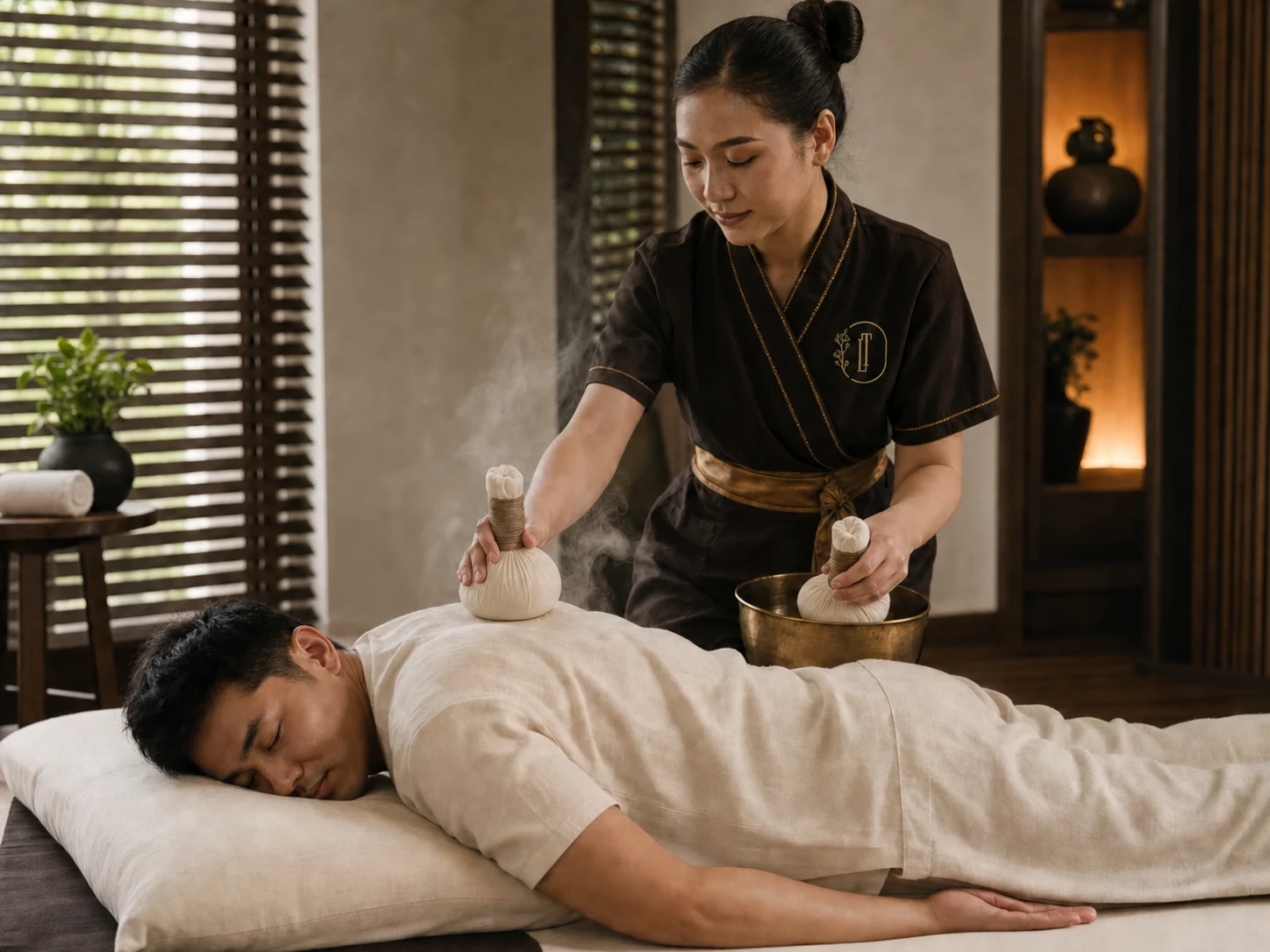
The compress must be heated according to its formula and preparation method so the centre warms without scorching the cloth.
The therapist uses a protected handling method and rotates prepared bundles when continuous work is planned.
Steam temperature at the equipment is not the same as safe contact temperature on the guest.
Step 3: Test Heat Before Every New Zone
The therapist checks the compress on a safe surface or through controlled hand contact, then introduces it briefly on a less sensitive area.
Early contacts should be quick and mobile; longer presses become possible only as the bundle cools and the guest confirms comfort.
Heat must be retested after resteaming, changing compresses, moving to thinner tissue or turning the guest.
Step 4: Press, Roll and Lift
Professional application uses rhythm rather than parking a very hot bundle on one spot.
Press-and-lift contacts, short rolls and controlled glides distribute warmth while preserving feedback.
Bony prominences, irritated skin and sensitive areas require lighter, shorter or no contact.
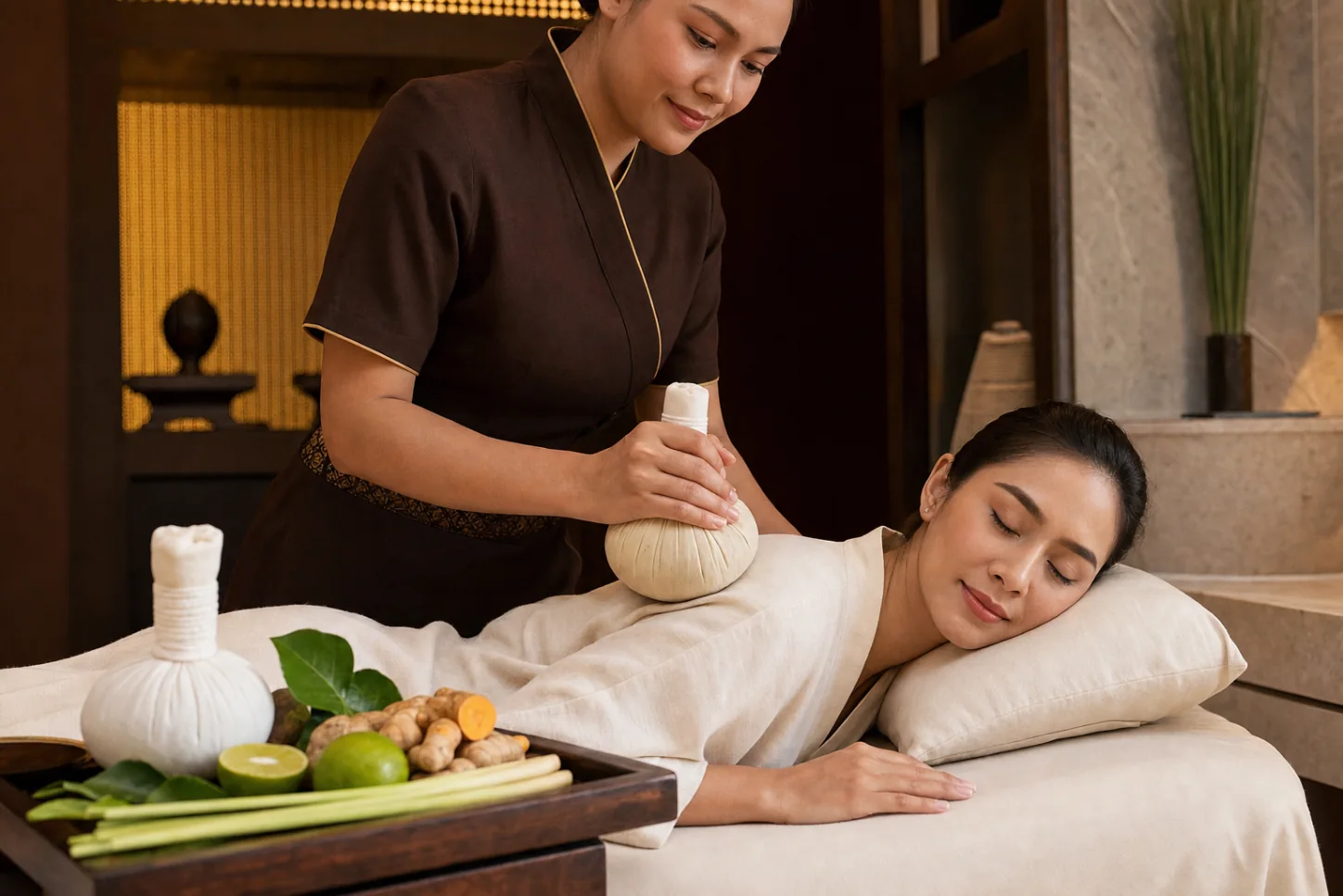
Step 5: Place the Compress within the Massage
The reviewed current protocol starts with traditional Thai massage and follows with the chosen herbal compress.
That architecture allows manual pressure and assisted movement to be distinguished from the later heat and aroma stage.
A different package may combine aroma oil and compress work, so the exact order must be confirmed rather than assumed.
Step 6: Control Linen, Moisture and Reuse
The treatment surface, towels, handling tools and steamer should be clean and dry between appropriate uses.
A compress that contacts skin, body fluids or a contaminated surface cannot be treated as automatically clean because it is warm.
Single-guest use or a documented preparation and reuse policy should be clear before the session.
Choose 90 or 120 Minutes by Sequence
The current service card shows a 90-minute Thai Herbal Compress, while the booking inventory includes both 90- and 120-minute entries for several formulas.
A longer treatment may allow more complete Thai massage, slower heat transitions or broader coverage.
Ask how many minutes belong to consultation, massage, compress application and changing rather than assuming that more time means more heat.
Aftercare Is Simple and Product-Specific
Allow time to sit up after a warm treatment and report any persistent burning, rash, dizziness or unusual discomfort.
Ask whether botanical residue remains on the skin and when showering is appropriate for the actual product used.
Hydration can support ordinary comfort after a warm session, but it should not be described as flushing toxins.
Twelve Questions Before Booking
Make the formula and heat protocol visible.
- Which exact herbal compress service is available?
- Is it 90 or 120 minutes, and what is the confirmed price?
- Which branch offers the chosen formula?
- What ingredients and proportions are in the bundle?
- Is the compress fresh, dried or commercially prepared?
- When was it prepared and how is it stored?
- Is the bundle assigned to one guest?
- How is temperature tested and retested?
- Does the session begin with clothed Thai massage or oil massage?
- Which areas are excluded from heat?
- What symptoms, medication or sensitivities should be disclosed?
- What should I do if the compress feels too hot?
Claims Removed from the Previous Version
The old article promised relief for back pain, stiff joints and soreness, improved circulation, reduced inflammation, lower stress and anxiety, detoxification, deeper herbal penetration and healthier skin.
It presented a traditional ingredient list as sufficient evidence for all of those outcomes.
This reconstruction preserves the technique and guest goals while replacing medical certainty with formula traceability, heat control, hygiene and appropriately limited research.
Respect the Heat, Formula and Sequence
Thai herbal compress work can be a distinctive sensory extension of Thai massage when the bundle is identifiable and the heat is controlled.
Its professionalism is visible in preparation, temperature checks, responsive contact, hygiene and honest claims.
Choose the current formula and duration only after those details are confirmed.
“The compress is professional when its formula is known, its heat is tested and every contact is adapted—not when the herb list carries the weight of a medical promise.”
Loft Thai Editorial Team
Continue your research
REFERENCES
Sources & further reading
- UNESCO: Nuad Thai, Traditional Thai Massage
- WHO: Benchmarks for Training in Nuad Thai
- PMC: Clinical Effects of Thai Herbal Compress—Systematic Review
- PubMed: Thai Massage versus Massage with Herbal Compress RCT
- NCCIH: Massage Therapy—What You Need to Know
- US FDA: Allergens in Cosmetics
- ISO 17679: Wellness Spa Service Requirements
- Loft Thai: Spa Menu 2026
PRACTICAL GUIDANCE
Frequently Asked Questions
What is inside a Thai herbal compress?
Formulas vary. Common stories include plai, turmeric, lemongrass, makrut lime and camphor, but the exact current ingredient list, proportions and preparation should be verified for the specific bundle.
How much is Thai Herbal Compress at Loft Thai Spa?
The reviewed current menu lists a 90-minute Thai Herbal Compress at 3,200 THB. The booking inventory also shows some 120-minute formula options, so confirm the live service and price.
Does the herbal compress detoxify the body?
No systemic detoxification claim is established by a warm spa compress. The observable treatment components are heat, moisture, aroma, pressure and the surrounding massage.
Should a herbal compress feel very hot?
It should feel comfortably warm, not burning. The therapist should test and retest it, use shorter contacts while hot and respond immediately to feedback.
Is herbal compress massage suitable for everyone?
No. Altered sensation, fragile or broken skin, acute injury, heat intolerance, allergies and some medical circumstances can require adaptation, postponement or appropriate clinical guidance.
CONTINUE READING
Related stories

Healing Herbs of Thailand: Secrets Behind Herbal Compress Therapy
Herbal compress therapy, a traditional healing practice in Thailand, involves the use of heated compresses filled with a blend of medicinal herbs. This therapy is known for its therapeutic benefits, promoting relaxation, improving circulation, and alleviating…
Read the guide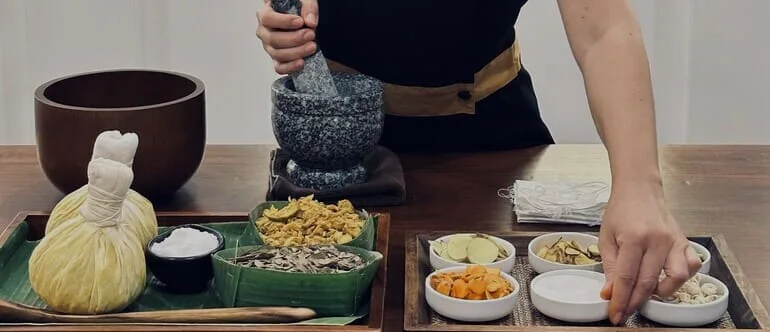
The Timeless Craft of Herbal Compress
In the heart of Loft Thai Spa, a therapeutic practice with ancient roots is blossoming anew: the art of herbal compress massage. This tradition, steeped in history, offers a holistic approach to healing, combining the tactile richness of massage with the…
Read the guide
Revitalize with Eucalyptus Herbal Compress at Loft Thai Spa
In the heart of Bangkok, Loft Thai Spa offers an award-winning, holistic spa experience like no other. Here, ancient traditions meet modern luxury to provide you with the best spa treatment Bangkok has to offer. One standout among their rejuvenating services…
Read the guide
Experience the Wonders of Authentic Thai Herbal Compress and Our Special Cannabis Herbal Compress
In the heart of serenity and wellness lies the secret of authentic Thai remedies. At Loft Thai Spa, we embrace this rich heritage through our Authentic Thai Herbal Compress and our unique Cannabis Thai Herbal Compress, bringing these traditional healing…
Read the guide