Pressure with purpose
The therapist uses body weight, stance and rhythm for control instead of treating force as a measure of quality.

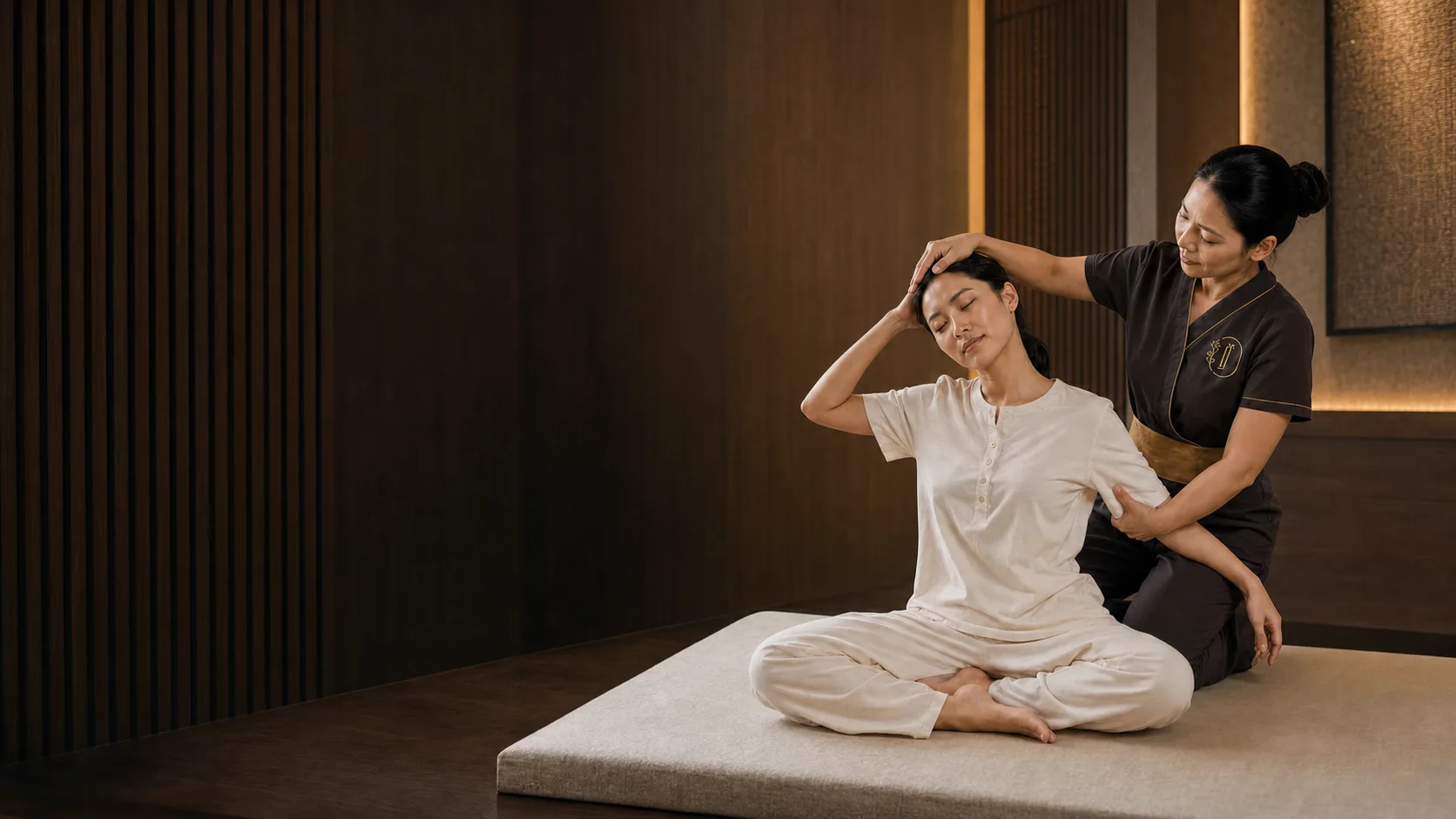
Traditional Nuad Thai · Bangkok
Authentic clothed bodywork shaped around your comfort — assisted stretching, rhythmic compression and considered therapist technique in a private Loft Thai room.
Traditional Thai massage, clearly explained
Nuad Thai is not simply a stronger massage. It is a connected sequence of pressure, compression, joint movement and assisted stretching, traditionally performed without oil while the guest remains clothed.
Traditional narratives often associate Thai massage with Jīvaka Komārabhacca, remembered as a physician in Buddhist tradition. Its real history is broader: a living synthesis shaped by Thai communities and by influences moving through South and Southeast Asia. Regional methods differ, and there is no single universal routine.
In 2019, UNESCO inscribed Nuad Thai on the Representative List of the Intangible Cultural Heritage of Humanity. At Loft Thai, respect for that heritage appears in the rhythm of the treatment, therapist body mechanics, comfort checks, fresh treatment clothing and the privacy of the room.
Read UNESCO’s Nuad Thai entryWhy Loft Thai
Technique, atmosphere and communication work together. The result should feel coherent from the first question to the final assisted movement.
The therapist uses body weight, stance and rhythm for control instead of treating force as a measure of quality.
Pressure, pace, range of movement and areas to avoid can be adjusted before and throughout the session.
Solo guests and couples experience the ritual in a calm private setting across Loft Thai’s Sukhumvit locations.
Warm materials, Thai craft and an unhurried service rhythm create more than a purely functional massage appointment.
The language of Nuad Thai
A professional sequence moves between techniques rather than repeating one pressure everywhere. Your therapist adapts depth and range to the body in front of them.
Palms, thumbs, forearms and other supported contact points create measured pressure through clothing.
Broad, steady compression can help the body settle before more mobile or focused work begins.
Small controlled movements explore comfortable motion without forcing a joint beyond the guest’s range.
The therapist supports the body through progressive stretches, adjusting leverage, angle and intensity.
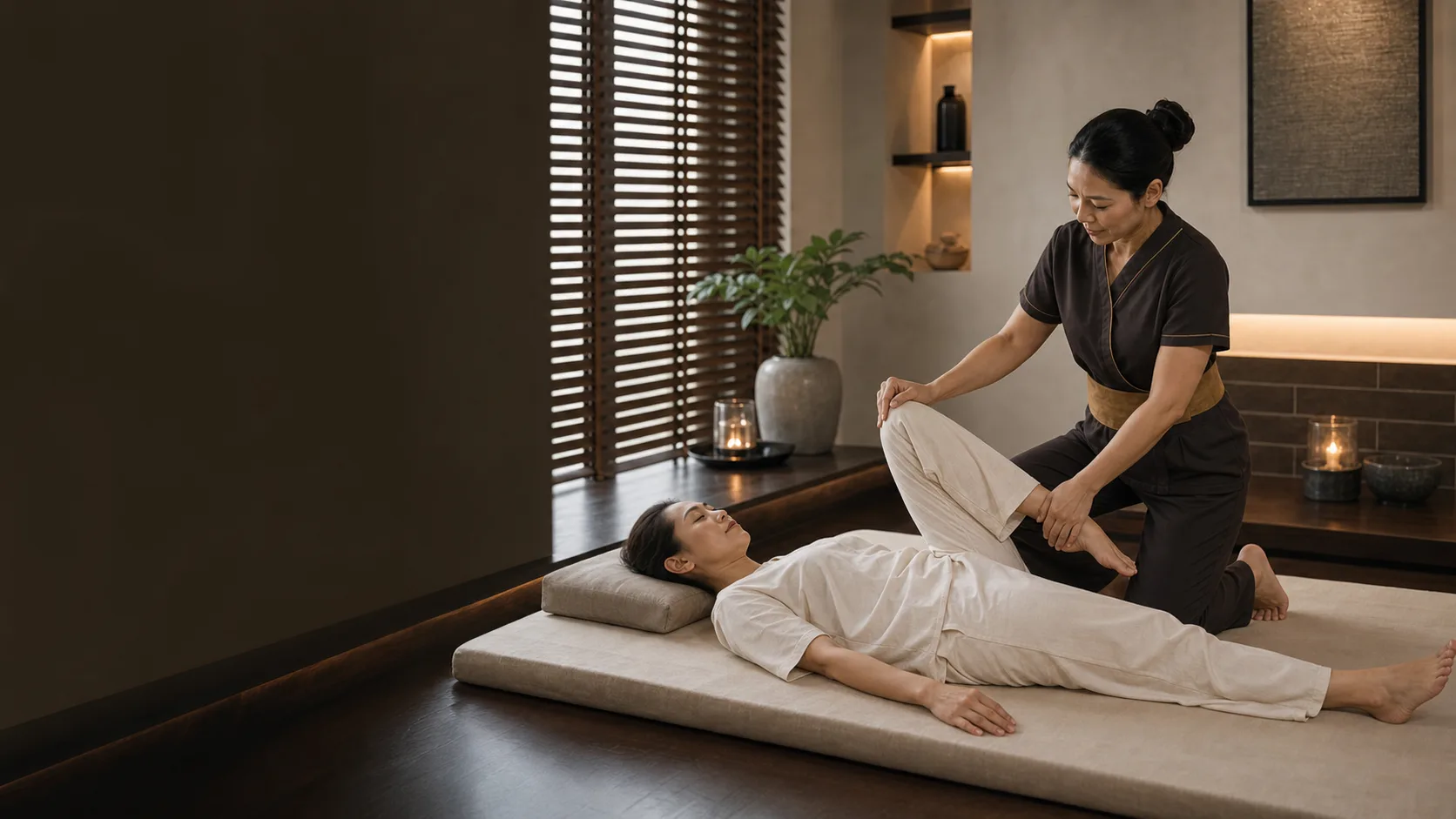
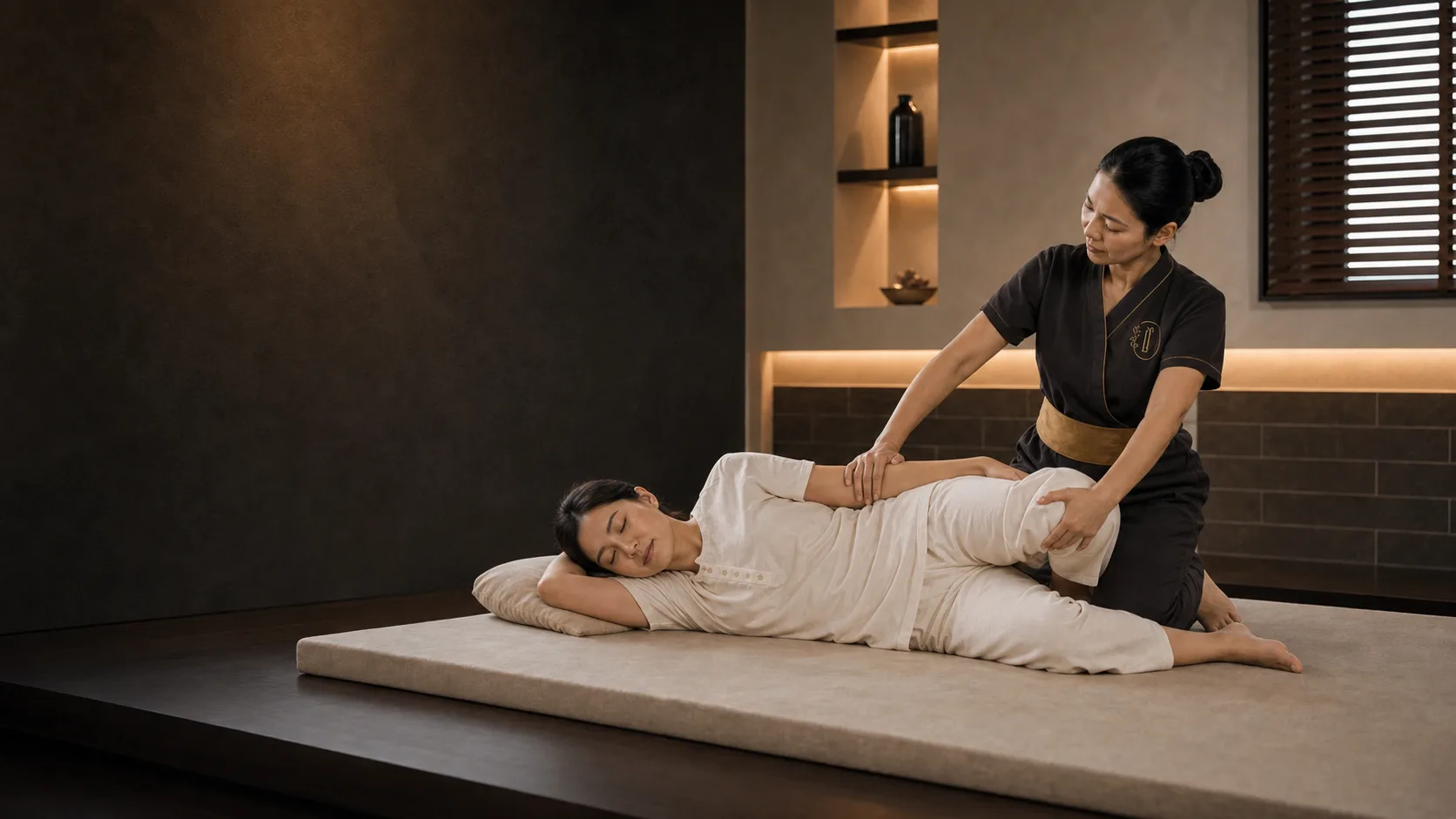
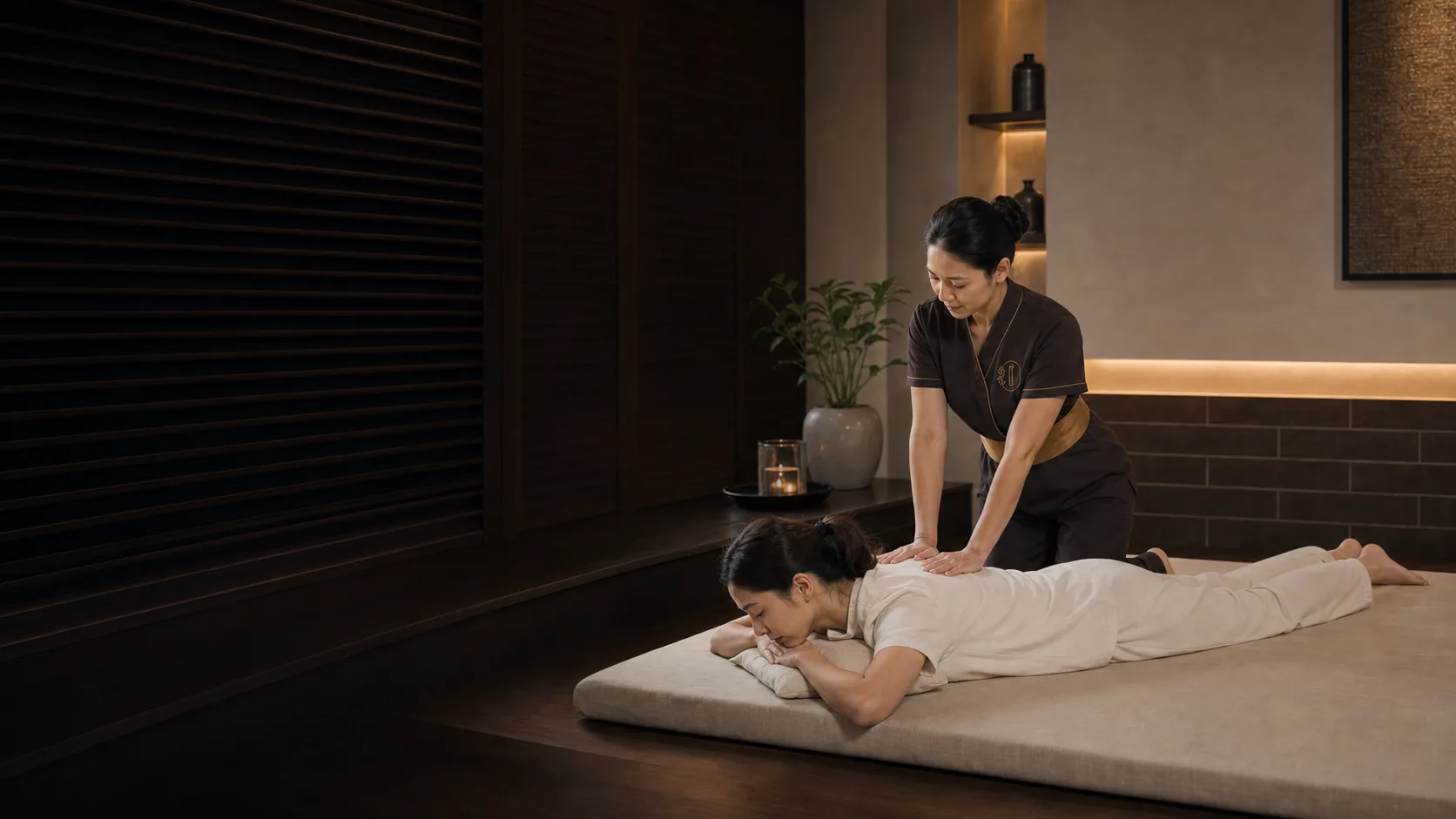
Positions used during the ritual
A session may move between these positions, but not every guest needs every position. Bolsters, smaller movements or an alternative technique can be used when comfort or mobility calls for a different approach.
Your appointment, step by step
The exact treatment changes with the guest. The professional structure around it should remain clear, calm and predictable.
Arrive a few minutes early for check-in and final questions, giving you time to settle before the treatment begins calmly and without a rush.
Share your preferred pressure, priority areas, movement comfort and anything to adapt or avoid, so the therapist can shape the sequence around you.
Loose treatment clothing is provided where needed, giving you room to move comfortably while keeping the traditional Thai massage ritual entirely oil-free.
Broad palm pressure and repeated compression establish a steady pace, helping you and the therapist settle before more active movement begins.
The therapist moves through supported positions and assisted stretches gradually, checking your comfort and staying within a range that feels manageable.
The final movements become slower before you sit or stand gradually, take a quiet moment and receive simple aftercare guidance from your therapist.
Potential benefits, responsibly described
Responses vary. Thai massage is a wellness service, not a promise to treat headaches, back pain, circulation, lymphatic conditions or nervous-system disorders.
Assisted movements and measured stretches invite the body to explore a comfortable range without forcing it. Guests may notice that standing, turning or walking feels more fluid for a while, although every response is personal and temporary.
Moving slowly through several positions makes range of motion easier to notice. The therapist adapts each stretch to your feedback, helping you explore flexibility with awareness rather than turning the session into a test or athletic challenge.
A steady rhythm, repeated pressure and unhurried transitions can encourage attention to settle. Quiet surroundings and comfortable breathing often make the ritual feel restorative, while the depth and pace remain adjustable throughout.
Traditional Thai massage follows a connected route through the feet, legs, hips, torso, shoulders and head. This whole-body sequence offers a broader sense of movement instead of concentrating the entire appointment on one isolated area.
Long flights, extended sitting and busy days can leave guests craving movement and a slower pace. A Thai massage offers time to stretch, change position and reconnect with the body before returning to a Bangkok itinerary.
Responses differ from person to person and even from one visit to the next. Some guests finish feeling quiet and rested, while others feel brighter and more alert; both are subjective experiences rather than promised outcomes.
Choose your duration
These are the current Traditional Thai Massage options from the Loft Thai site catalogue. Availability and the final booking summary are confirmed on the reservation page.
60minutes
A complete but more concise sequence. Choose 60 minutes when time is limited or when you are new to Thai massage and want a measured first experience.
90minutes
More time for the therapist to move through the body without rushing, repeat important stretches and give extra attention to one priority area.
120minutes
The most spacious option for a slower rhythm, broader full-body work and careful attention to several areas while keeping pressure comfortable.
Treatments, durations & direct booking
Six expressions of Thai bodywork, from the foundational classic to deeper recovery and Northern Thai Tok Sen.
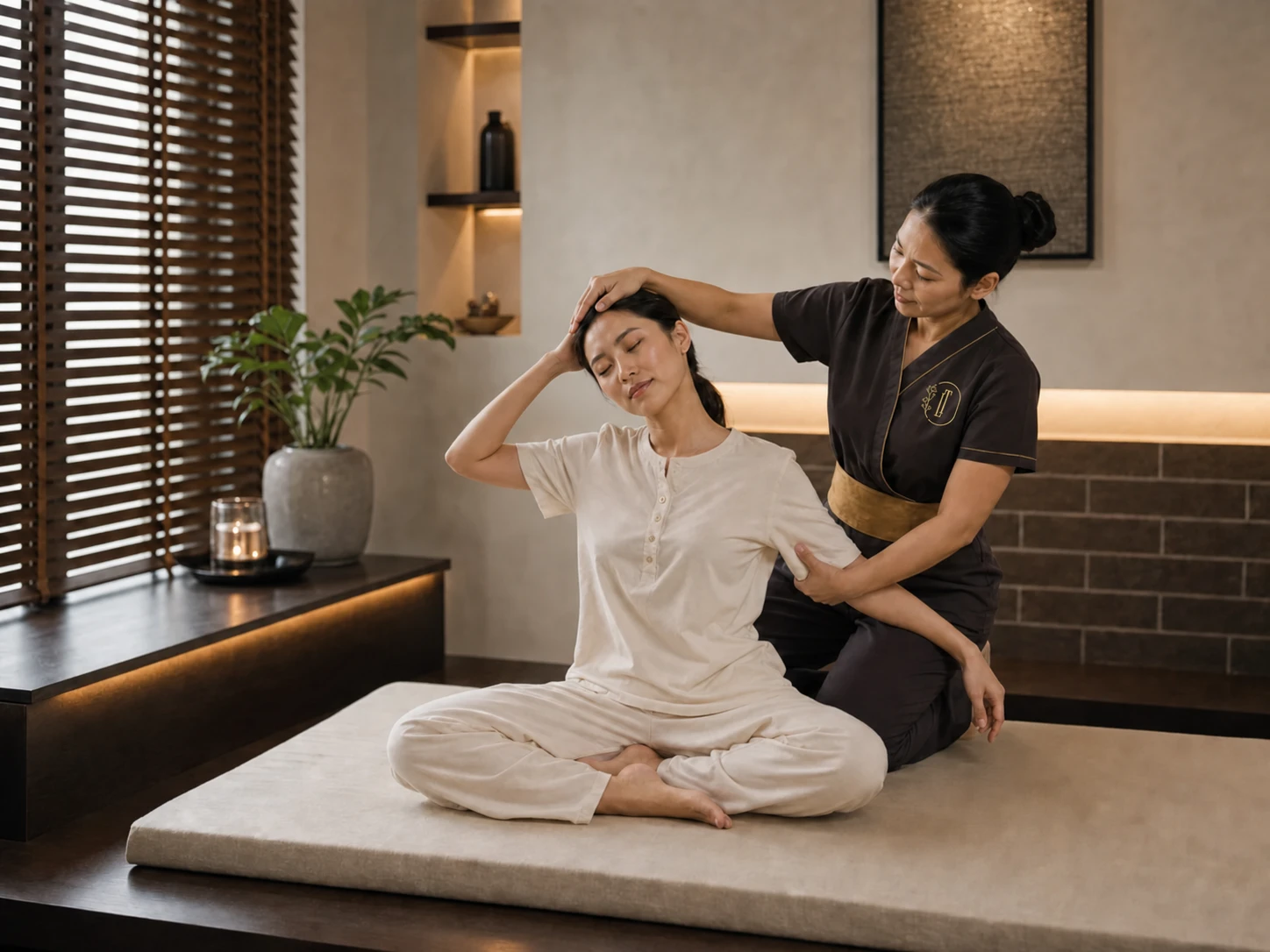 Thai Massage
A clothed Thai massage using stretching and acupressure techniques in a private individual or couple room.
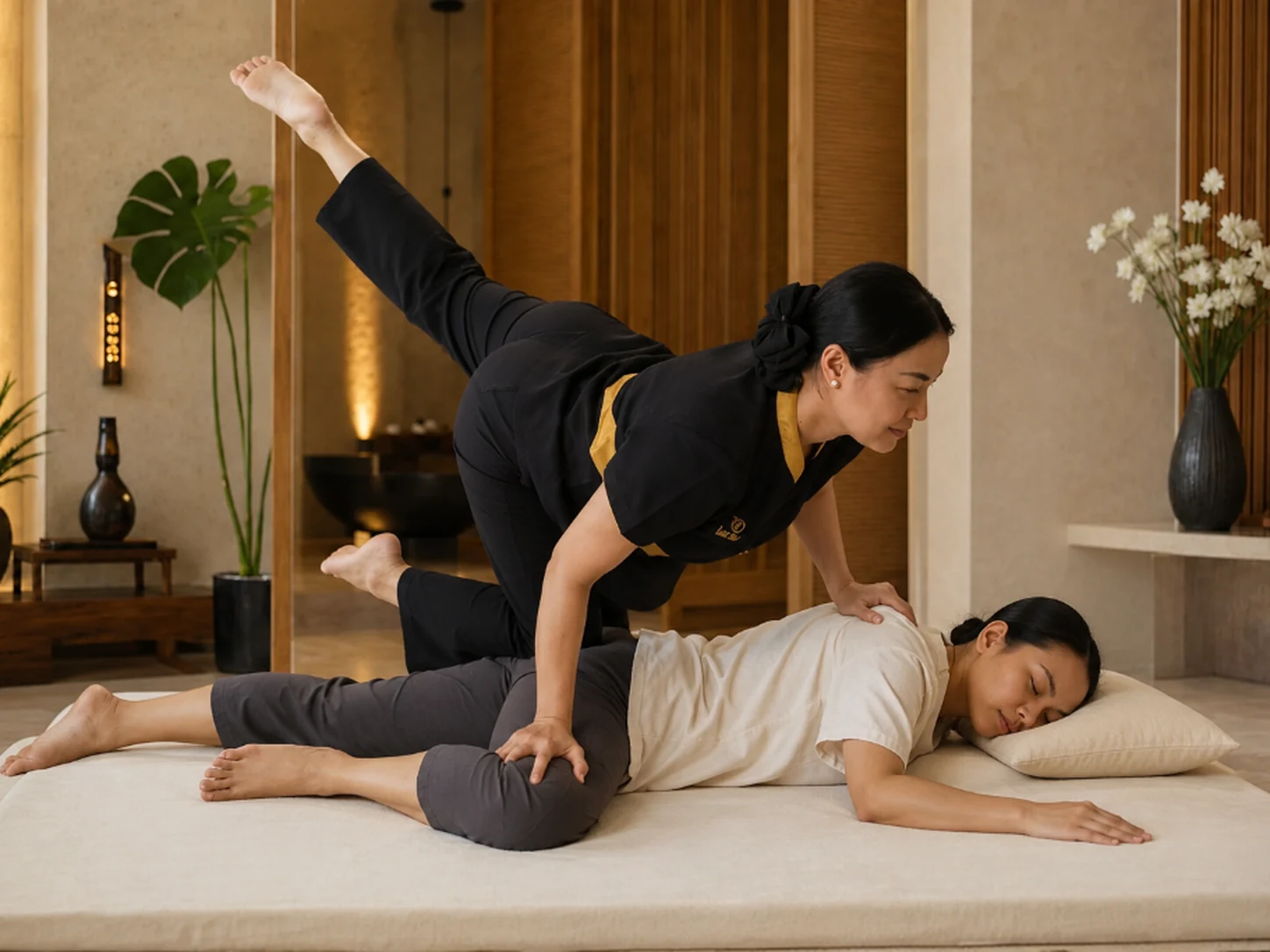 Thai Massage
Ancient Thai techniques and yoga-inspired movement designed for deeper release.
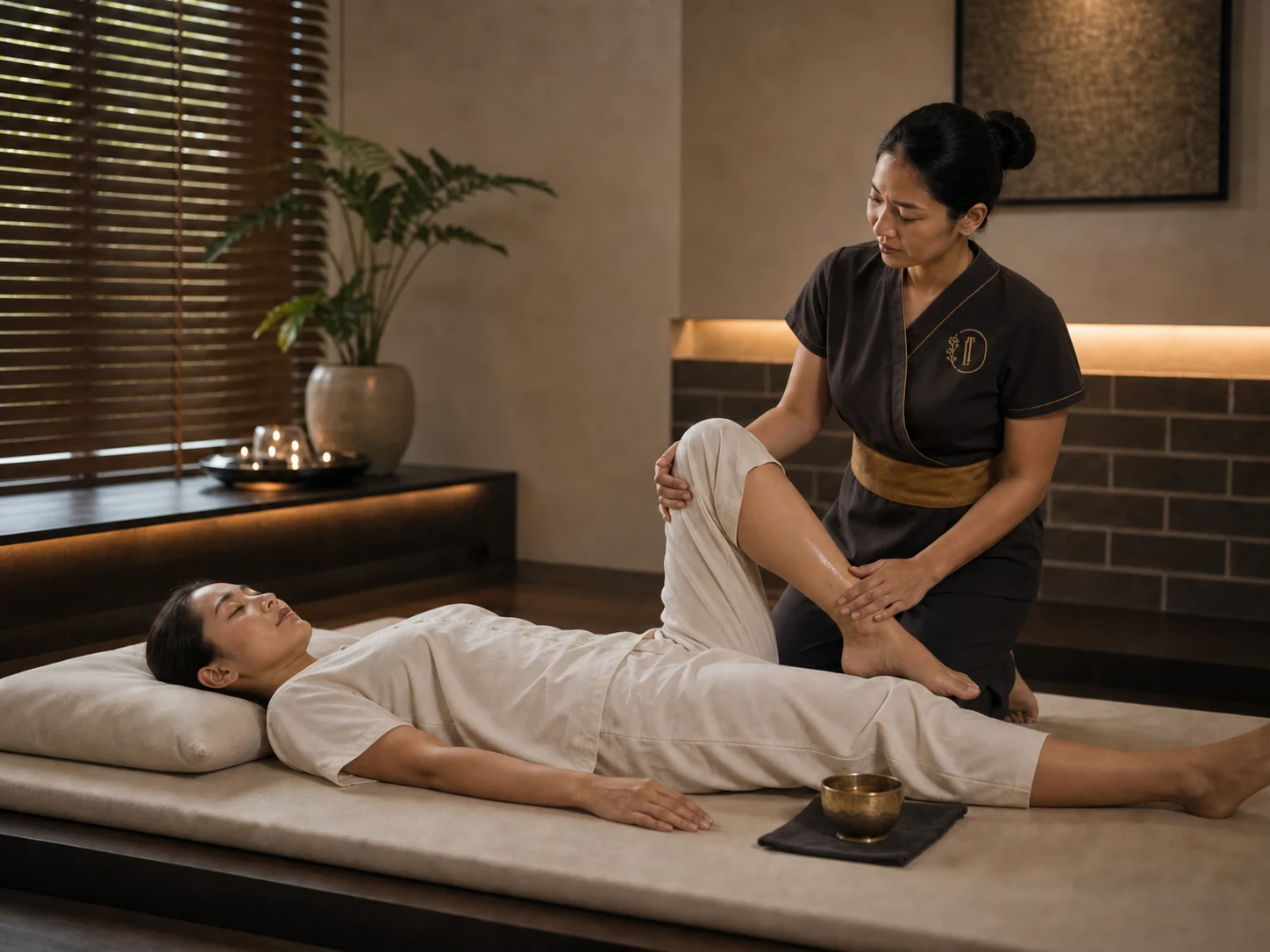 Thai Massage
A balanced blend of acupressure, Swedish strokes, Thai stretching and balm.
Targeted options for desk-related tension, sports recovery and Northern Thai Tok Sen therapy.
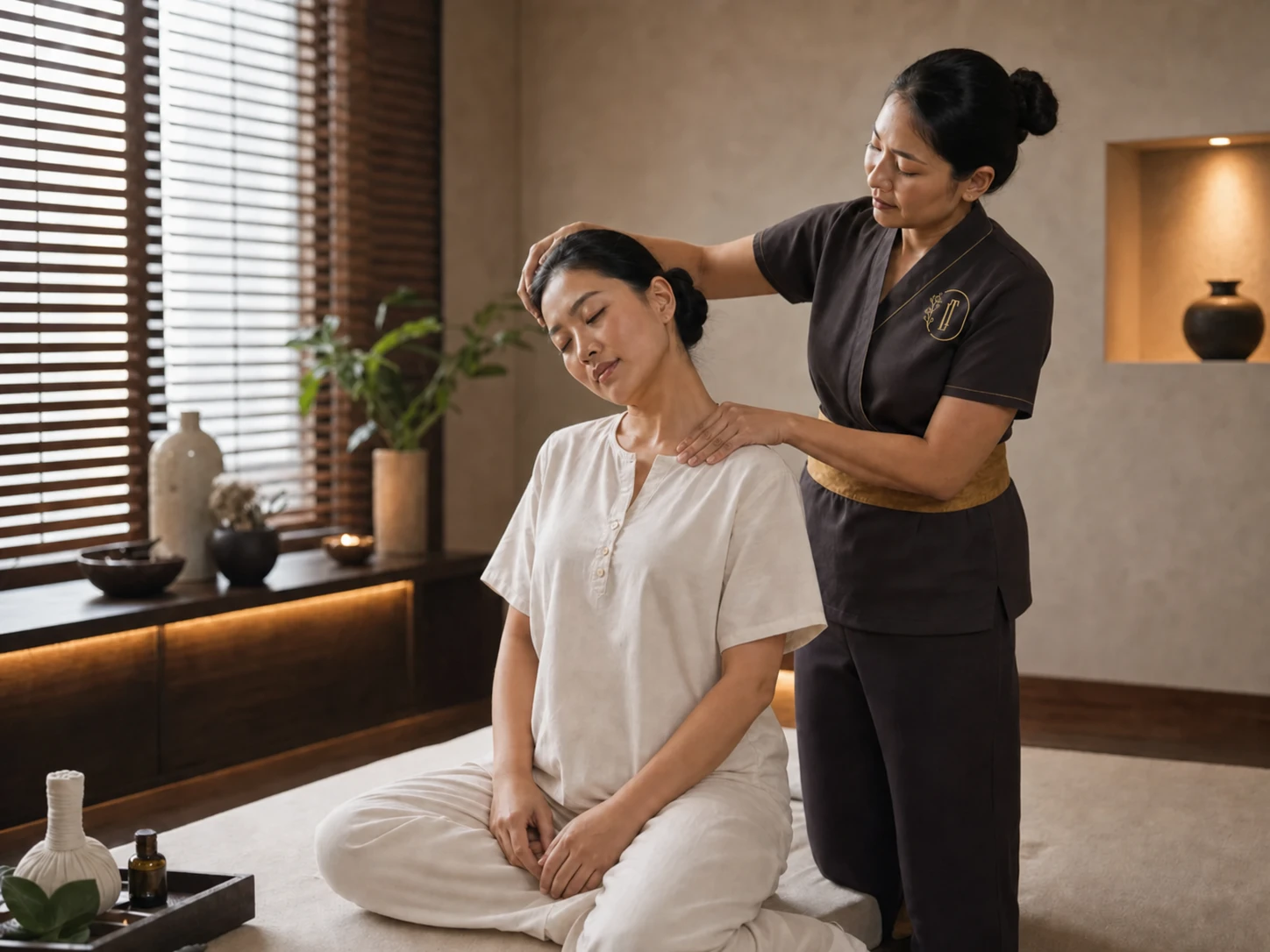 Thai Massage
Designed for office workers to relieve tension, support circulation and restore focus.
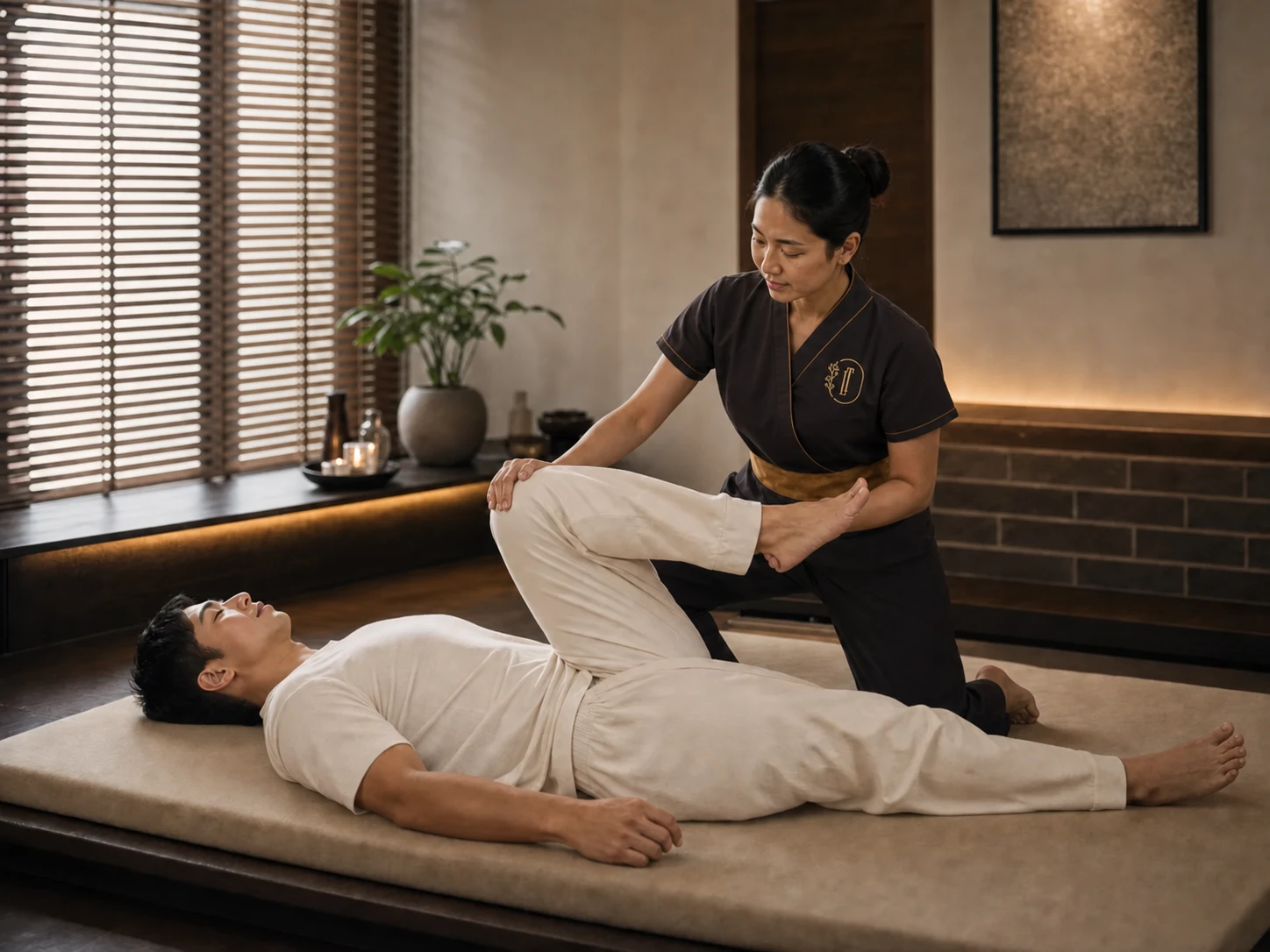 Thai Massage
Sports-focused bodywork for muscle tension, flexibility and recovery support.
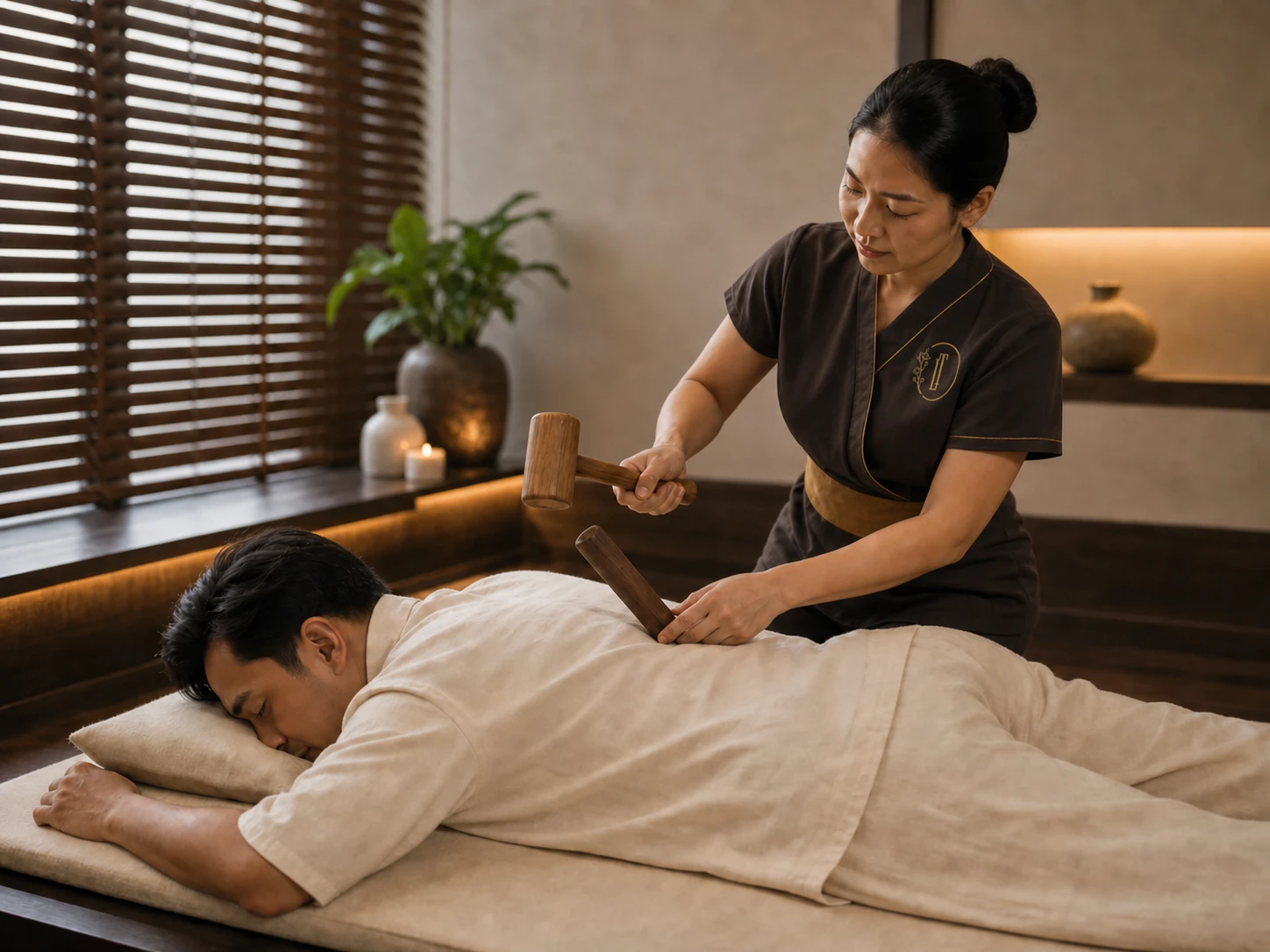 Thai Massage
A Northern Thai ritual using rhythmic wooden tools to release tension and encourage circulation.
Compare massage styles
The right choice is about format and comfort, not a hierarchy from “soft” to “best.” Use the distinctions below, then ask the spa if you are still unsure.
| Massage | Format | Pressure | Movement | Choose it when… |
|---|---|---|---|---|
| Traditional Thai Massage | Clothed · no oil | Adjustable, rhythmic | Assisted stretches, compression and mobilisation | You want active, mat-based bodywork and a whole-body sequence. |
| Thai Warrior Massage | Clothed · no oil | Stronger and more athletic | Deeper pressure and yoga-inspired assisted movement | You already enjoy firm Thai bodywork or want a more demanding ritual. |
| Aromatherapy Oil Massage | Oil massage | Gentle to firm | Long flowing strokes and pressure-point work | Your priority is sensory relaxation, warm oil and less active stretching. |
| Deep Tissue Oil Massage | Oil massage | Focused and deeper | Slow work on selected areas of muscular tension | You prefer oil and targeted, slower pressure rather than a Thai sequence. |
| Office Syndrome Massage | Targeted massage | Adapted to the area | Neck, shoulders, arms and back focus | Desk or screen habits have left specific upper-body areas feeling tight. |
Therapist expertise & continuous learning
Loft Thai’s connection with Nuad Thai School keeps treatment-room standards close to hands-on teaching: body mechanics, rhythm, client comfort, hygiene, contraindications and professional communication.
Training does not mean every guest receives the same routine. It gives therapists a structured foundation from which pressure, pacing and movement can be adapted with greater control.
Before, after & suitability
A Loft Thai film
Watch Thai Warrior Massage bring controlled pressure, assisted movement and steady rhythm together. Traditional Thai Massage can be gentler, with every technique adapted to your comfort.
Watch on YouTubeLOFT THAI ACROSS SUKHUMVIT
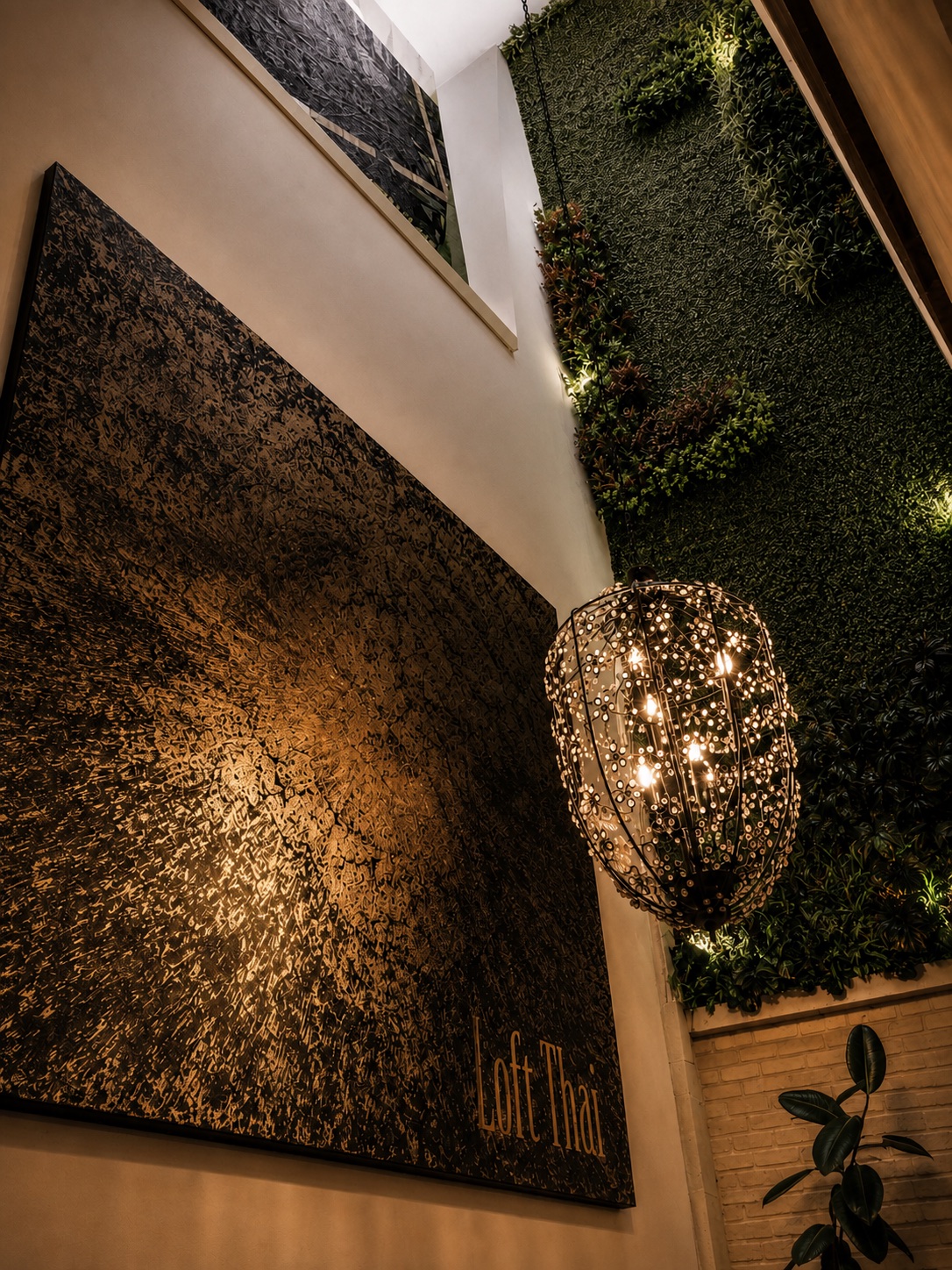
Loft Thai Boutique Spa & Massage62 Sukhumvit 38, Sukhumvit Rd., Phra Khanong, Khlong Toei, Bangkok 10110
BTS Thong Lo (Exit 2) - 5 min walk
Open daily: 10:00 - 22:00
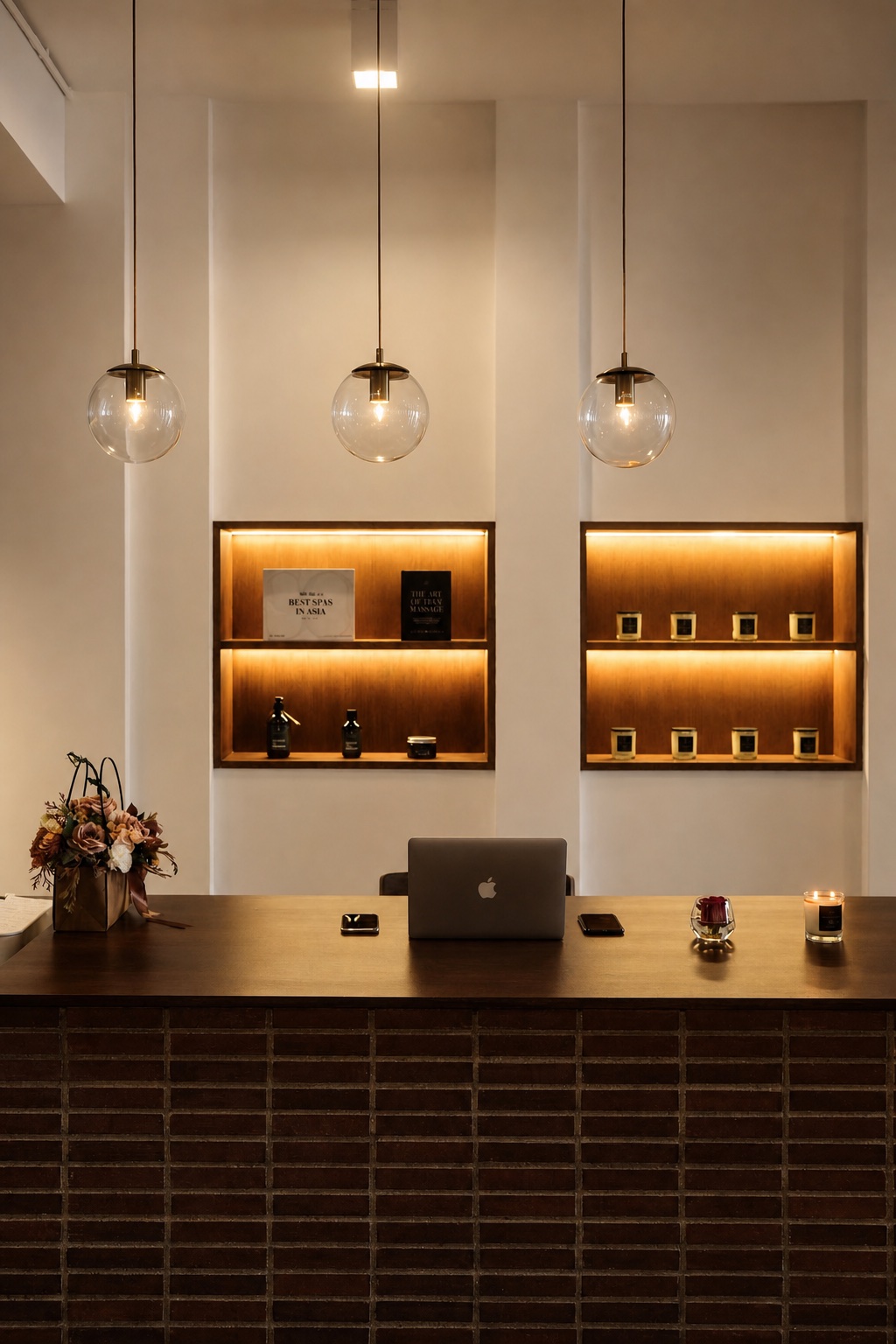
Loft Thai Spa & Wellness39/1 Sukhumvit 24, Sukhumvit Rd., Khlong Tan, Khlong Toei, Bangkok 10110
BTS Phrom Phong (Exit 5) - 1 min walk
Open daily: 10:00 - 24:00

Loft Thai Spa & Tea House1967 Sukhumvit 71 Rd., Phra Khanong Nuea, Watthana, Bangkok 10110
BTS Phra Khanong (Exit 2) - 15 min walk
Open daily: 10:00 - 20:00
Frequently asked questions
Still deciding which ritual or duration is right for you? These answers cover the practical details guests most often ask before booking.
Ask on WhatsAppTraditional Thai massage, often called Nuad Thai, is a clothed form of Thai bodywork that combines rhythmic pressure, broad compression, joint mobilisation and assisted stretching. It is normally performed without oil, with the guest moving through supported supine, side-lying, prone and seated positions as appropriate. The therapist uses controlled body weight and a steady rhythm rather than treating force as a measure of quality. A professional session begins with a short conversation about pressure, movement, priority areas and anything that should be avoided. The sequence is then adapted to the guest instead of being delivered as one rigid routine. Some moments feel still and grounding, while others involve more active movement. Nuad Thai is also a living Thai cultural practice with different regional and teaching traditions, so techniques and pacing may vary between trained practitioners. At Loft Thai, the aim is to respect that heritage while providing privacy, fresh treatment clothing, clear communication and a measured modern spa experience.
Thai massage should not feel sharply painful, alarming or impossible to breathe through. Certain pressure points, compressed areas or assisted stretches may feel intense, especially when the body is unfamiliar with the movement, but intensity is not the same as pain and it is never a requirement for an effective session. You can ask for softer pressure, a smaller range, more support, a slower pace or for a technique to stop at any time. The therapist can also change position or move to another area rather than pushing through discomfort. Tell the therapist before the session about sensitive areas, recent injuries or movements that concern you, and continue giving feedback once the treatment begins. A first visit can be intentionally gentle. Mild temporary tenderness can occur after stronger bodywork, but sharp, sudden or worsening pain is a reason to stop and reassess. Comfort checks and respectful communication are part of professional Thai massage, not an interruption to it.
Traditional Thai massage is performed fully clothed because the treatment includes supported position changes, compression and assisted movement rather than oil applied directly to the skin. Loft Thai provides loose treatment clothing when needed so you can move comfortably while remaining covered throughout the session. Soft, flexible garments allow the therapist to guide a leg, shoulder or seated stretch without fabric pulling or restricting the range. Very tight jeans, belts, bulky pockets, rigid sportswear and delicate accessories are less practical for this style of bodywork. You can remove jewellery or other items that may press uncomfortably before the treatment begins and keep personal belongings secured. If you have a mobility, modesty or clothing concern, mention it during the consultation so the room setup and sequence can be adapted. Professional coverage and privacy remain part of the experience from changing through to the final seated movements.
Traditional Thai Massage at Loft Thai is normally an oil-free treatment performed over comfortable clothing. This format allows the therapist to use rhythmic compression, palm or thumb pressure, supported position changes and assisted stretching without the slip created by massage oil. It also means the session feels different from a conventional table massage: movement and leverage are more central, while long gliding strokes are not the main technique. If you prefer direct skin contact, professional draping, warm oil and a smoother flowing rhythm, Aromatherapy Oil Massage may be a more suitable choice. Deep Tissue Oil Massage is another option when you prefer oil with slower, more focused work on selected areas. None of these formats is automatically better or stronger; they simply create different experiences. Tell the booking team about scent sensitivity, skin preferences or uncertainty between treatments so the most appropriate service can be discussed before your appointment.
The best duration depends on whether this is your first Thai massage, how much time you have and how broadly you want the therapist to work. A 60-minute session is a focused introduction that can still provide a complete sequence, but transitions and priority work need to be more concise. Ninety minutes gives the therapist more room to move through the whole body without rushing, repeat useful stretches and spend additional time on one main area. A 120-minute treatment creates the most unhurried pace and allows attention to several priorities while maintaining comfortable transitions between positions. A longer booking does not mean the pressure must be stronger; depth and range remain adjustable at every duration. New guests often find 60 or 90 minutes approachable, while experienced guests may prefer 90 or 120 minutes. Current availability, branch and final duration are confirmed through the reservation page before booking.
Traditional Thai massage is performed clothed and without oil, with the session built around rhythmic compression, pressure, joint mobilisation, supported position changes and assisted stretching. The guest may move between lying on the back, side or front and may also finish seated, depending on comfort and the chosen sequence. Oil massage is performed with professional draping and uses oil on the skin, allowing longer gliding strokes and a more continuous flowing rhythm. It usually involves fewer active position changes and may feel more familiar to guests who associate massage with a treatment table and warm oil. Both formats can be gentle or firm, and both should be adjusted through communication rather than judged by maximum pressure. Choose Thai massage when you want clothed, movement-led bodywork; choose Aromatherapy Oil Massage when sensory relaxation and flowing strokes are the priority. If you want slower, more targeted oil work, compare Deep Tissue Oil Massage before booking.
Traditional Thai Massage works through a connected, clothed full-body sequence using compression, pressure, mobilisation and assisted movement. The therapist may use several supported positions to create leverage and rhythm while continuing to adapt the range to your feedback. Deep Tissue Oil Massage uses oil and generally applies slower, more localised work to selected areas where the guest wants focused attention. It tends to involve less assisted stretching and fewer position changes, while direct contact and gradual pressure through the tissue are more central to the format. The word deep should not be interpreted as a requirement to tolerate pain, and Thai massage is not automatically the stronger option. Either service can be adjusted from gentle to firm within professional limits. Choose Thai massage when you value movement, compression and a broad sequence; choose Deep Tissue Oil Massage when you prefer oil and slower targeted work. Neither treatment replaces medical assessment for persistent pain, injury or neurological symptoms.
Thai massage can be very suitable for beginners because pressure, pace, position and range of movement can all be adapted. Tell the therapist that it is your first session and describe what normally feels comfortable in other forms of massage or stretching. You can request gentle pressure, slower transitions and a conservative range from the beginning rather than waiting until a technique feels too intense. The therapist can use additional support, reduce the depth of a stretch or omit a position that does not feel appropriate. A 60-minute booking offers a concise introduction, while 90 minutes allows more time to explain transitions and complete the sequence without rushing. You do not need to be flexible, athletic or familiar with yoga to participate. Wear the provided loose clothing, breathe normally and give honest feedback throughout. The goal of a first visit is to understand the rhythm and discover what feels suitable for you, not to complete every possible technique.
Yes. Pressure is a preference to discuss, not something you must silently accept once the treatment begins. During the consultation you can request soft, medium or firm work and identify areas that should receive more attention, lighter contact or no contact. During the session you can ask for less or more pressure, a smaller stretch, slower movement, extra support or a different position. Clear phrases such as softer here, smaller range or please avoid this area are enough; no technical vocabulary is required. The therapist may also reduce intensity when breathing changes, muscles guard or movement no longer feels smooth. Firm pressure should remain controlled and should not become sharp or threatening. Preferences can change from one part of the body to another and from one visit to the next. Ongoing feedback allows the therapist to shape the sequence around the person in the room rather than following a fixed idea of what Thai massage should feel like.
Before the appointment, allow enough time to arrive, check in and answer a few practical questions without rushing. Avoid a very heavy meal immediately beforehand because compression and position changes are usually more comfortable when you do not feel overly full. Normal hydration is sufficient; there is no need for excessive water or a special preparation ritual. Share any recent injury, surgery, procedure, pregnancy, medication concern, unusual tenderness or movement restriction with the therapist before treatment begins. Mention areas you do not want treated and any position that may be difficult, such as lying face down, kneeling or turning onto one side. Remove jewellery or accessories that could press into the body, and use the loose treatment clothing provided when appropriate. If a health condition makes massage or stretching uncertain, ask a qualified healthcare professional before the appointment. Honest information helps the therapist adapt the session; it is not a reason to feel judged or embarrassed.
At the end of the session, take a moment before standing and change position gradually, especially after a long treatment or if you tend to feel light-headed. Drink according to your normal thirst and daily needs; extreme hydration routines are not necessary. Notice how your body responds before scheduling intense exercise, long travel or another demanding activity immediately afterward. Some guests prefer a quiet period, a gentle walk or a normal meal, while others feel ready to continue their day. Mild temporary tenderness can occur after firmer pressure or unfamiliar movement, but severe pain, marked swelling, weakness, numbness or symptoms that persist or worsen are not expected wellness outcomes and deserve appropriate medical advice. Follow any simple aftercare guidance given by the therapist, but treat it as general comfort information rather than a medical prescription. Responses vary, so use your own comfort and health context to decide how much activity feels appropriate after the appointment.
Seek advice from a qualified healthcare professional before Thai massage when pregnancy, a recent injury, surgery, fracture, blood-clot risk, severe osteoporosis, uncontrolled cardiovascular concerns or another condition may make pressure or assisted stretching unsuitable. Acute fever, contagious illness, active infection, unexplained swelling, open wounds or a sudden new pain are also reasons to postpone and obtain appropriate guidance. Tell the spa about mobility limitations, implanted devices, medications that affect bleeding or sensation, and any instruction already given by your clinician. This list is not exhaustive, and a massage therapist cannot diagnose whether a medical condition is safe for treatment. Even with medical clearance, the therapist may need to omit stretches, avoid an area, use lighter pressure or recommend a different service. Stop immediately if a technique causes sharp pain, dizziness, numbness, breathing difficulty or another concerning response. Thai massage is a wellness service and should never delay urgent assessment, replace prescribed treatment or be presented as a cure for injury, disease or neurological symptoms.
Some guests choose Thai massage after long periods of sitting because the session combines pressure, position changes and assisted movement across the whole body. Moving through the hips, legs, torso, shoulders and neck may leave a person feeling temporarily less restricted or more aware of how different areas move together. The result is individual and should not be described as correcting posture, restoring circulation or treating a diagnosed condition. Traditional Thai Massage is useful when you want a broad clothed sequence rather than attention limited to the upper body. If your main priority is the neck, shoulders, arms and back after desk or screen work, compare Office Syndrome Massage, which is designed as a more targeted service. Tell the therapist about headaches, numbness, radiating pain, recent injury or symptoms aggravated by movement before treatment. Persistent or concerning problems deserve assessment by a qualified healthcare professional. Massage can complement a sensible wellness routine, but it does not replace medical care, movement advice or workplace adjustments.
Loft Thai Spa offers Traditional Thai Massage in private treatment rooms across three Sukhumvit areas: Thong Lo, Phrom Phong and Phra Khanong. The Thong Lo location is in Sukhumvit 38, the Phrom Phong location is in Sukhumvit 24 and the Phra Khanong location is in Sukhumvit 71. The page maps provide the most practical route from the nearby BTS station, while the reservation flow confirms current service and duration availability for the selected branch. Authenticity is not presented as a decorative label or a promise that every therapist performs one identical routine. It appears in the clothed, oil-free format, the use of compression and assisted movement, trained body mechanics, respect for comfort and the cultural context of Nuad Thai. The exact sequence still changes with the guest and the practitioner. Book the branch that fits your day, arrive early enough for a consultation and share pressure or mobility preferences before the session begins.
Advance booking is recommended when you want a particular branch, duration or appointment time, and it is especially useful for evenings, weekends and bookings for two guests. Traditional Thai Massage is offered in 60-, 90- and 120-minute options, but therapist and room availability can differ by location and time of day. The reservation page is the appropriate place to review the current service option, choose a duration and confirm the booking details shown before completion. If you are coordinating a flight, hotel schedule, dinner reservation or another treatment, leave enough time around the appointment so arrival and consultation are not rushed. Couples should book early enough for two suitable treatment spaces to be confirmed together. A visible service on the website does not by itself guarantee immediate availability at every branch. When your timing is flexible, compare the available slots and choose the location that fits your route through Sukhumvit. Contact the spa directly if you need help matching a service, duration and branch.
The Loft Thai Journal
Continue with practical comparisons, therapist education and deeper explanations of traditional Thai bodywork.
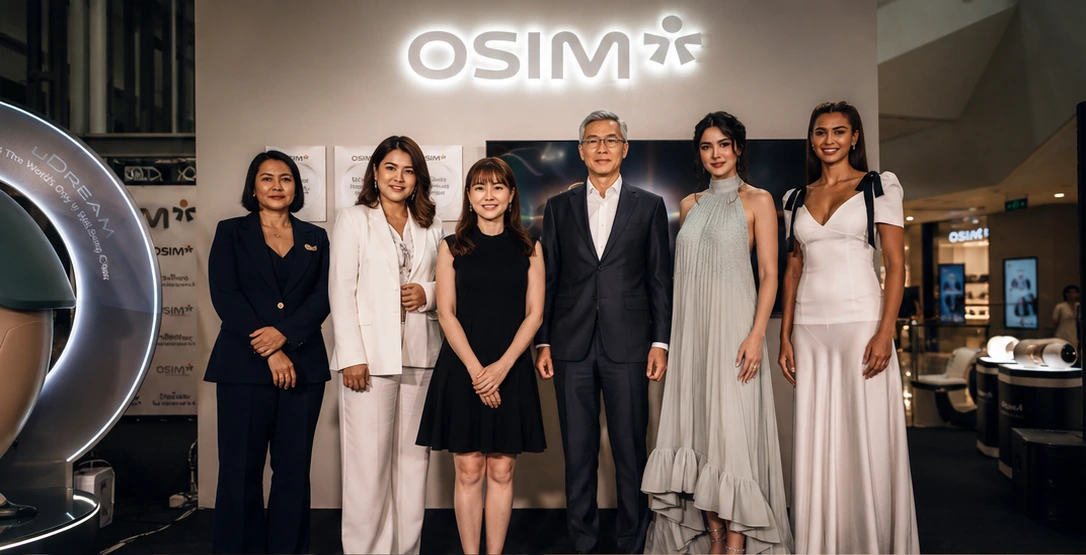
On 21 August 2026, Loft Thai Spa joined OSIM Thailand at EmQuartier for the official launch of OSIM uDream.AI: The Realm of Wellness. The Bangkok event placed authentic Thai massage knowledge beside personalised home-wellness technology, with a practical…
Read the guide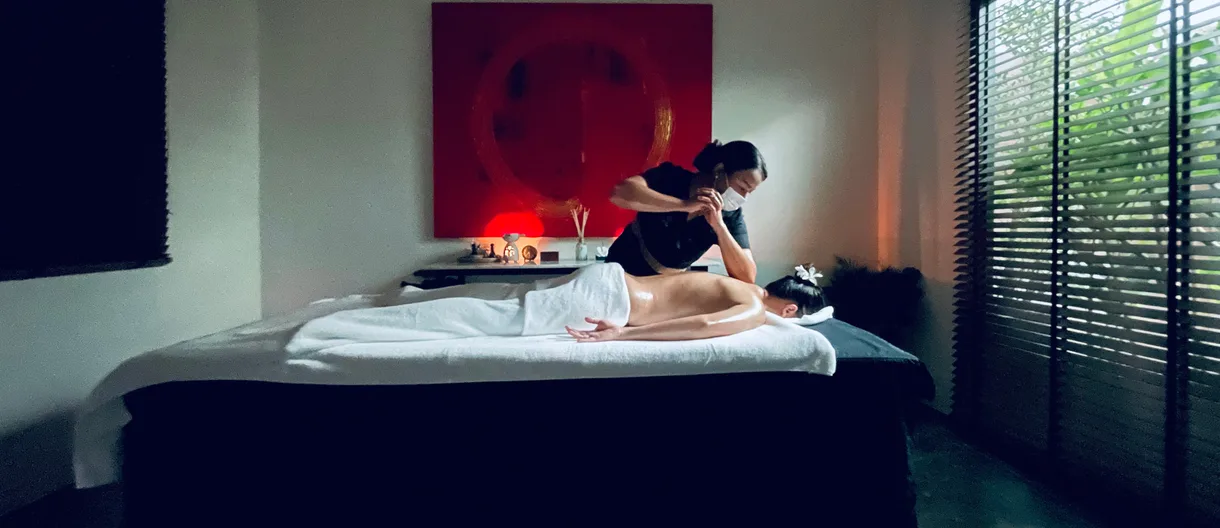
Inside a Loft Thai treatment room, the first language is rhythm. A therapist settles her stance, listens to the guest’s breathing and lets pressure build without hurry. Hands pause before they move again; every stretch is supported, every change of position…
Read the guide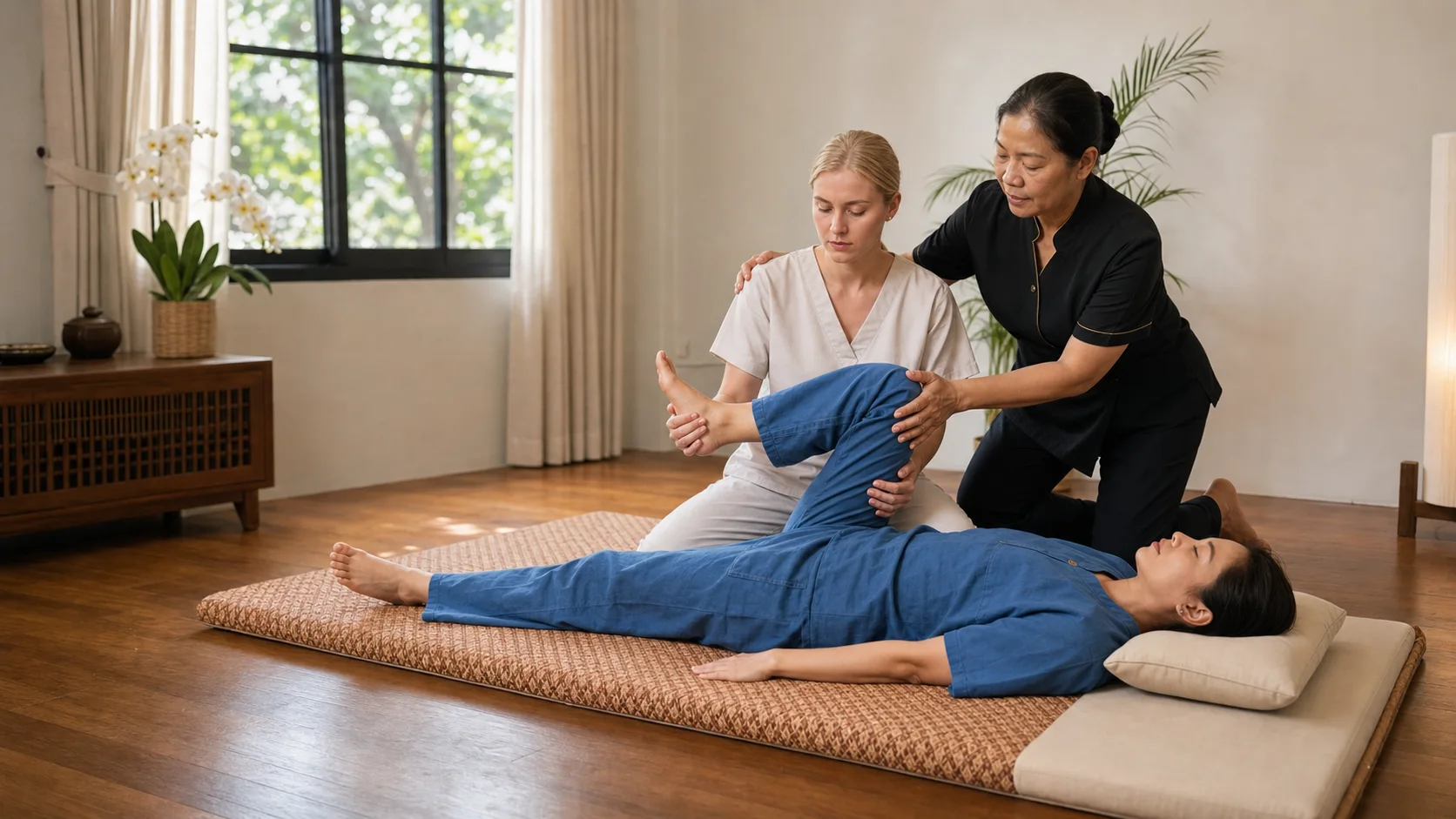
Bangkok has long been recognized as one of the world capitals of massage, spa therapy, traditional healing, and wellness culture. For many international students, professional therapists, spa owners, and wellness entrepreneurs, Thailand is not simply a…
Read the guide
When someone travels across the world to learn Thai massage in Bangkok, they are not simply booking a class. They are choosing to enter a culture, a tradition, and a way of understanding the body that has been passed from generation to generation. At Loft Thai…
Read the guide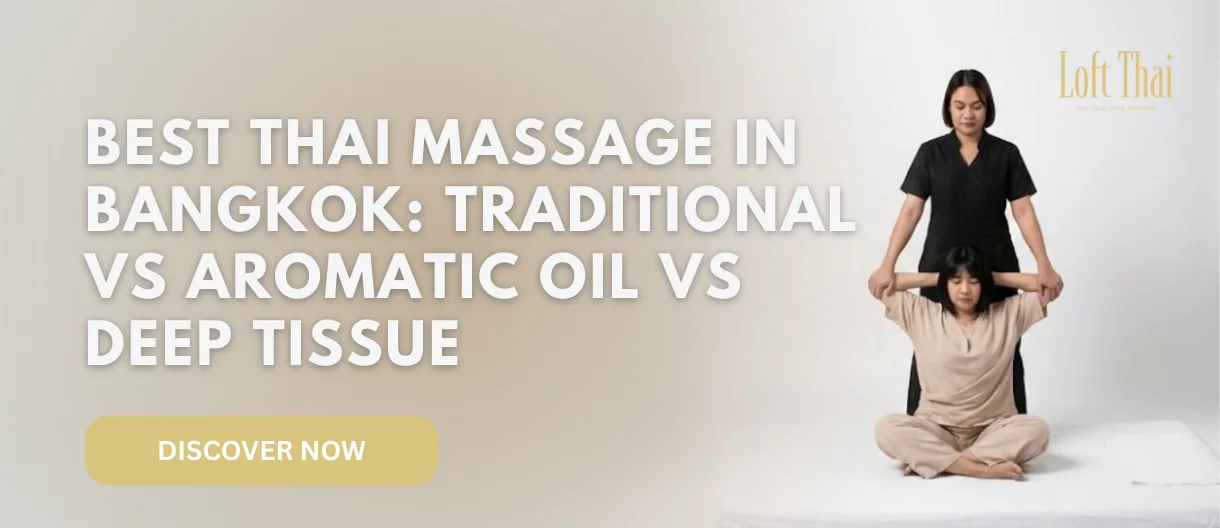
Bangkok is one of the few cities in the world where massage is not just a service—it’s culture. You can book a session almost anywhere, at almost any price, and still find talented hands. That’s the magic of Thailand. But it also creates the biggest problem…
Read the guide
People often say “I want a Thai massage,” but what they actually mean can be very different.
Read the guideEditorial sources
Your traditional Thai massage in Bangkok
Book the duration that fits your day, or ask Loft Thai to compare Traditional Thai Massage with Thai Warrior, oil or targeted therapeutic options.