

Herbal compress therapy, a traditional healing practice in Thailand, involves the use of heated compresses filled with a blend of medicinal herbs. This therapy is known for its therapeutic benefits, promoting relaxation, improving circulation, and alleviating various ailments. The secrets behind herbal compress therapy lie in the unique combination of aromatic herbs and the application of heat, creating a holistic approach to well-being in Thai traditional medicine.
What is Thai Herbal Compress Therapy
Thai Herbal Compress Therapy, also known as Luk Pra Kob, is a traditional healing practice originating from Thailand. It involves the use of compresses filled with a blend of therapeutic herbs, which are heated and applied to the body. The therapy combines the benefits of heat, aromatherapy, and herbal medicine to promote overall well-being.
Key elements of Thai Herbal Compress Therapy include:
1. Herbal Blend:
The compresses contain a mixture of traditional Thai herbs, such as ginger, turmeric, lemongrass, kaffir lime, and camphor. These herbs are chosen for their aromatic and medicinal properties.
2. Heating Process:
The herbal compresses are typically steamed or heated before application. This process activates the herbs and allows their beneficial compounds to be released.
3. Application Technique:
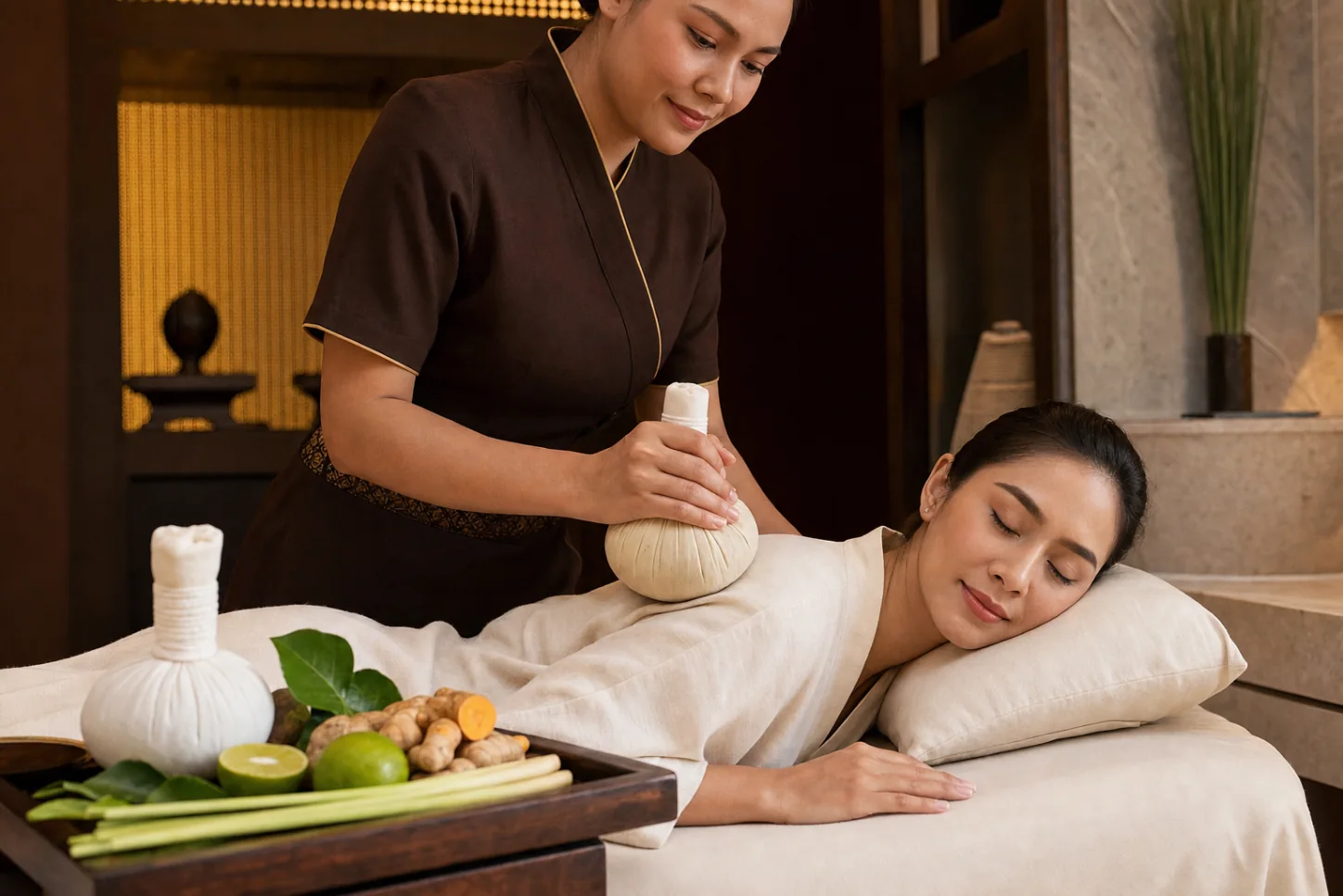
The therapist applies the heated herbal compresses to different areas of the body using gentle pressing, circular, or rolling motions. The heat and herbs work synergistically to provide therapeutic effects.
4. Therapeutic Benefits:
Thai Herbal Compress Therapy offers a range of benefits, including relaxation, improved circulation, muscle and joint relief, and detoxification. The aromatic herbs also contribute to a sensory and calming experience.
5. Holistic Approach:
Rooted in traditional Thai medicine, the therapy is viewed as a holistic approach that not only addresses physical ailments but also aims to balance the body's energy flow.
6. Spa and Wellness:
Thai Herbal Compress Therapy is commonly offered in spas and wellness centers as part of massage or body treatment sessions. It has gained popularity for its unique blend of herbal healing and relaxation.
Overall, Thai Herbal Compress Therapy reflects the rich cultural and medicinal heritage of Thailand, providing a natural and holistic way to promote health and well-being.
Benefits of Thai Herbal Compress Therapy
Thai Herbal Compress Therapy offers various benefits, including:
1. Relaxation:
The therapy induces a state of relaxation, reducing stress and promoting a sense of calm.
2. Improved Circulation:
Heat from the compresses helps improve blood circulation, enhancing overall vascular health.
3. Muscle Relaxation:
The combination of heat and herbs aids in muscle relaxation, easing tension and stiffness.
4. Pain Relief:
Herbal compress therapy can alleviate pain and discomfort, making it beneficial for conditions like arthritis or muscle aches.
5. Detoxification:
The warmth and herbal properties contribute to detoxification by stimulating the lymphatic system.
6. Skin Nourishment:
Herbs in the compresses may have skincare benefits, providing nourishment and promoting a healthy complexion.
7. Balancing Energy Flow:
In traditional Thai medicine, herbal compress therapy is believed to balance the body's energy, promoting overall well-being.
8. Joint Mobility:
The therapy can improve joint flexibility and mobility, particularly beneficial for those with joint issues.
9. Respiratory Benefits:
Aromatic herbs may offer respiratory benefits, helping with conditions like congestion or mild respiratory issues.
10. Holistic Wellness:
Thai Herbal Compress Therapy is a holistic approach, addressing physical, mental, and energetic aspects of well-being.
These benefits make Thai Herbal Compress Therapy a popular and traditional practice for promoting health and relaxation.
UPDATED LOFT THAI GUIDE
Additional guidance and current information
The following editorial update expands on the original Loft Thai article with practical context, current treatment guidance and further reading.
What Is a Thai Herbal Compress?
Thailand's Department of Thai Traditional and Alternative Medicine describes the practice as herbs wrapped in cloth to form a ball-shaped compress, then heated for application.
The Thai name is often transliterated as luk pra kob, luk prakob or luk pra khob.
It can be used as a distinct warm treatment element or combined with massage, depending on the exact service.
There Is No Single Universal Ingredient List
Official Thai teaching material presents a formula that includes plai, turmeric, lemongrass, kaffir-lime peel, tamarind leaf, acacia leaf, camphor and salt.
Professional recipes vary by school, producer, fresh or dried preparation and intended use.
Guests with allergy, pregnancy, fragrance sensitivity or reactive skin should ask for the actual ingredient list rather than rely on the generic phrase Thai herbs.
From Chopped Herbs to a Working Compress
Plant material is portioned into clean cloth and tied firmly so the rounded base remains stable in the therapist's hand.
The bundle is heated with steam or another controlled professional method until warm and moist.
Clean preparation, storage, heating equipment and single-guest handling matter as much as the romance of fresh herbs.
Temperature Testing Is the First Technique
A freshly heated compress can be too hot for direct sustained contact.
The therapist tests temperature, begins with brief or moving contact and adjusts as the bundle cools.
The guest should report burning, stinging, numbness or an area that cannot sense heat normally.
What Happens During the Treatment
The sequence may alternate pressing, rolling, rocking or gentle gliding with hands-on massage.
A warmer compress is normally kept moving or used through protective fabric before longer contact becomes comfortable.
As temperature falls, the therapist can work more slowly while continuing to check pressure and skin response.
The Immediate Experience: Warmth, Aroma and Rhythmic Pressure
The combination can feel comforting around tired muscles and may make a bodywork session feel more gradual.
A systematic review of Thai herbal compress research reported possible short-term effects for some musculoskeletal outcomes, but study quality and methods varied.
One small randomised study of upper-trapezius myofascial pain cannot justify broad claims about every formula, body area or healthy spa guest.
What the Compress Does Not Prove
Sweating, warmth or fragrant skin does not demonstrate removal of toxins.
A compress should not be promoted as a cure for arthritis, respiratory disease, circulation disorders, inflammation or chronic pain.
Spa comfort and clinical treatment are different scopes; persistent or unexplained symptoms need appropriate assessment.
When Heat Requires Extra Caution
Heat may be inappropriate over acute injury, active inflammation, broken or infected skin, reduced sensation or an area with impaired circulation.
Recent surgery, significant medical conditions, pregnancy and medicines that affect sensation or bleeding require an individual conversation.
A spa should postpone, modify or decline the treatment when safe application cannot be established.
Herbal Safety Is More Than a Pleasant Smell
Botanical ingredients can irritate skin or trigger allergy, and camphor or strong aromatic materials may not suit every guest.
Thai public-health research on herbal products demonstrates why plant origin alone is not a guarantee against adverse reactions.
The responsible response is traceable product selection, hygienic handling, an ingredient check and observation—not fear or exaggerated purity claims.
A Living Thai Practice, Not a Frozen Spa Prop
Thailand's public-health and training ecosystem continues to include herbal compress knowledge alongside Thai massage.
UNESCO's inscription of Nuad Thai recognises a living traditional-massage practice transmitted through families, associations, schools and health institutions.
Respecting that context means naming the technique accurately and avoiding a fictional single origin story.
A Better Herbal-Compress Booking Brief
Confirm whether the service is currently offered alone or within a massage, the duration, body areas, formula and final price.
Share heat preference, skin sensitivity, allergy and relevant health context before arrival.
Ask how the therapist will adapt temperature and pressure during the sequence.
-
01
Exact service
Herbal compress alone or combined with Thai, oil or signature massage.
-
02
Formula
Fresh or prepared compress and the actual ingredient list.
-
03
Heat tolerance
Preferred warmth and any area with altered sensation.
-
04
Skin context
Allergy, irritation, rash, wound, infection or recent procedure.
-
05
Health context
Pregnancy, injury, surgery, medicine or relevant condition.
-
06
Feedback plan
Permission to cool, move, skip or stop the compress at any point.
“The compress is not one miracle herb in a cloth bag. It is a controlled conversation between heat, pressure, formula, skin and therapist timing.”
Loft Thai Editorial Team
Continue your research
REFERENCES
Sources & further reading
PRACTICAL GUIDANCE
Frequently Asked Questions
What is inside a Thai herbal compress?
Formulas vary. An official Thai teaching formula includes plai, turmeric, lemongrass, kaffir-lime peel, tamarind and acacia leaves, camphor and salt, but the exact product used by a spa should be checked.
How is a Thai herbal compress heated?
The tied cloth bundle is generally warmed with steam or another controlled professional method, tested, then applied with brief or moving contact before slower pressure as it cools.
Does herbal compress massage detox the body?
No detoxification claim should be inferred from warmth, aroma or sweating. The realistic spa experience is moist heat, fragrance, pressure and comfort.
Can a herbal compress burn skin?
Yes, excessive temperature or prolonged contact can injure skin. Temperature testing, protective fabric, movement, guest feedback and avoiding areas with reduced sensation are important.
Who should check before booking herbal compress massage?
Guests with pregnancy, recent surgery, acute injury, altered sensation or circulation, active skin problems, allergy or a significant medical condition should discuss suitability before treatment.
CONTINUE READING
Related stories
Diving into the Art of Thai Massage in Bangkok and Thailand
Well, talk about best massage in world, and one cannot miss talking about Thailand! Yes, Thailand has a lot more to offer to a world apart from serene surroundings and luxury spa in Bangkok .
Read the guide
What are the Benefits of Luxury Spa Treatments for Your Health and Wellbeing?
In the hustle and bustle of our daily lives, taking a moment for self-care is essential. Luxury spa treatments offer more than just pampering; they contribute significantly to your overall health and wellbeing. In this blog, we’ll delve into the various…
Read the guide
Thai Spa for Stress Relief: Techniques to Restore Balance
Indulge in the art of relaxation with our Thai spa treatments designed to melt away stress and restore balance. From traditional Thai massages and aromatherapy to herbal steam baths and meditative yoga sessions, our spa offers a holistic approach to rejuvenate…
Read the guide
Tok Sen Massage for Deep Tension: Why Vibration Can Reach Where Hands Cannot
Deep muscle tension is often misunderstood. Many people imagine that a tight shoulder, a stiff lower back, or a heavy neck can only be solved by stronger pressure, deeper elbows, or longer massage sessions. While deep pressure can be useful when applied…
Read the guide