
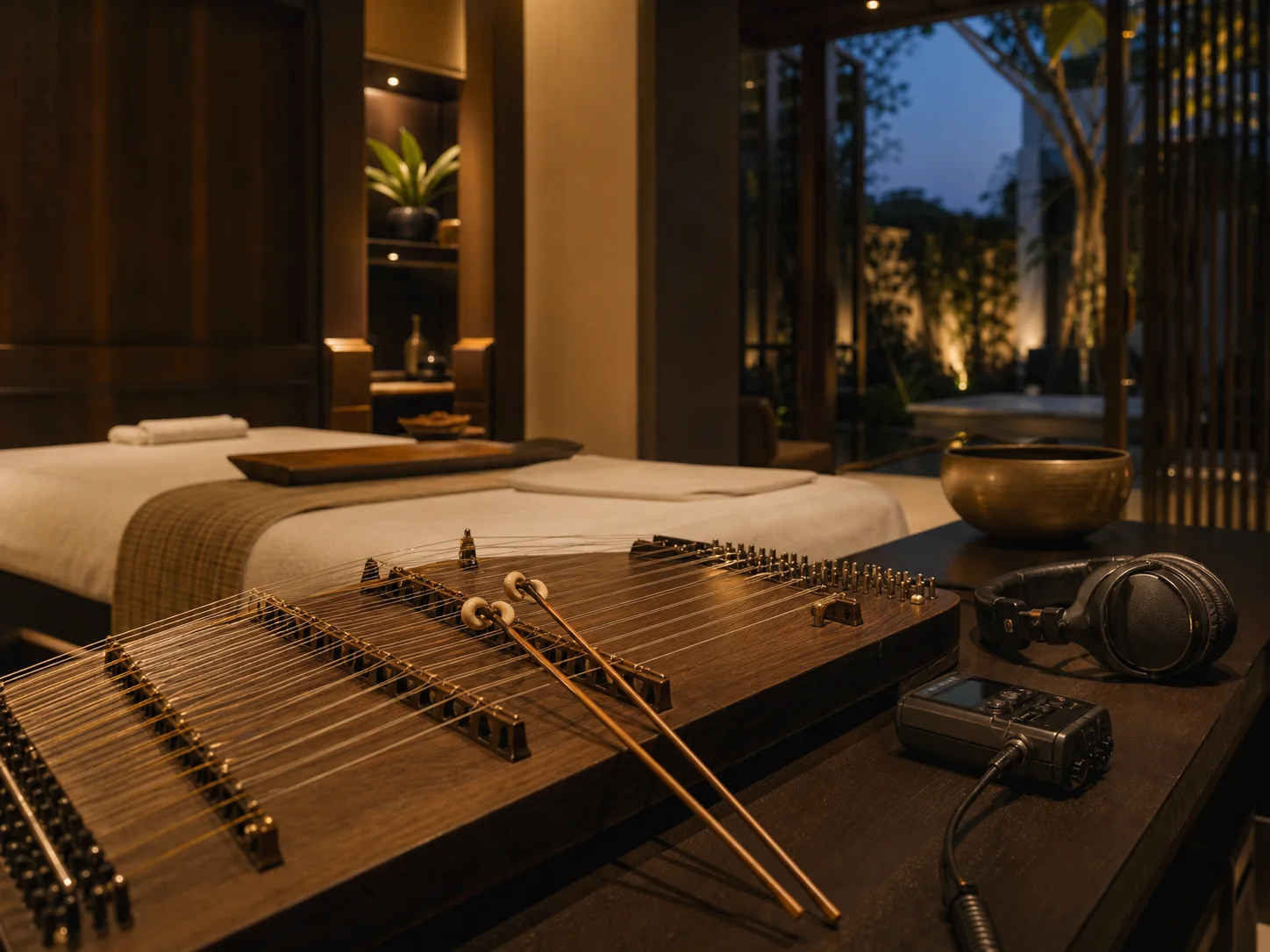
Finding time for rest and renewal has never been more crucial than it is in the fast-paced, digitally linked world of today. A new trend has emerged: virtual getaways. Traditional spa retreats have long been a popular option for anyone looking for a break from the rigors of regular life. These cutting-edge experiences give people a unique and restorative escape from the comfort of their homes by fusing the ease of technology with the tranquility of a spa. In order to relax and refocus, we can now do it without ever leaving our living rooms thanks to virtual retreats.
Accessibility and practicality
The accessibility of virtual retreats is one of their great features. Traditional spa getaways are frequently prohibitively expensive, making them unavailable to many people. However, because they do not require travel, lodging, or food, virtual retreats are a more cost-effective choice. Because of its accessibility, the wellness industry is now accessible to more people, enabling people from all socioeconomic levels to enjoy the advantages of a spa getaway. The physical obstacles that prevent people from remote places or regions with difficult access to wellness centers from partaking in high-quality spa experiences are also broken down by virtual getaways.
Customization and Variation
The range of choices is another benefit of virtual retreats. Your options were frequently constrained to the places and programming provided by particular establishments with traditional spa retreats. On the other hand, virtual getaways offer a wide range of opportunities. With just one click, you can research various wellness customs and practices from throughout the world. If Ayurveda, mindfulness, or holistic healing are of interest to you, virtual retreats provide a wide selection of programs and activities to fit your preferences. Virtual retreats can offer a special chance for personalisation. Your retreat experience can be customized to meet your unique requirements and interests by designing a schedule that fits your preferences.
Constructing a Sense of Community Through Bridge the Gap
While some might contend that the lack of physical contact and face-to-face conversations detracts from the spa experience, virtual getaways have come up with inventive solutions to fill the gap. Many programs include participatory components that strengthen members' connections and sense of community. You can interact with other retreat attendees, share experiences, and form relationships using live chat features, virtual group meetings, or online forums. The solitary character of conventional spa trips has been changed into a group and supportive experience by virtual retreats.
Creating a Sensory Experience from Scratch
The sensory experience of a traditional spa visit can be replicated thanks to the digital nature of virtual retreats. Participants can take advantage of vivid sights and calming noises that transport them to a peaceful world thanks to cutting-edge technology. Virtual reality (VR) technology is sometimes used in virtual retreats, enabling participants to explore tranquil settings and create a multimodal experience that improves rest and renewal. Virtual getaways frequently include self-care routines that may be readily incorporated into one's routine, such as facial massages, body stretches, and breathing exercises, even though they do not completely duplicate the physical touch of a spa treatment.
Resources for Education and Flexibility
Virtual retreats provide ease and flexibility. The speed and timing of health activities is up to the participants, who can access retreat materials whenever it is most convenient for them. Due to their ability to prioritize their own health without compromising other obligations, people are able to include self-care into their daily routines. A wealth of tools and educational opportunities are now available through virtual retreats. In-depth resources, such as e-books, films, and guides, are frequently provided by retreat organizers so that participants can learn more about various wellness techniques. These sources are available for use during the retreat and are helpful for continuing one's wellness journey after the virtual experience.
Impact on the environment and sustainability
Retreats conducted virtually benefit the environment. Traditional spa getaways include travel, which raises carbon emissions and damages the environment. People can lessen their carbon impact and adopt a more sustainable wellness strategy by choosing a virtual getaway. Virtual retreats show how self-care and environmental stewardship may coexist, in line with the rising awareness of the need for eco-conscious decisions.
As virtual getaways become more and more popular, it is crucial to select trustworthy and reliable organizers. Choosing the best virtual retreat for you requires doing your homework on the retreat provider, checking participant reviews, and making sure the program fits with your goals and values. To get the most out of the experience and maximize the advantages of self-care, pick a retreat that speaks to you personally. Spa getaways have been reimagined thanks to virtual retreats, which offer people a practical, cheap way to put their health first. These retreats provide a multitude of educational materials, cross geographic divides, and promote community relationships by embracing technology. While online retreats can't completely replace in-person interaction and physical touch. They provide an excellent opportunity to incorporate self-care into our daily lives and establish a sustainable health practice, without the distractions of a regular spa vacation. So it might be time to go on a virtual retreat and experience the spa reinvented if you're looking for a restorative getaway that fits in with your lifestyle.
UPDATED LOFT THAI GUIDE
Additional guidance and current information
The following editorial update expands on the original Loft Thai article with practical context, current treatment guidance and further reading.
From Virtual Replacement to Hybrid Choice
The previous article described virtual retreats as affordable, accessible, personalised, communal, immersive and environmentally beneficial.
It did not examine provider scope, movement safety, media access, data collection, subscription terms or the difference between an online class and an in-person spa service.
This version treats virtual, physical and hybrid formats as different tools. The right choice depends on the intended outcome and the conditions of the participant.
Know Which Retreat Format You Are Buying
A live virtual retreat has scheduled sessions and real-time interaction. An on-demand retreat provides recorded material. A hybrid retreat combines digital preparation or follow-up with an in-person programme.
Check the timezone, total live hours, replay period, group size, required equipment, language, captions, support and whether the programme is educational, recreational or health-related.
Do not accept the word retreat as a complete description of the service.
Start With One Goal and a Clear Scope
A retreat can provide structured rest, cultural learning, movement practice, creative time or preparation for an in-person visit.
Those are different from diagnosing or treating a health condition. If a programme makes health claims, examine the exact intervention, evidence, practitioner qualifications and referral boundaries.
Write one primary goal before comparing schedules. A crowded programme can reproduce the pressure it claims to remove.
Verify the Organiser and Every Specialist
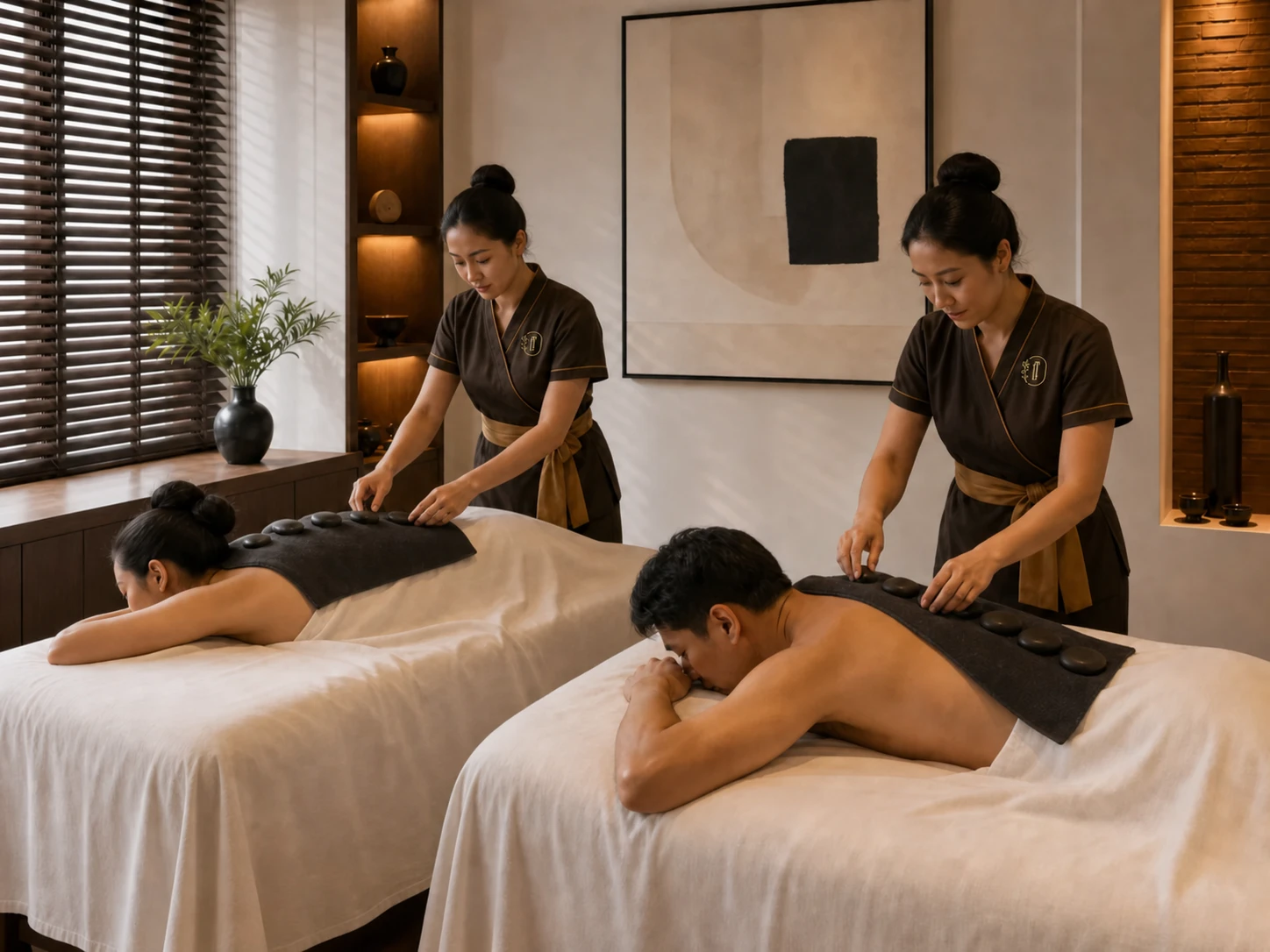
Identify the legal provider, instructor names, relevant qualifications, location, professional scope and contact route.
Check whether testimonials are genuine and whether paid, gifted or insider relationships are disclosed. The United States FTC’s review rule addresses fake or deceptive reviews and undisclosed relationships; the same transparency questions help international readers assess credibility.
A large following, polished set or luxury parcel does not replace professional scope.
Accessible Media Is Part of the Retreat, Not an Extra
W3C guidance recommends planning accessibility before recording, including captions, transcripts, description of important visual information and a player that supports access needs.
For live sessions, confirm captioning, keyboard access, readable chat, recording availability and an alternative way to ask questions.
Provide materials in advance so participants can understand equipment, ingredients and movements without racing a video.
The Participant Still Needs a Real Physical Space
A virtual retreat happens in a room with real floors, furniture, sound, heat, pets, children, work and other interruptions.
Check ventilation, trip hazards, privacy, drinking water, stable support and the space required for movement. Avoid candles, hot water or slippery products when the participant cannot supervise them safely.
Offer a seated, lower-intensity or observation-only option rather than assuming every participant can follow the demonstrated movement.
Movement Instruction Needs Boundaries
The WHO guidelines on physical activity and sedentary behaviour support movement and reducing sedentary time across adult life, but a general guideline does not establish that every online class suits every participant.
State the intended level, required positions, possible adaptations and reasons to stop. The instructor cannot always see pain, dizziness, balance or equipment problems through a small video window.
People with a relevant condition, recent procedure, pregnancy or uncertainty should follow appropriate professional advice before participating.
Treat Home Kits Like Products, Not Props
If the retreat ships oil, tea, masks, bath products or herbal items, list the exact contents, ingredients, intended use, allergens, storage, expiry and disposal.
Do not encourage participants to ingest, inhale, heat or apply an unfamiliar substance only because it appears in a guided video.
Provide an equipment-free alternative and a clear process for damaged, late or substituted items.
Community Requires Moderation and Privacy
A group can create structure and shared attention, but it can also expose names, homes, health information or personal stories.
Explain whether cameras are optional, sessions are recorded, chat is retained, screenshots are allowed and participant lists are visible.
Set moderation rules, a private reporting route and a way to join without disclosing more than the programme needs.
Read the Price, Renewal and Cancellation Path
The FTC’s dark-pattern report describes practices such as hidden terms, difficult cancellation and designs that push users to disclose data.
Before payment, capture the currency, total price, taxes, shipping, replay period, renewal, cancellation, refund and technical requirements.
A retreat should not require a participant to navigate a maze of promotional pages to leave a subscription.
Virtual Does Not Automatically Mean Sustainable
Removing flights or hotel nights may reduce some impacts, but a virtual programme still uses devices, networks, storage, shipping and sometimes single-use kits.
Compare the actual scenario rather than making a blanket green claim. Ask whether recordings are retained indefinitely, materials are necessary and packaging can be reduced.
Environmental value should be measured against a defined alternative, not inferred from the presence of a screen.
A Practical Hybrid Retreat Plan for Bangkok
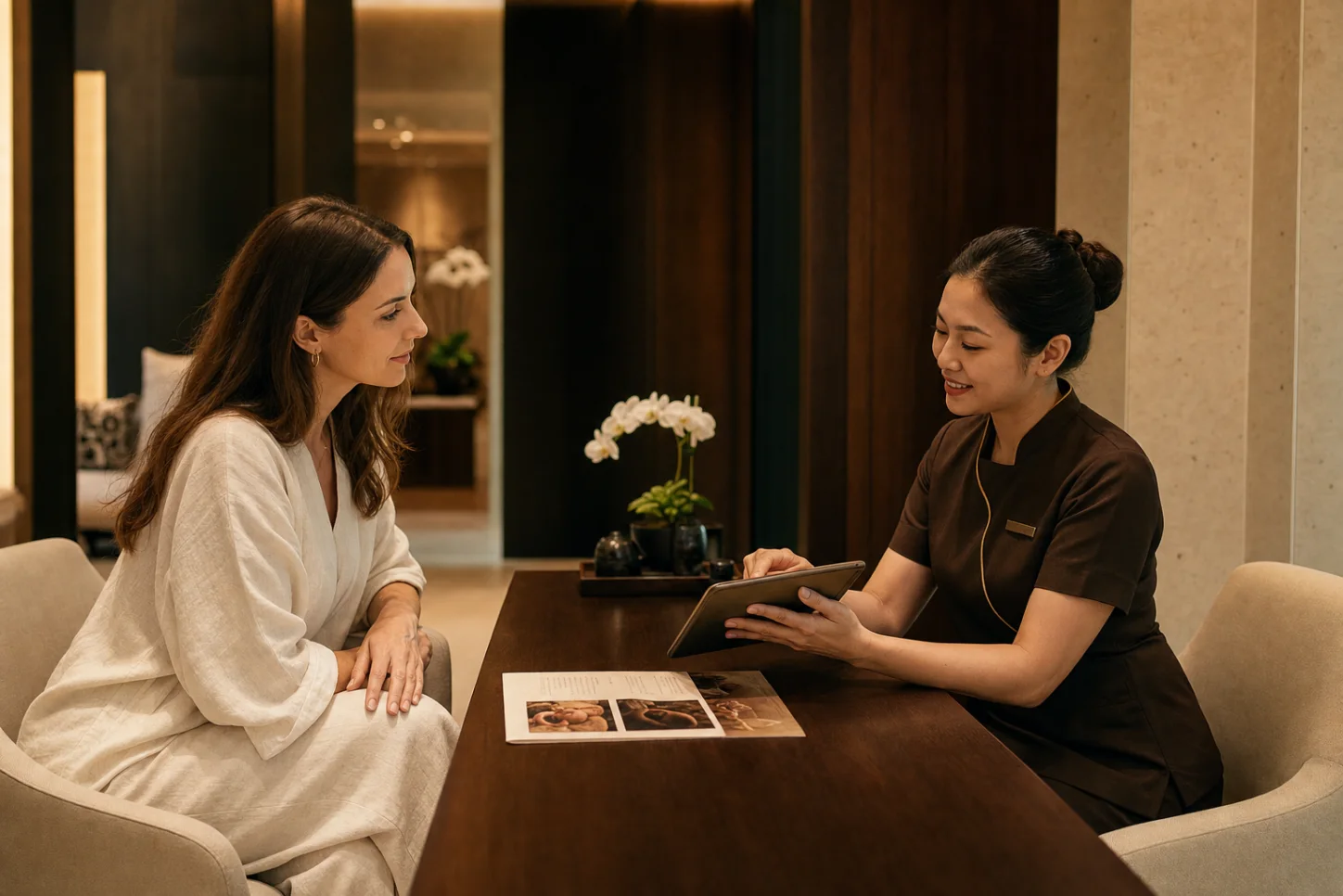
A hybrid format can use digital tools for preparation and reflection while reserving place-dependent services for the spa.
-
01
Set the intention online
Choose rest, movement, shared time or a specific spa journey as the primary goal.
-
02
Review the current menu
Confirm treatment, branch, duration, price and inclusions from the current source.
-
03
Prepare access and timing
Plan Bangkok travel, dietary or product questions and any accessibility needs.
-
04
Complete the consultation in person
Confirm comfort, pressure, sensitivities and areas to avoid with the therapist.
-
05
Keep the physical experience physical
Pause notifications and allow the room, treatment and human service to hold attention.
-
06
Use digital follow-up selectively
Retain only the notes, recordings or reminders that support a real next step.
What a Virtual Retreat Cannot Replicate
A screen cannot reproduce professional touch, live palpation, prepared water facilities, room hygiene, product application by a therapist or immediate physical adaptation.
It also cannot guarantee escape from home responsibilities or equal access to devices, bandwidth and private space.
Name these differences openly. The virtual format can still be useful without being described as equivalent.
Claims Removed from the Previous Version
The former article said virtual retreats made wellness accessible across socioeconomic levels, replicated a sensory spa experience, created supportive community and reduced environmental impact.
It also suggested home facial massage, breathing and movement could be integrated broadly without discussing product, movement or health boundaries.
This reconstruction replaces automatic accessibility, equivalence and sustainability claims with conditions that organisers and participants can verify.
Choose the Format That Fits the Experience
Use a virtual retreat when remote teaching, structure or reflection is the real value. Use an in-person spa when the value depends on facilities, products, touch and direct adaptation.
A hybrid programme can connect the two without pretending they are identical.
The most credible organiser explains the scope, access, evidence, privacy, price and limits before asking the participant to disconnect.
“A screen can organise a retreat and teach a practice; it should not pretend to reproduce the parts that require place, touch or direct professional care.”
Loft Thai Editorial Team
Continue your research
REFERENCES
Sources & further reading
- ISO: Wellness Spa Service Requirements, ISO 17679:2016
- W3C: Making Audio and Video Media Accessible
- WHO: Guidelines on Physical Activity and Sedentary Behaviour
- US FTC: Consumer Reviews and Testimonials Rule, Questions and Answers
- US FTC: Bringing Dark Patterns to Light
- NIST: Getting Started With the Privacy Framework
- Loft Thai: Signature Spa Journeys
PRACTICAL GUIDANCE
Frequently Asked Questions
What is the difference between a virtual and hybrid retreat?
A virtual retreat is delivered online through live or recorded sessions. A hybrid retreat combines digital preparation or follow-up with an in-person programme.
Can a virtual retreat replace a spa treatment?
It can provide instruction and structured time, but it cannot reproduce professional touch, facilities, product application or immediate in-person adaptation.
How do I check whether an online retreat is credible?
Verify the legal provider, instructor qualifications, programme scope, claims, reviews, commercial relationships, access features, price, cancellation and privacy terms.
What accessibility features should a virtual retreat include?
Look for captions, transcripts, visual description, keyboard access, readable chat, advance materials, movement alternatives and a human support route.
Is a virtual retreat always more environmentally friendly?
No. It may avoid some travel, but devices, data, shipping, packaging and storage also matter. Compare the actual programme with a defined alternative.
CONTINUE READING
Related stories

Unlocking Ultimate Relaxation Digitally
Digital Keys to Ultimate Relaxation Finding moments of peace and tranquility in today's hectic environment is more crucial for sustaining one's mental and physical health. The digital world has created new opportunities for obtaining relaxation practices and…
Read the guide
Blissful Half-Day Retreat Recharge at Loft Thai Spa
Indulge in the epitome of relaxation and rejuvenation with our Thai Spa Retreat at Loft Thai Spa. A blend of traditional Thai elements and modern art décor creates an ambiance that transcends into tranquility. It's not just a spa day; it's a journey towards…
Read the guide
The Holistic Approach to Radiance in Luxury Spa Retreats
In the pursuit of well-being, luxury spa retreats stand out as sanctuaries of rejuvenation where the concept of radiance is redefined. Far beyond conventional spa treatments, these retreats embrace a holistic approach that nurtures the mind, body, and spirit.…
Read the guide
How to Choose the Right Spa Treatment for You at Loft Thai Spa
Selecting the perfect spa treatment can make all the difference in your relaxation and wellness experience. At Loft Thai Spa, we offer a diverse range of therapies designed to meet various needs and preferences. Here’s a guide to help you choose the right…
Read the guide