
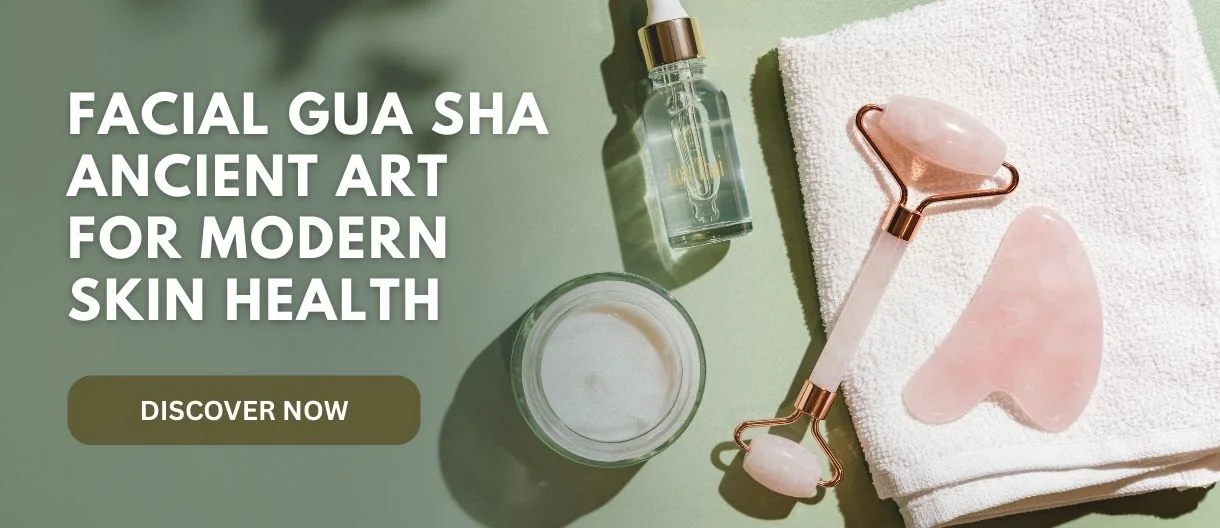
Gua Sha literally “scraping sand” in Mandarin (刮痧) has existed for well over a millennium in East Asian medicine, where it was originally practiced on the body to dispel pathogenic “wind,” encourage circulation, and relieve stagnation. While full-body Gua Sha is still used in Traditional Chinese Medicine clinics, the twenty-first-century wellness renaissance has witnessed a subtler, more cosmetically focused evolution: facial Gua Sha.
In this refined version, therapists glide smooth, carefully beveled stones across the contours of the face in rhythmic, deliberate strokes designed to coax lymph fluid toward the cervical nodes, enhance micro-circulation through superficial capillary beds, and unwind the fibrous fascia that anchors expression lines. The technique pairs perfectly with contemporary ideals of “skinimalism” because it requires minimal consumables—chiefly a botanical oil and a single stone—yet delivers a sensory ritual, visible lift, and profound relaxation.
Bangkok’s Loft Thai Spa was among the early adopters in Southeast Asia who recognized that the ancient scraping art could complement their results-driven facials, pairing traditional Thai massage lineage with the gua sha philosophy of “moving qi and xue” (vital energy and blood). Their therapists underwent dedicated cross-training with TCM practitioners to master every angle, wrist position, and directional nuance. Today, Loft Thai’s signature Facial Gua Sha Ritual is booked weeks in advance by clients who swear it restores definition to puffy cheeks after long-haul flights, sharpens jawlines softened by digital-age forward-head posture, and leaves the complexion luminous without relying on aggressive chemical actives. Whether one seeks professional mastery or wishes to cultivate a daily at-home routine, understanding the underpinning anatomy, tool science, stroke choreography, and lymphatic physiology is essential.
Anatomy of the Lymphatic Landscape
Before tracing a single stroke across the cheek, it is vital to know the terrain through which lymph flows. Lymph is an ultrafiltrate of blood plasma that seeps from capillaries to bathe cells in nutrients. Roughly ten percent of that interstitial fluid fails to re-enter veins directly; instead, it is collected by blind-ended lymphatic capillaries whose endothelial walls flap open under pressure like one-way valves. The fluid, now called lymph, meanders through an ever-larger plexus of vessels, passing through bean-shaped lymph nodes rich in macrophages, B cells, and T cells. These nodes filter antigens and debris, mount immune responses, and ultimately empty the cleansed fluid into the venous angles beneath the clavicles.
Facial tissue contains a dense network of superficial lymphatics that lie mere micrometers beneath the dermis, especially around the orbital ridge, infra-orbital region, parotid fascia, and along the mandible. Gravity, lack of skeletal muscle contraction in the face, sleep posture, and inflammatory mediators can all slow lymph flow, leading to transient edema and the dull, sallow look many people notice upon waking. Manual Lymphatic Drainage (MLD)—a gentle rhythmic pumping popularized by Emil and Estrid Vodder in 1930s Europe—has long targeted these channels. Facial Gua Sha taps the same target but adds shear forces that also mobilize stagnant blood within the micro-vasculature and loosen myofascial adhesions formed by habitual expressions.
Medical literature underscores the systemic value of lymph movement. Efficient lymph flow supports tissue detoxification, lipid transport from the intestines, and immune surveillance. When stagnation persists—seen clinically in lymphedema—patients experience swelling, fibrosis, and heightened infection risk. Though healthy individuals rarely face such extremes, even mild stagnation can blunt tissue oxygenation and metabolic waste clearance, thereby dulling complexion and accelerating inflammatory aging cascades.
Toolcraft: Stones, Metals, and Ergonomic Innovation
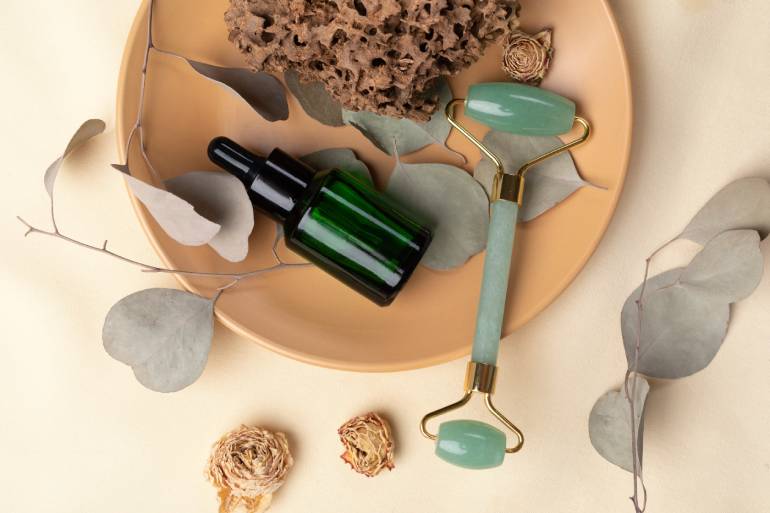
A traditionalist might insist on hand-carved green jade (nephrite) sourced from northern Myanmar or Xiuyan Mountain, prized for its emblematic “cooling” nature and historical prestige in Chinese culture. Yet the modern marketplace now offers an arrayof facial Gua Sha tools, each material conferring subtle tactile and hygienic advantages. Rose quartz, symbolizing unconditional love in gemology, imparts a silky glide and retains chill longer than jade. Bian stone—composed of microcrystalline dolerite laced with over thirty trace minerals—may emit measurable infra-red waves, though independent dermatologic studies remain limited. Surgical-grade stainless steel has gained favor among professional estheticians because it is non-porous, dishwasher-safe, and naturally weighted, facilitating consistent pressure without muscular strain.
Whatever the medium, a proper facial board must display fully rounded edges, a tapered comb side for scalp and brow work, a V-notch or concave wing tailored to cradle the jaw, and a broader curve to embrace the cheek. Loft Thai Spa commissions bespoke tools machined to an exact 7.5 cm length and 4 cm width, a dimension Goldilocks-approved for navigating both narrow nasolabial corridors and wide forehead planes. The surface undergoes 8,000-grit diamond sanding and ultrasonic polishing, producing a mirror finish that neither micro-tears the epidermis nor harbors bacteria.
Purchasing a high-quality tool for home use is an investment akin to acquiring a chef’s knife: a single, well-crafted instrument will outlast dozens of disposable gadgets. Look for stones free of fissures, uniformly thick enough to distribute pressure, and sold in protective sleeves that guard against chips. Authentic retailers often provide certificates of mineralogical authenticity and disclaimers about natural color variance. Counterfeits made of glass tinted green are brittle; their edges quickly dull and can scratch skin. Loft Thai’s boutique stocks certified Nephrite Grade A boards and medical-steel variants, each accompanied by a QR-coded tutorial booklet and lifetime edge-refinishing service.
Preparatory Ritual: Cleansing, Slip, and Intent
Facial Gua Sha is not a dry massage. Mechanical drag on bare skin risks friction micro-injuries, erythema, and collagen breakdown. Begin with a thorough, pH-balanced cleanse to remove pollutants that could be driven deeper by strokes. Next, apply a liberal film of slip—traditionally a cold-pressed seed oil such as camellia or squalane. Loft Thai formulates its own Jasmine Rice-Bran Elixir infused with Thai butterfly pea antioxidants, chosen for their low comedogenicity and blue-violet anthocyanins that quench free radicals. The oil should remain surface-visible throughout the session; if your board starts squeaking or skipping, re-oil.
Beyond the physical, many practitioners integrate a moment of mindfulness. Experienced therapists synchronize breath with stroke cadence, believing that parasympathetic dominance enhances circulatory shunting from core to skin. Clients at Loft Thai sip warm pandan-lemongrass tea laced with chrysanthemum to encourage mild diuresis, priming lymphatic receptivity.
Stroke Choreography: Mapping Every Movement
Facial Gua Sha strokes adhere to two cardinal principles: always work from the midline out toward terminus nodes (pre-auricular, sub-auricular, and supraclavicular basins) and maintain a shallow twenty-to-thirty-degree tool angle so that the stone lies almost flush, distributing pressure across a broad surface.
Begin at the neck because lymph must have a clear exit route. With the concave side hugging the tracheal contour, glide downward from beneath the jaw to the clavicle, ten sweeps per side. Do not skip this step; clearing distal channels prevents bottlenecks when fluid descends from the face.
Next, cradle the chin inside the V-notch. With feather-lithe pressure—imagine the weight of a credit card—sweep along the mandible toward the earlobe. A slight wiggle at the terminus helps empty fluid into the parotid node. Repeat five to seven passes, gradually increasing drag to moderate but never bruising intensity.
Shift to the cheeks. Using the broad edge, plant the board near the nasolabial crease and glide beneath the cheekbone, arcing toward the hairline. This path traces the malar lymphatic plexus and sculpts the zygomatic arch by disengaging subcutaneous fat pads from tethered fascia. Again, end each stroke with a micro-jiggle over the hinge of the jaw where superficial parotid nodes cluster.
For the delicate infra-orbital region, employ the curved tip. Anchor the free hand above the brow to stabilize tissue, then sweep from the tear trough outward, skimming the orbital rim. Excessive pressure risks breaking fragile capillaries; let the stone’s inherent glide suffice. This maneuver visibly depuffs morning eye bags by mobilizing periocular lymph pooled overnight.
The brow lift involves stroking from the glabella beneath the brow tail to the temporal scalp. Therapists often combine this with a subtle upward flick at the terminal point that neurologically cues the frontalis muscle to relax, easing a furrowed forehead.
Finally, address the forehead by dividing it into three vertical columns. Starting at the brow line, sweep upward toward the hairline. This direction differs from earlier outward strokes because lymph on the forehead drains superiorly toward loose aponeurotic tissue and the posterior auricular chain. Upward glides counteract downward gravitational ptosis to impart an eyebrow-raising effect many clients liken to mild Botox.
A complete professional sequence involves two to three sets of each region with interwoven neck clearing intervals. In skilled hands the tempo resembles Tai Chi—slow, deliberate, continuous—lasting twenty to thirty minutes.
Pressure Nuance and Sensory Feedback
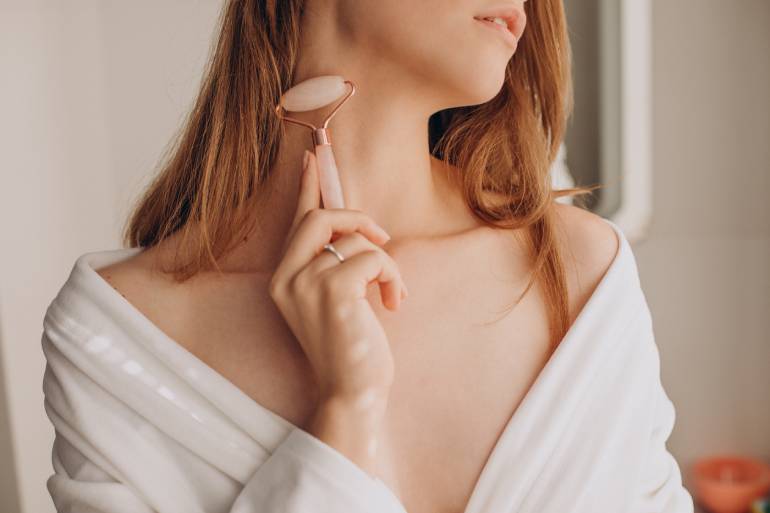
Contrary to body Gua Sha, which can leave ecchymotic “sha” marks resembling fervid brushstrokes, facial Gua Sha seeks only the faintest pink flush or no coloration at all. Excessive force not only risks telangiectasia but can trigger the fibroblast wound cascade, producing collagen bundles that stiffen rather than soften fascia.
Practitioners calibrate pressure by tuning into auditory and kinaesthetic cues: a whisper-soft scraping sound indicates optimal shear; a coarse rasp signals insufficient oil or too steep an angle; squeaks reflect dehydration of tissue. At Loft Thai, therapists are taught a “two-finger test”—if they can lightly finger-drum on the stone without hearing a tap, angle and pressure are correct because the board is hugging flesh intimately.
Clients often report sensations of warmth, sinus drainage, or metallic taste as trigeminal nerve endings stimulate saliva flow. Temporary erythema should fade within twenty minutes; persistent redness or petechiae denote overly aggressive technique.
Physiologic Benefits: Beyond Aesthetics
The visible payoff—defined cheekbones and a lit-from-within glow—typically headlines magazine editorials, yet the physiologic gains are equally compelling. Scholarly investigations employing Doppler ultrasound show that light pressure scraping raises cutaneous microcirculation up to four-fold for at least fifteen minutes post-treatment, saturating skin with oxygen and nutrients essential for fibroblast vitality. Simultaneously, mechanical stress upregulates heme-oxygenase-1 and anti-oxidant response elements, providing a hormetic stimulus that fortifies skin against oxidative assault.
From a lymphologic perspective, strokes acting as external pumps accelerate the removal of interstitial proteins, cytokines, and metabolic by-products. Lower protein concentration in the dermis translates into reduced colloid osmotic pressure and thus diminished water retention—goodbye morning puffiness.
Neurologically, slow, caressing movement along the C-tactile afferent fibers triggers parasympathetic dominance, attenuating cortisol and sympathetic vasoconstriction. This relaxation reflex partly explains why many clients note improved sleep quality after an evening session.
When practiced regularly—three to five times weekly for self-care, or biweekly in a clinical setting—facial Gua Sha can support a softer perioral line profile, faster post-acne mark clearance thanks to enhanced blood flow, and improved jaw function as temporalis and masseter tension eases.
At-Home Ritual versus Professional Mastery
With social platforms flooded by sped-up tutorials, it is tempting to grab a bargain-bin stone and replicate moves in the bathroom mirror. While at-home practice can maintain results between spa visits, novices often overlook critical subtleties—directional drainage pathways, pressure modulation, and neck opening sequences. Missteps may perpetuate fluid congestion or foster repetitive-strain microdamage.
Receiving treatment from seasoned therapists at Loft Thai Spa offers several advantages. First, professionals evaluate skin condition, contraindications, and underlying muscular imbalances before selecting oil viscosity and stroke plan. Second, bilateral symmetry is more easily achieved when an external practitioner controls angles unimpeded by mid-stroke mirror adjustments. Third, a therapist’s tactile sensitivity allows them to detect fascial knots—tiny gristly nodules that trap nerve receptors—and melt them with targeted micro-shear, a finesse difficult to execute on oneself.
Moreover, Loft Thai integrates add-ons such as cryo-globes post-scraping to constrict vessels and lock in lifted contours, or LED photobiomodulation to capitalize on increased product penetration after the barrier has been gently shifted. The setting amplifies relaxation with aromatherapy, Thai flute soundscapes, and ergonomic beds that cradle cervical lordosis, encouraging deeper lymph outflow.
That said, spa sessions do not negate personal responsibility. Therapists encourage clients to adopt a condensed home maintenance routine—five minutes each morning—to prolong sculpted effects. They recommend stainless-steel pocket tools paired with a lightweight squalane-centella serum for swift office-friendly touch-ups. Loft Thai’s workshops teach clients how to angle mirrors, support elbows, and time strokes with exhalations, demystifying the art for safe daily practice.
Frequency, Timing, and Contraindications
Like strength training, tissue remodeling obeys the stimulus-recovery cycle. Daily practice at feather weight is acceptable, yet moderate pressure sessions should be spaced to allow neural adaptation and microvascular repair. Most dermatologists and estheticians suggest three or four sessions weekly, each lasting five to ten minutes for self-care or twenty-plus minutes professionally.
Morning applications dispel overnight edema; evening rituals pair seamlessly with double-cleansing routines and can deflate tech-neck tightness accrued by sunset. Avoid performing facial Gua Sha directly after dermal fillers or neuromodulator injections for at least two weeks, lest you perturb placement. Active cystic acne, open wounds, sunburn, rosacea flare-ups, and active herpes labialis constitute red-flag contraindications because scraping can exacerbate inflammation or viral dissemination. Pregnant clients can safely receive facial Gua Sha provided no high-temperature stones or vigorous neck pressure are used, though they should consult their obstetric care provider.
Integrative Add-Ons and Synergy Therapies
Facial Gua Sha’s lymph-boosting aptitude synergizes with modalities that either stimulate circulation or calm post-treatment hyperemia. After a scraping sequence, Loft Thai therapists often layer a sheet mask saturated with Thai lotus stem peptides; heightened perfusion accelerates ingredient uptake. Radio-frequency skin tightening scheduled forty-eight hours later benefits from reduced interstitial fluid, which can otherwise dissipate thermal energy. On the more analog side, inhaled Thai holy basil steam primes sinuses for easier drainage, while Tibetan singing-bowl acoustics in the treatment room entrain alpha brain waves, deepening relaxation.
For clients seeking maximal sculpting, therapists alternate weeks of facial Gua Sha with intraoral buccal massage that releases deep masseter adhesions unreachable from the surface. Those with melasma combine gentle scraping with tranexamic acid mesotherapy, leveraging improved micro-circulation to disperse pigment clusters.
Alternative Tools and Techniques
Not everyone resonates with a stone’s glide. Facial rollers fashioned of the same minerals provide a similar albeit milder effect; their cylindrical design limits shear stress but excels at chilling tissue when pre-stored in a refrigerator. Manual lymphatic drainage performed solely with fingertips uses gentle proximal “station clearing” pumps followed by distal feather strokes, ideal for ultra-sensitive skin or post-operative clients.
Microcurrent devices deliver sub-sensory electrical impulses that mimic the face’s bioelectric signature, toning muscles via Golgi tendon reflexes rather than fascia scraping. The two can complement each other: microcurrent on even days, Gua Sha on odd, preventing tissue adaptation plateau.
Cupping facial massage employs small silicone domes that create negative pressure to lift tissue, stimulating lymph return via differential pressure rather than compressive drag. When alternated judiciously with scraping, cupping fosters three-dimensional mobilization—compression, expansion, and shear—encouraging comprehensive fascial hydration.
The Economics and Ethics of Tool Purchase
While entry-level stones retail online for little more than a cup of coffee, ethically sourced, hand-polished boards command higher prices. Loft Thai partners with family-run workshops in Lampang, Thailand, and Fujian, China, where artisans are paid living wages, and waste stone slurry is repurposed into road aggregate, minimizing environmental impact. Consumers voting with their wallets for such transparency ensure sustainable mining practices and the survival of intangible heritage craftsmanship.
Buying a genuine board also secures safety. Inferior dyes can leach heavy metals under the emulsifying influence of facial oils; unknown resins used to glue re-constituted stone shards may provoke dermatitis. A professionally vetted tool carries material assay reports and often lifetime warranties. Considering the skin is the body’s largest organ and a primary immunologic barrier, cost-cutting on a tool repeatedly scraping its surface is false economy.

Clinical Evidence and Research Directions
Rigorous randomized trials on facial Gua Sha remain sparse compared to pharmaceutical interventions, yet preliminary studies show promise. A 2023 split-face trial at Shanghai Jiaotong University measured trans-epidermal water loss (TEWL) and visco-elastic modulus after twelve sessions; subjects exhibited a statistically significant nineteen-percent reduction in TEWL and fifteen-percent improvement in dermal elasticity on the treated side. Another 2024 South Korean fMRI study found that gentle scraping activated the anterior insula and default mode network, supporting claims of psychologic relaxation.
Dermatologists call for larger sample sizes and standardized pressure metrics, yet anecdotal support can be persuasive: beauty editors chronicle immediate camera-ready glow, and physical therapists report decreased temporomandibular joint pain when scraping extends to the masseter insertion.
Current research frontiers include coupling Gua Sha with wearables that track micro-perfusion in real time and designing AI-driven apps that map ideal stroke vectors for individual facial topography. Loft Thai collaborates with Bangkok’s Chulalongkorn Faculty of Allied Health to assess lymphoscintigraphy patterns pre- and post-scraping in volunteers, seeking quantifiable proof of drainage efficiency.
An Intentional Practice for Skin and Self
Facial Gua Sha is more than an aesthetic quick-fix; it is a meditative dialogue between hand, stone, and the sophisticated lymph-vascular orchestra beneath the skin. Each stroke whispers to the immune system, the fascia, and the nervous network, nudging them toward flow and balance. Whether enjoyed as a monthly indulgence on a teak treatment bed at Loft Thai Spa, or practiced in the quiet of dawn beside a bathroom mirror, the technique exemplifies how ancient intuition aligns with modern anatomy.
Owning a sculpted stone is a tangible reminder to slow down, apply oil with intention, and trace familiar lines on the face with newfound reverence. In a world of hyper-stimulating devices and quick-fire injectables, the simplicity of a polished board invites a return to tactile self-care and holistic health. Consistency, gentleness, and anatomical respect transform a few daily minutes into long-term dividends: clearer lymph, brighter skin, and a deeper sense of connection to one’s own physiology.
Loft Thai Spa extends an open invitation to curious newcomers and seasoned wellness lovers alike: come feel the feather-light scrape, watch morning puffiness melt as lymph flows, and carry the ritual home in your palm, a smooth tool glinting softly—an emblem of centuries-old wisdom adapted for the modern glow seeker.
UPDATED LOFT THAI GUIDE
Additional guidance and current information
The following editorial update expands on the original Loft Thai article with practical context, current treatment guidance and further reading.
Traditional Body Gua Sha and Modern Facial Gua Sha Are Not Identical
Traditional Gua Sha uses a smooth-edged instrument to press-stroke the body within East Asian medicine. Some forms intentionally produce petechiae or ecchymosis.
The modern facial beauty version normally uses much lighter pressure, more slip and shorter strokes. It should not create the marked redness or bruising associated with stronger body practice.
Calling every facial sequence ancient hides an important distinction: the contemporary cosmetic routine is an adaptation.
The Tool’s Shape Matters More Than Its Mythology
Tools are sold in stone, ceramic, stainless steel and synthetic materials. No credible evidence shows that jade, rose quartz or a named crystal produces a unique biological effect through mineral energy.
A useful tool has a smooth, intact edge, a comfortable grip and a surface that can be cleaned according to its material.
Discard chipped or cracked tools; a decorative stone is not worth abrading the face.
Angle, Pressure and Slip Define the Experience
The tool is usually held almost flat to the skin rather than pressed in with a sharp edge. A compatible oil, balm or serum reduces friction.
Strokes should feel controlled and comfortable. Repeated dry scraping, force over bone or pressure that causes pain, pinpoint bleeding or persistent redness is not a better treatment.
The neck, jaw, cheek and forehead require different hand positions; speed should never replace control.
Facial Gua Sha Is Not Medical Lymphatic Drainage
Light facial movements may temporarily redistribute superficial fluid and change how puffiness appears, but that is not the same as treating lymphoedema.
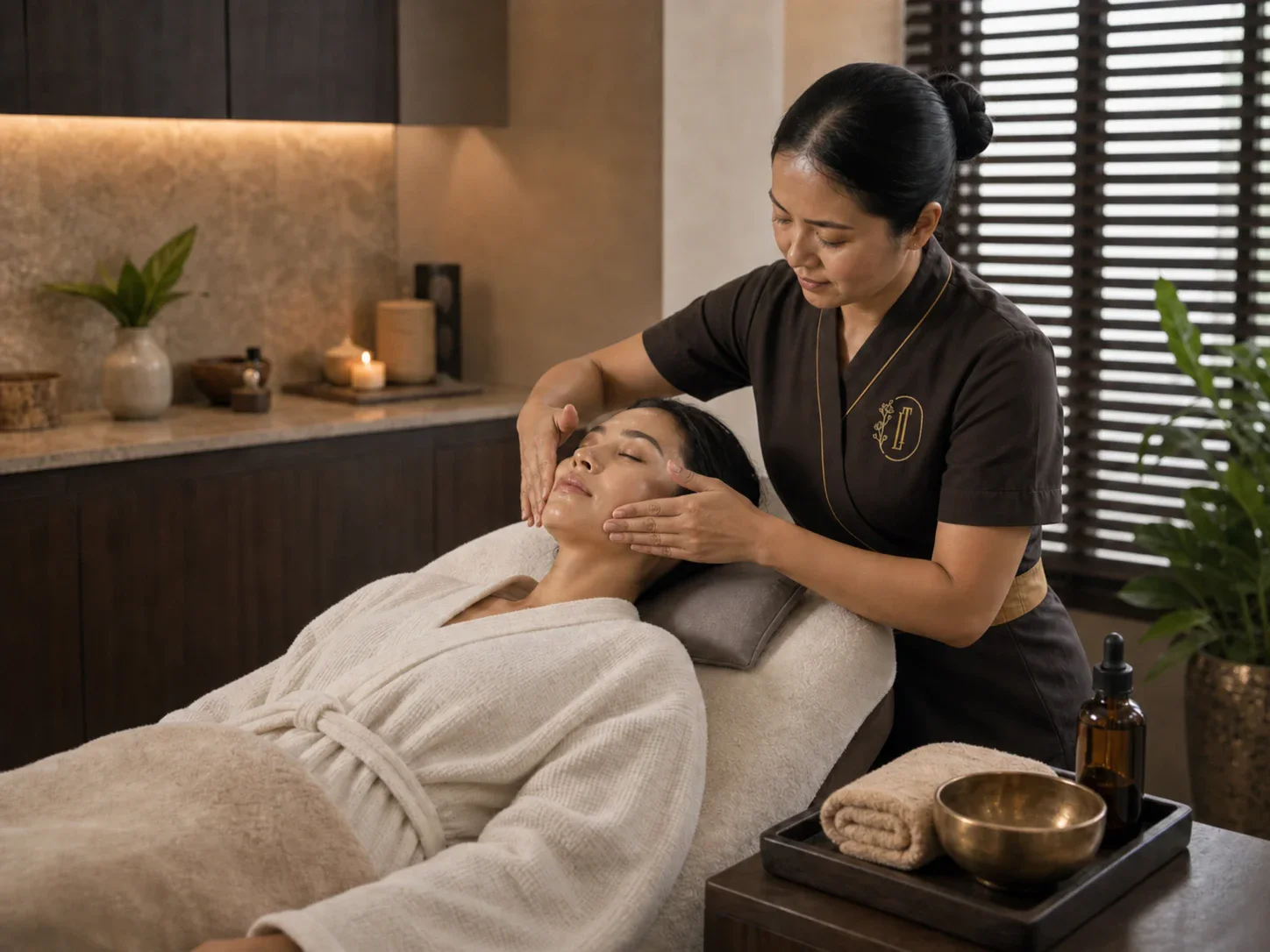
Medical manual lymphatic drainage is a specialist intervention within a wider clinical plan. A beauty tool does not diagnose swelling or clear an obstruction.
Sudden, one-sided or unexplained facial swelling needs appropriate assessment rather than repeated scraping.
What the 2025 Randomised Study Found
A 2025 trial randomised 34 women aged 20 to 50 to either facial Gua Sha or a facial roller. Participants used the assigned method for 10 minutes, five times a week, over eight weeks.
Both groups showed changes in measured facial distances. The Gua Sha group showed changes in measured muscle-tone parameters, while the roller group showed changes in skin-elasticity measures.
This is relevant early research because the protocol and outcomes were stated clearly. It does not prove that one professional session permanently reshapes every face.
Why the Evidence Still Needs Restraint
The study was small, involved women within a limited age range and compared two active routines rather than including a no-treatment control.
A 2025 systematic review of conservative mechanical facial-rejuvenation techniques found the wider evidence limited and noted that claims of substantial long-term structural change remain unproven.
Neither a millimetre measurement in a controlled protocol nor an influencer photograph justifies a guaranteed jawline, collagen increase or facelift claim.
Realistic Outcomes Are Usually Modest
A well-performed session may feel calming, reduce a sense of facial tension and create a temporary change in surface flush or puffiness.
Oil or balm can also make skin look more luminous immediately, while lighting, head position and camera distance alter photographs.
Bone structure, fat distribution, skin laxity and medical conditions do not permanently change because a stone follows an upward arrow.
When to Avoid Facial Gua Sha
Do not work over broken skin, active infection, open lesions, sunburn or a painful inflammatory flare. Easily irritated rosacea may worsen with friction, heat or pressure.
Recent injectables, threads, laser, chemical peel, microneedling, facial surgery or dental surgery can change what is safe and when. Follow the treating clinician’s instructions.
People with a bleeding disorder, anticoagulant medication, unexplained bruising or medically significant swelling should obtain appropriate advice before forceful tool massage.
- Broken or infected skin
- Active painful acne cysts or inflamed lesions
- Sunburn or significant irritation
- Rosacea flare with heat, burning or stinging
- Recent facial or dental procedure without clearance
- Unexplained swelling, bruising or neurological symptoms
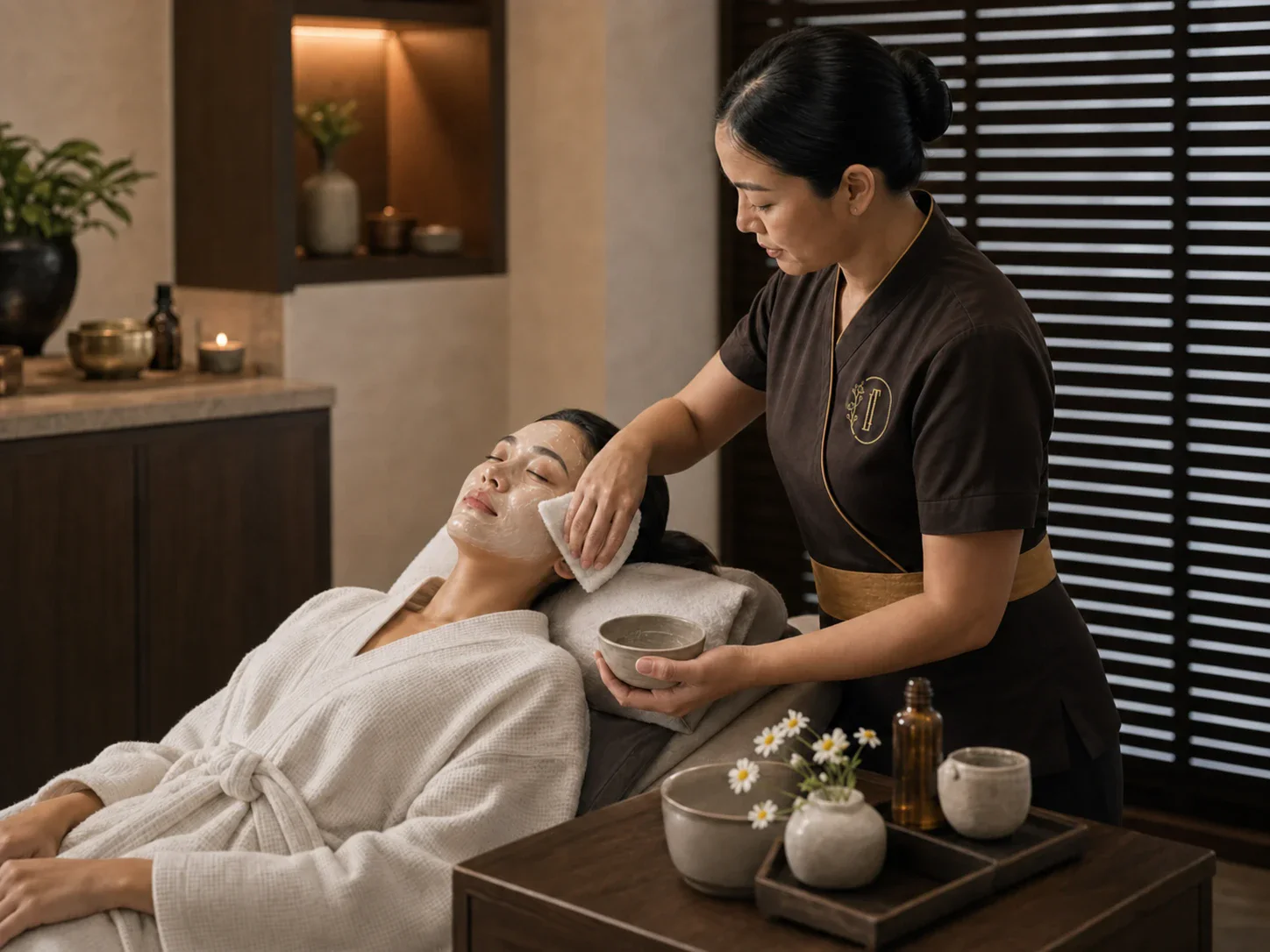
A Reusable Tool Needs a Hygiene Plan
The professional should clean the tool before and after every guest with a method compatible with the material and local infection-control practice.
Do not share a home tool without effective cleaning. Product residue can remain around curves, grooves and decorative edges.
Body Gua Sha that intentionally produces petechiae has additional blood-exposure concerns and should not be casually equated with a cosmetic facial routine.
A Conservative At-Home Sequence
Begin with clean hands, clean intact skin and a clean tool. Apply enough compatible slip, keep the tool nearly flat and use a few slow strokes rather than chasing redness.
Avoid the eyelids, thyroid area, inflamed lesions and any zone a clinician has asked you not to massage. Stop if the skin burns, stings, becomes painful or remains markedly red.
A short routine performed comfortably is more sensible than a complex map presented as anatomical drainage.
What to Ask Before a Professional Facial
Ask whether the service is a standalone Gua Sha treatment, one step within a facial or simply a facial massage using another tool.
The Loft Thai menu reviewed on 28 July 2026 does not list a standalone Facial Gua Sha treatment. Guests should confirm the current menu instead of relying on the legacy article’s service claim.
A professional consultation should cover skin sensitivity, products, procedures, pressure and the realistic purpose of the step.
Use the Tool Gently and the Claims Even More Gently
Facial Gua Sha can be an elegant, low-tech massage ritual when the tool glides smoothly and the skin is suitable.
Early research is interesting but still too limited for permanent lift, detoxification, collagen-rebuilding or medical-drainage promises.
Good technique protects the face; good editorial judgement protects the guest.
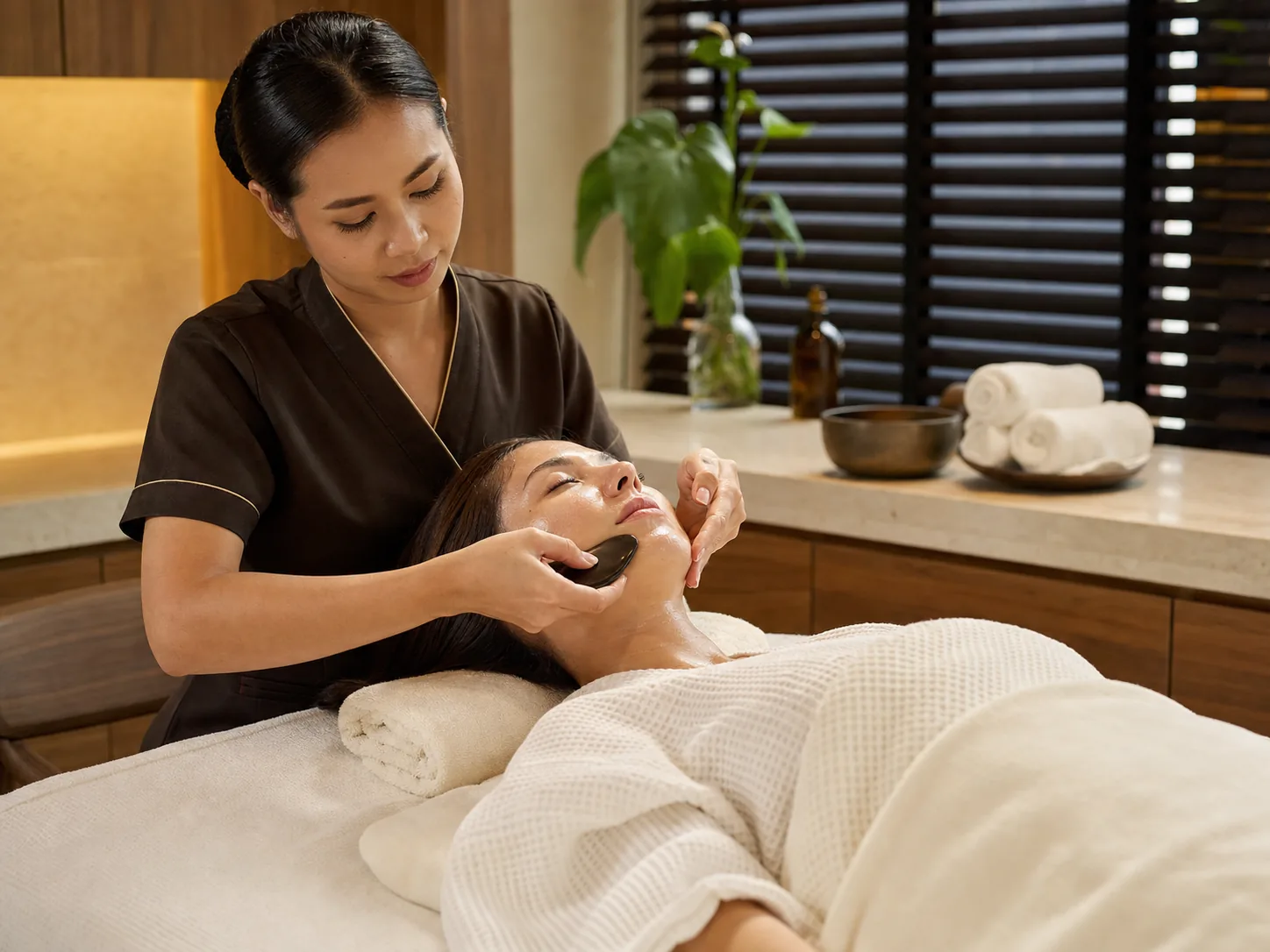
“A smooth stone is a massage tool, not a material guarantee of lift, detoxification or medical drainage.”
Loft Thai Editorial Team
Continue your research
REFERENCES
Sources & further reading
- PubMed: 2025 randomised trial comparing facial Gua Sha and roller massage
- PMC: 2025 systematic review of conservative mechanical facial rejuvenation
- PubMed: Dermatology commentary on Gua Sha, jade rollers and facial massage
- PubMed: Safety protocols for body Gua Sha and blood-exposure risk
- American Academy of Dermatology: Rosacea overview and irritation
PRACTICAL GUIDANCE
Frequently Asked Questions
Does facial Gua Sha permanently lift the face?
Current evidence does not establish a permanent facelift. Any visible change may be modest, temporary and influenced by fluid, product, posture and lighting.
Should facial Gua Sha leave bruises?
A gentle cosmetic facial routine should not aim for bruising, pinpoint bleeding or persistent painful redness.
Is jade better than stainless steel or ceramic?
No reliable evidence shows that one decorative material creates a unique biological result. Smoothness, intact edges, control and cleanability matter.
Can I use Gua Sha after Botox, fillers, laser or microneedling?
Follow the treating clinician’s timing and aftercare instructions. Pressure and friction may be inappropriate after recent procedures.
Does Loft Thai currently list a standalone Facial Gua Sha?
The current menu reviewed on 28 July 2026 did not list one. Ask the booking team whether any current facial includes a tool-assisted step.
CONTINUE READING
Related stories

What is Lymphatic Drainage Massage?
In the world of wellness and therapeutic treatments, few techniques are as misunderstood yet profoundly beneficial as lymphatic drainage massage. Often mentioned in medical circles and beauty clinics, this specialized form of massage is more than a relaxing…
Read the guide
Why Bangkok Is Dominating the Global Wellness Travel Scene in 2025
Bangkok, 2025 – In the heart of Thailand’s bustling capital, a wellness tourism boom is underway. Travelers from around the globe are flocking to Bangkok not just for its temples and street food, but to rejuvenate in the city’s luxurious spas and wellness…
Read the guide
Award-Winning Facials - The Complete Guide to Skincare Excellence in 2025
Bangkok in 2025 is not only the capital of wellness but also the international stage where spa culture blends art, science, and luxury. At the heart of this evolution stands Loft Thai Spa, a name already synonymous with excellence in massage and holistic…
Read the guide
Facial for Men in Bangkok: Why More Men Are Booking Luxury Facials in 2026
Bangkok has always been a city where people take care of themselves. But in 2026, something has clearly shifted: men are no longer treating skincare as “optional” or “only for special occasions.” More men are booking facials regularly—before work trips, after…
Read the guide