
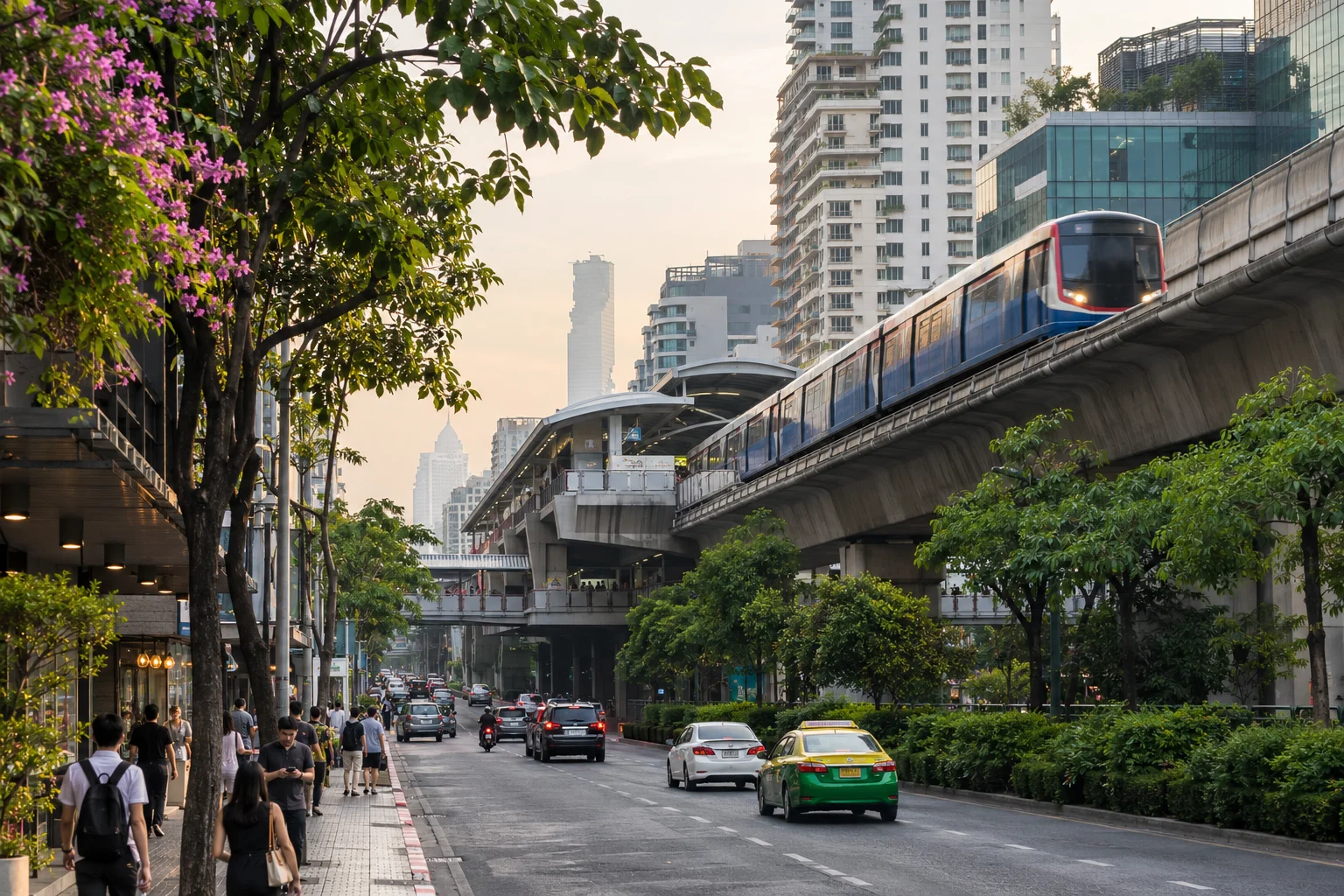
After a day on Sukhumvit, your skin can feel oily and tight at the same time. A walk to the BTS, a layer of sunscreen, a humid lunch outdoors and an afternoon in air conditioning can all leave their mark. On days when Bangkok’s air quality worsens, fine particles add another kind of exposure. It’s tempting to come home and scrub everything away. A gentler cleanse is usually the better starting point.
In November 2026, The Nation Thailand reported that Bangkok authorities expected PM2.5 levels to rise across parts of the city on 19–20 November and advised residents to check local air quality. Conditions change by neighbourhood and by day. For current readings, use the Pollution Control Department’s Air4Thai dashboard.
Here’s what the research says about pollution and skin, how to look after your face at home, and when a professional facial at Loft Thai can be a worthwhile addition.
What does PM2.5 do to your skin?
PM2.5 refers to airborne particles roughly 2.5 micrometres across or smaller. They are too small to see individually. Traffic emissions, smoke from burning and other sources contribute to Bangkok’s pollution, and weather can make the particles linger near ground level. The World Health Organization identifies fine particulate matter as a health concern well beyond skincare. Checking local advisories and reducing exposure when advised matters more than any product you put on your face.
For skin, researchers are particularly interested in the skin barrier: the outer layer that helps retain water and shields the tissue underneath. In a Korean study of 25 healthy volunteers, researchers recorded more water escaping through the skin and more facial redness during a higher-pollution period than during a lower-pollution period. The study was small, but its measurements give a useful explanation for why more cleansing or more exfoliation may be the wrong response when skin already feels uncomfortable.
Research in Thailand gives the question a local angle. A 2024 study comparing 33 women in Bangkok with 33 in Songkhla found differences in the microorganisms on their skin. Certain differences were associated with greater water loss or lower hydration in the outermost layer. Over the longer term, a study of 400 older women in Germany linked higher particle exposure with more pigment spots; the association with wrinkles was weaker.
These studies don’t tell us what caused a particular breakout or patch of redness. Sun, heat, skincare products and other factors can all affect how your face looks and feels. They also don’t show that a facial reverses pollution-related changes. What they do suggest is that skin deserves a little more care, not a heavier scrub.
How to cleanse your face after a day in Bangkok
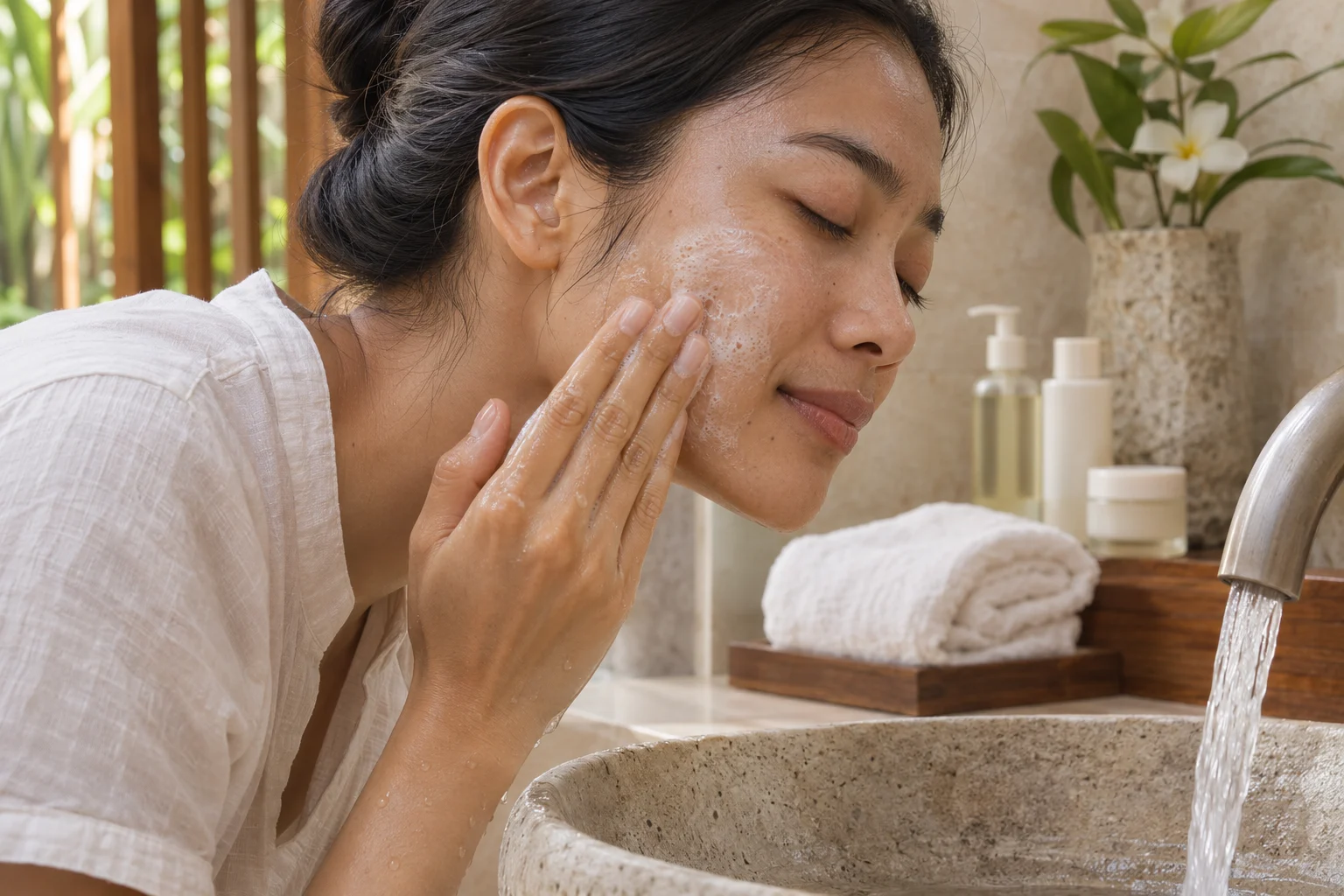
Wash gently at the end of the day. Use a mild, non-abrasive cleanser, lukewarm water and your fingertips. Take time around the hairline and jaw, where sunscreen and makeup can collect, then rinse and pat dry. Skip the cleansing brush or rough washcloth. The American Academy of Dermatology’s face-washing guide advises limiting washing to twice daily and after heavy sweating rather than repeatedly cleansing throughout the day.
Keep moisturiser and sunscreen in the routine. Apply a moisturiser you already tolerate, particularly if your face feels tight after cleansing. In the morning, use a broad-spectrum sunscreen of SPF 30 or higher to protect against UV. Sunscreen still matters on a hazy day, but its job is UV protection, not filtering the air around you. American Academy of Dermatology skincare guidance.
Match the routine to how your skin feels. If it stings when you apply an ordinarily comfortable product, that’s a reason to simplify, not to try a new peel. A high PM2.5 reading doesn’t mean you need an extra round of acids or a stronger scrub. If a rash or irritation persists, ask a dermatologist rather than trying to polish it away.
Is a professional facial worth it after a polluted week?
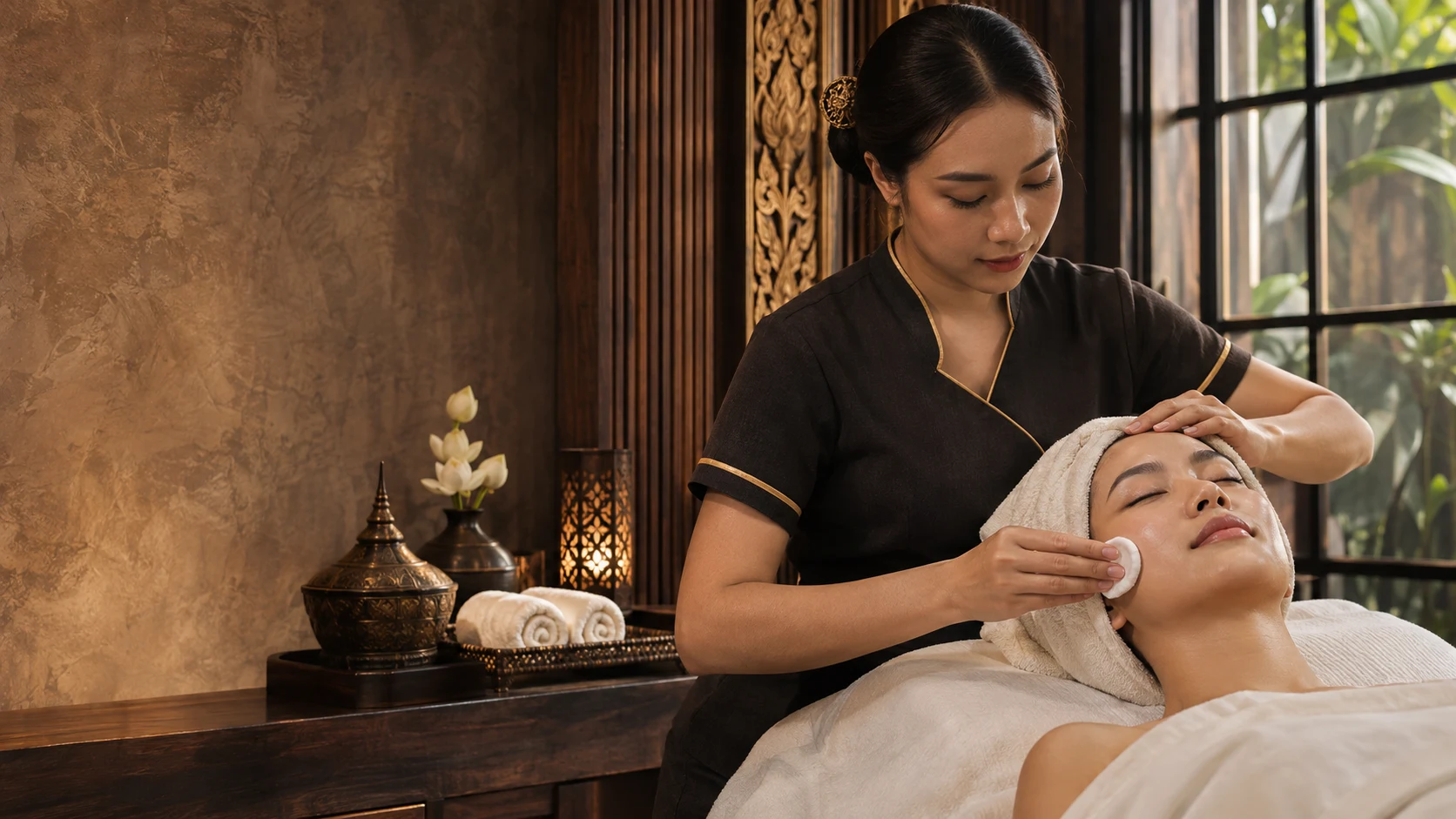
A facial can make sense if you enjoy the experience and want more than a quick wash: time for a consultation, careful surface cleansing and hydrating finishing care. Tell your therapist what you use at home and how your skin has felt over the past few days. That conversation helps you choose whether to focus on comfort, a fresher-looking complexion or a longer facial massage.
The cosmetic benefits are practical: skin may feel softer, more comfortable or more thoroughly cleansed afterwards. Think of a facial as an occasional addition to your routine. It doesn’t remove inhaled particles, prevent future exposure or draw toxins out of your body.
Which Loft Thai facial should you choose?
For straightforward cleansing and maintenance: The Classic Facial by EAU DE SPA is a good first choice if your skin feels comfortable but you’d like a thorough cleanse and an unhurried treatment. The ritual pairs cleansing and exfoliation with facial massage, mask care and hydration. Mention if you’d rather go easy on exfoliation.
For dull-looking skin and a hands-on facial: The Detox Facial by EAU DE SPA adds Gua Sha facial massage, antioxidant skincare and a moisturising finish. Choose it for the cleansing ritual and the slow, manual massage. On our menu, “detox” names the experience; it doesn’t describe a biological detoxification process. If your skin feels sensitive, ask about the suitability of steam and exfoliation before booking.
For a gentler-feeling experience: Ask about the Soothing Signature Facial if comfort is your priority. Share known ingredient sensitivities so the team can discuss the products and pressure with you. If your skin is sunburned, broken or actively inflamed, postpone the appointment. After a recent peel, laser session or other cosmetic procedure, follow your clinician’s guidance on when to resume facials.
For a longer Aesop ritual: The Intensive Facial by Aesop combines deep cleansing with Aesop skincare, facial massage and a mask. It’s a good choice when you’d like to spend more time on the experience and your skin is tolerating its normal routine.
Should you book a facial every time the air quality drops?
No. Build your routine around what your skin tolerates and what you enjoy, not a daily pollution reading. If you book before a dinner, wedding or photo session, leave some time for any temporary warmth or redness to settle, especially if it’s your first time with that treatment. Afterwards, keep things familiar: gentle cleansing, moisturiser and daytime sun protection rather than a new scrub or peel.
If you’re choosing your first facial in Bangkok, start with one question: Do I want a straightforward cleanse, a slower massage-led ritual, or something centred on comfort? Explore the full Loft Thai facial menu, then find your preferred Sukhumvit location. Check the treatment’s booking options for the branch and time that suit your day.
Visuals are AI-generated editorial illustrations.
Continue your research
REFERENCES
Sources & further reading
- The Nation Thailand reported
- Pollution Control Department’s Air4Thai dashboard
- World Health Organization
- Korean study of 25 healthy volunteers
- 2024 study comparing 33 women in Bangkok with 33 in Songkhla
- a study of 400 older women in Germany
- American Academy of Dermatology’s face-washing guide
- American Academy of Dermatology skincare guidance
CONTINUE READING
Related stories
Facial Prices in Bangkok: 60, 90 or 120 Minutes at Loft Thai?
Comparing facial prices in Bangkok is easier when the treatment and the appointment length are considered together. Loft Thai's published menu starts at 1,800 THB for a 60-minute Classic Facial Treatment, but not every facial comes in every duration. This…
Read the guide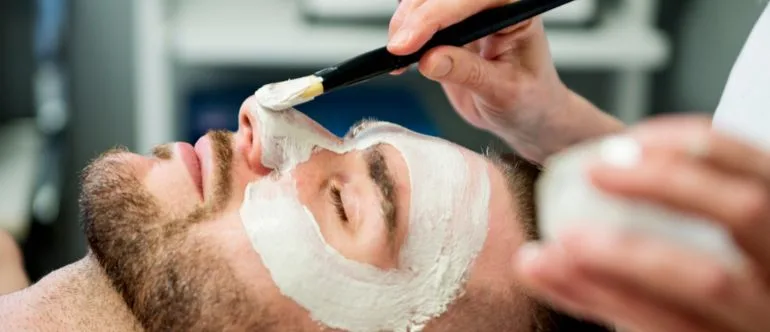
Facial for Men in Bangkok: Deep Cleansing, Hydration & Skin Clarity
A facial for men in Bangkok is not just a luxury treatment. For many men living in or visiting the city, it is a practical way to keep the skin clean, fresh, comfortable, and balanced.
Read the guide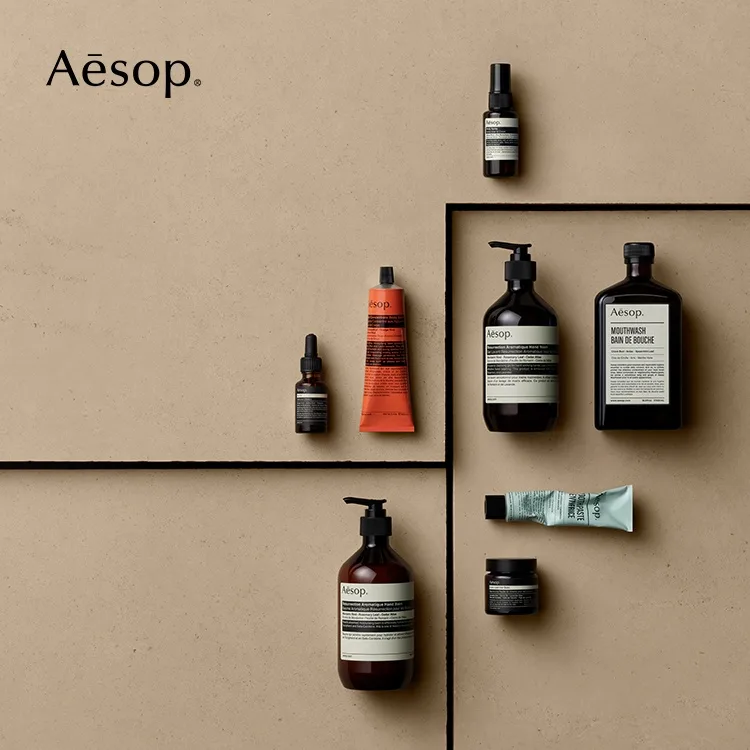
Aesop Facial in Bangkok: A Luxury Ritual for Radiant Skin
Finding the right facial in Bangkok is not only about improving the appearance of your skin. It is also about choosing an experience that feels refined, calming, and truly restorative.
Read the guide
Best Facial in Bangkok: A Complete Guide to Choosing the Right Facial
Finding the best facial in Bangkok is not only about choosing the most luxurious spa or the most advanced-looking treatment. The right facial should match your skin type, your lifestyle, your concerns, and even the climate you live in.
Read the guide