
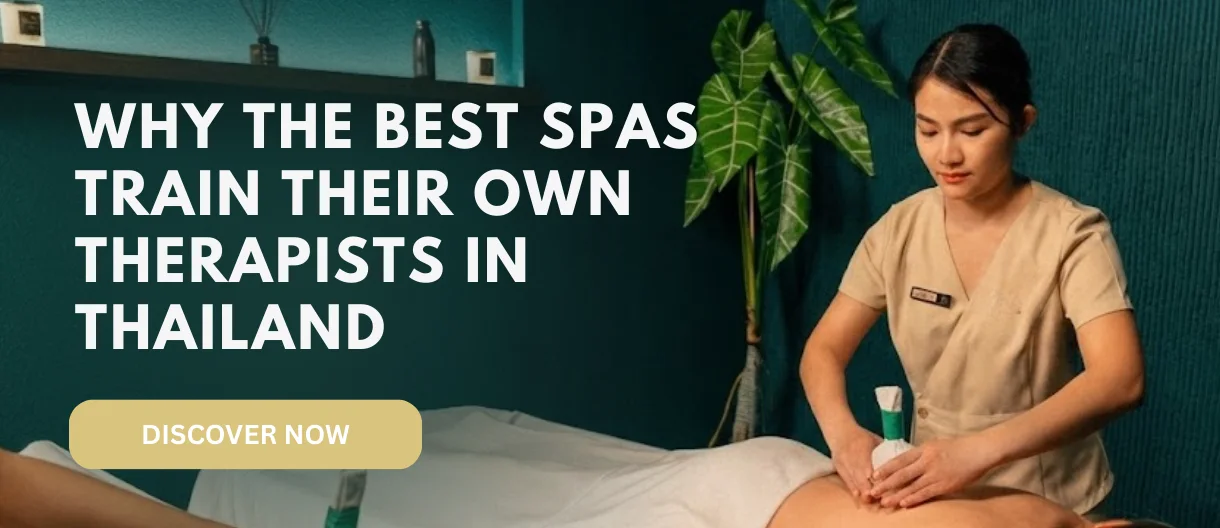
In Bangkok, you can find massage everywhere. Some places are surprisingly good. Others look beautiful online but feel average in real life. The difference is rarely the candle scent or the marble reception. The difference is usually something you don’t see as a guest: training.
The best spas don’t rely on luck. They don’t hope you’ll “get the right therapist.” They build a system where quality is repeatable—because in premium wellness, the real luxury is consistency. That’s why top spas train their own therapists.
Luxury isn’t decoration. It’s reliability.
When people talk about a “luxury spa,” they often picture a stylish space, soft music, premium oils, and a calm atmosphere. Those details matter, but they’re not the main reason guests come back.
Guests return because they can trust the experience: the pressure is controlled, the rhythm feels professional, the therapist understands tension patterns, the room is prepared correctly, and the session ends in a way that feels complete—not rushed. That level of reliability is almost impossible to achieve if a spa depends only on hiring and “natural talent.” It is achieved through training.
In other words, the best spas don’t sell a treatment. They sell a standard.
Hiring “experienced therapists” still creates inconsistency
Many spas assume the solution is hiring experienced staff. Experience helps, but it’s not enough to create a consistent brand.
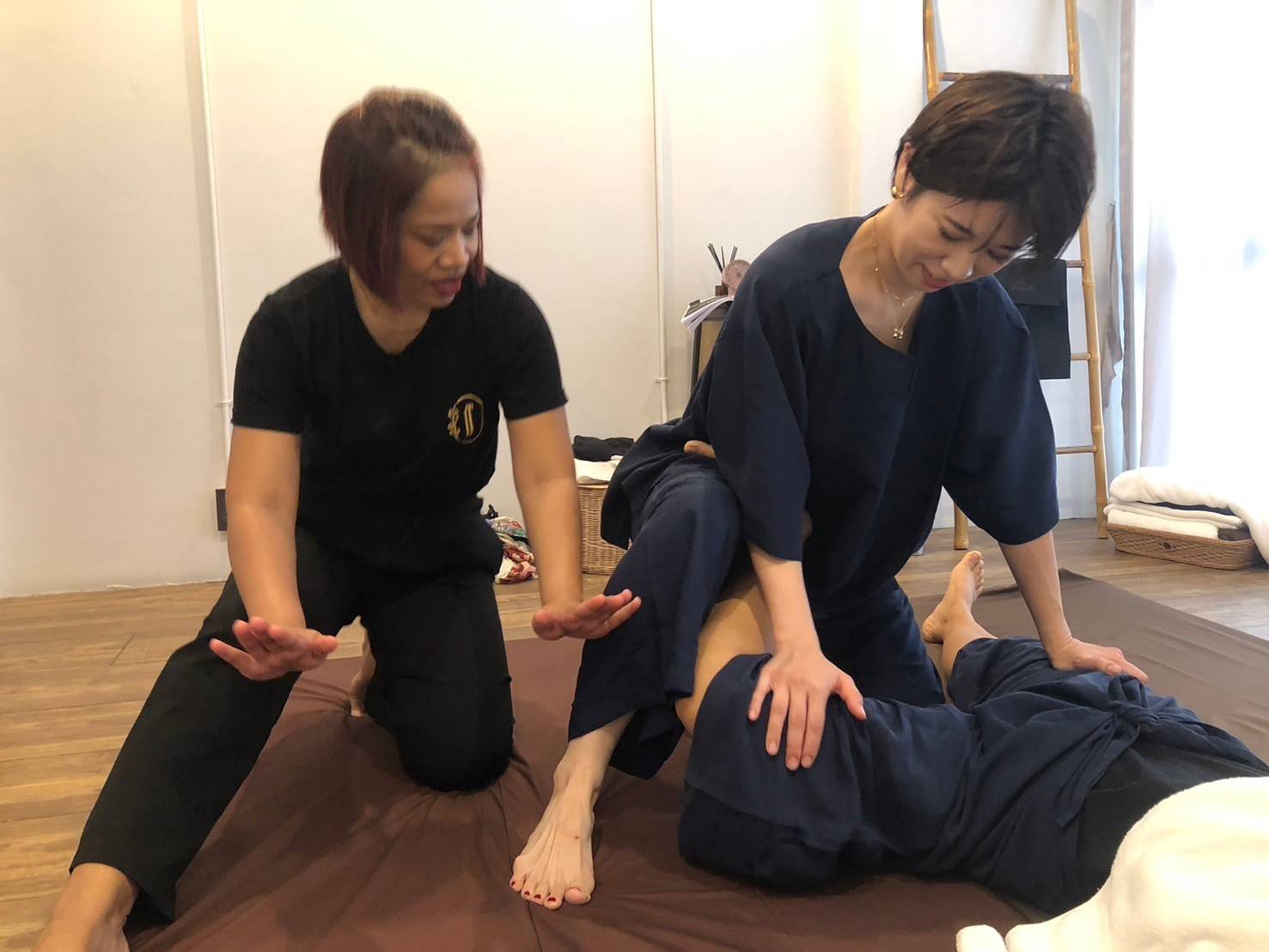
Therapists come from different backgrounds: hotel spas, local shops, clinics, different massage schools, and different regional styles. Even highly skilled therapists can have very different approaches—pressure habits, pacing, stretching preferences, how they handle the neck, how they end a session, whether they consult the guest properly, and so on.
If a spa does not train internally, each therapist becomes their own “version” of the spa. That makes the guest experience unpredictable. One day it feels amazing. Next time it feels completely different.
Luxury brands cannot afford that. Training exists to remove the luck factor.
Training creates a signature style guests can feel
The best spas have a recognizable “touch.” The rhythm, transitions, pacing, and pressure control feel intentional. Even if you can’t describe it, you feel it.
That signature isn’t created by decoration. It’s created by a shared massage language that therapists learn and practice together. When a spa trains internally, it can shape that identity: what a “proper Thai massage” feels like in their brand, what level of pressure is considered professional, how the therapist should communicate, how the session should flow.
That’s how a spa becomes memorable—not because the treatment name is unique, but because the experience feels distinct.
Training protects safety, especially for deep work
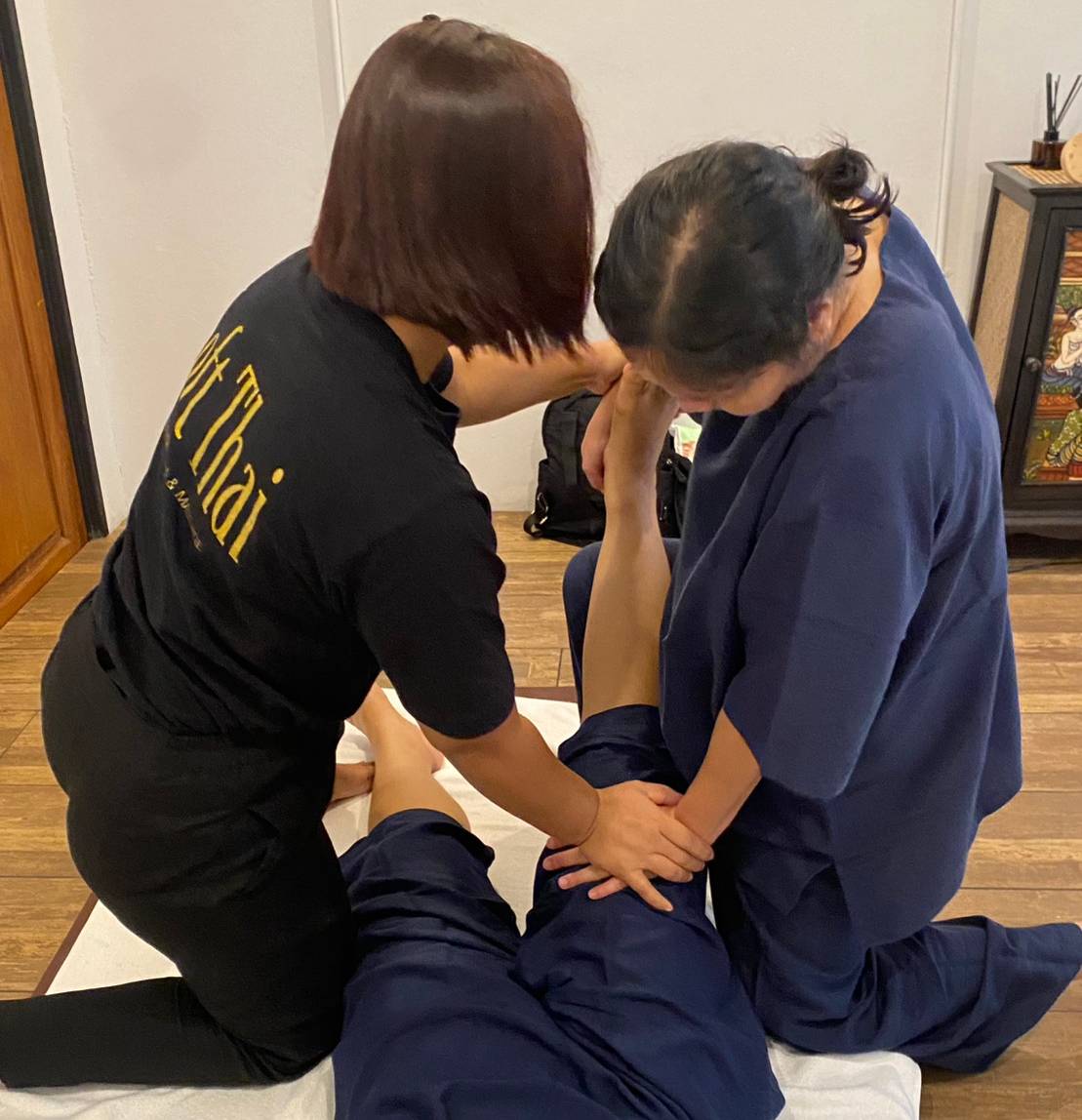
The more advanced the treatment, the more important training becomes. Office syndrome work, deep tissue, sports recovery, and Thai stretching can produce powerful results, but only when performed with proper technique.
Internal training teaches therapists how to apply strong pressure without brute force, how to work with angles and leverage, how to avoid risky movements, and how to adjust to each guest’s body type and sensitivity. It also trains therapists to recognize when a guest’s discomfort is “release discomfort” and when it’s a signal to change approach.
This is one of the most important reasons the best spas invest in training: it protects the guest, the therapist, and the brand.
Training allows a spa to grow without losing quality
Many spas are excellent when they are small. The founder is present, the team is tight, and quality control happens naturally. But as soon as a brand expands—multiple branches, higher guest volume, more new hires—consistency becomes hard.
This is where training becomes a true business advantage. A spa that trains internally can scale while keeping the experience stable. New therapists are not just “hired.” They are integrated into a standard. Treatments don’t become inconsistent across locations. Guests don’t feel that one branch is great while another is “not the same.”
For premium spa brands, training is how growth stays safe.
Training also improves the guest experience in subtle ways
Most guests don’t think about training, but they feel it through small details: the way the therapist checks your needs quickly and professionally, the way transitions are smooth, the pacing that feels calm but still effective, the room setup that feels precise, and the finish that leaves you grounded instead of abruptly ending.
These details are what separate “nice” from “high-end.”
Luxury is often the absence of friction. Training is how that friction disappears.
Why this matters at Loft Thai Spa and Nuad Thai School
At Loft Thai Spa, massage is treated as a craft and a culture, not a commodity. That’s why having a professional training center like Nuad Thai School matters. It allows the brand to develop therapists under one standard, continuously improve techniques, and protect consistency across experiences.
In Bangkok, where guests have endless options, internal training is one of the strongest signals that a spa takes quality seriously—because it’s a commitment that costs time, investment, and discipline.
The takeaway
The best spas train their own therapists because training turns a service into a standard. It turns “I hope this is good” into “I know this will be good.” It creates signature quality, protects safety, and ensures consistency—even as the spa grows.
That’s what makes a spa truly premium in 2026: not the menu, not the marketing, but the mastery behind the scenes.
UPDATED LOFT THAI GUIDE
Additional guidance and current information
The following editorial update expands on the original Loft Thai article with practical context, current treatment guidance and further reading.
In-House Training Begins After the Legal Baseline
Internal training should never be presented as a substitute for the qualifications required to work lawfully. Thailand’s government guidance says that a person registering as a service provider in a health establishment must be at least eighteen and hold a health-service diploma or certificate accredited by the Department of Health Service Support, alongside other eligibility conditions.
That registration establishes a professional baseline. A spa’s own programme then teaches how the venue expects services to be delivered: consultation language, treatment sequence, pressure calibration, hygiene, room preparation, product handling, draping, incident reporting and escalation.
The distinction matters. A short brand orientation cannot manufacture a therapist from zero, while an experienced therapist still needs time to learn a new employer’s protocols. Credible spas respect both recognised qualification and supervised integration.
Experience Alone Does Not Create One Standard
Two capable therapists can arrive from different schools, hotel spas or independent practices with equally valuable but very different habits. One may begin Thai massage at the feet; another may ground through the shoulders. Their preferred pace, pressure language, towel handling and finishing sequence may not match.
Variation is not automatically a problem. Guests are different, and therapeutic judgement cannot be reduced to choreography. The risk appears when important details vary without reason: whether contraindications are asked about, how a hot compress is tested, when the neck is worked, how consent is obtained or whether an adverse response is documented.
In-house training creates a common foundation so that personal style operates inside safe, recognisable boundaries. The guest can still receive an individual treatment without feeling that quality depends on luck.
A Signature Style Is a Shared Language
A spa’s signature is easier to feel than to describe. It may appear in the unhurried opening contact, the rhythm between techniques, the way pressure develops, the transition from one body area to another and the closing moment before the guest sits up.
Training turns those details into a language the team can discuss. Instructors can name the purpose of a movement, demonstrate body position and specify what must remain constant. Therapists then practise until the sequence feels natural enough to adapt without losing its identity.
This is different from asking every therapist to imitate one personality. A useful standard defines intention and safety while allowing adjustments for the guest’s size, mobility, sensitivity, health information and treatment goal.
- A clear purpose for each phase of the treatment
- Transitions that protect privacy and keep the guest comfortable
- Pressure that builds gradually and can be changed quickly
- Shared language for consent, positioning and areas to avoid
- A consistent finish with unhurried recovery and aftercare
From Demonstration to Reliable Treatment
Watching an instructor is only the beginning. Nuad Thai School describes a practice-first method based on demonstration, supervised repetition, direct correction, safety, treatment flow and review. Those stages also form a sensible structure for internal spa development.
The learner first needs to understand what a technique is meant to do and which body mechanics make it sustainable. Repetition then builds coordination. Feedback corrects pressure direction, stance, hand placement and pacing before an unsafe or inefficient habit becomes automatic.
Finally, the therapist must demonstrate the full service with realistic timing, consultation and room standards. Passing one assessment should not end development. Observation, guest feedback and refresher practice keep the standard alive.
-
01
Explain the treatment logic
Define the goal, structure, expected sensations, contraindications and the reason each technique is included.
-
02
Demonstrate at real pace
Show hand placement, body mechanics, draping, pressure progression and transitions rather than isolated movements only.
-
03
Practise with supervision
Repeat on an appropriate model while an instructor corrects angle, rhythm, force, posture and communication.
-
04
Assess the complete service
Evaluate consultation, hygiene, timing, adaptation, guest comfort and aftercare as one connected experience.
-
05
Review in practice
Use observation, documented incidents, guest feedback and scheduled refreshers to identify where retraining is needed.
Good Technique Protects the Therapist Too
Massage is physical work. A therapist who relies on thumb strength or rounded posture may deliver force for a short time but accumulate strain across a long working day. Training should teach stance, weight transfer, table or mat height, use of broader contact surfaces and when to reposition.
Efficient body mechanics are not a shortcut to harder pressure. They allow controlled force with less effort, making it easier to remain precise rather than fatigued. They also help the therapist reduce intensity immediately when the guest asks.
A sustainable standard includes workload, breaks, equipment setup and the right to stop a technique that feels unsafe. Protecting the practitioner supports continuity for guests and reduces the temptation to perform through pain.
Communication Is a Practical Massage Skill
A technically elegant massage can still fail if the therapist does not understand the guest. Training should make consultation concise, respectful and actionable. The goal is not to collect a long medical history; it is to identify preferences, contraindications, recent procedures, current symptoms and reasons to refer.
Therapists also need shared language for pressure. ‘Strong’ can mean firm broad compression to one guest and painful thumb pressure to another. Asking where, how much and for what purpose creates a better plan.
Consent continues during the treatment. The therapist explains changes in position, checks unfamiliar or intimate-adjacent areas and accepts a refusal without debate. Multilingual guests may need simpler wording, demonstration or reception support, but the responsibility to confirm understanding remains.
Safety Training Must Include Decisions, Not Just Rules
A list of contraindications has limited value if staff cannot apply it. Scenario practice helps therapists respond to situations such as sudden dizziness, an undisclosed recent operation, one-sided leg swelling, a guest requesting very strong neck work or skin that reacts after product application.
The correct response may be to reduce pressure, change position, remove a product, stop the session, ask a supervisor or recommend medical assessment. Therapists should know which symptoms fall outside spa care and how to document what happened without diagnosing.
Thailand’s service standards require screening and caution for guests who may be at risk because of age or underlying disease. In-house training converts that broad duty into actions the team can perform consistently.
The Treatment Room Is Part of the Curriculum
Guests experience hygiene through details: fresh linens, clean hands, prepared tools, product containers handled without contamination and equipment cleaned between appointments. These behaviours should be demonstrated, observed and assessed rather than left to assumption.
Government guidance for Thai health establishments addresses clean equipment, first-aid readiness, safe water areas, waste management and clearly displayed services and prices. A premium spa builds operational routines on top of those requirements.
Room preparation also supports calm. When towels, products and tools are placed consistently, the therapist does not need to search mid-session or leave the guest uncovered. Organisation becomes both a service-quality and privacy measure.
Calibration Keeps Multiple Therapists Coherent
A treatment manual cannot tell a team whether its ‘medium’ pressure feels similar across practitioners. Calibration sessions allow therapists to receive the same sequence from one another, compare sensations and discuss where interpretation has drifted.
Senior therapists can observe full services and give focused feedback. Useful notes describe behaviour—pressure increased too quickly, the turn was not explained, the compress temperature was not rechecked—rather than labelling a therapist as simply good or bad.
Calibration also reveals when the treatment design itself needs improvement. If several skilled therapists struggle to complete the service safely within the listed duration, the problem may be the protocol, not the people.
Guest Feedback Is Evidence, but It Needs Context
Reviews can identify patterns: repeated praise for pressure communication, recurring complaints about rushed endings or differences between branches. A single comment should not determine a therapist’s career, yet clusters of similar feedback deserve investigation.
Management should separate preference from process. One guest may dislike strong pressure while another seeks it; that disagreement does not prove a technical failure. Failing to ask, ignoring a request to reduce pressure or leaving service details unclear are process problems.
Training improves when feedback is connected to direct observation, treatment records and supervision. It should not be used to promise medical outcomes or reward therapists for making every guest tolerate a more intense session.
How Nuad Thai School Connects Training to Spa Practice
Nuad Thai School states that it operates within Loft Thai Spa environments and teaches with real treatment rooms, professional equipment and a hands-on method. Its public pages describe supervised repetition, correction, treatment flow, therapist ethics and professional communication.
That connection can support in-house development because instructors and spa managers can discuss the same service language. Students see how technique fits inside consultation, hygiene, timing and hospitality rather than learning isolated movements only.
The school’s marketing claims and course pathways should still be evaluated like any training offer. Prospective students should confirm the exact instructor, syllabus, hours, assessment, certificate and professional recognition that apply to the course they are considering.
What Guests Can Ask Before Booking
A guest cannot inspect an entire training programme from the reception desk, but a professional spa should be able to explain the basics. Ask how therapists are qualified, whether they receive protocol training and how pressure or health concerns are communicated.
For advanced services involving strong stretches, heat, cupping or specialised body areas, ask what additional training and screening apply. The answer should be concrete enough to build confidence without disclosing private staff information.
The most convincing proof appears in the appointment: the therapist listens, the room is prepared, the service matches the description, pressure remains adjustable and the team responds professionally when the plan needs to change.
- Are therapists registered or qualified for the services they provide?
- How does the spa train a new therapist in its own treatment protocols?
- Can the treatment be adapted after consultation?
- Who supports the therapist when a health or safety question arises?
- How are hygiene, heat, tools and stronger techniques checked?
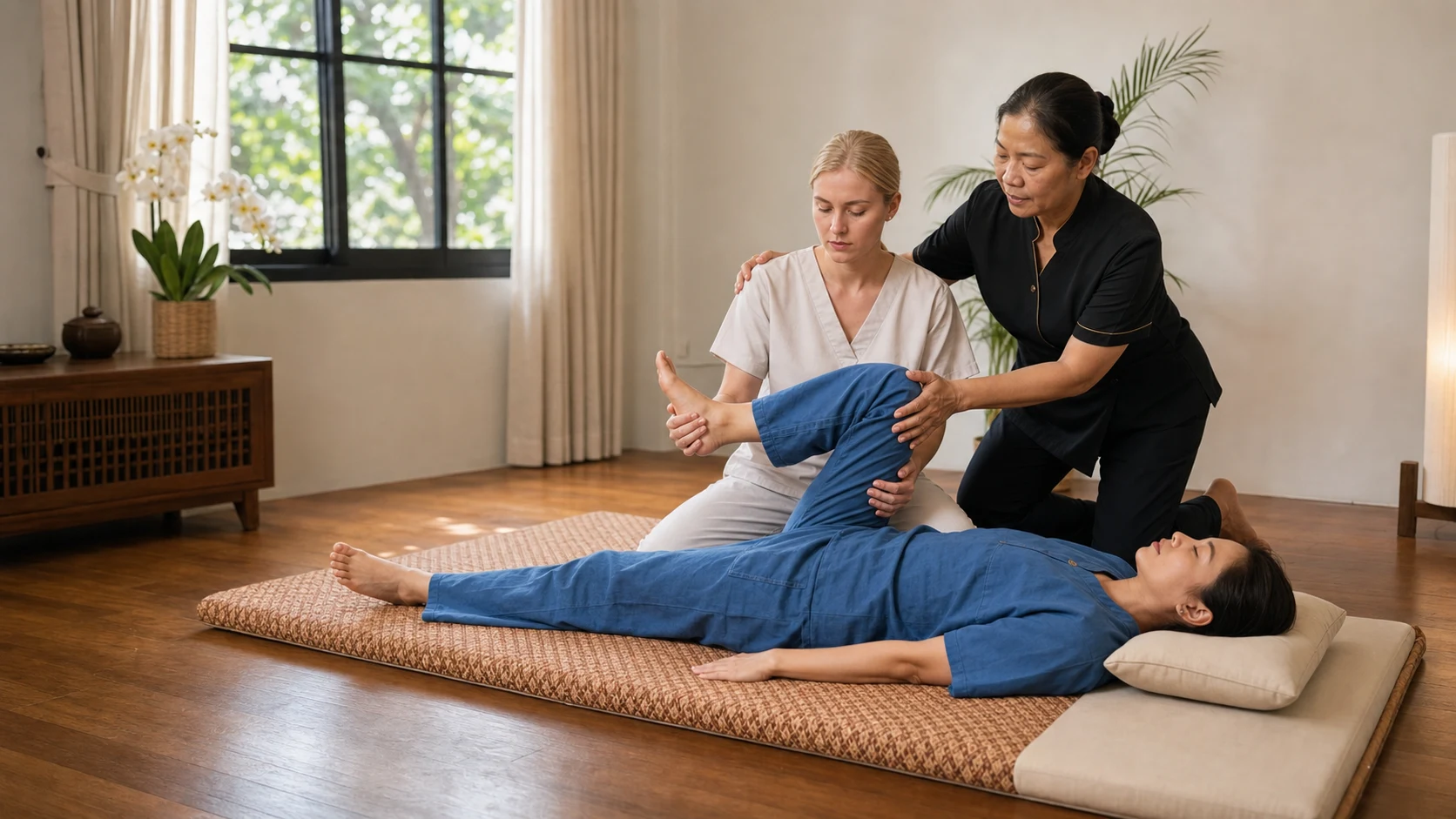
WATCH & LEARN
Inside private hands-on massage training at Nuad Thai School in Bangkok
“A signature treatment is not a script performed identically on every body. It is a shared method for making consistent, explainable and adaptable decisions.”
Loft Thai Editorial Team
Continue your research
REFERENCES
Sources & further reading
- Thailand government: Registration as a service provider in a health establishment
- Thailand government: Safety and service standards for spa and massage establishments
- Nuad Thai School: Practice-first teaching method
- Nuad Thai School: Academy and professional pathways
- UNESCO Intangible Cultural Heritage: Nuad Thai
PRACTICAL GUIDANCE
Frequently Asked Questions
Does in-house training replace a recognised massage qualification?
No. Internal training teaches a spa’s protocols and standards. It should build on the qualifications and registration required for lawful professional practice.
Why can experienced therapists still need brand training?
Experienced therapists may have different sequences, pressure habits and communication styles. Integration training creates a common safety and service foundation without erasing professional judgement.
Should every therapist perform a signature massage identically?
The purpose, safety points and core sequence should be recognisable, but pressure, pacing, positioning and optional techniques should adapt to the individual guest.
How often should therapist training be refreshed?
There is no universal interval for every spa. Refreshers should respond to new services, observed drift, incidents, equipment changes, regulatory updates and recurring guest feedback.
What is a simple sign of good therapist training?
The therapist explains the service clearly, asks relevant questions, adjusts pressure promptly, maintains privacy and knows when to stop or seek support.
CONTINUE READING
Related stories
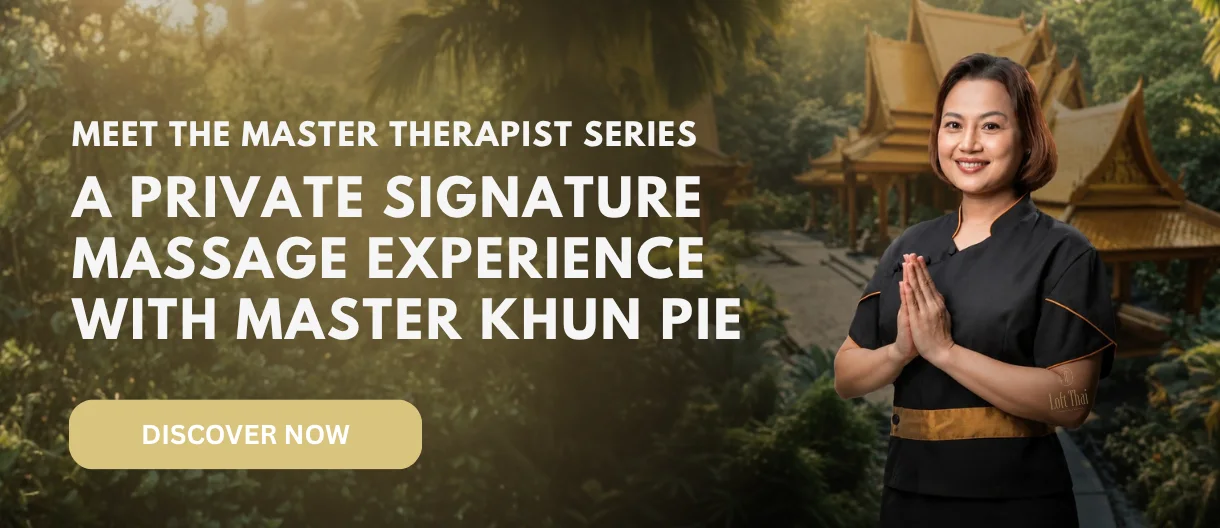
Meet the Master Therapist Series: A Private Signature Massage Experience with Khun Pie
There are massages you book because your body feels tired. There are spa rituals you choose because you want to escape the noise of the city for an hour. And then there are rare experiences that feel more like a meeting with living knowledge — a moment where…
Read the guide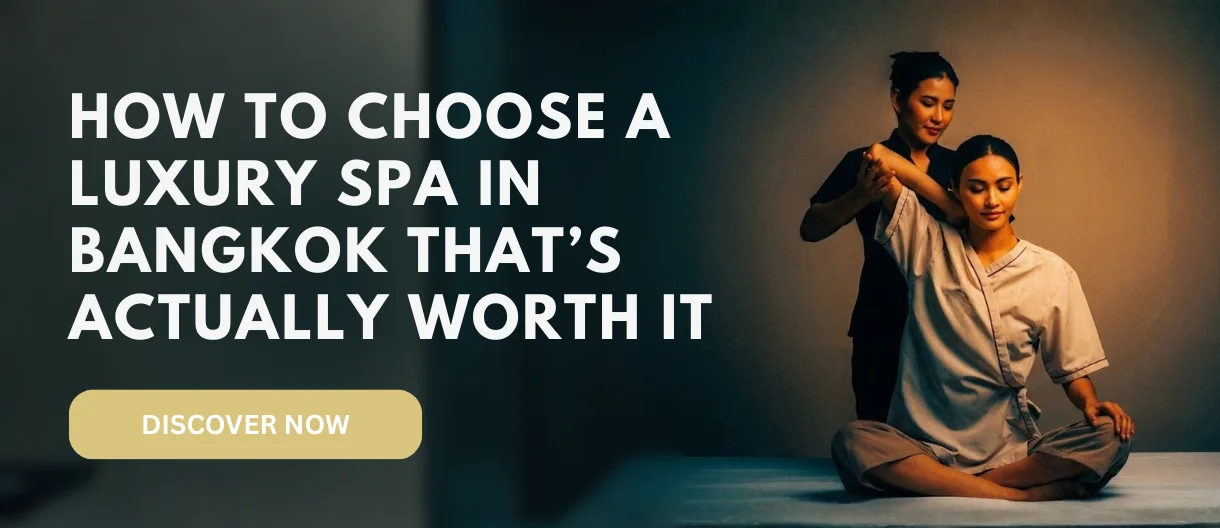
Best Spa in Bangkok (2026 Guide): How to Choose a Luxury Spa That’s Actually Worth It
Bangkok has thousands of massage shops, day spas, hotel spas, and “luxury” venues that look premium in photos but feel rushed in real life. If you’ve ever walked out of a treatment thinking, “That was nice… but was it actually worth it?”—you’re not alone.
Read the guide
The Incomparable Team at Loft Thai Spa: Delivering the Ultimate Spa Experience
In the heart of the city lies a true sanctuary of tranquility and relaxation, a place that offers an escape from the daily bustle: the Loft Thai Spa. This haven of serenity is not only known for its therapeutic treatments and rejuvenating ambiance but also for…
Read the guide