
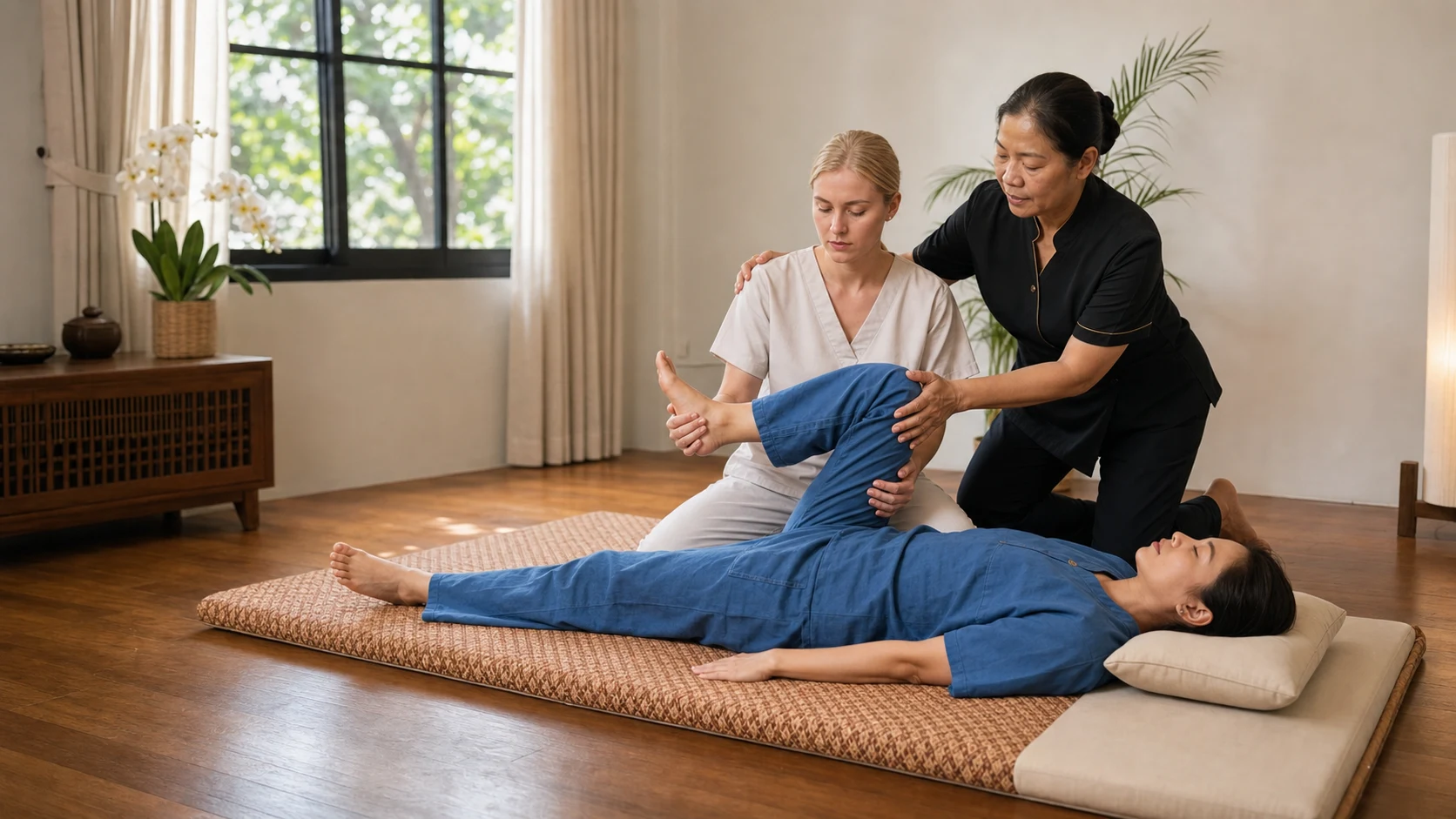
In the heart of the city lies a true sanctuary of tranquility and relaxation, a place that offers an escape from the daily bustle: the Loft Thai Spa. This haven of serenity is not only known for its therapeutic treatments and rejuvenating ambiance but also for its exceptional team of professionals.
From master therapists to experienced estheticians, aromatherapists, and diligent management staff, every member of the Loft Thai Spa team contributes to an unforgettable spa experience for its guests.
The Therapists and Master Therapists
Loft Thai Spa boasts an outstanding team of therapists and master therapists, each possessing a depth of knowledge in their craft. Our therapists, who hold extensive training in a variety of massage techniques, are skilled at releasing tension and fostering relaxation in each guest.
Taking it a step further, our master therapists carry a wealth of experience and advanced training, enabling them to provide specialized treatment options. They demonstrate exceptional skills in techniques such as deep tissue massage, Shiatsu, and reflexology, among others. Their aim is to provide treatments that not only relax the body, but also help in reducing stress, improving circulation, and restoring vitality.
The Aromatherapists
A crucial part of the holistic approach at Loft Thai Spa is the use of aromatherapy. Our certified aromatherapists blend and use essential oils to complement the therapies, enhancing the healing process. With a deep understanding of the psychological and physiological effects of different scents, they carefully select the appropriate oils to create a soothing atmosphere, promoting relaxation and stress reduction. This immersive aromatic experience is a signature of the Loft Thai Spa, and its magic lies in the capable hands of our aromatherapists.
The Estheticians
At Loft Thai Spa, we believe in the healing power of touch, but we also understand the importance of skin care in overall wellness. Our professional estheticians are experts in their field, offering a wide range of facial and body treatments designed to nourish and rejuvenate the skin. Utilizing the finest quality products and the latest techniques, they offer services such as facials, body wraps, and scrubs, aiming to leave guests with a glowing and revitalized complexion.
The Manager and Receptionists
Providing an exceptional spa experience extends beyond the treatment rooms. It starts the moment guests step into the Loft Thai Spa. Our team of receptionists greets each guest with a warm welcome, ensuring their needs are addressed and their spa journey is seamless from start to finish.
Behind the scenes, the Spa Manager ensures the smooth operation of the entire spa. From coordinating with the team to maintaining the quality of services, the Manager ensures every aspect of the spa adheres to the highest standards of excellence. With an unwavering commitment to guest satisfaction, the manager plays an integral role in shaping the unforgettable Loft Thai Spa experience.
Final Words
At Loft Thai Spa, we believe in the power of teamwork. Every team member, from the therapists to the receptionists, plays a crucial role in delivering an unparalleled spa experience. We understand that the spa journey is as important as the treatment itself, and we are dedicated to making each visit an unforgettable one. It is this commitment to excellence, coupled with our passion for wellness, that sets Loft Thai Spa apart.
UPDATED LOFT THAI GUIDE
Additional guidance and current information
The following editorial update expands on the original Loft Thai article with practical context, current treatment guidance and further reading.
Replace Superlatives With Observable Service
The former article described an incomparable team of master therapists, aromatherapists, estheticians, managers and receptionists.
The surviving archive does not provide a dated staff roster, individual qualifications or evidence that every title remains current.
A responsible team article should therefore explain the service system guests can observe and identify which credentials must be verified separately.
1. Booking to Reception: Preserve the Complete Record
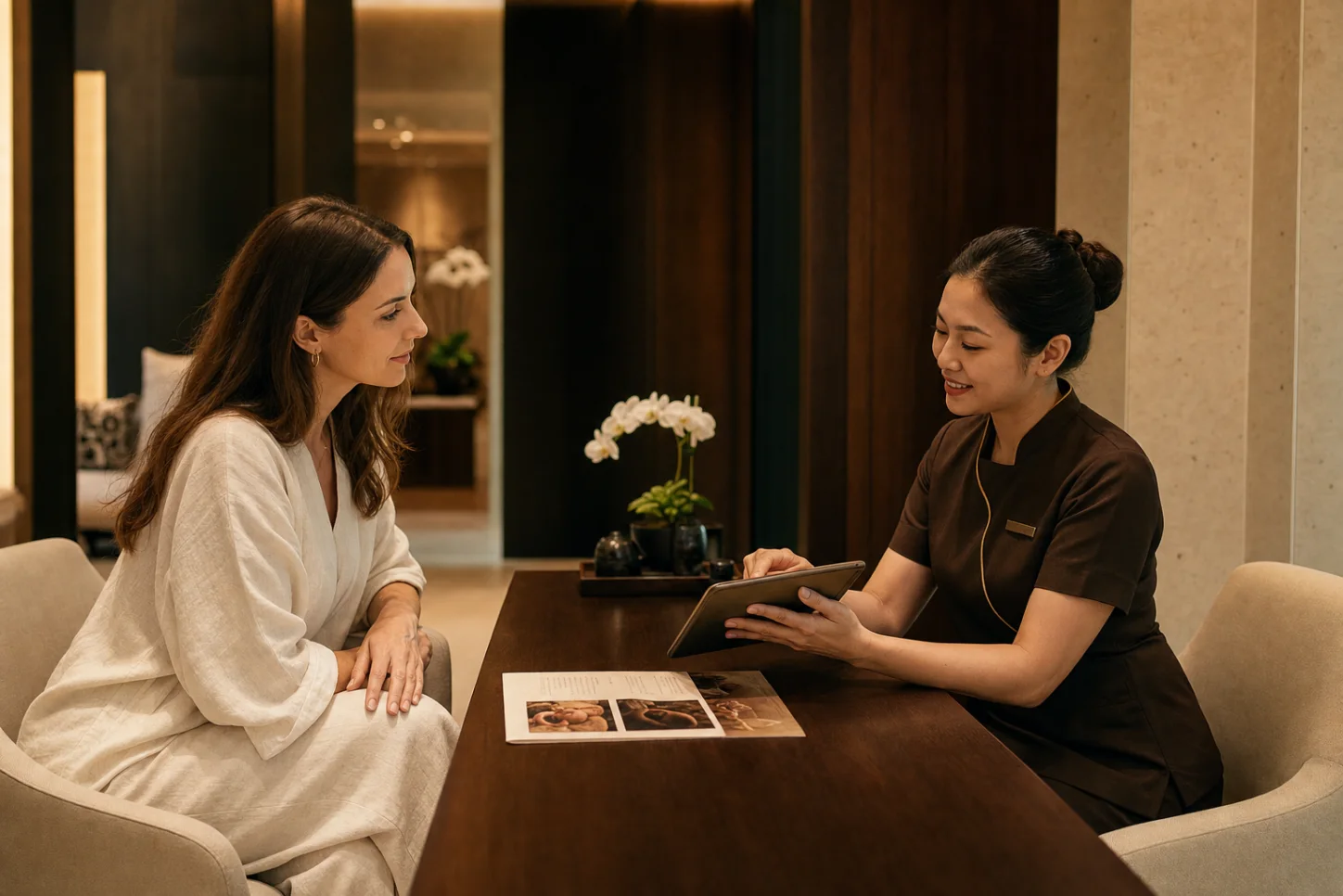
Reception should receive the correct branch, service, duration, price, payment position, language and practical preferences recorded at booking.
The guest should not have to reconstruct every message after arrival.
When a detail is missing or contradictory, the team should resolve it before moving the guest into the treatment sequence.
2. Reception to Consultation: Introduce the Real Decision
The booked service remains provisional until the therapist confirms current comfort, treatment area, pressure or sensory preferences and relevant limitations.
Reception can prepare the conversation but should not diagnose or promise a therapeutic outcome.
A good handoff identifies what the guest requested and what still needs direct discussion.
3. Consultation to Room Preparation: Translate Preferences
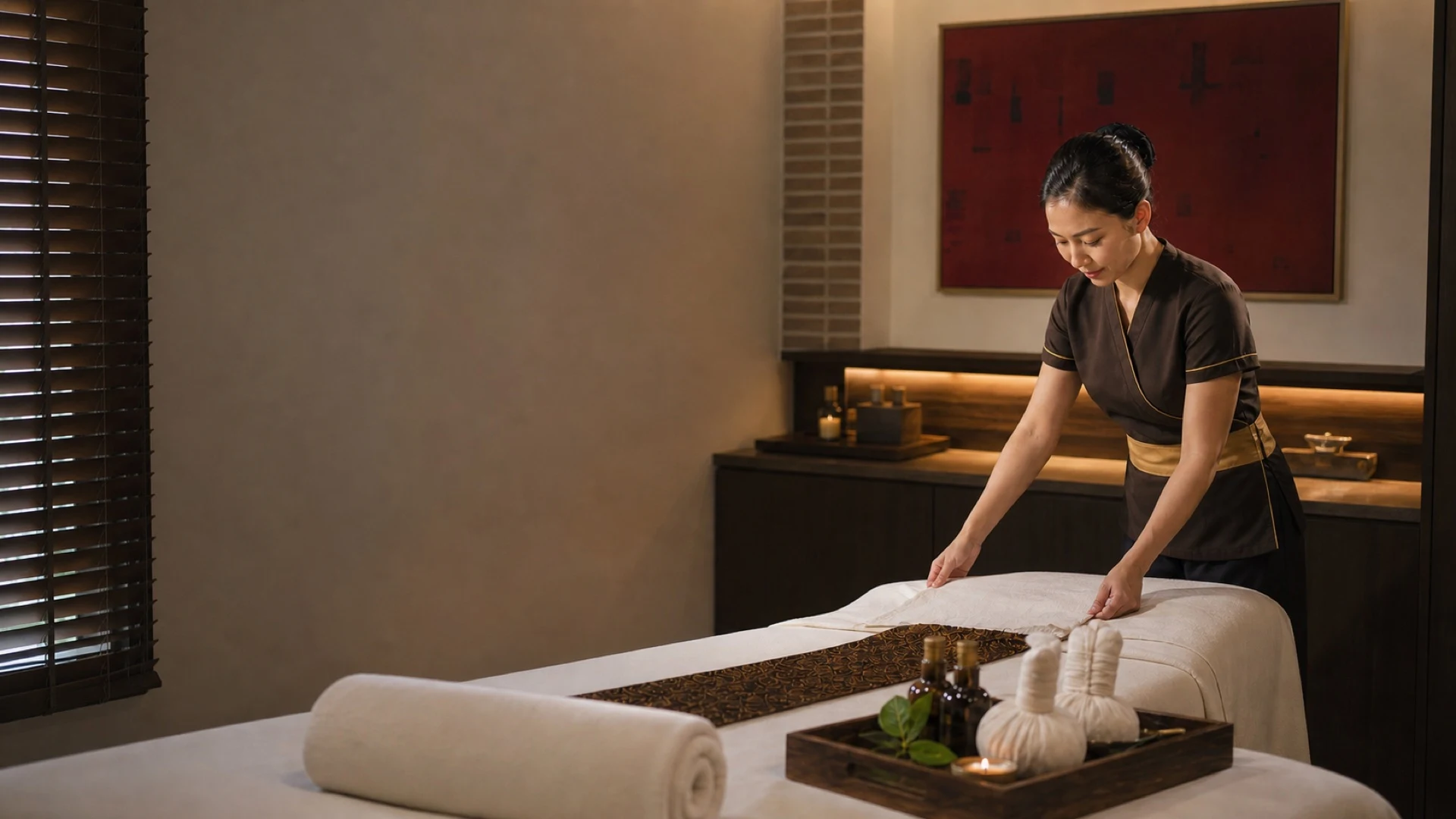
Room setup should reflect the agreed protocol: table or chair configuration, linens, products, equipment, temperature, modesty needs and access considerations.
Known sensitivities or declined components must be visible to the treating professional without broadcasting personal details unnecessarily.
The team should be able to change the setup when the live consultation alters the original plan.
4. Preparation to Treatment: Explain Before Touch
The therapist should identify the planned sequence, how the guest will be positioned and how feedback can be given.
Products, heat, equipment or stronger techniques deserve a clear explanation before use.
Consent is specific and continuing; agreement to one massage or facial does not imply agreement to every optional step.
5. Technique to Feedback: Adjust in Real Time
The therapist should observe verbal and non-verbal feedback without assuming silence means comfort.
Pressure, pace, temperature, sound, light and positioning can be discussed and adjusted within the service protocol.
When a request falls outside the therapist’s scope or the booked treatment, the answer should be clear rather than improvised.
6. Products and Equipment: Match Use to Protocol
The team should know which product or device is being used, its purpose in the sequence and the applicable preparation, hygiene and stop procedures.
Brand language should not replace staff competence or a product-specific suitability conversation.
A substitution must be communicated when it materially changes the service.
7. Treatment to Completion: Close the Service Clearly
The guest needs time and privacy to change position, dress or leave equipment safely.
Completion should include a concise summary of what was performed and any practical, non-medical aftercare relevant to the service.
Do not convert a routine spa farewell into diagnosis, recovery prediction or a guaranteed timeline.
8. Completion to Follow-Up: Record Only What Is Useful
A follow-up can address service satisfaction, lost property, booking corrections or a future preference.
The record should be concise, access-controlled and retained only for a defined operational purpose.
Feedback that identifies a safety, hygiene or conduct issue must move to a responsible manager rather than remain in a marketing inbox.
What Training Must Support Behind the Scenes
Quality depends on more than learning a sequence once.
A serious programme includes onboarding, demonstration, supervised practice, observation, corrective feedback, service-specific refreshers and a clear standard for independent work.
Training records should distinguish attendance from demonstrated competence.
- Consultation, consent and communication
- Technique sequence and adaptation boundaries
- Hygiene, linens, products and equipment
- Contraindications, precautions and referral boundaries
- Privacy, documentation and incident escalation
- Room preparation, timing and recovery between guests
Understand the Thai Registration Context
Thailand’s Department of Health Service Support operates systems for health-establishment licensing and service-provider registration, and publishes legal material covering spa and health-massage establishments.
The official directory and registration processes are relevant evidence, but this article does not assert a particular current registration or award without checking the exact entity and record.
Guests may ask the spa which licence, provider registration or training evidence applies to the selected branch and service.
Use Standards as a Framework, Not a Marketing Badge
ISO 17679 establishes service requirements and supporting processes for wellness spas and explicitly excludes medical-spa decisions.
The ASEAN Spa Services Standard also provides a regional reference for spa operations.
Citing a standard is not the same as proving certification. A spa should state accurately whether it uses a document as guidance, has completed an assessment or holds a current independent certification.
A Guest-Facing Team Quality Scorecard
Guests cannot inspect every internal record, but they can observe consistent signals across the visit.
-
01
Accurate
The branch, service, price and timing remain consistent from booking to payment.
-
02
Attentive
The team listens, confirms and adjusts without forcing the guest to repeat sensitive details.
-
03
Prepared
The room, products and equipment match the agreed protocol.
-
04
Bounded
Staff explain what the spa can provide and what requires another professional.
-
05
Recoverable
Errors, discomfort, equipment faults and complaints have a clear response route.
Seven Questions a Guest Can Ask
Direct questions reveal more than claims about an ultimate experience.
- Who will perform this specific service?
- What training or registration applies to it?
- Which parts can be adjusted after consultation?
- Which products or equipment will be used?
- How can I ask to pause or stop?
- Who handles a safety or service concern?
- What information will be retained after the visit?
Know When the Team Must Refer Out
A wellness-spa team can discuss comfort, service suitability and ordinary precautions within its role.
Persistent, severe, worsening or unexplained symptoms need assessment from an appropriately qualified healthcare professional.
A trustworthy team protects the guest by recognising that boundary rather than extending a spa claim into medical advice.
Claims Removed from the Previous Version
The former article asserted extensive current training, specialist titles and outcomes such as stress reduction, improved circulation, restored vitality, healing through aromatherapy and skin rejuvenation.
It did not name current team members, qualifications, product protocols, evidence or regulatory scope.
This version preserves the importance of teamwork while replacing unverifiable biography and health promises with handoffs, training controls and guest questions.
The Team Is the System Guests Experience
A premium room or famous product cannot rescue a broken handoff.
The strongest spa teams protect accuracy from the first booking, preserve consent during treatment and know how to respond when circumstances change.
Judge the team by the eight handoffs, not by a superlative.
“Service quality is the accuracy of every handoff, especially when a guest’s comfort or the treatment plan changes.”
Loft Thai Editorial Team
Continue your research
REFERENCES
Sources & further reading
- ISO 17679: Wellness Spa Service Requirements
- ASEAN: Spa Services Standard
- Thailand HSS: Health Establishment Laws and Standards
- Thailand HSS: Spa and Service Provider Directory
- Thailand HSS: Premium Spa Quality Assessment
- Nuad Thai College of Thailand: Official Training Context
- Nuad Thai College: Specialist Stretching Course and Prerequisites
PRACTICAL GUIDANCE
Frequently Asked Questions
What makes a spa team professional?
Professional quality appears through relevant training or registration, accurate handoffs, clear scope, hygiene, consent, protocol knowledge, adjustment and responsible escalation.
Is a master therapist an automatically regulated title?
A title alone does not prove the holder’s current training, registration or scope. Ask what qualification, assessment and service responsibility support the title.
Should I repeat my preferences to the therapist?
The booking and reception teams should preserve useful notes, but the therapist should still reconfirm current preferences and consent directly before treatment.
Can a receptionist recommend a medical treatment?
A receptionist can explain the spa menu and logistics but should not diagnose a condition or prescribe medical care.
How can I raise a concern after treatment?
Use the identified branch or management contact, describe the service and time, and state the concern clearly. Safety, hygiene or conduct issues should be escalated beyond routine marketing follow-up.
CONTINUE READING
Related stories
Why the Best Spas Train Their Own Therapists
In Bangkok, you can find massage everywhere. Some places are surprisingly good. Others look beautiful online but feel average in real life. The difference is rarely the candle scent or the marble reception. The difference is usually something you don’t see as…
Read the guide
What Makes a World-Class Spa in 2026?
In 2026, the idea of a world-class spa has evolved far beyond plush interiors and premium products. As global travelers become more experienced and wellness-literate, expectations have shifted toward authenticity, intelligence, and emotional depth. Luxury is…
Read the guide
How Loft Thai Spa Can Surprise You with Its Excellent Service and Hospitality
When it comes to spa experiences, excellence in service and hospitality can make all the difference. At Loft Thai Spa, we pride ourselves on offering more than just treatments, we provide a comprehensive wellness journey that surprises and delights our guests.…
Read the guide