
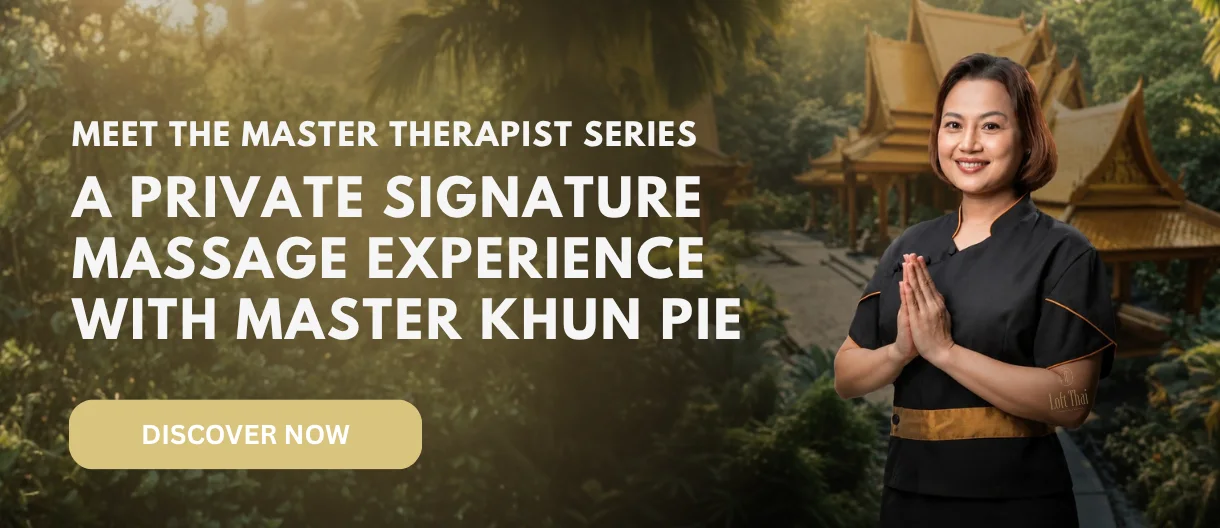
There are massages you book because your body feels tired. There are spa rituals you choose because you want to escape the noise of the city for an hour. And then there are rare experiences that feel more like a meeting with living knowledge — a moment where touch, tradition, technique, and conversation come together in one private encounter.
Loft Thai Spa is proud to introduce a new experience created for guests who want more than a treatment: the Master Therapist Series with Khun Pie. This limited-edition experience invites guests to meet one of Loft Thai Spa’s most respected master therapists, receive a signature massage personally performed by her, and spend time in conversation with the practitioner behind the technique. It is designed not only for relaxation, but also for inspiration, education, and connection.
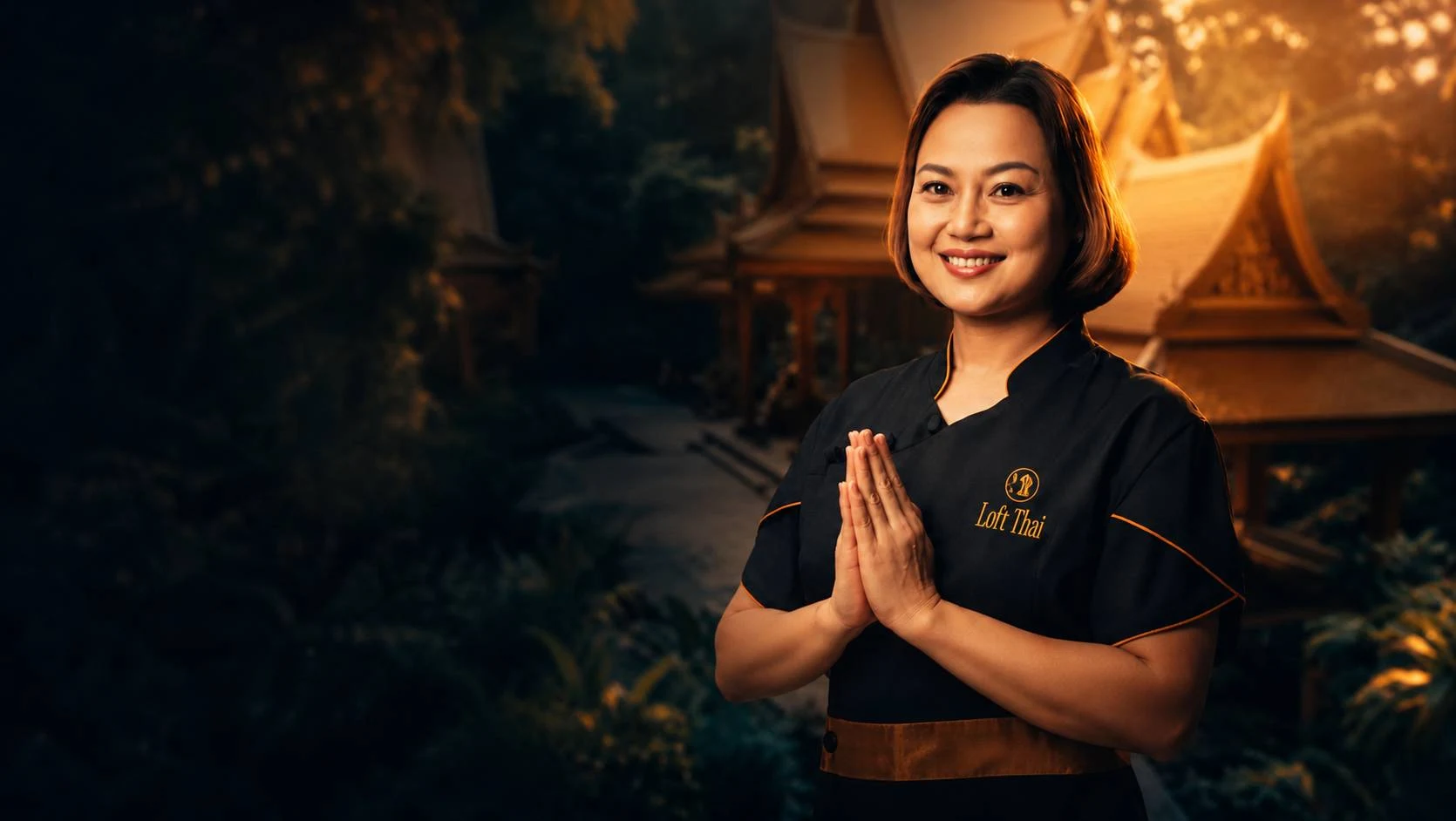
Khun Pie is recognized at Loft Thai Spa for her refined Thai massage technique, deep understanding of body mechanics, and calm, precise therapeutic presence. With more than 20 years of experience, she has trained, guided, and managed teams of more than 100 therapists. She is also presented by Loft Thai Spa as a Senior Instructor at Nuad Thai School, helping pass authentic Thai massage knowledge to the next generation of wellness professionals.
This new Master Therapist Series is limited to a small number of private sessions. Loft Thai’s Khun Pie page presents the experience as only five private sessions per month, giving each guest the feeling of a personal appointment rather than a standard spa booking. The page describes the experience as a chance to receive her signature therapeutic touch, meet her, speak with her, and take a photo after the treatment.
A Journey Begins Before the Massage
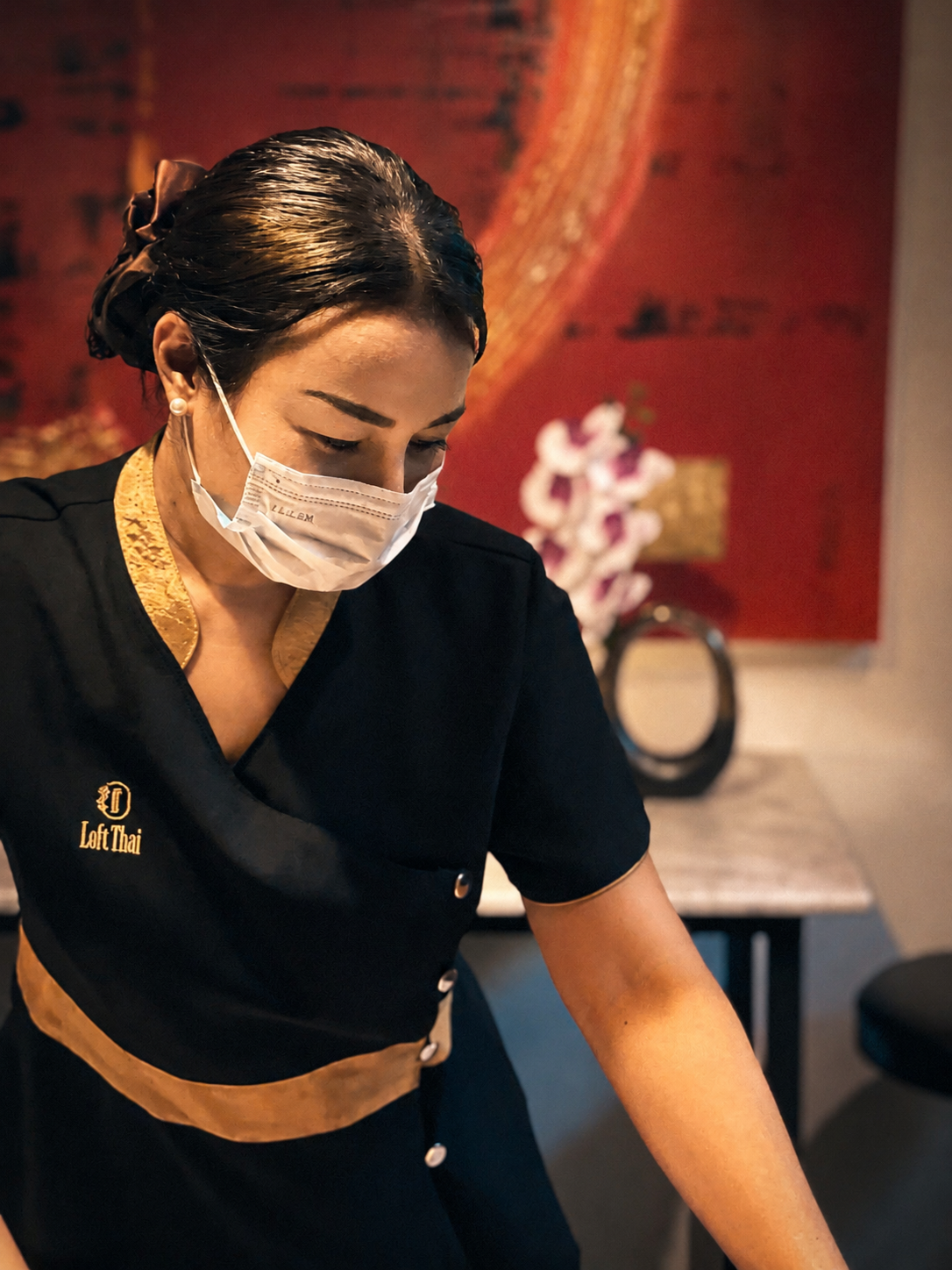
The experience begins before the first stretch, before the first press of the palm, before the first breath of essential oil or warm herbal steam. It begins with meeting Khun Pie herself.
For many guests, Thai massage is something they know through feeling: a deep stretch, a release in the shoulders, a sense of energy returning to the body. But in this experience, guests are invited to understand the thinking behind the touch. Why does a therapist begin with grounding pressure? Why does a stretch feel gentle when it is guided with the right rhythm? Why does Thai massage often work not only on one tight muscle, but on the whole chain of the body?
These are the kinds of questions that turn a treatment into a learning moment. During the Master Therapist Series, the guest is not simply placed into a routine. The session is shaped by the person in front of Khun Pie: their posture, their tension, their lifestyle, their work, their travel fatigue, and their comfort level. The result is a signature massage that feels deeply professional, highly personal, and rooted in decades of practice.
At the end of the experience, every guest receives a complimentary copy of The Art of Thai Massage, signed by Khun Pie, together with a keepsake picture. It is a small but meaningful ritual: a book to take home, a signature from the master, and a photo that captures the moment of meeting someone who has dedicated her life to the art of healing touch.
Introducing Khun Pie: A Master of Thai Stretch Precision
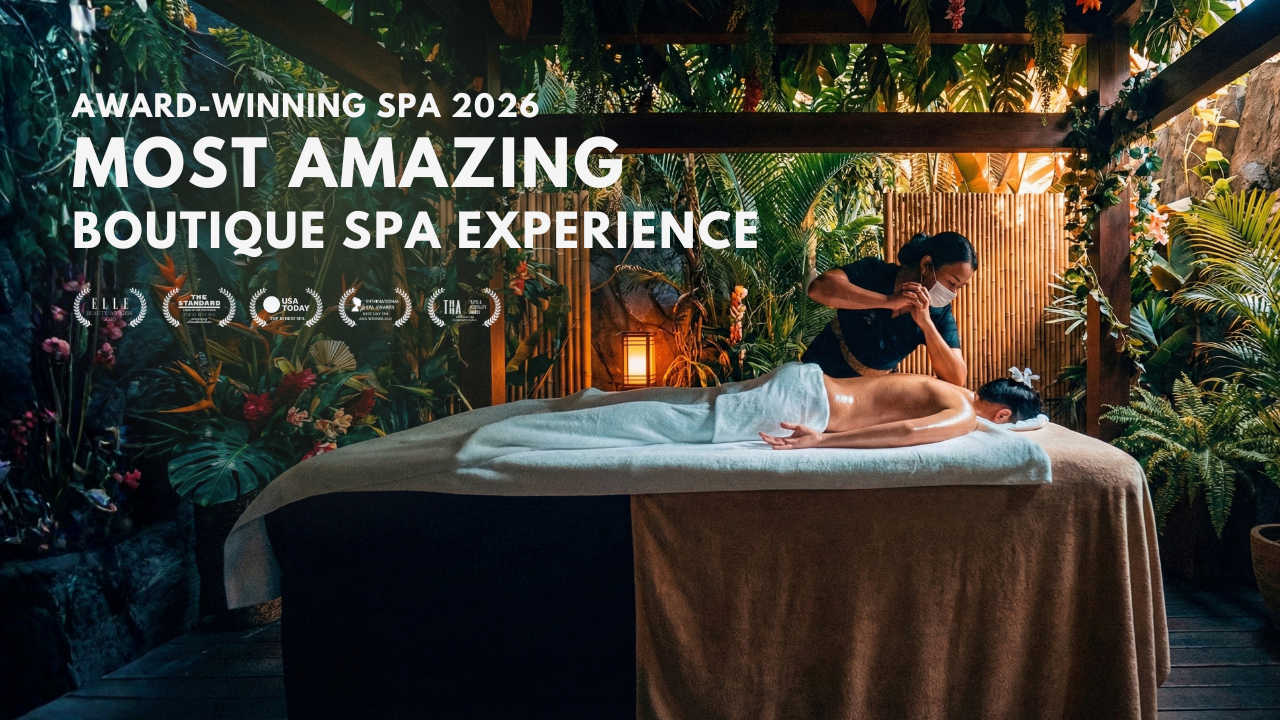
Khun Pie’s reputation is built on precision. Her work is not about force. It is about timing, balance, breathing, and the ability to feel how the body responds. In Thai massage, pressure must be firm but intelligent. Stretching must be deep but never careless. A therapist must know when to move, when to pause, and when the body needs softness instead of strength.
Loft Thai Spa describes Khun Pie as the master behind Thai stretch precision and highlights her ability to connect traditional Thai massage knowledge with modern wellness innovation. Her signature work includes assisted stretches, rhythmic pressure, deep mobility work, herbal therapy, aroma oil work, Swedish-inspired flow, office-syndrome relief, and sport recovery techniques.
Her professional training portfolio reflects this depth. The certificates provided show a wide educational foundation across Thai massage and wellness disciplines, including Thai Massage training of 150 hours, advanced Thai Massage training of 372 hours, Aromatherapy Massage training of 60 hours, and a specialized Thai Massage course focused on balancing blood circulation and the lymphatic system. Her education also includes Spa Manager for Health training of 100 hours from the Faculty of Integrative Medicine at Rajamangala University of Technology Thanyaburi, as well as Thai Warrior Massage and Thai Warrior Massage Trainer certification completed in 2023.
These credentials matter because Thai massage is not simply a sequence of movements. It is a professional discipline that requires anatomy awareness, pressure control, ethical practice, safety, rhythm, and years of experience. A great therapist does not only memorize techniques; she learns how to read the body.
The Signature Massage: Where Technique Becomes Story
Khun Pie’s signature massage experience is built around the idea that the body carries a story. Some guests arrive with the stiffness of office life: rounded shoulders, heavy neck, tired eyes, and tension from long hours in front of a screen. Others arrive after travel, exercise, family responsibilities, or emotional stress. Some are curious about traditional Thai massage. Others are experienced spa guests searching for something deeper.
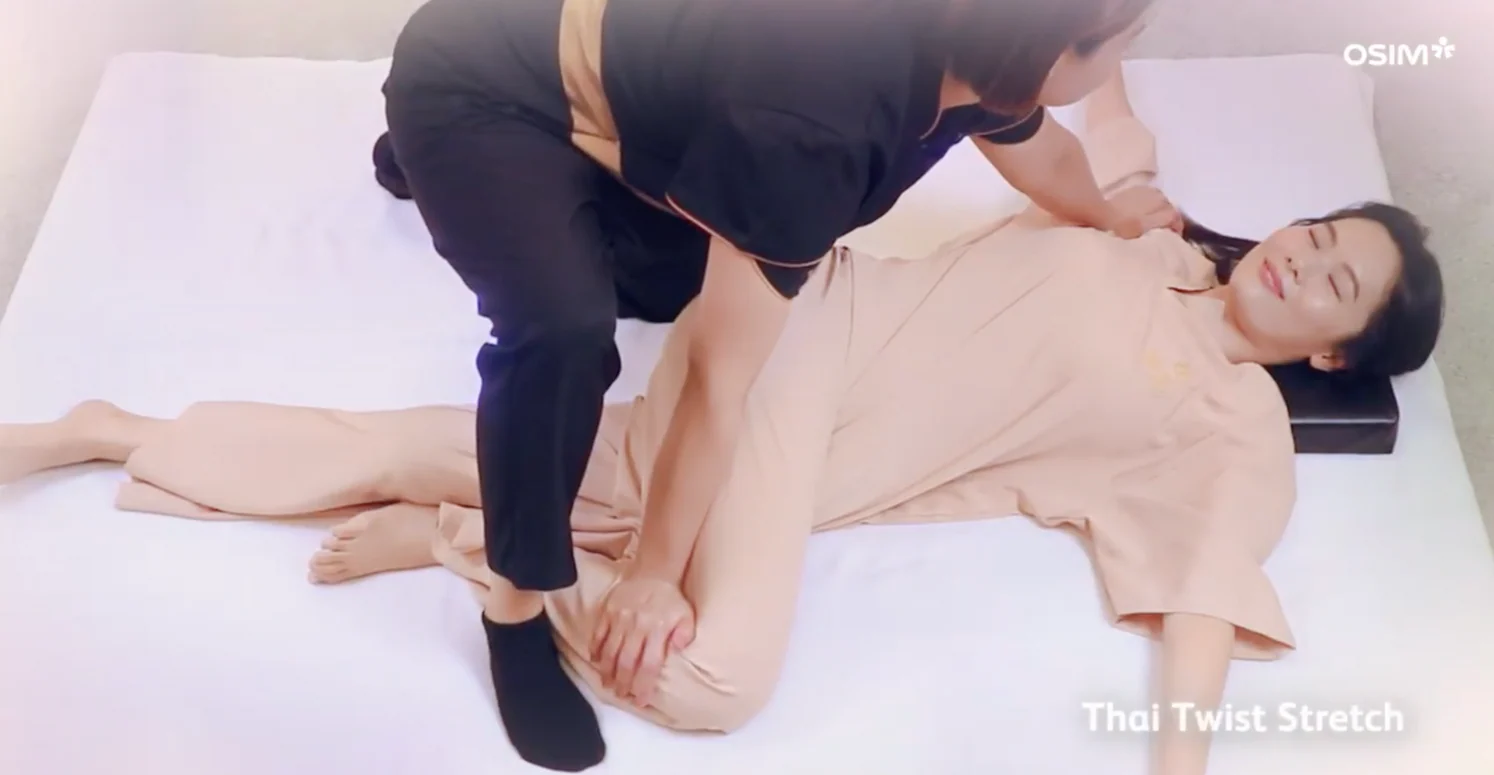
The session may include elements of Thai stretch massage, where the body is guided through assisted movements to support mobility and release stiffness. It may include rhythmic compression, where pressure is applied with steady timing to help the body relax into the treatment. It may include palm pressure, thumb work, forearm techniques, gentle rocking, assisted stretching, or focused release around the shoulders, back, hips, legs, and feet.
Thai massage is widely known for combining deep pressure, assisted stretching, and rhythmic movement. OSIM’s Thai massage feature with Loft Thai Spa describes Thai massage as a tradition focused on mobility, circulation, and energy balance, rather than relaxation alone.
This is why a session with Khun Pie can feel both active and calming. The body is not treated as separate parts. A tight shoulder may be connected to the upper back. A stiff lower back may relate to the hips. Heavy legs may need work through the feet, calves, and lines of movement. Her approach is not rushed. It is layered, intelligent, and quietly powerful.
Thai Warrior Massage: Strength, Mobility, and Balance
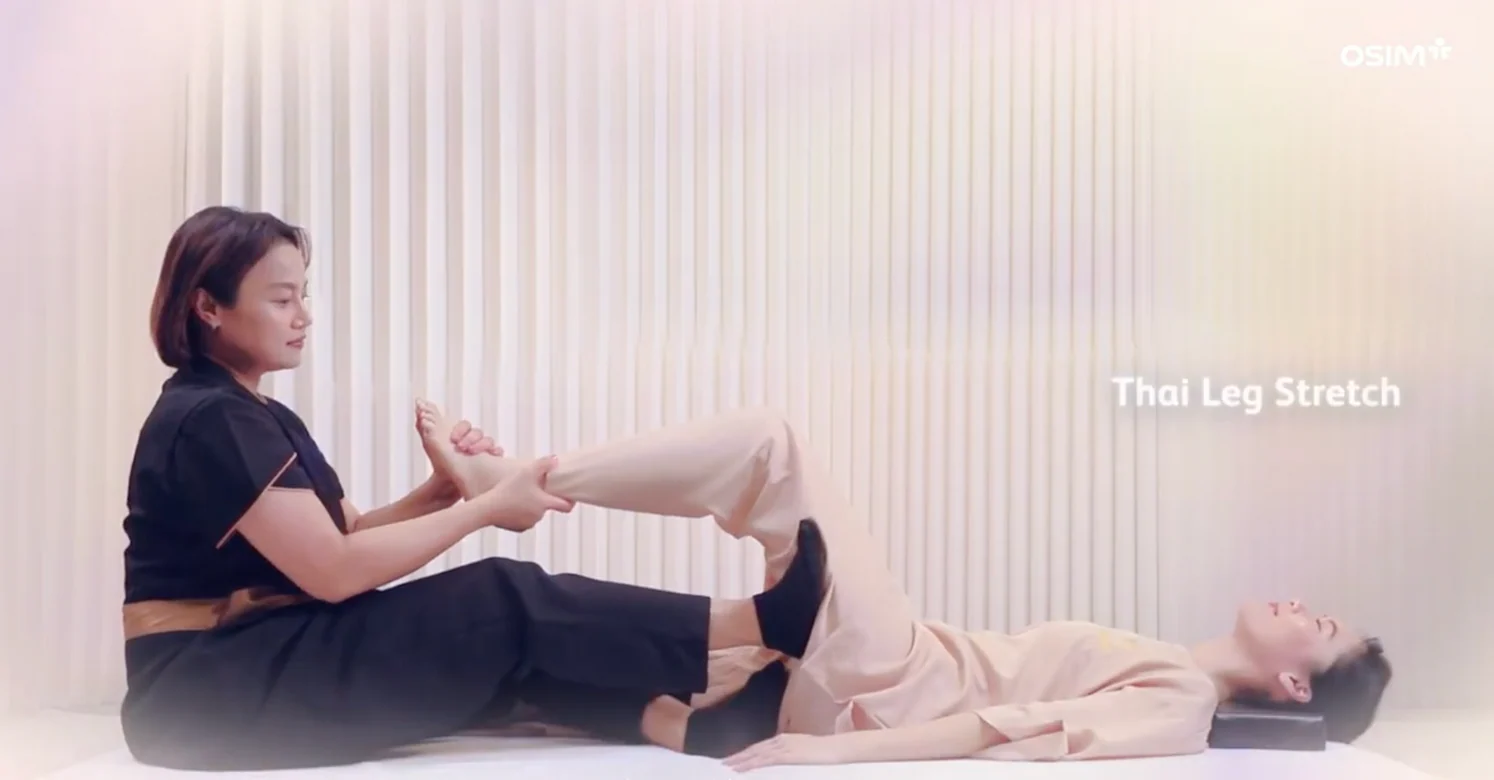
One of the most distinctive techniques associated with Khun Pie is Thai Warrior Massage. At Loft Thai Spa, Thai Warrior Massage by Khun Pie is described as a powerful Thai therapeutic sequence combining assisted stretches, rhythmic pressure, and deep mobility work for strength, flexibility, and balance.
The name “warrior” carries a feeling of strength, but the experience is not about intensity for intensity’s sake. It is about controlled power. The therapist works with leverage, positioning, and rhythm to help the body open safely. This style can feel especially meaningful for guests who want a more active form of bodywork — people who do sports, travel often, sit for long hours, or feel that normal relaxation massage is not enough.
In Khun Pie’s hands, the technique becomes a balance between discipline and care. A stretch may feel strong, but it is guided. A pressure point may feel deep, but it is measured. A sequence may wake up the body, but it never loses its sense of grounded calm.
Thai Warrior Massage is also a reminder that Thai massage has always been more than spa luxury. It is part of a cultural tradition of body knowledge, movement, care, and recovery. In the Master Therapist Series, guests can experience this heritage directly from a therapist trained not only to perform, but also to teach.
Herbal Compress, Aromatherapy, Office Relief, and Sport Recovery
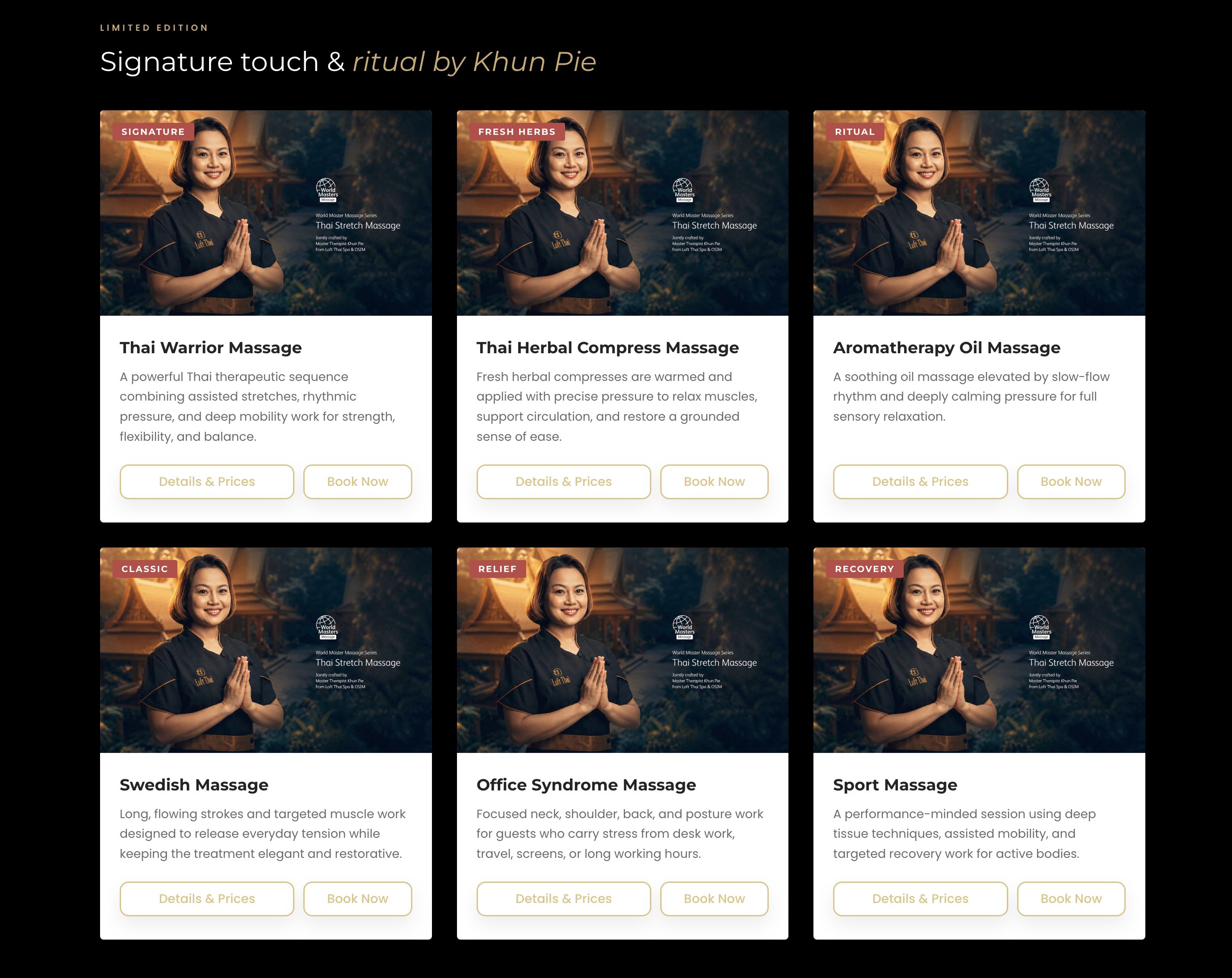
Khun Pie’s work is not limited to one signature style. Loft Thai Spa presents several limited-edition treatments by Khun Pie, including Thai Warrior Massage, Thai Herbal Compress, Aroma Oil Massage, Swedish Massage, Office Syndrome Massage, and Sport Massage.
Each one speaks to a different kind of guest.
The Thai Herbal Compress experience brings warmth, pressure, and traditional herbs into the treatment. Loft Thai describes this style as beginning with traditional Thai massage techniques to support joint flexibility and mobility, followed by warm compresses such as Thai herbal, eucalyptus, lemongrass, or Plai and camphor tree options.
The Aroma Oil Massage is softer and more flowing. It uses organic essential oils from plants, leaves, and flowers, combined with pressure-point work and warm oil to create deep relaxation. For guests who want emotional calm, softness, and full sensory rest, this may be the perfect way to meet Khun Pie’s touch.
The Office Syndrome Massage is made for modern life. Long hours at a desk, phone use, screens, and repeated posture patterns can leave the neck, shoulders, back, and arms feeling heavy. Loft Thai describes this treatment as focused work for guests who carry stress from desk work, travel, screens, or long working hours.
The Sport Massage is for active bodies. It combines deeper tissue work, assisted mobility, and recovery-focused techniques for guests who want to support flexibility, performance, and post-training recovery.
Together, these treatments show Khun Pie’s range: traditional, therapeutic, restorative, athletic, aromatic, and educational.
A Conversation with the Master
What makes the Master Therapist Series truly different is the time after the treatment.
In many spa experiences, the massage ends, tea is served, and the guest leaves quietly. Here, the ending becomes part of the story. Guests are invited to sit with Khun Pie, speak with her, ask questions, and hear about the inspiration behind her work.
This conversation may explore Thai massage tradition, training, body mechanics, posture, breathing, or the difference between human intuition and mechanical massage. It may be a simple personal exchange: how she became a therapist, what she loves about teaching, what she has learned after two decades of working with different bodies, and why Thai massage continues to inspire her.
For wellness lovers, this is a rare opportunity. Many people receive massage for years without ever speaking deeply with a therapist about technique. This experience opens that door. It gives guests a chance to understand that the best Thai massage is not random pressure. It is knowledge applied through touch.
Then comes the book signing. Khun Pie signs The Art of Thai Massage, offered complimentary to the guest, and the moment is completed with a photo. The guest leaves not only with a relaxed body, but with a memory, a story, and a deeper respect for the craft.
Loft Thai Spa × OSIM: When Human Touch Inspires Innovation
The Master Therapist Series also connects to a larger story: the partnership between Loft Thai Spa and OSIM.
OSIM is one of the world’s leading massage-chair and home-wellness technology brands, and its uDream.AI massage chair is designed as an AI-powered, multi-sensory wellness chair combining massage technologies, AI wellness insights, and immersive sensory features.
The collaboration between Loft Thai Spa and OSIM is built around a beautiful idea: technology becomes more meaningful when it learns from real human mastery. OSIM explains that its World Masters Massage Series includes Thai Stretch Massage inspired by traditional Thai techniques, combining stretching and rhythmic pressure, developed in collaboration with boutique spa Loft Thai Spa.
Loft Thai Spa’s Khun Pie page also presents her role in this story, describing how Khun Pie and Loft Thai Spa contributed Thai massage expertise to OSIM’s World Masters Massage Series, helping translate real Thai stretch principles into advanced massage chair movements.
This is where the Master Therapist Series becomes especially meaningful. Guests can experience what no chair can fully replace: the awareness, sensitivity, and personal adjustment of the master herself. At the same time, they can understand how her expertise has helped shape the future of wellness technology.
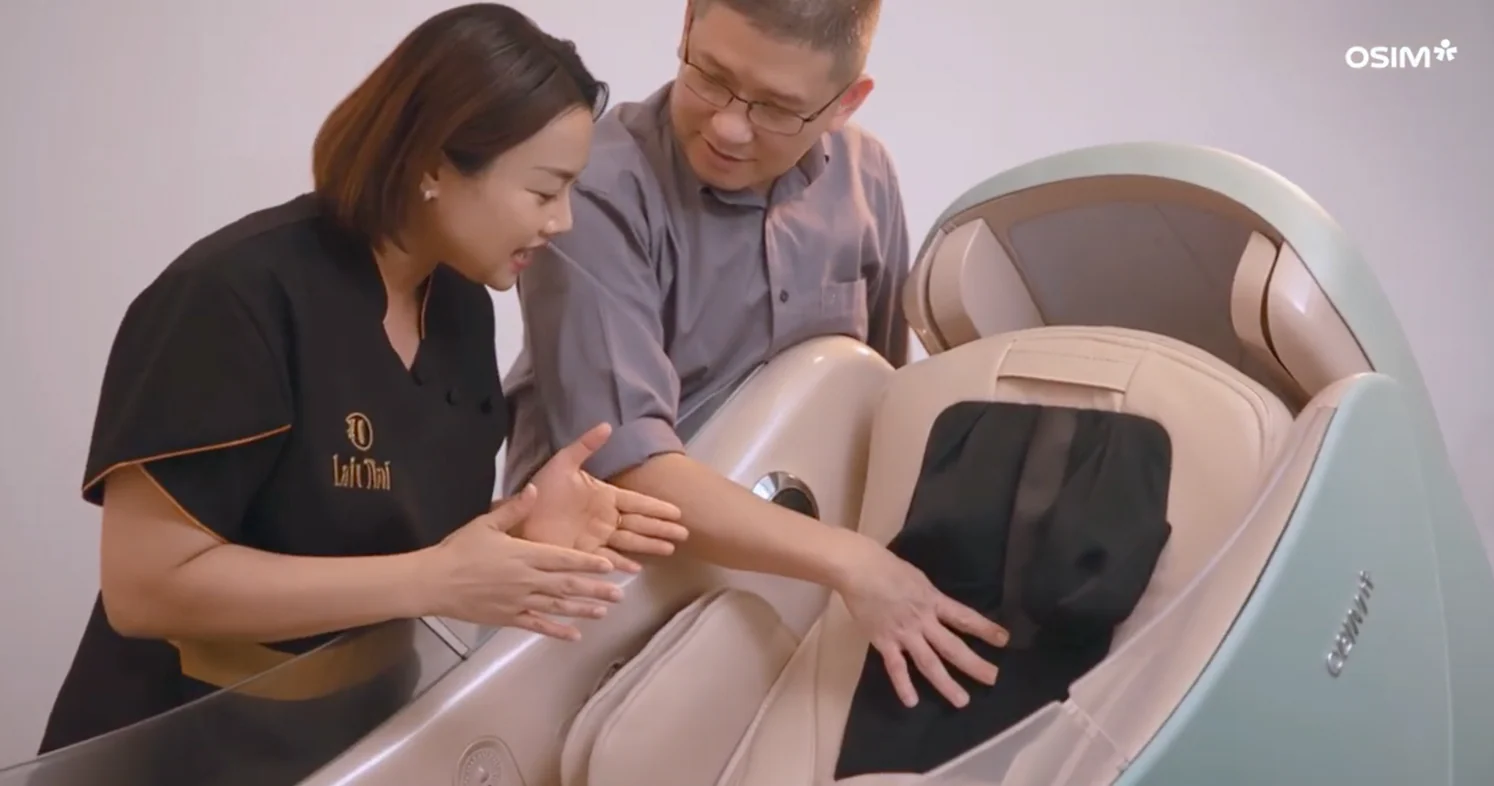
OSIM’s uDream.AI brings Thai-inspired massage into the home through AI body sensing, adaptive massage programs, and movements designed to feel human-like and consistent. But the Master Therapist Series brings guests back to the source: the human hands, intuition, and living tradition behind the innovation.
The Art of Thai Massage, Shared Personally
The complimentary book, The Art of Thai Massage, is more than a gift. It represents the educational spirit of the experience.
Thai massage is an art that is passed from teacher to student, from therapist to therapist, from one generation to the next. It lives in training rooms, treatment rooms, temples, schools, and family knowledge. A signed book becomes a bridge between the session and the guest’s own curiosity. It gives the guest something to hold, read, remember, and share.
The photo adds another layer. In the world of wellness, many experiences are beautifully designed, but few feel personal. This one does. The picture is not just a souvenir. It is a record of meeting the therapist, hearing her story, and being part of a limited series that celebrates Thai massage as a living cultural art.
For Guests Who Want More Than Relaxation
The Master Therapist Series with Khun Pie is ideal for guests who want a deeper spa experience in Bangkok.
It is for travelers who want to discover authentic Thai massage from a respected master. It is for wellness lovers who want to understand technique, not just receive it. It is for spa professionals and massage students who admire Thai bodywork. It is for loyal Loft Thai guests who want to meet the people behind the brand’s quality. It is for anyone who believes that true relaxation includes knowledge, inspiration, and human connection.
Because the sessions are limited, each appointment carries a feeling of exclusivity. This is not a fast-service massage. It is not a standard menu item. It is a private experience with a master therapist, created for guests who appreciate craft.
A New Chapter in Thai Wellness
In a world where wellness is becoming faster, more digital, and more automated, Loft Thai Spa’s Master Therapist Series offers something beautifully human.
It reminds us that the future of wellness does not need to leave tradition behind. It can honor it. It can listen to the masters. It can bring together ancient techniques, professional education, modern spa hospitality, and innovation from global partners like OSIM.
Khun Pie stands at the heart of this story. She represents the therapist as practitioner, teacher, innovator, and storyteller. Her hands carry experience. Her technique carries discipline. Her conversation carries passion. And through this limited series, guests are invited to meet not only the therapist, but the art itself.
The Master Therapist Series with Khun Pie is more than a massage.
It is a private encounter with Thai massage mastery.
It is a signature treatment, a conversation, a signed book, a photograph, and a memory.
It is the moment when relaxation becomes education — and when Thai massage becomes a story you can take home.
Limited private sessions are available each month at Loft Thai Spa. Guests are invited to reserve their place, meet Khun Pie, experience her signature touch, and discover the art of Thai massage from the master herself.
Find out more at: https://www.loft-thai.com/khun-pie/
UPDATED LOFT THAI GUIDE
Additional guidance and current information
The following editorial update expands on the original Loft Thai article with practical context, current treatment guidance and further reading.
Who Is Khun Pie?
Loft Thai presents Khun Pie as a master therapist with more than twenty years of experience and a senior instructor at Nuad Thai School. Her current profile describes work across traditional Thai stretch, herbal compress, aroma oil, Swedish, office-syndrome and sport-massage formats. These are the spa’s own professional statements and give useful context for the range of sessions she leads.
OSIM independently identifies Khun Pie as the master therapist behind the Thai Stretch component of its World Masters Massage Series. The company says that the programme was developed in collaboration with Loft Thai Spa and draws on stretching, twisting and rhythmic-pressure principles associated with Thai massage.
That collaboration does not make a chair equivalent to a therapist. It demonstrates why a precise human sequence can be studied and translated into technology. In a live appointment, Khun Pie can still observe breathing, hesitation, guarding, comfort and feedback—signals that require moment-to-moment judgement.
What Makes the Master Therapist Series Private
Private should describe more than a closed door. In this series, the value lies in protected time with the practitioner: a conversation before the session, a treatment led personally by Khun Pie and space to discuss the thinking behind the technique. Loft Thai currently presents a limited number of private appointments each month, so availability should always be confirmed directly.
The treatment is not a public demonstration or a group lesson. The guest remains the focus, and privacy, draping and quiet should be respected throughout. Questions can be welcomed without turning the massage into a lecture.
A limited appointment can feel ceremonial, but it is still a professional wellness service rather than medical care. The therapist can adapt massage to comfort and disclosed needs; she does not diagnose an injury or replace assessment by a doctor, physiotherapist or other qualified clinician.
The Treatment Begins with a Useful Consultation
A signature massage should not begin with the assumption that every guest wants deep pressure or maximum stretching. The first task is to understand why the person booked: general relaxation, travel fatigue, desk-related stiffness, an interest in Thai technique or recovery after ordinary activity.
The consultation should also identify reasons to modify or postpone. Recent injury or surgery, pregnancy, anticoagulant use, osteoporosis, skin infection, fever, unexplained swelling, loss of sensation and current medical advice can all change what is appropriate. A massage room is not the place to test whether a serious symptom can be pressed away.
Preferences matter alongside health information. Some guests welcome assisted movement; others want minimal conversation and a slower oil-based flow. A skilled therapist translates those answers into a plan rather than forcing the guest into a predetermined performance.
- Describe the main goal in plain language rather than naming a diagnosis
- Disclose recent procedures, injuries, pregnancy and relevant medicines
- State preferred pressure and whether assisted stretching feels comfortable
- Mention areas to avoid and any position that is difficult to maintain
- Agree that pressure, technique or pace can change during the session
Personalisation Continues After the First Touch
A consultation provides words; the treatment provides new information. The therapist observes how easily the body settles, whether a limb moves freely, where the guest braces and how breathing changes when pressure increases. None of these signals is a diagnosis. Together, they help guide pace and intensity.
A master therapist does not need to use every technique she knows. Restraint is part of expertise. A strong stretch may be replaced by rocking, broad palm pressure or a quieter hold when the body resists. A planned focus on the shoulder may widen to the upper back and arm if the sequence can be performed more comfortably that way.
This adaptive loop—apply, observe, ask, adjust—is the practical heart of personalisation. It is also why the guest should keep communicating. Silence can mean relaxation, but it should never be interpreted automatically as permission for increasing intensity.
Thai Stretch Is Controlled Movement, Not a Flexibility Test
Traditional Thai massage commonly combines compression, supported positioning, rhythmic movement and assisted stretching. UNESCO recognises Nuad Thai as part of Thailand’s intangible cultural heritage and describes a practice transmitted through families, schools, associations and healthcare settings.
In a spa context, assisted stretching should be collaborative. The therapist uses positioning and leverage to guide movement while the guest remains relaxed and able to breathe normally. The goal is not to reach a dramatic pose or to prove how far a joint can move.
The OSIM collaboration highlights four Thai-inspired directions—back stretch, twist stretch, leg stretch and neck pressure. In person, each direction still needs screening and control. Twisting is not suitable for every back, neck pressure should remain gentle and a hip stretch should stop well before sharp pain or fear.
Pressure Should Be Specific, Adjustable and Easy to Discuss
Words such as soft, medium and strong are useful starting points, not precise measurements. What feels moderate at the calves may feel intense near the shoulder blade. Pressure also changes with fatigue, sleep, recent exercise and anxiety.
A professional therapist builds intensity gradually and checks the response. Productive massage does not require the guest to endure numbness, burning, electric sensations, nausea, dizziness or sharp pain. Those signals call for an immediate change or stop.
Simple phrases work well: ‘lighter here’, ‘keep this pressure’, ‘please avoid the neck’ or ‘no more stretching today’. Clear feedback does not interrupt the treatment. It gives the therapist better information and helps preserve the calm rhythm of the session.
-
01
Start broad
Use grounding contact and broad compression before focused pressure so the guest can settle and the therapist can observe response.
-
02
Test gradually
Increase pressure in small stages rather than assuming a requested ‘strong’ massage means maximum force everywhere.
-
03
Check the response
Ask concise questions and watch breathing, guarding and involuntary movement without diagnosing their cause.
-
04
Adapt the sequence
Change position, technique, pressure or duration when the response suggests the original plan is not the best fit.
-
05
Finish coherently
Reduce intensity, integrate the areas worked and allow the guest time to sit and stand without rushing.
Choose the Format Before Choosing the Intensity
Khun Pie’s profile spans several treatment families. Thai Warrior Massage is presented as the more active signature, combining assisted stretches, rhythmic pressure and mobility-focused work. It suits guests who want to participate in a Thai bodywork sequence, but it should still be adapted and may not suit an acute injury.
Thai herbal compress introduces moist warmth and aromatic herbs after or alongside massage. Heat can feel comforting, yet it requires a temperature check and extra caution for reduced sensation, vascular concerns, inflamed skin or pregnancy. The choice of compress should be explained rather than treated as interchangeable.
Aroma oil and Swedish-style massage offer a more flowing table-based direction. Office-syndrome and sport-massage labels indicate areas or goals, not medical diagnoses. Guests should describe actual symptoms, training load and comfort so the therapist can decide whether spa treatment is suitable.
What the OSIM Collaboration Can—and Cannot—Show
OSIM says its World Masters Massage Series was co-created with practitioners from Thai, Chinese and Japanese traditions. The Thai Stretch programme was developed with Loft Thai Spa, and OSIM’s product page presents Khun Pie as the guiding master therapist.
The collaboration is a legitimate part of her professional story because it is documented by the brand that created the programme. It shows how practitioners can help engineers study sequence, direction and rhythm. It does not establish that a device can assess pain, consent to a stretch or provide clinical judgement.
A chair can repeat a programmed movement consistently. A therapist can decide not to repeat it. That capacity to pause, ask, soften and change course is one of the most valuable features of a private human session.
Consent Is Continuous, Even in an Exclusive Appointment
A prestigious title or limited booking does not reduce the guest’s control. Consent applies to body areas, pressure, assisted movement, heat, product use, photography and conversation. Permission for one element does not automatically cover another.
Thailand’s health-establishment guidance addresses screening, hygiene, safe equipment and service information. These requirements form the baseline. Premium practice adds clear explanation, clean draping, respectful boundaries and a therapist who can recommend postponement without turning it into a sales problem.
Photography is especially separate from treatment. If a keepsake photograph is offered, the guest can decline. If an image might be used publicly, specific permission should be obtained; a private session should remain private by default.
How to Prepare for—and Leave—a Signature Session
Arrive with enough time to complete the consultation without shortening the treatment. Avoid a very heavy meal immediately beforehand, wear or bring comfortable clothing when booking a dry Thai format and confirm whether the selected service uses oil, heat or assisted stretching.
After the massage, stand slowly and notice how the body responds before returning to a busy Bangkok itinerary. Ordinary hydration, a calm meal and comfortable movement are sensible. There is no need for a punitive detox routine or a promise that soreness proves the treatment worked.
Mild temporary tenderness can occur after unfamiliar pressure. Severe, worsening or persistent pain, new weakness, marked swelling, numbness, chest pain or breathlessness requires appropriate medical attention rather than another massage.
Who Will Value the Master Therapist Series Most
The experience is well suited to guests who are curious about technique and want a treatment built through conversation. It can also appeal to experienced spa guests who value pacing and judgement more than novelty, or learners who want to observe how a senior practitioner explains choices without turning the appointment into formal training.
It may be less suitable for someone seeking urgent treatment of a new injury, a guaranteed medical outcome or a completely anonymous appointment with no consultation. Those expectations should be clarified before reserving one of the limited sessions.
The best reason to book is simple: to experience skilled Thai-informed bodywork from a practitioner whose role in Loft Thai and the OSIM collaboration is publicly documented, while retaining the right to shape every part of the appointment.
WATCH & LEARN
Watch Khun Pie explain the Loft Thai Spa and OSIM collaboration
“Personalisation is not a longer list of techniques. It is the discipline of choosing what this guest needs, leaving out what they do not, and checking the body’s response throughout.”
Loft Thai Editorial Team
Continue your research
REFERENCES
Sources & further reading
PRACTICAL GUIDANCE
Frequently Asked Questions
Is the private session always a very strong Thai massage?
No. The pressure, amount of stretching and treatment format should be agreed after consultation. Personalisation may mean using gentler, slower or oil-based work.
How many Khun Pie appointments are available?
Loft Thai currently presents five private sessions per month. Availability and what is included can change, so confirm directly before planning a visit.
Can Khun Pie diagnose an injury during massage?
No. A spa therapist can observe comfort and adapt a wellness treatment, but a new injury, neurological symptom or persistent pain needs assessment by an appropriate healthcare professional.
What is the Loft Thai and OSIM collaboration?
OSIM states that its Thai Stretch programme in the World Masters Massage Series was developed with Loft Thai Spa and guided by master therapist Khun Pie.
Can I decline stretching or a photograph?
Yes. Assisted movement and photography are separate choices. Consent can be changed at any time, and declining an element should not affect professional care.
CONTINUE READING
Related stories

Bangkok Spa Etiquette: Tipping, What to Wear, What to Say to Get the Pressure You Want in 2026
Booking a spa in Bangkok should feel exciting—not confusing. But if it’s your first time Thai massage or oil massage, it’s normal to wonder about the unspoken rules. Do you tip? How much? What do you wear? Do you keep underwear on? And how do you ask for the…
Read the guide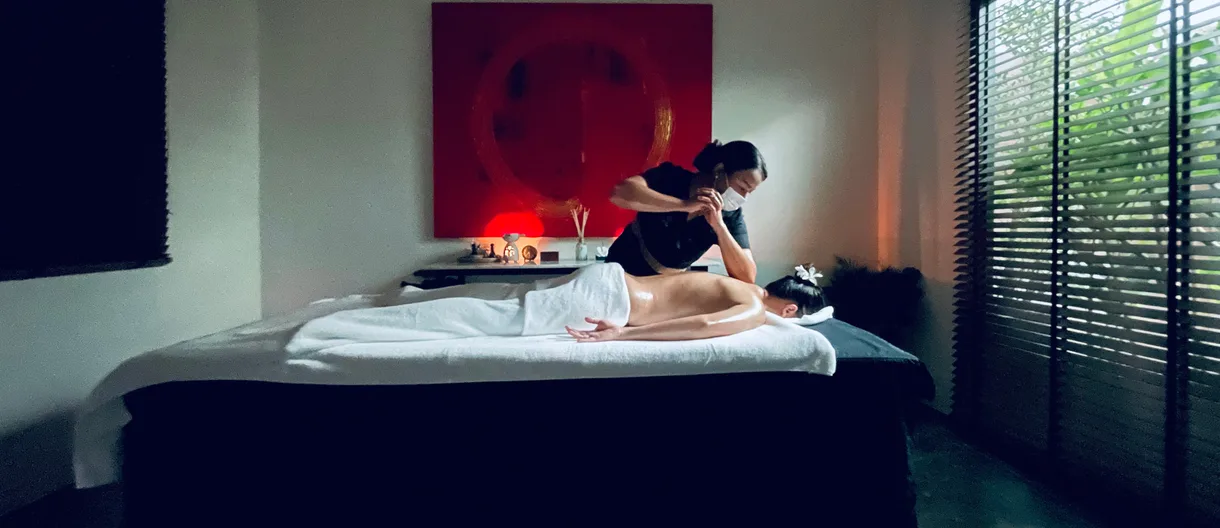
Best Thai Massage Thailand: The Loft Thai Story
Inside a Loft Thai treatment room, the first language is rhythm. A therapist settles her stance, listens to the guest’s breathing and lets pressure build without hurry. Hands pause before they move again; every stretch is supported, every change of position…
Read the guide
Best Thai Massage in Bangkok: Traditional vs Aromatic Oil vs Deep Tissue Which One Is Right For You?
Bangkok is one of the few cities in the world where massage is not just a service—it’s culture. You can book a session almost anywhere, at almost any price, and still find talented hands. That’s the magic of Thailand. But it also creates the biggest problem…
Read the guide
What Makes Authentic Thai Massage Different from Spa Massage?
People often say “I want a Thai massage,” but what they actually mean can be very different.
Read the guide