Booking a spa in Bangkok should feel exciting—not confusing. But if it’s your first time Thai massage or oil massage, it’s normal to wonder about the unspoken rules. Do you tip? How much? What do you wear? Do you keep underwear on? And how do you ask for the pressure you want without sounding awkward?
This guide is written for real guests—especially visitors who want a luxury experience at Loft Thai Spa, but also want to feel confident walking into any Bangkok spa. We’ll cover the essentials of Thai massage etiquette, including spa tipping Bangkok, what to wear for different massage styles, and the exact words (in English and Thai) that help you get the pressure that feels perfect.
Bangkok is one of the world’s best wellness cities. When you understand the etiquette, everything becomes easier—and you’ll enjoy your treatment more.
Why etiquette matters in Bangkok spas
Bangkok has every type of massage experience: quick walk-in massage shops, premium day spas, and high-end wellness destinations. The etiquette is generally friendly and flexible, but understanding the norms helps you avoid the two most common disappointments.
The first disappointment is overthinking. Some first-time guests stay tense because they’re unsure what’s “correct,” which defeats the purpose of a massage.
The second disappointment is under-communicating. Many guests don’t say anything when the pressure is too strong or too light, then leave thinking the massage wasn’t good—when it could have been perfect with a simple adjustment.
Good etiquette isn’t about rules. It’s about comfort, respect, and communication.
Spa tipping Bangkok: is tipping expected?
Tipping in Thailand is not “mandatory” in the same way it is in some countries, but for massage and spa services it is widely understood as appreciated—especially when you’re happy with the experience. Multiple travel and tipping guides describe tipping as optional but common, with typical ranges depending on the length and type of service.
In practice, many guests do tip, particularly at spas where therapists provide labor-intensive work for 60–120 minutes. It’s also one of the most direct ways to say “thank you” for great technique and care.
The key etiquette detail: if you choose to tip, it’s usually best to give it directly to your therapist rather than leaving it at reception, so the therapist definitely receives it.
How much to tip for Thai massage in Bangkok
There isn’t one official number, but common guidance clusters around a few patterns:
For standard massage sessions, many guides suggest about 50–100 THB per hour if you’re satisfied.
For premium spas and longer sessions, tips often rise to around 100–200 THB depending on duration and service quality.
Some general tipping references also frame spa tips as roughly 10–15% of treatment price, particularly for visitors who prefer a percentage rule.
What matters most is that tipping is a thank-you, not a requirement. If your therapist delivered a truly excellent session—fixed your tight shoulders, found exactly where you hold tension, adjusted perfectly to your comfort level—tipping a bit more is a meaningful gesture.
Also check whether a service charge is already included (this varies by business). Some guests tip less when a service charge is included; others still tip the therapist directly for excellent care.
When to tip (and how to do it gracefully)
In Bangkok spa culture, the easiest moment is at the end of the session, after you’ve changed and the therapist has guided you out or handed you back to reception.
The most natural way is simple: hand the tip to the therapist with a smile and a “thank you.” If you want to be extra culturally warm, add the Thai polite ending “khrap” (for men) or “kha” (for women). That small detail is always appreciated.
No big speech needed. No awkwardness. Just a simple thank you.
Thai massage etiquette: what to wear
This is one of the biggest differences between Thai massage and many Western massage styles.
Traditional Thai massage is typically done fully clothed
Thai massage is traditionally performed with the guest fully clothed in loose, comfortable clothing—often a spa-provided outfit—because the therapist uses compression, stretching, and mobility work that’s difficult to do with oil on skin.
If you’re wondering what to wear to your appointment, think “comfortable movement.” The spa will usually provide clothing, but it’s still smart to arrive in easy-to-change attire.
Oil massage is typically done with minimal clothing
Oil massage is different: oil needs direct skin contact, so guests are generally asked to undress and either keep underwear on or wear disposable undergarments provided by the spa.
If you’re shy, it’s completely normal to keep your underwear on. Professional therapists work with proper draping and respect your boundaries.
What to wear for your first time Thai massage or oil massage
If you’re new, here’s the simplest mindset:
For Thai massage, expect to be dressed in a comfortable outfit and moved through positions and stretches.
For oil massage, expect to undress to comfort level and be covered by a towel or sheet; only the area being worked on is typically uncovered.
If you’re ever unsure, you can ask the receptionist: “Should I change into the spa outfit?” or “Do you provide disposable underwear?” That’s normal, and staff hear those questions every day.
Arriving at a Bangkok spa: small etiquette that improves your experience
Luxury spas run on timing and calm pacing. Arriving a little early helps your body start relaxing before the massage even begins. Many spas also have a short consultation, foot cleansing ritual, or aroma selection. Showing up late can compress the experience and make the session feel rushed.
If you can, arrive about 10–15 minutes early so your nervous system can settle. This is especially helpful if Bangkok traffic has you stressed before you walk in.
Also, treat your spa time as a “quiet zone.” Put your phone on silent. Avoid taking calls. Let the therapist guide the pace. These small habits make your session feel dramatically more luxurious.
Hygiene and comfort: showering, deodorant, and what’s considered polite
You don’t need to overthink it. Just basic cleanliness is enough.
If you’ve been walking around Bangkok in the heat, a quick rinse before a massage is ideal—especially for oil massage. Many luxury spas provide showers or at least fresh towels and amenities. It’s less about being “perfect” and more about comfort for you and your therapist.
Avoid heavy fragrance right before your session if you can, since many spas use aromatherapy or premium oils and you’ll enjoy them more when your skin isn’t competing with a strong perfume.
How to communicate pressure: the most important Thai massage etiquette skill
Here’s the truth: pressure preference is personal. A therapist can be extremely skilled and still not magically guess whether you want “deep athletic pressure” or “gentle relaxation.”
In Bangkok, it’s normal to communicate pressure during the session. In fact, many spas encourage it. Loft Thai Spa even addresses this directly in its beginner-friendly content, because it’s one of the most common first-time concerns.
The simplest way to say it in English
You can say any of these, politely and clearly:
- “I prefer light/medium/strong pressure.”
- “A little softer, please.”
- “A little stronger, please.”
- “That’s perfect—keep it like this.”
- “Too painful here—please reduce pressure.”
No explanation required. The therapist will adjust.
Helpful Thai words for pressure
If you want to use Thai phrases (which can be fun and effective), these are commonly taught for massage situations:
- “Bao bao” = gently / softer
- “Nak nak” = stronger / heavier
- “Por dee” = just right
- “Jep” = it hurts (use when it’s too much)
A simple example:
- “Bao bao, please” when it’s too strong.
- “Por dee” when it feels perfect.
- “Nak nit noi” (stronger a little) if you want more pressure.
Don’t worry about pronunciation being perfect. Therapists understand the intent and will respond.
Deep pressure vs pain: what you should and shouldn’t tolerate
One of the most important etiquette points—especially for first time Thai massage—is knowing the difference between productive intensity and unsafe pain.
Deep Thai massage or deep tissue work can feel intense, but it should not feel sharp, alarming, or like your body is bracing. If you find yourself holding your breath or clenching your jaw, that’s usually a sign it’s too strong.
A high-quality therapist prefers you to communicate early rather than suffer silently. Saying “a little softer” doesn’t offend anyone. It helps the therapist deliver the right result.
If you want strong pressure, you can absolutely ask for it. Just keep the communication open: strong can still be controlled, gradual, and safe.
What to say if you want a relaxing oil massage (not “therapeutic deep work”)
Aromatic oil massage is often chosen for calm, stress relief, and nervous system downshift. If that’s your goal, say it before the session. Something as simple as:
- “I want relaxation today.”
- “Please focus on calming, not too deep.”
- “Medium pressure is perfect.”
When the therapist understands your intention, they’ll choose pacing and technique that match relaxation rather than deep corrective work.
What to say if you want Thai massage stretching (or if you don’t)
Traditional Thai massage often includes assisted stretching and body repositioning. Some guests love it. Some prefer minimal stretching, especially if they feel stiff, sensitive, or nervous about flexibility.
It’s absolutely okay to say:
- “I want stretching, please.”
- Or: “No strong stretching, please.”
- Or: “Gentle stretching only.”
That’s good etiquette because it prevents discomfort and lets the therapist tailor the session.
Body boundaries and modesty: what’s normal in a professional Bangkok spa
At a reputable spa, boundaries are respected and the experience is professional.
For oil massage, draping is standard: you are covered with a towel or sheet, and only the area being worked on is uncovered. You can always request extra coverage if it makes you more comfortable. You can also keep underwear on. Many spas provide disposable underwear for oil massage because it’s common for guests to prefer that.
For Thai massage, because you’re clothed, modesty is even simpler.
If anything ever feels unclear, you can speak up immediately. A luxury spa wants you to feel safe and relaxed.
Common first-timer questions (and the etiquette-friendly answers)
People often ask whether they should talk during the massage. In Bangkok spas, silence is totally fine and often preferred, but it’s also normal to speak when needed—especially about pressure, temperature, or comfort. You don’t need to fill the silence. Quiet is part of the luxury.
People also wonder if they should fall asleep. Yes, you can. Many guests do during oil massage. It’s a sign your nervous system has relaxed.
And if you’re concerned about sore muscles after a strong session, know that slight tenderness can happen after deep work. Hydration and rest help. But you should not feel bruised or harmed; if you do, that’s a sign the session was too aggressive.
Bangkok spa etiquette for couples
Couples massages are popular in Sukhumvit and across Bangkok. Etiquette is simple: decide together what vibe you want.
If one person wants deep pressure and the other wants gentle relaxation, say so. A good spa can tailor each therapist’s approach separately even in a couple room. Also, couples should never feel pressured to choose identical treatments—comfort matters more.
Why understanding etiquette makes a luxury spa feel even more worth it
When you’re confident about tipping, clothing, and communication, you relax faster. That changes the whole experience.
You stop thinking “Am I doing this right?” and start feeling the benefits: slower breathing, lower shoulders, lighter legs, calmer mind.
And that’s what a great Bangkok spa experience is really for—especially in 2026, when stress and overstimulation are part of everyday life. A massage isn’t only a “nice thing.” It’s a reset ritual, and the etiquette is simply the language that helps you receive it fully.
Quick recap, without the stress
If you remember only three things, remember these:
Tipping in Bangkok spas is optional but appreciated; many guests give a small tip when happy, often around 50–100 THB per hour, more at premium spas or for exceptional service.
Thai massage is usually fully clothed; oil massage usually involves undressing with proper draping and often disposable underwear options.
To get the pressure you want, speak up early—“bao bao” for gentler, “nak nak” for stronger, “por dee” for just right.
If you want, tell me which treatment you’re writing this for (Traditional Thai, Aromatic Oil, Deep Tissue, or a couple package) and which Loft Thai Spa branch area you want to mention (Phrom Phong / Thonglor / Sukhumvit 71 / EMSPHERE), and I’ll tailor this article’s examples and tone to match that exact page.
UPDATED LOFT THAI GUIDE
Additional guidance and current information
The following editorial update expands on the original Loft Thai article with practical context, current treatment guidance and further reading.
Before the Appointment: Arrive Ready to Consult
Arriving ten to fifteen minutes early gives the reception team time to confirm the treatment, ask about health considerations and explain what will happen. Running late may shorten the session so the next guest is not delayed.
Share pregnancy, recent surgery, an acute injury, allergies, medication that affects bruising or sensitivity, and any area that should not be touched. A spa consultation is not a diagnosis, but it helps the team adapt or recommend postponing when a treatment is not appropriate.
What to Wear for Thai Massage, Oil Massage and Facials
For traditional Thai massage, many professional spas provide loose, clean clothing because the treatment includes compression and assisted movement without oil. Wear simple clothes to the spa and remove jewellery that could catch during stretching.
For oil massage, the therapist should explain changing and draping privately. Keep on whatever undergarment the spa requests or makes available, and tell the therapist if you prefer additional coverage. Facial and head spa appointments usually require access to the face, neck or scalp, so mention hair extensions, contact lenses or recent procedures during consultation.
- Choose comfortable arrival clothing that is easy to change
- Remove valuable jewellery before entering the treatment room
- Ask how draping works before the therapist begins
- Request more coverage whenever that makes you more comfortable
How to Ask for the Pressure You Want
Words such as light, medium and firm are useful starting points, but pressure is subjective. Describe the experience you want: slow and relaxing, stretching-focused, or targeted attention to a particular area.
Give feedback during the first few minutes. A professional therapist should adjust without taking the request personally. Deep pressure can feel intense, but sharp pain, numbness, tingling, dizziness or difficulty breathing are reasons to stop and speak immediately.
-
01
Name the goal
Explain whether you want relaxation, assisted stretching or considered work around a tired area.
-
02
Choose a starting pressure
Begin with light, medium or firm, then allow the therapist to check how it feels.
-
03
Describe the sensation
Say too strong, too light, sharp, comfortable or please avoid this area rather than waiting in silence.
-
04
Reassess after a position change
Pressure can feel different on the back, legs, neck and feet, so keep communicating.
Tipping at a Bangkok Spa: Optional, Not a Fixed Rule
Thailand does not have one universal mandatory tipping rule for spa treatments. Practices vary by venue, guest and service charge. A gratuity can be a personal thank-you for attentive service, but it should not be presented as a hidden compulsory payment.
If you wish to tip, ask reception whether a service charge is already included and how gratuities are handled. Many guests give cash directly after the treatment, but the amount is a personal decision. Clear pricing and a receipt should remain separate from any optional tip.
Draping, Boundaries and Consent
Professional massage uses towels, sheets or treatment clothing to protect privacy while allowing access only to the area being treated. The therapist should knock before entering, explain major position changes and keep intimate areas covered.
You can decline a stretch, request a same-gender therapist where availability allows, ask for the door to remain positioned a certain way, or end the treatment. If anything feels unclear, stop and ask. Good hospitality never depends on a guest staying silent.
Bangkok Spa Etiquette for Couples
Couples do not need to choose the same treatment or pressure. Discuss individual preferences at reception so each therapist can plan separately while keeping the appointment coordinated.
A private couple room should still preserve individual consultation and draping. Tell the team whether you want conversation, quiet or a particular order for changing and showering.
After the Treatment: Leave Without Rushing
Take a moment to sit up, dress and check that you have your belongings. Reception can clarify aftercare, current opening hours, transport or a future appointment without turning the end of the visit into a sales conversation.
Seek medical advice for severe or persistent symptoms rather than assuming they are a normal sign that massage has worked. A professional spa should welcome feedback about comfort, pressure and service.
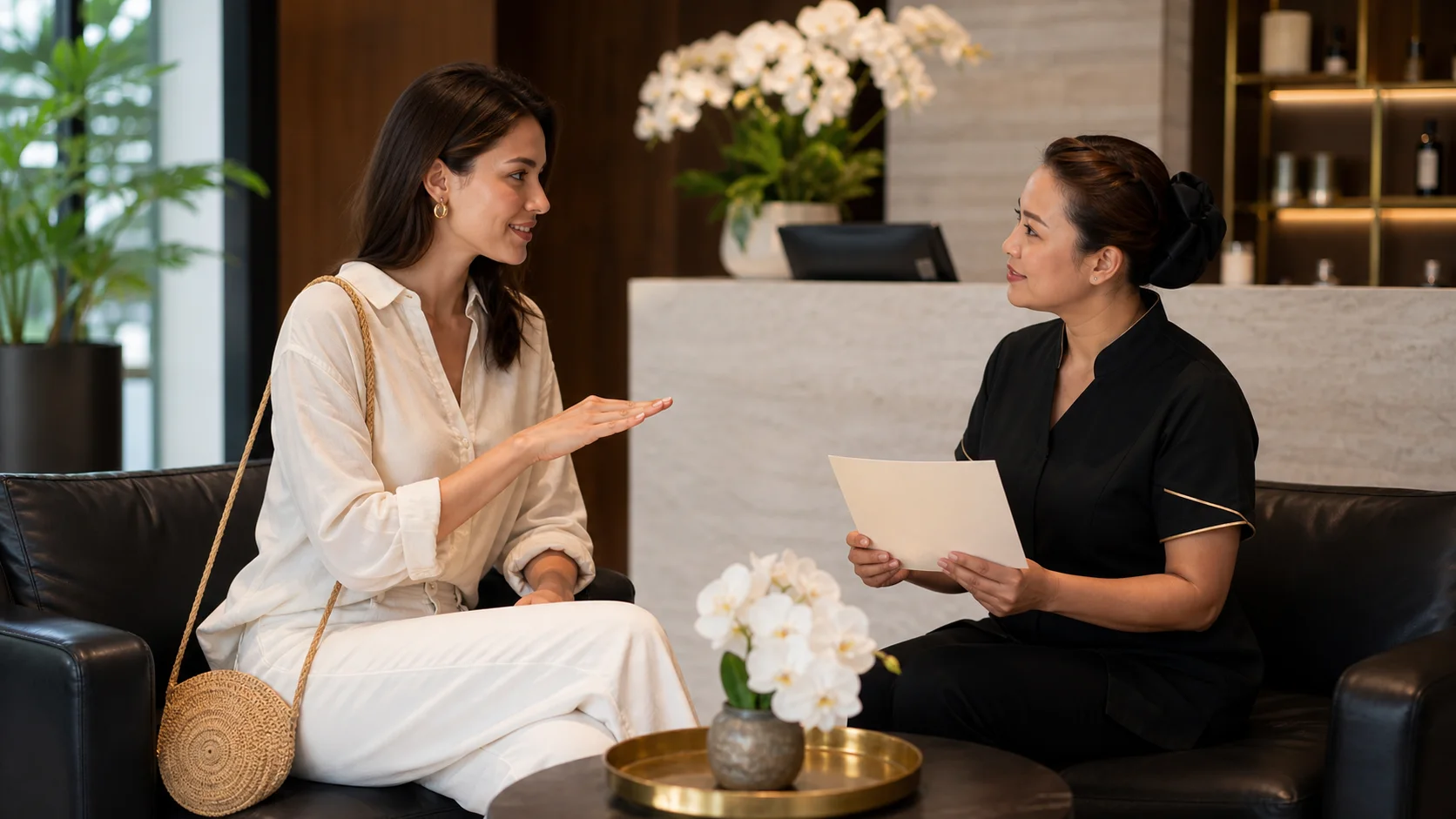
WATCH & LEARN
See a professional Thai massage experience at Loft Thai Spa
“The most useful spa etiquette is honest communication delivered early, calmly and without embarrassment.”
Loft Thai Editorial Team
Continue your research
REFERENCES
Sources & further reading
PRACTICAL GUIDANCE
Frequently Asked Questions
Is tipping required after a massage in Bangkok?
No single mandatory amount applies across Bangkok. Tipping is generally an optional gesture. Check whether a service charge is included and ask reception if you are unsure how gratuities are handled.
What should I wear for traditional Thai massage?
Professional spas commonly provide loose treatment clothing for Thai massage. Arrive in comfortable clothes, remove jewellery and follow the spa’s private changing instructions.
How do I ask for less pressure?
Say so as soon as the pressure feels too strong. Phrases such as lighter please, this area is sensitive or please avoid this spot are clear and appropriate.
Do I have to remove all my clothing for oil massage?
No. The spa should explain its changing and draping procedure, provide privacy and keep the body covered except for the area being treated. You can request additional coverage.
How early should I arrive?
Ten to fifteen minutes is useful for consultation and changing. Allow more time if it is your first visit or if you need to discuss health considerations.
CONTINUE READING
Related stories
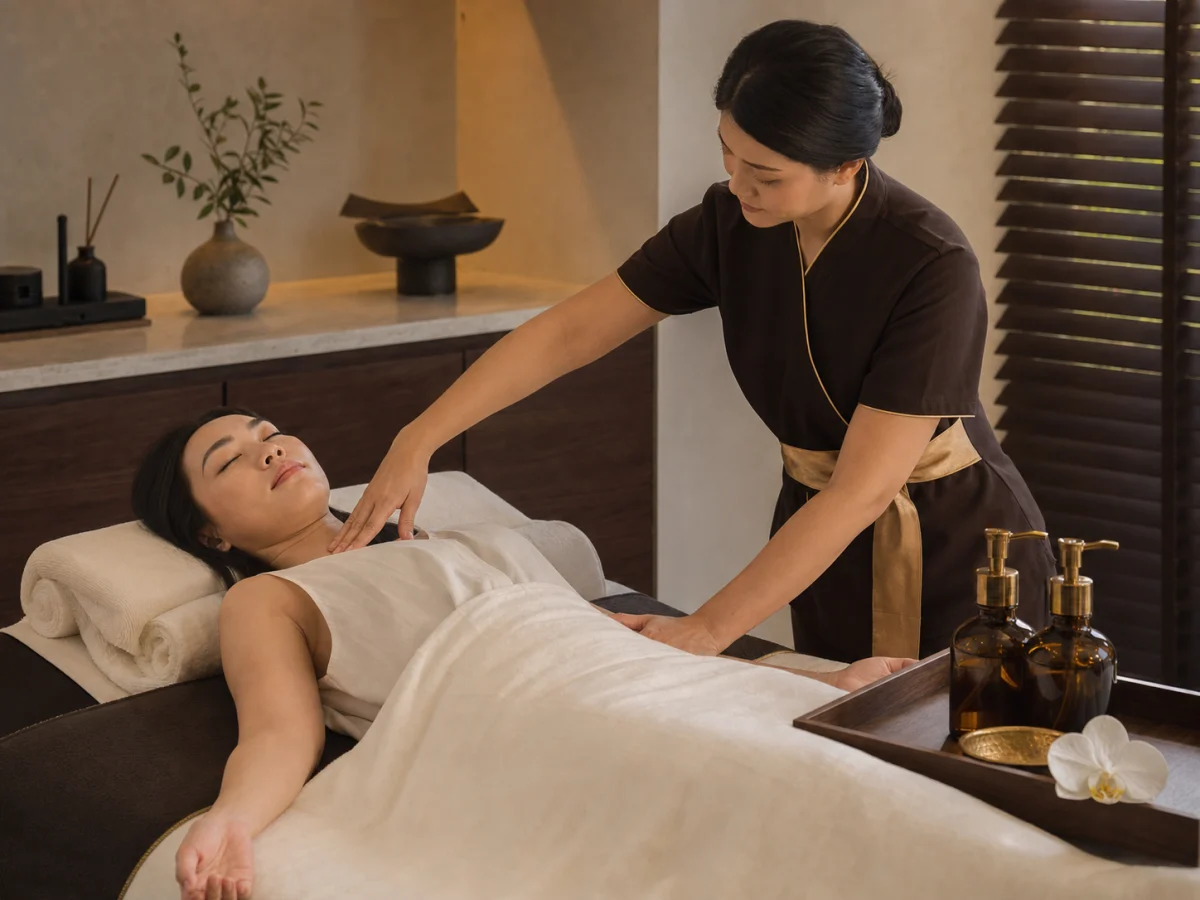
Late Night Massage in Bangkok: The Ultimate Way to Relax Before Sleep
Bangkok is a city that never truly sleeps. From vibrant night markets and rooftop bars to late-night dining and entertainment, the Thai capital remains lively long after sunset. Yet for many travelers and residents, the perfect way to end the day in Bangkok is…
Read the guide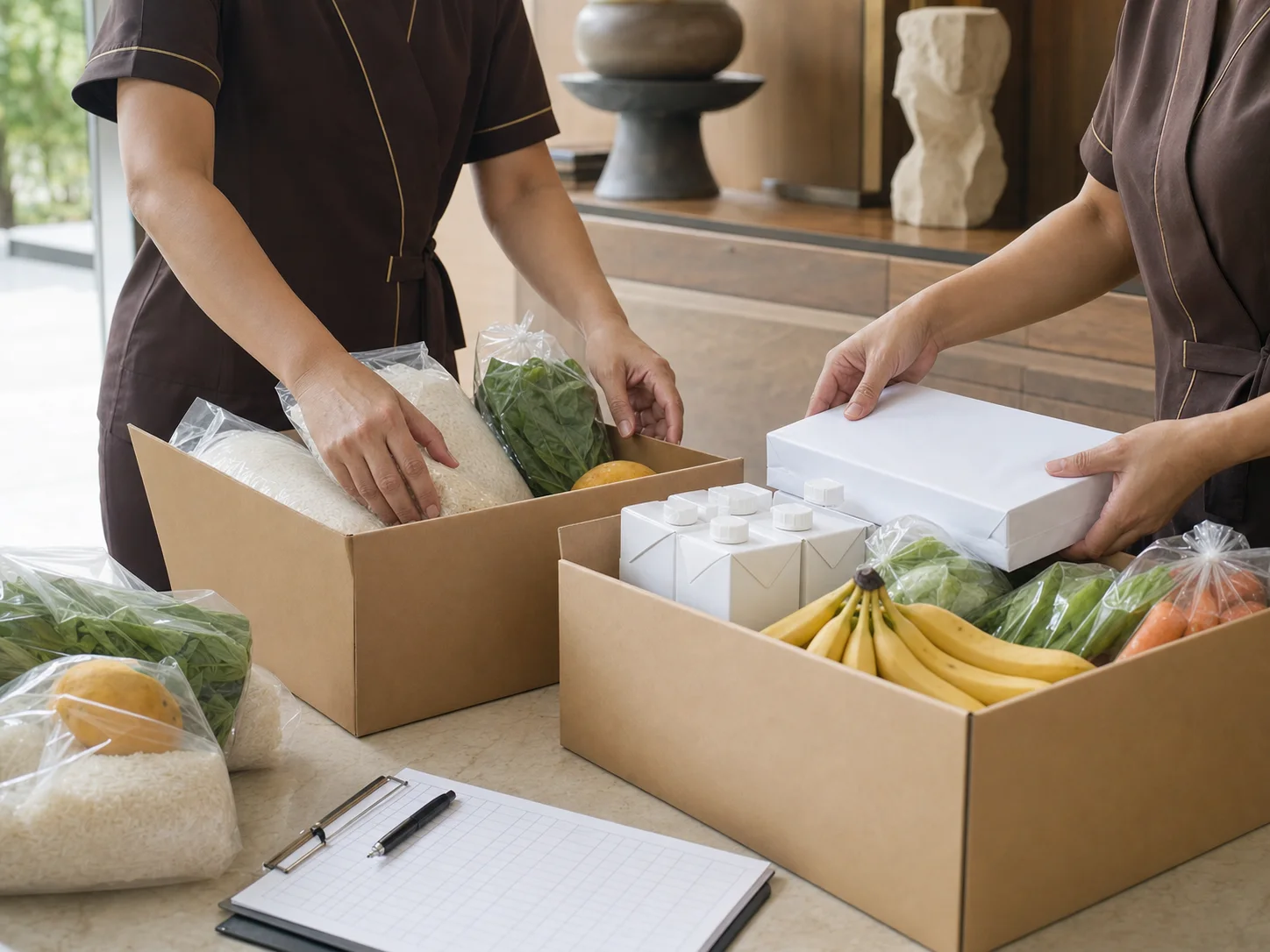
Supporting the Children of Khlong Toei Nursery
At Loft Thai Spa, we believe that true beauty and wellness go beyond the treatments we offer inside our serene spa. As part of our commitment to the community, we recently organized a heartwarming charity initiative to support the children of Khlong Toei…
Read the guide