
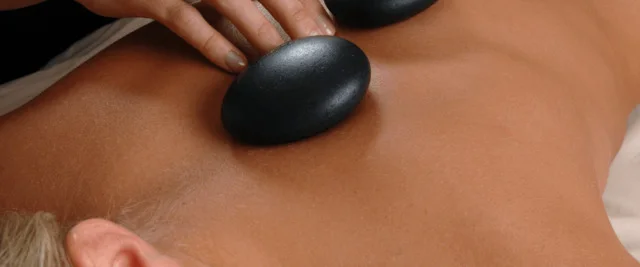
Smooth, heated stones are used in hot stone massages to promote relaxation, ease muscle tension, and improve general health and wellness. Despite the current rise in popularity of this therapeutic approach, it has a lengthy and diverse history that cuts across many ethnicities and cultural traditions. The history of hot stone massage in ancient China and India as well as its cultural significance around the world will be examined. We'll also examine the current use of hot stone massage in Western spas and medical facilities.
The Roots of Hot Stone Massage
Many historical societies have used the age-old tradition of hot stone massage. It was used as a medicine in ancient China and India to ease muscular tension, improve circulation, and promote relaxation.
Hot stone massage, also known as "shiatsu," was regularly combined with acupuncture in China to help balance the body's energy flow. The practice of "ayurvedic massage," also known as hot stone massage, was an essential component of traditional Ayurveda treatment in India.
Hot Stone Massage in Native American Culture
The hot stone massage was highly valued in Native American culture, particularly among the Hopi tribe. The Hopi employed hot stones to improve both physical and mental health because they believed they had therapeutic properties that could balance the body's energy.
In Hopi culture, hot stone massage was regularly mixed with other traditional medical practices like sweat lodges and herbal remedies. The stones were heated in a fire before being placed to specific body regions, including the back, shoulders, and legs, in order to aid in the release of stress and to promote relaxation.
The Rise of Hot Stone Massage in Western Culture
Although hot stone massage has been used for millennia in numerous cultures, it wasn't until the 1990s that it gained widespread acceptance in Western society. This was largely due to a technique developed by Arizona-based massage therapist Mary Nelson that involved adding hot, smooth stones to a full-body massage.
Nelson's approach quickly gained popularity and became the norm in spas and health centers throughout the globe. Today, hot stone massage is regarded as a popular and effective form of massage therapy.
The Cultural Significance of Hot Stone Massage Today
In many parts of the world today, hot stone massage is still relevant culturally in addition to historically. For instance, hot stone massage is extensively utilized in Japan to promote relaxation and reduce stress, particularly in busy urban areas.
In Hawaii, hot stone massage, sometimes referred to as "lomi lomi," is a significant component of the long-standing healing rituals practiced there. The lomi lomi method, which uses hot stones to promote relaxation and stress reduction, is deeply rooted in Hawaiian culture and spirituality.
The Benefits of Hot Stone Massage
Hot stone massage offers various health benefits in addition to its relevance as a cultural practice. The heat from the stones promotes circulation, which can reduce muscle tension and improve general health and fitness.
Also, a hot stone massage can improve sleep quality, relax you more, and reduce stress and anxiety. Also, it has been shown to help with the symptoms of conditions like fibromyalgia, arthritis, and chronic pain.
Conclusion
Hot stone massage is a beautiful and ancient method that has been embraced by many different cultures throughout history. From its origins in China and India to its significance in Native American and Hawaiian culture, hot stone massage has played a key role in healing procedures all over the world.
Due to its many therapeutic benefits, hot stone massage is becoming a popular type of massage therapy in spas and health centers all over the world. Whether your goal is to reduce tension and anxiety or you simply want to relax and unwind, a hot stone massage is a fantastic way to improve general health and wellness.
Moreover, it should be noted that hot stone massage is not only a medical practice but also a custom with a rich cultural and historical background. The method has evolved and spread to many parts of the world, with each culture giving it a unique twist. Hot stone massage is now a well-known and well-accepted kind of therapy in the West, and many spas and health centers offer it as a service. Whether you're looking to rest and relax, learn about conventional treatment methods, or get a therapeutic massage, hot stone massage can be a meaningful and refreshing experience for the body and mind.
UPDATED LOFT THAI GUIDE
Additional guidance and current information
The following editorial update expands on the original Loft Thai article with practical context, current treatment guidance and further reading.
How to Read the History of a Spa Technique
A credible history distinguishes dated primary evidence, practitioner tradition, brand history and later marketing retellings.
The existence of heated stones in a culture does not by itself establish the same placement, massage sequence or therapeutic claim used today.
Specific community traditions deserve their own sources and language.
Heat and Stone Have Broad Human Histories
People in many regions have used fire-heated stones for cooking, bathing, steam, domestic warmth and ceremonial settings.
Those practices show the long familiarity of stone as a heat carrier.
They do not prove that every modern spa protocol descends directly from one ancient treatment.
Shiatsu Is Not Ancient Chinese Hot Stone Massage
The archived article described hot stone massage in China as shiatsu, combining two different histories and terms.
Shiatsu is a Japanese manual practice and is not a synonym for placing heated stones on the body.
Chinese heat traditions should not be used as a generic origin story without a specific historical source.
Ayurveda Is Not Another Name for Hot Stone Massage
Ayurveda contains diverse practices with their own texts, materials, training and cultural context.
Calling hot stone massage Ayurvedic massage erases those distinctions.
A contemporary spa may combine warmth with an Ayurvedic-inspired product only when the actual protocol and source justify that description.
Do Not Borrow Indigenous Authority Without Evidence
The previous article attributed a therapeutic hot stone system to the Hopi and described sweat-lodge use without citing a Hopi source.
An Indigenous community should not be inserted into a commercial spa history as proof of authenticity.
Absent community-authored evidence, the responsible choice is to leave the claim unmade.
Lomi Lomi Is Not Defined by Hot Stones
Hawaiian lomi traditions have their own cultural and practitioner lineages.
A modern service may combine lomi-inspired touch and heated stones, but the combination does not make the terms interchangeable.
Technique names should identify what is actually taught and performed.
The Documented 1993 LaStone Record
LaStone’s official history says massage therapist Mary Nelson created LaStone Therapy in Tucson, Arizona, in 1993.
The account describes warm stones first and later the addition of cool marble.
This is a primary brand history for a specific modern system, not proof that Nelson invented every human use of heated stone.
How a Modern Spa Modality Spreads
Training courses, equipment suppliers, resort menus and practitioner adaptation can move a protocol quickly across markets.
As the term hot stone massage becomes generic, individual spas may use different stone types, temperatures, placements, oils and manual techniques.
The service name alone cannot describe the full treatment.
Thai Massage Has Its Own Documented Heritage
UNESCO inscribed Nuad Thai on the Representative List of the Intangible Cultural Heritage of Humanity in 2019.
Its documentation describes Thai manual knowledge and the use of heated herbal compresses, not a universal ancient volcanic-stone lineage.
A Bangkok spa can respectfully combine contemporary hot stone care with Thai hospitality without rewriting Nuad Thai history.
Stone Material and Shape Affect Handling
Contemporary spas commonly use smooth stones selected to retain heat and move comfortably over the body.
Material, mass and shape affect how quickly a stone warms, cools and transfers heat.
The therapist needs equipment knowledge rather than relying on a stone’s natural appearance.
Temperature Control Is the Central Safety Skill
Stones can retain uneven heat and continue transferring it during stationary contact.
The therapist should test temperature, begin with moving contact and keep checking sensation.
A guest should never be asked to tolerate burning, sharp heat or numbness as part of the benefit.
A Burn Is an Injury, Not a Healing Response
NHS guidance defines burns as skin damage from dry heat and advises prompt cooling under running water.
A blister, persistent pain or visible burn ends the spa treatment and needs appropriate first aid or medical advice.
Oil, cream or another hot stone should not be used to cover the problem.
The Manual Massage Still Matters
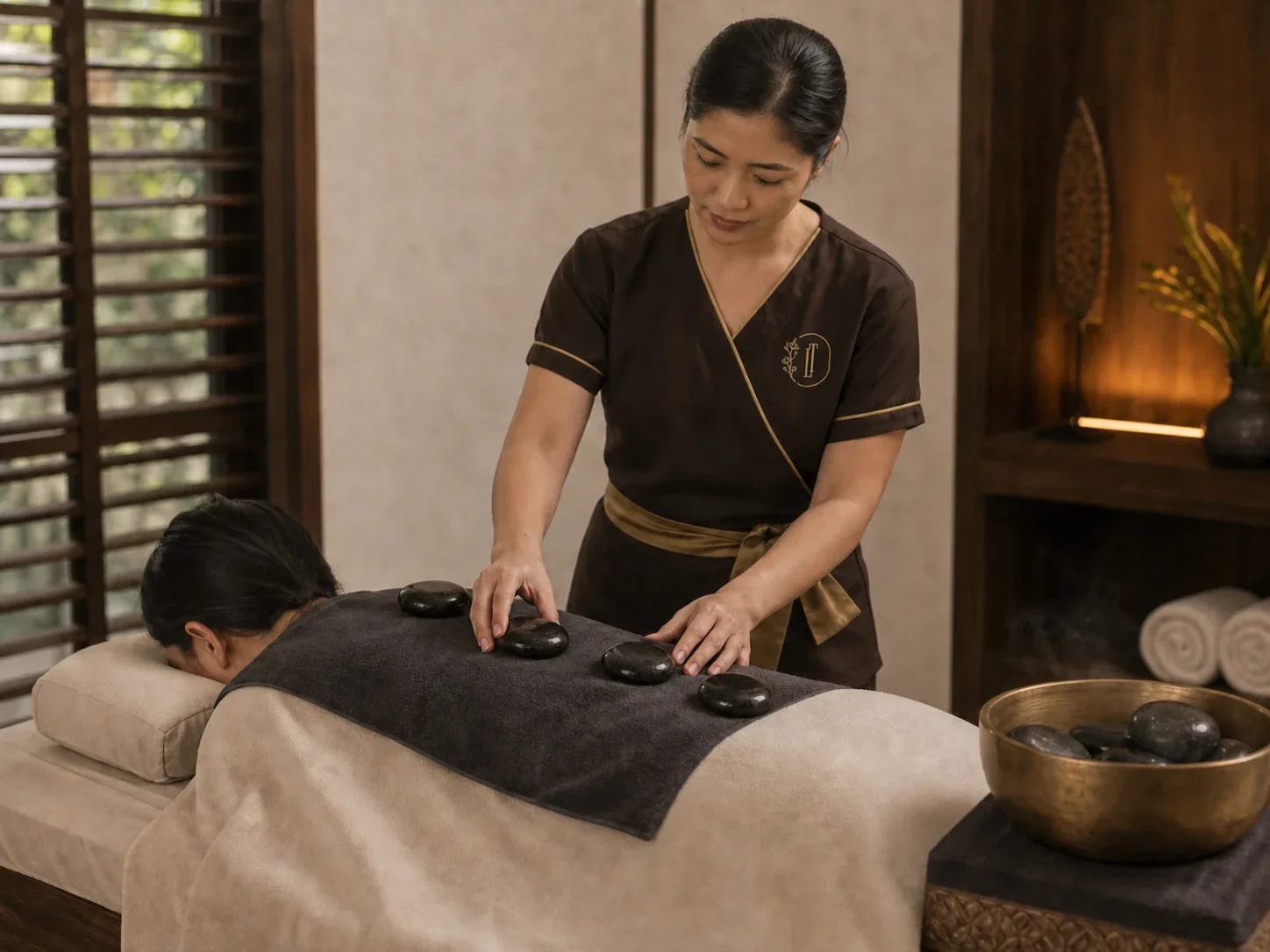
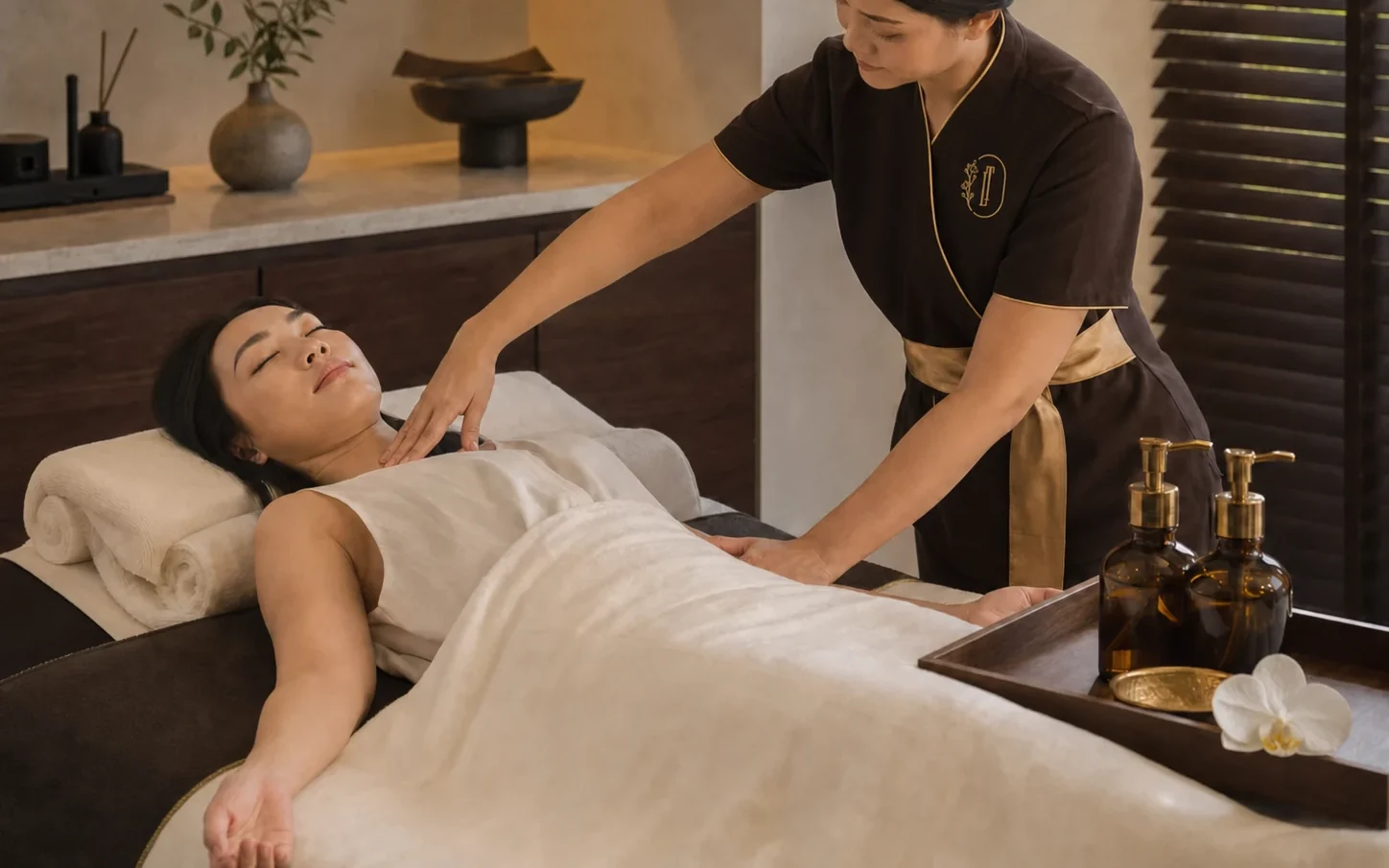
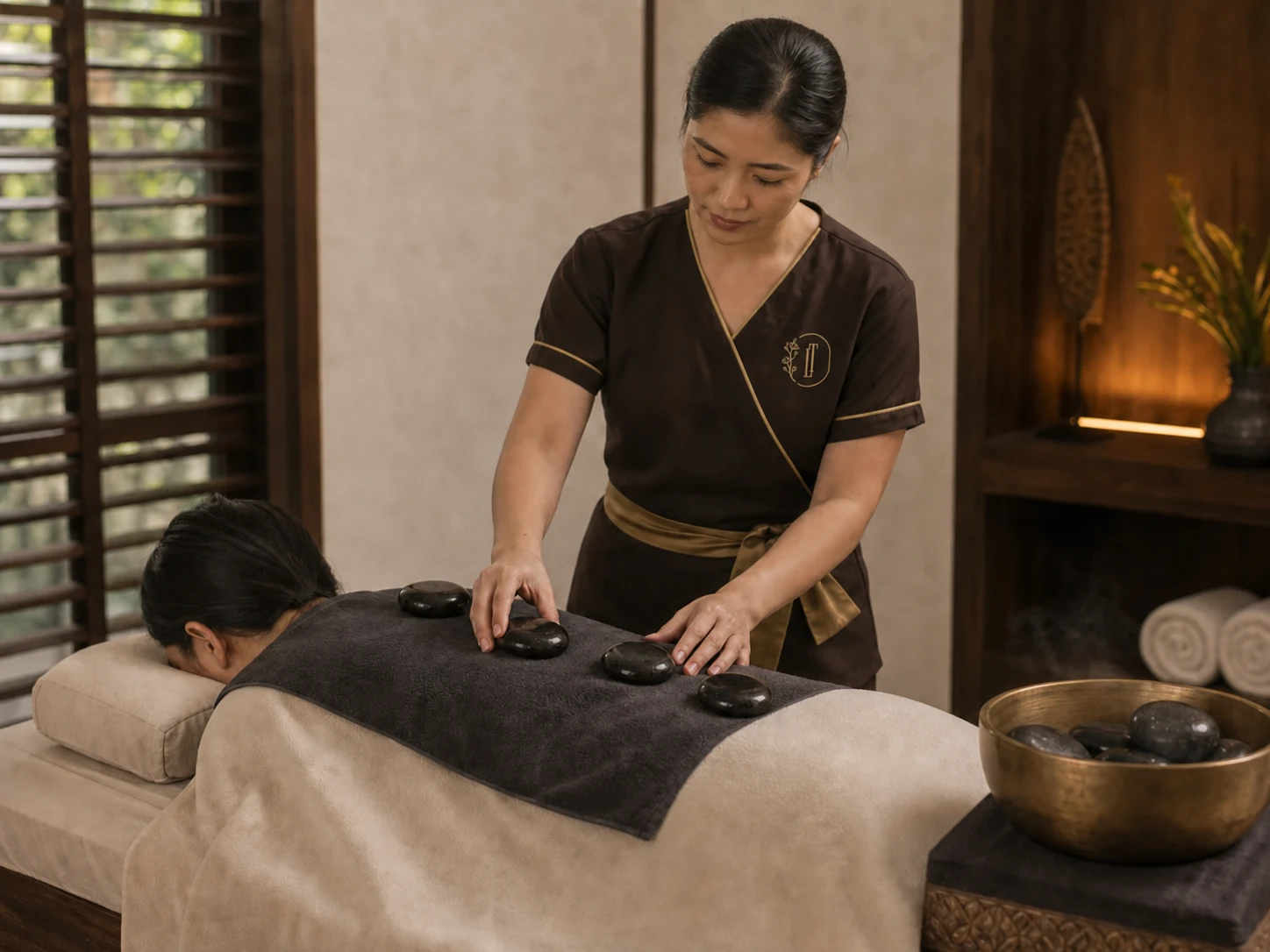
Hot Stone Massage combines stones with hands-on touch, pressure and often warm oil.
Any perceived result cannot automatically be attributed to stone heat alone.
Pressure, focus areas, duration, product and therapist technique remain independent variables.
current Hot Stone Massage
Loft Thai’s reviewed current menu lists Hot Stone Massage with heated volcanic stones and warm oil.
It is priced at 3,200 THB for 90 minutes and 4,200 THB for 120 minutes.
The service should be chosen for a paced heat-and-massage ritual, not a guarantee to cure pain or anxiety.
current Deep Tissue Hot Stone
Deep Tissue Hot Stone combines deeper-pressure bodywork with heated volcanic stones.
It is listed at 3,400 THB for 90 minutes and 4,400 THB for 120 minutes.
More pressure and more heat are not automatically better; both require separate comfort checks.
current Infused Hot Stone
Infused Hot Stone adds a choice of aromatic essential-oil direction to the heated-stone sequence.
It is listed at 3,400 THB for 90 minutes and 4,400 THB for 120 minutes.
Fragrance preference, ingredient sensitivity and room aroma should be discussed before use.
A History-and-Protocol Verification Card
Use these fields when a spa presents an ancient or cultural origin story.
- Name the exact technique rather than a broad region
- Separate community tradition from commercial brand history
- Identify the dated primary source
- Avoid treating similar materials as identical lineages
- Describe stone, temperature, oil and manual sequence
- Keep medical outcomes separate from cultural significance
Respect Grows from Precision
Hot stone massage can be a compelling modern spa ritual without a fictional tour of ancient civilisations.
The documented LaStone history, wider human use of heated stone and distinct cultural traditions can coexist when their boundaries remain clear.
In practice, controlled temperature, trained hands and honest expectations matter more than an exaggerated origin story.
“Similar uses of heat and stone across cultures do not automatically form one technique, one inventor or one uninterrupted lineage.”
Loft Thai Editorial Team
Continue your research
REFERENCES
Sources & further reading
PRACTICAL GUIDANCE
Frequently Asked Questions
Who created modern LaStone Therapy?
LaStone’s official history says massage therapist Mary Nelson created the system in Tucson, Arizona, in 1993.
Did Mary Nelson invent every form of hot stone use?
No. Her record concerns a specific modern spa system. People in many regions used heated stones for other purposes long before 1993.
Is shiatsu another name for hot stone massage?
No. Shiatsu is a Japanese manual practice and should not be used as a generic label for ancient Chinese hot stone massage.
What is the main hot stone massage risk?
Excessive or uneven temperature can burn skin. Temperature testing, moving contact, repeated comfort checks and prompt response to heat are essential.
What do Loft Thai hot stone massages currently cost?
Classic Hot Stone is 3,200 THB for 90 minutes and 4,200 THB for 120 minutes. Deep Tissue and Infused Hot Stone are 3,400 and 4,400 THB.
CONTINUE READING
Related stories
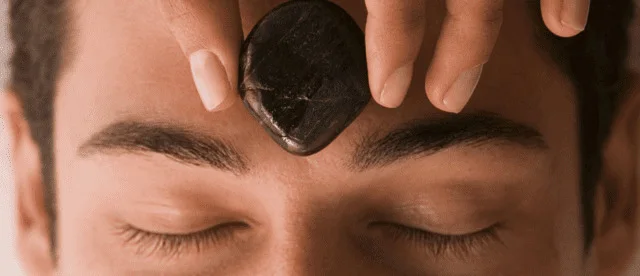
Combining hot stone massage with other therapeutic modalities for a holistic wellness approach
Heated stones are used in the therapeutic practice of hot stone massage to enhance the massage experience. The stones are frequently made of basalt, a volcanic rock type that effectively retains heat.
Read the guide
Incorporating Aromatherapy With Hot Stone Massage for an Enhanced Sensory Experience
It's popular to practice massage therapy as a means to relax and de-stress. It provides a number of physical and psychological health benefits, including improved mood, less muscle tension, and enhanced circulation.
Read the guide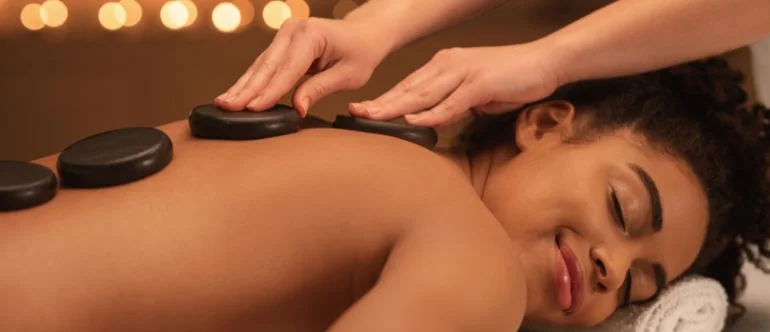
Healing Hot Stone Massage: A Tranquil Experience at Loft Thai Spa
Indulge in the world of holistic wellness at Loft Thai Spa, where the art of spa therapy reaches new heights. Offering an array of healing treatments, this Bangkok gem is a sanctuary for stress relief and rejuvenation.
Read the guide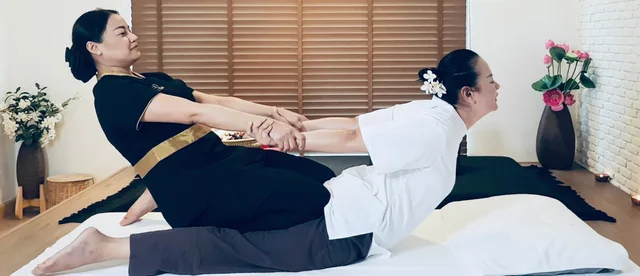
Experiencing the Thai Warrior Massage with Loft Thai Spa
Thai Warrior Massage, also known as Thai Massage or Nuad Bo-Rarn, is a distinct form of bodywork that dates back more than 2,500 years in Thailand. To relieve tension, improve flexibility, and promote relaxation, this therapeutic massage technique combines…
Read the guide