
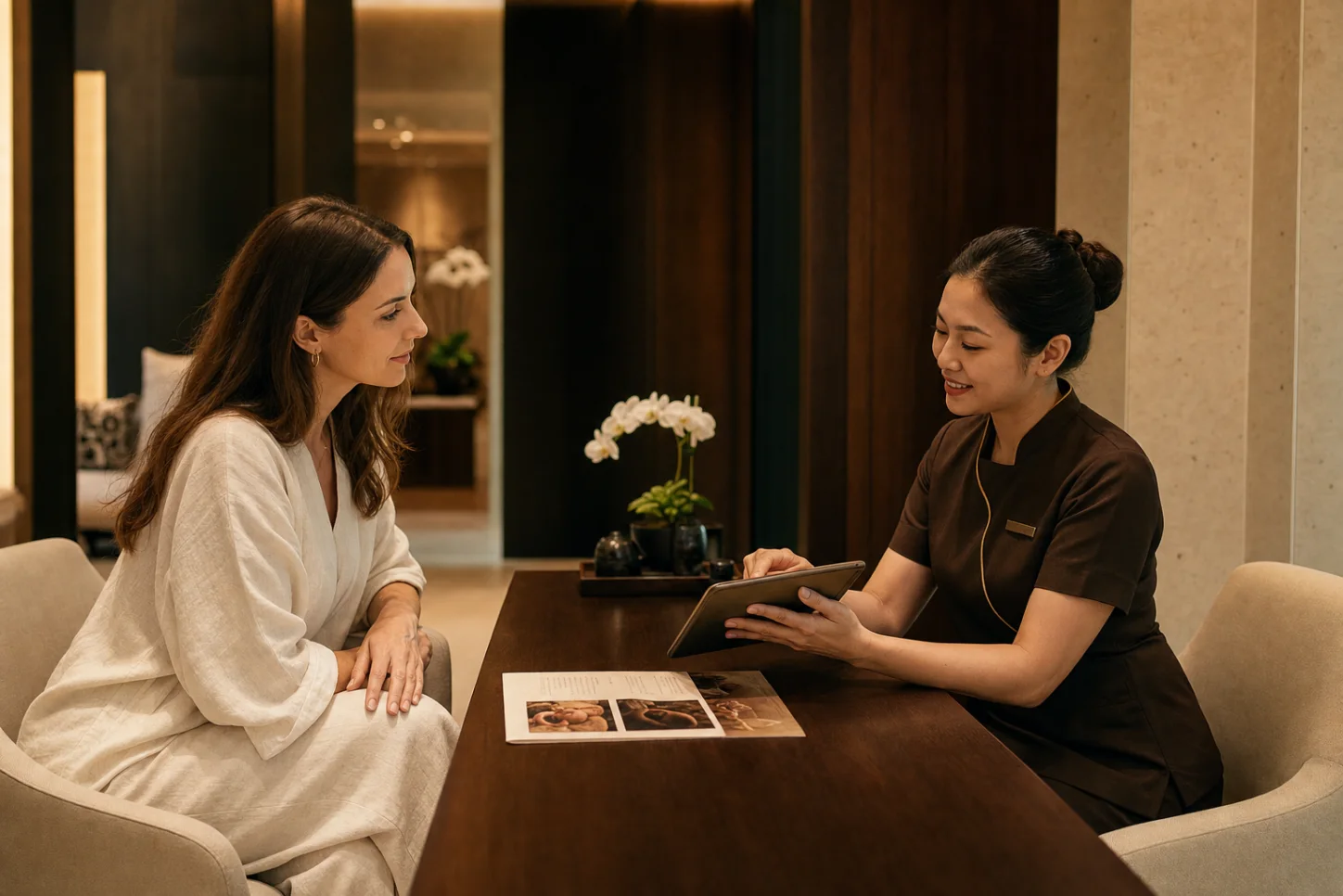
Nearly every element of our life has recently undergone a technological transformation, and the spa sector is no different. Technology has created new opportunities for upgrading spa services and giving clients a more individualized and immersive experience, from online booking platforms to cutting-edge treatment gadgets. In this article, we'll look at some of the ways that technology is changing the spa business and how both spa owners and their patrons stand to gain from these developments.
Personalization and Booking Streamlining
Online booking platforms are one of the most significant ways technology has improved spa services. The days of calling the spa and hanging on the line to make an appointment are long gone. Customers may quickly view the services that are offered, pick a comfortable time frame, and make a reservation with only a few clicks thanks to online booking tools. This not only allows for a streamlined and effective booking process but also saves time for both the client and the spa staff.
Additionally, a lot of spas now provide their clientele with unique internet profiles. Information including treatment choices, allergies, and past appointments are kept in these profiles. Spas can provide each customer a more customized experience thanks to this data. For instance, if a client has previously stated a desire for deep tissue massages, the spa may be able to suggest comparable treatments or even let the client know when a therapist with deep tissue massage experience becomes available. Spas may provide a more individualized and customer-focused service by utilizing technology to gather and use client data.
Convenient and engaging mobile apps
The use of mobile applications is another development in spa technology. Customers can easily browse services, book appointments, and get information about the spa via spa applications on their cellphones. Additionally, some apps provide features like virtual tours of the spa's facilities, in-depth treatment explanations, and staff communication. The spa can use these applications as excellent marketing tools to reach a bigger audience and more successfully market their services. They also improve the entire customer experience.
Modern Treatment Equipment
Technology has simplified the booking procedure and changed the therapies and treatments provided at spas. More effective and tailored treatments are now possible because to the development of cutting-edge treatment equipment. For instance, several spas now provide LED light treatment, which uses various light wavelengths to treat a variety of skin issues like acne, aging, and hyperpigmentation. In the spa business, other cutting-edge gadgets have also gained popularity. These include radiofrequency and microcurrent equipment, which provide non-invasive treatments with noticeable outcomes.
VR & AR Immersive Experiences
Additionally, virtual reality (VR) and augmented reality (AR) experiences have entered the spa industry thanks to technology. With the help of VR headsets, patients can be taken to peaceful settings during treatments, enjoying an immersive and soothing experience. On the other hand, AR can be utilized to improve the client's comprehension of various treatment methods or to highlight the potential outcomes of a specific skincare item or method. Clients can experience a multisensory experience that transports them to a realm of peace and beauty by integrating VR and AR technologies with spa services.
Successful Spa Management
Additionally, the use of technology has greatly enhanced spa management and operations. Spa owners can now manage different elements of their business, such as scheduling, inventory management, employee management, and customer relationship management (CRM), by utilizing software solutions created expressly for the industry. Through analytics and reporting tools, these systems boost productivity, streamline administrative processes, and offer useful insights into the spa's performance. Spa owners and staff can concentrate more on providing great services to their guests by automating regular tasks.
Integration of Self-Care and Wellness
Last but not least, technology has made it easier for people to incorporate health and self-care into their daily life outside of just going to the spa. Health and wellbeing tracking mobile apps and wearable technology have grown in popularity. By collaborating with digital firms and integrating their services with these applications and devices, several spas have embraced this trend. Customers can monitor their heart rate, stress levels, and sleep habits, for example, and depending on the information gathered, receive individualized recommendations for spa treatments or self-care practices. By fusing technology with wellness, clients may maintain their health outside of the spa, encouraging a comprehensive and long-lasting approach to self-care.
The spa sector has benefited greatly from technology, which has improved consumer satisfaction and changed how services are provided. Technology has completely changed the spa experience, from individualized profiles and online booking services to mobile apps and cutting-edge treatment equipment. Spa businesses may streamline operations, provide more individualized services, and beat the competition by embracing these technological improvements. Customers can benefit from a more convenient, all-encompassing, and personalized spa experience that is catered to their specific needs and interests. The potential for upgrading spa services is only anticipated to increase as technology develops, ensuring an even more exciting future for the sector.
UPDATED LOFT THAI GUIDE
Additional guidance and current information
The following editorial update expands on the original Loft Thai article with practical context, current treatment guidance and further reading.
From Technology Catalogue to Service Scorecard
The previous article moved from online booking and customer profiles to apps, LED devices, radiofrequency, microcurrent, VR, AR, management software and wearables.
It assumed that each layer increased personalisation, efficiency or results. It did not show how a spa should verify those improvements.
This version starts with operations: the decisions, handoffs and controls that turn a listed treatment into a consistent guest experience.
Score One: A Single Current Source of Truth
Every channel should draw treatment names, durations, prices, branches, inclusions and status from one governed source.
An archived article, printed menu, social post and booking form can create conflict when updates reach them at different times.
Measure the number of corrections caused by inconsistent information and assign ownership for updating the current menu and connected systems.
Score Two: Availability That Matches Real Capacity
A booking platform should account for therapist skills, room type, equipment, cleaning, changing time, couple setup and branch opening hours.
Real-time availability is only useful when those dependencies are accurate. Otherwise, automation confirms appointments that reception must later renegotiate.
Track accepted bookings, manual corrections, double-booking risk, unavailable equipment and the gap between request and confirmation.

Score Three: Relevant Consultation Without Overcollection
A pre-arrival form can prepare pressure preferences, areas to avoid, product sensitivities, accessibility needs and the purpose of the visit.
It should not turn every guest into a permanent health profile. Thailand’s Personal Data Protection Act requires an appropriate basis and transparency for personal-data processing, with additional attention to sensitive information such as health data.
Measure whether the information reaches the therapist accurately, can be corrected and reduces repeated questions without displacing the in-person consultation.
Score Four: Room and Product Readiness
Technology can translate the booking into a preparation checklist: room, linen, products, temperature, equipment, guest count and approved adaptations.
The checklist needs a responsible person and a completion point. A notification that no one owns does not prepare a room.
Track late setups, product substitutions, missing items, incorrect room types and whether the guest was informed before a material change.
Score Five: Equipment Lifecycle Control
A device-led service needs the exact model, intended function, operating protocol, cleaning process, training record, maintenance schedule and failure procedure.
Connected equipment may add software versions, accounts, logs and vendor support. A smart label does not remove physical maintenance.
Measure downtime, cancelled or modified treatments, overdue maintenance, staff competence and whether a non-device alternative is available.
Score Six: Product Traceability and Substitution
Inventory software can show whether oils, masks, serums, compresses and consumables are available for a booked protocol.
For professional products, the record should support batch or lot information where appropriate, expiry, storage, opened-on date and approved substitution.
A silent substitution can change fragrance, allergens, texture or intended use. Technology should prompt a human explanation rather than conceal the change.
Score Seven: Payment With a Clear Boundary
The spa record needs the amount, currency, payment status, transaction reference and refund or cancellation position.
It does not need full card details copied into general chat or consultation notes. PCI Security Standards Council guidance asks businesses to consider the complete e-commerce card-data flow.
Measure failed payments, duplicate charges, manual exposure of card information, refund time and mismatches between a paid item and the confirmed appointment.
Score Eight: Accessible Completion
W3C guidance supports labelled forms, visible keyboard focus, adequate target sizes, alternatives to dragging, reduced repeated entry and consistent help.
A booking is not successfully digitalised if a guest must ask someone else to operate it or abandon the process.
Measure completion with keyboard and assistive technology, zoom and mobile layouts, clear errors, human-assisted parity and the effect of fixed contact controls on visible focus.
Score Nine: Security and Privacy Through the Lifecycle
NIST Cybersecurity Framework 2.0 organises outcomes around Govern, Identify, Protect, Detect, Respond and Recover. A spa can use those functions to structure ownership across booking, accounts, devices and vendors.
The NIST Privacy Framework adds attention to problems individuals may experience throughout data processing, even without a cybersecurity breach.
Measure access reviews, departed-staff accounts, update status, incident detection, tested recovery, retention, deletion and whether a vendor can return usable records.

Score Ten: Exception and Service Recovery
The real quality of an operations system appears when a guest changes branch, arrives late, disputes a payment, reports discomfort or encounters an outage.
Create a named owner, a visible next action and a human escalation route. Do not trap sensitive issues inside automated menus.
Measure acknowledgement, resolution, fairness, repeated cause and whether the correction reaches the menu, training or system configuration.
Analytics Should Explain Work, Not Rank People
Dashboards can reveal booking corrections, service demand, equipment downtime, substitution, recovery and capacity patterns.
They can also create false precision when definitions change or when staff behaviour is reduced to a speed score.
Document every metric, denominator, exclusion and decision use. Pair numbers with observation from reception, therapists and guests.
The Twelve-Line Operations Scorecard
Review this scorecard monthly, after a system change and after any material incident.
-
01
Menu consistency
Percentage of channels matching the current service record.
-
02
Confirmation completeness
Bookings containing treatment, branch, time, duration, price and status.
-
03
Capacity accuracy
Bookings delivered without room, therapist or equipment correction.
-
04
Consultation continuity
Relevant information available, reviewable and confirmed in person.
-
05
Room readiness
Setups complete before the guest arrives.
-
06
Equipment availability
Maintenance completed and downtime handled without hidden substitution.
-
07
Product traceability
Current stock, expiry and substitution visible to the responsible team.
-
08
Payment integrity
Correct amount and status with no card data in inappropriate channels.
-
09
Accessible completion
Self-service and assisted routes tested across real access needs.
-
10
Account hygiene
Permissions, updates and departed-user access reviewed.
-
11
Recovery quality
Exceptions assigned, resolved and used to prevent recurrence.
-
12
Total workload
Time saved or shifted across guests, reception, therapists and managers.
Claims Removed from the Previous Version
The former article claimed profiles and wearables produce personalised treatments, apps improve engagement, advanced devices create noticeable results and VR or AR transports guests into peace and beauty.
It named LED, radiofrequency and microcurrent without establishing current Loft Thai inventory, professional scope or evidence for the stated skin outcomes.
The reconstruction replaces speculative benefits and competitive promises with service measures that can reveal whether technology actually helps.
Better Operations Should Feel Like Better Care
Guests should not need to notice the technology supporting a prepared room, complete confirmation or accurate handoff.
Managers should be able to see its value through fewer corrections, stronger controls, accessible completion and a clearer response to exceptions.
Adopt systems that improve those conditions. Retire or redesign the layers that only move complexity somewhere less visible.
“A useful system does not merely produce more data; it helps the right person make a better service decision at the right moment.”
Loft Thai Editorial Team
Continue your research
REFERENCES
Sources & further reading
- ISO: Wellness Spa Service Requirements, ISO 17679:2016
- W3C Web Accessibility Initiative: Accessible Forms Tutorial
- W3C: What Is New in WCAG 2.2
- NIST: Cybersecurity Framework 2.0
- NIST: Getting Started With the Privacy Framework
- Thailand ETDA: English Translation of the Personal Data Protection Act
- PCI Security Standards Council: Best Practices for Securing E-Commerce
- Loft Thai: Current Spa Menu 2026
PRACTICAL GUIDANCE
Frequently Asked Questions
How can technology improve spa service?
It can improve menu consistency, booking accuracy, consultation handoffs, room readiness, equipment maintenance, product traceability, payment status and service recovery.
Which spa technology metric matters most?
There is no single metric. Confirmation completeness, correction rate, accessible completion, room readiness, equipment availability and recovery quality work together.
Should a spa store guest health information?
Only relevant information with an appropriate purpose, access control, transparency and retention rule should be collected. Sensitive questions need particular care.
How should a spa manage connected treatment equipment?
Document the model, intended function, protocol, training, cleaning, maintenance, software, controls, downtime and non-device alternative.
Does automation always save spa staff time?
No. It may move work from reception to therapists or guests. Measure total workload, correction and exception handling across the complete journey.
CONTINUE READING
Related stories
Embracing Digital Innovation in Spas
Digital innovation has impacted practically every area of our lives in the fast-paced, technologically-driven world of today. We are always connected and looking for ways to improve and optimize our daily experiences, from smartphones to smart homes. The…
Read the guide
Digitizing the Spa Experience
It should come as no surprise that the spa business is embracing digital transformation in a time when technology is influencing every part of our life. With the introduction of cutting-edge technologies, spas are discovering new methods to improve their…
Read the guide
Enhancing Guest Satisfaction with Digitalization
Technology has ingrained itself into our lives in the current, fast-paced digital era, influencing a wide range of societal issues, including the hospitality sector. Visitors are more connected and tech-savvy than ever because of the popularity of smartphones,…
Read the guide
Varinraya Ketngam Represents Loft Thai & Nakhon Spa at the European Massage Championship 2025
At the heart of every exceptional spa treatment lies not just technique, but intention. For Varinraya Ketngam, Senior Massage Therapist and Instructor at Nakhon Spa Paris Champs-Élysées, massage is not simply a profession—it is a lifelong devotion, a language…
Read the guide