
Luxury spas have traditionally been associated with pampering, rest, and renewal. Technology has just entered the field of wellness, completely changing the spa experience. Technology is improving every facet of the luxury spa sector, from cutting-edge treatments to cutting-edge relaxation methods. This essay examines how technology is influencing the wellness experience in opulent spas.
Personalized Medical Care
In upscale spas, individualized treatments are now possible thanks to technology. Modern systems are utilized to evaluate each person's specific needs and provide treatments accordingly. A guest's skin type and condition, for instance, can be determined using facial recognition technology, enabling personalized skin care regimens. Similar to this, body scanning technology can offer exact measurements to create tailored massages, guaranteeing focused comfort and relaxation.
Modern Spa Equipment
The luxury spa market has undergone a transformation because to cutting-edge spa equipment. Advanced healing and relaxation experiences are provided by high-tech equipment like cryotherapy chambers, infrared saunas, and hydrotherapy tubs. To improve physical well-being, these technologies combine the healing properties of water, heat, and cold. For instance, hydrotherapy bathtubs with programmable jets deliver massage-like sensations that aid in stress reduction and muscular relaxation.
Utilizing VR to promote mindfulness
Virtual reality (VR) has a place in opulent spas, providing immersive experiences that whisk visitors away to tranquil and gorgeous settings. People can experience deep levels of relaxation using VR headsets and guided meditation sessions, which reduces tension and anxiety. Even in the busiest urban areas, virtual reality may provide a haven of peace, allowing spa visitors to escape to the joy of nature without ever leaving the spa grounds.
Online Wellness Resources
Digital wellness solutions have emerged as a result of technology, enabling clients to manage and track their well-being outside of spa visits. Real-time information on a variety of health metrics, such as heart rate, sleep quality, and stress levels, is provided by smartwatches, fitness trackers, and mobile applications. These technologies are being incorporated into the services offered at upscale spas, allowing clients to monitor their development, establish wellness objectives, and get tailored advice.
Improved visitor experience
The luxury spa guest experience has changed due to technology, becoming more frictionless and delightful. Visitors can schedule appointments, personalize treatments, and receive information on spa services using mobile apps and internet platforms. Additionally, spa visitors can customize their surroundings by modifying the temperature, music, and lighting to their tastes. This increases comfort and promotes relaxation. Technology integration streamlines processes, resulting in a seamless and effective experience for both customers and staff.
AI-Powered Health Coaching
In the world of luxury spas, artificial intelligence (AI) is causing a stir by providing individualized wellness coaching. Virtual assistants and chatbots powered by AI offer individualized advice on diet, exercise, and self-care techniques. As a result of their encounters with clients, these virtual coaches continuously modify their counsel. Luxury spas are expanding their role beyond pleasure to become partners in holistic wellbeing by utilizing AI technologies.
Modern skincare and cosmetics technologies
To provide its clients with state-of-the-art treatments and outcomes, luxury spas are using cutting-edge skincare and beauty technologies. As an illustration, LED light treatment employs various light wavelengths to target particular skin issues like acne, wrinkles, and hyperpigmentation. This non-invasive procedure enhances skin texture and encourages the creation of collagen, giving the face a more youthful appearance. The introduction of radiofrequency devices, which transmit heat energy to the skin and minimize the appearance of cellulite, is another breakthrough. For spa visitors, these technical developments in skincare and aesthetic treatments deliver efficient and long-lasting benefits.
Utilizing AR for consultations
Luxury spas are using augmented reality (AR) to improve the consultation process. Using AR technology, visitors may see the possible results of cosmetic procedures before deciding. People who are considering having a facial rejuvenation procedure, for example, can view a simulated image of how their face would look following the procedure. This enables clients to have more in-depth conversations with their dermatologist or aesthetician, which improves treatment planning and expectations.
Chairs With AI-Integrated Massage
Massage chairs are a mainstay in opulent spas since they help with relaxation and muscle pain. These chairs now provide a totally individualized experience thanks to the incorporation of artificial intelligence. AI-powered massage chairs use sensors to identify pressure points and muscle tension in the body and then adjust the massage pressure and pressure points accordingly. They are able to imitate the hands of a trained massage therapist and offer personalized massages that target particular muscle groups and reduce pain. A simple and customized spa experience is created by AI-integrated massage chairs, which provide clients the advantages of expert massages whenever they choose.
Spa Sustainability Techniques
In opulent spas, technology has a big part to play in fostering sustainability. To lessen the impact of spa operations on the environment, sophisticated climate control systems, water-saving fixtures, and energy-efficient lighting are being used. Additionally, spas are embracing eco-friendly product lines that highlight natural and organic components as well as digital recording methods to reduce the use of paper. Luxury spas are proving their commitment to environmental responsibility while offering their clients guilt-free wellness experiences by integrating technology into sustainable operations.
Classes in Wellness and Fitness Online
To meet the needs of their clients, upscale spas are also providing online fitness and wellness sessions. People can engage in yoga, Pilates, meditation, and other workout routines from the convenience of their homes or hotel rooms by live-streaming or watching sessions that have already been recorded. The convenience, adaptability, and access to knowledgeable trainers that these virtual sessions offer ensure that clients can continue to work toward their wellness and fitness goals even when they are not physically present at the spa. Luxury spas can now reach customers outside of their physical premises by offering comprehensive well-being experiences through virtual offers.
The potential of technology in opulent spas is always expanding, pushing the limits of what is conceivable in the field of relaxation and wellbeing. Technology is influencing the future of luxury spa experiences, from cutting-edge skincare procedures and augmented reality consultations to AI-driven massage chairs and sustainable practices. Luxury spas are improving customization, convenience, and sustainability by seamlessly incorporating technology into their services, ultimately offering clients transformative and unforgettable journeys of well-being. The potential for innovation in luxury spas is limitless as technology develops, providing ever more interesting breakthroughs and heightened experiences for spa fans throughout the world.
UPDATED LOFT THAI GUIDE
Additional guidance and current information
The following editorial update expands on the original Loft Thai article with practical context, current treatment guidance and further reading.
Luxury Technology Should Create Calm, Not Spectacle
The previous article moved quickly from facial scanning and virtual reality to cryotherapy, artificial intelligence, radiofrequency and online fitness. It treated novelty as a shared marker of progress.
A luxury spa has a different test. Does the technology make the visit clearer, safer, more comfortable or more consistent for this guest? If the answer is only that the device looks futuristic, the value proposition is incomplete.
The most refined experience may use sophisticated equipment quietly while keeping attention on consent, atmosphere and therapist communication.
The First Technology Touchpoint Is Usually Booking
Before any treatment device appears, the guest encounters a menu, search result, booking form, map, message channel or payment page. Errors here can undermine the entire visit.
A useful interface identifies the exact service, duration, inclusions, branch, current price, available time and cancellation terms. It should also make special requests possible without forcing sensitive details into an unsecured text box.
The W3C recommends the latest WCAG 2.2 standard and highlights consistent help, accessible authentication, adequate target sizes and avoidance of repeated entry. Those principles are highly relevant to a mobile spa booking.
Digital Consultation Tools Must Invite Correction
A tablet can present treatment options, record preferences or show a protocol in several languages. It can make a consultation more consistent when the therapist still asks follow-up questions.
Facial recognition, body scanning or automated pain mapping should not be described as necessary features of luxury care unless the spa actually uses them and can explain validation, data handling and clinical limits.
A guest should be able to say that a stored preference is outdated, a diagram is wrong or the suggested intensity feels inappropriate.
Device-Led Facials Need a Named Protocol
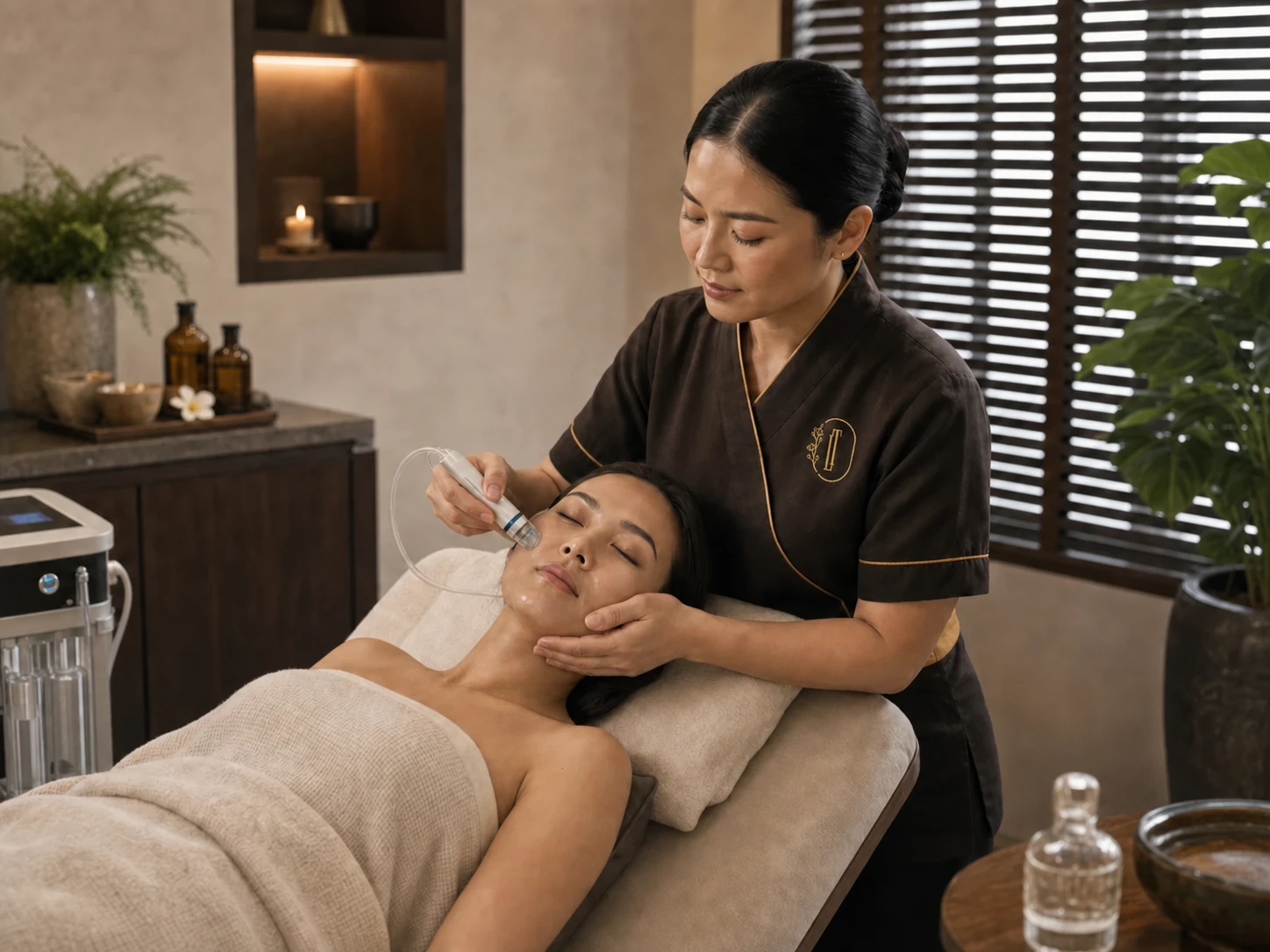
Hydradermabrasion combines controlled exfoliation, fluid delivery and suction through a device. The current Loft Thai facial collection includes HydraFacial formats with different durations, product directions and manual stages.
The device name does not reveal the whole treatment. Guests should confirm cleansing, exfoliation intensity, extraction, boosters, manual massage, mask, eye care and finishing protection.
LED, radiofrequency and facial-analysis systems are separate technologies with separate evidence and safety questions. They should never be inserted into a description simply because the article is about innovation.
Water, Heat, Jets and Light Are Four Different Controls
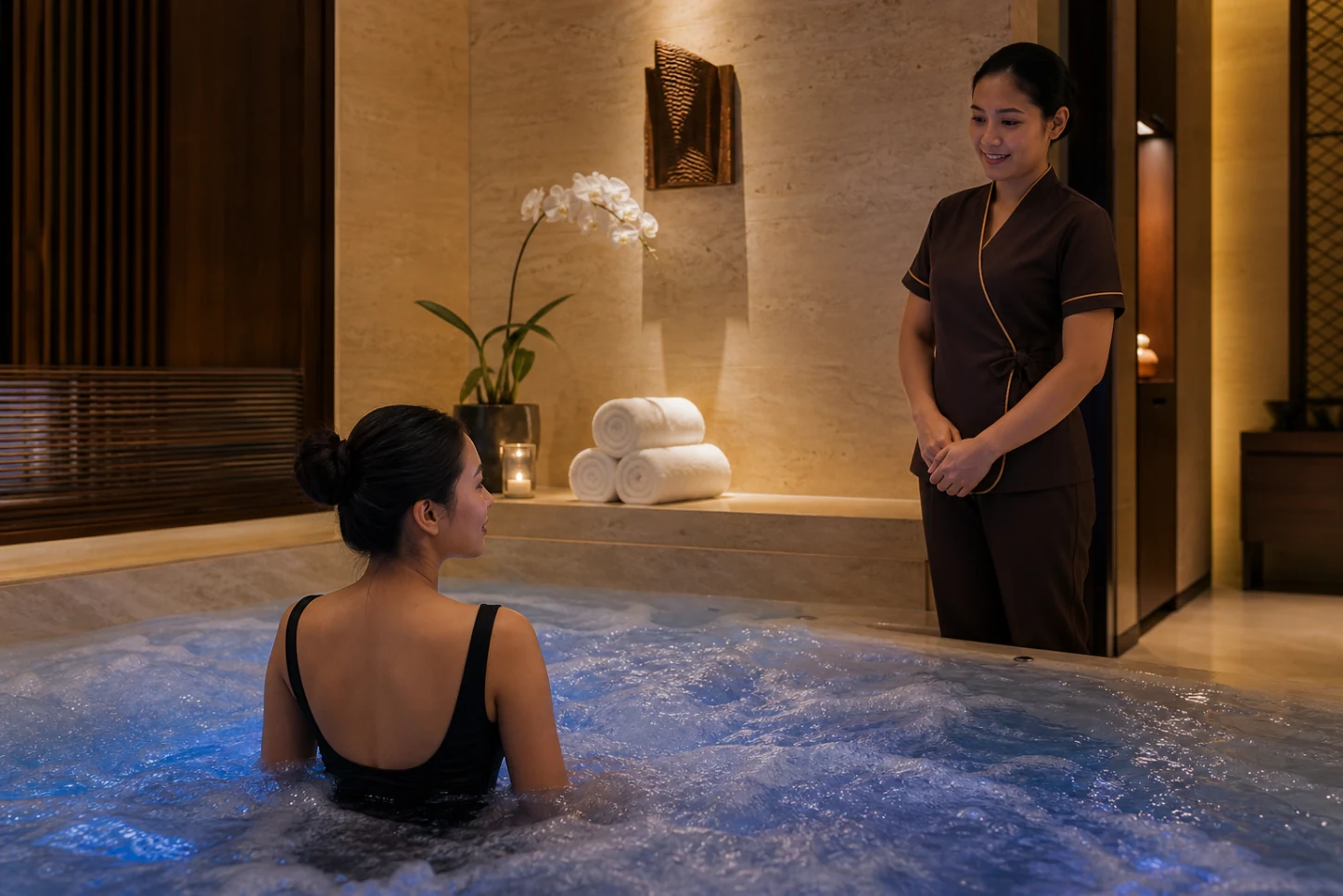
A private hydrotherapy ritual can combine water temperature, jet intensity, immersion time and coloured ambient light. Each element should be adjustable rather than presented as one mysterious therapeutic system.
Loft Thai’s HydroSense archive uses chromotherapy as an atmospheric layer within a private Jacuzzi-led sequence. The credible promise is sensory customisation, not that a colour treats a medical condition.
Heat tolerance, pregnancy, recent procedures, cardiovascular concerns, skin condition and alcohol use may affect whether warm-water immersion is appropriate. Reception should confirm the current protocol and screening before the visit.
Massage Chairs and Robots Are Not Human Therapists
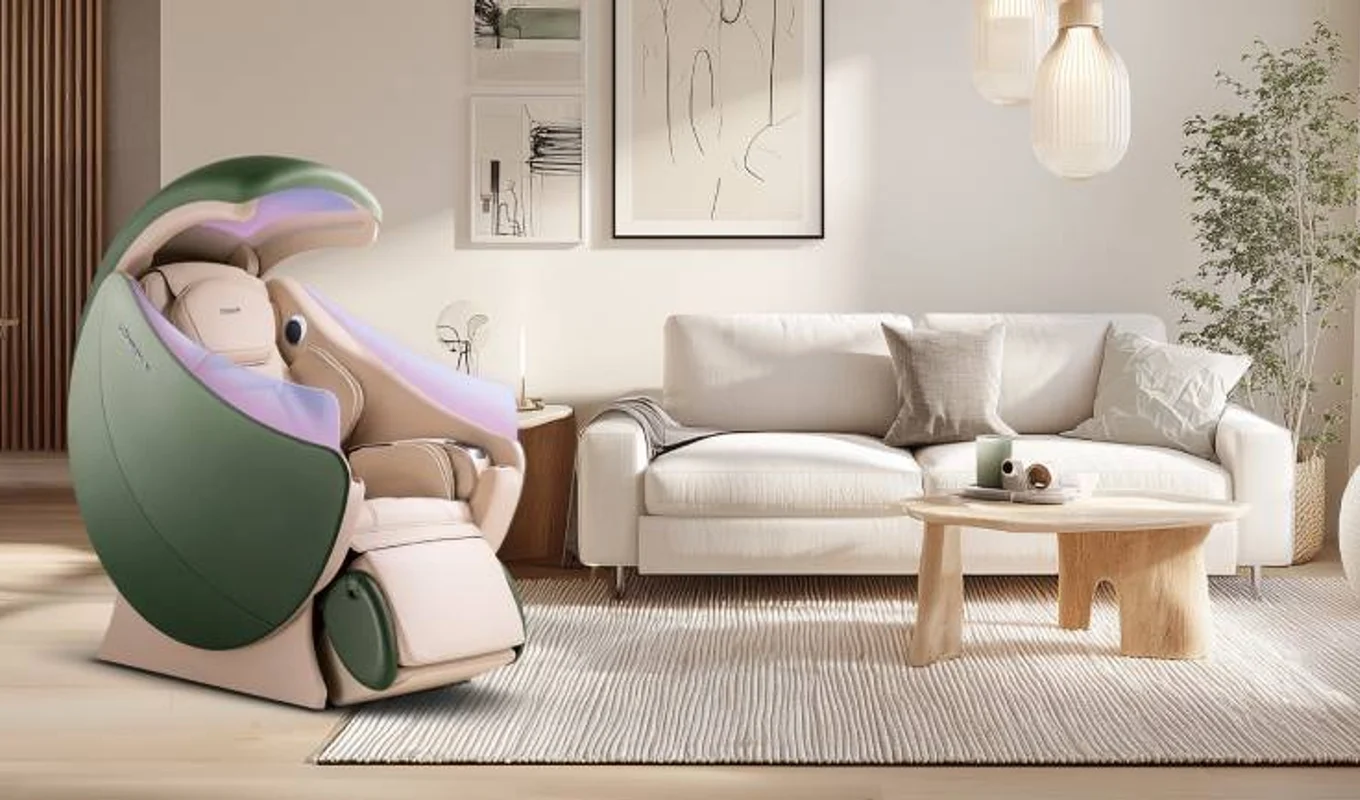
Connected chairs can offer repeatable programs, adjustable zones and convenient control. Robotic systems can deliver programmed pressure along defined paths.
Loft Thai’s documented collaboration with OSIM helped inform a Thai Stretch program for the uDream.AI chair. That collaboration should not be misread as evidence that the chair is a current in-spa treatment or that it reproduces the full judgment of a trained Thai therapist.
A person can interpret speech, movement, hesitation and changing comfort in real time. A machine follows its sensors, software and available controls. The two experiences may complement one another, but they are not equivalent.
AI Is a Governance Question Before It Is a Feature
An AI system may recommend a program, summarise guest notes or automate a response. The guest needs to know when automation is involved and how to reach a person.
NIST’s voluntary AI Risk Management Framework organises responsible practice around governance, mapping, measurement and management. It emphasises validity, safety, transparency, privacy and harmful-bias management throughout the system lifecycle.
A luxury label cannot replace that work. AI-generated treatment advice should remain reviewable, limited to its intended purpose and easy to override.
Payment Convenience Requires Visible Security
Online deposits, vouchers and prepayment can reduce reception time, but they introduce a separate payment environment.
PCI Security Standards Council guidance distinguishes e-commerce payment flows and stresses that merchants must consider the complete path of card data, not only the visible website page.
Guests should see the amount, currency, treatment or voucher, refund and cancellation terms before authorising payment. A spa should never ask a customer to send full card details through ordinary chat.
Accessibility Is a Premium Technology Standard
A beautiful booking journey fails when text cannot be enlarged, keyboard focus disappears, controls have no labels or a guest must drag a small target precisely.
Accessible design also benefits travellers using translation tools, people booking in bright sunlight, guests with temporary injuries and anyone completing a form one-handed on a phone.
Keep essential information available as readable text, provide a human help channel and avoid placing preparation instructions only inside an image or video.
Do Not Treat Digital as Automatically Sustainable
Paperless records may reduce printing, while efficient controls may reduce unnecessary heating or lighting. Those are plausible operational benefits when measured.
Devices also require materials, energy, maintenance, consumables, software and eventual disposal. A sustainability claim should identify the actual reduction or practice instead of equating every screen with environmental responsibility.
For a guest, the most visible signs remain disciplined linen use, product dosing, water management and equipment maintained for a long service life.
Match the Technology to the Guest’s Real Goal
A guest seeking a manual Thai massage does not need a device simply because one is available. Someone choosing a HydraFacial may value a controlled device sequence but still want hands-on consultation and facial massage.
A couple selecting HydroSense may care about privacy, water temperature and time together more than coloured lighting. Another visitor may prefer a straightforward oil massage with no connected equipment.
Luxury lies in choosing the appropriate layer and leaving out the rest.
Ten Questions Before Booking a Technology-Led Spa Service
Ask for a concrete protocol rather than accepting broad words such as advanced, smart, AI-powered or medical-grade.
-
01
What is the exact device or system?
Request the product name and the function used in this treatment.
-
02
What does the protocol include?
Confirm every manual, product and device stage.
-
03
Is it current at this branch?
Recheck location, duration, availability and live price.
-
04
Who operates it?
Ask about training, supervision and when a therapist intervenes.
-
05
What can the guest control?
Identify intensity, temperature, suction, light and stop controls.
-
06
What are the exclusions?
Discuss relevant conditions, medication, pregnancy and recent procedures.
-
07
What data is collected?
Distinguish booking details from photographs, scans, biometrics or health data.
-
08
How is payment handled?
Use a clear, appropriate payment path and never send full card details in chat.
-
09
Is there a non-device alternative?
A premium service should make another route possible when appropriate.
-
10
What aftercare is realistic?
Expect treatment-specific guidance, not guaranteed transformation.
Claims Removed from the Previous Version
The former article claimed facial recognition could determine skin needs, body scans could construct massages, LED creates collagen and radiofrequency produces long-lasting outcomes. It did not provide evidence or confirm that Loft Thai offered those technologies.
It also treated virtual reality as a route to deep relaxation and AI massage chairs as equivalents to trained therapists. Individual response, device design and context make those conclusions too broad.
This revision retains technology that can be named and contextualised while removing invented inventory, medical treatment language and guaranteed results.
The Future of Luxury Spa Is Selective
The most credible luxury spas will not install every available technology. They will choose systems that solve a defined problem and train people to use them well.
Guests should be able to see where technology begins and ends: online convenience before arrival, a clear protocol during treatment and a responsive human path throughout.
Use Loft Thai’s current menu to identify the actual service first. Then ask what the equipment adds to that experience.
“In a luxury spa, the best technology is legible: the guest understands its purpose, controls its intensity and can choose a human alternative.”
Loft Thai Editorial Team
Continue your research
REFERENCES
Sources & further reading
- W3C Web Accessibility Initiative: What Is New in WCAG 2.2
- PCI Security Standards Council: Best Practices for Securing E-Commerce
- NIST: Artificial Intelligence Risk Management Framework 1.0
- HydraFacial: Official How-It-Works Overview
- OSIM Singapore: uDream.AI Well-Being Chair
- World Health Organization: Digital Health Is Not a Silver Bullet
- Loft Thai: Current Spa Menu 2026
PRACTICAL GUIDANCE
Frequently Asked Questions
What technologies are used in luxury spas?
They can include accessible booking and payment systems, consultation tools, hydradermabrasion, controlled hydrotherapy, ambient lighting, massage chairs and operational software. Availability varies by spa and branch.
Is a technology-led facial better than a manual facial?
Not automatically. Compare the skin goal, products, exfoliation method, device stages, sensitivity, contraindications and desired amount of manual massage.
Does Loft Thai offer AI massage chairs as a spa treatment?
The reviewed evidence documents a product-development collaboration with OSIM. It does not establish the uDream.AI chair as a current Loft Thai treatment; confirm the live menu.
What does chromotherapy do in HydroSense?
In the current Loft Thai context it is best understood as adjustable coloured ambient light within a private Jacuzzi-led ritual, not as treatment for a medical condition.
How can I assess a spa’s digital booking?
Look for clear labels, current prices, branch and duration details, accessible help, written confirmation, secure payment and a way to contact a person.
CONTINUE READING
Related stories
Exploring the Benefits of Chromotherapy at Loft Thai Spa
In today's bustling world, the pursuit of holistic health and wellness has become paramount. Beyond the traditional spa treatments lies an avenue that delves into both science and art - chromotherapy, also known as color therapy. Loft Thai Spa has harnessed…
Read the guide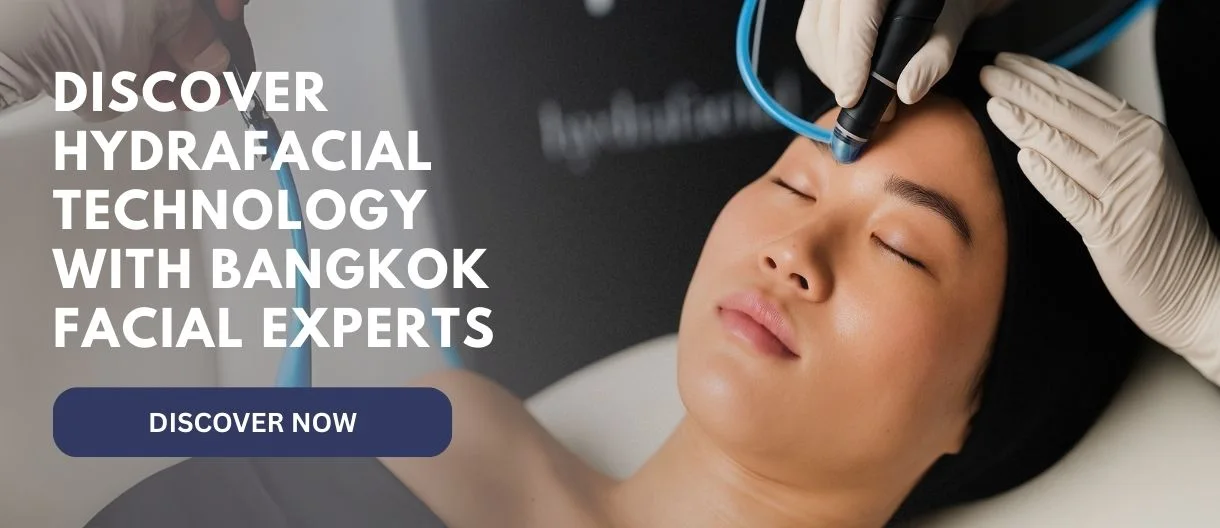
Discover HydraFacial Technology with Bangkok Facial Experts
Not every decade produces a device that completely re-writes the facial playbook, but the first HydraFacial system, unveiled in 2005, did precisely that. Until then, most in-clinic complexion boosters fell into two camps: mechanical resurfacing, such as…
Read the guide
Integration of Technology in Massage: How AI and Robotics are Transforming Bangkok’s Massage Industry
The massage and wellness industry is experiencing a transformative shift as advanced technology finds its way into traditional practices. With the integration of AI and robotic massage systems, companies like Aescape are pioneering innovations that bring a new…
Read the guide
Top 10 Luxury Spas in Bangkok for High-End Wellness Experiences in 2026
Bangkok is one of the rare cities where “high-end wellness” isn’t only about marble lobbies and expensive menus—it’s about therapist skill, heritage techniques, privacy, and consistency. If you’re investing in a luxury spa day (for recovery, stress relief, jet…
Read the guide