
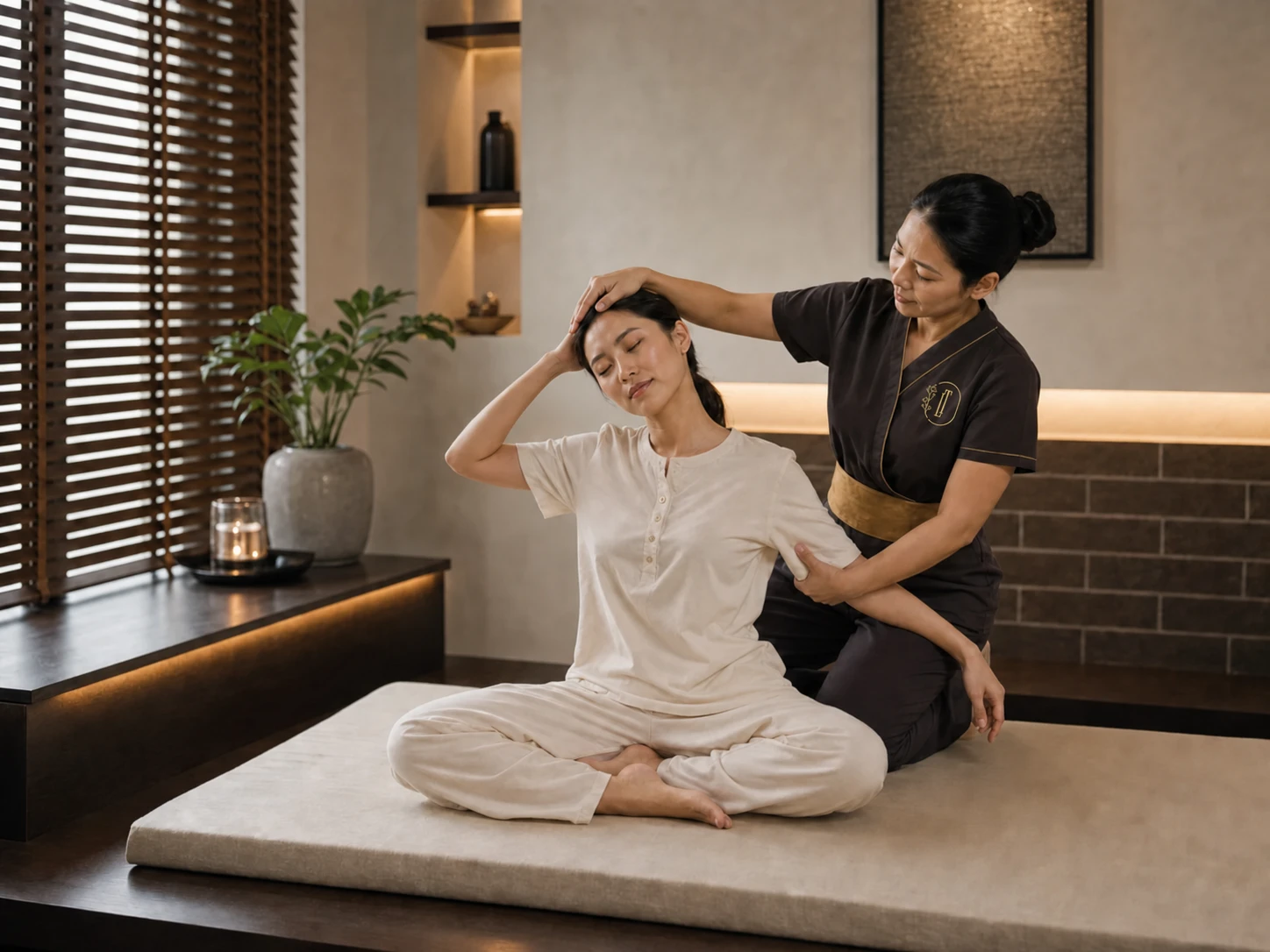
Since it has been practiced for thousands of years, Thai massage is a significant aspect of Thai culture. It has changed and diversified into several styles over time. Traditional Thai massage and Thai Warrior massage are two of the most well-liked varieties.
Every style has special advantages and is made to meet particular requirements. To assist you choose which type of massage is ideal for you, we will compare and contrast these two in this post.
Background:
For more than 2,500 years, Thai massage has been a popular kind of bodywork in Thailand. Due to the aided yoga positions and stretching involved, it is often referred to as Thai yoga massage. Thai massage is thought to have been introduced to Thailand by Buddhist monks, who brought it with them from India. It creates a holistic approach to wellbeing by fusing reflexology, acupressure, and yoga.
The practice of Thai massage has gained popularity all throughout the world, and its varied styles are now widely recognized as being Thai massage. Thai Warrior Massage and Traditional Thai Massage are two of the most popular types.
Traditional Thai Massage:
The most popular type of Thai massage is traditional Thai massage, sometimes referred to as Nuad Bo-Rarn. Stretches, compressions, and acupressure points are used during the entire body massage. The receiver is fully clothed and the massage is given on a mat on the floor.
The massage therapist applies pressure to the body's energy pathways by using their hands, elbows, knees, and feet. The meridians employed in Chinese medicine are comparable to these energy lines, also called Sen lines. These lines are subjected to pressure in order to clear obstructions and enhance the movement of energy throughout the body.
The benefits of traditional Thai massage include increased circulation, reduced tension, and increased flexibility. It is a fantastic choice for those who desire to enhance their general wellbeing.
Thai Warrior Massage:
Tok Sen, commonly referred to as Thai Warrior Massage, is a more sophisticated type of Thai massage. It was initially created as a method of treating warriors who had battle-related wounds. In order to tap on the body's energy pathways during the massage, a unique wooden mallet and wedge are used.
In order to relieve stress and promote healing, the tapping action generates a vibration that travels deep into the muscles and tissues. The receiver is fully clothed and the massage is given on a mat on the floor.
The benefits of Thai Warrior Massage include pain relief, increased mobility, and healing. For those who have persistent pain or have wounds that require specific care, it is a fantastic solution.
Comparison:
The fundamentals of Thai massage are the same for both Traditional Thai Massage and Thai Warrior Massage. To encourage healing and wellbeing, they both make use of stretching, acupressure, and energy lines. The two methods do, however, differ significantly in certain important ways.
The use of the wooden mallet and wedge in Thai Warrior Massage is the primary distinction between the two types of massage. Thai massage performed traditionally does not use this item. Traditional Thai massage does not produce the same sensations as the tapping action of the mallet.
The massage's primary focus is another distinction. A full-body massage, traditional Thai massage aims to enhance general wellness. On the other side, Thai Warrior Massage is a specialist massage that is intended to reduce pain and encourage healing.
Which One to Choose?
Depending on your needs and interests, you should decide which type of Thai massage to get. Traditional Thai Massage is the best choice if you're searching for a general wellness massage that can help you become more flexible, relieve tension, and enhance circulation.
Thai Warrior Massage is the perfect choice for you if you have injuries that need particular care or experience persistent pain. A deeper level of alleviation than Traditional Thai Massage may be possible with the use of the wooden mallet and wedge.
The difference between Thai Warrior Massage and Traditional Thai Massage should be noted. Some people may find the powerful sensation produced by the mallet's tapping motion to be uncomfortable. Traditional Thai massage can be a better choice for you if you are sensitive to pressure or have a low pain threshold.
Thai Warrior Massage is often more expensive than Traditional Thai Massage in terms of price. This is due to the fact that it calls for the use of a wooden mallet and wedge, as well as specific training.
Conclusion:
In conclusion, Thai Warrior Massage and Traditional Thai Massage are both fantastic choices for enhancing your general well-being. A general health treatment, traditional Thai massage is ideal for anyone looking to become more flexible, de-stress, and improve circulation. On the other side, Thai Warrior Massage is a specialist massage that is intended to reduce pain and encourage healing.
It's important to take your wants and tastes into account while picking which type of Thai massage to get. Thai Warrior Massage is the perfect choice for you if you have injuries that need particular care or experience persistent pain. Traditional Thai Massage is the finest choice if you're seeking a general wellness massage.
Overall, both types of massage have special advantages and can be an important part of your wellness regimen. For the full benefits of Thai massage, whichever style you select, locate a therapist who is respected and skilled.
UPDATED LOFT THAI GUIDE
Additional guidance and current information
The following editorial update expands on the original Loft Thai article with practical context, current treatment guidance and further reading.
First, Correct the Archive
The 2023 article called Thai Warrior Massage “Tok Sen” and attributed wooden mallets and wedges to the warrior service.
The current Loft Thai Spa Menu lists Traditional Thai Massage, Thai Warrior Massage and Tok Sen Massage as three distinct treatments.
This revision preserves the original URL and comparison intent while removing the false equivalence.
Three Services in One View
Traditional Thai: clothed compression, joint mobilisation, rocking and assisted stretching in a classic whole-body sequence.
Thai Warrior: a stronger, more active Thai direction with Ruesri Datton-inspired assisted movement and deeper pressure.
Tok Sen: rhythmic percussion created by tapping a shaped wooden tool with a small mallet over selected soft-tissue areas.
Traditional Thai Massage
Traditional Thai massage gives the therapist a broad vocabulary of palm, thumb, forearm, elbow, knee or foot pressure together with supported positioning.
The receiver usually remains clothed, and oil is not central to the treatment.
A professional session varies leverage and range rather than forcing every guest through an identical sequence.

Thai Warrior Massage
Loft Thai’s current description positions Thai Warrior as an active treatment built from traditional Thai techniques, Ruesri Datton-inspired movement and deep pressure.
The name communicates the treatment’s vigorous character; it is not evidence that the historical sequence treated battlefield injuries exactly as marketed today.
Guests should choose it for the present-day format and therapist adaptation, not for a romanticised cure narrative.
Tok Sen Massage
Tok Sen is associated with Northern Thai or Lanna practice and uses controlled rhythmic tapping with wooden tools.
Tool angle, placement, force, tempo and the body area all affect the sensation.
The distinctive sound and vibration do not make the technique interchangeable with stronger manual Thai massage.
Only One of These Three Uses a Wooden Mallet
Traditional Thai and Thai Warrior are primarily manual and movement-led services.
Tok Sen uses a mallet and shaped tool to create percussion and vibration.
A menu or therapist should name Tok Sen directly rather than hiding the tool under a different treatment label.
Clothing Is Similar; Technique Is Not
All three may be performed with the guest clothed, depending on the exact spa protocol.
Clothing supports grip, modesty and repositioning without requiring oil.
Similar clothing does not mean the pressure, pace, tools or sensory experience will be the same.
Movement Separates Traditional Thai and Warrior
Traditional Thai may include assisted movement inside a balanced full-body sequence.
Thai Warrior places greater emphasis on active, yoga-inspired movement and deeper assisted positions according to the current menu description.
Range must still be negotiated, and declining a stretch is always compatible with professional care.
Rhythm Separates Manual Work and Tok Sen
Manual Thai pressure can be sustained, rocking or repeated through broad contact.
Tok Sen produces an audible, percussive rhythm through wood-to-tool tapping.
Guests who dislike sound, vibration or highly localised percussion may prefer a manual Thai option.
Deep Does Not Mean Uncontrolled
Thai Warrior is marketed as the stronger direction, but pressure must remain responsive and purposeful.
Traditional Thai can also feel firm, while Tok Sen intensity depends on the tapping force, tool and location.
Sharp pain, numbness, tingling, guarding or breath-holding should prompt immediate adjustment.
current Durations and Prices
Traditional Thai Massage is listed at 60 minutes for 1,000 THB, 90 minutes for 1,400 THB and 120 minutes for 1,900 THB.
Thai Warrior Massage is listed at 90 minutes for 3,200 THB and 120 minutes for 4,200 THB.
Tok Sen Massage is listed at 90 minutes for 3,200 THB. Confirm current branch availability and price when booking.
Choose Traditional Thai When
You want a classic clothed sequence with compression, rocking, joint mobilisation and adjustable assisted movement.
You prefer a broad whole-body rhythm rather than the strongest or most specialised direction.
You need the therapist to scale positions carefully around mobility or first-time comfort.
Choose Thai Warrior When
You already enjoy active Thai bodywork and want a stronger, movement-led sequence.
You can communicate range and pressure clearly and do not have an acute issue that needs medical assessment.
You understand that athletic language does not require enduring pain.

Choose Tok Sen When
You specifically want the sound, percussion and vibration of traditional wooden tools.
You have discussed the treatment areas, tool placement, intensity and reasons the therapist may avoid certain zones.
You are not choosing it because the archive incorrectly called it Thai Warrior.
Heritage Deserves Precise Language
UNESCO recognises Nuad Thai as intangible cultural heritage and records its place in Thai traditional healthcare culture.
Ruesri Datton, Sen-line frameworks and Lanna Tok Sen belong to specific cultural and teaching contexts.
A premium article should preserve those distinctions rather than compressing every Thai technique into one ancient healing story.
Do Not Convert Tradition into a Cure List
The archived article promised healing, circulation improvement, pain relief and treatment for persistent injury without protocol-specific evidence.
NCCIH describes massage evidence as mixed or limited for many conditions and advises people not to postpone healthcare for a medical problem.
Traditional knowledge can be respected while modern clinical claims remain proportionate.
Who Needs Extra Screening or a Different Plan
Disclose a recent operation, fracture, acute sprain, fever, blood-clot concern, neurological symptoms, significant bruising, pregnancy or reduced sensation.
A current injury should not be assigned automatically to Thai Warrior because the name suggests recovery.
When uncertainty is clinically meaningful, seek advice from an appropriate healthcare professional before booking.
Eight Questions Before Choosing
Ask whether the treatment uses tools, how much movement it includes, which positions are planned and how pressure is checked.
Confirm clothing, duration, price, branch availability and whether the therapist may substitute techniques.
Describe your goal in ordinary language—quiet relaxation, active movement, manual compression or wooden percussion—rather than requesting the strongest option.
Three Names, Three Contracts
Traditional Thai promises a classic manual and movement vocabulary.
Thai Warrior promises a more active, deeper Thai sequence—not Tok Sen tools.
Tok Sen promises controlled wooden percussion. Clear naming allows the guest to give meaningful consent.
“Thai Warrior uses active assisted bodywork; Tok Sen uses wooden percussion tools. They should never be presented as the same treatment.”
Loft Thai Editorial Team
Continue your research
REFERENCES
Sources & further reading
PRACTICAL GUIDANCE
Frequently Asked Questions
Is Thai Warrior Massage the same as Tok Sen?
No. Thai Warrior is an active, stronger Thai bodywork sequence using assisted movement and manual pressure. Tok Sen is a separate technique using rhythmic wooden tools.
Which service uses a wooden mallet and wedge?
Tok Sen uses a small wooden mallet and shaped tool to create controlled percussion. Traditional Thai and Thai Warrior are primarily manual and movement-led.
Is Thai Warrior always suitable for an injury?
No. The name does not make it a medical treatment. Acute, severe or unexplained symptoms need appropriate assessment, and massage may need to be postponed or adapted.
Which is best for a first Thai massage?
Traditional Thai is often the clearest starting point because its pressure and movement can be scaled. The consultation should still determine suitability.
What are the current Loft Thai prices?
The reviewed current menu lists Traditional Thai from 1,000 THB, Thai Warrior from 3,200 THB and Tok Sen at 3,200 THB for 90 minutes. Confirm current availability.
CONTINUE READING
Related stories
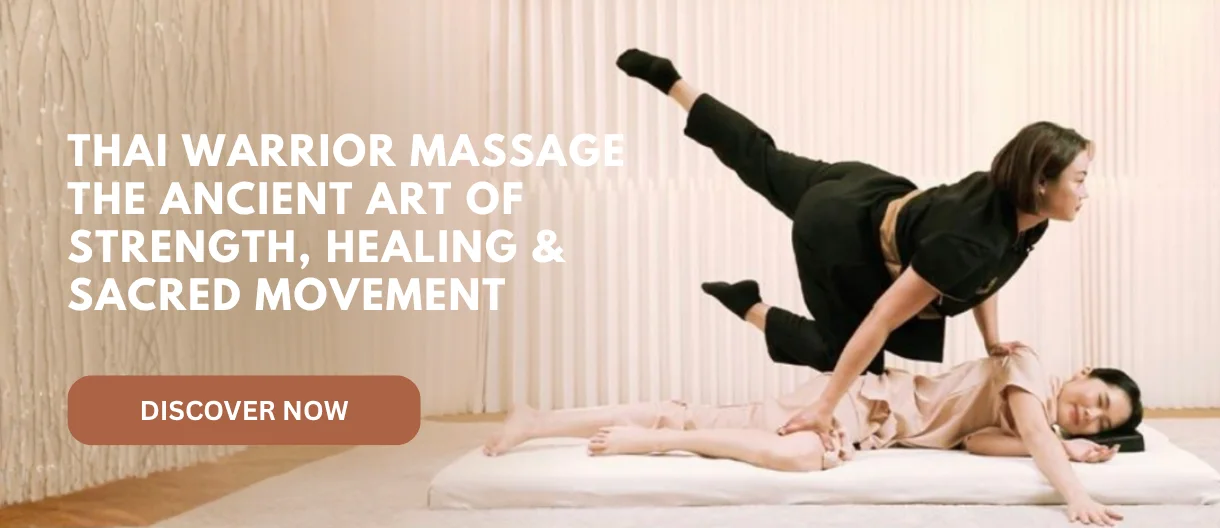
Thai Warrior Massage: The Ancient Art of Strength, Healing & Sacred Movement
Among the ancient healing traditions of Southeast Asia, the Thai Warrior Massage stands alone as a discipline that unites the physical intensity of martial arts with the elegance of therapeutic touch. It is at once a method of recovery, a ceremonial practice,…
Read the guide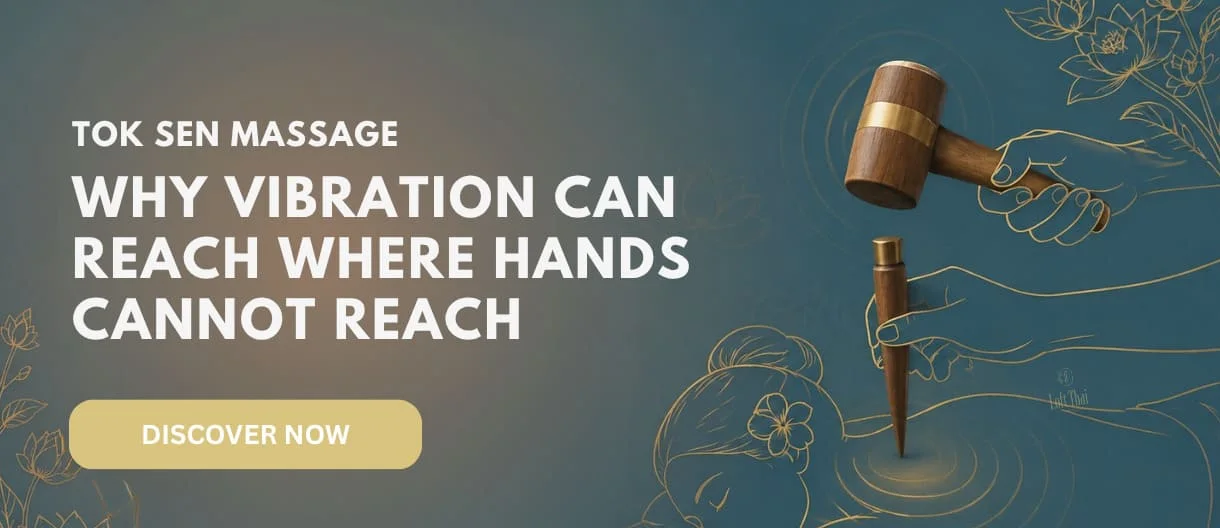
Tok Sen Massage for Deep Tension: Why Vibration Can Reach Where Hands Cannot
Deep muscle tension is often misunderstood. Many people imagine that a tight shoulder, a stiff lower back, or a heavy neck can only be solved by stronger pressure, deeper elbows, or longer massage sessions. While deep pressure can be useful when applied…
Read the guide
The Art of Thai Massage A Tradition Perfected at one of the Best Spa in Bangkok
Thai massage is more than just a form of relaxation; it is an art, a philosophy, and a cultural treasure that reflects the spirit of Thailand. Recognized by UNESCO as an Intangible Cultural Heritage of Humanity in 2019, Thai massage holds a special place in…
Read the guide
Best Thai Massage in Bangkok: Traditional vs Aromatic Oil vs Deep Tissue Which One Is Right For You?
Bangkok is one of the few cities in the world where massage is not just a service—it’s culture. You can book a session almost anywhere, at almost any price, and still find talented hands. That’s the magic of Thailand. But it also creates the biggest problem…
Read the guide