At Loft Thai Spa, massage is more than a wellness service — it is an art form rooted in ancient tradition, guided by anatomical science, and delivered with championship-level precision. In our latest showcase video, we invite you to discover the heart of what makes our treatments exceptional: a fusion of healing philosophy, elite training, and mindful technique.
In this blog article, we explore each of the massage techniques featured in our video and delve into the principles behind them. These are not just movements — they are curated experiences that unlock the body’s energy, promote alignment, and restore balance from within.
The Power of Touch: Thai Massage with a Purpose
Originating over 2,500 years ago, traditional Thai massage (Nuad Thai) is based on the concept of Sen Sib, or energy lines, that run throughout the body. When energy flows freely along these lines, the body remains healthy and balanced. When blocked, discomfort and illness can occur.
What sets Loft Thai Spa apart is our ability to blend ancient Thai wisdom with modern technique, perfected through our in-house training at the Nuad Thai School, and recognized by our recent Top 50 Best Spas in Asia award and European Massage Championship recognition.
Let’s explore the techniques in detail.
Deep Forearm Pressure: Calf & Hamstring Meridian Work
The session begins with the application of deep forearm pressure along the posterior leg meridians — focusing on the calf and hamstring regions. This movement exemplifies Thai massage’s principle of using the body as a tool. Rather than relying on force, the therapist channels her body weight through her forearm, ensuring both depth and comfort for the receiver.
This technique not only relieves muscle tightness but also stimulates blood flow, flushes out toxins, and supports lymphatic drainage in the legs — a crucial area often fatigued by standing, walking, or poor posture.
Our therapists wear the signature Loft Thai Spa uniform, and clients are dressed in traditional Thai garments — allowing for full range of movement while respecting cultural modesty.
Assisted Shoulder Stretch: Passive Yoga for the Upper Body
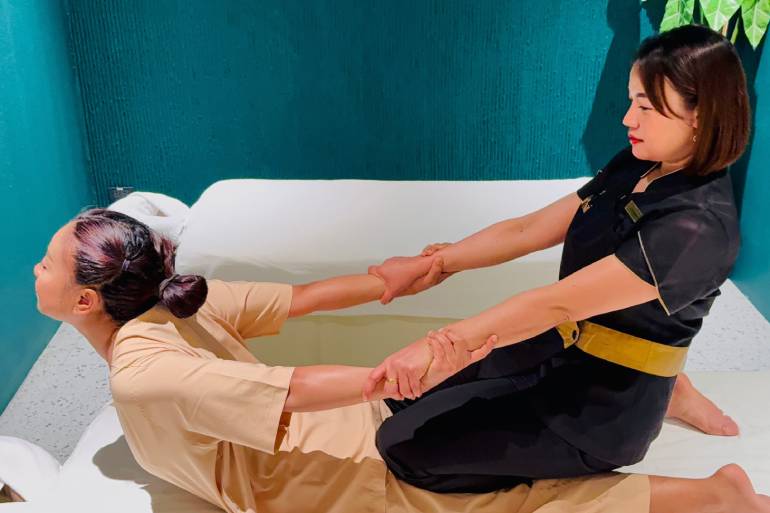
Moving into the upper body, the therapist guides the client through a passive yoga stretch aimed at releasing the shoulder girdle and upper back. This therapeutic movement is ideal for clients who experience limited shoulder mobility, tension from desk work, or postural fatigue.
The therapist applies gentle yet controlled leverage while synchronizing with the client’s breath — a cornerstone of Thai massage technique. This not only increases flexibility and joint freedom, but also taps into deeper energy pathways, leaving clients with a feeling of expansion, openness, and emotional lightness.
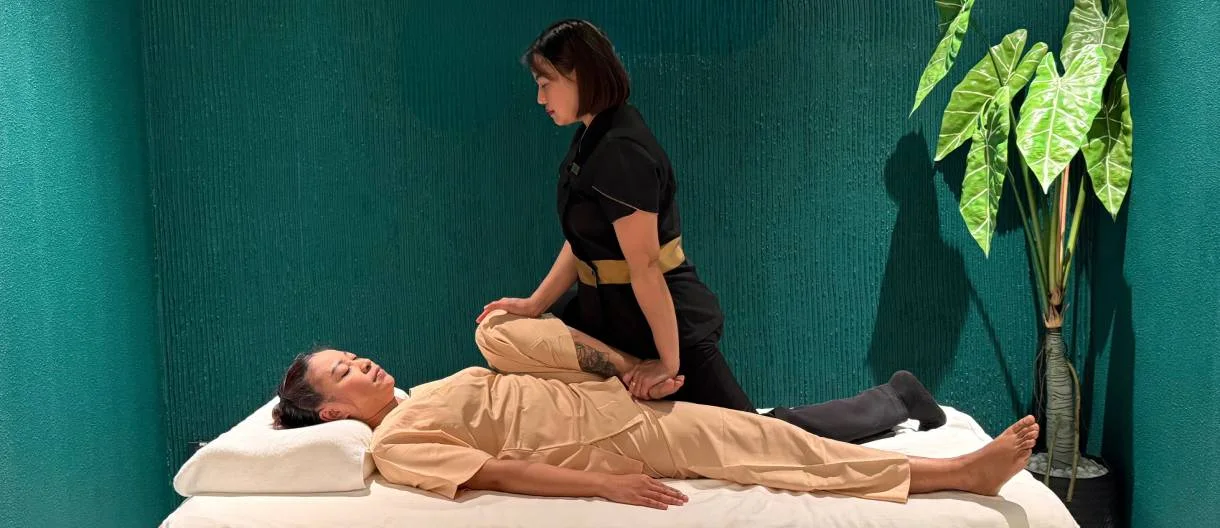
Knee Press & Ankle Mobilization: Restoring Lower Limb Vitality
Thai massage is unique in its multi-dimensional approach to treatment. In this sequence, we see a beautiful example of dual-action therapy: a knee press to the hamstrings paired with an ankle rotation.
This combination works on both muscular tension and joint mobility, addressing tightness from prolonged standing or sitting. The therapist's coordination and body rhythm allow the client’s entire leg to reset and realign, improving gait, flexibility, and lower body performance.
Such techniques are not only relaxing — they are therapeutic interventions that can support recovery from sports injuries, postural issues, and circulatory sluggishness.
Supported Leg Lift: Decompression of the Hip & Spine
As the therapist transitions to a supported leg lift, we witness one of Thai massage’s foundational practices: joint mobilization. This move decompresses the hip joint and lumbar spine, while also stretching the hamstrings and activating the psoas muscle, a critical yet often neglected muscle that affects posture, digestion, and back pain.
Performed with mindful awareness, this movement relieves chronic tension, opens tight hips, and supports proper spinal curvature. It also prepares the body for deeper therapeutic work later in the session.
At Loft Thai Spa in Thailand, our therapists don’t just “perform” massage — they listen with their hands, feeling the client’s body and responding with intuitive care.
Seated Spinal Twist: Realignment & Detoxification
With the client now seated, the therapist introduces a spinal twist that echoes traditional yoga postures but is fully passive for the recipient. This technique targets the paraspinal muscles, obliques, and abdominal region, creating a rotational stretch that realigns the upper body while stimulating internal organs.
Such twisting actions support digestion, relieve back stiffness, and help “wring out” the stress held in the rib cage and diaphragm. It’s particularly beneficial for those with upper back fatigue, poor breathing habits, or a sedentary routine.
These movements represent the elegant balance between structure and flow — a philosophy that defines Loft Thai Spa’s approach to modern Thai healing.
Upper Body Compression & Thoracic Mobilization
Continuing with upper body work, the therapist performs a precision-guided compression maneuver from behind. This movement focuses on the scapula and intercostal muscles, regions that commonly hold tension from technology overuse (“tech neck”) and mental stress.
By anchoring one elbow and applying a rotating stretch through the thoracic spine, the therapist facilitates postural correction, encourages chest expansion, and invites a deeper breath.
Our therapists are trained to sense subtle imbalances and adjust accordingly, offering not just pressure but presence — a quality that can’t be taught but is deeply felt in every treatment at Loft Thai Spa.
Hip Compression & Folded Leg Stretch
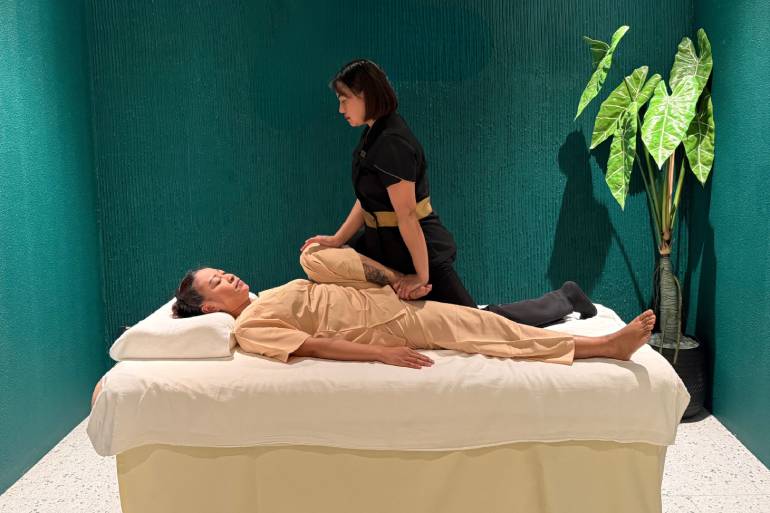
In one of the most therapeutic movements featured in the video, the therapist gently folds the client’s leg across the torso and applies firm compression into the hip and gluteal region. This movement addresses tension in the piriformis, IT band, and deep rotators, offering relief for clients suffering from sciatica or sacroiliac dysfunction.
The stretch also aids in pelvic realignment, which is essential for lower back health, athletic performance, and long-term joint integrity.
Such targeted techniques are often reserved for advanced practitioners, but at Loft Thai Spa, our clients benefit from a team of massage champions trained at the highest level, ensuring both safety and effectiveness in every move.
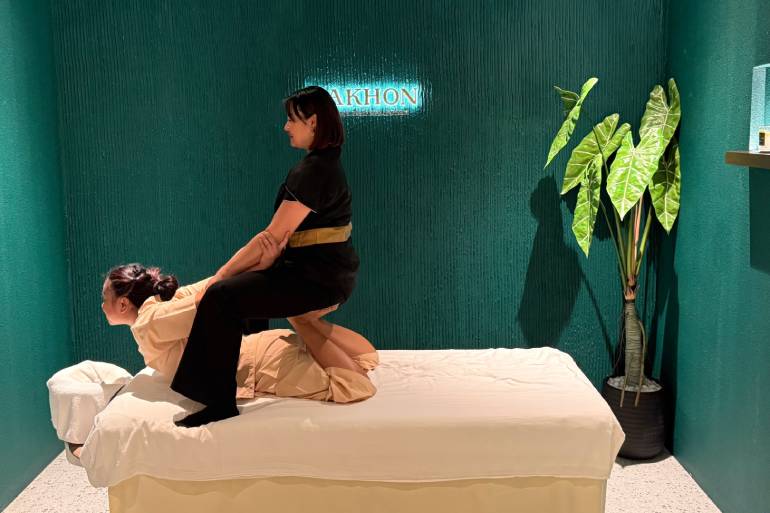
Full-Body Arch (Thai Cobra Pose): Energetic Closure & Emotional Release
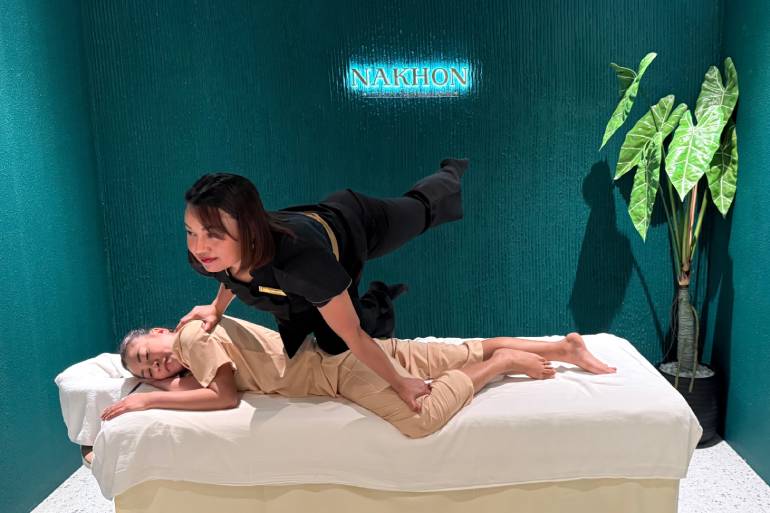
The session culminates in a visually stunning pose — the Thai Cobra Pose, also known as the Royal Arch. This movement represents the culmination of energy flow, integrating all the prior stretches and compressions into a final, heart-opening extension.
By arching her own back and lifting her arms, the therapist uses the client's leg as a grounding support while opening her own heart and chest — a symbolic and literal gesture of surrender and energy connection.
This pose activates the front body line, stimulating the heart chakra, solar plexus, and abdominal energy centers. It provides a powerful sense of renewal, completion, and inner lightness — the perfect closure to a full-body Thai massage journey.
Why This Video Matters: A Testament to Craftsmanship
What you see in this video is not just a series of massage techniques. It is the embodiment of Loft Thai Spa’s mission in Bangkok: to deliver authentic Thai healing with the highest professional standards.
Every movement reflects our values:
-
Precision and Expertise from world-class, competition-level therapists
-
Cultural Heritage preserved through our in-house training at the Nuad Thai School
-
Holistic Wellness that unites body, mind, and spirit
-
Luxury Experience rooted in mindfulness, aesthetics, and respect
Whether you are a curious viewer, an aspiring therapist, or a returning guest, this video offers insight into the depth and beauty of our practice.
Visit One of Our Luxury Spa Branches in Bangkok
Loft Thai Spa is proud to welcome you to experience our award-winning Thai massage and facial treatments across four exceptional locations in Bangkok, each offering a unique ambiance while upholding the same world-class standards of care, hospitality, and professionalism.
Loft Thai Boutique Spa & Massage – Sukhumvit 38 (Original Boutique Branch)
Nestled in a quiet street just minutes from Thonglor BTS, this is our original boutique spa, known for its warm, artistic atmosphere and serene setting. Home to the Nuad Thai School, this location serves as both a training center and wellness sanctuary, offering traditional Thai massage, signature oil treatments, and premium facials in an intimate space filled with Thai cultural elements and curated art.
Soi Sukhumvit 38, BTS Thonglor (5-minute walk)
Loft Thai Spa & Wellness – Sukhumvit 24 (Garden Escape)
Located in the heart of Phrom Phong, this branch offers an urban oasis surrounded by lush greenery and minimalist design. It's the perfect retreat for those shopping at EMQuartier or Emporium, featuring a tranquil Thai herbal aroma in the air and our most popular treatments like CBD oil massage, Thai warrior massage, and facial therapy rituals.
Soi Sukhumvit 24, BTS Phrom Phong (300 meters from EM District)
Loft Thai Spa & Tea House – Sukhumvit 71 (Spa & Tea House)
Located in the vibrant district of Phra Khanong, this branch combines a full-service spa with a traditional Thai tea house. It’s the ideal place to unwind with a massage and finish with a curated tea tasting experience. Our Head Spa, Foot Ritual, and Tok Sen treatments are guest favorites here, blending wellness with refined Thai hospitality.
Soi Pridi Banomyong 26, Sukhumvit 71, BTS Phra Khanong
NAKHON Spa by Loft Thai – The Flagship Luxury Spa (Sukhumvit EmSphere)
Our flagship location and luxury brand, NAKHON Spa, is the embodiment of refined Thai excellence. Located inside the EMSPHERE Luxury Shopping Mall, this ultra-premium spa features exclusive spa rituals from the Royal Kingdom Collection, facial treatments with globally renowned brands, and champion-level therapists handpicked from our top ranks.
Every detail — from the interior design to the massage protocols — reflects heritage, elegance, and modern sophistication. It is the crown jewel of Loft Thai Spa’s vision.
EMSPHERE Shopping Mall, Sukhumvit Road, Level 2 (connected to BTS Phrom Phong via skywalk)
UPDATED LOFT THAI GUIDE
Additional guidance and current information
The following editorial update expands on the original Loft Thai article with practical context, current treatment guidance and further reading.
How to Read a Thai Massage Demonstration
Loft Thai’s published film is titled “Thai Massage Mastery in Bangkok: Traditional Techniques with a Modern Touch.” It presents a polished sequence rather than an unedited full appointment.
A demonstration emphasises transitions and recognisable shapes. A real session includes questions, pauses, feedback, repositioning and techniques that may be omitted because they are less cinematic.
Use the film to understand vocabulary and therapist body mechanics, not to select the deepest possible pressure or copy advanced stretches at home.
Nuad Thai Is Living Heritage, Not a 2,500-Year-Old Frozen Protocol
UNESCO inscribed Nuad Thai on the Representative List of the Intangible Cultural Heritage of Humanity in 2019. Its description presents Thai massage as a living system of knowledge, practice and transmission.
Sen concepts belong to that traditional framework. They should be described as cultural and practice-based knowledge rather than claimed as anatomically proven tubes that become physically blocked.
Modern practitioners may also use anatomy, ergonomics and contemporary screening. Respecting tradition does not require confusing a historical explanatory model with a laboratory finding.
Body Weight Creates Pressure More Safely Than Arm Strength Alone
The therapist in the film often stacks joints and leans from a stable base. That allows pressure to rise and fall through body weight rather than forceful pushing from the wrist or shoulder.
Palms, thumbs, forearms, elbows, knees and feet can all appear in Thai massage, but the tool is secondary to angle, surface area, speed and feedback.
Broad forearm contact usually distributes force differently from a thumb. Neither is automatically gentle or deep; technique and the guest’s tissue tolerance determine the experience.

Forearm Work Along the Calf and Hamstring
The posterior-leg sequence shows slow pressure through the calf and hamstring region. A broad contact can feel less pointed while still producing substantial pressure.
The legacy article said this flushed toxins and supported lymphatic drainage. A video cannot establish either claim, and ordinary Thai massage is not specialist medical lymphatic drainage.
Varicose veins, suspected clot, acute swelling, fresh injury or marked tenderness require caution or avoidance. The therapist should never press through sharp, electrical or escalating pain.
Supported Shoulder Stretch: Range Before Drama
In the seated shoulder sequence, the therapist stabilises the guest while guiding the arm and upper body. The movement may create a stretch across the shoulder girdle, chest or upper back.
A single bout of stretching can produce a small acute increase in range of motion on average, according to a 2023 systematic review. That does not predict the response of an injured, unstable or post-operative shoulder.
Breath can help the guest communicate and avoid bracing, but exhalation is not permission to force a joint farther.
Ankle Rotation and Leg Compression Serve Different Purposes
The film pairs lower-limb pressure with controlled ankle movement. One contact addresses soft-tissue sensation; the other explores joint movement.
The older article promised gait correction and lower-body realignment. Those are clinical outcomes that a short spa sequence cannot guarantee.
The useful goal is comfortable, controlled movement within the guest’s available range. Recent sprain, fracture, swelling or instability changes the decision.
Supported Leg Lift: Hamstring and Hip Positioning
A supported leg lift changes the angle at the hip and can create a hamstring stretch. The therapist controls the limb’s weight and watches whether the pelvis begins to move.
It is inaccurate to promise spinal decompression, psoas activation, digestive improvement or correction of spinal curvature from the filmed manoeuvre.
Comfortable tension may be appropriate; nerve-like symptoms, numbness, tingling or pain travelling down the leg are reasons to stop and reassess.
Seated Rotation Is Not an Internal-Organ Detox
The seated rotation creates movement through the trunk while the therapist provides support. Depending on position, the guest may feel it across the back, chest or side body.
The legacy language described wringing out stress and stimulating digestion. Rotation does not squeeze toxins from organs, and a spa should not use digestive symptoms as a reason for stronger twisting.
Recent spinal surgery, osteoporosis, acute disc symptoms or unexplained neurological signs require professional assessment and may rule out the movement.
Thoracic and Scapular Work Needs a Stable Base
Upper-body compression from behind can combine scapular contact, trunk support and a small rotational or extension component.
The therapist’s base and the guest’s seated balance matter. The goal is not to crack the spine or manufacture postural correction in one appointment.
A guest should be able to request less range, slower movement or a different position without disrupting the logic of the session.
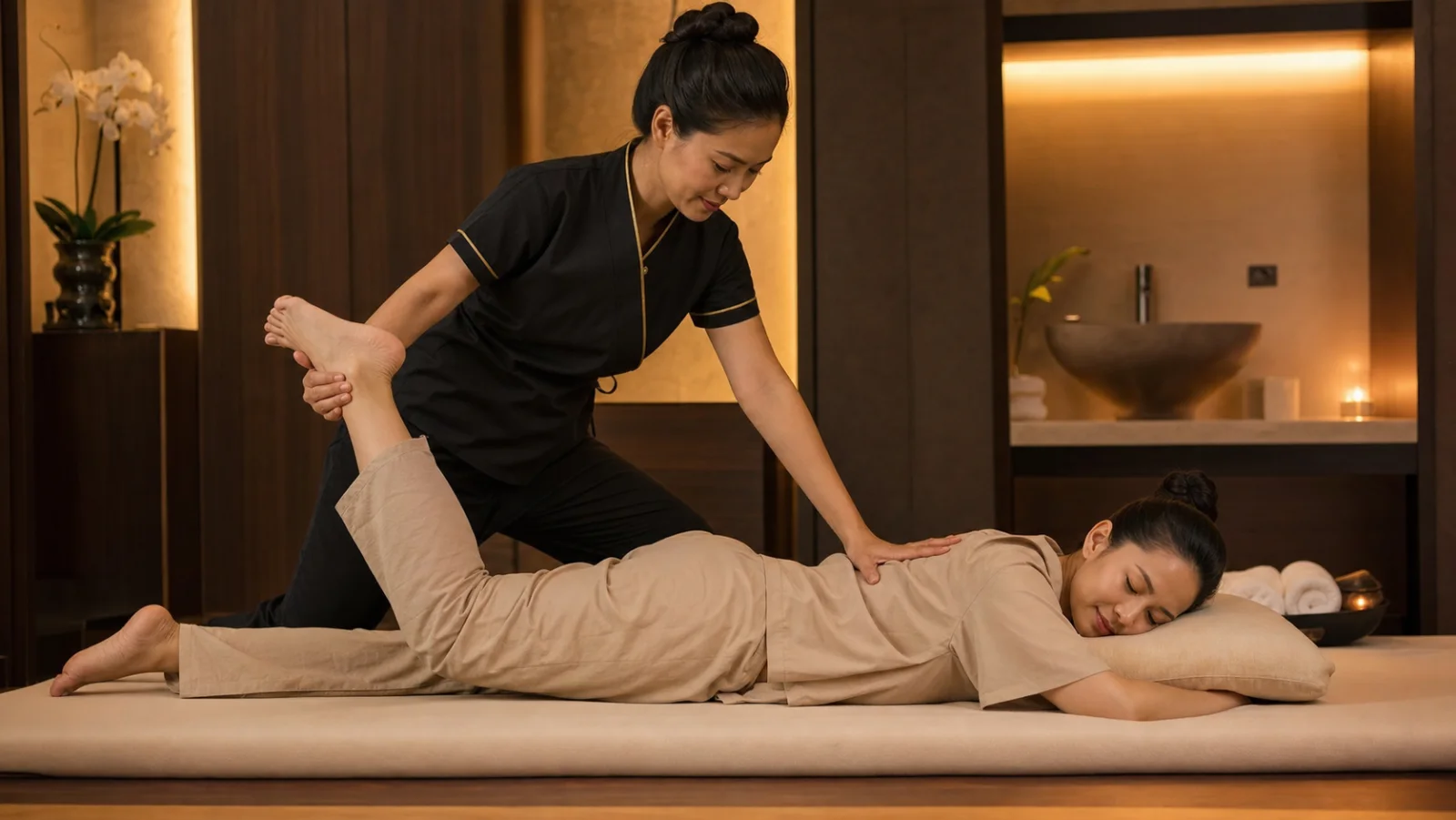
Folded-Leg Hip Work Does Not Diagnose Sciatica
A folded-leg position may create sensation around the gluteal region, outer hip or thigh. Small changes in angle can significantly change where it is felt.
The older article named the piriformis, iliotibial band, sacroiliac dysfunction and pelvic realignment as if the movement treated each condition. A spa video cannot diagnose those problems.
Known hip replacement, labral injury, acute sciatica-like symptoms or severe arthritis should be disclosed before the session so the position can be modified or avoided.
The Full-Body Arch Is an Advanced Option, Not a Finale Everyone Needs
The final arch is visually memorable because it combines extension across several regions. It also demands more tolerance than a simple compression or supported limb movement.
There is no requirement for every Thai massage to end in this pose. A guest with neck or back symptoms, osteoporosis, recent surgery, pregnancy-related considerations or discomfort in extension may need a smaller alternative.
A polished video should never create pressure to perform a movement that does not suit the person.
Evidence Supports Cautious Possibility, Not Universal Treatment Claims
A 2015 systematic review of six controlled studies reported improvements in chronic-pain outcomes after traditional Thai massage, while also calling for more research on moderators, mechanisms and long-term effects.
The US NCCIH similarly describes massage evidence as mixed or low quality for several pain conditions and advises against delaying medical care.
Research on one population, protocol or outcome cannot prove that every technique in this video treats every pain problem.
Screening Comes Before Pressure and Range
WHO’s Nuad Thai training benchmark emphasises screening for contraindications. It names conditions and regions requiring avoidance or caution, including recent surgery, severe osteoporosis, acute neurological signs, wounds, inflammation and vascular problems.
Tell the therapist about pregnancy, anticoagulants, recent injury, surgery, fever, bone fragility, numbness, tingling and diagnosed vascular conditions.
During treatment, useful feedback is specific: lighter pressure, smaller range, slower pace, support under the knee, or stop. Sharp pain is not evidence of a blocked Sen line opening.
Technique Becomes Skilled Care Through Adaptation
The film shows an expressive Thai massage vocabulary: broad pressure, assisted movement, joint positioning, rhythm and coordinated transitions.
Its quality should be judged by control and adaptability, not by the number of advanced poses completed.
For a Thai massage in Bangkok, choose a trained setting, explain your current condition and let comfort determine the sequence.
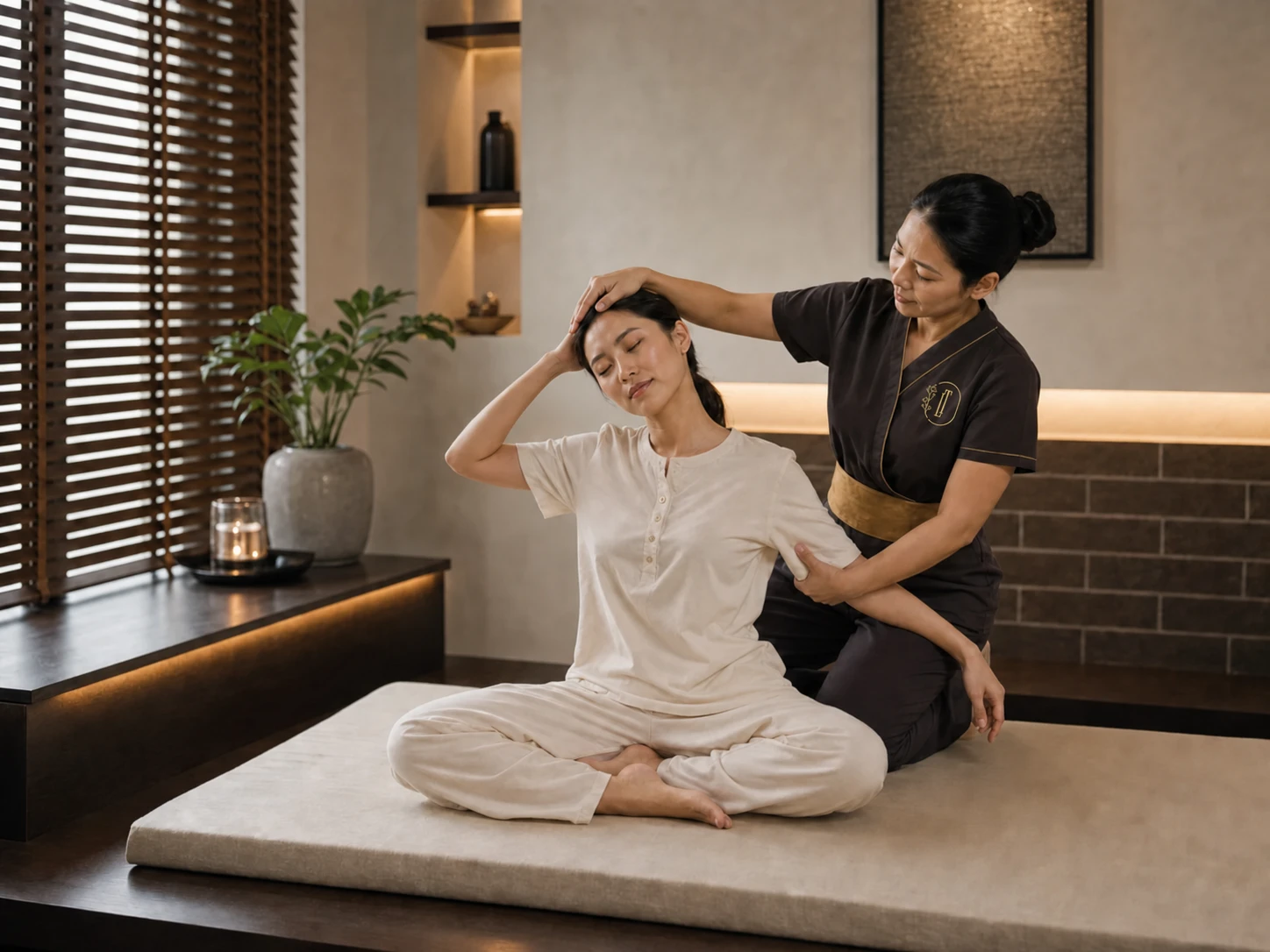
WATCH & LEARN
Thai Massage Mastery in Bangkok: Traditional Techniques with a Modern Touch
“The best-looking stretch is not automatically the best stretch for the person receiving it.”
Loft Thai Editorial Team
Continue your research
REFERENCES
Sources & further reading
- Loft Thai Spa: Thai Massage Mastery video
- UNESCO: Nuad Thai, traditional Thai massage
- WHO: Benchmarks for training in Nuad Thai
- PubMed: Traditional Thai massage for chronic pain systematic review
- PubMed: Acute stretching and range-of-motion systematic review
- NCCIH: Massage therapy evidence and safety
PRACTICAL GUIDANCE
Frequently Asked Questions
Does Thai massage always include strong stretching?
No. Pressure, range, position and pace can be adapted, and an advanced stretch can be replaced or omitted.
Are Sen lines the same as nerves or blood vessels?
No. Sen belong to a traditional Thai explanatory framework and should not be presented as anatomically identical to nerves, vessels or lymphatic channels.
Can Thai massage realign the pelvis or spine?
A spa should not promise structural realignment from one session. Thai massage may involve comfortable movement and temporary changes in sensation or range.
Who should avoid advanced Thai massage stretches?
Suitability depends on the person. Recent surgery, acute injury, severe osteoporosis, neurological symptoms, vascular problems and some pregnancy-related conditions require modification, medical advice or postponement.
Is the video a complete treatment protocol?
No. It is a polished demonstration. A real appointment includes consultation, feedback, pauses and adaptation not visible in a short film.
CONTINUE READING
Related stories
The History and Heritage of Thai Massage
Exploring its Roots in Ayurvedic Medicine, Buddhist Traditions, and the Healing Legacy of Jivaka Kumar Bhaccha
Read the guide
The Science of Pressure Points and Energy Lines (Sen)
How Thai massage stimulates circulation, relieves blockages, and balances body energy—an educational deep dive for health-conscious, well-traveled spa guests.
Read the guide
How to Become the Best Therapist in Thailand
Thailand is known around the world as the Land of Smiles—but for those who work in wellness, it’s also the Land of Healing. From ancient temples to modern spa sanctuaries, massage therapy in Thailand is not just a job; it is an art, a philosophy, and a…
Read the guide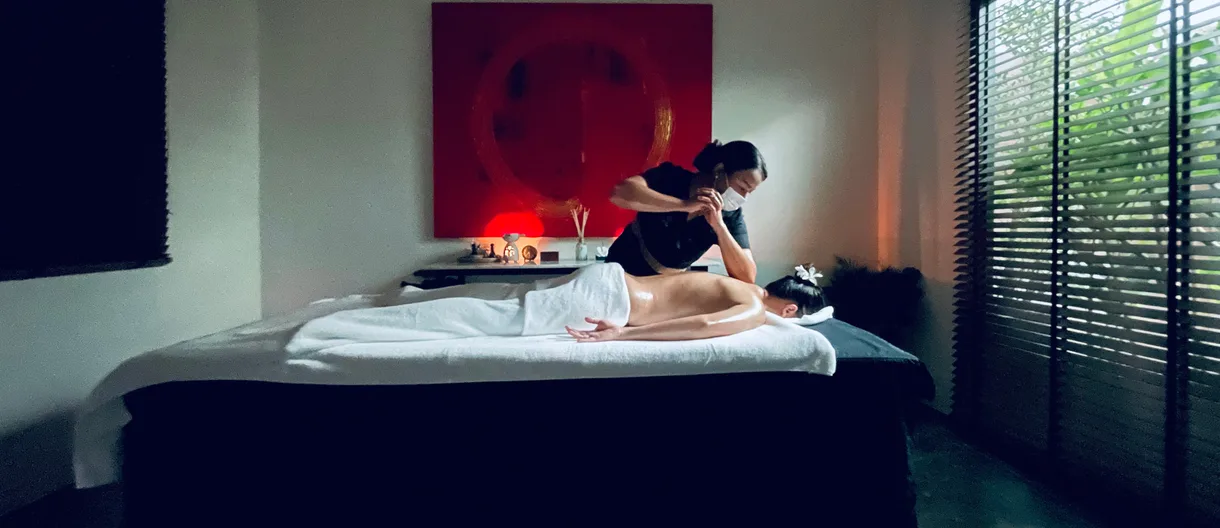
Best Thai Massage Thailand: The Loft Thai Story
Inside a Loft Thai treatment room, the first language is rhythm. A therapist settles her stance, listens to the guest’s breathing and lets pressure build without hurry. Hands pause before they move again; every stretch is supported, every change of position…
Read the guide