
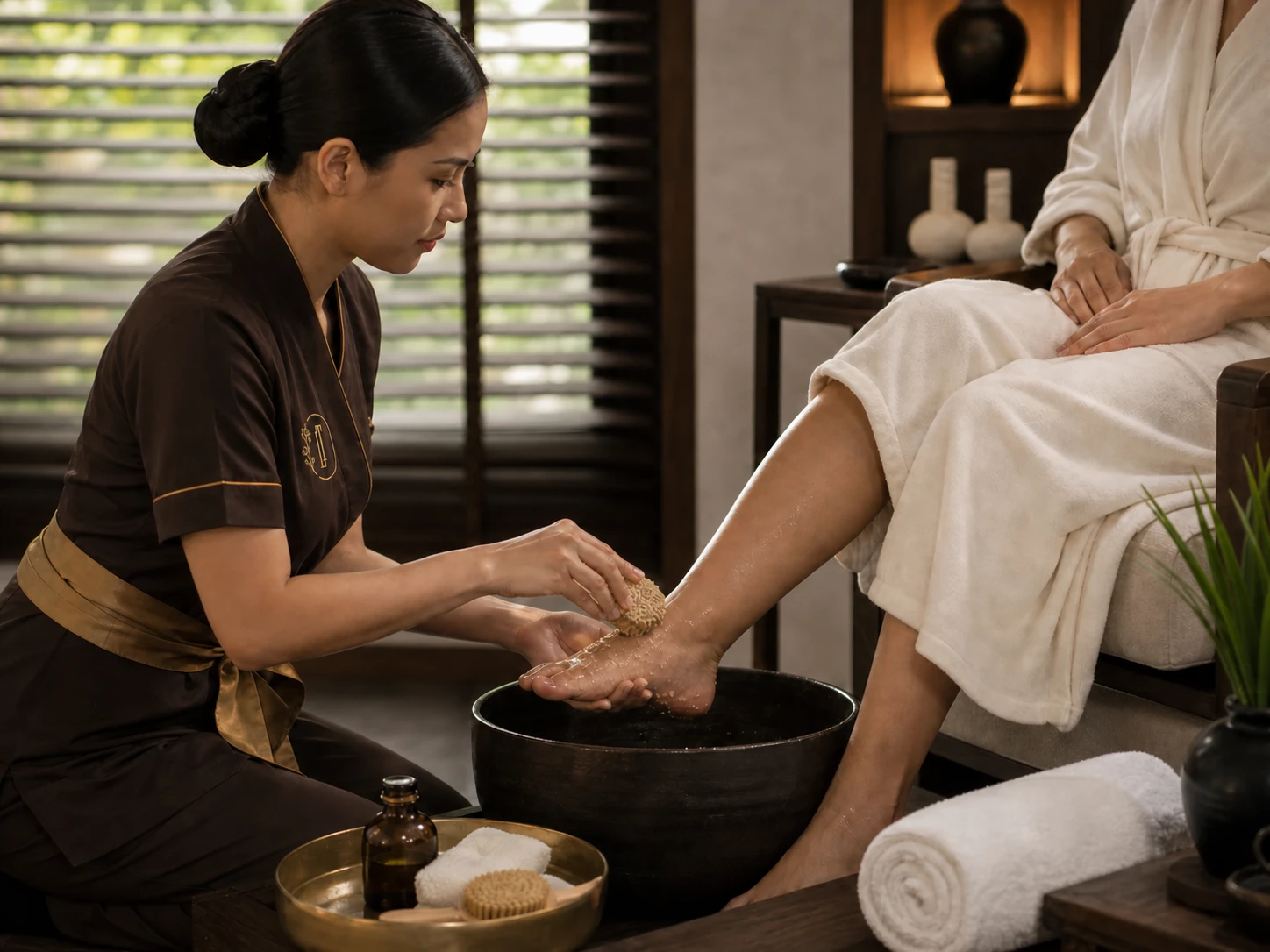
An end-of-the-day type of massage is always something that people look for after work or after a long day of running errands. When visiting a massage & spa salon, it's common to request a traditional Thai massage or even a foot massage to get their day going. However, there is another form of massage that isn't thought about a lot: reflexology.
When you look into the idea of reflexology and foot massage, there are similarities that you can look into but also enormous differences that make both massages entirely different. Although both forms of massages look to accomplish the same goal, the techniques used are more intricate and can offer differences in the short and long term for your body.
Massage therapy has been used for centuries as a form of relaxation and pain relief. In recent years, reflexology and foot massage have become popular forms of massage in which specific pressure points on the feet are stimulated to promote healing and relaxation. While the two techniques may seem similar, there are significant differences between them. This article aims to explore and highlight the differences between reflexology and foot massage.
Reflexology is essentially a form of treatment that looks into the areas and points of the feet, hands, and ears that are well connected to the nervous system of the body. Applying pressure to these points around the body will stimulate the movement of energy which creates balance in the body. What makes this a very unique treatment is that your therapist must first understand where the nerves are in the body. It is known that there are around 7,000 nerve endings in the human foot alone. Each nerve corresponds to a part of the body and can be seen in a reflexology chart that is used in most salons.
A foot massage, on the other hand, is a traditional form of massage that is great for relieving muscle soreness in the foot but only accomplishes short-term relief and does not solve any long-term chronic issues in the body. The easiest way to think about this is that a foot massage is the general form of massage that you can easily request at any massage & spa salon from your therapist. However, once you get technical with the points of the body that needs assistance, then this is where you can consider reflexology treatment.
In addition to this, you can experience improvement in brain power, as well as your nerves, are being stimulated and opening up pathways throughout your body. This means that information traveled around the body will flow faster and can help you conduct tasks easily. Similarly, you can think of this as improving your headaches as this is a common symptom that occurs for humans nowadays. With a reflexology treatment, you can reduce the severity of migraines and headaches to help you get through the day easily.
Looking at all of these benefits of reflexology, it is very important that your therapist understands the reflexology chart and your body as well. A foot massage will always still be considered a common massage but it is ultimately being able to understand the long-term goals that make reflexology superior in every way. It's very important to know that a general foot massage will only produce short-term relief and doesn't assist with chronic and long-term pain.
While both reflexology and foot massage involve the manipulation of the feet, there are several key differences between the two techniques.
Firstly, reflexology is based on the principle that specific points on the feet correspond to specific organs and glands in the body, while foot massage is a more general technique that focuses on promoting relaxation and reducing tension in the muscles.
Secondly, reflexology involves the use of specific techniques to stimulate the reflex points on the feet, while foot massage may involve a variety of techniques and does not necessarily target specific reflex points.
Lastly, reflexology is often used as a form of complementary therapy to address specific health conditions, while foot massage is typically used for relaxation and stress relief.
In summary, while reflexology and foot massage may seem similar, there are significant differences between the two techniques. Reflexology is a form of massage that is based on the principle that specific points on the feet correspond to specific organs and glands in the body, while foot massage is a more general technique that aims to promote relaxation and reduce tension in the muscles. Both techniques have their own unique benefits and can be used to promote overall health and wellbeing.
At Loft Thai Spa & Massage, we have trained and licensed therapists who have expertise in foot massage and reflexology. For more information, you can visit our foot massage and reflexology page to dive down into the specific details of this unique treatment, and you can also head to our booking page to book a spot for an amazing experience for facial treatments today!
UPDATED LOFT THAI GUIDE
Additional guidance and current information
The following editorial update expands on the original Loft Thai article with practical context, current treatment guidance and further reading.
Foot Massage Works Directly with Local Tissues
A general foot massage focuses on the soles, arches, heels, toes, ankles and often the calves.
The therapist may use gliding, kneading, compression and gentle joint movement.
The immediate goal can be comfort and a pleasant local massage experience without an organ-mapping theory.
Reflexology Uses a Correspondence Map
NCCIH defines reflexology as applying different amounts of pressure to specific points on the feet or hands.
Practitioners believe those points match other parts of the body.
NCCIH states that relaxation and healing in corresponding body areas has not been proven.
Reflexology Maps Are Practice Models, Not Anatomy Charts
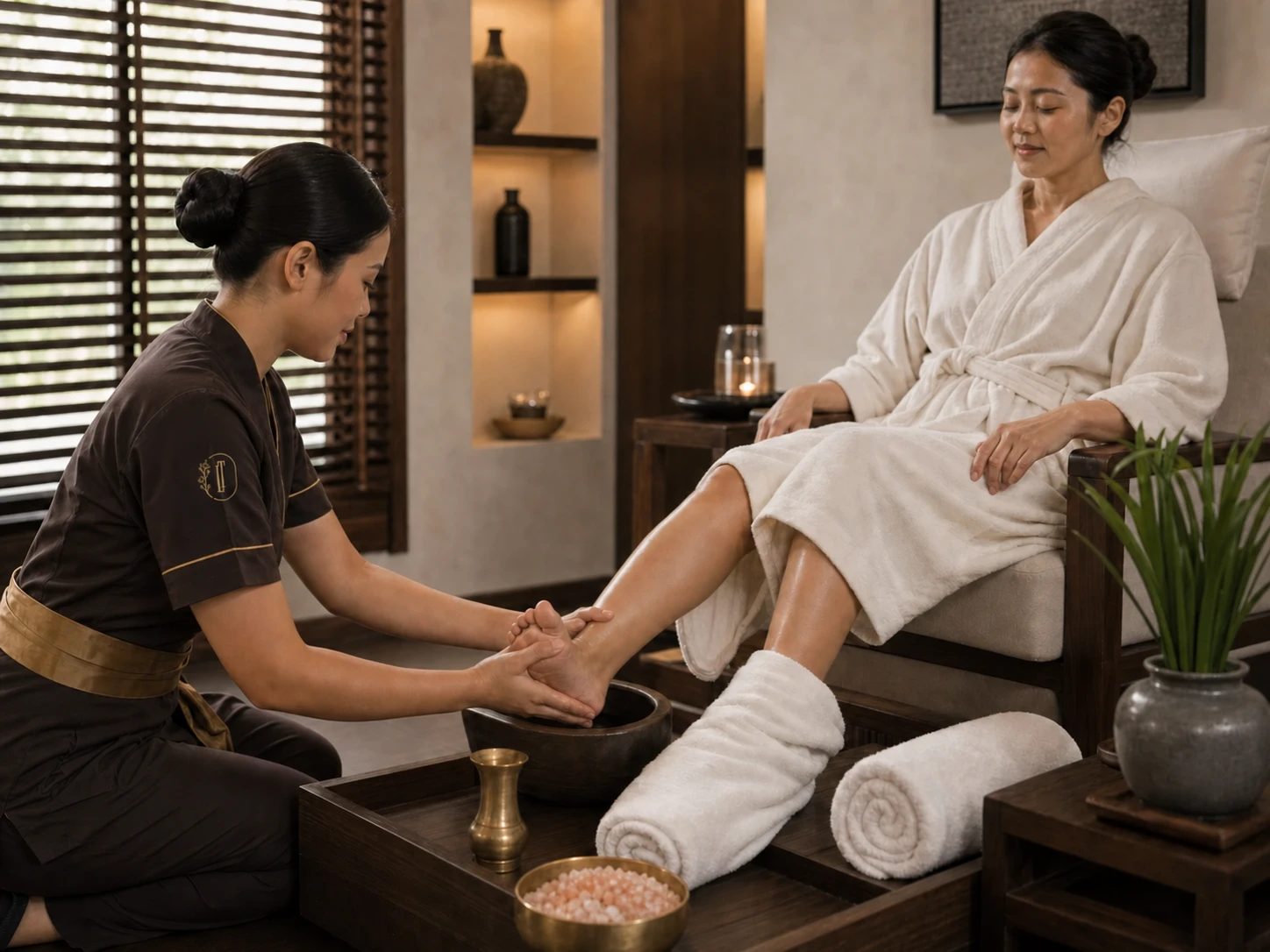
Charts commonly divide toes, arches and heels into zones associated with organs or body regions.
The maps are not equivalent to a nerve-dissection atlas, diagnostic image or laboratory test.
A tender point cannot reliably diagnose a liver, brain, bowel or hormone problem.
The 7,000 Nerve-Ending Claim Is Not Needed
The archived article used an exact figure of about 7,000 nerve endings in each foot to support reflexology maps.
It did not provide a primary anatomical source or explain how that number validates correspondence with distant organs.
The foot is highly innervated and sensitive without making the map a proven diagnostic system.
Evidence Is Condition-Specific and Incomplete
NCCIH reports insufficient evidence for most multiple-sclerosis symptoms and too little evidence for irritable bowel syndrome conclusions.
It cites one cancer study with improvement in a few symptoms but not pain or nausea.
Those findings do not prove permanent whole-body benefits in a healthy spa population.
Recent Reviews Do Not Make Reflexology Universal
A 2024 pregnancy review pooled thirteen randomised studies and reported improvements in selected maternal outcomes.
A separate multiple-sclerosis review reported several positive findings across small and varied studies.
Population, comparator, protocol and study quality matter, so these results should not be copied into a general Bangkok menu promise.
Neither Format Is Automatically Superior
Foot massage can be selected for direct local attention and a familiar massage rhythm.
Reflexology may appeal to guests who enjoy mapped point pressure and understand its traditional explanatory model.
The best choice is the one whose technique, claims, pressure and context match the guest.
The current Service Is Traditional Foot Massage
Loft Thai's reviewed current menu uses the name Traditional Foot Massage.
It is listed at 800 THB for 60 minutes and 1,200 THB for 90 minutes.
The card should not be relabelled medical reflexology unless the booked protocol explicitly uses that term.
A Practical Traditional Foot Massage Sequence
A session can begin with a foot check, cleansing and agreement about pressure.
Work may progress from the sole and arch to heel, toes, ankle and lower leg.
The therapist should avoid forcing joints or using painful point pressure as proof that a treatment is working.
Tools and Products Change the Exposure
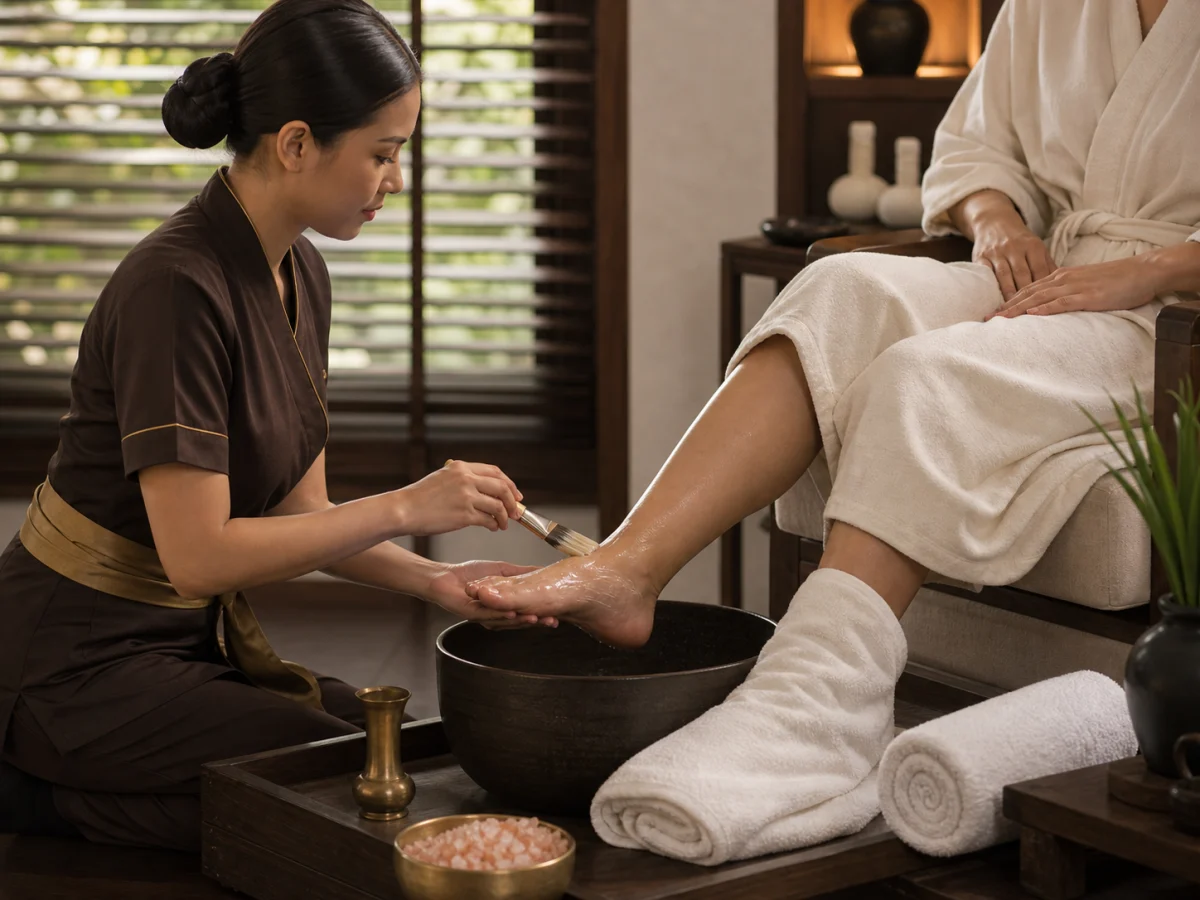
Some foot sessions use a wooden stick, balm, lotion, oil, towel or warm element.
Each adds questions about pressure, cleanliness, fragrance, ingredient allergy and heat.
The tool should support control rather than create bruising or sharp pain.
Inspect Skin and Hygiene Before Pressure
Cuts, blisters, active fungal infection, warts, inflamed nails or contagious skin conditions can change the plan.
Hands, tools, linens and basins require an appropriate cleaning process.
A foot soak does not sterilise skin or equipment.
Reduced Sensation Requires Extra Caution
Diabetes, neuropathy, some neurological conditions and previous injury can reduce reliable pressure or temperature feedback.
Poor circulation, swelling or a wound may require clinical advice instead of routine spa work.
The absence of pain is not proof that pressure or heat is safe.
Persistent Foot Pain Needs a Cause Check
New swelling, inability to bear weight, severe heel pain, colour change, numbness or trauma may need medical assessment.
Massage cannot diagnose plantar fasciitis, fracture, gout, infection or a nerve disorder.
Temporary comfort should not delay appropriate care for a worsening problem.
Pregnancy Research Does Not Replace Screening
Published pregnancy trials used defined participants, timing and protocols.
A pregnant guest should share trimester, complications and healthcare advice before any massage.
No foot point should be marketed as a guaranteed way to start labour or control pregnancy outcomes.
Before the Session
State whether you want general foot massage or mapped reflexology-style point work.
Share diabetes, neuropathy, circulation issues, pregnancy, skin problems, recent injury and blood-thinning medicine.
Confirm duration, price, products, tools and lower-leg coverage.
After the Session
Notice comfort, tenderness, skin reaction and any change in existing symptoms.
Normal daily hydration is sufficient; no toxin-flushing routine is required.
Seek appropriate assessment for persistent swelling, weakness, numbness, severe pain or skin breakdown.
Choose by Technique, Not by Myth
Foot massage and reflexology can share touch while resting on different explanatory models.
The current service is a clearly priced Traditional Foot Massage, and any reflexology element should be described honestly.
Good practice protects comfort, skin, consent and evidence boundaries instead of promising organ healing or permanent change.
“Pressure on the foot is real; a map that diagnoses or permanently changes a distant organ is a separate claim that needs separate evidence.”
Loft Thai Editorial Team
Continue your research
REFERENCES
Sources & further reading
PRACTICAL GUIDANCE
Frequently Asked Questions
What is the main difference between reflexology and foot massage?
Foot massage works directly with local tissues; reflexology applies pressure to mapped points believed to correspond with other body areas.
Are reflexology organ maps scientifically proven?
NCCIH says healing in corresponding body areas has not been proven, and a tender point is not a diagnosis.
What does Loft Thai currently list?
The current menu lists Traditional Foot Massage at 800 THB for 60 minutes and 1,200 THB for 90 minutes.
Can reflexology treat migraines or improve brain power?
The archived claims are not supported as general or permanent outcomes and should not replace medical assessment.
Who needs extra caution with foot massage?
People with neuropathy, diabetes, circulation problems, wounds, infection, significant swelling, pregnancy complications or recent injury need individual screening.
CONTINUE READING
Related stories
A Guide to Foot Reflexology at Loft Thai Spa in Bangkok
If you're looking for a relaxing and therapeutic way to alleviate stress and improve your overall well-being, foot reflexology may be just what you need. At Loft Thai Spa in Bangkok, you can experience the ancient healing art of foot reflexology in a serene…
Read the guide
Revitalize Your Body and Mind with a Foot Reflexology Treatment
It's crucial to set aside some time to focus on relaxation and self-care in the fast-paced world of today. Foot reflexology, a traditional medical technique that has been used for millennia to promote wellness and regeneration, is one approach to accomplish…
Read the guide
Introducing the Pinnacle of Foot Spa Packages at Loft Thai Spa
In the hustle and bustle of our modern lives, our feet often bear the brunt of our daily rush. The weariness, stress, and endless running around can leave our feet in need of some serious TLC. At Loft Thai Spa, we recognize the importance of pampering these…
Read the guide
Loft Thai Spa Listed Among Trusted Foot Care and Reflexology Destinations Worldwide
Our mission has always been clear: to elevate Thai wellness to a global standard while preserving its cultural authenticity, therapeutic depth, and holistic philosophy. Today, we are proud to announce an important new international recognition. Loft Thai Spa…
Read the guide