
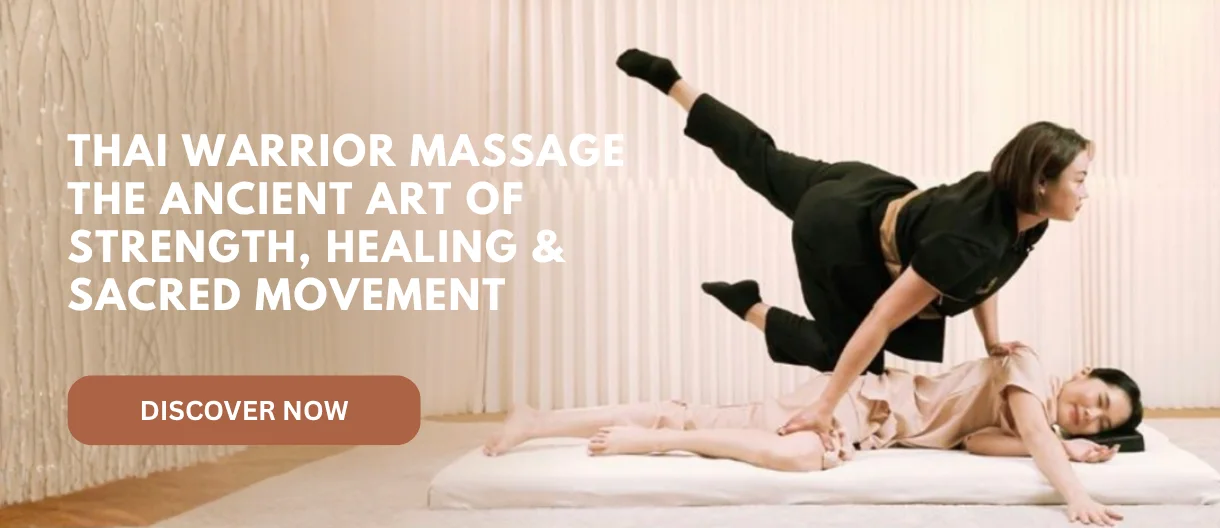
Among the ancient healing traditions of Southeast Asia, the Thai Warrior Massage stands alone as a discipline that unites the physical intensity of martial arts with the elegance of therapeutic touch. It is at once a method of recovery, a ceremonial practice, a scientific system of pressure and movement, and a profound expression of Thailand’s cultural identity. For centuries, this extraordinary massage was guarded within temples, military units, and ascetic communities, passed discreetly from master to apprentice.
Today, it is emerging again as a celebrated symbol of Thai healing philosophy, offering modern seekers a rare experience that blends strength and serenity, precision and intuition, science and spirit. To understand the Thai Warrior Massage fully, one must explore its history, its poses, its physiological impact, its spiritual meaning, and the rigorous training required to master it.
Unlike contemporary spa treatments built around relaxation alone, the Thai Warrior Massage was created out of necessity—developed to prepare, protect, and restore the bodies of those who defended the kingdom. It embodies a worldview in which the body is not separate from the mind or the energy field around it. Every movement, every pressure point, every transition has purpose and lineage. This treatment is therefore not only therapeutic for the receiver; it is transformative for the practitioner, who must approach the massage with grounded strength, technical mastery, and an unwavering presence.
In an era where wellness is often reduced to surface-level comforts, the Thai Warrior Massage serves as a reminder of what true healing is meant to be: immersive, intentional, precise, and deeply connected to cultural wisdom. It is a celebration of the human body’s resilience and a living testament to the idea that healing is both science and art.
The Origins of Thai Warrior Massage
To understand the origins of Thai Warrior Massage, one must journey back to the Ayutthaya Kingdom, a period marked by both cultural flourishing and constant warfare. The Siamese armies faced physical demands that modern athletes would struggle to comprehend. Warriors marched long distances across uneven terrain, trained with heavy weaponry, endured tropical heat, and engaged in emotionally and physically exhausting battles. Yet despite these harsh conditions, they were expected to maintain agility, endurance, and clarity of mind. This required more than brute strength: it required knowledge of the body, knowledge of injury prevention, and knowledge of how to restore vitality rapidly.
The earliest custodians of such knowledge were not military generals but monks and hermits dwelling in forest temples. These monks were scholars of movement, meditation, herbal medicine, and energy therapy. They studied the human body not only through observation but through spiritual practice, meditation, and experiential exploration. Their system of self-healing stretches, breathing techniques, and energy work—known as Ruesi Dat Ton—formed the foundation upon which Thai Warrior Massage was built. These hermits, known as Ruesi, believed that strength must be balanced with softness, and discipline must be paired with healing.
When warrior monks adopted the healing principles of Ruesi Dat Ton, they adapted them to meet the realities of military life. Pressure techniques were refined so they could be applied quickly and effectively. Assisted stretches were expanded to address mobility limitations caused by armor and weapon training. New sequences were created to warm the body before combat and repair it afterward. Through this fusion of spiritual knowledge and practical necessity, the early form of Thai Warrior Massage emerged as a multifaceted healing system combining anatomical understanding, rhythmic movement, breath coordination, and energy alignment.
This sacred knowledge was not written in books for most of its history. It was embodied by masters who transmitted it through direct demonstration. It survived political shifts, wars, and cultural transitions because it existed within people rather than parchment. Later, when King Rama III ordered the documentation and engraving of Thai medical knowledge into the marble walls of Wat Pho in the nineteenth century, the principles behind Thai Warrior Massage were immortalized in diagrams, energetic pathways, and anatomical depictions that still influence Thai traditional medicine today.
As Thailand modernized, Thai Warrior Massage became less common in daily military practice yet remained alive in traditional lineages, martial arts schools, and dedicated healing communities. In recent decades, specialized therapists and teachers have revived and refined this method, presenting it to the world not merely as a historical curiosity but as a dynamic, powerful, and deeply therapeutic massage with profound relevance for modern bodies living under the strain of sedentary lifestyles, chronic stress, and structural imbalance.
The Philosophy and Spiritual Foundations
Although Thai Warrior Massage has clear physical benefits, its depth cannot be understood through muscle anatomy alone. It is grounded in a holistic philosophy that views the body, breath, emotions, and energy as interconnected forces. The foundation of this approach is the belief that healing begins with presence. Before the therapist touches the client, before the first pressure is applied, there is an internal alignment that must occur. The practitioner centers themselves in quiet concentration, stabilizing their breath and calming their inner dialogue. This grounding transforms the massage from a technical act into a meditative exchange.
At the heart of the Thai healing tradition lies the concept of “Lom,” the vital energy that travels through invisible pathways known as Sen lines. These lines are the Thai equivalent of nadis in yoga or meridians in Chinese medicine. Although the names differ, the underlying idea is the same: life force must flow freely for the body to function at its best. Blocked energy manifests as tension, pain, emotional stagnation, or illness. Through rhythmic pressure, stretches, and strategic bodyweight techniques, Thai Warrior Massage is designed to re-open these pathways, restoring circulation and energetic coherence.
Another important spiritual dimension comes from Buddhism. The therapist is trained to approach the client with Metta—loving-kindness—a sincere wish for the client’s well-being. This intention imbues every movement with compassion and respect. It protects both therapist and receiver, creating an atmosphere of trust that enables deeper release. The client is not treated as a passive body but as a whole human being with emotional layers, energetic patterns, and lived experiences that shape the way tension manifests physically.
This philosophy creates a therapeutic environment where mind and body are inseparable. The poses and techniques are performed with awareness, not force. The therapist’s breath becomes a metronome guiding pressure and movement. Their posture reflects discipline and humility. Their transitions embody mindfulness. When the treatment is performed correctly, both therapist and client enter a state of shared flow—a quiet synergy where healing feels natural, effortless, and alive.
The Poses and Techniques of Thai Warrior Massage
The poses of Thai Warrior Massage are famously dynamic and visually striking, resembling a cross between martial arts, Thai yoga, and contemporary stretching therapy. They require significant strength and control from the therapist, yet they must be executed with softness and fluid precision. Each pose is crafted to open specific areas of the body, decompress joints, improve circulation, and release deep fascial tension.
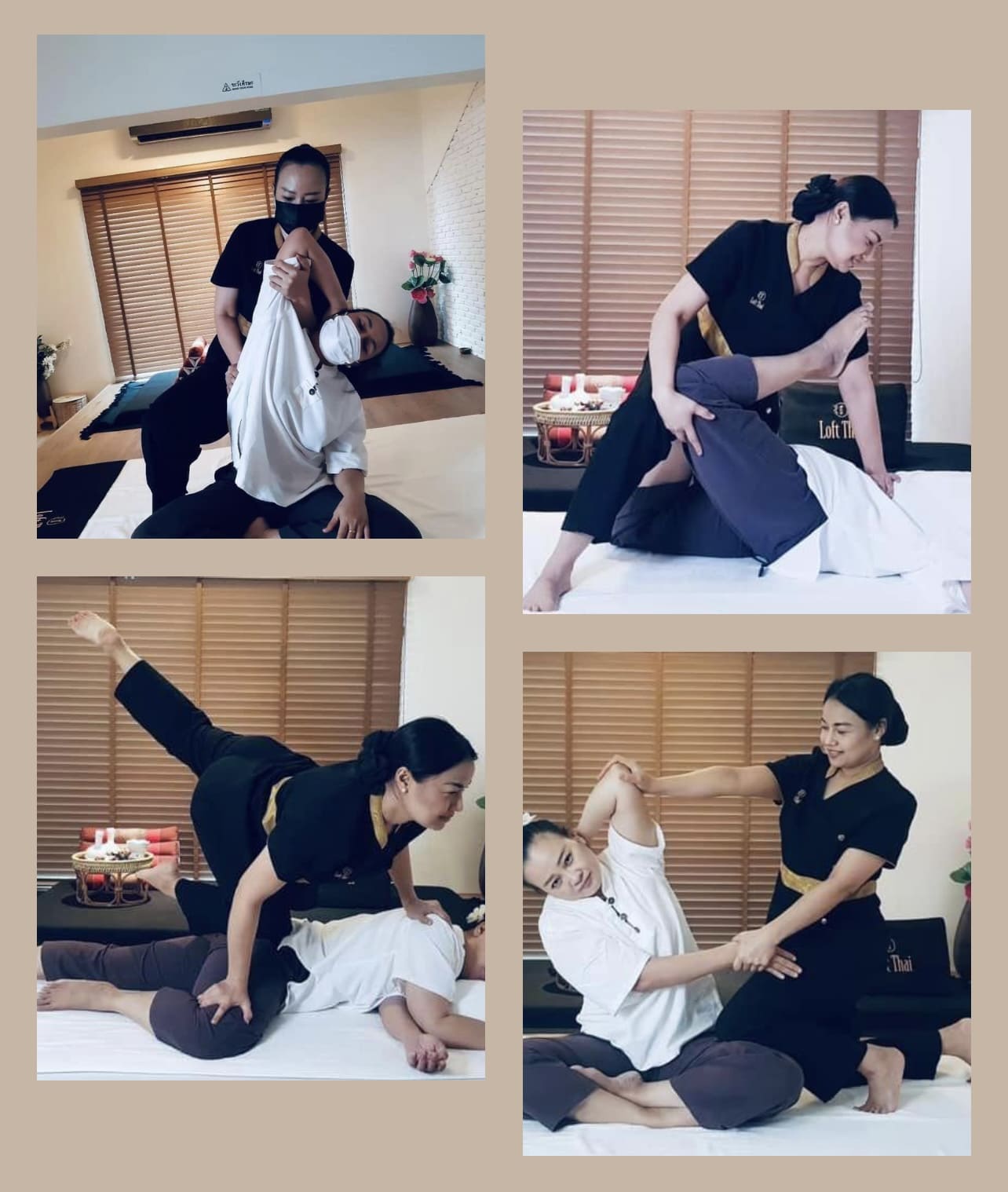
One of the signature poses resembles an archer’s stance from ancient combat. The therapist lowers themselves into a wide, grounded kneeling position, activating the thighs and core while keeping the spine long. From this stable base, they lean forward with controlled bodyweight to apply deep, sustained pressure along the client’s legs or back. Although the pressure can be intense, it is never abrupt. It is delivered through gradual, intentional sinking—allowing the tissues to relax rather than resist.
Another essential posture is the warrior lunge, which places one foot forward and one knee back, enabling the therapist to distribute weight evenly through the hips. This position allows for powerful but safe compression on the thighs, hips, and lower back. It is particularly effective for relieving the chronic tightness that develops from long hours of sitting. The transition into and out of this posture is seamless, demonstrating the therapist’s agility and awareness.
Perhaps the most iconic movement in Thai Warrior Massage is the controlled step-over. This ceremonial transition requires the therapist to rise, balance, and step over the client’s body in a single smooth arc. The purpose is twofold: to position the therapist correctly for the next technique, and to symbolize a guardian-like presence rooted in ancient warrior ritual. When performed skillfully, it looks effortless; in reality, it demands perfect alignment, concentration, and body control.
As the session progresses, the techniques intensify in therapeutic depth. Knee pressure on the hips loosens the deep rotators that often trigger sciatic discomfort. Forearm sweeps across the chest open the pectoral muscles and free the breath. Assisted spinal rotations release trapped tension between the vertebrae while stimulating both the nervous system and the energetic pathways that influence emotional stability. Later sequences introduce dramatic backbend lifts where the therapist supports and gently elevates the client, creating an expansive opening through the chest and spine. This posture, when performed safely, is profoundly liberating, especially for clients experiencing upper body tightness from stress or posture imbalance.
Every movement flows into the next without interruption. The fluidity of technique is central to the method’s healing power. It mirrors the ebb and flow of breath, the cycle of tension and release, the continuous rhythm of life energy moving through the body.
The Science of Thai Warrior Massage: Anatomy, Physiology, and Biomechanics

Although Thai Warrior Massage is steeped in temple tradition and spiritual symbolism, its effectiveness can also be explained through modern medical science. To understand why the massage feels transformative, one must look at the body’s deepest systems: the muscular network, fascia, joints, nervous system, and circulatory pathways. The genius of this ancient method lies in how precisely it influences each of these systems, long before anatomy textbooks existed.
At the muscular level, Thai Warrior Massage works by applying sustained, directional pressure that penetrates multiple layers of muscle. The pressure is never random; it is guided by anatomical intuition and centuries of practice. When the therapist uses their knees or elbows to sink into the hip muscles, for example, they are targeting the gluteus medius, piriformis, and deep rotators responsible for stabilizing the pelvis. Tightness in these muscles is one of the most common causes of lower back pain, sciatica, and mobility restriction. By compressing and lengthening these tissues, the therapist restores balance between the anterior and posterior chains of the body.
The stretching sequences enhance this effect by elongating muscle fibers that have become shortened through daily habits such as prolonged sitting. Hamstring stretches, hip extensions, and thoracic openings not only increase immediate flexibility but also stimulate neuromuscular re-education. This means the body learns a new, healthier pattern of movement. When the therapist lifts the client into an assisted backbend, for example, the thoracic spine receives a rare opportunity to fully extend. This counteracts the forward-leaning posture created by desk work, smartphone use, and stress-induced contraction.
But the real secret to the technique’s power lies in its influence on fascia—the interconnected web of connective tissue that surrounds muscles, bones, and organs. Fascia is sensitive, responsive, and essential to healthy movement, yet it becomes stiff, dehydrated, or adhesive when the body is stressed or underused. Thai Warrior Massage acts as a dynamic myofascial therapy. The deep, slow pressure applied through knees and forearms melts fascial restrictions, while stretching rehydrates the tissue and restores its elasticity. Modern fascia research echoes what healer-monks understood intuitively centuries ago: when you free the fascia, you free the body.
Joint mobility is also enhanced through rotational, traction-based, and extension movements. The controlled spinal twists performed in Thai Warrior Massage mobilize the facet joints between vertebrae, releasing accumulated tension and improving fluid movement. Hip rotations stimulate the ball-and-socket joint, which is essential for balance, walking efficiency, and athletic performance. Even the gentle ankle mobilizations improve proprioception—the body’s sense of position in space—contributing to better balance and coordination.
On a physiological level, Thai Warrior Massage significantly increases blood flow. The rhythmic compressions work like a pump, drawing fresh oxygenated blood into the tissues while simultaneously promoting venous return. This improves nutrient delivery, accelerates muscle recovery, and reduces inflammation. Lymphatic circulation is also stimulated through pressure and release. This is why many clients report feeling lighter or “cleansed” after a session: their body is literally eliminating stagnant fluids and waste more efficiently.
The nervous system plays an equally important role in the experience. When pressure is applied slowly and mindfully, the mechanoreceptors in the skin and fascia send signals to the brain that reduce sympathetic activity. In simple terms, the massage tells the body it is safe. The fight-or-flight response softens, replaced by the parasympathetic mode responsible for rest, digestion, and healing. Breathing deepens, muscle guarding decreases, heart rate stabilizes, and the body’s natural healing mechanisms accelerate. This neurological shift explains why even strong stretches and deep pressure can feel deeply soothing rather than stressful.
Furthermore, the combination of movement and pressure enhances the release of endorphins and serotonin—natural chemicals associated with pain relief and mood regulation. This contributes to feelings of emotional clarity, improved sleep, and reduced anxiety. Many clients describe a sensation of “resetting,” as though their entire mind-body system has been recalibrated.
Energetically, traditional Thai medicine explains these scientific effects through the concept of Sen lines. These pathways correspond loosely to myofascial meridians described in modern anatomy. What ancient practitioners recognized intuitively through observation and touch, modern science has begun to validate: that emotional stress, physical injury, and poor posture create patterns of tension that extend beyond individual muscles and into the body’s connective network. By releasing these pathways, Thai Warrior Massage influences both physical and emotional well-being.
This intersection of science and tradition is what makes Thai Warrior Massage so powerful. It is a method created through centuries of embodied experimentation, refined through lineage, and now supported by contemporary understanding. In many ways, it is a bridge between ancient wisdom and modern physiology—a system that treats the human body not as isolated parts but as an integrated whole.
The Holistic Dimension: Mind, Energy, Emotion, and Ritual
While the scientific benefits explain how the body responds on a physiological level, the holistic dimension of Thai Warrior Massage explains why the experience is so deeply transformative. Thai culture has always viewed the body as a vessel of interconnected forces. The physical body, emotional body, and energetic body are seen as inseparable, with each influencing the others in subtle and profound ways. Thai Warrior Massage embraces this viewpoint, working not only on muscles and joints but on the unseen aspects of human experience.
The breath is central to the holistic dimension. Throughout the session, the therapist synchronizes their breath with movement, creating a steady tempo that encourages the client to breathe more deeply. Breath has a direct influence on the nervous system, and as it slows, thoughts quiet, emotions settle, and awareness expands. Many clients report entering a meditative state during the treatment—not because they try to, but because the rhythm of the massage invites it naturally.
The therapist’s intention is another important factor. Rooted in Buddhist principles, the practice encourages the therapist to cultivate Metta, or loving-kindness. This is not sentimental affection but a calm, unconditional goodwill directed toward the client. It is conveyed through touch, pace, and presence. When a therapist works with Metta, the client feels safe enough to let go. This emotional surrender allows deeper layers of tension—including those rooted in worry, grief, or unresolved stress—to soften and release.
Energy flow is also an essential part of the holistic dimension. In traditional Thai belief, blockages in the Sen lines can manifest as both physical pain and emotional disturbance. By releasing these blockages, Thai Warrior Massage can free emotional energy trapped in muscles, fascia, or the diaphragm. It is common for clients to experience emotional shifts during or after the treatment. These may range from tears to a sudden feeling of lightness or clarity. This emotional release is not a side effect; it is an intended outcome, representing the liberation of stored tension.
The ceremonial elements of the massage—the grounding ritual, the step-over transition, the rhythm of movement—play a symbolic role as well. They represent protection, respect, and energetic guardianship. These elements, rooted in ancient warrior tradition, elevate the session from simple bodywork to a sacred encounter between two people. The therapist becomes a guide, the client a participant in a centuries-old healing ritual that honors both the physical and spiritual nature of the human body.
This holistic orientation is why Thai Warrior Massage continues to resonate deeply in modern times. People seek it not only for pain relief but for balance, clarity, and reconnection. It offers something rare in contemporary culture: an experience that acknowledges the human being in their full complexity, recognizing that true wellness is found not only in the muscles but in the mind, heart, and spirit.
The Emotional Landscape of the Body: Memory, Tension, and Release
One of the most profound dimensions of Thai Warrior Massage is its ability to address the emotional anatomy—the idea that the body stores memories and psychological experiences in muscular patterns. This concept, once dismissed by Western science, is now widely accepted in fields such as somatic psychology, neuroscience, and trauma therapy. Human beings do not hold stress merely in the mind; they hold it in the shoulders where responsibility becomes weight, in the hips where fear restricts movement, in the chest where grief constricts breath, and in the jaw where anger locks tension into place. Over time, these emotional imprints create physical limitations, chronic pain, and postural imbalances.
Thai Warrior Massage works directly with these emotional layers because of its unique combination of pressure, stretch, and movement. The deep compressions applied with forearms, knees, or elbows penetrate areas where the body unconsciously stores tension. When pressure is applied slowly and mindfully, it bypasses defensive muscle guarding and reaches the deeper layers where emotional memories reside. This is why clients sometimes experience an unexpected release when a therapist presses into the hips, diaphragm, or chest. The pressure unlocks the body’s emotional holding patterns, allowing stored feelings to surface gently and without force.
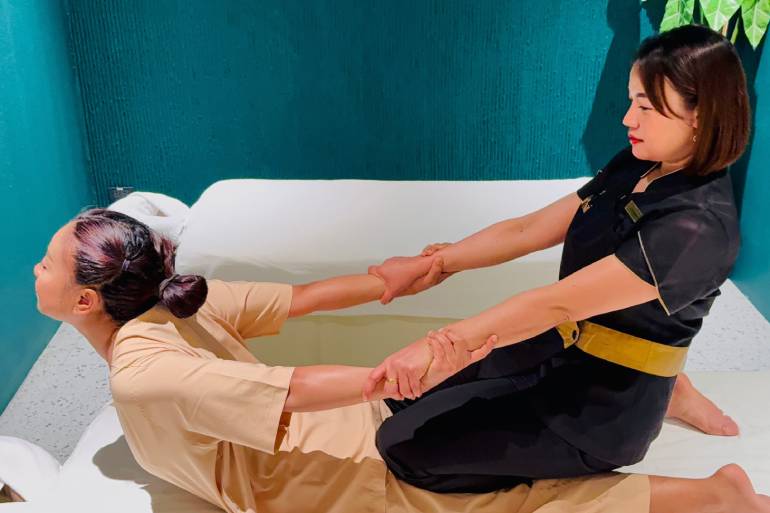
The stretching component of the massage plays an equally important role. Certain stretches, especially those involving the spine, shoulders, and hips, open areas of the body that are often physically and emotionally contracted. For example, when the therapist supports the client’s chest in a gentle backbend, the ribcage expands, the diaphragm softens, and the heart space opens. This posture creates a sense of vulnerability but also liberation. It counteracts the protective posture the body adopts during periods of stress, sadness, or fear. Clients frequently describe a feeling of inspiration, courage, or newfound spaciousness in their chest after this movement.
Another emotional dimension is the sense of safety created by the therapist’s presence. Thai Warrior Massage requires close physical proximity and strong body contact, but it is never invasive. The therapist’s movements are grounded, stable, and confident, providing reassurance through their own physical alignment. When a client feels supported, held, and respected, their nervous system relaxes, enabling deeper emotional release. This sense of trust is essential in unlocking deep-seated emotional tension. The treatment becomes less about receiving pressure and more about receiving permission to let go.
The rhythmic nature of the massage amplifies this effect. Repetitive motion has a calming influence on the brain, similar to the swinging of a pendulum or the gentle rocking of a boat. Neuroscientists have observed that rhythmic movement reduces activity in the amygdala, the part of the brain responsible for fear and anxiety. It also increases activity in the prefrontal cortex, the region associated with emotional regulation and clarity. This is why Thai Warrior Massage often leaves clients feeling not only physically relaxed but emotionally clear, grounded, and centered.
Just as important as the emotional release during the massage is the integration that follows. Many clients report that after a session, they feel more connected to their body, more aware of their emotions, and more able to respond to life with presence rather than tension. This integration is not something the therapist forces; it emerges naturally from the combination of physical techniques and emotional freedom. In this sense, Thai Warrior Massage becomes a form of embodied therapy—healing not through words but through movement, touch, and breath.
The Flow of Movement: Why Thai Warrior Massage Feels Like a Dance
One of the most captivating qualities of Thai Warrior Massage is its resemblance to dance. Observers often describe it as a fluid sequence of movements that flows seamlessly from one posture to the next. This is not an artistic coincidence but a deliberate stylistic element rooted in the practice’s origins.
In ancient Siam, warriors were trained in both combat techniques and ceremonial forms of movement. Martial arts such as Muay Boran were practiced with grace and rhythm, emphasizing fluid transition, awareness of space, and coordination with breath. These principles found their way into Thai Warrior Massage, shaping the therapist’s approach to movement. The treatment became a ceremonial dance of healing, where every step, transition, and gesture held meaning.
The dance-like quality arises from three primary components: rhythm, continuity, and body awareness. Rhythm is established through breath and consistent pacing. The therapist moves in harmony with their own breathing and encourages the client to do the same. This creates a shared tempo that defines the entire session. Movements are neither rushed nor delayed; they unfold in a natural cadence that mirrors the ebb and flow of energy in the body.
Continuity ensures that the client feels held throughout the session. There are no abrupt transitions, no sudden changes in direction, and no disjointed movements. When the therapist moves from one technique to another—perhaps from hip pressure to a stretch or from a spinal twist to a shoulder release—it happens with seamless smoothness. This continuity is essential because it encourages the client’s nervous system to remain calm and receptive. The body relaxes more deeply when it does not anticipate sharp or unpredictable movements.
Body awareness, or proprioception, is the third key element. The therapist must be deeply attuned to their own posture, balance, and weight distribution. They must move with intention, engaging their core and legs while keeping their spine aligned. This internal awareness allows them to execute the flowing movements characteristic of Thai Warrior Massage. When performed by a skilled practitioner, the technique looks effortless, but it is anything but effortless. It requires incredible concentration, muscular stability, and physical intelligence.
The dance-like nature of the massage also contributes to its therapeutic effect. Movement stimulates lymphatic circulation and encourages the flow of energy through the Sen lines. The gentle swaying, shifting, and rhythmic pressing soothe the nervous system and create a hypnotic effect. Many clients report drifting into a meditative state, not because they try to meditate, but because the body naturally enters a trance-like relaxation in response to the movement. This quality is one of the reasons why Thai Warrior Massage can feel simultaneously powerful and soothing, vigorous and peaceful.
But perhaps the most extraordinary aspect of this dance-like flow is the connection it fosters between therapist and client. In a world where touch is often rushed, clinical, or transactional, Thai Warrior Massage stands out as a form of communication through movement. The therapist listens to the client’s body, responds to its cues, and adapts the flow accordingly. This creates a dialogue without words—a silent conversation guided by intuition, empathy, and shared rhythm. It is this connection that transforms the technique from a mechanical sequence into a living, breathing art form.
The Challenge and Discipline of Learning Thai Warrior Massage
To the untrained eye, Thai Warrior Massage may look graceful and intuitive. But to those who attempt to learn it, it quickly becomes clear that this technique is one of the most demanding forms of bodywork ever created. It requires not only physical strength but technical precision, emotional stability, and an understanding of anatomy, energy, and biomechanics.
The difficulty begins with the poses themselves. Many of the foundational postures require strong legs, stable hips, and a well-engaged core. Therapists must hold deep lunges, wide kneeling positions, and balanced stances while applying their bodyweight in a controlled manner. These positions can be physically exhausting for beginners who have not yet built the necessary strength or endurance. The therapist must learn to use their body efficiently, relying on alignment and leverage rather than brute force.
Balance is another major challenge. Thai Warrior Massage involves numerous transitions in which the therapist shifts weight from knees to feet, from one hip to the other, or from crouching to standing. These transitions must be executed with grace to avoid startling the client or losing control. Maintaining balance while applying pressure requires exceptional proprioception and awareness of the body.
Beyond the physical challenge lies the technical complexity. The therapist must memorize sequences of movements, understand how different techniques affect the body, and adjust pressure based on the client’s needs. They must learn to read subtle cues: a slight change in breath indicating discomfort, a softening of muscle signaling readiness for deeper pressure, or a shift in posture revealing emotional tension. This intuitive sensitivity develops only through practice, experience, and deep listening.
The intellectual difficulty is equally daunting. To practice Thai Warrior Massage safely, therapists must understand anatomy, joint mechanics, and contraindications. They must know how to protect the client’s spine, hips, knees, and shoulders while executing powerful techniques. They must learn where to apply pressure and where to avoid it, how to stretch without overstretching, and how to adapt techniques for different body types.
Then there is the emotional and spiritual discipline. Thai Warrior Massage requires the therapist to remain grounded, calm, and centered throughout the session. If the therapist is distracted, tense, or fatigued, the client will feel it. The practice demands emotional maturity, mindfulness, and the ability to maintain inner balance even when performing physically demanding movements.
For these reasons, Thai Warrior Massage is often considered a "master level" technique within the world of Thai bodywork. It is not typically taught to beginners. Instead, it is reserved for therapists who have already established a strong foundation in traditional Thai massage and who are prepared for the rigorous training required to learn the warrior method. Many therapists describe the journey of learning Thai Warrior Massage as transformative—not only for their technique but for their entire relationship with movement, breath, and healing.
UPDATED LOFT THAI GUIDE
Additional guidance and current information
The following editorial update expands on the original Loft Thai article with practical context, current treatment guidance and further reading.
What the current Menu Actually Verifies
Loft Thai Spa’s current treatment page and spa menu list Thai Warrior Massage as a 90- or 120-minute service. The menu describes a Thai and yoga-massage-inspired format with stronger, controlled movements and assisted stretching in a private individual or couple room.
That establishes a current commercial treatment, its duration and its broad service style. It does not establish every historical statement in the former article, including claims that the sequence was guarded by military units, created for combat recovery or transmitted unchanged from the Ayutthaya period.
The most accurate description is therefore a contemporary Loft Thai signature built from recognisable Thai massage elements and presented with a more dynamic level of movement. Guests should book it for that experience, not because an unreferenced legend is treated as historical proof.
Thai Heritage and a Branded Signature Are Different Claims
UNESCO inscribed Nuad Thai on the Representative List of the Intangible Cultural Heritage of Humanity in 2019. Its file describes a living Thai healthcare tradition transmitted through families, schools, associations and professional communities.
That recognition belongs to Nuad Thai as a cultural practice. It does not automatically authenticate a branded service name, prove a martial lineage or endorse a particular spa. Responsible storytelling keeps the wider heritage and the Loft Thai treatment connected without making them identical.
The former article also combined Ruesi Dat Ton, Wat Pho inscriptions, monks, warriors and modern sports recovery into one seamless genealogy. These subjects may intersect within Thai cultural history, but no source reviewed for this migration verifies that exact chain for Thai Warrior Massage.
How It Differs from a Standard Thai Massage
A traditional Thai massage is generally performed through comfortable clothing on a firm mat or low bed. The practitioner may use rhythmic compression, supported joint movement, position changes and passive stretches, with the sequence adapted to the guest.
Thai Warrior Massage uses the same broad vocabulary but places greater emphasis on longer, more athletic-looking transitions and controlled leverage. The distinction is one of service design and intensity, not proof that ordinary Nuad Thai is incomplete.
A strong-looking pose is never the goal by itself. Range should remain within the guest’s comfortable limit, and the therapist should be able to shorten, replace or omit a movement without weakening the quality of the session.
- Traditional Thai massage: broad foundation, rhythmic compression and adaptable movement
- Thai Warrior Massage: Loft Thai signature with a more dynamic assisted-movement emphasis
- Oil massage: glide on exposed skin with different draping and less clothed positional work
- Sports massage: goal-led work for activity preparation or recovery, not a heritage label

A Responsible Session Starts Before the First Stretch
The appointment should begin with a private consultation covering current pain, injuries, surgery, pregnancy, health conditions, medication, previous massage experience and movements that feel unsafe. “Strong” is not a complete treatment preference; the therapist needs to know whether the guest wants steady pressure, more mobility work or simply a longer Thai sequence.
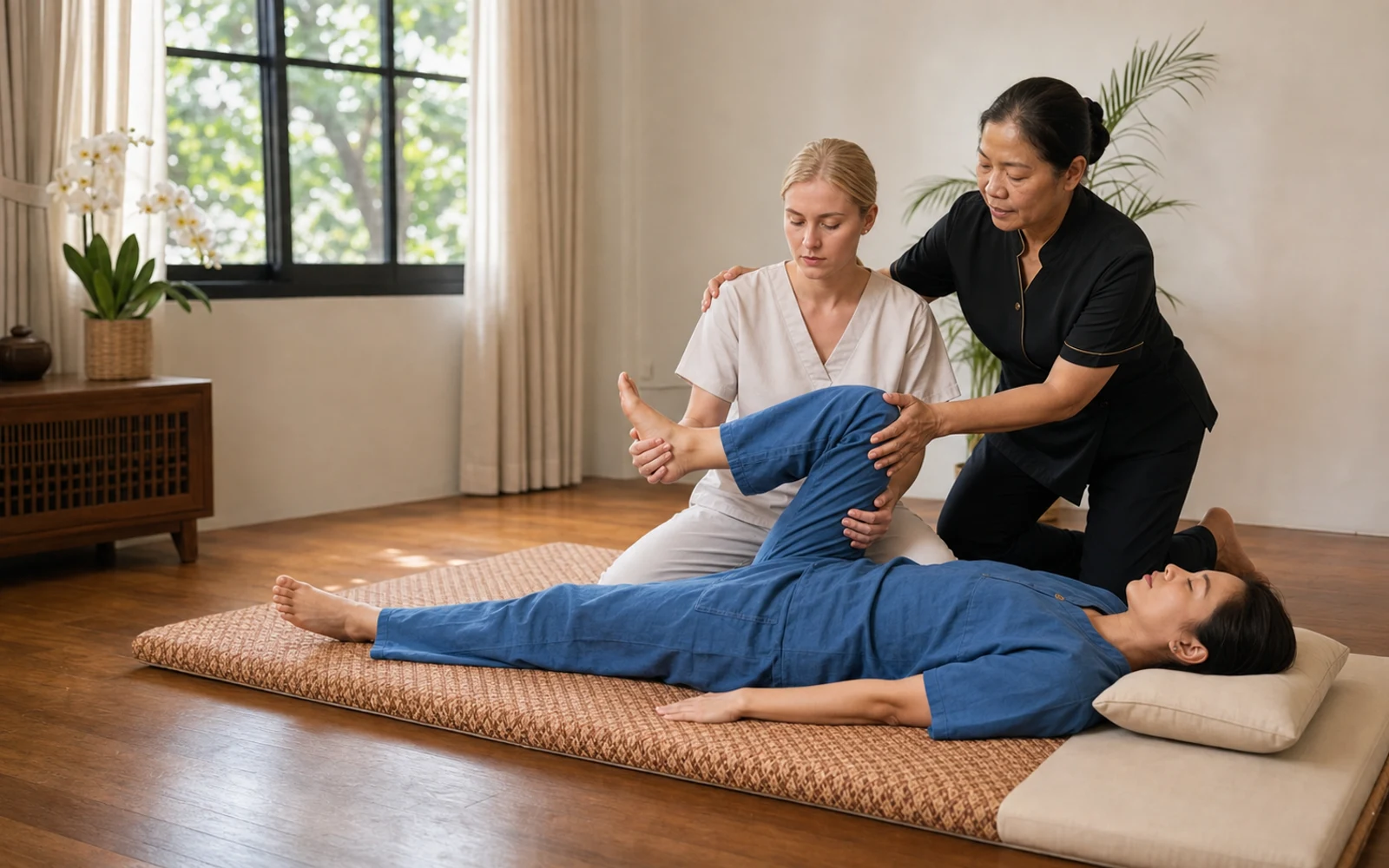
Loose clothing allows the body to move without exposing the skin. A session may progress through supine, side-lying, prone or seated positions, but there is no requirement to complete every position. Bolsters, cushions and smaller ranges can make the same intention more comfortable.
Communication continues throughout. Numbness, tingling, sharp pain, dizziness, breath-holding or a feeling of instability are reasons to stop and reassess, not tests of endurance.
-
01
Consult
Describe health context, movement limits and the kind of intensity you expect.
-
02
Prepare
Change into loose clothing and agree on pressure and positioning signals.
-
03
Move
Progress through supported compressions and stretches within a comfortable range.
-
04
Review
Pause when sensation changes and finish with unhurried position changes.
More Intensity Is Not More Authenticity
Deep pressure and large stretches photograph dramatically, but quality is better measured by control, preparation, contact, pacing and the therapist’s response to feedback. Pain is not evidence that a blockage is being released.
The US National Center for Complementary and Integrative Health notes that massage research varies by condition and that rare serious adverse events have been reported, sometimes after vigorous techniques or in people at higher risk of injury.
A premium session therefore earns trust through restraint. The practitioner uses body weight progressively, keeps joints supported and avoids forcing end range. The guest can request less pressure or a different position at any point.
Who May Prefer the Thai Warrior Direction
The service may suit an experienced massage guest who enjoys clothed Thai bodywork, is comfortable changing positions and wants a longer sequence with more assisted movement. It can also appeal to active travellers who prefer a participatory ritual rather than an oil-based treatment.
It is not automatically the best choice for an athlete, a flexible person or someone with persistent pain. Fitness does not reveal joint stability, injury history or medical risk, and a massage therapist does not diagnose the cause of symptoms.
First-time guests can still ask about the treatment, but a standard traditional Thai massage or gentler combination may provide an easier introduction. Choosing the less intense option is not a downgrade.
When to Adapt, Postpone or Seek Medical Advice
Tell the spa before booking about pregnancy, recent surgery, fracture, joint replacement, osteoporosis, blood-thinning medication, a history of blood clots, acute injury, neurological symptoms, uncontrolled health conditions or recent cosmetic and medical procedures.
Fever, infection, unexplained swelling, chest pain, breathing difficulty, sudden weakness, severe pain or a suspected clot require appropriate medical assessment rather than vigorous massage. Massage should not delay necessary healthcare.
Where massage remains appropriate, adaptation may include lighter pressure, fewer position changes, no end-range stretching or a different service. The therapist should be willing to decline techniques that are outside a safe wellness scope.
Choose 90 or 120 Minutes by Pace, Not Ambition
Ninety minutes allows a full-body treatment with consultation and selected dynamic work. One hundred and twenty minutes can provide more time for gradual preparation, slower transitions and attention to several areas.
The longer appointment should not mean two hours of maximum pressure. Time is valuable because it removes the need to rush. A careful therapist may spend more of it warming tissues, checking comfort and balancing the sequence.
Confirm the current price, branch availability and room arrangement on the live menu before travelling. Service details can change after an article’s publication date.
After the Treatment
Rise slowly, notice how you feel and share immediate concerns before leaving. Normal hydration and a regular meal are more useful than a ritualised detox claim.
Temporary tenderness can occur after vigorous bodywork, but severe or worsening pain, substantial bruising, weakness, persistent numbness or other worrying symptoms deserve medical advice. Do not assume every reaction is a healing response.
The purpose of aftercare is observation and comfort. The treatment does not realign the skeleton, remove toxins, reset the nervous system or guarantee athletic recovery.
A Signature Worth Understanding Clearly
Thai Warrior Massage is most credible when presented as Loft Thai’s dynamic Thai-inspired signature: a longer clothed ritual that uses controlled pressure, supported movement and assisted stretching.
Its value does not depend on an unverifiable military origin. Consultation, therapist skill, proportionate intensity and respect for Nuad Thai’s documented living heritage provide a stronger story—and a safer Bangkok spa experience.

“A stronger treatment should feel more carefully controlled—not less collaborative.”
Loft Thai Editorial Team
Continue your research
REFERENCES
Sources & further reading
PRACTICAL GUIDANCE
Frequently Asked Questions
Is Thai Warrior Massage an ancient military treatment?
The current Loft Thai service is verified, but the exact claim of an uninterrupted military lineage was not independently established during this review.
Is Thai Warrior Massage the same as traditional Thai massage?
It uses a related clothed Thai massage vocabulary but is presented as a more dynamic Loft Thai signature with stronger assisted-movement emphasis.
Does Thai Warrior Massage have to hurt?
No. Sharp pain, numbness, instability or forced end range are reasons to stop and adapt the technique.
How long is the treatment?
Loft Thai’s current menu lists 90- and 120-minute options. Confirm current availability and pricing before booking.
Who should discuss the treatment with a clinician first?
People with significant medical conditions, recent surgery or injury, clot risk, osteoporosis, pregnancy-related concerns or unexplained symptoms should seek appropriate advice and tell the spa.
CONTINUE READING
Related stories
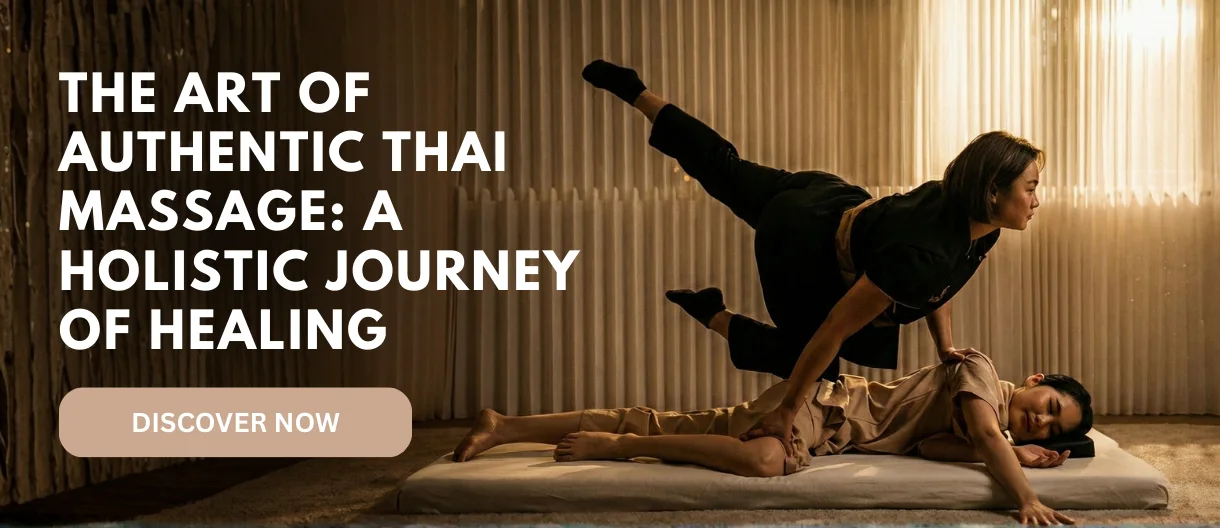
The Art of Authentic Thai Massage: A Holistic Journey of Healing
In the heart of Bangkok, where tradition meets modern sophistication, the art of Thai massage continues to thrive — not merely as a spa treatment, but as a cultural treasure and holistic wellness philosophy that has endured for over 2,500 years. Today, Thai…
Read the guide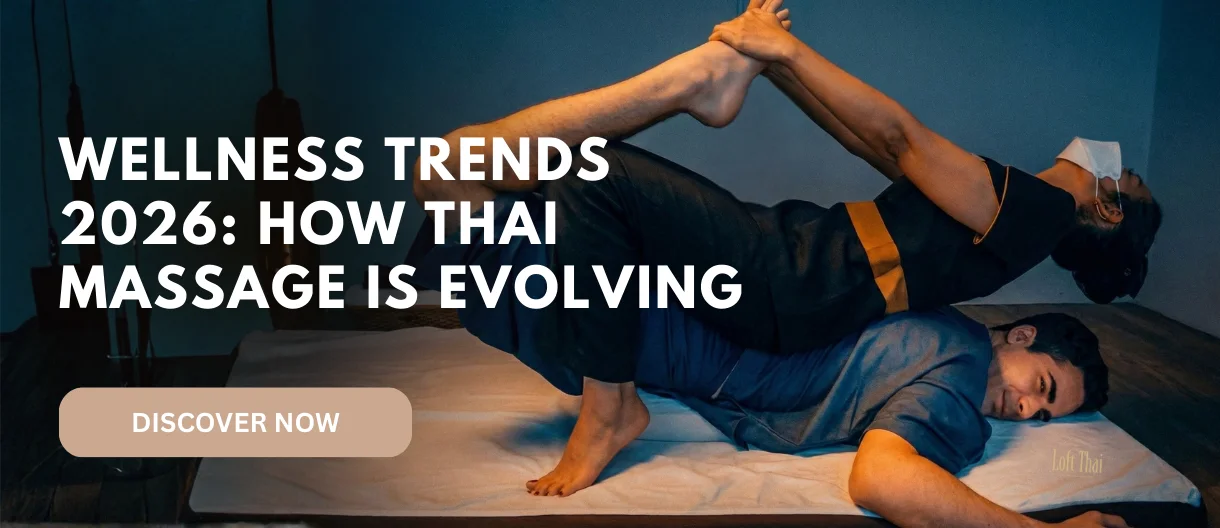
Wellness Trends 2026: How Thai Massage Is Evolving for the Modern Lifestyle
As the world steps into a new era of wellness, 2026 marks a pivotal moment for the global spa and holistic health industry. Wellness is no longer treated as an occasional luxury or a once-a-year retreat—it has become a lifestyle necessity, deeply embedded in…
Read the guide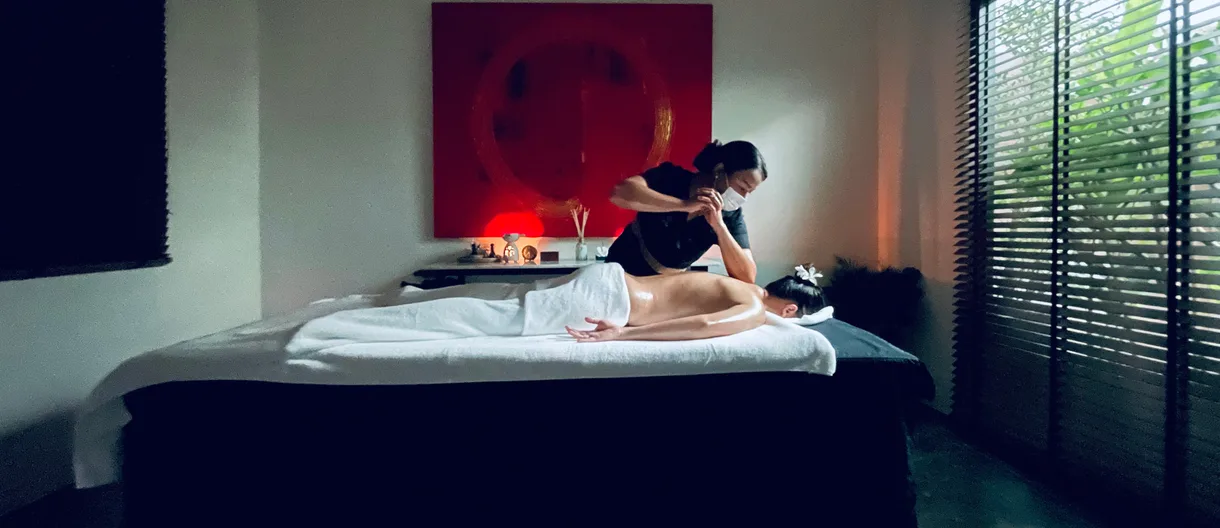
Best Thai Massage Thailand: The Loft Thai Story
Inside a Loft Thai treatment room, the first language is rhythm. A therapist settles her stance, listens to the guest’s breathing and lets pressure build without hurry. Hands pause before they move again; every stretch is supported, every change of position…
Read the guide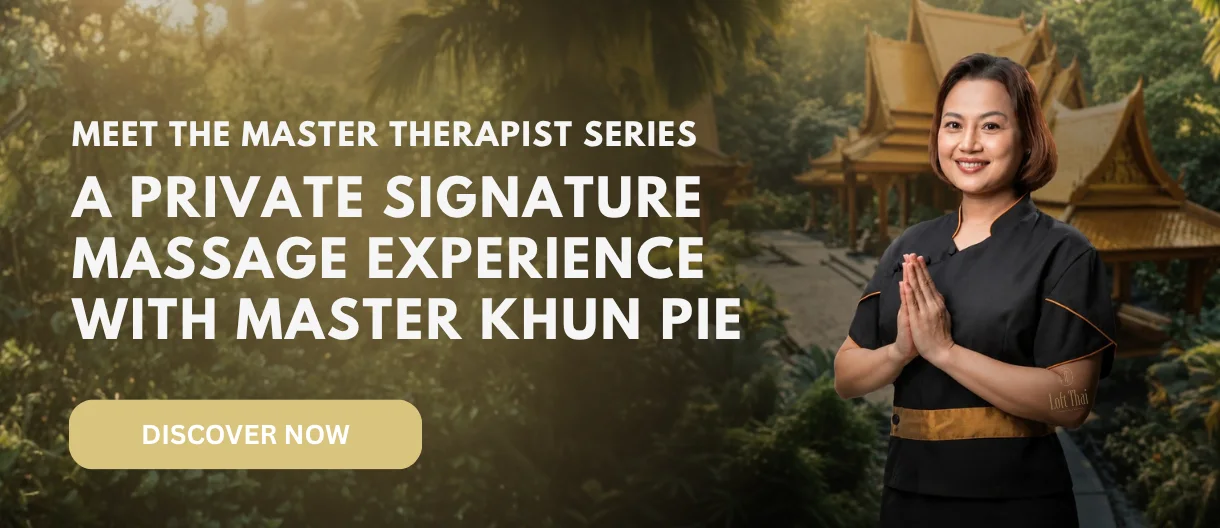
Meet the Master Therapist Series: A Private Signature Massage Experience with Khun Pie
There are massages you book because your body feels tired. There are spa rituals you choose because you want to escape the noise of the city for an hour. And then there are rare experiences that feel more like a meeting with living knowledge — a moment where…
Read the guide