
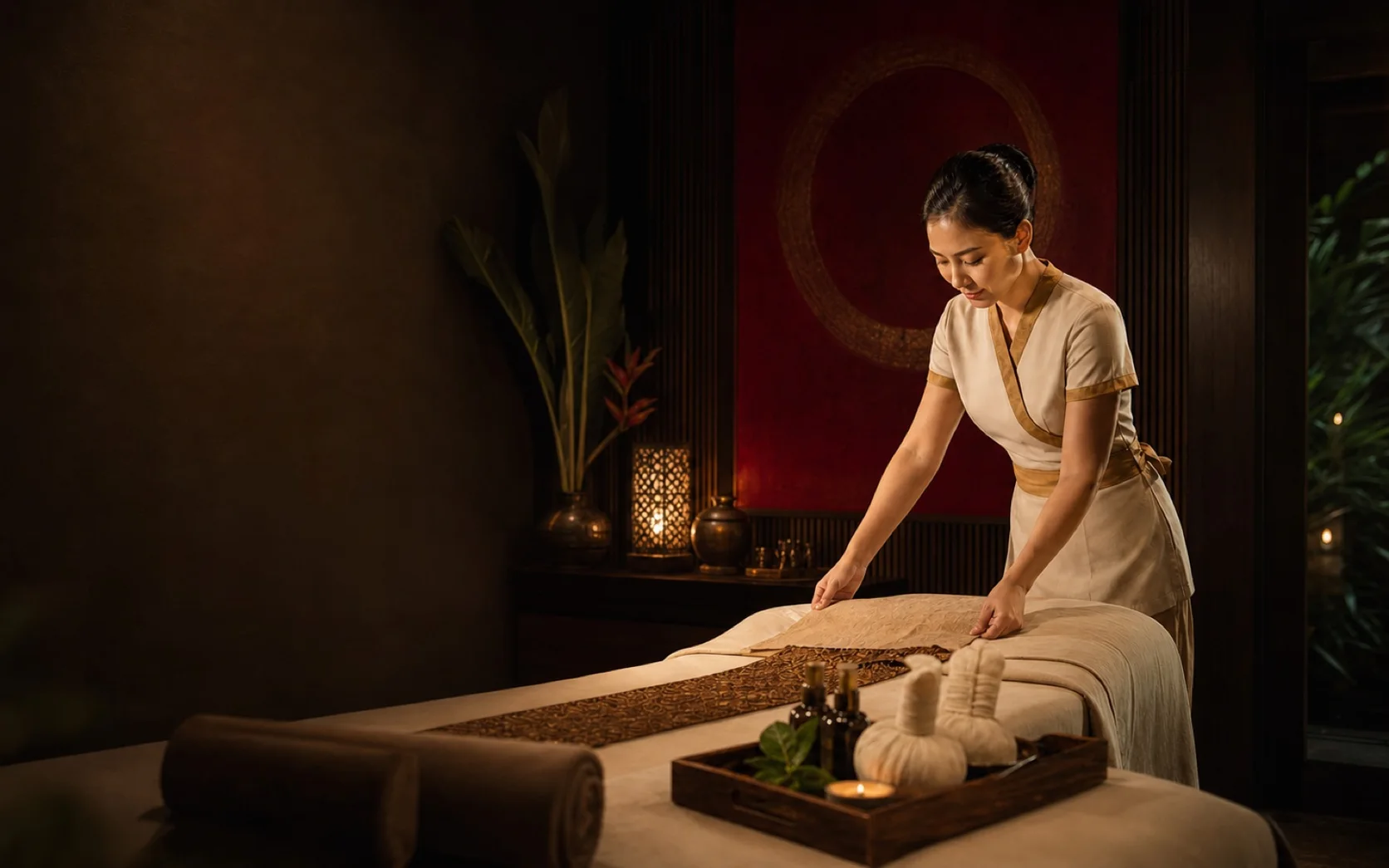
In today's fast-paced and stress-filled world, finding moments of relaxation and rejuvenation has become essential for maintaining overall well-being. The concept of luxury spas has long been associated with opulence and extravagance, offering a haven of tranquility and pampering.
However, as society evolves and individuals seek more meaningful and holistic experiences, the definition of luxury spa experiences is undergoing a significant transformation. This article delves into the changing landscape of luxury spas, exploring the emerging trends and innovative approaches that are redefining the way we experience spa treatments.
Shifting towards Holistic Well-being
One of the key aspects of redefining luxury spa experiences is a shift towards wellness and holistic well-being. Instead of focusing solely on pampering and indulgence, luxury spas are now incorporating elements of physical and mental health, mindfulness, and self-care. They are embracing a more comprehensive approach to wellness by offering a range of services that promote relaxation, stress reduction, and overall vitality.
Integration of Nature and Environment
Another important trend in redefining luxury spa experiences is the integration of nature and the environment. Many modern spas are designed to blend seamlessly with their natural surroundings, creating a sense of harmony and tranquility. Outdoor treatment areas, lush gardens, and eco-friendly architecture are becoming increasingly common in luxury spa resorts, allowing guests to connect with nature and benefit from its healing properties.
Sustainability and Eco-friendly Practices
Furthermore, the concept of sustainability has gained prominence in the luxury spa industry. Spa resorts are adopting eco-friendly practices, such as using organic and locally sourced products, implementing energy-saving technologies, and minimizing waste generation. These initiatives not only align with the growing environmental consciousness of consumers but also enhance the overall wellness aspect of luxury spa experiences.
Personalization of Spa Treatments
The personalization of spa treatments is another significant development in redefining luxury spa experiences. Luxury spas now offer customized treatments tailored to individual preferences and specific wellness goals. Advanced technologies, such as AI-powered diagnostics and data analysis, enable spas to provide personalized recommendations and therapies based on each guest's unique needs. This personalized approach ensures that guests receive the maximum benefits from their spa experience, leading to greater satisfaction and long-term loyalty.
Cultural Diversity and Traditional Healing Practices
Luxury spas are also embracing cultural diversity and incorporating indigenous healing practices from different parts of the world. Traditional techniques like Ayurveda, Traditional Chinese Medicine, and Native American rituals are being integrated into spa treatments, adding a rich cultural dimension to the experience. These ancient healing traditions offer a holistic approach to well-being, focusing on restoring balance and harmony in the body, mind, and spirit.
Social Connection and Community
Additionally, the concept of community and social connection is finding its way into luxury spa experiences. Some spas are offering group activities and wellness retreats where guests can interact with like-minded individuals and foster a sense of belonging. These communal experiences not only provide opportunities for personal growth but also create a supportive environment for guests to share their wellness journey.
Technological Advancements and Wellness Innovations
Luxury spas are also incorporating advanced wellness technologies to enhance the overall spa experience. From state-of-the-art fitness equipment to high-tech skincare treatments, these technological advancements are revolutionizing the way we perceive luxury spa experiences. For example, infrared saunas and cryotherapy chambers offer innovative and effective wellness solutions.
Culinary Experiences and Nourishment
The culinary aspect of luxury spa experiences is also evolving. Many luxury spas now offer farm-to-table dining experiences, focusing on locally sourced and organic ingredients. These gourmet meals are thoughtfully designed to provide nourishment and vitality, complementing the overall wellness journey of the guests.
UPDATED LOFT THAI GUIDE
Additional guidance and current information
The following editorial update expands on the original Loft Thai article with practical context, current treatment guidance and further reading.
Redefine Luxury as a Service Standard
The former article described holistic wellbeing, nature, eco-friendly architecture, artificial-intelligence diagnostics, indigenous practices, social retreats, cryotherapy, farm-to-table food and art as emerging luxury.
It did not identify a specific spa, service, measurement, qualification or evidence source for those claims.
A practical definition begins with what a guest can see, ask, confirm and experience without relying on trend language.
1. A Precise Choice Before Purchase
The menu should identify the treatment, duration, branch, price, products or equipment that define it and material limitations.
A luxury experience should not require the guest to decode vague package names or discover essential exclusions after payment.
Comparison becomes premium when it is calm, complete and free from artificial urgency.
2. An Unhurried Consultation
The therapist needs enough time to confirm current comfort, preferences, treatment area and the day’s protocol.
Personalisation means choosing among trained, documented adjustments; it does not mean improvised diagnosis.
The guest should understand what will remain the same and which steps can change.
3. Privacy and Consent by Design
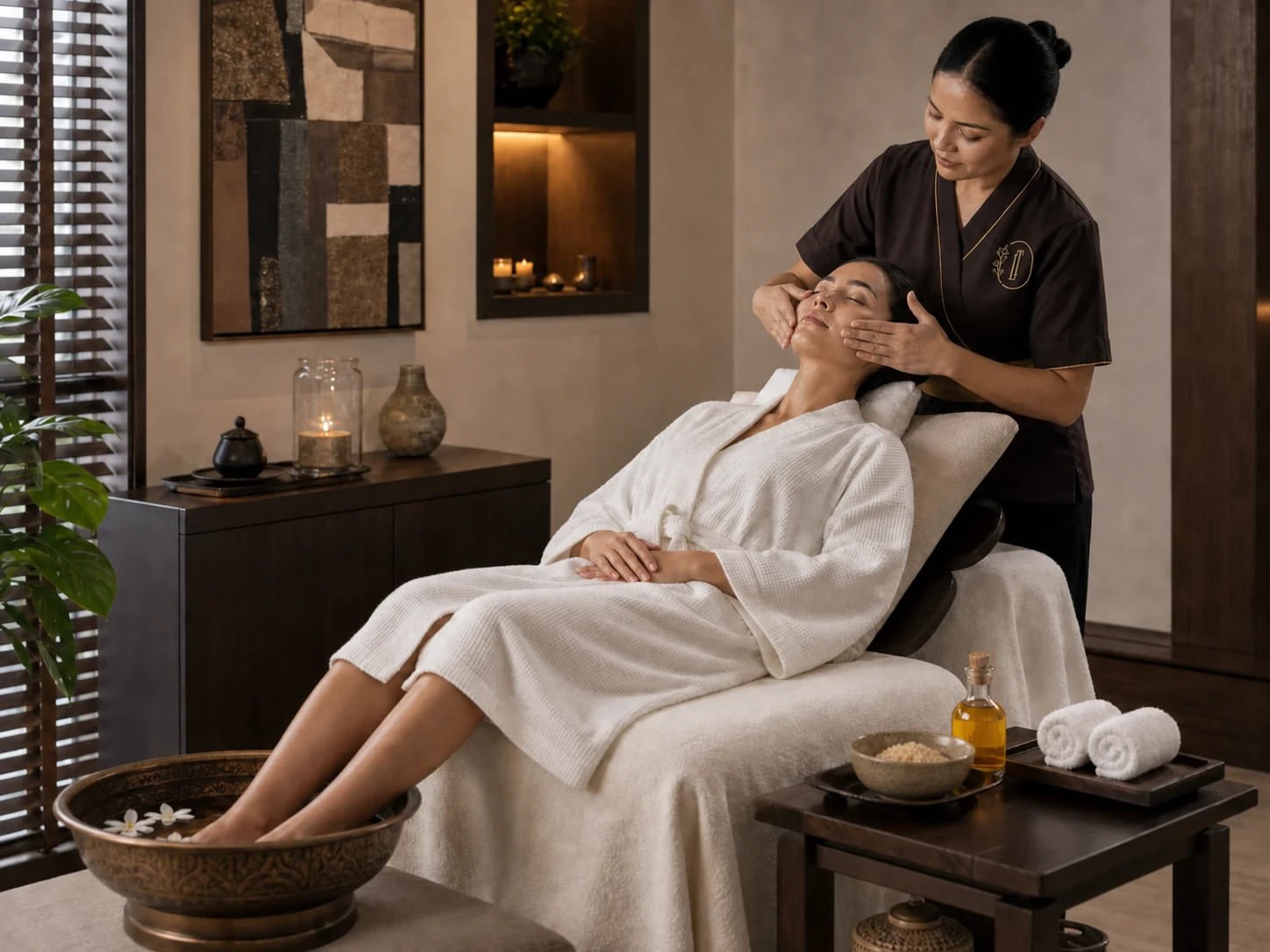
Privacy includes the booking record, conversation, changing process, treatment position, room access and handling of photographs or sensor data.
Consent should be specific to products, heat, equipment, touch and optional upgrades.
A premium spa makes it easy to decline a step without embarrassment or pressure.
4. A Room the Guest Can Understand and Control
Temperature, lighting, sound, scent and positioning should be explained and adjustable within safe operating limits.
Technology may support those controls, but a simple manual route should remain available.
Luxury decreases when a guest has to tolerate discomfort because a preset programme is treated as mandatory.
5. A Coherent Protocol
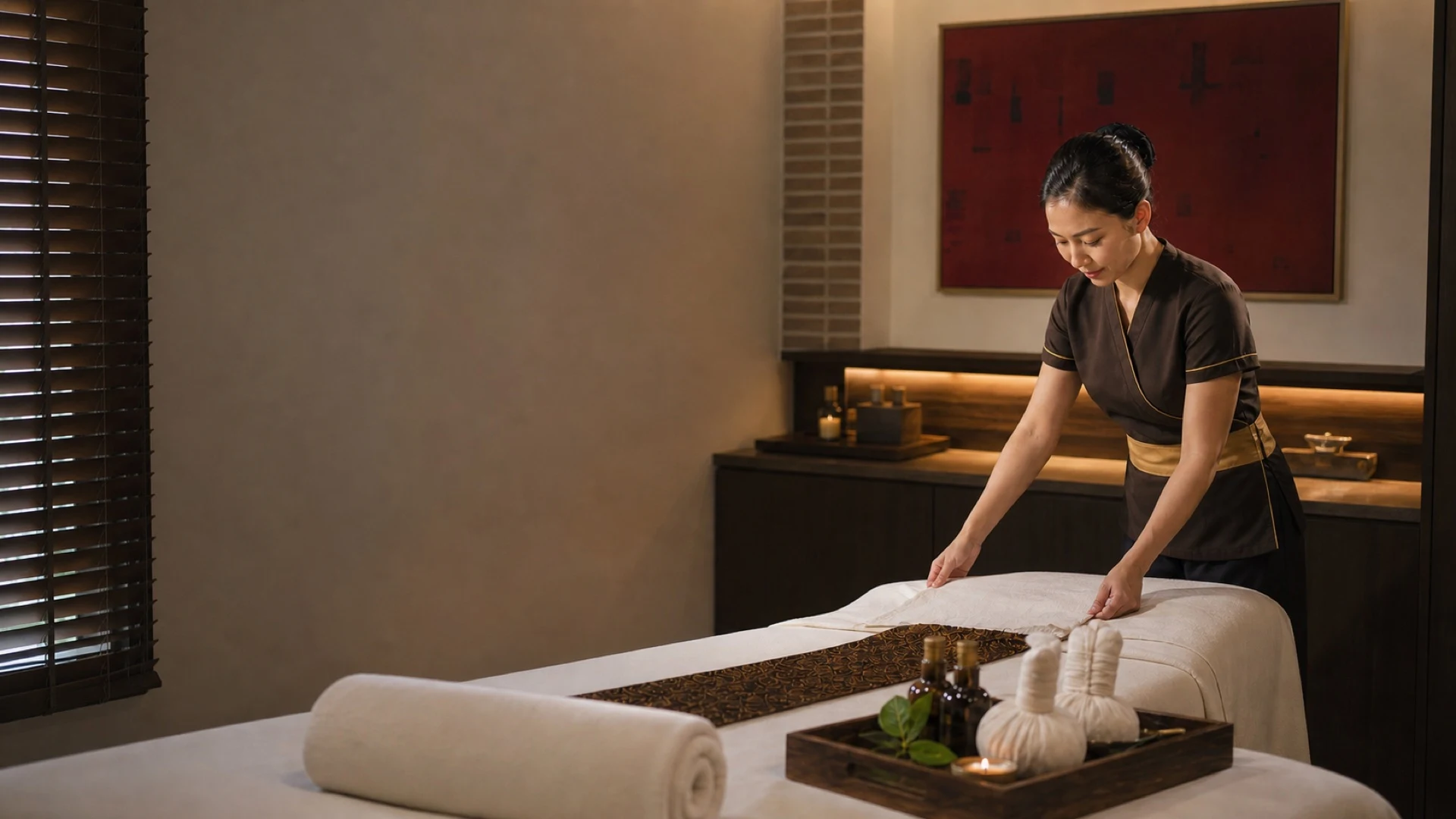
Preparation, products, techniques, equipment, transitions and finishing steps should form one understandable sequence.
More steps do not automatically create more value. Each component needs a purpose and enough time to be performed properly.
When the plan changes, the therapist should explain the substitution.
6. Skilled Human Handoffs
Booking, reception, therapist, room preparation and payment teams should share accurate operational information without unnecessary personal detail.
Training should cover technique, consultation, hygiene, consent, products, equipment and escalation.
A luxury promise fails when the guest must repeatedly repair the team’s internal communication.
7. Traceable Products and Equipment
The spa should be able to name the product or device, explain its place in the protocol and identify relevant cleaning, storage or single-use controls.
Imported, organic, natural and high-tech are not complete quality measures.
Ingredient transparency, maintenance and trained use matter more than prestige language.
8. Accessibility Without a Special-Request Burden
Booking forms, directions, communication formats, physical access and treatment positioning should be considered before the guest has to improvise a workaround.
The team should state what is available accurately and offer an alternative when a standard route does not work.
Inclusive service is part of premium hospitality, not an optional extra.
9. A Considered Finish
The treatment should close with privacy, time to change, a concise summary, accurate payment and a clear contact route.
Aftercare should stay within spa scope and avoid detox, cure or recovery guarantees.
The guest should leave knowing what was performed and how to raise a concern.
Trend Audit: Nature Is a Design Choice, Not a Cure
Plants, natural light, outdoor space and botanical materials can shape atmosphere and identity.
They do not automatically heal, purify, reduce stress or make a service environmentally responsible.
Ask which element is real, how it is maintained and what guest need it serves.
Trend Audit: Replace Eco-Friendly With Measurements
The FTC Green Guides warn against broad, unqualified environmental-benefit claims and recommend specific, prominent qualifications.
A spa should identify the unit and comparison: water per service, energy per room, percentage of recycled content, refill rate, waste weight or verified sourcing.
One plant-based product does not prove that the whole operation is sustainable.
Trend Audit: Personalisation Needs Boundaries
Useful personalisation can adjust pressure, pace, scent, music, positioning, product selection or conversation level after consultation.
Artificial-intelligence diagnostics or biometric recommendations require a named system, validated purpose, data protection and an appropriate professional scope.
Without those elements, technology is not a reliable basis for treatment selection.
Trend Audit: Credit Cultural Traditions Precisely
Ayurveda, Thai massage, Chinese medicine and Indigenous practices are not interchangeable decorative themes.
A spa should identify the specific tradition, practitioner training, technique, source and limits rather than combining cultures under a generic ancient-wisdom label.
Respect begins with attribution and competent practice.
Trend Audit: Community, Food and Art Need Their Own Standards
A group retreat requires privacy, facilitation and a clear programme. Food service requires accurate ingredients, allergens and operational responsibility. An art presentation requires artist credit, labels and current exhibition dates.
Each can enrich a spa visit, but none automatically produces belonging, nourishment or healing.
Evaluate the component through the standards of its own field.
A Nine-Line Luxury Scorecard
Rate each standard as verified, partly verified or unknown before paying a premium.
- Choice and price are complete.
- Consultation has protected time.
- Privacy and consent are explicit.
- Room controls are understandable.
- The protocol is coherent.
- Team handoffs are accurate.
- Products and equipment are traceable.
- Access needs have a practical route.
- The finish is unhurried and accountable.
What Standards Can—and Cannot—Prove
ISO 17679 addresses wellness-spa service requirements and supporting processes while excluding medical-spa decisions.
Thailand’s HSS Premium Award programme publishes a quality-assessment framework for participating establishments.
Using a standard as guidance is different from holding a current independent assessment, so every certification or award statement should identify the entity, level and validity.
Claims Removed from the Previous Version
The earlier text promised stress reduction, vitality, healing through nature, environmental benefit, AI-led individual recommendations, effective cryotherapy, nourishing farm-to-table meals and social belonging.
Those claims lacked specific services, operators, measurements, evidence or qualification.
This version retains the underlying themes as questions while removing automatic medical, environmental and cultural conclusions.
Pay for Standards You Can Verify
A genuine luxury spa protects time, privacy, accuracy, skilled attention and recovery from avoidable friction.
Design, products, nature, art and technology can support that system when their role is clear.
Use the nine standards to compare Bangkok spas beyond photographs and superlatives.
“Luxury is the absence of avoidable uncertainty, combined with time, privacy, control and a service that remains coherent from booking to farewell.”
Loft Thai Editorial Team
Continue your research
REFERENCES
Sources & further reading
- ISO 17679: Wellness Spa Service Requirements
- Thailand HSS: Premium Spa Quality Assessment
- Thailand HSS: Health Establishment Laws and Standards
- US FTC: Environmental Claims and Green Guides Summary
- US FTC: Health Products Compliance Guidance
- W3C Web Accessibility Initiative: Forms Tutorial
- Loft Thai: Spa Menu 2026
PRACTICAL GUIDANCE
Frequently Asked Questions
What makes a spa luxurious in Bangkok?
Verifiable luxury combines accurate choice, protected consultation, privacy, guest control, coherent protocols, trained human service, traceable products, accessibility and a considered finish.
Does expensive equipment make a spa more premium?
Not by itself. The equipment needs a clear purpose, trained operator, maintenance process, privacy controls, suitability check and fallback procedure.
What should an eco-friendly spa claim include?
It should identify a specific measured benefit, unit, comparison, scope and relevant trade-offs rather than relying on a broad green or eco-friendly label.
Can a luxury spa personalise every treatment?
It can adapt defined elements within staff training and service scope. Personalisation should not become diagnosis or an improvised technique.
Does ISO 17679 certify Loft Thai automatically?
No. The standard provides a wellness-spa service framework. A certification claim would require separate evidence identifying the assessed entity, scope and validity.
CONTINUE READING
Related stories
What Makes a World-Class Spa in 2026?
In 2026, the idea of a world-class spa has evolved far beyond plush interiors and premium products. As global travelers become more experienced and wellness-literate, expectations have shifted toward authenticity, intelligence, and emotional depth. Luxury is…
Read the guide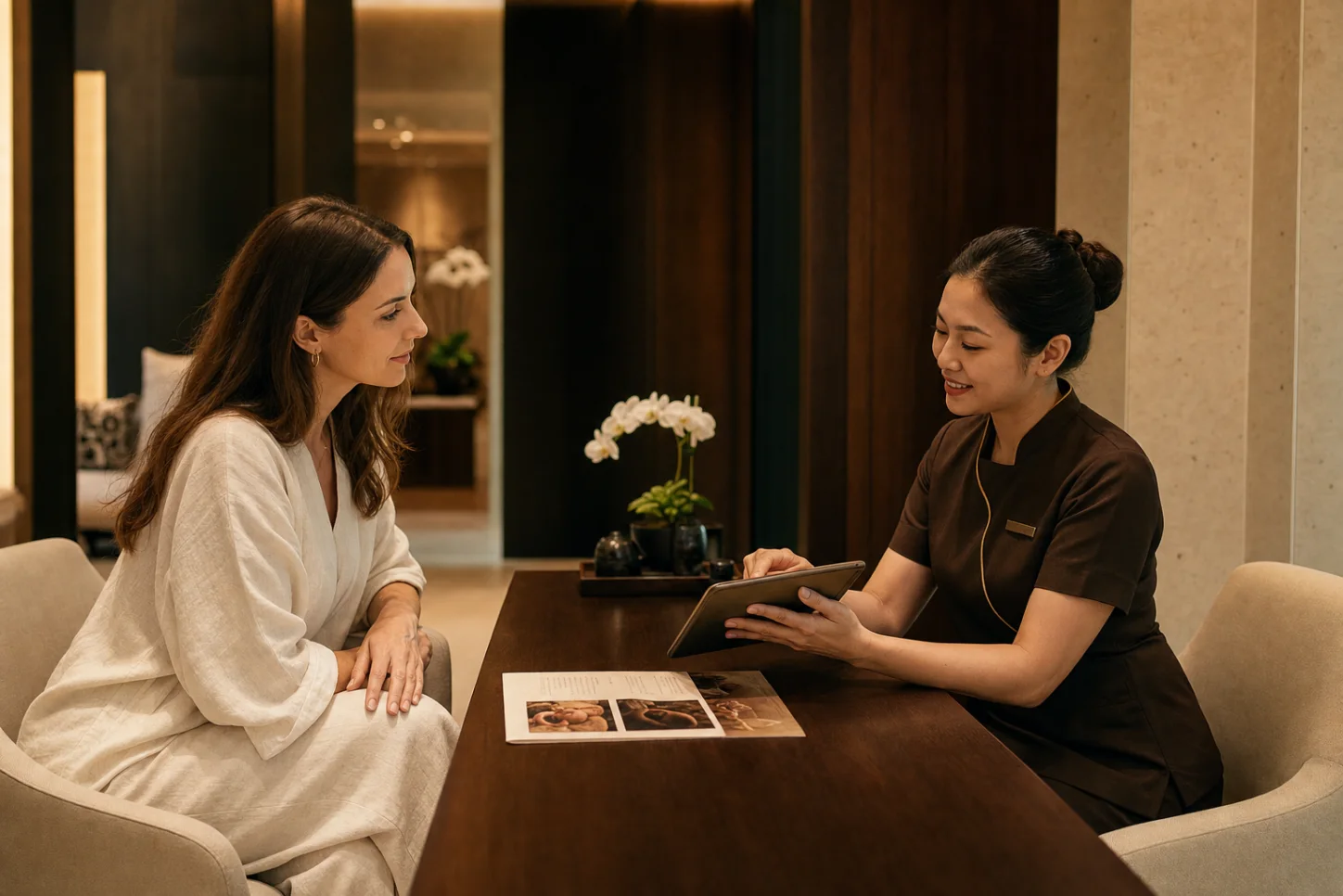
Premium Spa Experience Beyond the Hotel's Elegance
In the realm of luxury and opulence, the spa experience extends beyond the confines of a hotel's elegant walls. For those seeking an unparalleled retreat into relaxation, a premium spa experience offers more than just a pampering session—it's a journey into…
Read the guide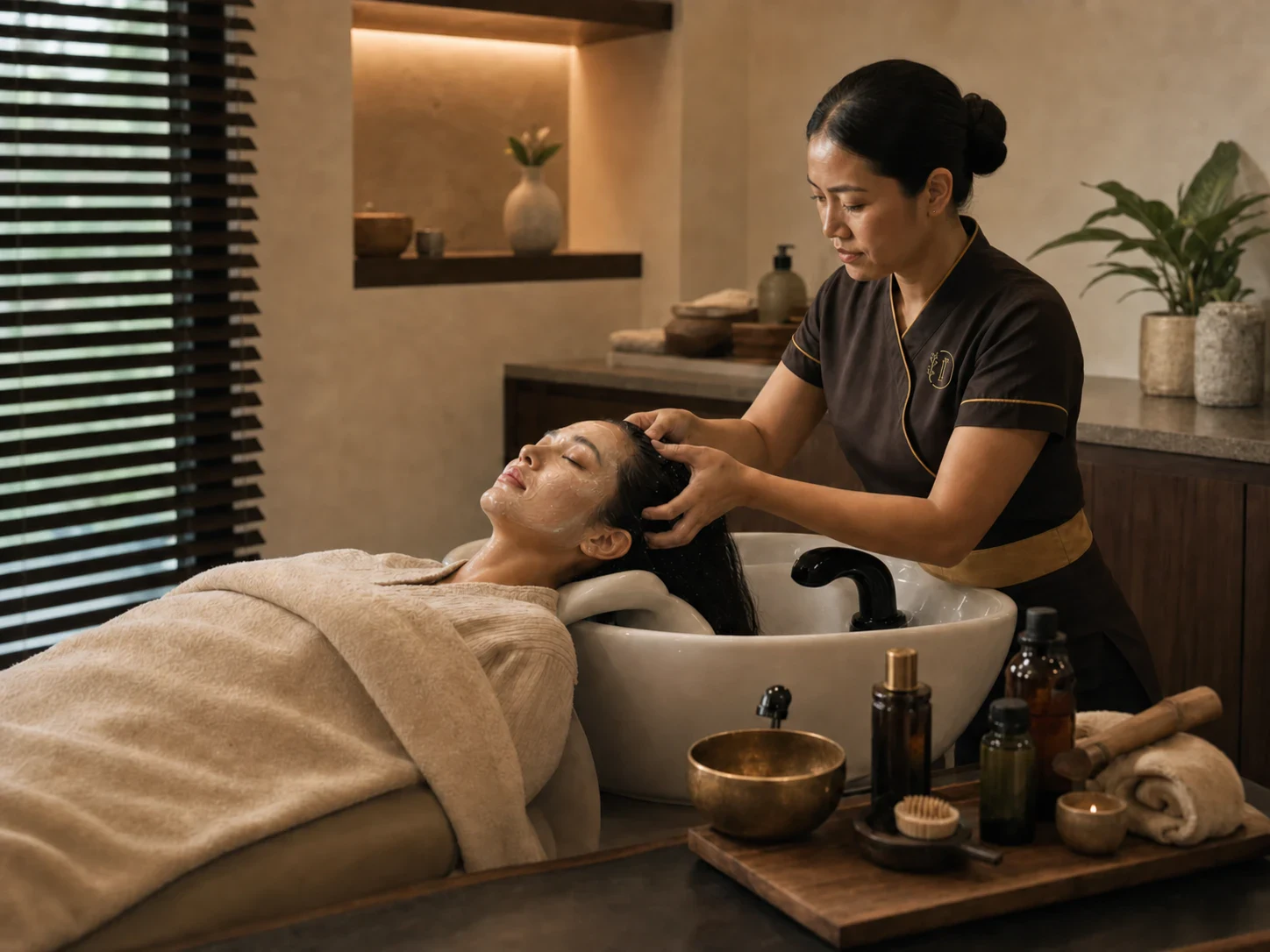
The Best Luxury Spa Trends and Tips for 2024
As we embark on the journey through 2024, the landscape of luxury spas is undergoing a fascinating transformation. No longer confined to traditional practices, the industry is embracing innovation, personalization, and sustainability. In this comprehensive…
Read the guide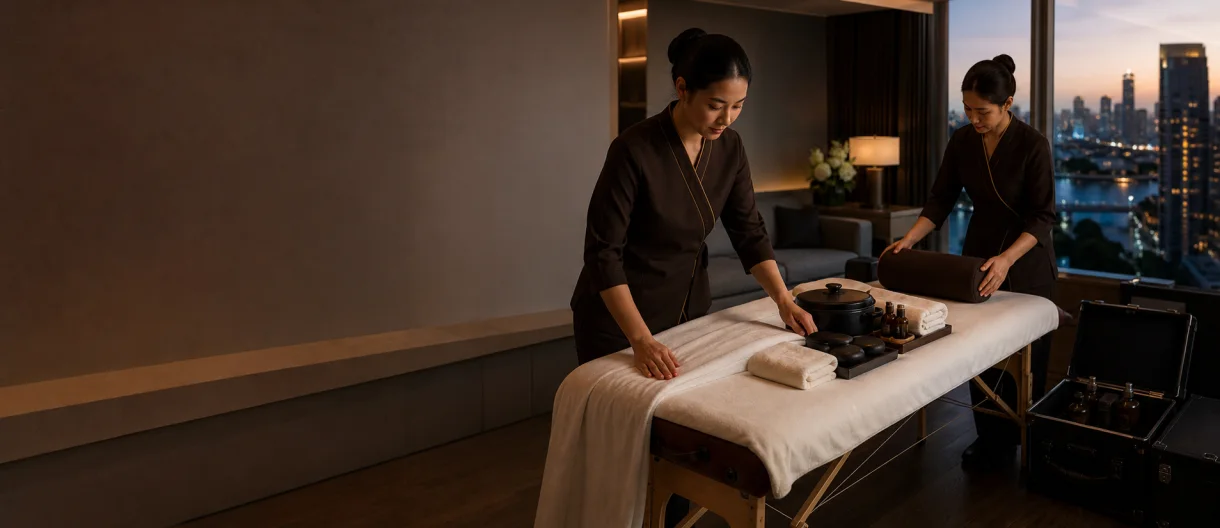
Home Massage Bangkok: Five-Star Spa at Your Hotel or Residence
Enjoy massage delivery in Bangkok at your hotel, condominium or home. Loft Thai brings two therapists and the equipment for your confirmed treatment, with setup and room reset included. This guide covers hotel access, couples massage and the independent…
Read the guide