
At Loft Thai Spa, we see it every day: busy professionals who live tethered to their desks, absorbed in meetings, emails, and projects. Without realizing it, their bodies silently accumulate strain—tight shoulders, aching necks, stiff lower backs—until the discomfort becomes a daily companion. This is the reality of Office Syndrome, a condition affecting more people in Bangkok’s fast-paced working culture than ever before.
Through this article, illustrated with educational slides from our special Office Syndrome awareness campaign, we want to help you recognize the early signs, understand the risks, and discover simple but powerful ways to protect your health at work.
What is Office Syndrome?
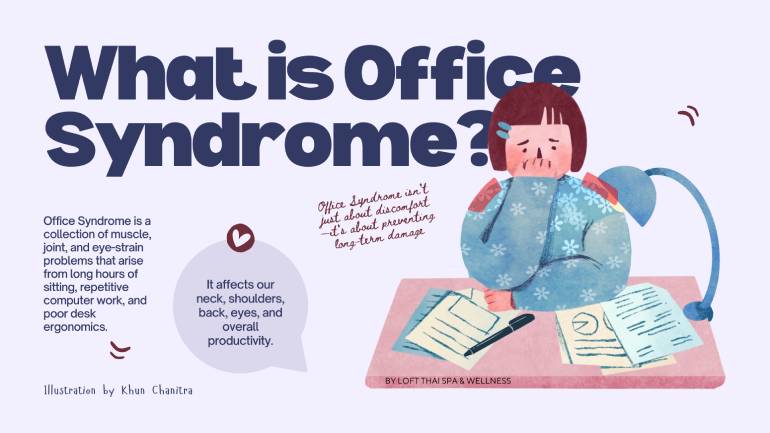
Office Syndrome is a collection of physical issues that result from spending extended periods in a seated, static posture. It occurs when the same muscles are overworked for too long without variation, especially in an environment where computers, phones, and improper desk setups dominate the workday.
When you remain seated for hours with your head jutting forward and shoulders slumping, certain muscles tighten while others weaken. Blood circulation decreases, nerves become compressed, and joints stiffen. What starts as a minor discomfort soon evolves into chronic pain affecting your productivity, sleep, and quality of life.
Why It’s Important to Act Early
Ignoring Office Syndrome can lead to long-term complications. Persistent muscle tension contributes to conditions like frozen shoulder, carpal tunnel syndrome, migraines, herniated discs, and even early spinal degeneration.
Office Syndrome doesn't just damage the body; it can gradually erode mental well-being, creating fatigue, irritability, and difficulty focusing. Taking action early—before aches and stiffness become severe—protects not just your physical health, but your energy, creativity, and overall happiness.
Recognizing the Warning Signs

Office Syndrome often starts subtly. You may notice mild neck tension by lunchtime or wrist stiffness after a long report. Over time, symptoms escalate: persistent headaches, a burning sensation between the shoulder blades, numbness or tingling in the fingers, and an increasing sense of fatigue.
These are not random discomforts. They are your body's call for attention. Recognizing these signs early can prevent more serious injury—and with small changes, recovery is absolutely possible.
Debunking Common Myths About Office Syndrome
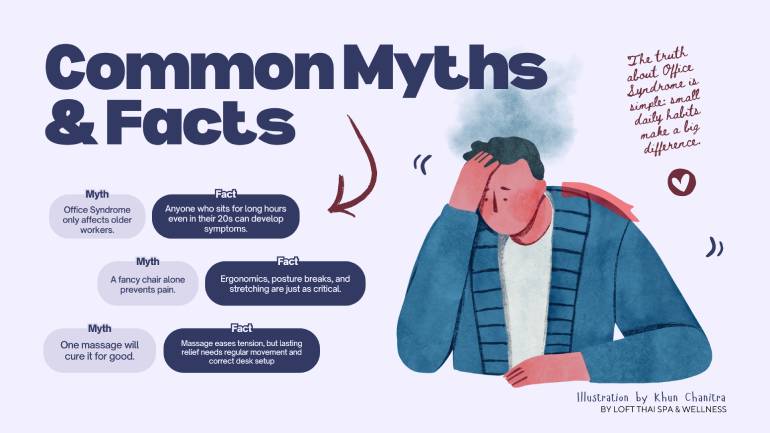
It’s a common misconception that only older people suffer from Office Syndrome. In truth, young professionals in their twenties and thirties are highly vulnerable due to technology-driven lifestyles.
Another myth suggests that buying a top-tier office chair will automatically prevent all problems. While good furniture helps, no chair can replace the need for regular movement, mindful posture, and stretching throughout the day. Similarly, while massage therapy can relieve pain, a single session won’t erase years of bad habits. Sustainable recovery combines therapy, ergonomics, and lifestyle changes.
Small Daily Steps for a Healthier Workday
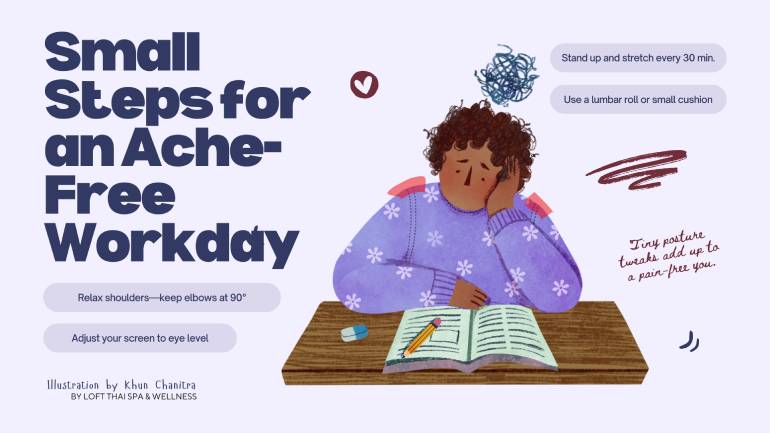
Small, consistent habits offer powerful protection against Office Syndrome. Adjust your screen so that it meets your eye level, keep your feet flat on the floor, and sit with your shoulders relaxed and elbows bent at 90 degrees.
Set reminders to stand up and stretch every thirty minutes. Gentle shoulder rolls, neck rotations, and deep breathing exercises help keep muscles supple and oxygenated. Investing just a few minutes into self-care during the workday can mean the difference between chronic discomfort and sustained vitality.
The Power of Support in the Workplace

At Loft Thai Spa, we believe that office culture plays a major role in personal wellness. When employers and colleagues openly discuss ergonomic health, take regular stretch breaks together, and encourage good practices, the whole environment becomes healthier.
Something as simple as reminding a coworker to adjust their posture or organize a 2-minute stretch break during meetings can dramatically reduce the collective strain within a team.
Managing Desk Strain and Fatigue

Staying active doesn’t mean you have to leave your desk. Micro-movements—like wrist circles, seated spinal twists, or standing calf stretches—revive circulation and prevent muscles from locking up.
Equally important is screen hygiene. Follow the 20-20-20 rule: every 20 minutes, look at something 20 feet away for 20 seconds to relax your eye muscles. Build breathing pauses into your schedule and stay hydrated, as muscles function better when properly oxygenated and nourished.
Knowing When to Seek Professional Help
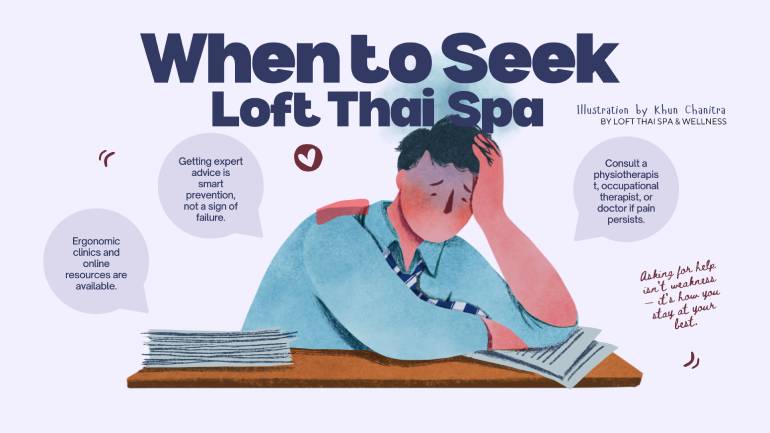
If you experience persistent numbness, sharp radiating pain, or stiffness that limits your daily activities, it’s time to seek professional evaluation. Physiotherapists, chiropractors, and trained spa therapists can assess your condition and tailor a recovery plan.
At Loft Thai Spa, our Office Syndrome Package offers not only physical therapy but also lifestyle guidance to empower lasting change. Early intervention makes a world of difference.
Promoting Healthy Work Habits Together

Changing how we work starts with conversation. The more openly we acknowledge that discomfort at the desk is not normal—and not shameful—the easier it becomes to advocate for solutions.
Encouraging colleagues to stretch, creating awareness days focused on posture, or even suggesting ergonomic upgrades for shared workspaces can ignite a healthier movement within any organization.
Your Posture Matters. Your Comfort Matters. You Matter.
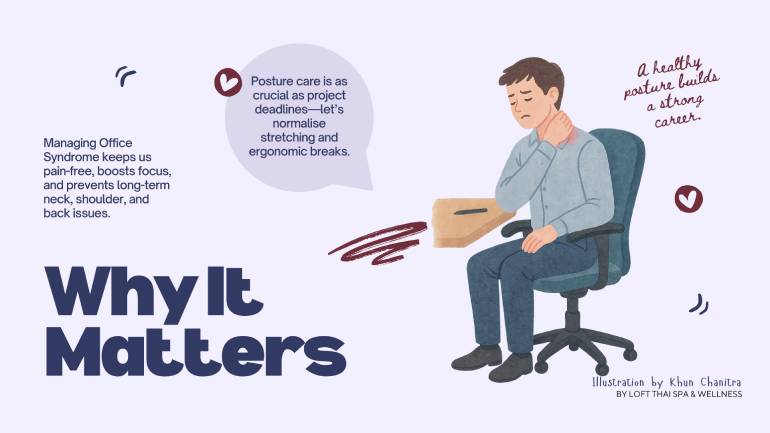
Your body is your greatest tool, your most loyal partner in everything you pursue. Treat it with respect and attention. Small adjustments made today—standing tall, stretching regularly, relaxing your shoulders—compound into long-term strength, resilience, and wellbeing.
At Loft Thai Spa in Bangkok, we are committed to helping our community not just heal but thrive. Whether through our specially designed Office Syndrome massages, posture coaching, or simply sharing knowledge like this, we believe every professional deserves to work—and live—without pain.
Because ultimately, your story, your health, and your happiness truly matter.
UPDATED LOFT THAI GUIDE
Additional guidance and current information
The following editorial update expands on the original Loft Thai article with practical context, current treatment guidance and further reading.
Office Syndrome Is an Umbrella Term
The phrase commonly groups non-specific neck, shoulder and back discomfort with wrist or forearm symptoms, tension-type complaints and visual fatigue related to computer work.
Grouping symptoms can help people recognise a work pattern, but it does not identify one damaged structure. Carpal tunnel syndrome, migraine, cervical radiculopathy and disc disease require their own assessment rather than automatic attribution to posture.
Know the Symptoms That Need More Than Ergonomics
Persistent numbness, progressive weakness, loss of grip, pain after trauma, fever, unexplained weight loss, a hot swollen limb or symptoms that repeatedly wake you require professional evaluation.
Sudden one-sided weakness, facial droop, severe new headache, chest pain, breathing difficulty or loss of bladder or bowel control needs urgent medical attention. A massage booking is not the right first response.
There Is No Single Perfect Posture
OSHA presents several neutral working positions rather than one ideal pose. Head and trunk are generally balanced, shoulders relaxed, elbows close, wrists in line with the forearms, lower back supported and feet supported.
The same OSHA guidance emphasises frequent position change. A technically attractive sitting posture can still become uncomfortable when held without variation for hours.
Morning: Fit the Workstation to the Task
Place the primary monitor directly ahead, with the top around or just below eye level, and far enough away that text is readable without leaning forward. Increase text size before moving the head closer.
Keep the keyboard and mouse near enough that elbows remain close to the torso. Support the feet and back; if the desk cannot change height, a footrest or a more suitable chair may solve more than a posture reminder.
Laptop and Phone Work Need Different Solutions
A laptop fixes screen and keyboard together, making prolonged neutral use difficult. For regular desk work, a stand with a separate keyboard and pointing device allows the screen and hands to be positioned independently.
For phones, bring the device higher and change tasks rather than holding the neck bent for an uninterrupted block. Voice input or calls with a headset can reduce repeated thumb and neck load.
Mid-Morning: Interrupt the Load
OSHA recommends micro-pauses, task rotation and periodic standing or walking. The exact schedule should match the work, but frequent short changes are more practical than waiting for one long exercise break after hours.
A position change can be small: lean back, stand for a call, walk to speak with a colleague, switch the mouse hand for a low-precision task or look away while a file loads.
Exercise Has Better Support Than Passive Posture Policing
A 2022 systematic review of seven randomised trials involving 967 office workers found workplace exercise interventions tended to reduce musculoskeletal complaints, but six studies had high risk of bias.
A 2024 review found low-certainty evidence that strengthening neck, shoulder and scapular muscles can reduce pain and disability in office workers with chronic neck pain. A qualified clinician or trainer can adapt exercise when symptoms, diagnosis or fitness level make generic routines unsuitable.
A Five-Minute Workday Reset
Stand and walk briefly, then perform comfortable shoulder blade movement, gentle neck rotation within an easy range, wrist opening and a few sit-to-stands. None should reproduce radiating pain or numbness.
The plan is not a cure and does not need to be identical every hour. Its value is breaking the same exposure and returning circulation and attention to varied movement.
Screen Comfort Also Changes Neck Behaviour
Glare, small text and poor contrast can make a person lean forward or squint. OSHA recommends managing screen position, brightness, contrast, lighting and reflections.
Looking into the distance and blinking deliberately can reduce visual effort for many people. Persistent double vision, eye pain or sudden visual change requires eye-care assessment.
Bangkok Adds Commute, Climate and Hybrid-Work Variables
A day may combine BTS standing, rideshare phone use, cold air-conditioning and laptop work at a table not designed as a desk. No single chair purchase addresses that entire exposure.
Carry only what is needed, alternate the shoulder used for a light bag, raise the laptop when possible and count the commute as part of the day’s load rather than as recovery from work.
Workplace Design Is Not Only an Individual Responsibility
Employers can provide adjustable equipment, training, task variety and a culture where short recovery pauses are possible. Workers should not be blamed for failing to maintain an ideal pose in a fixed workstation.
A simple evaluation checks screen, chair, input devices, lighting, frequent reaches and whether work can alternate. The objective is practical adjustability, not an expensive showroom.
Massage May Help Temporarily—Within Limits
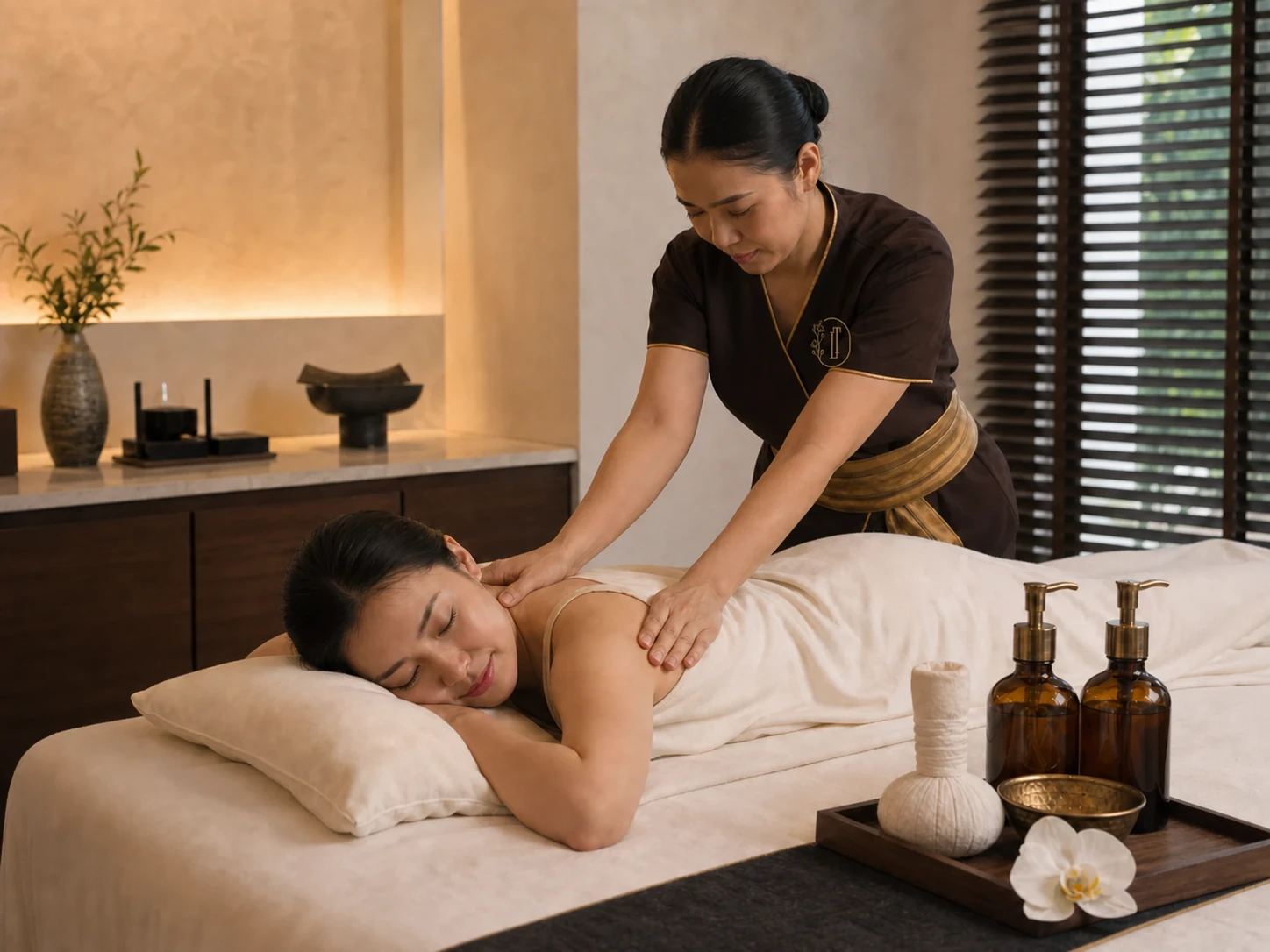
NCCIH reports that massage may help some neck or shoulder pain in the short term, while evidence quality and duration of benefit vary. It does not show that one session corrects a workstation, reverses a disc condition or permanently fixes posture.
Use massage as one part of comfort and recovery when appropriate. Persistent, worsening or neurological symptoms should guide assessment rather than pressure intensity.
Build a System That Works Before Pain Peaks
Office syndrome prevention is less about holding the shoulders perfectly and more about changing exposure: a fitted workstation, readable screen, varied tasks, movement, appropriate exercise and early assessment.
Massage can be a welcome recovery tool in Bangkok, but the durable plan lives in the hours between appointments.
“The best posture is rarely one rigid pose held all day; it is a supported position you can change before discomfort becomes the schedule.”
Loft Thai Editorial Team
Continue your research
REFERENCES
Sources & further reading
- OSHA: Computer workstation good working positions
- OSHA: Computer workstation evaluation checklist
- OSHA: Work process, micro-breaks and symptom recognition
- PubMed: Workplace exercise interventions in office workers
- PubMed: Exercise for chronic neck pain in office workers
- WHO: Guidelines on physical activity and sedentary behaviour
- NCCIH: Massage therapy evidence and safety
- Loft Thai: Current Spa Menu 2026
PRACTICAL GUIDANCE
Frequently Asked Questions
Is office syndrome a medical diagnosis?
It is commonly used as an umbrella term for work-related discomfort. Specific symptoms may have different diagnoses and should be assessed when persistent or severe.
What is the best office posture?
Use a supported neutral position that fits your equipment, but change position regularly. No single pose should be held rigidly all day.
How often should I take a break?
Build frequent short pauses and task changes into computer work. The exact schedule depends on the job, but waiting until pain peaks is not ideal.
Can massage cure office syndrome?
Massage may provide short-term comfort for some neck or shoulder pain, but it does not replace workstation changes, exercise or assessment of persistent symptoms.
How much is Office Syndrome Massage at Loft Thai?
The current menu reviewed on 28 July 2026 lists 90 minutes at 2,800 THB and 120 minutes at 3,600 THB. Confirm current price and availability when booking.
CONTINUE READING
Related stories

Office Syndrome Massage in Bangkok: How to Fix Neck, Shoulder & Back Pain the Right Way
“Office syndrome” isn’t a trendy phrase in Bangkok—it’s real life. Hours at a laptop, constant phone use, commuting, gym imbalance, stress breathing, and long periods of sitting create the same pattern again and again: tight neck, heavy shoulders, stiff upper…
Read the guide
Understanding the Difference Between Soft Tissue Massage and Deep Tissue Massage
Massage therapy has become an integral part of modern wellness routines, offering a wide range of physical and mental benefits. Whether it's to relieve stress, improve posture, or recover from muscular fatigue, different massage techniques cater to different…
Read the guide
Complete Guide to Massage in Bangkok From Street to Luxury
Bangkok has always been a city of contrasts, a place where sacred temples stand alongside futuristic shopping malls, where golden pagodas rise just a few steps away from neon-lit nightlife, and where serenity can be found amid chaos.
Read the guide
Cupping Therapy Explained: Technique, Marks, Benefits, and Medical Insights
Cupping therapy is one of the most visually recognizable bodywork techniques in the wellness world. Even people who have never tried it often recognize the round red or purple marks that can appear on the back, shoulders, or neck after a session.
Read the guide