
Cupping therapy is one of the most visually recognizable bodywork techniques in the wellness world. Even people who have never tried it often recognize the round red or purple marks that can appear on the back, shoulders, or neck after a session.
These marks sometimes look surprising at first, but they are generally a normal and temporary effect of the suction used during the treatment. When performed correctly by a trained professional, cupping can be used as part of a broader wellness, massage, or recovery experience to support muscular relaxation, local circulation, and a deeper sense of release in areas of tension.
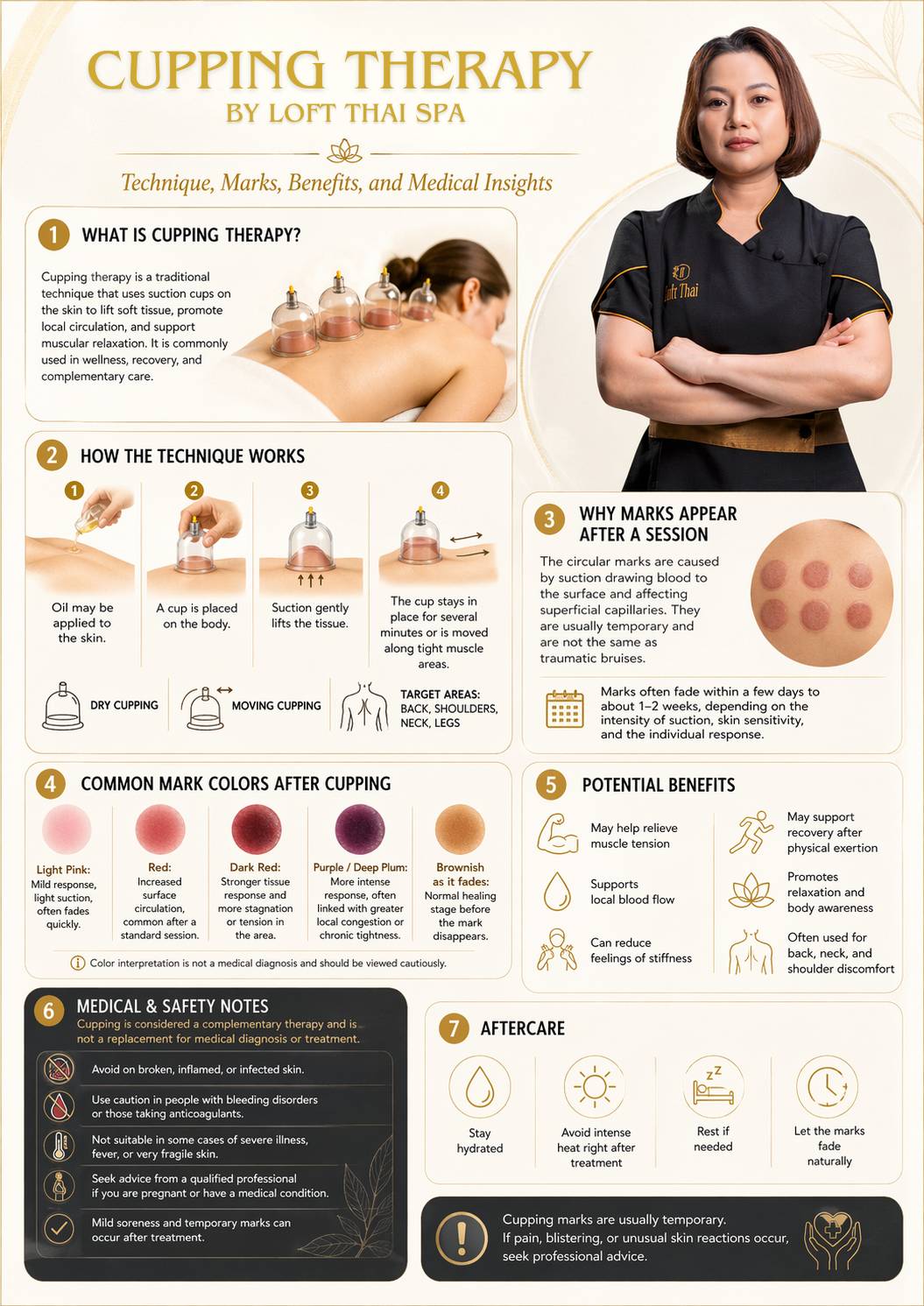
The infographic presents cupping therapy in a clear and educational way, showing not only how the technique works, but also why the marks appear, what the different colors may indicate, what benefits clients may expect, and what safety points should always be respected. It is important to understand from the beginning that cupping therapy is considered a complementary therapy. It is not a replacement for medical diagnosis, medical treatment, physiotherapy, or care from a qualified healthcare professional. Scientific evidence around cupping is mixed: some sources describe possible benefits for pain, stiffness, and muscle recovery, while also emphasizing that more high-quality research is needed. Trusted medical sources also note possible side effects, such as temporary marks, skin irritation, burns, infection, scarring, or worsening of certain skin conditions if the technique is poorly performed or unsuitable for the client.
Cupping is best understood as a therapeutic support technique rather than a miracle cure. In a professional spa or massage environment, its value often comes from the combination of careful assessment, skilled touch, correct pressure, client comfort, and responsible aftercare. A good cupping session is not simply about placing cups on the skin. It is about understanding where the body carries tension, how the client responds to suction, how long the cups should stay in place, and when the technique should be avoided.
What Is Cupping Therapy?
Cupping therapy is a traditional bodywork technique that uses suction cups placed on the skin. The suction gently lifts the superficial tissues instead of pressing down on them. This makes cupping different from many massage techniques, where the therapist usually applies downward pressure with the hands, thumbs, elbows, or forearms. In cupping, the cup creates a negative pressure effect. The skin and underlying soft tissue are drawn upward into the cup, which can create a stretching sensation, stimulate local blood flow, and influence the feeling of tightness in the treated area.
In a wellness setting, cupping is often used on the back, shoulders, neck, legs, and sometimes around larger muscle groups. These are areas where people commonly experience tension from work posture, sport, travel, stress, or long hours sitting in front of a computer. For many clients, the sensation of cupping feels unusual at first but becomes relaxing once the body adapts. Some people describe it as a deep pulling or lifting sensation. Others feel warmth, pressure, or a mild stretching effect. The experience should not feel painfully sharp. A professional therapist should always ask about comfort level and adjust the suction when necessary.
Cupping has been used in different traditional medicine systems, including East Asian, Middle Eastern, and other cultural healing traditions. Today, it is commonly offered in wellness centers, massage clinics, physiotherapy environments, and spas. Modern cupping may use glass, plastic, silicone, or other cup materials. The suction can be created with a pump, with heat, or by manual pressure depending on the style. In a professional spa context, dry cupping and moving cupping are often preferred because they can be integrated smoothly with massage and do not involve breaking the skin.
The technique is popular because it offers a distinctive experience. Instead of only compressing tight muscles, it lifts and decompresses the tissue. This is why many clients feel that cupping reaches tension in a different way from traditional massage alone. For some people, it may complement deep tissue massage, Thai massage, office syndrome therapy, sports recovery treatments, or shoulder and back release programs.
How the Technique Works
The infographic explains the technique in four simple steps. First, oil may be applied to the skin. This is especially common when the therapist plans to use moving cupping, where the cups slide along the muscle area. Oil reduces friction and allows the cup to glide more comfortably. The therapist may also warm the tissues with massage before applying the cups. This helps the client relax and allows the therapist to assess areas of stiffness, sensitivity, or muscular tightness.
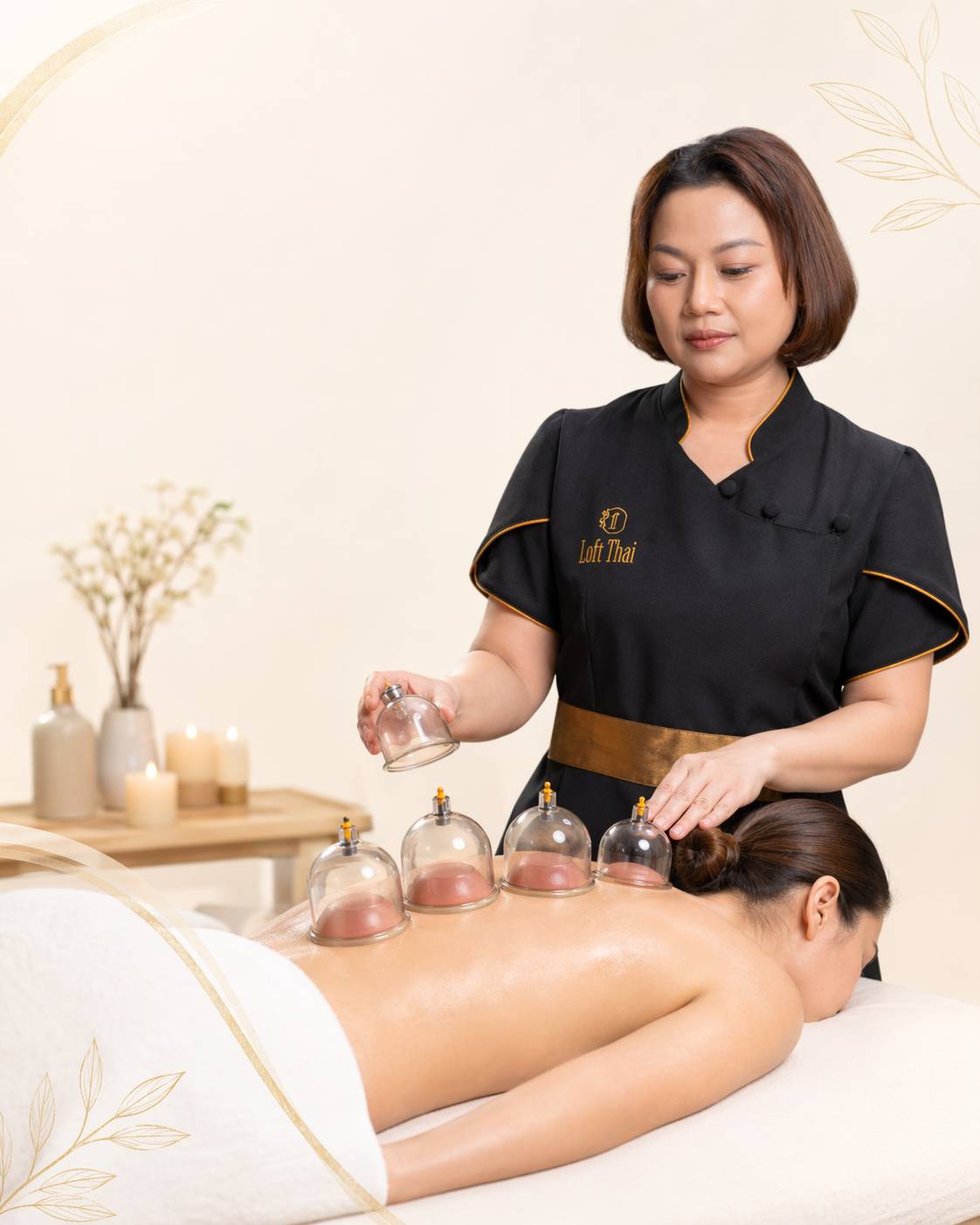
Second, the cup is placed on the body. The therapist selects the size and type of cup depending on the area being treated. Larger cups may be used on broad areas such as the back, while smaller cups may be used around the shoulders, neck, or more specific muscle zones. Correct placement matters. A trained therapist does not place cups randomly. The position is usually chosen based on muscular anatomy, tension patterns, client symptoms, and safety considerations. For example, cups are commonly placed over thick muscle areas, not over fragile skin, wounds, inflamed areas, or sensitive anatomical structures.
Third, suction gently lifts the tissue. This is the central action of cupping. The vacuum effect pulls the skin upward into the cup. The intensity can vary from light to strong. A light suction may create only a pale pink mark and a mild sensation. A stronger suction may create deeper redness or darker marks, especially in areas where the tissue is tight or the skin response is strong. However, stronger is not always better. A responsible therapist understands that cupping should be adapted to the client’s body, not forced for dramatic results.
Fourth, the cup may stay in place for several minutes or be moved along tight muscle areas. When the cups remain stationary, this is often called dry cupping. When the therapist moves the cup across the skin, it is often called moving cupping or sliding cupping. Stationary cupping may create more visible circular marks because the suction remains concentrated in one area. Moving cupping can feel like a deep gliding release and may create more diffuse redness rather than perfectly round marks.
In a high-quality spa experience, cupping is often combined with manual massage. The therapist may begin with warming strokes, apply cups to specific areas, then finish with massage to soften the tissue and calm the body. This combination helps make the treatment more complete. The cups provide lifting and decompression, while the therapist’s hands provide assessment, rhythm, pressure control, and a relaxing human touch.
Why Marks Appear After a Session
The circular marks after cupping are one of the most misunderstood parts of the treatment. Many people call them bruises, but in the context of cupping, they are usually suction marks caused by the pulling effect of the cup on the skin and superficial capillaries. The suction draws blood toward the surface and may cause temporary discoloration. Medical sources explain that cupping leaves temporary marks and can sometimes cause bruising, skin irritation, or other side effects. It is important for clients to understand these marks before treatment so they are not surprised afterward.
These marks are usually not the same as traumatic bruises caused by impact. A traumatic bruise happens when the body is hit or injured. A cupping mark happens because suction has pulled tissue upward and affected superficial circulation. That said, the appearance can be similar, especially when the marks are dark red or purple. This is why the infographic carefully explains that the marks are generally temporary but should still be treated with awareness.
The intensity of the mark depends on several factors. The first factor is suction strength. Stronger suction usually creates darker marks. The second factor is duration. Cups left in place for longer may create more visible marks than cups applied briefly. The third factor is the client’s skin sensitivity. Some people mark easily even with light suction, while others show only mild redness. The fourth factor is the condition of the tissue. Areas with strong tightness or reduced mobility may respond differently from relaxed tissue. The fifth factor is the client’s general health, hydration, medication use, and tendency to bruise.
Most cupping marks fade within a few days to about one or two weeks. Some disappear very quickly, while others take longer. A client should avoid judging the success of the treatment only by the darkness of the marks. A darker mark does not automatically mean a better treatment. The goal is not to create dramatic discoloration. The goal is to apply the right technique for the right person at the right intensity.
Understanding the Different Colors of Cupping Marks
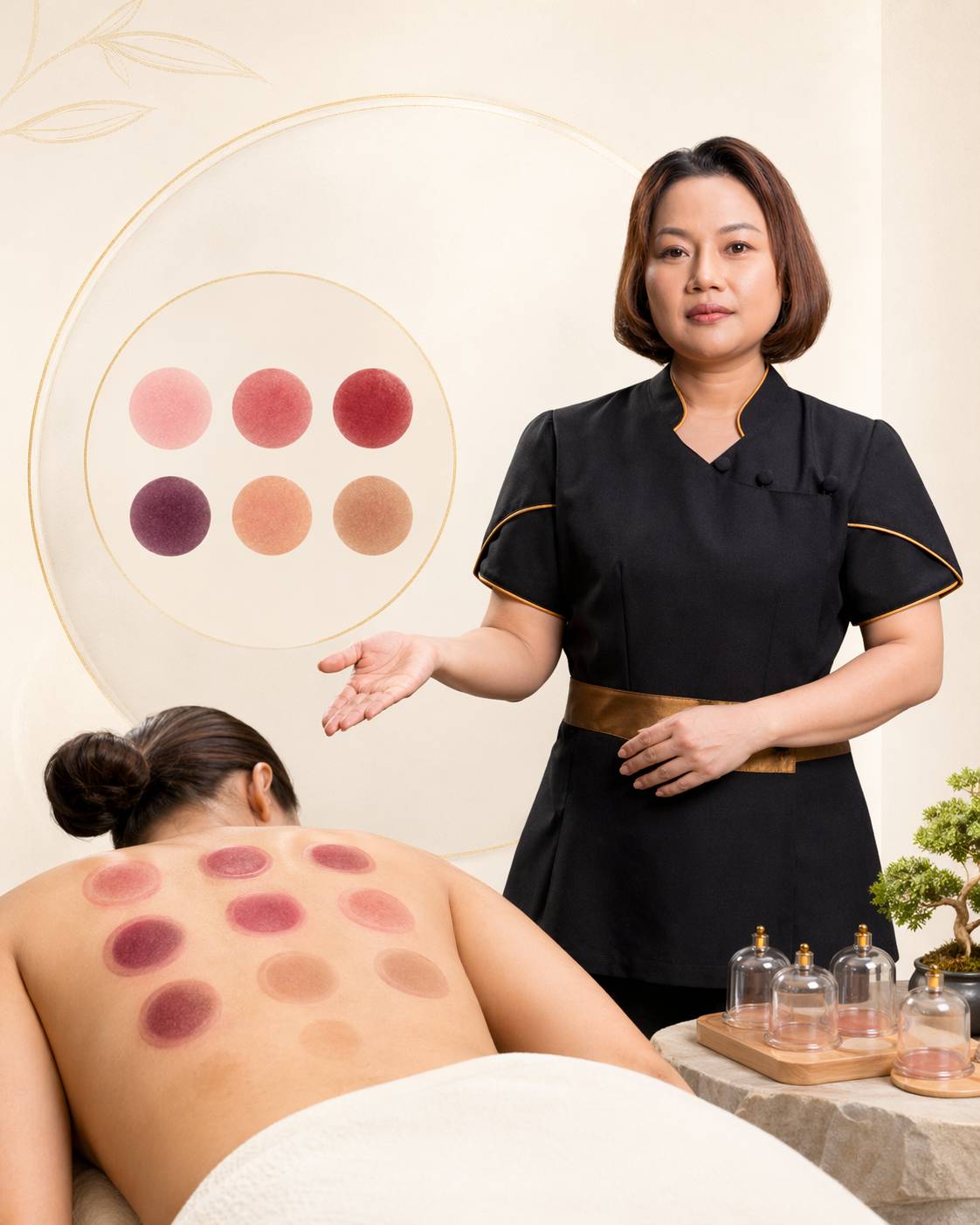
The infographic includes a useful color guide to help clients understand what they may see after a session. This type of guide should be used carefully. Color interpretation is not a medical diagnosis. It can offer general wellness insight, but it should not be used to claim that a person has a disease, toxin accumulation, or a specific internal medical condition. This distinction is very important for ethical and professional communication.
A light pink mark usually suggests a mild response. It may happen when suction is light, when the cup is applied briefly, or when the tissue responds gently. These marks often fade quickly. For clients trying cupping for the first time, a therapist may intentionally begin with lighter suction to observe how the skin and body respond.
A red mark is common after a standard session. It can indicate increased surface circulation and a normal response to suction. Many clients will see red circular marks on the back or shoulders after treatment. These marks may look strong immediately after the session but gradually soften in color over the following days.
A dark red mark may appear when the suction is stronger or when the tissue response is more intense. In traditional interpretations, darker marks are sometimes associated with areas of stagnation or deeper tension. In a modern medical-wellness explanation, it is safer to describe them as a stronger local tissue response rather than making diagnostic claims. A dark red mark may simply reflect suction intensity, capillary response, skin sensitivity, or how long the cup stayed in place.
A purple or deep plum mark is a more intense response. It may occur in areas where the tissue is very tight or where suction has been stronger. These marks can look impressive, but again, they should not be used as proof of a specific medical condition. If the client feels excessive pain, blistering, burning, or unusual skin changes, the treatment may have been too intense and professional advice should be sought.
A brownish color as the mark fades is part of the normal color evolution of many skin marks. As the body clears the discoloration, the color may change from red or purple to brown, yellowish, or lighter tones before disappearing. This fading process is usually normal. Clients should let the marks fade naturally and avoid scratching or aggressively rubbing the area.
The color section of the infographic is especially helpful because it prepares clients emotionally. Many people feel worried when they see dark circles after their first cupping session. Education reduces anxiety. When clients understand that temporary marks can be expected, they can plan appropriately, especially if they have events, beach days, photo shoots, or professional commitments where visible marks may be inconvenient.
Potential Benefits of Cupping Therapy
Cupping is commonly used to help relieve muscle tension, support local blood flow, reduce feelings of stiffness, support recovery after physical exertion, promote relaxation, and address discomfort in the back, neck, and shoulders. The Cleveland Clinic notes that cupping uses suction to pull on the skin and increase blood flow to the affected area, while also emphasizing that evidence for benefits is mixed and that risks can include bruising and skin infection.
One of the most common reasons clients choose cupping is muscular tension. Modern life creates many tension patterns. People sit for long hours, work on laptops, look down at phones, drive in traffic, train intensely at the gym, or carry emotional stress in the shoulders and upper back. Cupping may help some clients feel a release in these areas because the suction lifts tissue and creates a different sensory input from regular massage. When combined with skilled manual therapy, this can feel deeply relieving.
Another potential benefit is the support of local circulation. The suction effect draws blood toward the surface of the skin. This is part of why the marks appear. In a wellness sense, clients often describe the treated area as warmer, looser, or more open after the session. However, it is important not to exaggerate this into unsupported claims. Cupping should not be marketed as a guaranteed cure for circulation disorders or systemic health problems. It may support local blood flow in the treated area, but medical circulation issues require proper medical care.
Cupping may also reduce the feeling of stiffness. This is particularly relevant for the back, neck, and shoulder region. A client with office syndrome, for example, may feel tightness around the upper trapezius, shoulder blades, neck, and lower back. Cupping can be used as part of a broader treatment plan that includes massage, stretching, posture awareness, mobility work, hydration, and rest.
For people who exercise, cupping may be used as part of recovery. Athletes and fitness clients sometimes use it after training to help with muscle tightness and body awareness. Still, recovery should be approached holistically. Sleep, nutrition, hydration, active recovery, and proper training load are also essential. Cupping is one tool, not the entire solution.
The relaxation effect should not be underestimated. Many people think of cupping only as a physical technique, but the nervous system plays a major role in how the body feels. A calm environment, warm lighting, professional therapist presence, slow breathing, and careful technique can help the client shift into a more relaxed state. In a premium spa environment, the experience itself becomes part of the therapeutic value. The client feels cared for, guided, and educated.
The Medical Side: What Clients Should Know
Cupping sits between traditional wellness practice and modern complementary therapy. It has a long history, but modern clients often want to understand it through anatomical and medical language. This is why the infographic uses a balanced approach. It explains the technique, but it does not overpromise.
From a medical perspective, cupping affects the skin, superficial blood vessels, connective tissue, and sensory nerves. The suction creates mechanical stress on the tissue. This can produce redness, warmth, and temporary marks. It may also change the way the nervous system perceives tension or discomfort in the area. Some clients feel immediate relief. Others feel mild soreness after treatment, similar to the feeling after deep tissue massage. A small amount of soreness can be normal, but strong pain is not the goal.
Trusted health sources describe cupping as generally low risk when performed correctly, but they also list possible adverse effects. NCCIH notes that cupping can cause temporary marks and may cause side effects such as persistent discoloration, scars, burns, infections, or worsening eczema or psoriasis. Cleveland Clinic also notes that cupping can cause bruising and may lead to skin infection, while describing the evidence for benefits as mixed.
This is why professional training matters. A therapist must understand hygiene, skin assessment, pressure control, contraindications, and aftercare. Cups must be cleaned and handled correctly. The therapist should not apply cupping over broken skin, active infection, severe inflammation, fragile skin, open wounds, burns, rashes, or areas where the client has unexplained symptoms. The client should always be asked about relevant health conditions.
People with bleeding disorders or those taking anticoagulant medication need special caution because they may bruise more easily or have a higher risk of bleeding-related issues. Pregnant clients, people with severe illness, fever, very fragile skin, serious cardiovascular conditions, or complex medical histories should seek advice from a qualified healthcare professional before receiving cupping. It is also wise to avoid cupping immediately after intense sun exposure, alcohol consumption, or when the body is already unwell.
The medical message should be clear: cupping can be a valuable wellness technique when appropriate, but it must be practiced responsibly. A beautiful spa experience should never ignore client safety.
Safety Notes and Contraindications
The infographic’s medical and safety section is one of its most important parts. In marketing, it is tempting to focus only on benefits. But real professionalism comes from explaining both benefits and limitations.
Cupping should be avoided on broken, inflamed, or infected skin. Applying suction to damaged skin can make irritation worse and may increase the risk of infection. Cupping should also be avoided over fresh wounds, recent burns, severe acne lesions, active eczema flare-ups, or areas with unexplained swelling. If the client has a skin condition, the therapist should proceed carefully or decline the treatment in that area.
Caution is also needed for people with bleeding disorders or those taking blood-thinning medication. Because cupping affects superficial capillaries and can produce marks, people who bruise easily may have stronger discoloration. The therapist should ask questions before treatment and adjust the technique accordingly.
Cupping may not be suitable in cases of severe illness, fever, extreme fatigue, or very fragile skin. A client who is unwell should not be pushed into an intense bodywork session. In a wellness context, rest may be more appropriate than stimulation. The therapist should also avoid using cupping as a solution for symptoms that require medical evaluation, such as unexplained severe pain, sudden swelling, numbness, chest pain, or signs of infection.
Pregnant clients should seek professional advice before cupping. Some areas and techniques may not be appropriate during pregnancy. A spa should have clear protocols and should only provide pregnancy-safe treatments with trained therapists.
Mild soreness and temporary marks can occur after treatment. This should be explained before the session, not after. Consent is important. Clients should know that marks may be visible and may last for days. They should also know that they can ask the therapist to reduce suction or stop the technique at any time.
The Client Experience: What a Professional Session Should Feel Like
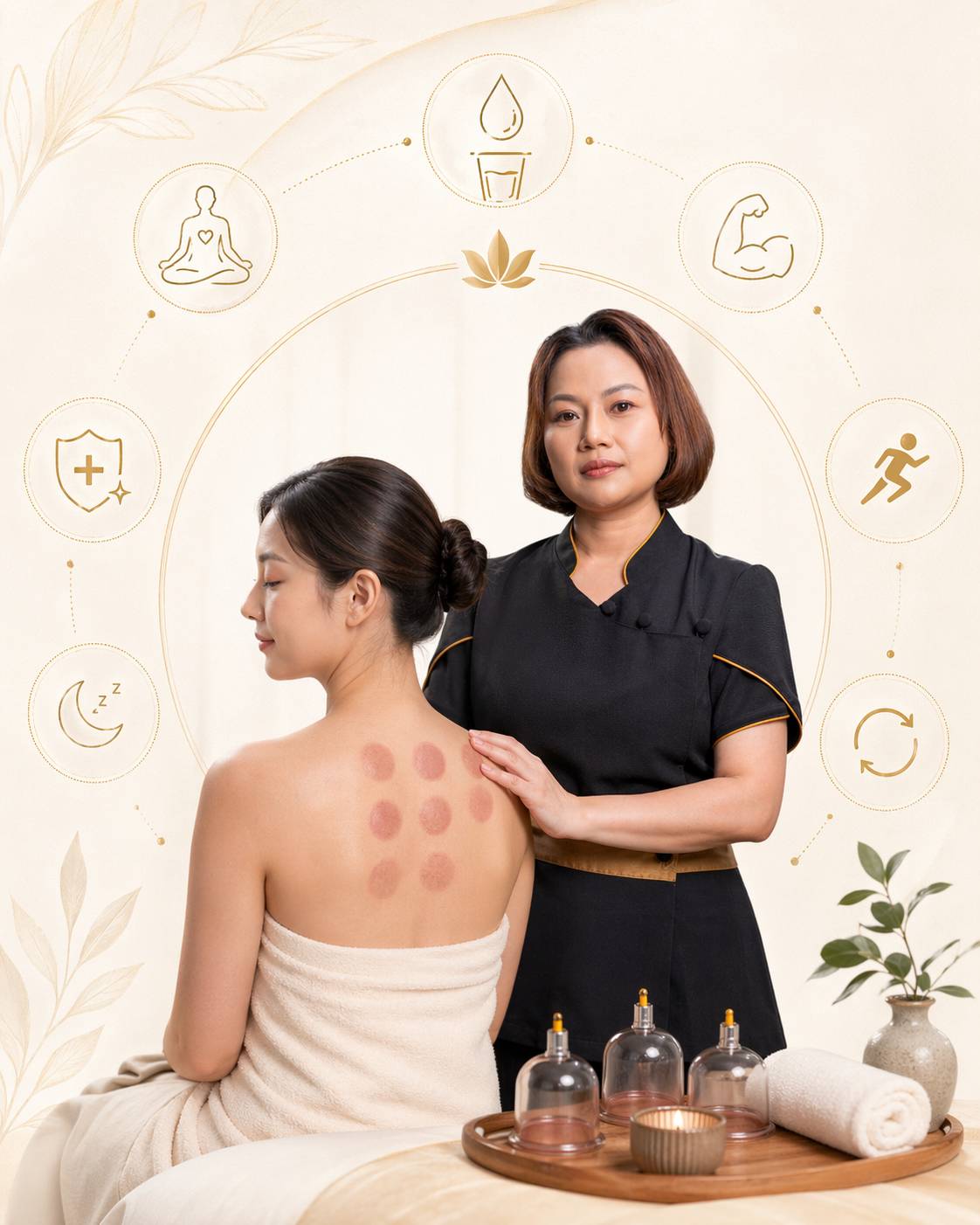
A professional cupping therapy experience should begin with communication. The therapist should ask about the client’s goals, areas of tension, previous experience with cupping, medical conditions, medication, skin sensitivity, and comfort level. This consultation does not need to feel clinical or intimidating, but it should be thorough enough to protect the client.
The treatment room should be clean, calm, and prepared. The cups should be sanitized and organized. The therapist should explain what will happen, where the cups will be placed, how the suction may feel, and what marks may appear afterward. This helps the client relax because they know what to expect.
The therapist may begin with massage to warm the tissue. This stage is important because it prepares the body and allows the therapist to feel the texture of the muscles. Tight areas may feel dense, restricted, or sensitive. The therapist can then decide where cupping may be useful.
When the cups are applied, the client should feel a firm pulling sensation, but not unbearable pain. Some discomfort can happen in tight areas, but the therapist should always check in. A good session is not about forcing the body. It is about creating enough stimulus to encourage release while keeping the nervous system calm.
During stationary cupping, the cups may remain in place for several minutes. The client may feel warmth or pressure. During moving cupping, the therapist glides the cup across oiled skin. This can feel like a deep wave moving through the muscle. Some clients prefer moving cupping because it feels more dynamic and massage-like. Others prefer stationary cupping because it feels targeted and intense.
After the cups are removed, the therapist may massage the area again to soften the tissue and help the client transition out of the treatment. The marks will often be visible immediately. The therapist should explain what the colors mean in a general way and remind the client that they are temporary.
A premium experience also includes aftercare guidance. The client should not leave confused or worried. They should understand how to care for the treated area and when to seek advice.
Aftercare: What to Do After Cupping
Aftercare is simple but important. The infographic recommends staying hydrated, avoiding intense heat right after treatment, resting if needed, and letting the marks fade naturally.
Hydration supports general recovery and comfort after massage or bodywork. Clients do not need to overdrink water, but they should maintain normal hydration. After a deep treatment, the body may feel relaxed, warm, or slightly tired. Drinking water and taking time to rest can help the client feel balanced.
Avoiding intense heat immediately after treatment is also sensible. Saunas, steam rooms, very hot showers, and strong sun exposure may irritate the skin after cupping. The skin has already been stimulated by suction, so giving it time to calm down is a good idea. A warm shower may be fine for many people, but extreme heat should be avoided shortly after the session.
Rest is useful if the client feels tired. Some people feel energized after cupping, while others feel sleepy or deeply relaxed. Both responses can be normal. The client should listen to the body and avoid heavy training immediately after an intense session if the treated areas feel sore.
The marks should be left alone to fade naturally. Clients should avoid scratching, aggressively rubbing, or trying to “remove” the marks. The skin may be slightly sensitive. Gentle care is enough.
<p">If pain, blistering, unusual swelling, strong burning sensation, signs of infection, or unexpected skin reactions occur, the client should seek professional advice. This is not meant to create fear, but to encourage responsible care. Most marks are temporary, but unusual reactions should not be ignored.
Why Education Makes the Treatment Better
Cupping therapy becomes more valuable when clients understand it. Without education, the marks can feel alarming. With education, clients understand that the marks are part of the technique’s normal response, although they should still be monitored. The infographic plays an important role because it turns a visually dramatic treatment into something clear, structured, and professional.
For a spa, this type of educational content also builds trust. It shows that the brand does not only sell treatments; it teaches clients how treatments work. In the wellness industry, trust is everything. Clients want results, but they also want safety, transparency, and expertise. An infographic like this helps position the therapist as knowledgeable, careful, and client-focused.
It also helps set realistic expectations. Cupping may help many people feel looser, more relaxed, and more comfortable, but it should not be presented as a guaranteed cure. A responsible message is stronger than an exaggerated one. Clients appreciate honesty. When a spa explains both the benefits and the safety notes, it creates a more credible experience.
The Role of the Therapist
The therapist is at the center of the cupping experience. Cups are tools, but tools do not create quality by themselves. The quality comes from the therapist’s judgment, training, sensitivity, and technique. A skilled therapist knows how to read the body, how to adjust suction, how to combine cupping with massage, and how to protect the client.
The therapist must also know when not to use cupping. This is a mark of true professionalism. Not every client needs cupping. Not every area should be cupped. Not every session should be intense. Sometimes a lighter massage, gentle stretching, or relaxation treatment is more appropriate. The best therapists are not those who use the strongest technique, but those who choose the right technique.
In a luxury spa environment, the therapist’s presence also shapes the emotional experience. A confident, calm, well-trained therapist helps the client feel safe. The client can relax more deeply because they trust the person performing the treatment. This is especially important with cupping because the marks can make the treatment feel more serious or medical than a regular massage.
Cupping in a Spa and Wellness Context
In a spa setting, cupping can be positioned as a bridge between traditional therapy and modern recovery. It fits well with treatments focused on back tension, office syndrome, sports recovery, deep relaxation, and shoulder release. It can also be offered as an add-on to massage when appropriate.
However, the spa must communicate clearly. Clients should know that cupping may leave visible marks. They should be asked if they have an important event soon or if they are comfortable with marks on the skin. This is especially relevant for clients who may wear open-back clothing, attend social events, go swimming, or have professional photo sessions.
Cupping can also be integrated into a broader wellness journey. For example, a client with chronic shoulder tension may benefit from massage, cupping, stretching advice, posture awareness, regular movement breaks, and stress management. Cupping may provide relief, but long-term improvement often requires habits beyond the treatment room.
This is where a premium spa can offer deeper value. Instead of treating the session as a one-time service, the therapist can educate the client about body awareness. Where does the tension come from? Is it posture? Training? Stress? Sleeping position? Laptop setup? Carrying bags? Jaw tension? The treatment becomes not only a physical release but also a moment of learning.
Final Educational Message
<p">Cupping therapy is a powerful-looking technique, but its real value comes from intelligent application. It uses suction to lift the skin and superficial tissues, creating a distinctive sensation and often leaving temporary circular marks. These marks can range from light pink to red, dark red, purple, or brownish as they fade. Their color can reflect the intensity of local response, suction strength, duration, and skin sensitivity, but it should not be used as a medical diagnosis.
The potential benefits of cupping include muscle tension relief, support for local blood flow, reduced feelings of stiffness, recovery support, relaxation, and improved body awareness. It is often used for the back, neck, shoulders, and legs. At the same time, it must be practiced with safety in mind. It should be avoided on broken or infected skin, used cautiously with bleeding risks or anticoagulant medication, and approached carefully for pregnant clients or those with medical conditions.
A professional cupping session should feel controlled, respectful, and adapted to the client. The therapist should explain the process, check comfort, use clean equipment, avoid unsafe areas, and provide aftercare advice. After the session, the client should stay hydrated, avoid intense heat, rest if needed, and allow the marks to fade naturally.
The most important message is balance. Cupping is not magic, and it is not a substitute for medical care. But when performed by a qualified professional in a safe and thoughtful environment, it can be a meaningful part of a wellness and massage experience. It can help clients reconnect with their body, release areas of tension, and understand how traditional techniques can be presented with modern education, safety, and professionalism.
UPDATED LOFT THAI GUIDE
Additional guidance and current information
The following editorial update expands on the original Loft Thai article with practical context, current treatment guidance and further reading.
What Is Cupping Therapy?
Cupping is a traditional practice found in several cultures. A cup made from glass, plastic, silicone or another suitable material is placed on the skin and negative pressure is created inside it. Instead of pressing tissue downward, as a hand or forearm does in massage, the cup gently draws the skin and superficial tissue upward.
In a spa setting, treatment usually means dry cupping, which does not pierce the skin. Stationary cups may remain in selected positions for a short period, while moving or sliding cupping uses oil so the therapist can glide one cup over a broad muscle area. Wet cupping breaks the skin and belongs to a different clinical and hygiene context; it is not part of Loft Thai’s spa ritual.
- Stationary dry cupping concentrates suction in one selected area
- Moving cupping combines light-to-moderate suction with a gliding action
- Cup size and intensity should change with the body area and the guest
- A trained therapist should explain the sensation before increasing suction
How a Professional Cupping Session Works
The most important part of cupping happens before the first cup is placed. The therapist asks about skin sensitivity, bruising, medication, current pain, recent injury and previous reactions to suction. The treatment area is then observed and prepared with considered hands-on work.
Cups should be placed over appropriate soft-tissue areas rather than directly over the spine, fragile bones, broken skin or an unexplained swelling. Suction is introduced gradually. A strong pulling sensation may be noticeable, but sharp pain, burning, numbness or distress is a reason to stop and reassess.
-
01
Consult and screen
Discuss health history, skin condition, bruising tendency, medication and the purpose of the session.
-
02
Warm the area
Use massage and positioning to help the guest settle and identify suitable muscle areas.
-
03
Introduce suction
Begin conservatively with an appropriate cup size and check comfort before progressing.
-
04
Hold or glide
Use stationary or moving cupping according to the treatment goal and skin response.
-
05
Release and reassess
Remove the cups carefully, inspect the skin and finish with calming manual work.
Why Do Cupping Marks Appear?
Circular red, pink or purple marks can appear because suction changes pressure in superficial tissue and affects small blood vessels near the skin. Stationary cups are more likely to leave defined circles; moving cups often create more diffuse redness. The marks are not the same as a therapist intentionally striking or crushing tissue, although they can resemble bruises visually.
Colour varies with suction strength, duration, body area, skin tone and individual response. A darker circle does not prove that more toxins were removed, that an organ is unhealthy or that the treatment worked better. Cupping marks should never be used as a medical diagnosis.
Marks generally fade, but timing differs from person to person. Guests should be told about this visible possibility before treatment—especially when they have an event, photo session, swimming plan or clothing that exposes the area.
What the Evidence Suggests—and What It Does Not
The US National Center for Complementary and Integrative Health notes that most cupping research is low quality. Cupping may help some pain conditions, but the evidence is not strong enough to promise a result or to draw conclusions for many other uses.
Systematic reviews have reported possible short-term pain outcomes in selected populations, while also highlighting limitations such as small trials, inconsistent methods and risk of bias. This makes cautious language essential. A pleasant feeling of release after cupping is a valid guest experience; it is not proof that a medical condition has been treated.
Cupping should therefore be positioned as complementary bodywork. It does not replace diagnosis, physiotherapy, medication or care from a qualified healthcare professional when symptoms are persistent, severe, unexplained or worsening.
Why Cupping Is Often Combined with Massage
Cupping offers a pulling sensation, while massage provides compression, gliding, rhythm and continuous feedback through the therapist’s hands. Combining the two can create a more coherent experience than leaving cups in place without preparation or follow-through.
At Loft Thai Spa, Cupping Aroma Therapy is framed as a considered ritual rather than a dramatic display of marks. Aromatic oil and manual massage help warm the back and shoulders, while selected cups add another texture of touch. Intensity remains adjustable throughout.
Guests with desk-related shoulder tension, training fatigue or a preference for deep-feeling bodywork may appreciate the combination. The therapist should still choose technique according to the day’s condition rather than assuming that every tight area needs a cup.
Safety, Contraindications and Honest Screening
Cupping can cause temporary marks and may also cause skin irritation, burns, infection or scarring when technique, hygiene or client selection is poor. Professional dry cupping requires clean equipment, intact skin, controlled suction and a therapist who knows when not to proceed.
Treatment should be postponed over sunburn, rash, infection, open wounds, recent surgery, acute injury or unexplained swelling. People who bruise or bleed easily, take anticoagulant medication, have fragile skin, certain vascular conditions or reduced sensation need individual medical advice before cupping.
Pregnancy and complex health conditions require a more specific conversation because position, body area and treatment suitability may change. Cupping must never be used to delay assessment of severe pain, weakness, numbness, fever, chest symptoms or a recent traumatic injury.
Aftercare and Choosing Cupping in Bangkok
After treatment, keep the area clean and avoid scratching or aggressively exfoliating marked skin. Choose comfortable clothing and protect the area from excessive heat or sun while it feels sensitive. Hydration can support general comfort, but water does not flush out supposed toxins released by the cups.
Before booking, ask whether the spa offers dry or moving cupping, how equipment is cleaned, how suction is adjusted and what screening is performed. A credible provider should be comfortable explaining both potential benefits and limitations.
The best session is not the one that leaves the darkest circles. It is the one that matches the guest’s goals, respects the skin and ends with the body feeling cared for rather than overworked.
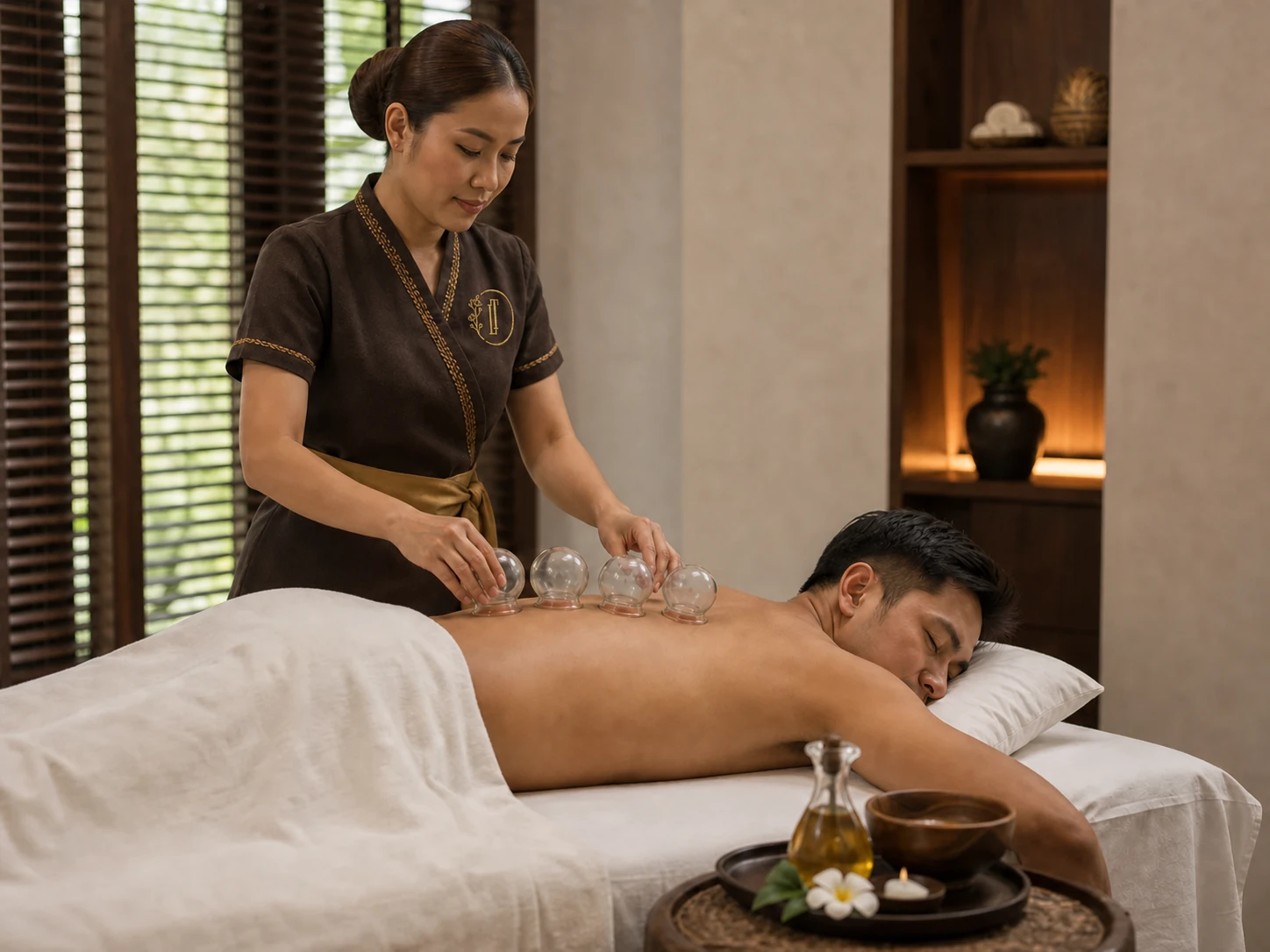
WATCH & LEARN
See how Cupping Aroma Therapy is performed at Loft Thai Spa
“The colour of a cupping mark is a skin response to suction—not a reliable map of toxins, disease or how successful the session was.”
Loft Thai Editorial Team
Continue your research
REFERENCES
Sources & further reading
PRACTICAL GUIDANCE
Frequently Asked Questions
Are cupping marks bruises?
They can look like bruises, but they arise from suction rather than direct impact. Their colour and duration vary, and they should not be interpreted as a diagnostic map.
Does darker colour mean more toxins were removed?
No. Mark colour is influenced by suction, duration, skin and body area. Reliable medical sources do not support using colour to measure toxins or treatment success.
Is cupping therapy painful?
It may feel strongly pulling or warm, but it should not feel sharply painful or burning. The therapist should reduce suction or remove the cup if discomfort becomes unpleasant.
How long do cupping marks last?
They are temporary, but there is no single timetable. Some fade quickly while deeper marks can remain visible for several days. Ask before treatment if visibility matters for an upcoming event.
Who should avoid cupping?
Suitability depends on health and skin condition. Broken or infected skin, recent surgery, acute injury, easy bleeding, anticoagulant medication and some vascular or sensory conditions require professional advice before treatment.
CONTINUE READING
Related stories
Sports Recovery Massage in Bangkok: Best Treatments After Training or Travel (2026)
Bangkok is an amazing city for training—gyms, boxing, running routes, Pilates studios, and that “walk-all-day” lifestyle that quietly racks up 15,000–25,000 steps without you noticing. It’s also a city where travel fatigue hits hard: long flights, heat,…
Read the guide
Why Stress and Burnout Are Driving the Luxury Spa Market
Luxury spas used to be framed as “treat yourself” experiences. In 2026, they’re increasingly positioned as stress-management infrastructure—a place people go to downshift their nervous system, recover from high-pressure work cycles, and protect long-term…
Read the guide
Office Syndrome Massage in Bangkok: How to Fix Neck, Shoulder & Back Pain the Right Way
“Office syndrome” isn’t a trendy phrase in Bangkok—it’s real life. Hours at a laptop, constant phone use, commuting, gym imbalance, stress breathing, and long periods of sitting create the same pattern again and again: tight neck, heavy shoulders, stiff upper…
Read the guide
A Deep Dive into the Healing Science of Cupping Therapy Massage and the Loft Thai Spa Experience
In the vast and evolving landscape of holistic health and modern medicine, few modalities bridge the gap between ancient wisdom and contemporary physiological science as effectively as Cupping Therapy. Often recognized by the circular marks left on the skin of…
Read the guide