

“Office syndrome” isn’t a trendy phrase in Bangkok—it’s real life.
Hours at a laptop, constant phone use, commuting, gym imbalance, stress breathing, and long periods of sitting create the same pattern again and again: tight neck, heavy shoulders, stiff upper back, headaches, jaw tension, and that tired feeling that even sleep doesn’t fully fix.
The good news: when office syndrome is approached correctly, you can feel a real difference fast—not just “relaxed,” but lighter, freer, and more aligned.
This guide explains what Office Syndrome Massage in Bangkok actually is, how it differs from a normal spa massage, what benefits to expect, and who it’s for—based on the therapeutic, technique-first approach used at Loft Thai Spa (a luxury wellness destination known for Thai bodywork and advanced therapies). Use these internal links in your blog: Spa Menu, Locations, Booking, and optional Packages.
What is “Office Syndrome” and why is it so common in Bangkok?
Office syndrome is not one single injury. It’s a pattern created by modern posture and repetitive habits.
Most people don’t feel it right away. It builds slowly:
- shoulders creep upward
- head shifts forward
- chest becomes tight
- upper back becomes stiff
- scapula (shoulder blade) movement gets restricted
- neck muscles overwork to hold the head up
- forearms and hands get tense from mouse and phone use
- breathing becomes shallow under stress
Bangkok makes it worse because daily life is intense—long workdays, traffic, late nights, heavy screen exposure, and not enough movement between meetings.
A proper office syndrome massage is designed to target these patterns strategically. It’s not “just a strong massage.” It’s therapeutic bodywork with structure.
At Loft Thai Spa, office syndrome is treated as an advanced therapy within the broader spa menu, alongside classic Thai massage, oil massage, and other specialized techniques.
Why office syndrome massage is different from normal spa massage

A traditional spa massage is typically built for relaxation: soothing flow, general muscle comfort, gentle-to-medium pressure, and a calm rhythm.
Office syndrome massage is built for results: it focuses on the specific areas and chains that create the pain pattern—neck, upper trapezius, levator scapulae (deep neck/shoulder muscle), rhomboids (between shoulder blades), chest tightness, upper back stiffness, and often forearms.
The difference is intention.
A relaxation massage might make you feel better for an hour.
A true office syndrome massage aims to change how your body feels after you leave, and often the next day.
At Loft Thai Spa, the experience stays luxurious—calm rooms, professional service, premium care—but the technique becomes more targeted and therapeutic when you choose advanced therapies like office syndrome treatment.
What a good office syndrome massage should feel like
If you’ve only experienced “deep tissue” as painful pressure, you might assume office syndrome massage is supposed to hurt.
It shouldn’t.
A high-quality office syndrome session feels like:
- “good pain” only when needed (never sharp or alarming)
- pressure that is controlled and adjusted constantly
- a sense of release in the neck and shoulders
- more space in the upper back and chest
- easier breathing
- a lighter head (less “heavy neck” feeling)
- improved posture without forcing it
The best therapists work with angles, rhythm, and leverage—not brute strength. They know when to go deeper and when to soften. That’s what makes it safe, effective, and worth booking at a professional spa rather than gambling on a random place.
The real causes behind your neck and shoulder pain (and why it keeps coming back)
Office syndrome pain usually returns when you treat symptoms instead of the pattern.
Common root patterns include:
Forward head posture
When the head shifts forward, the neck muscles work overtime. The upper traps and deep neck stabilizers get exhausted. Headaches become common.
Rounded shoulders + tight chest
When the chest is tight, shoulders roll forward and the upper back becomes stiff. The body loses balance, so the neck compensates.
Scapula restriction
If your shoulder blades don’t glide well, your neck and upper traps do extra work to move your arms—especially when typing or using a mouse.
Stress breathing
Shallow breathing activates accessory neck muscles, increasing tightness in the same areas you already overload with posture.
A true office syndrome massage targets these patterns. That’s why it can feel dramatically different from a general massage—even if the session length is the same.
What to expect during an Office Syndrome Massage at Loft Thai Spa
Every spa has its own style, but at Loft Thai Spa, the general approach is professional and results-focused while keeping the experience premium.
What you can expect:
A quick consultation
Your therapist (or receptionist) should confirm where you feel pain, what pressure you prefer, and if there are any injuries or sensitive areas.
Targeted upper-body work
A proper session focuses on neck, shoulders, upper back, and often the arms/hands—because office syndrome often lives in the whole chain.
Technique variety
Depending on the therapist and your needs, the session may blend Thai technique (compression, stretching, positioning) with therapeutic massage methods.
Post-session advice (simple, not lecture)
A good spa may suggest basic follow-ups like hydration, gentle stretching, or “avoid heavy lifting today” if deep work was done.
To understand which therapy is right for you—and how it’s described—start from the Spa Menu page, then reserve via Booking.
Key benefits people usually notice (especially in the first session)
When the treatment is done properly, guests often report:
- A lighter neck and shoulders
- Less tension headache feeling
- Improved shoulder mobility and easier posture
- Reduced “burning” sensation between the shoulder blades
- Less stiffness when turning the head
- A calmer nervous system (stress release often shows up physically)
- Better sleep that night (common after releasing chronic upper-body tension)
For busy professionals in Bangkok, that’s why office syndrome massage is not just “self-care.” It’s performance recovery.
Who office syndrome massage is for

This therapy is especially helpful if you:
- Work on a laptop daily
- Use a phone constantly
- Drive or commute long hours
- Feel tight neck/shoulders most days
- Get headaches linked to tension
- Feel stiff upper back and rounded shoulders
- Train at the gym but feel imbalanced (strong chest, tight shoulders, weak upper back)
- Travel often (airplane posture + luggage strain is a big trigger)
It’s also great for visitors. Many travelers come to Bangkok, walk all day, then sit long hours in taxis, then sleep in unfamiliar beds—office syndrome patterns can flare up quickly.
Who should be cautious (and what to tell your therapist)
Massage is safe for many people, but you should always be cautious if you have:
- Recent injuries (especially neck or shoulder)
- Numbness, tingling, or nerve symptoms
- A known disc problem
- Recent surgery
- Severe pain that is new or unexplained
If any of these apply, tell the therapist clearly. A professional spa can adjust the session. If pain is severe or worsening, medical advice matters.
How often should you do office syndrome massage?
For chronic tension, one session can help—but consistency is what changes the pattern.
A realistic approach many people use:
- One session to “break the cycle” of tension
- A second session within 1–2 weeks if symptoms are chronic
- Then maintenance based on workload and stress (often monthly)
You don’t need to live at the spa. You just need the right frequency to stop the tension from rebuilding to the same intensity.
If you want a complete reset day, you can also combine office syndrome therapy with a relaxing body massage or facial—check the Packages page and tailor your experience from there.
Why Loft Thai Spa is a smart choice for office syndrome massage in Bangkok
Bangkok has many massage options, but office syndrome work requires:
- therapists who understand technique, not only pressure
- a structured, consistent approach
- an environment that supports relaxation (because stress amplifies tension)
- professional consultation and hygiene standards
Loft Thai Spa is positioned as more than a traditional spa—it’s a Thai wellness destination with classic and advanced treatments delivered in a luxury environment. That combination is exactly what people want when they’re searching for a top rated spa Bangkok that can handle both relaxation and therapeutic needs.
Final thought: Office syndrome doesn’t go away with “one good massage” it improves with the right method
If your neck and shoulders keep tightening again and again, it’s rarely because you “need stronger pressure.” It’s because your body is stuck in a pattern created by posture, repetition, and stress.
A proper Office Syndrome Massage in Bangkok is designed to release that pattern safely and intelligently so you don’t just feel relaxed, you feel corrected.
If you want that kind of result in a luxury spa Bangkok setting, explore Loft Thai Spa’s therapeutic options in the Spa Menu, choose your nearest branch, and book the session that matches what your body needs today.
Find out more at: https://www.loft-thai.com/
UPDATED LOFT THAI GUIDE
Additional guidance and current information
The following editorial update expands on the original Loft Thai article with practical context, current treatment guidance and further reading.
What Does “Office Syndrome” Actually Mean?
Office syndrome is a popular regional label rather than one precise diagnosis. It can describe a cluster of discomfort around the neck, shoulders, upper back, forearms or wrists in people who spend long periods working at computers or looking down at devices.
Symptoms may relate to workload, repeated movement, insufficient variation, stress, sleep, workstation fit or an underlying condition. It is too simple to blame one “bad posture” or one tight muscle for every case.
Massage can support relaxation and short-term comfort for some guests, but persistent pain, weakness, numbness, severe headache or loss of function requires healthcare assessment.
Why Desk and Device Work Can Feel Heavy
Even a comfortable position becomes tiring when it is held too long. Reaching for a mouse, raising the shoulders to meet a high keyboard or bending the neck towards a laptop can increase muscular effort. Stress can add jaw tension and shallow breathing to the same pattern.
OSHA’s computer-workstation guidance emphasises neutral alignment, relaxed shoulders, supported arms and regular changes of position. It also states that there is no single correct posture for every person.
The practical goal is variety. Alternating tasks, adjusting equipment and taking short movement breaks are more realistic than trying to hold a rigid “perfect posture” throughout the day.
- Screen height and distance influence head position
- Keyboard and mouse placement influence shoulders, forearms and wrists
- Chair and foot support influence the whole sitting position
- Long static periods matter even when the setup appears correct
What Massage May Help—and What It Cannot Promise
The US National Center for Complementary and Integrative Health reports that massage may help neck or shoulder pain, but benefits may be short term and evidence varies. That supports measured expectations rather than claims of fixing posture or curing a syndrome.
A focused session may help the upper body feel less guarded, create a period of relaxation and make comfortable movement easier. The experience can be valuable even when it does not change the workstation or remove the reason symptoms return.
Massage does not reposition bones, diagnose a disc problem or permanently lengthen tissue in one appointment. A credible therapist stays within scope and recommends medical or rehabilitation care when symptoms suggest more than ordinary muscular fatigue.
How an Office Syndrome Massage Is Structured
The session begins with location, quality and timing of symptoms. The therapist should ask what movements aggravate discomfort, whether sensations travel into the arm and whether there is a recent injury or medical diagnosis.
Treatment often prioritises the upper back, shoulders, neck, chest area, arms and hands rather than applying strong pressure only where pain is felt. Depending on the booking, the therapist may blend compression, oil massage, careful stretching and supported positioning.
Neck work should be controlled. Rapid forceful movement is not required for a satisfying result, and the guest should remain able to stop or change technique at any time.
-
01
Map the symptoms
Clarify location, onset, aggravating tasks, health history and any neurological signs.
-
02
Choose a comfortable position
Use seated, side-lying, prone or supine work according to comfort and treatment area.
-
03
Warm broad areas
Begin with measured contact before moving into more specific shoulder, neck or forearm work.
-
04
Add movement carefully
Use supported range rather than forcing the neck or shoulder beyond a comfortable limit.
-
05
Reassess before standing
Finish calmly and check comfort, dizziness and movement after the session.
Why More Pressure Is Not the Same as Better Work
Desk-related tension often feels deep, which can make maximum pressure tempting. Yet an irritated or protective area may respond better to slow, moderate work. Pain that makes the guest hold their breath or brace against the table limits useful feedback.
Tell the therapist when sensation is sharp, electric, numb or travels down the arm. These descriptions are different from ordinary muscular tenderness and should not be worked through as a challenge.
A professional Office Syndrome massage adapts throughout the session. Pressure preference is not a contract signed at reception.
Make the Result Last with Workstation and Movement Changes
Massage is only one part of the picture. Position the screen so the head can remain balanced, keep shoulders relaxed, support the forearms and place the keyboard and mouse within easy reach. Laptop users may benefit from a separate keyboard and pointing device when working for long periods.
The CDC notes that a well-designed office should avoid over-reaching, prolonged sitting or standing and awkward positions. It also cites short hourly breaks as a way to reduce discomfort for computer workers.
Choose small repeatable changes: stand for a call, walk for a few minutes, vary tasks and reset the position of the shoulders and hands. There is no need to turn aftercare into an exhausting corrective routine.
Red Flags, Frequency and When to Seek Advice
Seek healthcare assessment for severe or worsening pain, symptoms after trauma, loss of strength, persistent numbness, fever, unexplained swelling, balance changes, chest symptoms or a sudden unusual headache. Massage should not delay evaluation.
Recent surgery, pregnancy, anticoagulant medication, fragile bones and diagnosed neurological, vascular or inflammatory conditions require individual guidance. Thai health-establishment standards also emphasise screening people who may be at risk.
There is no universal massage frequency. Some guests book when workload is unusually high; others prefer occasional maintenance. If symptoms repeatedly return, review the task, workstation, sleep and medical context rather than assuming that increasingly frequent or stronger massage is the only answer.
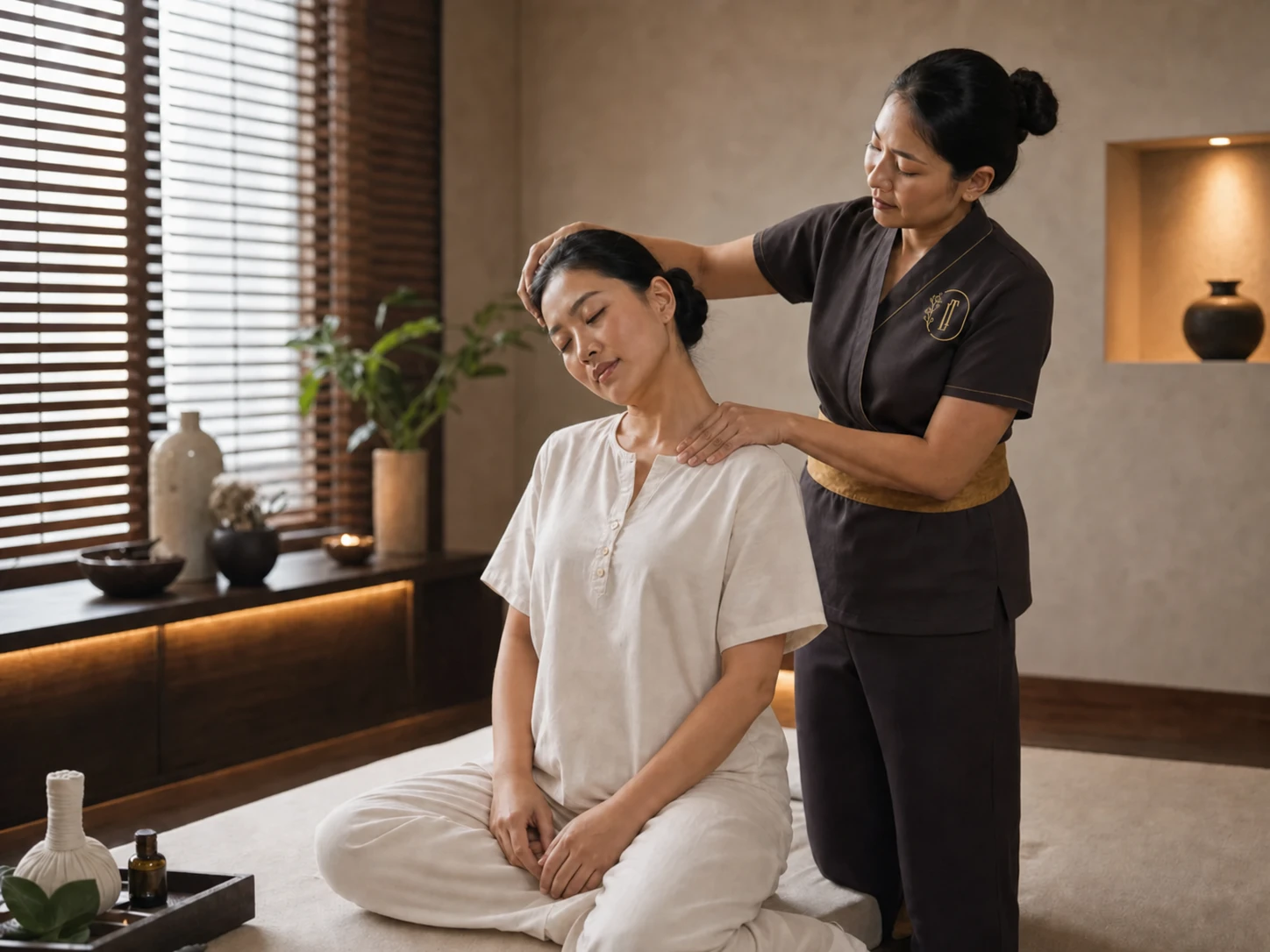
“Massage may change how a desk-work body feels today; movement, workstation fit and medical assessment still matter tomorrow.”
Loft Thai Editorial Team
Continue your research
REFERENCES
Sources & further reading
- US Occupational Safety and Health Administration: Computer workstations
- US Centers for Disease Control and Prevention: Office environments and safety
- US National Center for Complementary and Integrative Health: Massage therapy
- Thailand government: Safety and service standards for spa and massage establishments
PRACTICAL GUIDANCE
Frequently Asked Questions
Is Office Syndrome a medical diagnosis?
It is commonly used as a descriptive label for desk- and device-related discomfort, not one precise diagnosis. Persistent or neurological symptoms need professional assessment.
Can Office Syndrome massage fix my posture?
Massage may support comfort and movement, but it cannot permanently correct posture in one session. Workstation fit, task variation, movement and health factors also matter.
Should neck and shoulder massage feel painful?
No. Focused work can feel intense, but sharp, electric, radiating or numbing sensations should be reported immediately and not treated as useful pain.
How often should I book Office Syndrome massage?
There is no fixed schedule. Choose according to symptoms, workload, response and professional guidance. Repeatedly returning pain deserves a broader review.
When should I see a doctor instead of booking massage?
Seek assessment for severe or worsening pain, trauma, weakness, persistent numbness, fever, swelling, balance changes, chest symptoms or a sudden unusual headache.
CONTINUE READING
Related stories

Sports Recovery Massage in Bangkok: Best Treatments After Training or Travel (2026)
Bangkok is an amazing city for training—gyms, boxing, running routes, Pilates studios, and that “walk-all-day” lifestyle that quietly racks up 15,000–25,000 steps without you noticing. It’s also a city where travel fatigue hits hard: long flights, heat,…
Read the guide
Cupping Therapy Explained: Technique, Marks, Benefits, and Medical Insights
Cupping therapy is one of the most visually recognizable bodywork techniques in the wellness world. Even people who have never tried it often recognize the round red or purple marks that can appear on the back, shoulders, or neck after a session.
Read the guide
Why Stress and Burnout Are Driving the Luxury Spa Market
Luxury spas used to be framed as “treat yourself” experiences. In 2026, they’re increasingly positioned as stress-management infrastructure—a place people go to downshift their nervous system, recover from high-pressure work cycles, and protect long-term…
Read the guide
A Deep Dive into the Healing Science of Cupping Therapy Massage and the Loft Thai Spa Experience
In the vast and evolving landscape of holistic health and modern medicine, few modalities bridge the gap between ancient wisdom and contemporary physiological science as effectively as Cupping Therapy. Often recognized by the circular marks left on the skin of…
Read the guide