
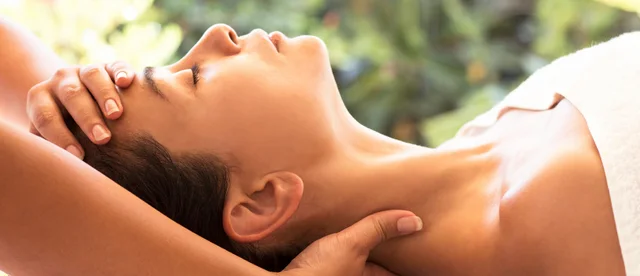
Thai massage is an ancient healing practice that has been used for centuries to promote relaxation, improve circulation, and relieve pain and tension in the muscles and joints. If you're looking for a high-quality Thai massage experience in Bangkok, then Loft Thai Spa is the perfect place for you. In this article, we'll take a closer look at the traditional Thai massage techniques offered at Loft Thai Spa and what sets them apart from other spa and massage centers.
One of the key features of the traditional Thai massage offered at Loft Thai Spa is the use of traditional techniques that have been passed down through generations of practitioners. These techniques include the use of gentle stretches, acupressure, and the application of pressure to specific points on the body. The therapists at Loft Thai Spa are highly skilled and trained in these traditional techniques, ensuring that you receive the highest quality massage experience.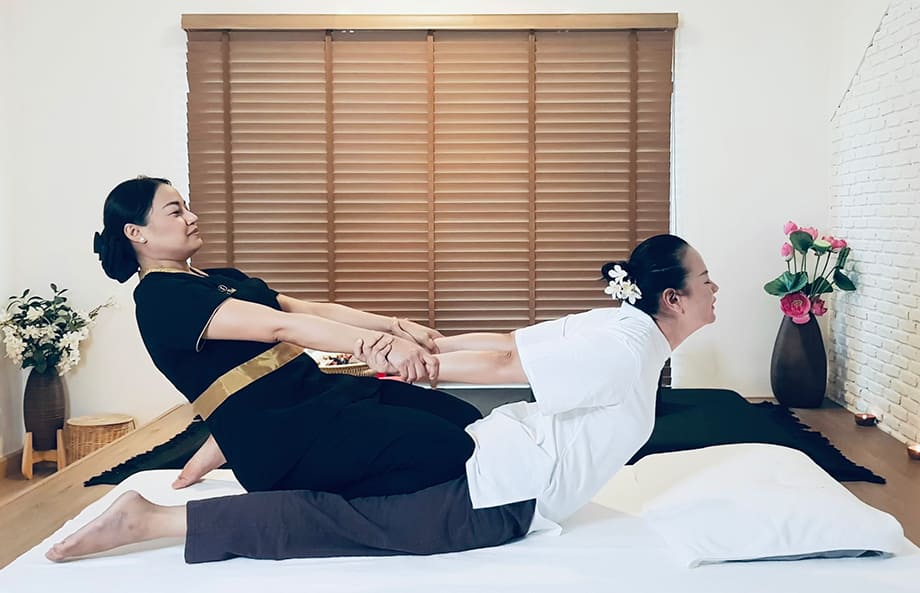
Another unique aspect of the Thai massage offered at Loft Thai Spa is the use of natural oils and herbal compresses. These natural products are carefully chosen for their healing properties and are used to enhance the massage experience. The natural oils are used to help loosen tight muscles and improve circulation, while the herbal compresses are used to soothe sore muscles and reduce inflammation.
In addition to traditional Thai massage, Loft Thai Spa also offers a variety of other services, such as Thai Warrior Massage, which is a more vigorous massage that incorporates deep tissue work, and Facial Treatment. These services are designed to help clients achieve a sense of balance and well-being, with the ultimate goal of leaving them feeling rejuvenated and refreshed.
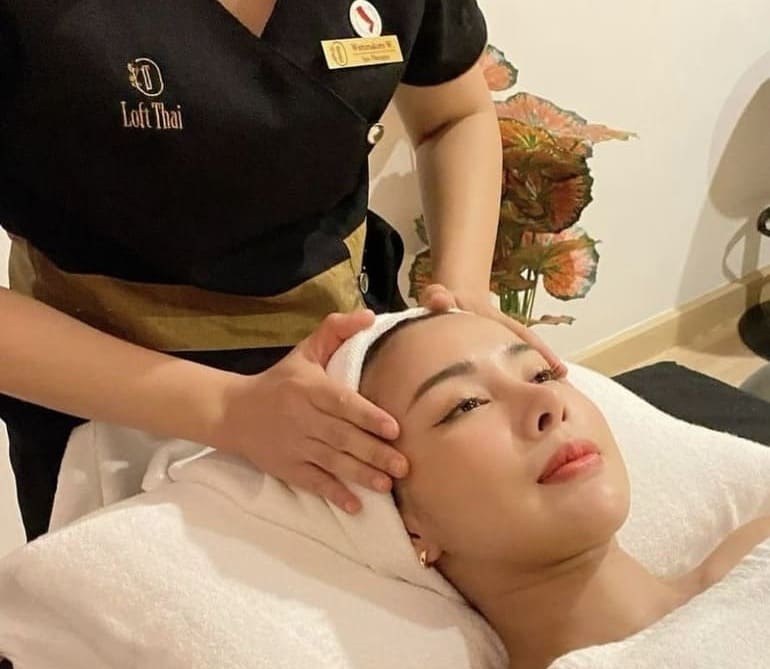
Our most popular facial treatment is the Thai Herbal Facial. This treatment is based on the traditional Thai herbal medicine and is designed to improve the overall health and appearance of your skin. The therapist uses a combination of natural herbs, fruits, and oils to cleanse, exfoliate, and moisturize your skin. This treatment is perfect for those who are looking to improve the texture and tone of their skin.
 Overall, Loft Thai Spa offers a unique and high-quality Thai massage experience, with traditional techniques and natural products used to enhance the massage experience. Whether you're looking to relieve stress, improve your circulation, or simply relax and unwind, the therapists at Loft Thai Spa are dedicated to helping you achieve your goals. If you're looking for a relaxing and rejuvenating massage experience in Bangkok, be sure to visit Loft Thai Spa.
UPDATED LOFT THAI GUIDE
Additional guidance and current information
The following editorial update expands on the original Loft Thai article with practical context, current treatment guidance and further reading.
Review Technique Before Marketing Claims
A technique review should identify position, contact, direction, leverage, intended sensation and modification.
It should also state what the technique cannot establish, including diagnosis, corrected energy flow or guaranteed pain relief.
Guest feedback and therapist control matter more than visual drama.
Traditional Thai Massage Is a Clothed Format
The guest commonly wears loose clothing while the therapist works without massage oil.
This allows position changes, broad compression and assisted movement while preserving coverage.
The current menu lists 60 minutes at 1,000 THB, 90 minutes at 1,400 THB and 120 minutes at 1,900 THB.
The First Technique Is a Good Consultation
Discuss pressure preference, painful or vulnerable areas, recent injury, surgery, pregnancy, mobility and positions that should be avoided.
A therapist cannot infer safe range from appearance or age.
Agree on an immediate stop signal before the sequence begins.

Broad Palm Pressure Creates a Stable Starting Point
Palm contact distributes force across a larger area and can introduce rhythm without a sharp focal sensation.
The therapist controls depth through body weight, angle and time rather than pushing from the shoulders.
Broad does not mean light; the guest still chooses intensity.
Thumb and Finger Pressure Need a Clear Reason
Smaller contact can explore a defined area but increases pressure concentration.
It should not be used to chase a painful spot, bruise tissue or prove that the therapist found a blockage.
Reduce force, enlarge contact or move away when sensation becomes sharp, electric, numb or unpleasant.
Forearm Contact Can Deliver Broad Depth
A forearm offers a wider surface than the thumb and can reduce repetitive strain for the therapist.
Its use requires stable support and precise control because the guest may find the contact powerful.
Sensitive bony, vascular or vulnerable areas need avoidance or a different tool.
Rhythmic Compression Organises Pace
Compression alternates load and release through clothing rather than gliding over oiled skin.
Rhythm can help the guest anticipate contact, but speed should not replace careful placement.
The therapist should pause when the guest guards, holds the breath or asks for a change.
Rocking Uses Repetition Instead of Extreme Range
Small repeated movement can introduce motion without immediately taking a joint toward its limit.
Rocking should remain supported and controllable rather than shaking the guest.
Stop when it creates dizziness, nausea, pain or loss of confidence.
Supported Limb Movement Tests Comfort Gradually
The therapist supports the weight of an arm or leg while moving within an agreed range.
The guest should not need to help, brace or anticipate a sudden change.
Slower setup and smaller range usually reveal more useful feedback than one large movement.
Assisted Stretching Is Not a Flexibility Contest
A stretch should have stable contact, predictable direction and a clear return path.
Range depends on the guest's anatomy, history, current comfort and position on the day.
Pain, bouncing and forced end range are not signs of a more authentic Thai massage.
Supine Work Needs Privacy and Clear Boundaries
Leg, hip, abdomen, shoulder and neck sequences can bring contact closer to private or vulnerable areas.
Explain the position, use appropriate clothing and support, and request specific consent.
Inner-thigh contact is optional and should never be introduced silently.
Side-Lying Can Improve Support and Access
Pillows and bolsters can stabilise the head, upper leg and torso.
The position may suit some guests who do not tolerate prone or supine work, including selected pregnancy or mobility situations after appropriate assessment.
It is an adaptation, not a universal safety solution.

Prone Work Requires Breathing and Neck Comfort
Face-cradle height, chest support, ankle position and time affect comfort.
Pressure through the back and legs should not force the guest to hold the breath or rotate the neck awkwardly.
Change position when face pressure, dizziness, numbness or breathing discomfort develops.
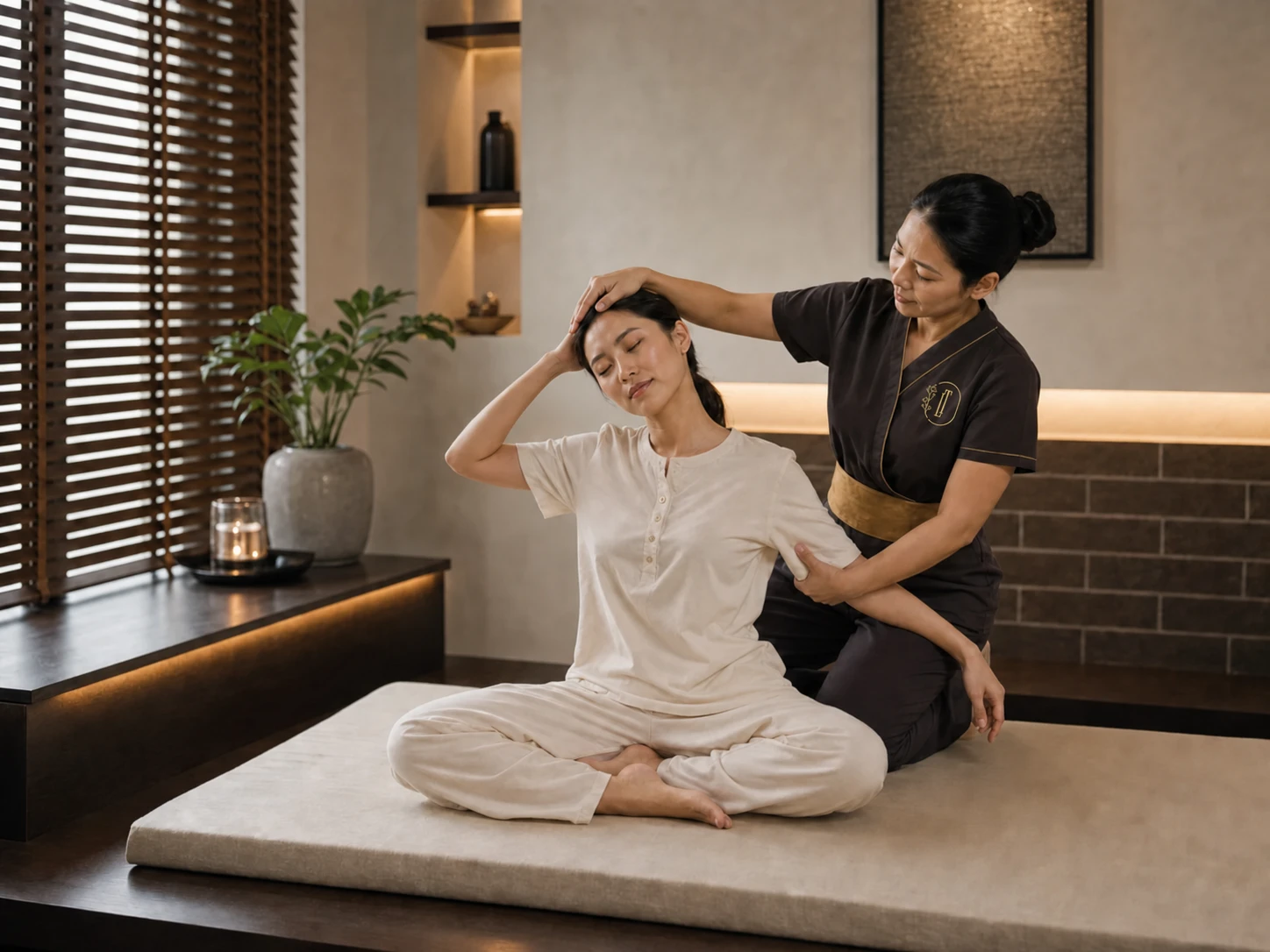
A Seated Finish Needs Stable Support
Seated shoulder pressure, chest opening or spinal movement can feel exposed and visually dramatic.
The therapist should stabilise the guest and use a smaller range than the image of a technique may suggest.
Skipping the seated finish is a valid choice.
Sen Can Guide Tradition Without Replacing Anatomy
Thai massage training may organise sequences through sen, a traditional explanatory framework.
Sen should not be presented as confirmed physical vessels or proof that an organ is being treated.
Guests can appreciate the cultural vocabulary while making pressure and movement decisions in ordinary body terms.
A Guest-Led Technique Scorecard
Was the setup explained, the body supported and pressure adjusted when requested?
Did each movement feel predictable, controllable and easy to stop?
A quality review should describe communication, technique fit and after-feeling rather than making medical conclusions.
Traditional Skill Looks Controlled, Not Extreme
Thai massage combines a broad vocabulary of pressure, rhythm, movement and supported stretches.
Its quality appears in transitions, leverage, judgement and consent rather than maximum depth.
Choose duration and format from the current menu, then let the therapist build a sequence around real-time feedback.
“A Thai massage technique is only as good as its setup, leverage, communication and ability to become smaller when the guest needs less.”
Loft Thai Editorial Team
Continue your research
REFERENCES
Sources & further reading
PRACTICAL GUIDANCE
Frequently Asked Questions
Does traditional Thai massage use oil?
Usually not. It is commonly a clothed format without massage oil. Thai Combination is the current direction when clothed Thai technique and oil-based work are both wanted.
Should Thai massage stretching hurt?
No. Assisted movement should remain supported, predictable and within an agreed range. Ask for smaller range or stop when it becomes painful.
Are sen lines proven anatomical structures?
No direct equivalence is established. Sen are a traditional framework and should not be represented as confirmed nerves, vessels or fascia.
How much is Traditional Thai Massage at Loft Thai?
The current menu reviewed on 29 July 2026 lists 60 minutes at 1,000 THB, 90 minutes at 1,400 THB and 120 minutes at 1,900 THB.
What makes a Thai massage technique high quality?
Clear setup, stable support, controlled leverage, responsive pressure, safe range, good transitions and consent are stronger signals than force or dramatic stretching.
CONTINUE READING
Related stories
The history and cultural significance of Thai massage and how it is incorporated at Loft Thai Spa
Thai massage is a traditional healing practice in Thailand that has been passed down through generations. It is a one-of-a-kind combination of acupressure, yoga-like stretching, and meditation designed to balance the body, mind, and spirit. At Loft Thai Spa,…
Read the guide
The Science of Pressure Points and Energy Lines (Sen)
How Thai massage stimulates circulation, relieves blockages, and balances body energy—an educational deep dive for health-conscious, well-traveled spa guests.
Read the guide
Understanding the Different Types of Massage Services Offered at Loft Thai Spa
For millennia, people have utilized massage treatment to reduce tension, enhance circulation, and encourage relaxation. One of the top spas in Bangkok, Loft Thai Spa offers a variety of massage services to suit the individual requirements and interests of its…
Read the guide
Experience Authentic Thai Massage
Traditional therapeutic techniques like Thai massage have been used for a very long time. It is a unique and powerful kind of massage that combines acupressure, stretching, and energy therapy to release stress and restore the body's equilibrium. No place is…
Read the guide