Traditional Thai Massage, or Nuad Thai, is often described poetically as "lazy man’s yoga." It is a complex, holistic therapy that blends rhythmic acupressure, assisted stretching, and deep compression to harmonize the body’s physical structure and energy pathways. Unlike Western massage modalities that focus primarily on muscular manipulation while the client lies passive under a sheet, Thai massage is a dynamic dance between giver and receiver, performed fully clothed on a floor mat.
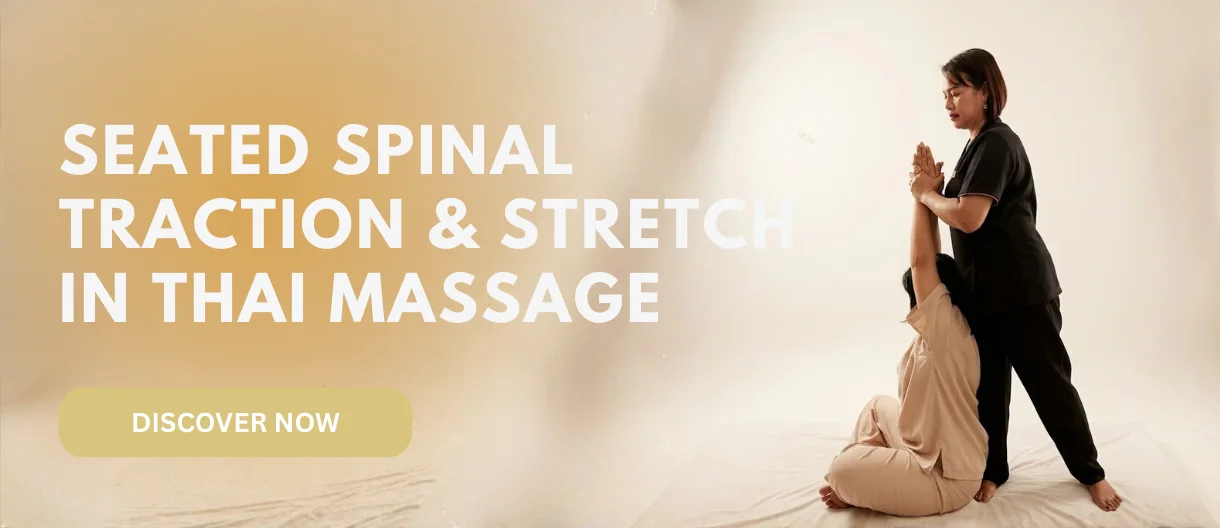
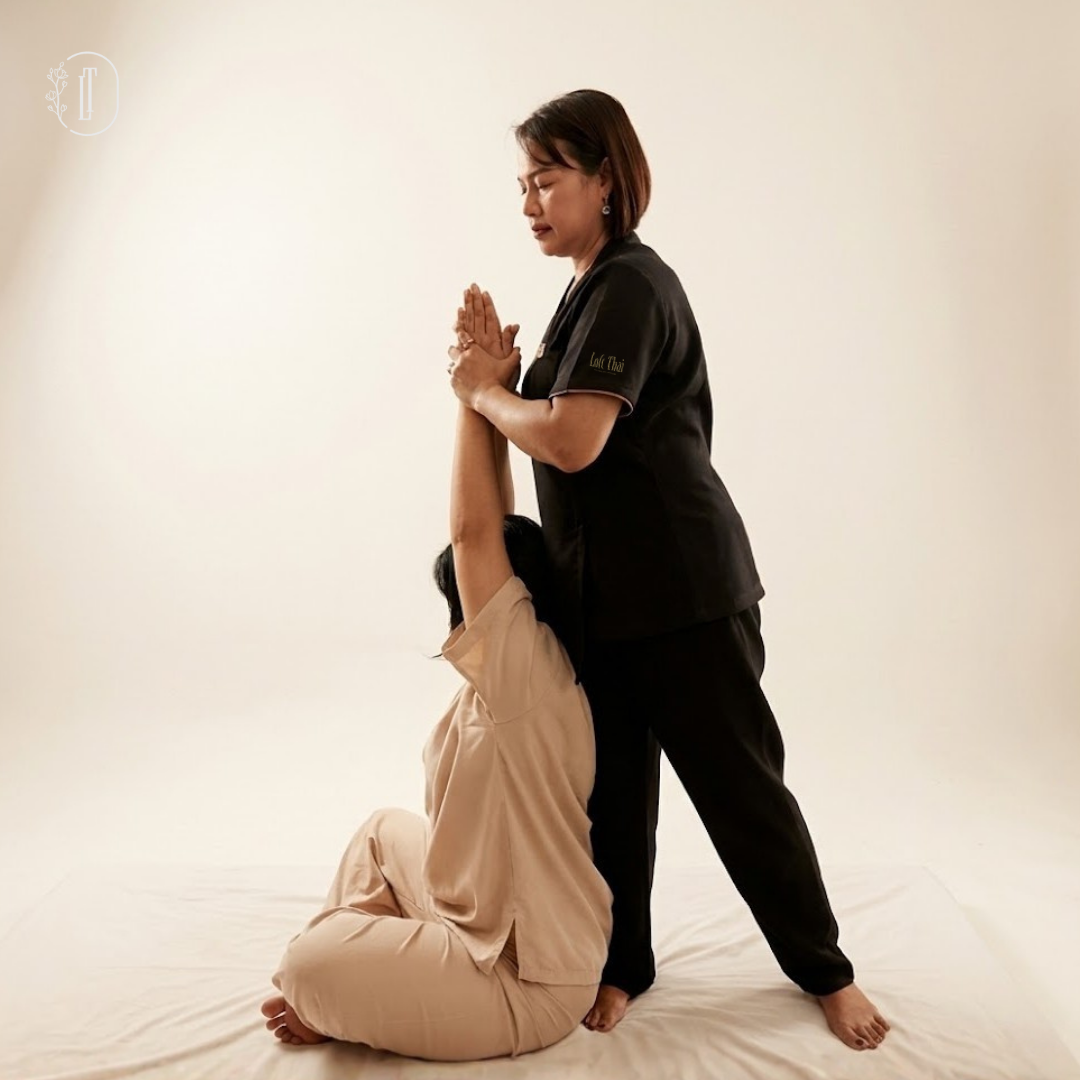
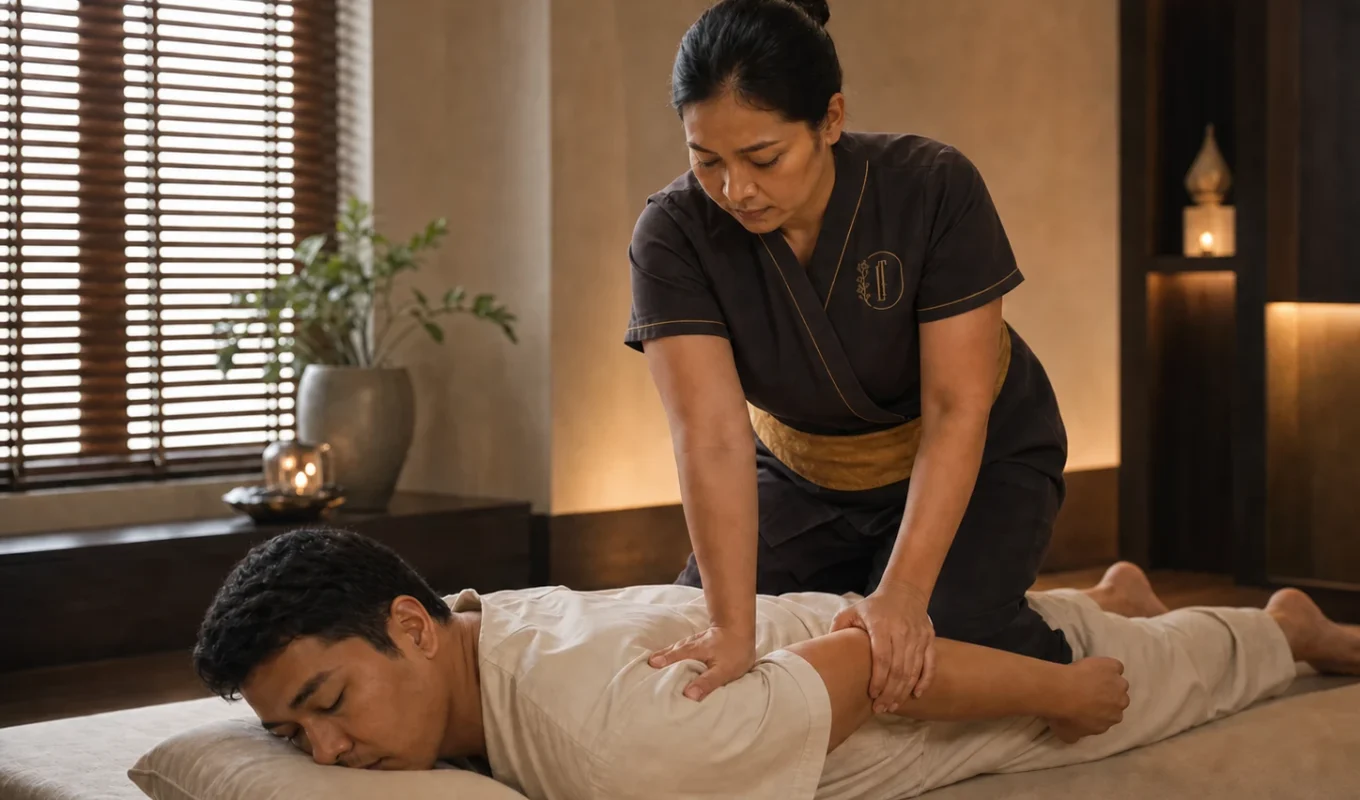
The image provided captures a quintessential moment in this modality: a powerful, assisted stretch performed during the final phase of a treatment. While it lacks a single, standardized ancient Sanskrit name, in professional circles, it is variously known as the Seated Spinal Traction, the Passive Cobra Lift, or the Seated Chest Opener.
This pose is not merely a physical stretch; it is the culmination of a 90 to 120-minute journey intended to awaken the body before the client stands up to face the world again. To truly understand this technique, we must look through dual lenses: the ancient wisdom of Thai tradition and the modern understanding of biomechanics and anatomy.
The Cultural Context: The Seated Sequence and Ruesri Dat Ton
In a structured Thai massage routine, the session begins at the feet, moving up the legs, torso, arms, and ending at the head, usually while the recipient is lying supine, prone, or side-lying. The "Seated Sequence" is almost always the concluding chapter.
After an hour or more of being deeply relaxed, often drifting into a theta brainwave state between wakefulness and sleep, the client needs to be "brought back." The seated position is grounding. It realigns the equilibrium before standing. The techniques performed here, including the spinal lift pictured, are designed to reinvigorate the system, sending a fresh flush of blood and oxygen to the brain and major organs.
Furthermore, this pose possesses deep roots in Ruesri Dat Ton (Thai Hermit or Ascetic Yoga). For millennia, forest monks and hermits practicing intense, long-duration seated meditation needed ways to maintain physical health and correct the physical stagnation caused by stillness. They developed a system of dynamic self-stretching exercises.
The image shows a passive application of what a hermit might do actively. An ascetic might interlace their fingers overhead and stretch upward to decompress their spine after hours of sitting. In Nuad Thai, the therapist provides the external force to achieve a deeper version of that same relief, allowing the recipient to remain completely passive and receptive.
Anatomical Deconstruction: The Mechanics of Decompression
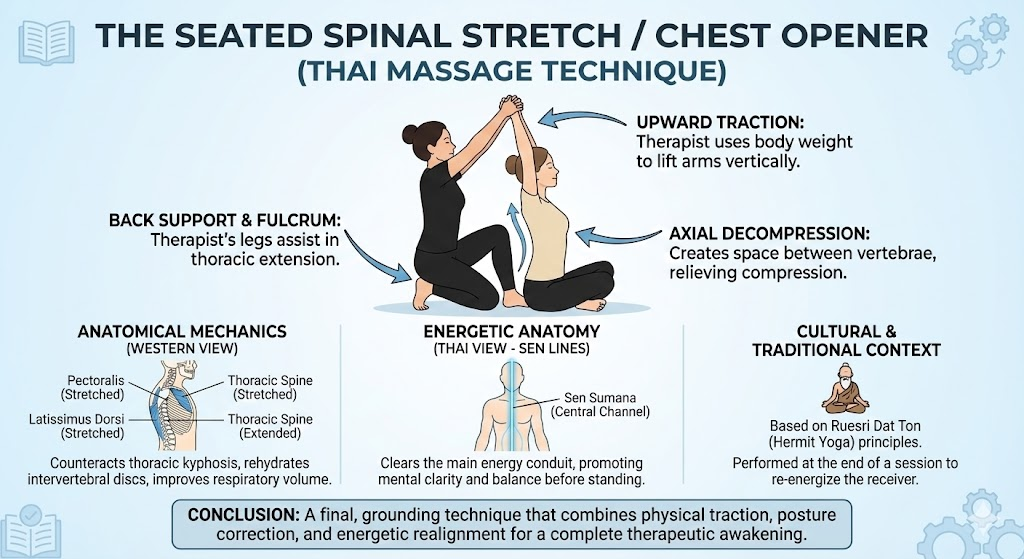
From a Western medical and biomechanical perspective, the Seated Spinal Stretch is a highly effective maneuver for addressing the ailments of modern sedentary life, particularly "upper crossed syndrome"—the clinical term for the hunched-over posture resulting from chronic desk work and phone usage.
Let us examine the physiological mechanics at play in this specific image:
1. Axial Spinal Traction (Decompression)
The primary action occurring here is axial traction. The therapist is pulling the client’s arms vertically upward. Because the client is seated firmly on their ischia (sitz bones), their pelvis is anchored.
This upward pull creates space between the vertebrae. Modern life means gravity is constantly compressing the spine. This technique temporarily reverses that process. By creating this vertical space, pressure is relieved from the intervertebral discs—the cartilaginous shock absorbers between spinal bones. This decompression allows the discs to rehydrate and can take pressure off nerve roots exiting the spinal column, offering significant relief for those with general back compression or mild lumbar muscular tension.
2. Addressing Thoracic Kyphosis
The therapist is not just pulling straight up; they are also leaning back slightly while bracing their legs against the client's posterior rib cage and thoracic spine (mid-back).
This bracing action acts as a fulcrum. As the client's arms are pulled back and up, their thoracic spine is encouraged to extend. This directly counteracts excessive thoracic kyphosis (the rounded upper back). It forces the spine out of the "slump" and into neutral, or slightly extended, alignment.
3. Muscular Anatomy Involved
This single maneuver engages and stretches a massive array of muscle groups simultaneously:
-
Pectoralis Major and Minor (The Chest): As the arms are raised overhead and pulled backward, the pectoral muscles on the front of the chest are placed in a deep stretch. Chronically tight pectorals pull the shoulders forward into a slump; stretching them is crucial for posture correction.
- Latissimus Dorsi (The Lats): These large, wing-shaped muscles of the back attach from the spine and pelvis all the way up to the humerus (upper arm bone). Raising the arms overhead provides a significant stretch to the entire length of the "lats," increasing overhead shoulder mobility.
- Anterior Deltoids and Biceps Brachii: The front of the shoulders and the biceps are elongated in this overhead position.
- Rectus Abdominis (The Abs): As the torso is lifted and slightly arched backward, the superficial abdominal muscles receive a gentle stretch.
- Intercostal Muscles: These are the small muscles between the ribs. As the rib cage is lifted and expanded, these muscles are stretched, increasing the pliability of the rib cage.
4. Respiratory Mechanics
The stretching of the intercostals and the pectorals has a profound effect on respiration. By mechanically lifting and opening the thoracic cage, the therapist is creating more volume for the lungs to expand. This position combats the shallow "chest breathing" associated with stress and poor posture, encouraging the diaphragm to drop lower and facilitating deeper, more efficient tidal volume (the amount of air moved in one breath). The client often involuntarily takes a massive, refreshing inhale during this move.
The Energetic Anatomy: Clearing the "Sen Sumana"
A Thai massage therapist is not just thinking about muscles and bones; they are working with Sen lines. These are the energy pathways through which life force, or Lom (wind), circulates in the body. While similar to Chinese meridians, they follow distinct trajectories.
There are 72,000 theoretical lines, but practical Thai massage focuses on the primary ten (Sen Sib).
The Seated Spinal Stretch is vital for clearing the central channel.
- Sen Sumana: This is arguably the most important line. It starts at the tip of the tongue and runs down the center of the body, aligning roughly with the spinal cord, to the solar plexus and navel area. It is the highway of central nervous system energy.
- Sen Ittha and Sen Pingkhala: These lines run immediately parallel to the left and right sides of the spine, respectively.
By performing axial traction on the physical spine, the therapist is energetically "flossing" these central channels. The goal is to remove any remaining blockages along the main conduit of the body, ensuring that energy flows freely from the root chakra up to the crown before the session concludes. A blockage in Sen Sumana is traditionally believed to cause issues ranging from digestive problems to manic mental states; clearing it promotes clarity and calm.
The Role of the Therapist: Biomechanics and "Metta"
In the image, the therapist’s form is excellent and demonstrates the principle of leverage over effort. Notice her stance: her feet are planted wide for stability, and her knees are slightly bent.
She is not using the small muscles of her arms to pull the client up. Instead, she has locked her grip on the client's wrists and is using her entire body weight, leaning backward, to generate the force. This is crucial for longevity in a massage career; using large muscle groups and leverage prevents therapist burnout and injury.
The positioning of her legs against the client’s back is also deliberate. It provides necessary support. Without that bracing, pulling the client's arms could cause them to simply fall backward or hyperextend their lower back (lumbar spine) to an unsafe degree. The therapist provides a safe boundary against which the stretch occurs.
Beyond mechanics, the execution of this move requires Metta (loving-kindness). It is a powerful, dominating position for the therapist. It must be executed with slow, listening intent, ensuring the client does not feel vulnerable or forced past their limit. The therapist feels for the resistance in the client's tissues and stops at the "edge" of a good stretch, never bouncing into pain.
Conclusion
The Seated Spinal Stretch pictured is far more than a simple arm pull. It is a sophisticated micro-cosmic representation of Thai massage philosophy. It utilizes the therapist's body as a tool to apply ancient Ruesri Dat Ton principles to the client.
Medically, it is a powerful antidote to the compressive forces of gravity and the postural degradation of modern life, addressing thoracic kyphosis, rehydrating spinal discs, and stretching the chronically tight anterior chest muscles. Energetically, it clears the central pathways, ensuring the client leaves the mat not just relaxed, but awake, aligned, and revitalized. It is the perfect closing statement to the therapeutic dialogue between giver and receiver.
UPDATED LOFT THAI GUIDE
Additional guidance and current information
The following editorial update expands on the original Loft Thai article with practical context, current treatment guidance and further reading.
First, Identify the Movement Clearly
In this variation, the guest sits upright or cross-legged while the therapist stands or kneels behind. The guest’s arms travel overhead, and the therapist supports the hands, wrists or forearms while encouraging a gentle upward direction.
Training names vary. Seated spinal stretch, overhead traction and chest opener may describe related but not identical techniques. The name matters less than explaining the position, direction and level of assistance before it begins.
This article addresses the overhead-arm version. A different movement, often called Dat Lang in some teaching contexts, uses bent elbows and a more explicit supported chest-opening action. That technique is covered separately.
What Actually Moves
The most obvious motion occurs at the shoulders as the arms rise. The shoulder blades rotate and the upper back may extend slightly if the guest has comfortable range. The pelvis remains the seated base, and the therapist’s support should prevent sudden backward movement.
The sensation may be felt across the sides of the torso, upper back, shoulders or chest. Where it is felt depends on position, individual anatomy and range. A guest should not be told that one sensation proves a particular muscle, joint or energy line has been corrected.
The old version of this article claimed that the technique creates space between vertebrae, rehydrates discs and relieves nerve-root pressure. A spa stretch cannot establish those effects, and the movement should not be presented as spinal decompression or treatment for a disc condition.
- Primary visible action: arms move overhead
- Possible accompanying action: gentle upper-back extension
- Essential support: stable seated base and controlled arm contact
- Not established by the movement: disc rehydration, postural correction or nerve decompression
What the Stretch Should Feel Like
A comfortable version feels gradual. The guest can breathe normally, keep the jaw relaxed and ask for less range without resistance. There may be a broad stretching sensation, but not sharp pain, pinching at the front of the shoulder, tingling, numbness or dizziness.
The therapist should not use a surprise pull to wake the guest near the end of a session. Deep relaxation can make a sudden move feel disorienting. A clear explanation and small first range are more effective than dramatic leverage.
Breathing can help pace the movement, but there is no need to force a large inhale or claim that the stretch increases lung capacity. The guest’s normal breath is a useful comfort signal.
A Safer Progression From Small to Assisted
The therapist can begin by asking the guest to raise the arms actively. Active movement shows the range the guest controls without external force. If that already feels limited or painful, assisted range should not be used to push beyond it.
Support can then be added at the forearms rather than pulling the hands. The direction remains upward and only slightly back if comfortable. A pause allows the guest to report sensation before any second repetition.
A technique should be abandoned when the guest guards, holds breath, shifts the pelvis sharply or reports symptoms. Switching to a smaller shoulder movement is professional adaptation, not a failed treatment.
-
01
Explain
Describe the arm position and ask whether the guest wants to try the stretch.
-
02
Observe active range
Let the guest lift the arms without assistance and note comfort rather than seeking a maximum.
-
03
Support
Use broad contact, stabilise the seated position and add only a small amount of help.
-
04
Pause and ask
Check the shoulders, neck, hands and overall comfort before continuing.
-
05
Release slowly
Lower the arms under control and give the guest a moment before standing.
When to Modify or Avoid the Stretch
Tell the therapist about recent shoulder or neck injury, surgery, dislocation, marked instability, osteoporosis, fracture, neurological symptoms or pain when raising the arms. These situations may require avoidance or medical guidance rather than a deeper stretch.
A history of dizziness or difficulty sitting unsupported also changes the plan. The guest may be safer remaining side-lying or supine. Pregnancy can affect comfort and balance, so positioning and range should be individually adapted.
Sudden severe pain, new weakness, numbness, one-sided swelling, recent trauma or other concerning symptoms should be assessed appropriately. Massage should not be used to test a possible injury.
Alternatives That Preserve the Intention
If the aim is a calm transition from lying down to sitting, the therapist can use supported head, neck and shoulder contact without taking the arms overhead. Gentle scapular movement in side-lying is another option.
For guests who enjoy an upper-body stretch but have limited overhead range, one arm can be moved at a time with the elbow bent. A towel or cushion can support position without increasing force.
Traditional Thai massage offers many routes through a session. Authenticity does not depend on completing one signature pose. The sequence should serve the guest, not the other way around.
Therapist Body Mechanics and Grip
The therapist needs a stable base and should avoid pulling with the arms alone. Body weight can create smooth assistance, but it must remain controllable in both directions. A locked grip and large backward lean can turn a small correction into excessive force.
Broad support at the forearms may be more comfortable than gripping wrists, particularly for smaller joints or guests with hand sensitivity. Contact should never compromise circulation or place the wrist in an awkward angle.
Training should include how to stop. The therapist must be able to return the arms to a neutral position if the guest withdraws consent or reports symptoms.
Cultural Context Without Anatomical Myth
UNESCO describes Nuad Thai as a living knowledge system using bodily manipulation, hands, elbows, knees and feet within traditional Thai healthcare. It also records the importance of knowledge transmission and community practice.
Some schools explain assisted stretches through sen-line or wind-element frameworks. These are traditional concepts and can be presented as such. They should not be translated directly into claims about the spinal cord, nerve roots or mental states.
The most respectful modern explanation holds both perspectives clearly: this is a Thai massage technique with cultural context, and its physical use should still follow contemporary consent and safety standards.
Before You Stand Up
A seated sequence may appear near the end of a Thai massage, but it is not required. After extended time lying down, sit for a moment and notice whether you feel light-headed before standing.
Tell the therapist if an arm feels weak, numb or painful after the stretch. A brief general sensation may settle, but persistent or concerning symptoms need appropriate assessment.
The desired finish is simple: the guest understands what happened, feels stable and leaves without being told that posture, discs or energy have been permanently corrected.

“A successful assisted stretch is measured by control and comfort, not by how far the body moves.”
Loft Thai Editorial Team
Continue your research
REFERENCES
Sources & further reading
PRACTICAL GUIDANCE
Frequently Asked Questions
Is the seated Thai massage stretch spinal decompression?
It may create a subjective feeling of length, but a spa stretch should not be described as medically decompressing the spine, rehydrating discs or relieving nerve-root pressure.
Should the stretch hurt across the shoulders?
No. Broad tension can occur, but sharp pain, pinching, tingling, numbness or breath-holding is a reason to reduce the range or stop.
Does every traditional Thai massage include this technique?
No. Sequences vary, and the therapist should omit or replace the stretch when it does not suit the guest.
Can I ask the therapist not to lift my arms overhead?
Yes. Consent applies to every technique. You can request a smaller range, one arm at a time or no overhead movement.
Who should discuss the stretch with a clinician first?
People with recent surgery, significant shoulder or spine injury, fracture, osteoporosis, neurological symptoms or another relevant condition should seek appropriate guidance.
CONTINUE READING
Related stories
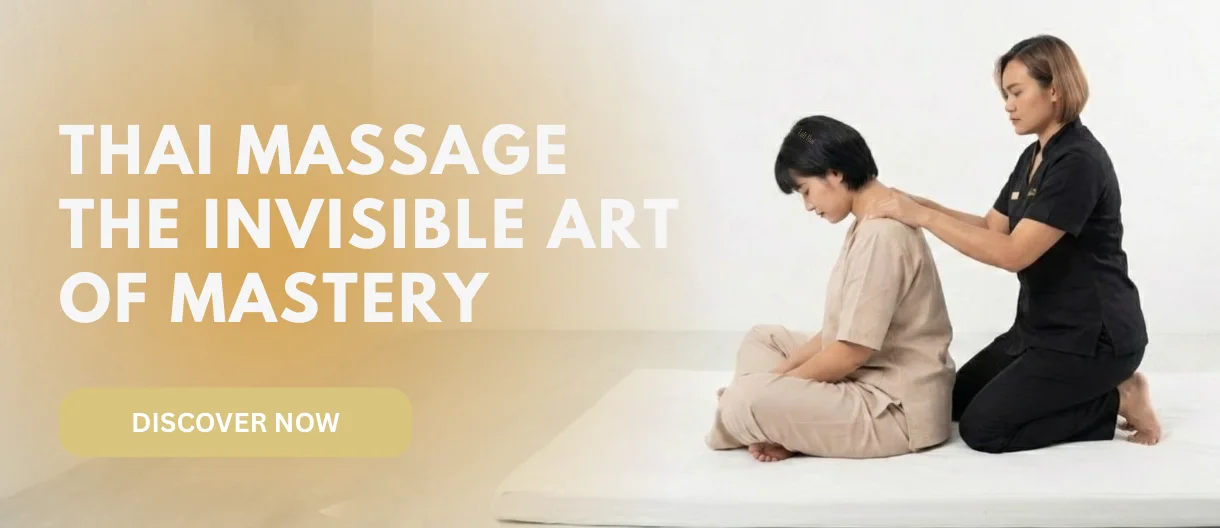
How Education and Heritage Power the World of Loft Thai Spa
In the competitive landscape of luxury wellness, where every establishment promises tranquility and rejuvenation, true distinction is rarely a matter of chance. It is easy to construct a beautiful room, to light scented candles, and to play soft music that…
Read the guide
What Makes Authentic Thai Massage Different from Spa Massage?
People often say “I want a Thai massage,” but what they actually mean can be very different.
Read the guide
Bangkok Spa Etiquette: Tipping, What to Wear, What to Say to Get the Pressure You Want in 2026
Booking a spa in Bangkok should feel exciting—not confusing. But if it’s your first time Thai massage or oil massage, it’s normal to wonder about the unspoken rules. Do you tip? How much? What do you wear? Do you keep underwear on? And how do you ask for the…
Read the guide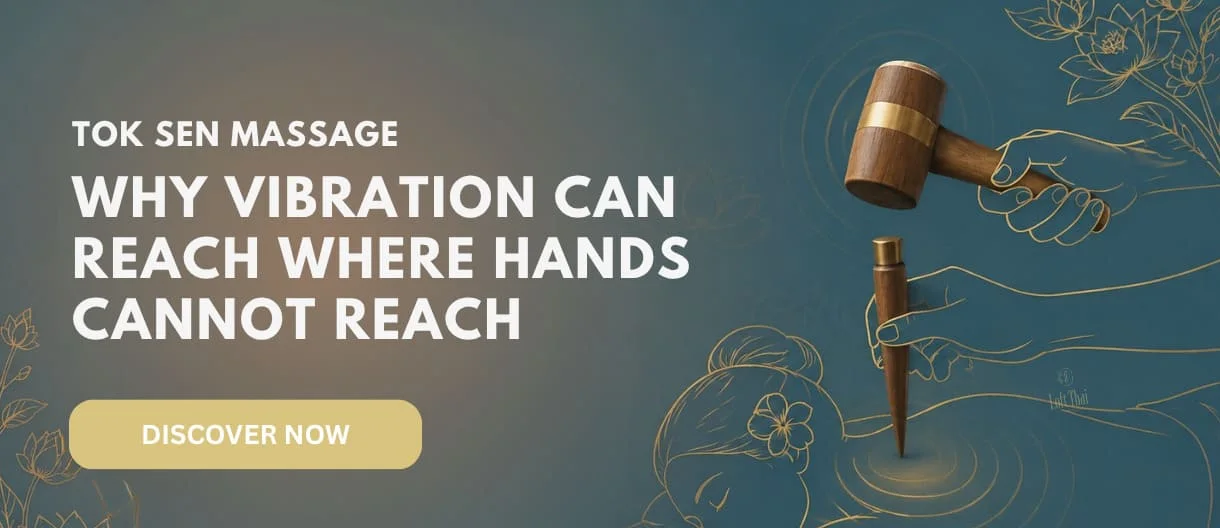
Tok Sen Massage for Deep Tension: Why Vibration Can Reach Where Hands Cannot
Deep muscle tension is often misunderstood. Many people imagine that a tight shoulder, a stiff lower back, or a heavy neck can only be solved by stronger pressure, deeper elbows, or longer massage sessions. While deep pressure can be useful when applied…
Read the guide