
How Thai massage stimulates circulation, relieves blockages, and balances body energy—an educational deep dive for health-conscious, well-traveled spa guests.
Where Tradition Meets Physiology
Thai massage—Nuad Boran—is often described as “lazy yoga,” a graceful choreography of stretches, compressions, and acupressure performed on a comfortable mat. Beneath the elegant ritual lies a robust body of traditional knowledge: sen—the energy pathways said to weave through the body—and lom (vital wind or breath) moving along those lines to nourish tissues and keep us in balance. While the vocabulary of Thai healing comes from a different era and culture, the practice maps remarkably well onto modern concepts in anatomy, physiology, and neuroscience: myofascial chains, mechanotransduction, circulatory and lymphatic dynamics, autonomic regulation, and the pain-modulation systems that influence how we feel and function.
This comprehensive guide bridges tradition and science. You’ll learn what sen lines are in classical Thai theory, how pressure points are used, and—critically—what contemporary research suggests is happening in the body when skilled therapists work along those lines. The goal is not to “medicalize” an ancient art, but to illuminate why a Thai massage can leave you limber, clear-headed, and deeply restored.
Understanding Sen: The Traditional Map

What are Sen Lines?
In Thai traditional medicine, sen are channels through which life force (lom) flows. Historical medical manuscripts and temple murals (notably at Wat Pho in Bangkok) depict ten primary sen commonly treated in clinical practice. These ten are often emphasized because working them is considered sufficient to influence the entire body. Though listings vary by lineage, commonly taught lines include:
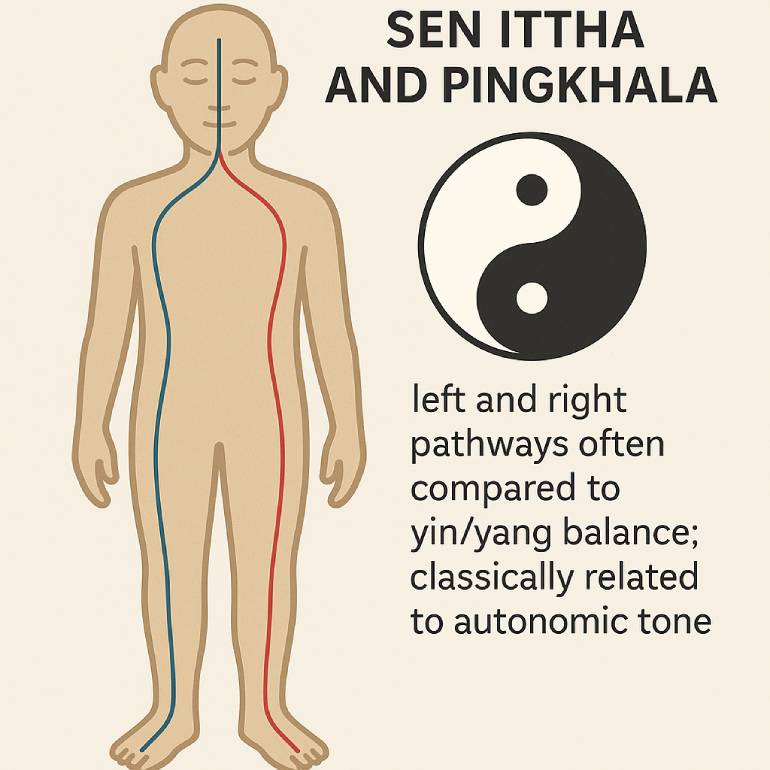
- Sen Ittha and Pingkhala: left and right pathways often compared to yin/yang balance; classically related to autonomic tone.
- Sen Sumana (Sushumna): a central midline pathway associated with deep balance and posture.
- Sen Kalathari (outer/inner): lateral lines affecting limbs and trunk mobility.
- Sen Sahatsarangsi and Thawari: anterior pathways associated with visceral and respiratory balance.
- Sen Lawusang and Ulangka: posterior lines influencing spinal and hip dynamics.
Each sen features junctions and nodes—functionally similar to acupressure points—where gentle sustained compression can “clear blockages,” calm the nervous system, or invigorate circulation.
Why Pressure Points?
In Thai practice, pressure points are entryways to influence sen. A point might feel tender, “full,” or exquisitely relieving when pressed, indicating local congestion or neural sensitivity. Stimulating these points is said to restore flow. From a modern perspective, these are often places where superficial nerves perforate fascia, where musculotendinous junctions live, or where fascial septa concentrate mechanoreceptors—areas primed to affect both local tissue tone and central pain processing.
The Session Experience
A classical Thai massage progresses along sen with a rhythmic cadence: palming, thumb presses, forearm rolling, gentle stretches, rocking, and traction. The therapist tunes pressure to the client’s breath, using body weight rather than muscular force. The experience should feel firm yet comfortable, cyclic, and meditative—more like listening to the body than forcing it.
Modern Science Beneath the Tradition
Mechanotransduction: How Pressure Changes Tissues
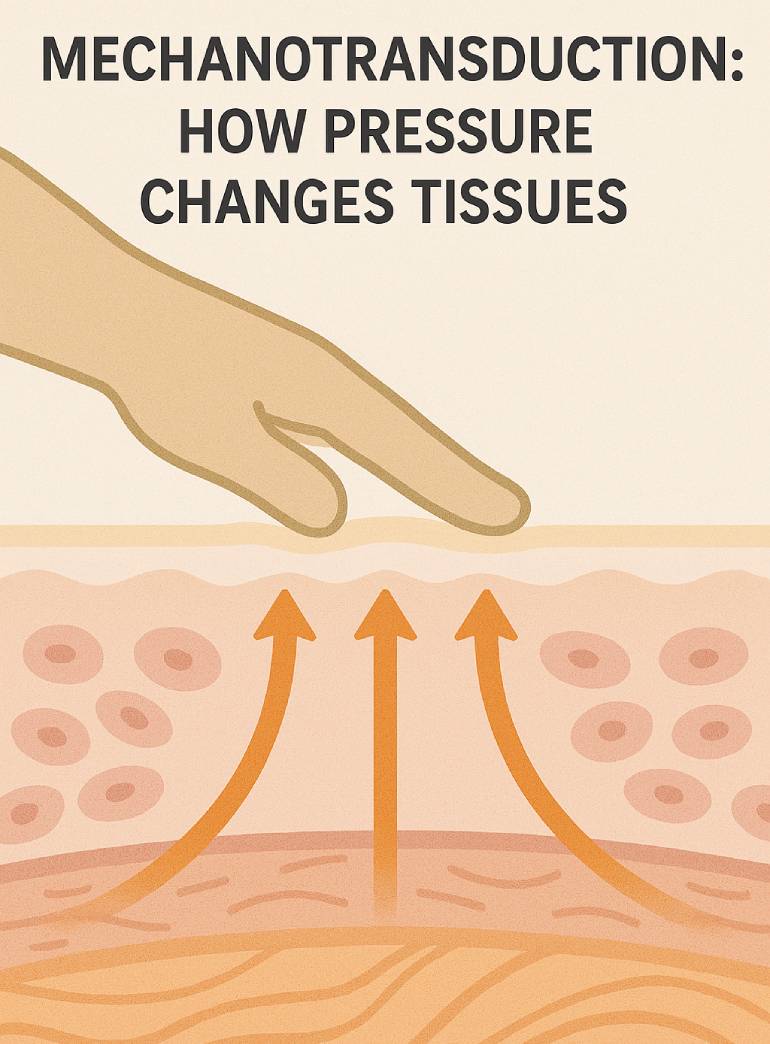
Your body is a living fabric of cells embedded in extracellular matrix (ECM) and fascia. When a therapist compresses or stretches along a sen line, they deform that fabric. Cells sense this mechanical input and convert it into biochemical signals—a process called mechanotransduction. The results can include:
- Short-term relaxation of hypertonic muscle via Golgi tendon organ and muscle spindle reflexes.
- Improved tissue gliding as hyaluronan in fascia becomes less viscous with warmth and movement.
- Altered fibroblast activity, potentially leading to better collagen alignment and reduced stiffness over time.
- Nitric oxide (NO) release in vascular endothelium with light shear and pressure, supporting microcirculation.
Think of pressure along sen as a way of “talking” to the body’s fabric, improving its hydration, glide, and neuromuscular coordination.
Circulation and Lymph: Moving the Inner Rivers
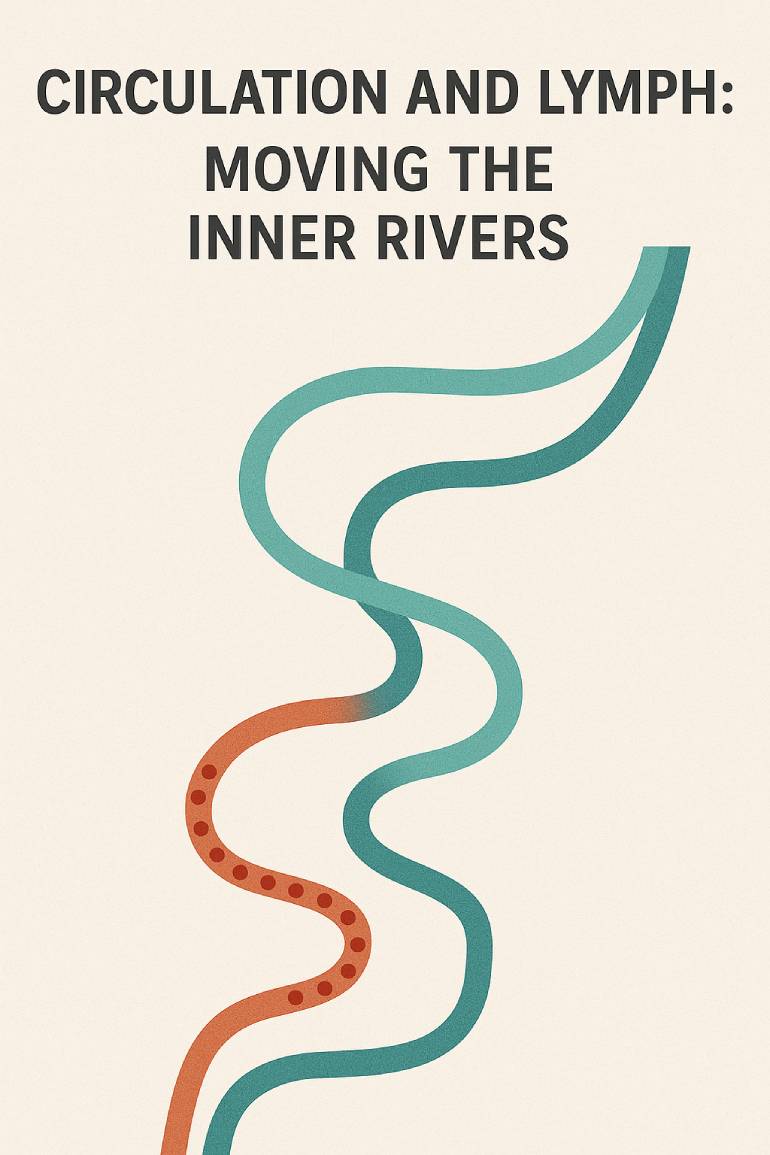
Thai massage is famous for its dynamic compressions and rhythmic rocking, which behave like a mechanical pump:
- Venous return: Intermittent pressure, followed by release, promotes blood returning to the heart through one-way venous valves, especially in the lower limbs.
- Microcirculation: Compression enhances the arteriovenous pressure gradient, and subsequent reperfusion delivers oxygen and carries away metabolites.
- Lymphatic flow: Gentle, proximal-to-distal (and then back to proximal) sequences mirror principles of manual lymphatic drainage. Because lymph vessels are pressure-sensitive and rely on tissue movement, the wave-like cadence of Thai techniques can support decongestion.
Clients often report warmth, lightness, and reduced puffiness after sessions—felt evidence of fluid dynamics in action.
Fascia and Myofascial Chains: The Western Cousins of Sen
Research on myofascial meridians (e.g., the Superficial Back Line, Lateral Line, Spiral Line) shows the body’s connective tissue forms continuous chains that transmit tension and movement across distant regions. This modern map parallels the sen concept: pressing or stretching one area changes tone and motion in another. When a therapist follows sen with global stretches—hip openers, spinal twists, shoulder releases—they’re functionally mobilizing entire chains, harmonizing posture and movement far beyond the local point of contact.
Nervous System Regulation: Vagal Tone, Stress, and Sleep

The autonomic nervous system (ANS) determines whether we’re in “fight/flight” or “rest/digest.” Thai massage’s slow rhythm, breath-paced pressure, and mindful pacing favor a parasympathetic shift:
- Vagal stimulation: Gentle pressure on the abdomen, diaphragm work through breathing cues, and neck/cranial holds can promote vagal activity, associated with calmer heart rate variability (HRV) patterns, improved digestion, and deeper sleep.
- Baroreflex engagement: Gradual compressions across the torso and neck modulate baroreceptors (pressure sensors), helping recalibrate blood-pressure responses and a sense of internal steadiness.
- Pain gate control: Non-noxious pressure activates A-beta fibers that inhibit nociception at the spinal cord level, reducing the perception of pain during and after the session.
Together, these mechanisms explain why a Thai massage often leaves you alert yet calm, with mental clarity and a grounded sense of ease.
Pain Science: Rewriting Threat
Chronic pain often involves central sensitization—an amplified perception of threat. Predictable, skilled touch and graded pressure along tender points sends the nervous system a different message: this input is safe. Over time, repeated sessions can reduce protective guarding, allowing movement to become smoother and less effortful. That’s the neurobiological translation of “clearing a blockage.”
The Practice: How Therapists Use Sen and Points
Assessment: Reading the Lines
Before working, an expert therapist performs a listening scan: observing posture, gait, breath, and tissue quality. Palpation identifies tension knots, ropey bands, cool or puffy areas, and points that “speak” under the thumb. Clients might report referred sensations: a press in the calf felt in the lower back—classic evidence of chain connectivity.
Pressure Dosing: Just Right, Never Forced
Quality Thai massage uses the therapist’s body weight, not brute force. Pressure is introduced on the exhale, held long enough for tissues to yield (usually 8–20 seconds on a point), then released slowly to allow reperfusion. Three guiding principles:
- Pressure should be sensitive, not painful. The aim is deep relief, not overload.
- Work proximal to distal and back. Clear central “dams” (hips, abdomen, thorax) before distal limbs, then re-integrate toward the core.
- Move in rhythms. The nervous system entrains to rhythm; rockings and oscillations convince guarded tissues to let go.
Stretch Sequencing: Opening Gates Along a Line
Passive stretches are threaded between point work to lengthen chains while tissues are warm and responsive. Examples:
- Hip opener with Sen Kalathari: After pressing lateral thigh points, the therapist guides the client’s leg into external rotation and abduction, releasing iliotibial and gluteal lines.
- Spinal twist along Sen Sumana: Rhythmic thoracic rotations after abdominal and diaphragm work decompress the midline and improve breath mechanics.
- Shoulder spiral: Following pec minor and biceps points, a gentle arm spiral mobilizes the anterior line and frees cervical motion.
Breath as a Conductor
Clients are invited to sync pressure with breath. Exhales accompany deeper compressions; inhales ride the stretch’s crest. This entrainment improves tissue oxygenation, refines parasympathetic tone, and gives clients a sense of active participation rather than passive receiving.
What Gets Better and Why
Mobility and Posture
By addressing myofascial restriction along sen, Thai massage often delivers immediate improvements in hip extension, thoracic rotation, ankle dorsiflexion, and shoulder abduction—the building blocks of easy gait and upright posture. Better glide between fascial layers means less “drag” on movement, which translates into a freer, lighter body.
Circulatory Vitality
Post-session, many notice warmer extremities, reduced swelling, and a soft flush across the face. Mechanistically, intermittent compression encourages venous and lymphatic return, while reperfusion phases restore capillary exchange in muscles that were previously tight or ischemic.
Recovery and Performance
For active travelers, athletes, and desk-bound professionals alike, Thai massage can shorten recovery time by easing delayed onset muscle soreness (DOMS), improving range of motion, and optimizing motor patterns. When tissues move well, the brain can re-map efficient patterns and reduce compensations that cause recurring tightness.
Mental Clarity and Sleep
Clients frequently report clearer focus and deeper sleep following sessions. These outcomes are consistent with a parasympathetic tilt, improved HRV, and a quieter pain system—internal signals that the body is safe enough to repair, digest, and restore.
Safety, Adaptation, and Personalization
When to Be Cautious
Thai massage is highly adaptable, but there are contraindications and red flags that call for modification or medical clearance:
- Acute inflammation, fever, or infection
- Recent surgery, fractures, or severe osteoporosis
- Uncontrolled hypertension or cardiovascular instability
- Deep vein thrombosis, active cancer, or lymphedema (unless cleared and specialized protocols are used)
- Pregnancy: Thai techniques can be wonderfully supportive with appropriately trained therapists, but certain points and supine/prone durations must be modified.
- Neuropathy or loss of protective sensation: Pressure should be conservative and monitored.
A skilled therapist will screen, ask about medications (e.g., anticoagulants), and tailor both pressure and positioning to the guest’s needs.
Cultural Respect, Clinical Rigor
Honoring sen theory doesn’t require abandoning science. The most effective approach blends respect for lineage with critical thinking: using traditional maps to guide focus, and modern evidence to refine dosage, sequencing, and safety. This synthesis gives guests both the authenticity they seek and the confidence that care is grounded in contemporary best practices.
A Traveler’s Guide to Getting the Most from Thai Massage
Before Your Session
- Hydrate, but avoid heavy meals 1–2 hours prior.
- Wear flexible clothing; Thai massage is often clothed to enable stretching and movement.
- Share goals and concerns: jet lag, lower back stiffness, headaches, or sleep issues.
- Mention medical history, recent injuries, and activity levels.
During Your Session
- Communicate pressure: a “7 out of 10 good pressure” is a helpful target—intense but never bracing.
- Breathe with the rhythm: allow exhales to soften into compressions; let inhales buoy the stretch.
- Notice referred sensations: tingles along a limb or release in a distant area are signs that chains are connecting.
After Your Session
- Sip water or herbal tea to support fluid dynamics.
- Enjoy a gentle walk or easy mobility sequence later that day to consolidate new ranges.
- Sleep: many guests find they drift off more easily—let it happen.
- Plan a series if you’re working on chronic patterns. Complex postural restrictions often unwind layer by layer.
Spotlight on Key Sen Lines and Example Sequences
The following is an educational overview, not a substitute for formal training. Skilled application depends on anatomy knowledge, palpation skill, and client feedback.
Sen Ittha & Sen Pingkhala (Left & Right Autonomic Balance)
Primary aims: calm stress reactivity, ease neck/shoulder tightness, integrate breath and posture.
Approach:
- Breath priming with hand over abdomen and chest, syncing to slow exhales.
- Neck and upper thorax points: gentle compressions along scalenes, SCM borders, and the upper trapezius—careful, mindful, never on carotid.
- Anterior shoulder spiral: pec minor/bicipital groove points followed by arm spirals and scapular glides.
Expected effect: a “neck grows taller” feeling, easy nasal breathing, less jaw clench.
Sen Sumana (Central Midline)
Primary aims: midline stability, diaphragmatic ease, digestion support.
Approach:
- Abdominal decompress: hand-over-hand, low-pressure circles; diaphragm release with breath cueing.
- Thoracic rhythm: gentle thoracic mobilizations, then supported spinal twist.
- Hip-to-rib connection: psoas-adjacent and iliacus edges via soft indirect holds, never forceful.
Expected effect: openness in the front body, deeper breaths, calmer heart rhythm.
Sen Kalathari (Lateral Lines)
Primary aims: gait efficiency, IT band tension relief, hip/shoulder lateral balance.
Approach:
- Lateral leg palming from greater trochanter to lateral malleolus, then slow thumb points at tender nodes along vastus lateralis and peroneals.
- Side-lying hip opener with cradle and external rotation; lateral rib glides for intercostal release.
- Neck-shoulder lateral decompression to finish the chain.
Expected effect: freer hip extension, lighter stride, reduced “band” tightness.
Sen Sahatsarangsi & Thawari (Anterior Lines)
Primary aims: breathing, shoulder protraction relief, core-shoulder synergy.
Approach:
- Upper abdominal wave and sternal decompression (subtle!) in sync with slow exhale counts.
- Pectoral and anterior deltoid points followed by gentle shoulder abduction and ER stretches.
- Arm line continuities down to wrist flexors/extensors for carpal comfort.
Expected effect: chest spaciousness, reduced rounded-shoulder posture, easier overhead reach.
Sen Lawusang & Ulangka (Posterior Lines)
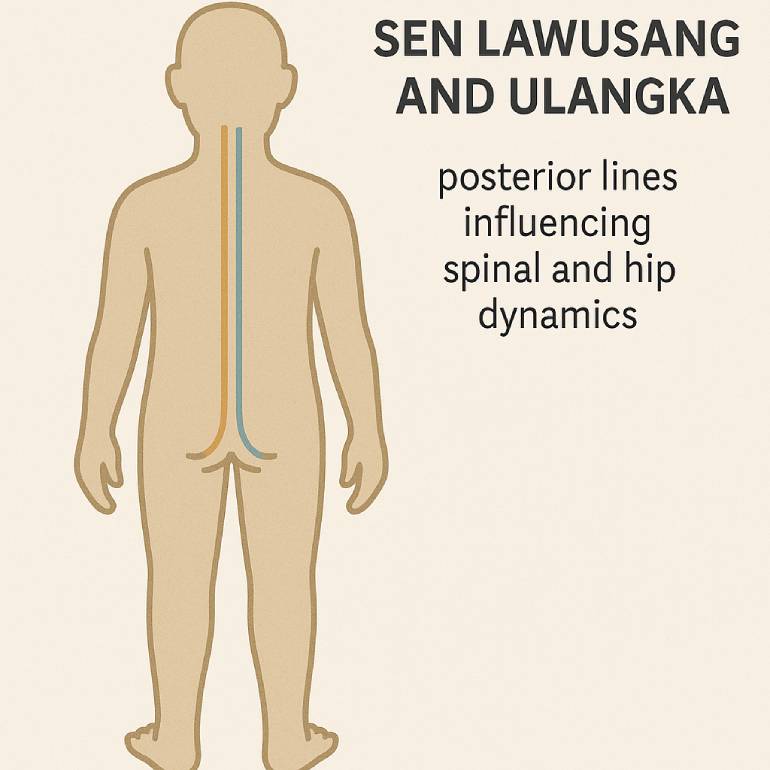
Primary aims: spinal comfort, hamstring/calf mobility, posterior chain balance.
Approach:
- Foot and plantar points (great for jet lag), then calf compressions and soleus “pump.”
- Hamstring sweeps with sustained points at proximal tendinous junctions.
- Paraspinal rhythm and sacral rock, finishing with a gentle prone backbend or child’s-pose-like fold.
Expected effect: long back line, reduced low-back tension, springier ankles.
Frequently Asked (Evidence-Aware) Questions
Are Sen Lines “Real”?
If “real” means histologically identical tubes, then no; sen are functional maps. But if “real” means reproducible effects along predictable pathways that correlate with fascial continuities, nerve perforations, and vascular highways, then yes—their usefulness is borne out daily in practice and increasingly aligns with what fascia science and neurophysiology observe.
Is Relief Just Placebo?
Placebo is not “nothing”—it’s the brain’s capacity to modulate symptoms based on context and expectation. Thai massage leverages context (ritual, breath), skilled touch (mechanotransduction, fluid shifts), and graded exposure (safe pressure) to produce tangible, durable changes. Placebo might be a slice of the pie, but biomechanics and neurophysiology clearly contribute.
How Long Do Benefits Last?
Immediate gains in range of motion and calm are common. With a series of sessions—and supportive home movement, sleep, and hydration—improvements consolidate. Chronic patterns often reflect years of adaptation; expect meaningful change over weeks, not just a one-off miracle.
For Health-Conscious, Well-Traveled Guests: Why Thai Massage Belongs in Your Routine
You manage jet lag, long flights, demanding schedules, and high cognitive loads. Thai massage offers a systems-level reset:
- Posture and mobility: Counteracts sitting, restores hip extension and thoracic rotation for pain-free movement.
- Circulatory refresh: Eases heaviness in legs and ankles; boosts microcirculation after flights.
- Stress regulation: Entrains the nervous system toward rest-and-digest, improving sleep and digestion.
- Head-to-toe integration: Treats the body as a single tensegrity unit, not isolated parts.
In short: Thai massage is not merely indulgence. It’s a strategic recovery tool that respects tradition and resonates with modern science.
Part X — Practical Tips to Extend the Benefits
- Hydrate and mineralize: Electrolyte-rich fluids can sustain better fascial hydration and nerve function.
- Ten minutes of daily mobility: Cat-camel, thoracic rotation, hip capsule circles, ankle rocks—cement new ranges.
- Breathwork: 5–10 minutes of slow nasal breathing (e.g., 4-second inhale, 6-second exhale) maintains vagal tone.
- Light walking the evening after a session: promotes lymph and venous return without overloading tissues.
- Sleep: Aim for a calm pre-sleep routine; Thai massage days are perfect for early lights-out.
One Body, Many Languages
Thai massage speaks two fluent languages at once. One is ancient: sen, lom, balance. The other is modern: fascia, mechanotransduction, autonomic regulation, fluid dynamics. Both describe the same lived experience—a body that feels open, coherent, and alive.
When a skilled therapist follows sen with thoughtful pressure and rhythmic stretches, they’re not chasing magic. They’re using a time-tested map to nudge complex biological systems toward circulatory vitality, neuromuscular harmony, and a calmer mind. For the discerning, health-conscious traveler, Thai massage offers more than relaxation: it’s a whole-system tune-up—culturally rich, scientifically resonant, and exquisitely human.
UPDATED LOFT THAI GUIDE
Additional guidance and current information
The following editorial update expands on the original Loft Thai article with practical context, current treatment guidance and further reading.
Two Maps, Two Kinds of Knowledge
Traditional Thai medicine describes the body through elements, wind and Sen pathways. Modern biomedicine describes tissues, nerves, blood vessels, joints and physiological processes.
These systems developed for different purposes and should not be forced into a one-to-one translation. Calling a Sen line “the sciatic nerve” or “the fascia train” may sound modern while overstating what has been demonstrated.
Practitioners can use traditional sequencing and terminology while still screening with contemporary anatomy and safety knowledge.
What Traditional Sources Say About Sen
The World Health Organization’s benchmarks for training in Nuad Thai therapy describe a traditional model of 72,000 Sen lines, with ten principal lines known as Sen Sib.
Within that model, wind or energy is believed to move along the lines, and obstruction is associated with symptoms. Pressure and other Nuad Thai methods are used traditionally to address those patterns.
The word believed matters. The benchmark records the theory used within Thai traditional medicine; it does not establish that 72,000 discrete structures have been identified anatomically.
Why Sen Matters Culturally
UNESCO’s description of Nuad Thai includes Sen as part of the knowledge system carried by practitioners and communities. It also places massage within Thai traditional healthcare and a history of household and village care.
Learning the map can help students understand how traditional sequences are organised, how teachers describe relationships across body regions and why treatment is often whole-body.
UNESCO recognition safeguards a living cultural element. It does not turn every traditional explanation into a biomedical mechanism or validate every commercial claim.
What Pressure Contacts Physically
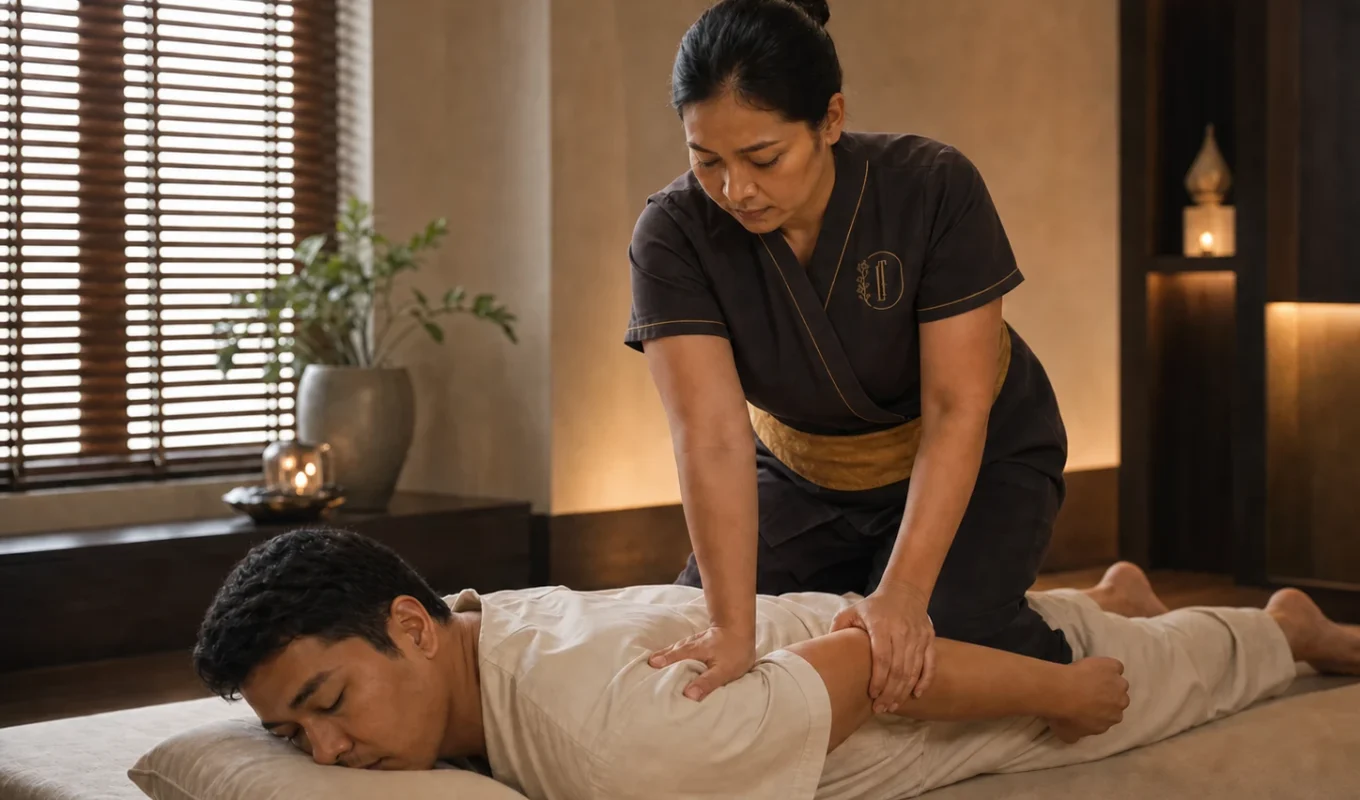
Hands, thumbs, forearms, elbows, knees and feet apply force through skin and other soft tissue. The effect depends on location, direction, surface area, speed, duration, body position and the guest’s condition.
Assisted movement also changes joint position and lengthens or loads tissues within a range. Sensory input from touch and movement is processed by the peripheral and central nervous systems.
Those observable interactions are enough to explain why pressure and stretching feel different. They do not prove that a specific point opens an organ channel, releases toxins or permanently changes fascia.
A Pressure Point Is Not a Universal Button
A therapist may return to areas of tenderness, muscle tone or traditional significance. But the same point can feel neutral to one person and sharply sensitive to another.
Pressure should be exploratory and adjustable, not a fixed dose. Pain intensity does not reveal the size of a blockage and does not predict a better result.
Avoid direct pressure over acute injury, infection, open wounds, prominent vessels, unstable joints or any area excluded by training and screening.
What Thai Massage Research Can Establish
Research evaluates defined treatments and outcomes, not the existence of Sen as anatomical structures. Small trials have examined pain, flexibility, muscle activity and short-term symptoms.
A 2015 systematic review found only six controlled studies of traditional Thai massage for chronic pain and called for more research on mediators, moderators and long-term effects. The small and varied evidence base limits broad conclusions.
An exploratory study comparing three Thai massage methods included 30 healthy female office workers. Some measures changed, but that design cannot prove the Sen map or generalise to all clients and conditions.
Modern Mechanism Claims Also Need Restraint
Manual therapies may influence sensory processing, perceived tension, movement and short-term autonomic measures. The size and clinical importance of those effects remain uncertain.
An overview of systematic reviews found inconsistent autonomic findings and could not determine a reliable effect by body region. This weakens claims that pressing one Sen line predictably activates a specific organ or nervous-system response.
A guest can experience relaxation or easier movement without the therapist needing to claim a precise hormonal, neurological or circulatory mechanism.
How a Responsible Therapist Uses the Map
The therapist begins with consultation, observes movement and positions the guest safely. Traditional line work then provides a sequence, while anatomy and live feedback guide depth and adaptation.
Technique can include broad palm compression before more focused pressure, supported limb movement and work across related regions rather than only the painful spot.
The therapist should be able to explain what will happen in ordinary language and stop if symptoms change.
-
01
Screen
Identify health factors, current symptoms and areas requiring avoidance or referral.
-
02
Position
Support joints and choose a stable posture for both guest and therapist.
-
03
Contact broadly
Begin with controlled surface area and assess tissue and comfort response.
-
04
Refine
Add focused pressure or movement only when the response remains appropriate.
-
05
Reassess
Check comfort and function rather than assuming a line has been opened.

Nuad Thai for Health Is Not the Same as Therapy
The WHO benchmark distinguishes Nuad Thai for health promotion from Nuad Thai therapy. The latter involves symptom-oriented care within Thai traditional medicine and requires a different professional context.
A consumer spa treatment should not be advertised as diagnosis or rehabilitation simply because it uses Sen terminology.
Guests with significant or persistent symptoms should seek assessment from an appropriately qualified healthcare professional and disclose any care plan before massage.
When Pressure-Point Work Needs Extra Caution
Seek individual advice for recent surgery, fracture risk, bleeding disorders or anticoagulants, blood-clot history, pregnancy complications, cancer treatment, acute neurological symptoms or unstable medical conditions.
Stop for sharp or radiating pain, new numbness, weakness, dizziness, breathing difficulty or any feeling of threat. Deep pressure is not appropriate everywhere.
NCCIH advises asking about a therapist’s training and not using massage to postpone medical care.
Questions Worth Asking
Ask the therapist how Sen work changes the sequence, which pressure levels are available and how the treatment will be adapted to your history.
A credible answer may include tradition, landmarks and observation. It should not require belief in guaranteed detoxification, organ repair or permanent energy correction.
- Is this a health-promotion massage or licensed therapeutic care?
- Which areas and movements will the session include?
- How can I request less pressure or skip a technique?
- What conditions or medications would change the plan?
- What result can reasonably be assessed after one session?
Respect Does Not Require False Equivalence
Sen lines remain an important language of Nuad Thai transmission and identity. Modern anatomy offers another language for structure, risk and observable response.
The most credible practice neither dismisses tradition nor labels it proven science. It uses both maps within their limits and puts the guest’s safety first.
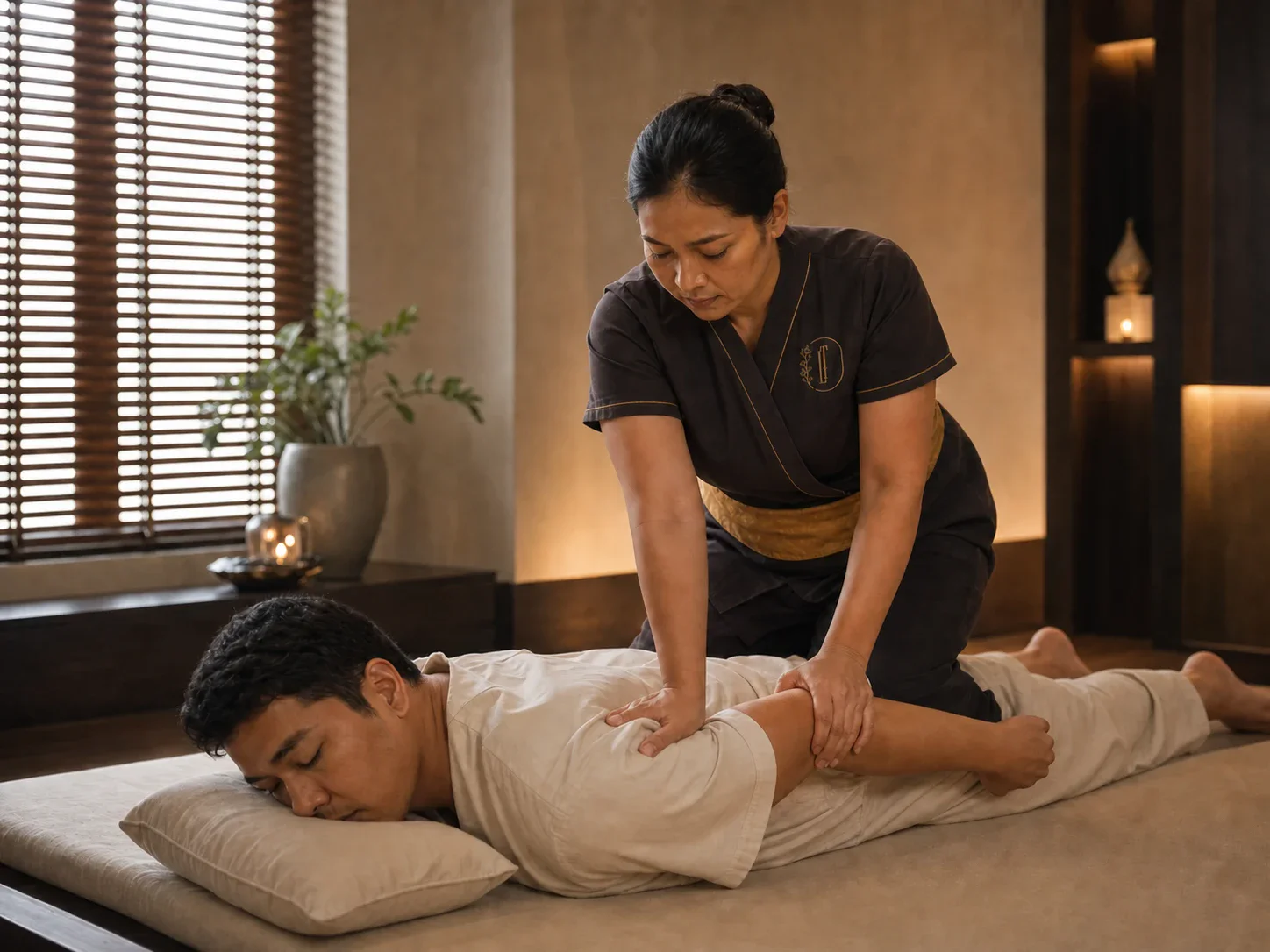
“Sen is a traditional clinical language; anatomy is a different map. A skilled therapist can work respectfully with both.”
Loft Thai Editorial Team
Continue your research
REFERENCES
Sources & further reading
PRACTICAL GUIDANCE
Frequently Asked Questions
Are Sen lines the same as nerves or fascia?
No direct one-to-one anatomical equivalence has been established. Sen belongs to a traditional Thai medical model, while nerves and fascia are biomedical structures.
How many Sen lines are there?
Traditional sources describe 72,000 lines and ten principal Sen Sib. This is part of the traditional theory, not an anatomical count.
Can pressure points unblock energy?
That is the traditional explanation. Modern research can measure outcomes such as pain or movement, but it has not verified invisible blockages as anatomical entities.
Should Thai massage hurt?
No. Intensity should be adjustable. Sharp, radiating, electrical or worsening pain is a reason to stop and communicate.
Is Nuad Thai therapy the same as spa Thai massage?
No. WHO benchmarks distinguish health-promotion massage from symptom-oriented Nuad Thai therapy within a professional traditional-medicine context.
CONTINUE READING
Related stories
The History and Heritage of Thai Massage
Exploring its Roots in Ayurvedic Medicine, Buddhist Traditions, and the Healing Legacy of Jivaka Kumar Bhaccha
Read the guide
The Art of Authentic Thai Massage: A Holistic Journey of Healing
In the heart of Bangkok, where tradition meets modern sophistication, the art of Thai massage continues to thrive — not merely as a spa treatment, but as a cultural treasure and holistic wellness philosophy that has endured for over 2,500 years. Today, Thai…
Read the guide
How to Become the Best Therapist in Thailand
Thailand is known around the world as the Land of Smiles—but for those who work in wellness, it’s also the Land of Healing. From ancient temples to modern spa sanctuaries, massage therapy in Thailand is not just a job; it is an art, a philosophy, and a…
Read the guide
Tok Sen Massage for Deep Tension: Why Vibration Can Reach Where Hands Cannot
Deep muscle tension is often misunderstood. Many people imagine that a tight shoulder, a stiff lower back, or a heavy neck can only be solved by stronger pressure, deeper elbows, or longer massage sessions. While deep pressure can be useful when applied…
Read the guide