Thai massage is a traditional healing practice in Thailand that has been passed down through generations. It is a one-of-a-kind combination of acupressure, yoga-like stretching, and meditation designed to balance the body, mind, and spirit. At Loft Thai Spa, we take pride in incorporating this ancient practice into our treatments because it provides our clients with not only physical benefits but also cultural and historical significance.
The history and cultural significance of Thai massage
Thai massage is based on Ayurvedic medicine, an ancient Indian healing system. Jivaka Kumar Bhaccha, a physician and friend of the Buddha, is thought to have invented it over 2,500 years ago. The practice spread throughout Southeast Asia before arriving in Thailand, where it became ingrained in the culture and was passed down through generations of healers.
Thai massage is distinguished by its emphasis on energy lines, also known as sen lines. These lines are thought to run throughout the body, connecting all of the major organs and systems. Gentle pressure and stretching techniques along these lines are used by practitioners to release blockages and improve the flow of energy throughout the body. This promotes healing and helps to balance the body.
The benefits of traditional Thai massage at Loft Thai Spa
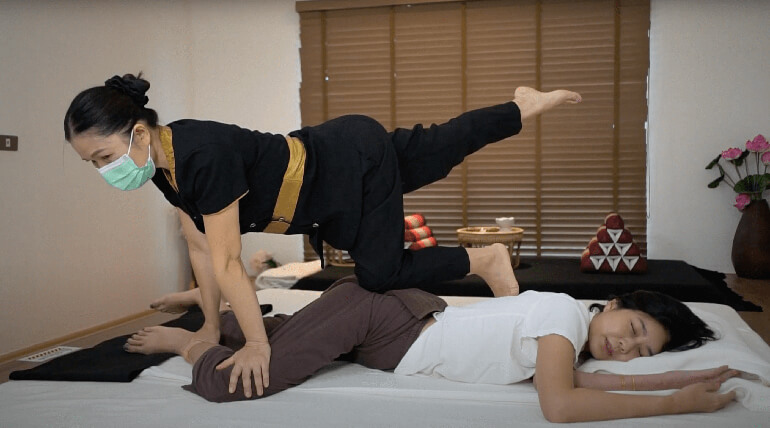
Traditional Thai massage techniques are incorporated into our treatments at Loft Thai Spa to provide our clients with the full benefits of this ancient practice. Our trained therapists use gentle pressure and stretching to relieve tension and improve energy flow. The massage is given while the client is fully clothed on a comfortable mat on the floor.
Thai massage has a calming effect on the mind and spirit in addition to the physical benefits of improved flexibility, increased circulation, and reduced stress. Meditation is incorporated into the massage, with the therapist guiding the client through deep breathing and visualization techniques. This aids in stress reduction, mental clarity, and overall well-being.
The unique aspect of Thai massage and its focus on energy lines
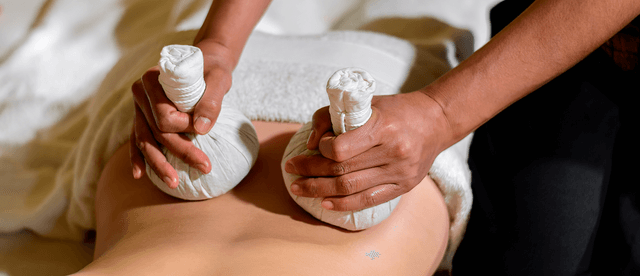
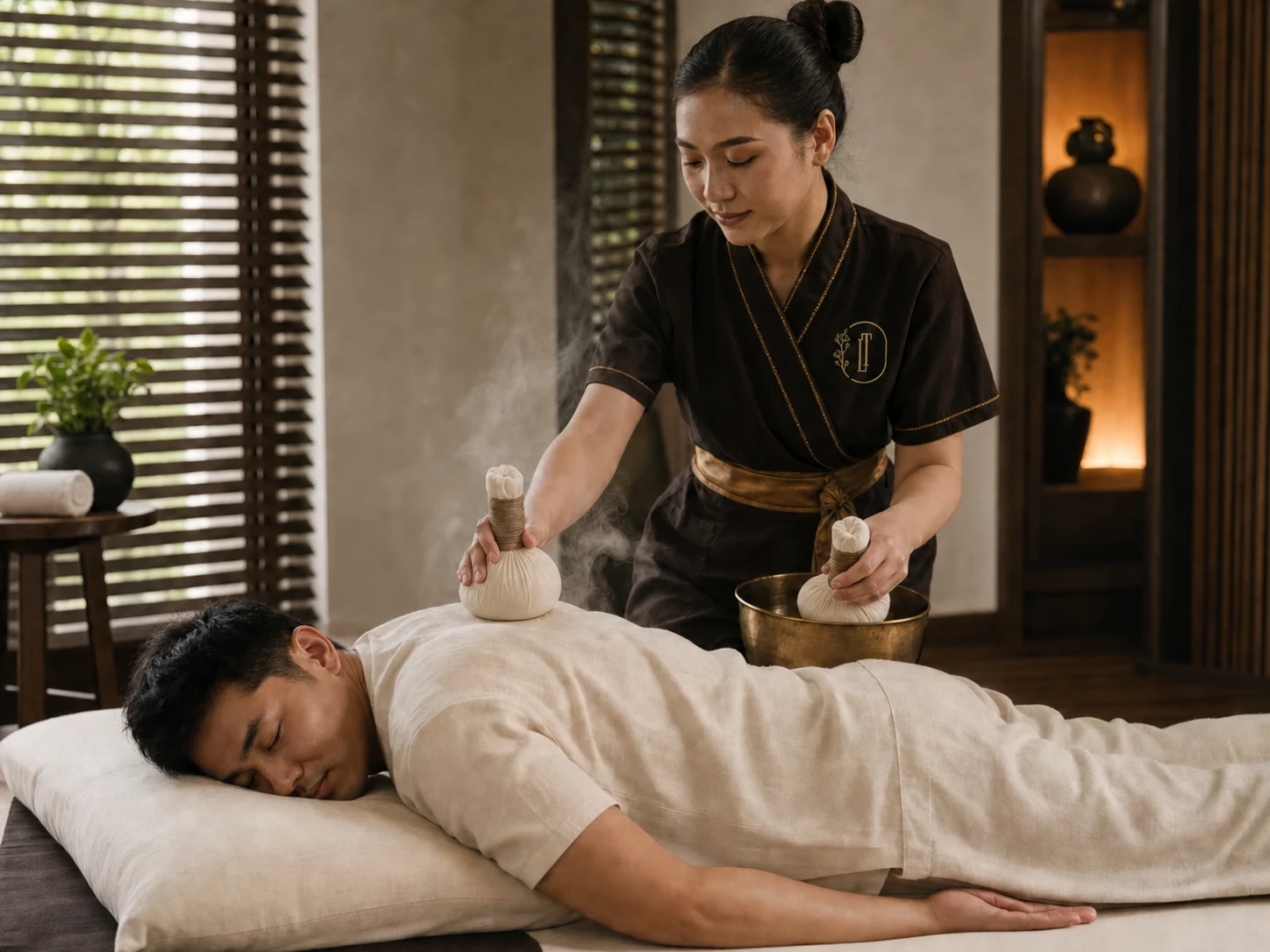
Traditional Thai herbal massage treatments are also available at Loft Thai Spa. This massage employs a warm compress infused with traditional Thai herbs such as lemongrass, kaffir lime, and turmeric. These herbs have healing properties and are used to relieve muscle pain, improve circulation, and promote relaxation.
Furthermore, Thai massage benefits not only the body but also the mind and spirit. It is also an excellent way to learn about Thailand's culture and history, as well as a peaceful and ancient art form that benefits both the client and the practitioner.
Finally, Thai massage is a traditional healing practice in Thailand that has been passed down through generations. It is a one-of-a-kind combination of acupressure, yoga-like stretching, and meditation designed to balance the body, mind, and spirit. To provide our clients with the full benefits of this ancient practice, we incorporate traditional Thai massage techniques as well as Thai herbal massage treatments into our treatments at Loft Thai Spa. It not only provides physical benefits, but it also has cultural and historical significance.
UPDATED LOFT THAI GUIDE
Additional guidance and current information
The following editorial update expands on the original Loft Thai article with practical context, current treatment guidance and further reading.
Nuad Thai Is Living Heritage
UNESCO describes Nuad Thai as part of the art, science and culture of traditional Thai healthcare.
The inscription concerns knowledge, skills, practices and cultural meaning carried by communities in Thailand.
It does not turn every spa, technique, energy explanation or commercial claim into UNESCO-certified practice.
What the 2019 UNESCO Inscription Means
Nuad Thai was inscribed in 2019 on the Representative List of the Intangible Cultural Heritage of Humanity.
Representative-list status raises visibility and supports safeguarding, documentation and transmission.
It is not a ranking of individual therapists, schools or Bangkok spas.
The History Is Not a Single Straight Line
Thai massage has been shaped by local self-care, traditional medicine, religious and community settings, family transmission, teachers and public education.
Regional exchange and later professionalisation also influenced how the practice is described and taught.
A precise history therefore distinguishes documented institutions from stories that express lineage or reverence.
Treat the Jivaka Story as Cultural Lineage
Jivaka Komarabhacca is honoured in many Thai healing traditions and is often presented as a founding physician.
The archived article stated that he invented Thai massage 2,500 years ago, a much more specific claim than the available historical record can establish.
A respectful account can acknowledge the cultural figure without turning tradition into a verifiable single-inventor biography.
Wat Pho Helped Make Knowledge Public
UNESCO's Nuad Thai material identifies sen diagrams among the stone inscriptions displayed at Wat Pho from the reign of King Rama III.
The inscriptions are an important public record within a much wider living practice.
They should be studied as historical and cultural sources, not read as modern anatomical imaging.
Sen Lines Are a Traditional Explanatory Framework
Sen organise touch, movement and traditional reasoning within Nuad Thai.
They are not established as physical tubes that can be equated directly with nerves, blood vessels, fascia or meridians.
A therapist can explain the traditional framework while discussing pressure, joints, range and precautions in ordinary anatomical language.
Knowledge Moves From Teacher to Learner
UNESCO describes transmission through families, practitioners, associations, educational establishments and health services.
Practical learning depends on observation, supervised repetition, feedback, body mechanics and the ability to adapt.
A short demonstration or inherited sequence is not the same as competent independent practice.
Modern Institutions Also Shaped the Tradition
The UNESCO record notes a national revitalisation movement and the expansion of training and public recognition.
Contemporary Nuad Thai therefore includes both continuity and organised education.
Modern regulation, service standards and healthcare boundaries are not betrayals of heritage; they help define responsible practice today.
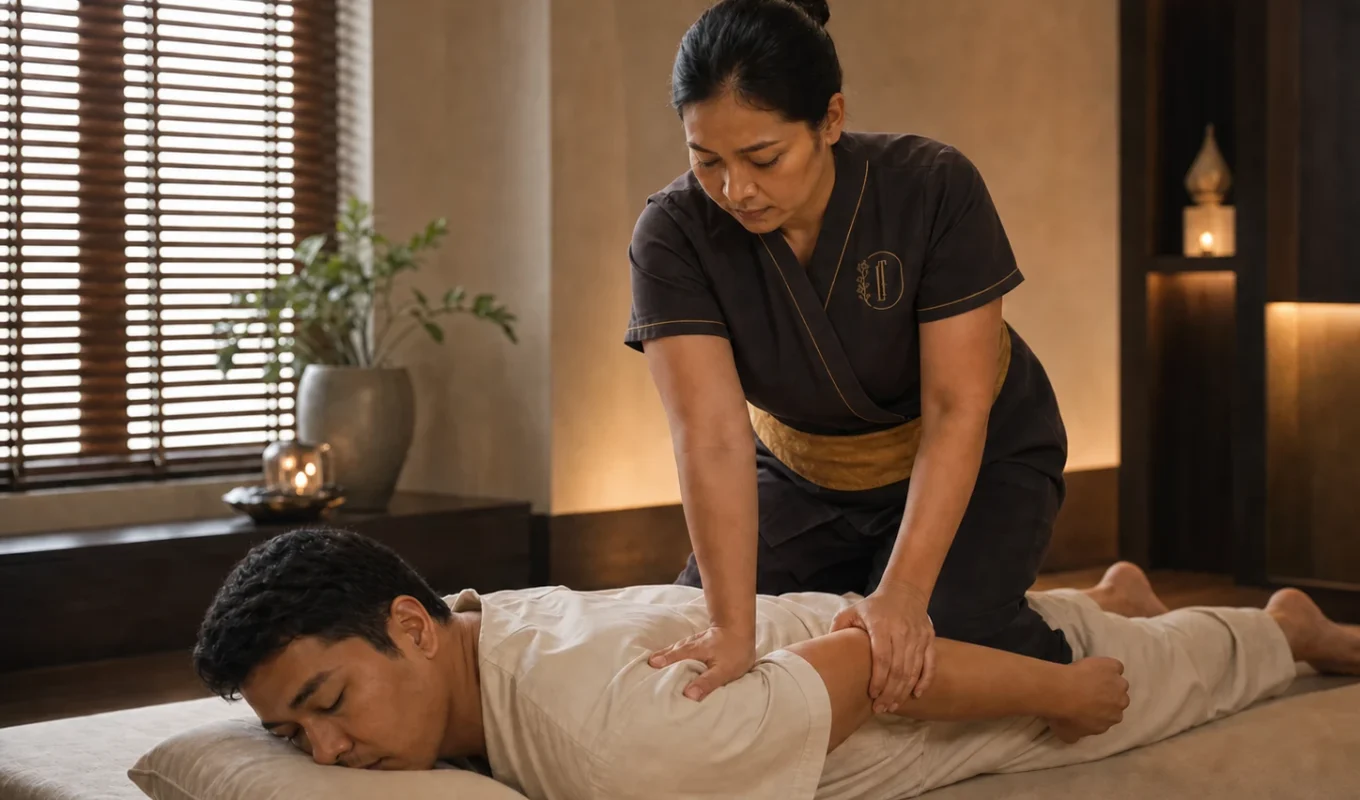
Traditional Thai Massage Is Commonly Clothed
The guest typically wears loose clothing while the therapist works through fabric on a mat or another suitable support.
This differs from oil massage, which usually involves direct skin contact, product and draping.
Confirm the actual room, clothing and support used by the selected service rather than assuming every Thai massage setting is identical.
Pressure, Rocking and Assisted Movement Form a Vocabulary
Nuad Thai may use palms, thumbs, forearms and other controlled contact together with rocking and supported movements.
The technique is not a fixed performance of maximum pressure or dramatic stretches.
Pace, leverage, range, position and contact area should respond to the guest and the therapist's trained judgement.
The Therapist's Body Mechanics Matter
Balanced stance, weight transfer and stable support allow broad pressure without unnecessary force.
Poor leverage can make a movement uncomfortable for the guest and demanding for the practitioner.
Training should therefore protect both bodies rather than celebrating endurance.
Consent Is Part of Authentic Practice
Cultural heritage does not remove the guest's right to understand, decline or modify a movement.
Check pressure, vulnerable areas, range, draping, support and stop signals before and during the treatment.
A respectful therapist does not use tradition to dismiss pain or silence a question.
Adaptation Keeps the Practice Usable
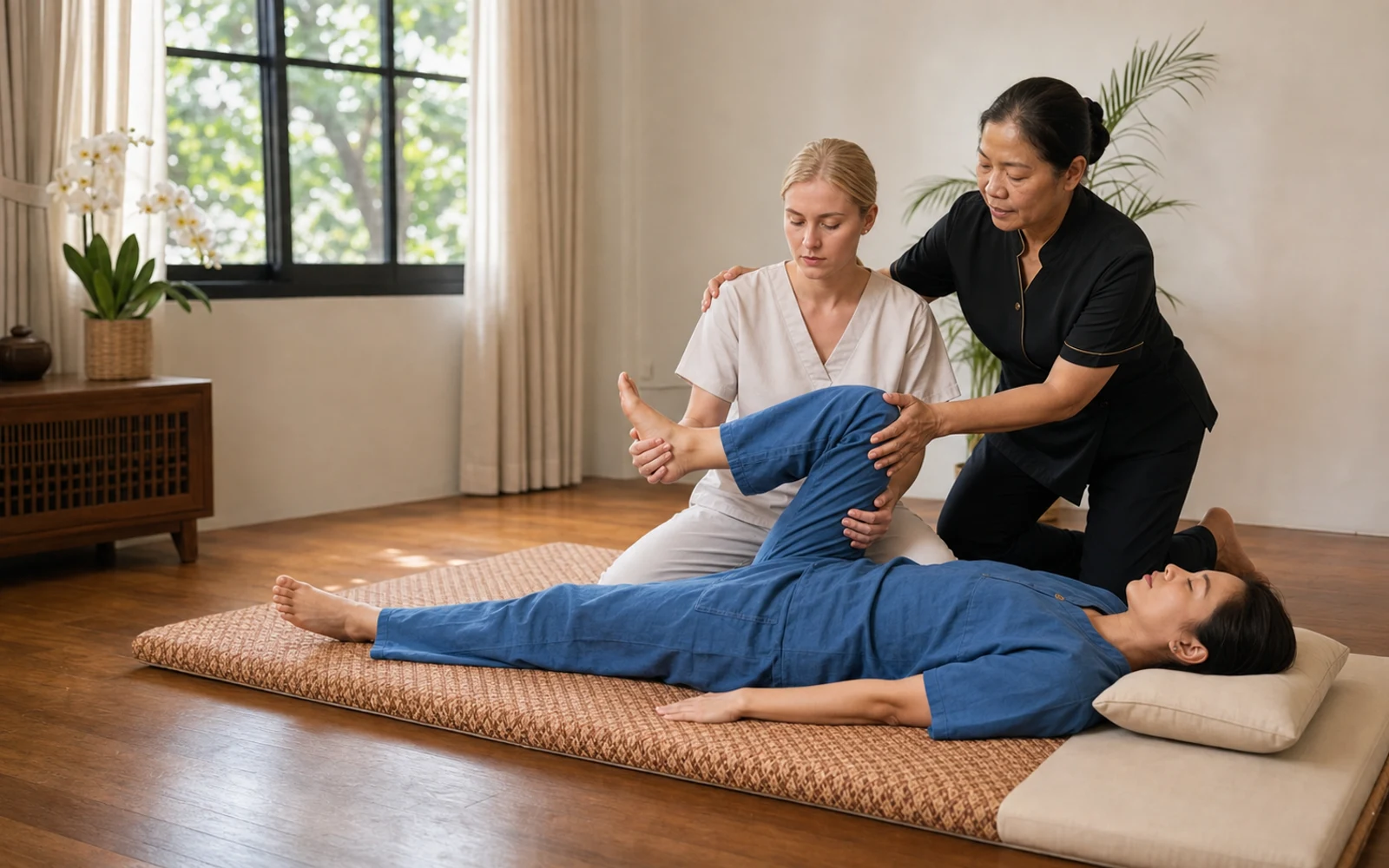
Age, mobility, injury history, pregnancy, recent procedures and personal comfort can change position and intensity.
A floor-based sequence may be modified, shortened or moved to another support when appropriate.
The aim is not to reproduce every textbook posture but to maintain clear technique within safe limits.
Cultural Significance and Clinical Evidence Answer Different Questions
UNESCO recognition supports the heritage value of Nuad Thai; it does not establish a medical effect.
NCCIH notes that massage research varies by condition, technique and study quality, with risks generally low but rare serious harms reported.
Do not use heritage status to promise detoxification, restored energy flow, organ treatment or guaranteed healing.
Herbal Compress Is Related but Distinct
Thai herbal compress combines a prepared herbal bundle, heat and pressure or rolling contact.
It can be integrated with massage, but its ingredients, temperature, skin contact and timing require separate consent.
The current menu lists Thai Herbal Compress Massage at 3,200 THB for 90 minutes.
How Loft Thai Presents the Tradition Today
The current menu lists Traditional Thai Massage at 1,000 THB for 60 minutes, 1,400 THB for 90 minutes and 1,900 THB for 120 minutes.
Thai Combination Massage adds oil-based work and is listed at 2,000 THB for 90 minutes and 2,800 THB for 120 minutes.
These are contemporary service formats; cultural credibility still depends on accurate description, consultation, trained delivery and adaptation.
Education Connects Heritage to the Treatment Room
A training pathway should cover sequence, touch, body mechanics, contraindication awareness, consent, hygiene, supervised practice and assessment.
Nuad Thai School provides a natural internal connection between classroom learning and Loft Thai's service environment, but individual credentials still require verification.
Heritage is strengthened when the school explains both traditional vocabulary and present-day professional boundaries.
Honour Nuad Thai Through Responsible Practice
Thai massage carries cultural meaning because communities continue to teach, practise and adapt it.
The strongest modern expression is neither a museum reconstruction nor a list of medical promises.
It is a clear, clothed bodywork service delivered with skill, context, consent and respect for the guest and the tradition.
“Living heritage is preserved through people who teach, practise, adapt and explain it responsibly—not through a frozen origin myth.”
Loft Thai Editorial Team
Continue your research
REFERENCES
Sources & further reading
- UNESCO: Nuad Thai, Traditional Thai Massage
- UNESCO: Nuad Thai Photographic Documentation and Wat Pho Inscriptions
- WHO: Benchmarks for Training in Nuad Thai
- WHO: Global Report on Traditional, Complementary and Integrative Medicine 2024
- NCCIH: Massage Therapy—What You Need to Know
- Thailand HSS: Health Service Support Provider Registration
- Loft Thai: Current Spa Menu 2026
PRACTICAL GUIDANCE
Frequently Asked Questions
When was Nuad Thai recognised by UNESCO?
UNESCO inscribed Nuad Thai on the Representative List of the Intangible Cultural Heritage of Humanity in 2019.
Does UNESCO recognition prove Thai massage health benefits?
No. The inscription recognises cultural heritage and transmission. Clinical claims require separate evidence for the exact intervention and outcome.
Did Jivaka Komarabhacca invent Thai massage?
He is an important cultural and healing-lineage figure, but the specific claim that one person invented the entire practice 2,500 years ago is not established by the reviewed record.
Are sen lines the same as nerves or blood vessels?
No direct equivalence is established. Sen are a traditional explanatory framework and should not be presented as confirmed anatomical structures.
How much is Traditional Thai Massage at Loft Thai?
The current menu reviewed on 29 July 2026 lists 60 minutes at 1,000 THB, 90 minutes at 1,400 THB and 120 minutes at 1,900 THB. Reconfirm the live menu.
CONTINUE READING
Related stories
The History and Heritage of Thai Massage
Exploring its Roots in Ayurvedic Medicine, Buddhist Traditions, and the Healing Legacy of Jivaka Kumar Bhaccha
Read the guide
The Science of Pressure Points and Energy Lines (Sen)
How Thai massage stimulates circulation, relieves blockages, and balances body energy—an educational deep dive for health-conscious, well-traveled spa guests.
Read the guide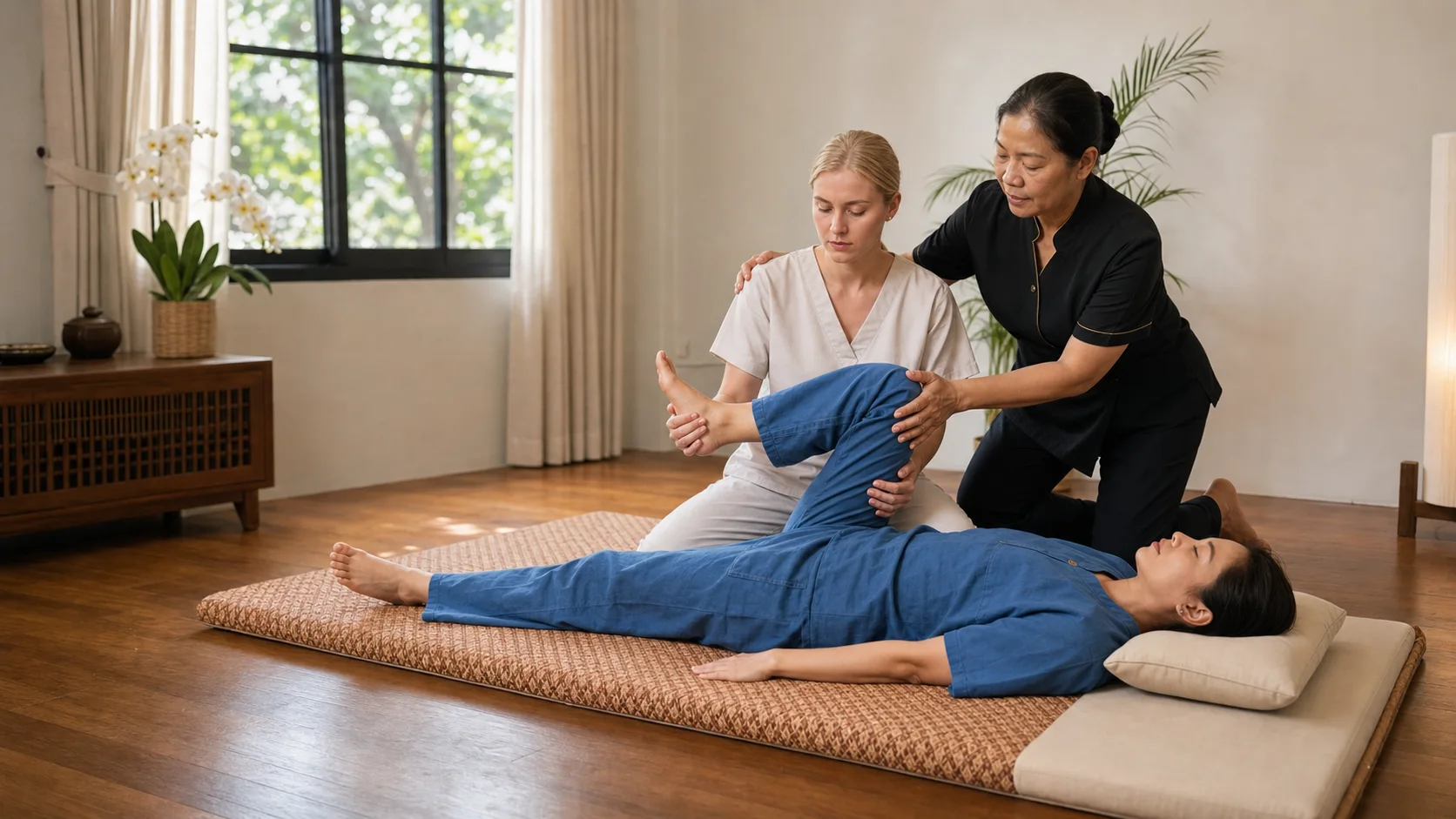
The Art Of Thai Massage by Loft Thai Spa
In today's fast-paced world, where stress and tension have become the norm, finding ways to relax and rejuvenate is essential for overall well-being. One ancient practice that has stood the test of time is Thai massage. If you're looking to delve into the…
Read the guide
How Education and Heritage Power the World of Loft Thai Spa
In the competitive landscape of luxury wellness, where every establishment promises tranquility and rejuvenation, true distinction is rarely a matter of chance. It is easy to construct a beautiful room, to light scented candles, and to play soft music that…
Read the guide