
If you suffer from Office Syndrome, you know how debilitating it can be to deal with the aches and pains associated with sitting at a desk all day.
While massage therapy is a great way to alleviate these symptoms, why not take it one step further and experience the ultimate relaxation and wellness package by combining massage therapy with a Loft Thai Spa experience in Bangkok?
Understanding Office Syndrome and Massage Therapy Benefits
Office Syndrome is a condition that affects many people who work in an office environment. The condition is characterized by symptoms such as headaches, neck and shoulder pain, lower back pain, and other musculoskeletal disorders. Prolonged sitting, poor posture, and repetitive movements such as typing or using a computer mouse are some of the leading causes of Office Syndrome.
Massage therapy is a natural way to alleviate the symptoms of Office Syndrome. It can help improve circulation, reduce muscle tension and stiffness, and promote relaxation. Improved circulation can help reduce inflammation and promote healing in areas of the body that are affected by Office Syndrome, while reducing muscle tension can help prevent injuries and improve range of motion. The relaxation benefits of massage therapy can also help reduce stress levels and improve mental health.
Swimming Pool: Combining Relaxation and Exercise
Swimming is a great form of exercise that offers numerous health benefits, such as improved cardiovascular health, weight loss, and stress relief. The Loft Thai Spa takes this concept a step further by combining the benefits of swimming with the relaxation of a spa. The Loft Thai Spa is a private pool and spa that is designed to offer a luxurious and relaxing experience. It is typically located in a secluded area, such as a backyard or rooftop, and is designed to be used by a small group of people. The pool is usually heated, and the spa features a range of therapeutic treatments, such as hydrotherapy, aromatherapy, and massage.
Combining Massage Therapy with a Loft Thai Spa Experience in Bangkok
A Loft Thai Spa experience in Bangkok takes the relaxation and wellness benefits of massage therapy and swimming to the next level. The spa offers a range of unique packages and promotions that combine massage therapy with hydrotherapy, aromatherapy, and other therapeutic treatments. For example, you can choose a package that includes a traditional Thai massage followed by a dip in the Loft Thai Spa pool, or you can indulge in a luxurious full-day spa package that includes a massage, facial, body scrub, and hydrotherapy treatment.
The Loft Thai Spa in Bangkok offers a unique spa experience that combines the relaxation benefits of massage therapy with the exercise benefits of swimming. Combining these two activities in a luxurious and private setting can help alleviate the symptoms of Office Syndrome, reduce stress levels, and promote overall physical and mental well-being.
UPDATED LOFT THAI GUIDE
Additional guidance and current information
The following editorial update expands on the original Loft Thai article with practical context, current treatment guidance and further reading.
First Correct the Archived Pool Story
The 2023 article described a private heated pool, hydrotherapy and massage package as if they were verified Loft Thai facilities and current offers.
The reviewed current menu does not support that description, so this update removes it rather than converting an external backlink story into business fact.
Current treatment names, durations and prices are drawn from the current spa menu and should still be confirmed for the chosen date and branch.
What “Office Syndrome” Means in Bangkok
Office syndrome is a familiar Thai commercial phrase for discomfort associated with long desk, laptop and phone use.
It may describe neck, shoulder, upper-back, forearm, wrist or lower-back fatigue, but it is not one universally standardised medical diagnosis.
The label should start a conversation about tasks and symptoms, not end an assessment.
Work Factors Are More Than Posture
NIOSH identifies repetition, force, static load and awkward posture among relevant work-related musculoskeletal risk factors.
A long workday can also include limited recovery time, poorly placed equipment, sustained visual concentration and little task variation.
Blaming one imperfect sitting position oversimplifies a pattern that changes with workload, equipment, previous injury and the individual.

Know When the Plan Needs Clinical Input
New weakness, spreading numbness, loss of coordination, severe or worsening pain, trauma, fever, chest symptoms or a persistent headache should not be packaged automatically as desk tension.
Symptoms that do not settle with ordinary rest or keep returning may need assessment by an appropriate healthcare professional.
NCCIH advises against using massage to postpone care for a medical problem.
Control 1: Fit the Workstation to the Worker
OSHA’s computer-workstation guidance places the top of the monitor at or just below eye level, keeps the head balanced with the torso and supports relaxed shoulders.
Elbows stay close to the body, wrists align with the forearms, the lower back is supported and the feet rest on the floor or a footrest.
These are adjustable design goals, not one rigid perfect pose that must be held all day.
Control 2: Change Position Before Discomfort Builds
NIOSH’s current office guidance notes that sitting or standing too long and working in awkward positions should be addressed through equipment or task changes.
Short breaks and position changes interrupt static loading even when a full workout is impossible.
The practical target is variety across the day: sit, stand, walk, look away from the screen and change the task when work permits.
Control 3: Review the Keyboard, Mouse and Phone
A distant mouse, unsupported forearm or laptop-only setup can keep the shoulder elevated and the wrist working at an awkward angle.
Move frequently used devices closer, support the forearms without compressing them and consider an external keyboard or raised screen for long laptop sessions.
A headset or speaker option may reduce the habit of trapping a phone between shoulder and ear.
Control 4: Include Eyes, Jaw and Breathing
Screen concentration can coexist with eye fatigue, jaw clenching and shallow breathing even when the chair is well adjusted.
Regularly look at a distant point, notice whether the teeth are pressed together and allow an unforced exhale before returning to the task.
These checks are not treatments for headache or jaw disorder; persistent symptoms need the right professional evaluation.
The Bangkok Commute Is Part of the Load
Phone use on trains, one-shoulder bags, motorbike posture, heat and long periods in traffic can extend the same static pattern beyond the office.
Reduce unnecessary bag weight, alternate carrying sides when practical and avoid spending the entire journey with the neck flexed over a screen.
Choose a spa time and branch that do not turn a calming appointment into a rushed cross-city transfer.
What Massage Can Realistically Add
Massage offers a scheduled period of contact, pressure, movement and attention away from the work task.
NCCIH describes only limited or short-term evidence for several pain conditions, including neck and shoulder pain, and does not support one massage type as universally superior.
The responsible aim is comfort and an observable change in how the area feels, not correction of posture, inflammation, circulation or an occupational disorder.
The current Office Syndrome Massage
The reviewed current menu lists Office Syndrome Massage at 90 minutes for 2,800 THB and 120 minutes for 3,600 THB.
Its documented focus is the neck, shoulders, arms and back for guests who spend long periods at a desk or screen.
Treat promotional phrases such as headache relief or improved circulation as service-language context rather than guaranteed medical outcomes.
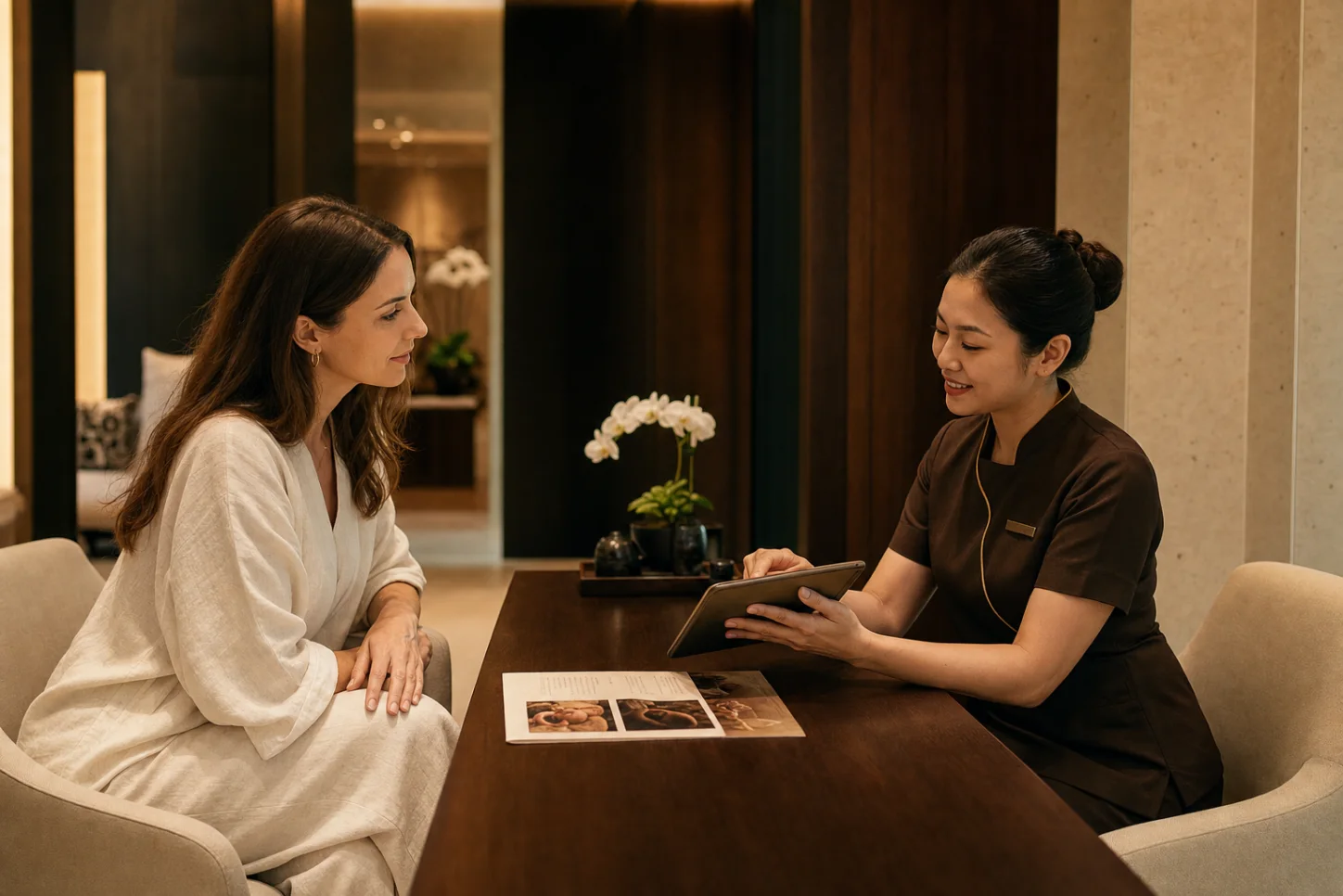
A Better Consultation Starts with the Workday
Describe the task, hours, equipment, dominant hand, commute, symptom location, duration and what makes the area better or worse.
Share injuries, surgery, medication, pregnancy, skin sensitivity and any clinical advice relevant to massage.
Then agree the priority areas, pressure range, oil or clothing expectations and stop signal.
Pressure Should Follow Feedback, Not the Job Title
A senior role, athletic background or high pain tolerance does not automatically make deep pressure appropriate.
Start at a tolerable level, reassess after warming the tissue and avoid using sharp, radiating or electric sensations as proof that the treatment is working.
The therapist can spend more time on the neck and shoulders without forcing every sensitive structure.
Choose 90 Minutes for a Focused First Visit
Ninety minutes allows consultation, a defined desk-body focus and a calmer finish without filling an entire half day.
It may suit a first visit when the guest wants to learn how the pressure and sequence feel.
Ask how the time will be divided rather than assuming every minute is hands-on massage.
Choose 120 Minutes for More Area or Slower Pace
The longer format can provide more time for the back, arms and other agreed regions or allow a less hurried pace.
Longer is not automatically deeper, more effective or medically necessary.
If one focal symptom is severe or unexplained, more massage time is not a substitute for assessment.
A Practical Workday-to-Spa Timeline
Before work, set the screen, chair and input devices for the task rather than accepting the previous user’s layout.
Across the day, vary position and tasks; before leaving, note the specific areas that feel tired instead of reducing everything to stress.
Allow enough travel time to arrive without rushing, and bring relevant product or medical information to the consultation.
After the Session, Return to the Cause
Notice which regions feel easier, unchanged or irritated and record how long any change lasts.
Resume ordinary movement gradually and avoid treating soreness as evidence of a successful deep treatment.
The next workday still needs a better equipment setup, task variation and appropriate follow-up if symptoms persist.
Do Not Turn a Recurring Problem into an Automatic Subscription
Repeat visits should follow a clear purpose, response and budget rather than a claim that weekly massage is mandatory.
If comfort is brief while the same task immediately recreates symptoms, revisit the workstation and workload.
Escalating pressure or frequency without reassessment can hide the fact that the original plan is not solving the relevant problem.
Twelve Questions for an Office-Worker Booking
Confirm the exact service, duration, price, branch, therapist training, clothing, oil, pressure options and main body areas.
Ask what health information changes the session and which symptoms would lead the spa to postpone treatment.
Finally, clarify cancellation, arrival time and whether the booking includes any facility beyond the treatment room; do not assume a pool, sauna or hydrotherapy.
The Recovery Plan Has Two Different Jobs
Ergonomic design and task variation reduce the repeated load created by work.
Massage offers a separate period of adjustable bodywork and short-term comfort.
Keeping those roles distinct creates a more credible Bangkok wellness plan than promising that one spa visit can fix office syndrome.
“Massage can create a useful pause; it cannot make an unchanged workstation fit the person using it.”
Loft Thai Editorial Team
Continue your research
REFERENCES
Sources & further reading
PRACTICAL GUIDANCE
Frequently Asked Questions
Is office syndrome a medical diagnosis?
It is commonly used in Thailand as a broad description of desk- and screen-related discomfort, but it is not one universal diagnosis and should not explain every symptom.
Can Office Syndrome Massage fix poor posture?
No. Massage may provide short-term comfort, but workstation fit, task variation, movement and appropriate clinical care address different parts of the problem.
What does Loft Thai’s current Office Syndrome Massage cost?
The reviewed current menu lists 90 minutes at 2,800 THB and 120 minutes at 3,600 THB. Confirm current price and availability before booking.
Does the service include a pool or hydrotherapy?
The reviewed current menu does not document the private-pool and hydrotherapy package described by the old article. Ask the venue for the exact inclusions.
When should I seek medical advice instead of massage?
Seek appropriate assessment for severe, worsening or persistent pain, trauma, weakness, spreading numbness, loss of coordination, fever, chest symptoms or another concerning change.
CONTINUE READING
Related stories

Office Syndrome Massage in Bangkok: How to Fix Neck, Shoulder & Back Pain the Right Way
“Office syndrome” isn’t a trendy phrase in Bangkok—it’s real life. Hours at a laptop, constant phone use, commuting, gym imbalance, stress breathing, and long periods of sitting create the same pattern again and again: tight neck, heavy shoulders, stiff upper…
Read the guide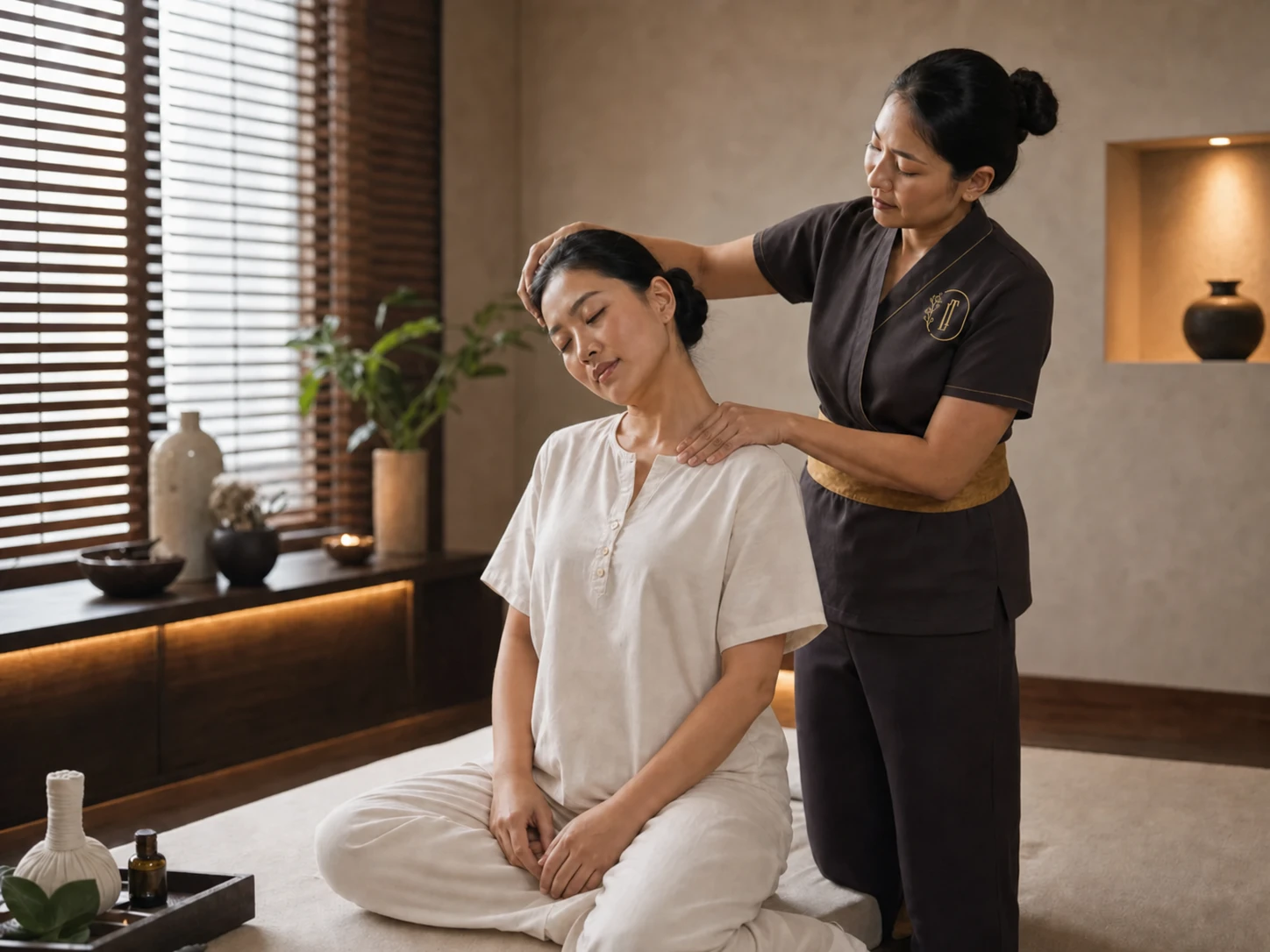
Understanding Office Syndrome in Bangkok and How to Prevent and Treat It
At Loft Thai Spa, we see it every day: busy professionals who live tethered to their desks, absorbed in meetings, emails, and projects. Without realizing it, their bodies silently accumulate strain—tight shoulders, aching necks, stiff lower backs—until the…
Read the guide
Understanding the Difference Between Soft Tissue Massage and Deep Tissue Massage
Massage therapy has become an integral part of modern wellness routines, offering a wide range of physical and mental benefits. Whether it's to relieve stress, improve posture, or recover from muscular fatigue, different massage techniques cater to different…
Read the guide
How to Choose the Right Massage Package for Your Needs at Loft Thai Spa in Bangkok
There are several places in Bangkok where you may get a massage. But selecting the ideal massage package can be challenging, particularly if you're not familiar with the various massages and treatments on offer. We have a range of massage packages available at…
Read the guide