
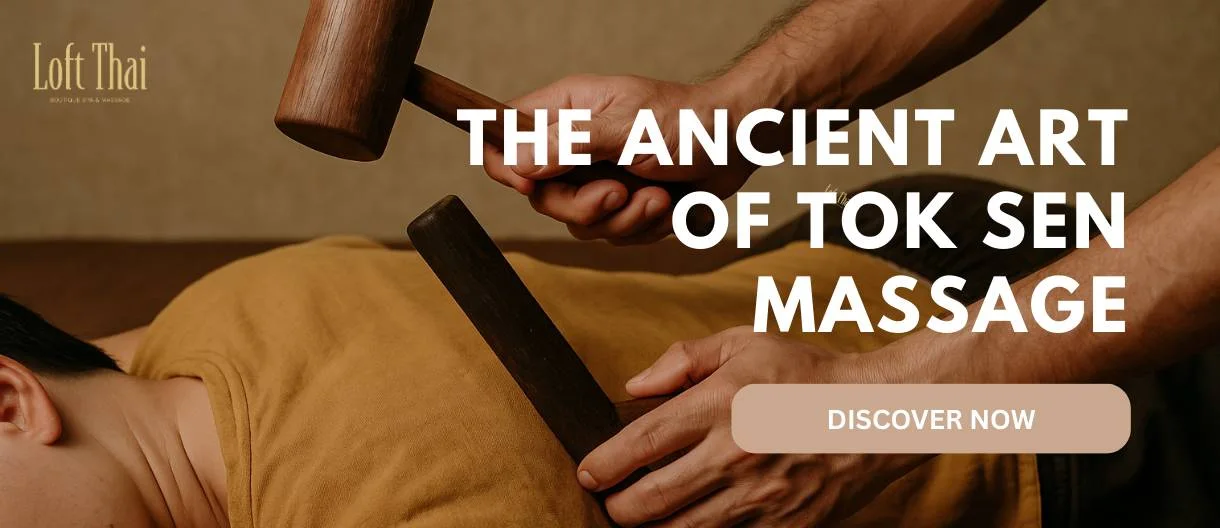
In a world increasingly drawn to ancient wellness therapies and holistic healing, Tok Sen Massage stands out as a fascinating, lesser-known treasure from the north of Thailand. Rooted in Lanna tradition, this rhythmic tapping technique is not only a sensory delight but also a powerful therapy for muscular tension, blocked energy, and deep emotional release. While it may sound unusual at first—using a wooden mallet and stick to ‘tap’ along the body’s energy lines—the results are astonishingly effective and deeply relaxing.
Today, you’ll find this rare treatment not only in the hills of Chiang Mai but also offered in refined urban sanctuaries like Loft Thai Spa in Bangkok, where highly trained therapists combine Tok Sen with modern spa expertise. In this article, we delve into everything you need to know about Tok Sen: its story, tools, technique, safety, and why you should try it for yourself.
What is Tok Sen?
Tok Sen (ตอกเส้น) literally translates to “tapping the energy lines.” It is an ancient therapeutic technique from Northern Thailand, originally developed over 2,000 years ago as part of traditional Lanna healing practices. Unlike other forms of Thai massage that rely on hand pressure, stretching, and acupressure, Tok Sen is characterized by rhythmic, gentle tapping along the Sen lines (the body's energy pathways) using specialized wooden tools.
This technique is deeply rooted in Thai Buddhist and shamanic traditions. It was traditionally practiced by monks and local healers to treat muscle pain, release blocked energy, and restore harmony to the body and mind. Tok Sen is often passed down from generation to generation, typically taught orally or in small communities.
The Story Behind Tok Sen

Tok Sen is believed to have originated among rice farmers and villagers in Chiang Mai and surrounding provinces. The repetitive motions of agricultural work often led to deep muscular tension and chronic pain. Tok Sen was developed as a non-invasive method to "shake loose" the tension stored in the muscles and fascia using the natural vibrations created by wooden instruments.
For centuries, it remained a closely guarded practice of the Northern Thai people, relatively unknown outside the region. It was only in recent decades, with the growth of Thai wellness tourism and the revival of traditional medicine, that Tok Sen began to gain recognition among spa professionals, particularly those trained in Thai massage schools and integrative therapy programs.
The Wooden Tools of Tok Sen
The Tok Sen technique uses three primary wooden tools, all carved from specific sacred or medicinal trees. These tools are often blessed or infused with spiritual meaning in traditional practice:
-
Limb (hammer) – A small, rounded wooden mallet that creates the vibration. It is used to gently strike the stick.
-
Khone (chisel-like stick) – A flat, smooth, or pointed wooden tool placed on the body; the mallet strikes this stick to send vibration through the tissues.
-
Li (resonator or handle) – Sometimes, therapists use a secondary piece to hold the stick more precisely and target smaller areas.
The tools are usually crafted from Tamarind wood, Jackfruit tree wood, or Neem, which are considered both durable and energetically potent. The tapping creates sound waves and mechanical vibrations, believed to loosen tight fascia, stimulate circulation, and rebalance energetic blockages.
Techniques and Experience
The Tok Sen massage typically starts with manual Thai massage techniques to prepare the body. Once the muscles are warm and relaxed, the therapist begins the rhythmic tapping process.
The steps usually include:
-
Assessment: Identifying areas of blockage or muscular tension.
-
Application of oil or balm: To allow the stick to glide and to condition the skin.
-
Tapping: The stick is placed along specific Sen lines or pressure points. The mallet is used to gently tap, creating mechanical pulses that travel into the muscles and connective tissues.
-
Breathing synchronization: Some therapists synchronize tapping with the client’s breathing rhythm.
-
Integration: After tapping, manual pressure or soothing strokes are used to integrate the effects.
Sessions can last from 30 minutes to 90 minutes, depending on the treatment plan. The sensation is often described as soothing, pulsing, and deeply meditative. Many clients report a trance-like state, emotional release, or a tingling afterglow for hours.
Benefits of Tok Sen Massage

Tok Sen massage offers a wide range of physical, emotional, and energetic benefits, making it a holistic healing modality. Some of the most recognized benefits include:
1. Deep Muscle Relief
Tok Sen can penetrate deeper than traditional hand pressure, making it especially effective for chronic muscular tension, knots, and trigger points that are resistant to other types of massage.
2. Improved Circulation and Lymphatic Drainage
The tapping vibrations stimulate blood flow, promote lymphatic drainage, and improve overall detoxification of tissues.
3. Enhanced Nervous System Function
The rhythmic tapping can help reset the nervous system, reducing stress, anxiety, and sleep disturbances.
4. Release of Energy Blockages
Based on Thai medicine philosophy, tapping along Sen lines helps to unblock stagnant energy, bringing the body into a state of balance and vitality.
5. Joint and Mobility Support
It is particularly beneficial for joint stiffness, frozen shoulder, sciatic nerve issues, and postural imbalances caused by modern sedentary lifestyles.
Is Tok Sen Safe?
Yes, Tok Sen is generally considered very safe when performed by a trained professional. However, there are some precautions to keep in mind:
-
Pregnant women or individuals with deep vein thrombosis, bone fractures, or severe cardiovascular issues should avoid Tok Sen.
-
It’s important that the tapping pressure is adjusted based on the client’s condition, and only experienced therapists should perform Tok Sen in sensitive areas like the spine or neck.
-
Clients may experience mild soreness or light bruising, especially if the treatment was deep.
For those new to the therapy, it’s essential to communicate with the therapist throughout the session.
Can You Do Tok Sen Yourself?
Some wellness enthusiasts have experimented with self-practice Tok Sen by purchasing the tools online. While you can try basic tapping on non-sensitive areas like the arms or thighs, it is not recommended to perform Tok Sen on yourself without proper training.
Incorrect use can cause discomfort or injury, especially around the neck, spine, or joints. The effectiveness of Tok Sen lies in the precision of tapping on the Sen lines—which requires anatomical knowledge and years of experience. Instead of trying it solo, it’s best to experience it from a professional first and perhaps enroll in a course if you’re interested in learning.
Where to Try Tok Sen Massage Professionally
If you’re in Bangkok and curious about experiencing this ancient healing technique, Loft Thai Spa is one of the few places where authentic Tok Sen is performed by certified massage therapists trained in Northern Thai traditions.
At Loft Thai Spa:
-
Tok Sen is often integrated into a customized massage session or available as a standalone 60 or 90-minute treatment.
-
The spa combines the traditional art of Tok Sen with aromatherapy, sound healing, and soothing herbal balms, creating a full sensory experience.
-
The ambiance blends modern minimalism with Thai heritage, offering an oasis of calm in the heart of bustling Bangkok.
The spa also features other signature treatments like Thai Warrior Massage, CBD Oil Therapy, and HydraFacial, making it a complete destination for rejuvenation and self-care.
Tok Sen is more than just a massage—it’s a vibrational healing experience that touches both the body and the spirit. From its roots in the rice fields of Chiang Mai to modern spa sanctuaries like Loft Thai Spa, Tok Sen has transcended time while preserving its cultural and therapeutic essence.
Whether you suffer from chronic pain, stress, or just seek something different from your usual massage routine, Tok Sen offers a unique and deeply satisfying form of bodywork that must be felt to be believed.
UPDATED LOFT THAI GUIDE
Additional guidance and current information
The following editorial update expands on the original Loft Thai article with practical context, current treatment guidance and further reading.
Recognising Tok Sen by Technique
Tok Sen uses two principal wooden implements: a small mallet and a shaped wedge, peg or chisel-like tool. The wedge rests against an appropriate soft-tissue area while the mallet creates controlled taps.
The result is a combination of audible rhythm and mechanical percussion. A professional sequence may alternate tool work with palm pressure, compression, stretching or quieter hands-on transitions.
What the Name “Tok Sen” Communicates
The name is commonly explained through Thai terms associated with hammering or tapping and with Sen, the traditional lines used to organise Thai massage practice. English spellings and translations vary because the expression is transliterated rather than originally written in the Latin alphabet.
A translation helps describe the action, but it does not make Sen lines identical to nerves, blood vessels, fascia chains or meridians. Each framework has its own history and should be named accurately.
The Lanna and Northern Thai Context
Tok Sen is associated with Northern Thailand and the cultural region historically linked with Lanna. In contemporary practice it appears in community knowledge, training programmes, spas and therapeutic-massage settings.
Lanna is not merely an aesthetic label for dark wood and herbal scent. It refers to a distinct regional history and cultural inheritance whose practices continue to be taught, adapted and debated.

Why the “2,000-Year-Old” Claim Needs Restraint
Many modern descriptions call Tok Sen two thousand years old or attribute it to monks and agricultural communities. During this editorial review, no primary historical record was established that dates the named practice and its present tool sequence with that precision.
It is reasonable to describe Tok Sen as a traditional Northern Thai practice. It is not responsible to convert an often-repeated number into a documented anniversary without a traceable source.
Wooden Tools Carry Craft, but Wood Stories Vary
Tool shape, density, finish and maintenance affect contact and sound. The wedge needs a controlled surface and the mallet needs enough weight for the practitioner to create rhythm without uncontrolled force.
Specific woods, sacred trees, ritual preparation and names for individual tools vary across teachers and marketing accounts. Those details may be meaningful within a lineage, but they should not be presented as universal Tok Sen standards unless the lineage is identified.
Sound Is Part of the Treatment Texture
Every strike creates audible feedback. Rhythm can help the practitioner maintain a measured tempo, while the guest experiences both the sound in the room and the vibration at the contact point.
Some people find the repetition absorbing; others find it startling or overstimulating. Sound preference belongs in consultation, especially for guests with migraine, sensory sensitivity, anxiety around impact or a strong preference for quiet massage.
Vibration Is Mechanical Before It Is Metaphorical
The tool transmits a mechanical impulse into nearby tissue. The sensation can spread beyond the small contact surface, which helps explain why Tok Sen feels different from a stationary thumb or a broad palm.
That observation does not prove that vibration breaks scar tissue, clears energy blockages, detoxifies organs or resets the nervous system. Those stronger claims require evidence beyond the existence of a felt vibration.
Sen Belongs to Traditional Thai Knowledge
UNESCO’s description of Nuad Thai recognises Sen as part of the traditional system through which practitioners understand and organise the body. Tok Sen is often explained through this cultural vocabulary.
A modern practitioner can respect Sen while also using anatomical knowledge to avoid bone, the spine, the front of the neck, vulnerable joints, acute injury and other unsuitable areas. Cultural respect and contemporary safety are complementary.
Living Practice Changes Through Teaching
Traditional practices are not frozen museum objects. Teachers select sequences, name tools, combine Tok Sen with Thai massage and adapt pressure for spa or training contexts.
That variation makes lineage and instructor transparency useful. A practitioner should be able to explain who taught the method, how tool placement is assessed and what conditions lead them to modify or refuse the technique.
Early Research Does Not Settle the History—or the Claims
A small preliminary study compared Tok Sen with traditional Thai massage in twenty adults with shoulder pain, and a Chiang Mai University trial studied a defined Tok Sen relaxation menu among eighty Lanna spa users. Both contribute early information about contemporary protocols.
Neither study proves an ancient date, validates every Sen explanation or establishes Tok Sen as a cure. The companion evidence guide examines samples, outcomes and safety limits in more detail.
Cultural Curiosity Still Requires Screening
The wooden wedge should not be struck directly over the spine, fragile bone, the front of the neck, open or infected skin, acute injury or an unexplained swollen area. Sharp pain, numbness or an alarming sensation is a reason to stop.
Pregnancy, anticoagulants, osteoporosis, recent surgery, neurological symptoms, vascular concerns or persistent severe pain require individual guidance. Tok Sen is not a substitute for diagnosis.
Listen to the Practice Without Mythologising It
Tok Sen’s cultural power does not depend on a precise age that cannot be documented. Its identity is already distinctive: Northern Thai association, crafted wooden tools, Sen-informed sequencing and an unmistakable rhythm.
Choose a practitioner who can explain both tradition and limits. The most credible session honours where the practice comes from while keeping tool placement, pressure and claims accountable in the present.

“Respect for tradition grows stronger—not weaker—when documented knowledge is separated from a beautiful but unverifiable origin story.”
Loft Thai Editorial Team
Continue your research
REFERENCES
Sources & further reading
PRACTICAL GUIDANCE
Frequently Asked Questions
What does Tok Sen mean?
The name is commonly explained through Thai terms for tapping or hammering and Sen, the traditional lines used in Thai massage. English spellings and translations vary.
Is Tok Sen really 2,000 years old?
It is a traditional Northern Thai practice, but this review did not establish a primary historical source that dates the named modern tool sequence to exactly 2,000 years.
Are Tok Sen tools made from sacred wood?
Wood species, tool names and ritual stories vary across teachers and lineages. Ask the practitioner about their own training rather than assuming one universal standard.
Why is Tok Sen so loud?
The wooden mallet striking the wedge creates sound as well as mechanical vibration. Rhythm is part of the treatment texture, but intensity should remain controlled.
How much is Tok Sen Massage at Loft Thai?
The current menu reviewed on 28 July 2026 lists 90 minutes at 3,200 THB. Confirm current availability and price when booking.
CONTINUE READING
Related stories
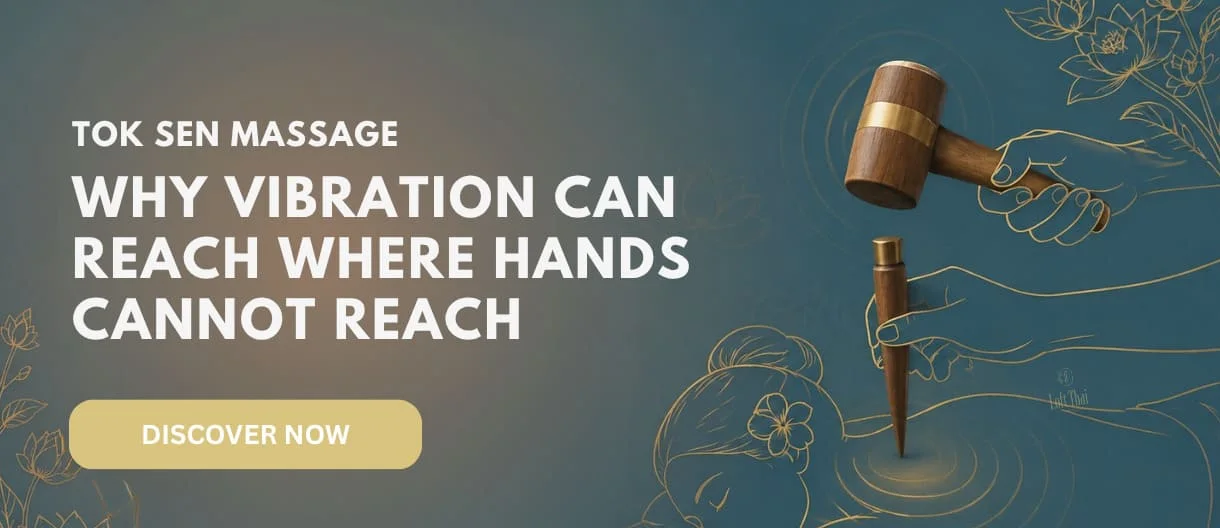
Tok Sen Massage for Deep Tension: Why Vibration Can Reach Where Hands Cannot
Deep muscle tension is often misunderstood. Many people imagine that a tight shoulder, a stiff lower back, or a heavy neck can only be solved by stronger pressure, deeper elbows, or longer massage sessions. While deep pressure can be useful when applied…
Read the guide
The History and Heritage of Thai Massage
Exploring its Roots in Ayurvedic Medicine, Buddhist Traditions, and the Healing Legacy of Jivaka Kumar Bhaccha
Read the guide
The Science of Pressure Points and Energy Lines (Sen)
How Thai massage stimulates circulation, relieves blockages, and balances body energy—an educational deep dive for health-conscious, well-traveled spa guests.
Read the guide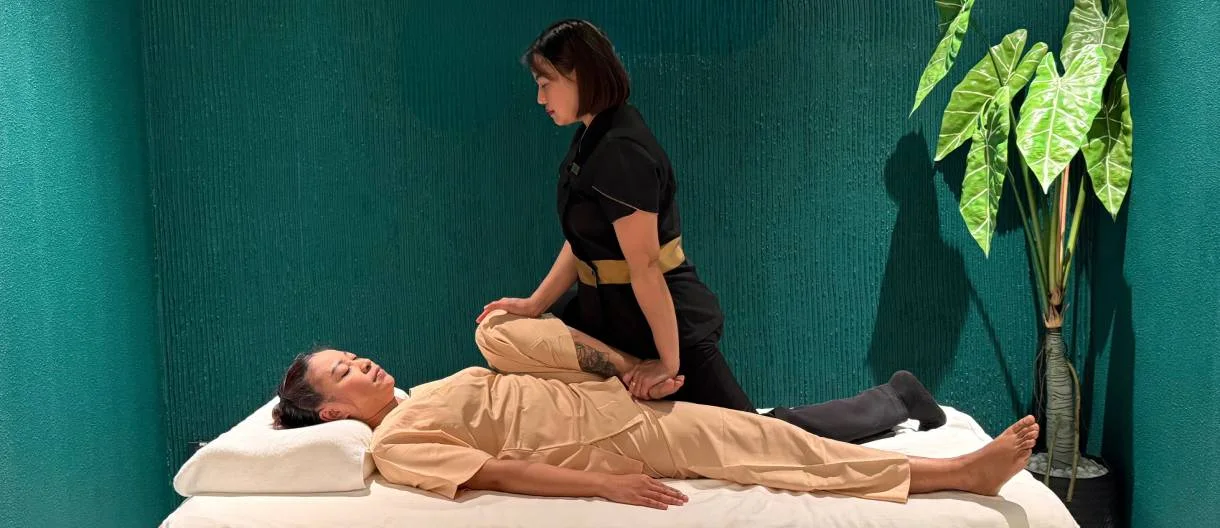
Unlocking the Secrets of Thai Massage in Bangkok
At Loft Thai Spa, massage is more than a wellness service — it is an art form rooted in ancient tradition, guided by anatomical science, and delivered with championship-level precision. In our latest showcase video, we invite you to discover the heart of what…
Read the guide