Thailand is known around the world as the Land of Smiles—but for those who work in wellness, it’s also the Land of Healing. From ancient temples to modern spa sanctuaries, massage therapy in Thailand is not just a job; it is an art, a philosophy, and a lifelong journey of learning.
Becoming a truly great therapist—one who can perform authentic Thai massage, oil therapy, facial care, bamboo massage, and even specialized techniques like prenatal or office syndrome treatments—requires more than just training. It requires dedication, practice, compassion, and mastery of body and mind.
This guide will explore, in detail, the steps, mindset, and path to becoming an exceptional therapist in Thailand.
Understanding the Spirit of Thai Massage
Thai massage (Nuad Thai) is more than a technique—it is a cultural heritage, recognized by UNESCO as part of the Intangible Cultural Heritage of Humanity. Rooted in Buddhist philosophy, Thai massage embodies metta (loving-kindness), mindfulness, and the balance of body energy lines known as Sen.
A good therapist must first understand that massage is not only about manipulating muscles but also about transferring positive energy and restoring balance. Every session is a dialogue between therapist and client, guided by intuition, respect, and connection.
Core Principles
- Metta (Loving-kindness): Treat every client as if they were family. Healing begins with empathy.
- Mindfulness: Be fully present during each session. A distracted mind leads to mechanical touch.
- Balance of Sen Lines: Learn the 10 major energy pathways that govern body function.
- Breathing and Posture: A therapist’s breath should synchronize with their movement, creating fluid, meditative rhythm.
Foundational Training: Where Every Great Therapist Begins
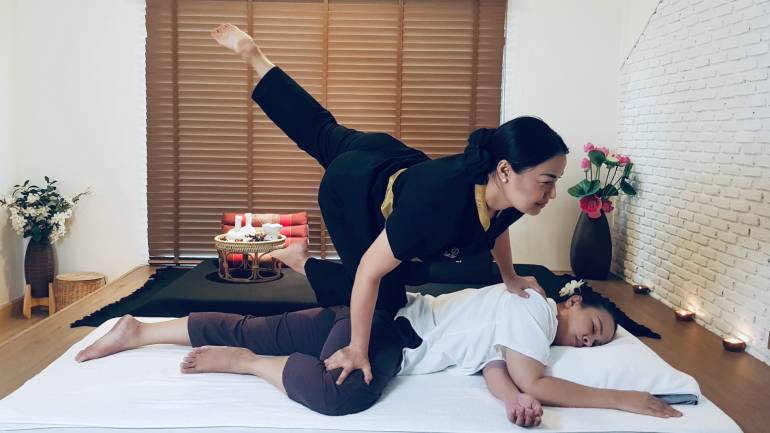
To become a skilled therapist in Thailand, the journey begins with proper training at a certified massage school. Institutions like Nuad Thai School, Wat Pho Traditional Massage School, and other UTTS-certified schools provide courses that follow the Ministry of Education’s professional standards.
Essential Foundational Courses
Thailand is known around the world as the Land of Smiles—but for those who work in wellness, it’s also the Land of Healing. From ancient temples to modern spa sanctuaries, massage therapy in Thailand is not just a job; it is an art, a philosophy, and a lifelong journey of learning.
Becoming a truly great therapist—one who can perform authentic Thai massage, oil therapy, facial care, bamboo massage, and even specialized techniques like prenatal or office syndrome treatments—requires more than just training. It requires dedication, practice, compassion, and mastery of body and mind.
This guide will explore, in detail, the steps, mindset, and path to becoming an exceptional therapist in Thailand.
Understanding the Spirit of Thai Massage
Thai massage (Nuad Thai) is more than a technique—it is a cultural heritage, recognized by UNESCO as part of the Intangible Cultural Heritage of Humanity. Rooted in Buddhist philosophy, Thai massage embodies metta (loving-kindness), mindfulness, and the balance of body energy lines known as Sen.
A good therapist must first understand that massage is not only about manipulating muscles but also about transferring positive energy and restoring balance. Every session is a dialogue between therapist and client, guided by intuition, respect, and connection.
Core Principles
- Metta (Loving-kindness): Treat every client as if they were family. Healing begins with empathy.
- Mindfulness: Be fully present during each session. A distracted mind leads to mechanical touch.
- Balance of Sen Lines: Learn the 10 major energy pathways that govern body function.
- Breathing and Posture: A therapist’s breath should synchronize with their movement, creating fluid, meditative rhythm.
Foundational Training: Where Every Great Therapist Begins
To become a skilled therapist in Thailand, the journey begins with proper training at a certified massage school. Institutions like Nuad Thai School, Wat Pho Traditional Massage School, and other UTTS-certified schools provide courses that follow the Ministry of Education’s professional standards.
Essential Foundational Courses
| Goal | Lymphatic Drainage | Deep Tissue / Sports | Traditional Thai |
|---|---|---|---|
| Primary Effect | Fluid movement, de-puffing, parasympathetic calm | Mechanical release of tight muscle & fascia | Assisted stretching, joint mobilization, energy lines |
| Pressure | Very light | Moderate to deep | Variable (compressions & stretches) |
| Best For | Puffiness, sensitive systems, post-flight, nervous-system reset | Chronic tightness, specific muscle knots | Flexibility, whole-body reset, posture |
These courses provide a well-rounded base that allows a therapist to work in a professional spa or even open their own business.
Learning Thai Massage the Authentic Way
The Professional Thai Massage Course (150 hours) is the cornerstone of Thai healing arts. It combines anatomy, physiology, and traditional knowledge.
Key Components
- Theory: Understanding muscle groups, joints, and the Sen lines.
- Practice: Hands-on learning with an instructor and a model.
- Posture: Using the body’s weight instead of strength to prevent fatigue.
- Flow: Creating a continuous rhythm of movement from head to toe.
- Stretching: Incorporating assisted yoga poses that improve flexibility.
Why It Matters
A strong foundation in traditional Thai massage builds confidence. Once mastered, it becomes easier to integrate other modalities like oil or facial massage, as the therapist already understands body mechanics, pressure control, and rhythm.
Mastering the Art of Oil Massage
Oil massage blends traditional Thai techniques with Western methods such as Swedish or Balinese massage. The therapist must develop fluidity, gentle pressure control, and intuitive touch.
Skills Required
- Learning how to adjust pressure according to muscle tone.
- Understanding essential oils and their properties (e.g., lavender for relaxation, lemongrass for muscle pain).
- Using forearms and elbows to maintain smooth flow.
- Mastering the transitions between movements for uninterrupted relaxation.
Advanced Add-ons
- Aromatherapy: Blending oils for mood enhancement.
- Hot Oil Techniques: Using warmed oil for deeper relaxation.
- CBD Oil Massage: Combining the therapeutic benefits of CBD to reduce inflammation and anxiety.
The Delicate Art of Foot Massage
Foot massage, or Reflexology, is an ancient science that maps each part of the foot to a specific organ or body system.
Core Learning
- Anatomy of the foot and pressure points.
- Using thumbs, knuckles, and wooden sticks for precision.
- Techniques to stimulate blood flow and release blockages.
- Hygiene, safety, and client comfort.
A great therapist learns to read the client’s reactions and adjust pressure accordingly. Reflexology can become an entire art form by itself—especially for therapists working in spas where clients seek total relaxation.
Specialization: Facial, Bamboo, and Cupping Mastery
After mastering Thai, oil, and foot massage, advanced therapists move into specialized techniques that elevate their profile.
Facial Massage & Skincare
A top therapist in Thailand is often also trained in facial therapy. This includes:
- Cleansing, exfoliation, and massage for lymph drainage.
- Using natural or professional-grade products (e.g., Filorga, Guinot, or Avène).
- Techniques such as Kobido (Japanese face lifting massage) or Gua Sha.
- Understanding skin types, contraindications, and hygiene standards.
Bamboo Massage
An advanced muscle-relaxing technique that uses heated bamboo sticks.
- Enhances circulation and relieves chronic tension.
- Requires rhythm and skill to maintain consistent pressure.
- Popular among athletes and those with deep muscle stiffness.
Cupping Therapy
Originating from Chinese medicine, cupping is now integrated into Thai spa therapies.
- Involves placing cups on the skin to create suction.
- Promotes detoxification, lymphatic drainage, and pain relief.
- Requires proper training to avoid skin injury or bruising.
Herbal Compress
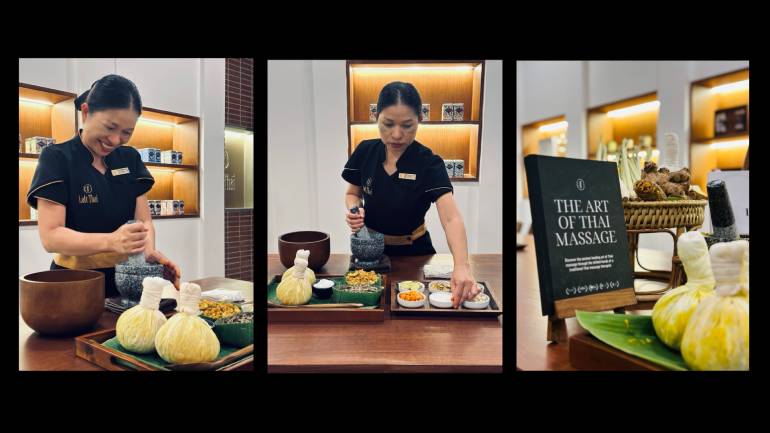
Learning to prepare homemade herbal compress balls is essential for authenticity.
- Herbs such as lemongrass, turmeric, kaffir lime, and camphor are wrapped in cotton.
- The compress is steamed and applied on the body after massage.
- Enhances relaxation, reduces inflammation, and adds aromatic benefit.
Understanding Specialized Clients: Prenatal & Office Syndrome Massage
Every great therapist must learn to adapt their techniques to specific client needs.
Prenatal Massage
- Focuses on comfort and safety during pregnancy.
- Avoids pressure points that may induce contractions.
- Reduces swelling, lower back pain, and anxiety.
- Performed with side-lying positions and soft cushions.
Office Syndrome Therapy
- Tailored for clients with sedentary lifestyles and desk jobs.
- Emphasizes shoulder, neck, and lower back stretches.
- Involves trigger point therapy, herbal compress, and hot stones.
- Helps improve posture, circulation, and focus.
Being able to treat these common modern conditions sets elite therapists apart from the rest.
The Importance of Continuous Practice and Feedback
Even after completing training, excellence comes only with thousands of hours of practice. A professional therapist must:
- Practice daily to refine muscle memory.
- Receive feedback from clients and instructors.
- Record sessions to analyze technique and flow.
- Observe masters and attend workshops regularly.
At prestigious schools like Nuad Thai School, students often continue their journey as teaching assistants to gain deeper understanding through repetition and observation.
Competing and Learning from the Best
Participating in massage competitions is a powerful way to improve skills and gain recognition. Events like the World Massage Championship (Copenhagen) or Thailand Spa & Wellness Awards gather top talents from across the globe.
Benefits of Competition
- Exposure to new styles and innovations.
- Building professional reputation and confidence.
- Networking with international experts.
- Receiving feedback from world-class judges.
Many of Thailand’s best therapists are World Massage Champions who later become instructors or open their own training centers.
Teaching and Passing on the Knowledge
The highest level of mastery is not just performing but teaching others. When a therapist becomes an instructor, they deepen their own understanding and help preserve Thai culture.
Instructor Pathway
- Minimum 3–5 years of professional experience.
- Certification from a UTTS-approved school.
- Ability to demonstrate and explain each technique clearly.
- Empathy, patience, and strong communication skills.
Teaching ensures the legacy of Thai healing continues for future generations.
The Role of Continuous Education
A true master never stops learning. Every year, Thailand welcomes new trends, techniques, and technologies—from HydraFacial machines to CBD therapy and sound healing.
Recommended Continuing Courses
- Advanced Anatomy for Massage Therapists
- Hydrotherapy & Spa Management
- Spa Product Knowledge
- Aesthetic Treatments and Machines
- Mindfulness and Meditation for Therapists
Top spas like Loft Thai Spa and Nakhon Spa often organize internal workshops where therapists learn new facial protocols, updated massage routines, and holistic wellness techniques.
Professional Ethics and Client Experience
Technical skills alone do not make a great therapist. What truly sets a professional apart is their ethics, communication, and care.
Golden Rules
- Confidentiality: Respect all client information.
- Cleanliness: Personal hygiene and spa sanitation are crucial.
- Empathy: Listen actively and respond with compassion.
- Professional Boundaries: Maintain respectful distance and conduct.
- Consistency: Deliver the same high-quality service every time.
Enhancing the Experience
- Greet clients warmly.
- Explain treatment clearly.
- Use aromatherapy, music, and lighting to create ambiance.
- Offer tea or refreshments before and after sessions.
In Thailand, a good therapist is not just a technician—they are a healer, host, and ambassador of Thai hospitality.
Career Opportunities in Thailand and Beyond
A well-trained therapist can pursue multiple paths:
- Luxury Spa Therapist: Working in 5-star hotels or award-winning spas.
- Independent Practitioner: Offering private sessions.
- Instructor: Teaching in schools or workshops worldwide.
- Spa Manager: Overseeing operations, training staff, and client relations.
- Franchise Partner: Opening a branded spa with continuous support and audits.
With experience, therapists can also travel internationally—many Thai therapists work in France, Dubai, Singapore, and beyond, bringing Thai wellness to the world.
Building a Reputation as the Best Therapist
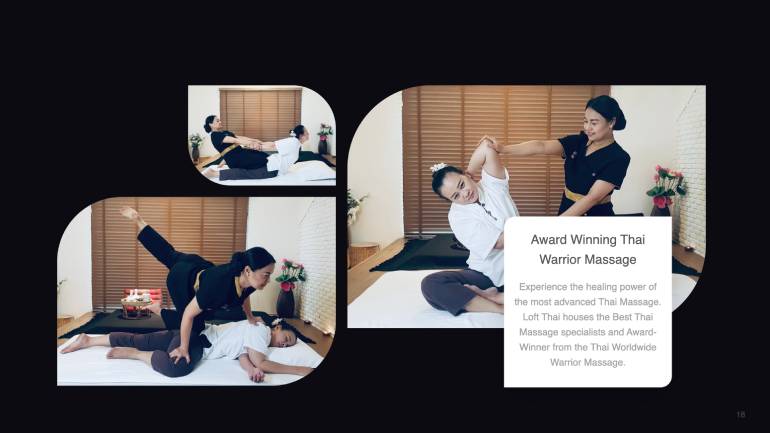
Reputation is built through consistency, innovation, and humility. Clients remember how you make them feel, not just how skilled your hands are.
Steps to Build a Strong Reputation
- Get Certified: Display professional certificates proudly.
- Collect Reviews: Encourage satisfied clients to share their feedback online.
- Stay Updated: Attend seminars and learn new trends.
- Develop a Signature Technique: Combine your skills to create something unique (e.g., Thai Warrior Massage + Aromatherapy Oil).
- Work at Recognized Spas: Gaining experience in high-end spas builds credibility.
The Philosophy of Lifelong Improvement
In Thai culture, mastery is a path with no end. Even the most awarded therapist continues to learn. Every session becomes a meditation; every client, a teacher.
Daily Habits of the Best Therapists
- Practice breathing and stretching before work.
- Meditate to calm the mind and enhance focus.
- Study anatomy and health topics weekly.
- Take care of personal health—sleep, nutrition, and posture.
- Reflect after each session to find room for growth.
The Journey from Student to Master
Let’s imagine a typical path:
- Year 1: Complete Thai Massage, Oil, and Foot Massage courses. Begin practicing at a spa.
- Year 2: Add Facial, Herbal Compress, and Prenatal Massage skills.
- Year 3: Join competitions, refine technique, and begin mentoring others.
- Year 4: Learn Spa Management or Teaching. Develop a personal signature massage.
- Year 5+: Teach internationally, open your own spa, or represent Thailand in competitions.
Each stage builds upon the previous one, combining technical excellence with emotional intelligence.
Becoming a Symbol of Thai Healing Worldwide
The best therapists from Thailand are not only skilled—they are cultural ambassadors. Through their hands, they share centuries of tradition, artistry, and compassion with the world. When they perform, it’s not merely massage—it’s a ritual of healing that represents Thai culture itself.
To become one of them, you must:
- Learn from authentic teachers.
- Practice with humility.
- Serve clients with genuine kindness.
- Continue evolving your craft with passion.
The Path to Excellence
Becoming the best therapist in Thailand is not a destination but a lifelong journey of growth and devotion. It requires mastering techniques like Thai massage, oil massage, facial, foot reflexology, and advanced modalities like bamboo massage, cupping, and herbal compress. It also means embodying the true spirit of Thai healing—mindfulness, compassion, and continuous learning.
A true master therapist is not just trained by schools but shaped by experience, discipline, and heart. In the end, the hands of a great therapist do not simply touch the body—they touch the soul.
These courses provide a well-rounded base that allows a therapist to work in a professional spa or even open their own business.
Learning Thai Massage the Authentic Way
The Professional Thai Massage Course (150 hours) is the cornerstone of Thai healing arts. It combines anatomy, physiology, and traditional knowledge.
Key Components
- Theory: Understanding muscle groups, joints, and the Sen lines.
- Practice: Hands-on learning with an instructor and a model.
- Posture: Using the body’s weight instead of strength to prevent fatigue.
- Flow: Creating a continuous rhythm of movement from head to toe.
- Stretching: Incorporating assisted yoga poses that improve flexibility.
Why It Matters
A strong foundation in traditional Thai massage builds confidence. Once mastered, it becomes easier to integrate other modalities like oil or facial massage, as the therapist already understands body mechanics, pressure control, and rhythm.
Mastering the Art of Oil Massage
Oil massage blends traditional Thai techniques with Western methods such as Swedish or Balinese massage. The therapist must develop fluidity, gentle pressure control, and intuitive touch.
Skills Required
- Learning how to adjust pressure according to muscle tone.
- Understanding essential oils and their properties (e.g., lavender for relaxation, lemongrass for muscle pain).
- Using forearms and elbows to maintain smooth flow.
- Mastering the transitions between movements for uninterrupted relaxation.
Advanced Add-ons
- Aromatherapy: Blending oils for mood enhancement.
- Hot Oil Techniques: Using warmed oil for deeper relaxation.
- CBD Oil Massage: Combining the therapeutic benefits of CBD to reduce inflammation and anxiety.
The Delicate Art of Foot Massage
Foot massage, or Reflexology, is an ancient science that maps each part of the foot to a specific organ or body system.
Core Learning
- Anatomy of the foot and pressure points.
- Using thumbs, knuckles, and wooden sticks for precision.
- Techniques to stimulate blood flow and release blockages.
- Hygiene, safety, and client comfort.
A great therapist learns to read the client’s reactions and adjust pressure accordingly. Reflexology can become an entire art form by itself—especially for therapists working in spas where clients seek total relaxation.
Specialization: Facial, Bamboo, and Cupping Mastery
After mastering Thai, oil, and foot massage, advanced therapists move into specialized techniques that elevate their profile.
Facial Massage & Skincare
A top therapist in Thailand is often also trained in facial therapy. This includes:
- Cleansing, exfoliation, and massage for lymph drainage.
- Using natural or professional-grade products (e.g., Filorga, Guinot, or Avène).
- Techniques such as Kobido (Japanese face lifting massage) or Gua Sha.
- Understanding skin types, contraindications, and hygiene standards.
Bamboo Massage
An advanced muscle-relaxing technique that uses heated bamboo sticks.
- Enhances circulation and relieves chronic tension.
- Requires rhythm and skill to maintain consistent pressure.
- Popular among athletes and those with deep muscle stiffness.
Cupping Therapy
Originating from Chinese medicine, cupping is now integrated into Thai spa therapies.
- Involves placing cups on the skin to create suction.
- Promotes detoxification, lymphatic drainage, and pain relief.
- Requires proper training to avoid skin injury or bruising.
Herbal Compress
Learning to prepare homemade herbal compress balls is essential for authenticity.
- Herbs such as lemongrass, turmeric, kaffir lime, and camphor are wrapped in cotton.
- The compress is steamed and applied on the body after massage.
- Enhances relaxation, reduces inflammation, and adds aromatic benefit.
Understanding Specialized Clients: Prenatal & Office Syndrome Massage
Every great therapist must learn to adapt their techniques to specific client needs.
Prenatal Massage
- Focuses on comfort and safety during pregnancy.
- Avoids pressure points that may induce contractions.
- Reduces swelling, lower back pain, and anxiety.
- Performed with side-lying positions and soft cushions.
Office Syndrome Therapy
- Tailored for clients with sedentary lifestyles and desk jobs.
- Emphasizes shoulder, neck, and lower back stretches.
- Involves trigger point therapy, herbal compress, and hot stones.
- Helps improve posture, circulation, and focus.
Being able to treat these common modern conditions sets elite therapists apart from the rest.
The Importance of Continuous Practice and Feedback
Even after completing training, excellence comes only with thousands of hours of practice. A professional therapist must:
- Practice daily to refine muscle memory.
- Receive feedback from clients and instructors.
- Record sessions to analyze technique and flow.
- Observe masters and attend workshops regularly.
At prestigious schools like Nuad Thai School, students often continue their journey as teaching assistants to gain deeper understanding through repetition and observation.
Competing and Learning from the Best
Participating in massage competitions is a powerful way to improve skills and gain recognition. Events like the World Massage Championship (Copenhagen) or Thailand Spa & Wellness Awards gather top talents from across the globe.
Benefits of Competition
- Exposure to new styles and innovations.
- Building professional reputation and confidence.
- Networking with international experts.
- Receiving feedback from world-class judges.
Many of Thailand’s best therapists are World Massage Champions who later become instructors or open their own training centers.
Teaching and Passing on the Knowledge
The highest level of mastery is not just performing but teaching others. When a therapist becomes an instructor, they deepen their own understanding and help preserve Thai culture.
Instructor Pathway
- Minimum 3–5 years of professional experience.
- Certification from a UTTS-approved school.
- Ability to demonstrate and explain each technique clearly.
- Empathy, patience, and strong communication skills.
Teaching ensures the legacy of Thai healing continues for future generations.
The Role of Continuous Education
A true master never stops learning. Every year, Thailand welcomes new trends, techniques, and technologies—from HydraFacial machines to CBD therapy and sound healing.
Recommended Continuing Courses
- Advanced Anatomy for Massage Therapists
- Hydrotherapy & Spa Management
- Spa Product Knowledge
- Aesthetic Treatments and Machines
- Mindfulness and Meditation for Therapists
Top spas like Loft Thai Spa and Nakhon Spa often organize internal workshops where therapists learn new facial protocols, updated massage routines, and holistic wellness techniques.
Professional Ethics and Client Experience
Technical skills alone do not make a great therapist. What truly sets a professional apart is their ethics, communication, and care.
Golden Rules
- Confidentiality: Respect all client information.
- Cleanliness: Personal hygiene and spa sanitation are crucial.
- Empathy: Listen actively and respond with compassion.
- Professional Boundaries: Maintain respectful distance and conduct.
- Consistency: Deliver the same high-quality service every time.
Enhancing the Experience
- Greet clients warmly.
- Explain treatment clearly.
- Use aromatherapy, music, and lighting to create ambiance.
- Offer tea or refreshments before and after sessions.
In Thailand, a good therapist is not just a technician—they are a healer, host, and ambassador of Thai hospitality.
Career Opportunities in Thailand and Beyond
A well-trained therapist can pursue multiple paths:
- Luxury Spa Therapist: Working in 5-star hotels or award-winning spas.
- Independent Practitioner: Offering private sessions.
- Instructor: Teaching in schools or workshops worldwide.
- Spa Manager: Overseeing operations, training staff, and client relations.
- Franchise Partner: Opening a branded spa with continuous support and audits.
With experience, therapists can also travel internationally—many Thai therapists work in France, Dubai, Singapore, and beyond, bringing Thai wellness to the world.
Building a Reputation as the Best Therapist
Reputation is built through consistency, innovation, and humility. Clients remember how you make them feel, not just how skilled your hands are.
Steps to Build a Strong Reputation
- Get Certified: Display professional certificates proudly.
- Collect Reviews: Encourage satisfied clients to share their feedback online.
- Stay Updated: Attend seminars and learn new trends.
- Develop a Signature Technique: Combine your skills to create something unique (e.g., Thai Warrior Massage + Aromatherapy Oil).
- Work at Recognized Spas: Gaining experience in high-end spas builds credibility.
The Philosophy of Lifelong Improvement
In Thai culture, mastery is a path with no end. Even the most awarded therapist continues to learn. Every session becomes a meditation; every client, a teacher.
Daily Habits of the Best Therapists
- Practice breathing and stretching before work.
- Meditate to calm the mind and enhance focus.
- Study anatomy and health topics weekly.
- Take care of personal health—sleep, nutrition, and posture.
- Reflect after each session to find room for growth.
The Journey from Student to Master
Let’s imagine a typical path:
- Year 1: Complete Thai Massage, Oil, and Foot Massage courses. Begin practicing at a spa.
- Year 2: Add Facial, Herbal Compress, and Prenatal Massage skills.
- Year 3: Join competitions, refine technique, and begin mentoring others.
- Year 4: Learn Spa Management or Teaching. Develop a personal signature massage.
- Year 5+: Teach internationally, open your own spa, or represent Thailand in competitions.
Each stage builds upon the previous one, combining technical excellence with emotional intelligence.
Becoming a Symbol of Thai Healing Worldwide
The best therapists from Thailand are not only skilled—they are cultural ambassadors. Through their hands, they share centuries of tradition, artistry, and compassion with the world. When they perform, it’s not merely massage—it’s a ritual of healing that represents Thai culture itself.
To become one of them, you must:
- Learn from authentic teachers.
- Practice with humility.
- Serve clients with genuine kindness.
- Continue evolving your craft with passion.
The Path to Excellence
Becoming the best therapist in Thailand is not a destination but a lifelong journey of growth and devotion. It requires mastering techniques like Thai massage, oil massage, facial, foot reflexology, and advanced modalities like bamboo massage, cupping, and herbal compress. It also means embodying the true spirit of Thai healing—mindfulness, compassion, and continuous learning.
A true master therapist is not just trained by schools but shaped by experience, discipline, and heart. In the end, the hands of a great therapist do not simply touch the body—they touch the soul.
UPDATED LOFT THAI GUIDE
Additional guidance and current information
The following editorial update expands on the original Loft Thai article with practical context, current treatment guidance and further reading.
Replace “Best” With Observable Standards
Skill is not measured by how much pressure a therapist can apply, how many modalities appear on a profile or whether a treatment feels dramatic.
A strong practitioner gathers relevant information, recognises when not to treat, positions the guest safely, adjusts technique, maintains boundaries and delivers a coherent session without exhausting their own body.
Reviews and competitions may reflect part of a career, but they do not replace training records, supervision, safe practice and professional accountability.
Decide What the Training Is For
A half-day introduction can help a traveller understand basic cultural context and a short sequence. It is not equivalent to a professional programme.
Someone seeking employment needs a course aligned with the treatment they will perform, the establishment’s requirements and applicable Thai rules. An experienced therapist adding one technique needs a different pathway from a complete beginner.
Write the intended outcome before comparing schools: cultural learning, personal practice, staff development, professional registration preparation or continuing education.
Verify the School, Branch and Exact Course
Thailand’s Department of Health Service Support stated in July 2025 that schools offering health-service programmes intended for provider registration must have the relevant course approved before teaching it.
The department also advised learners to check the institution, branch and course in the official Health Establishment Division system before enrolling. Approval of one programme or location should not be assumed to cover every course a brand sells.
Ask for the exact Thai and English course name, approved hours, location, certificate wording and registration pathway in writing. If a school uses a separate certification body, confirm what that certificate does and does not authorise.
- Exact legal name of the school and teaching branch
- Course name and number of supervised hours
- Government approval or recognition relevant to the learner’s goal
- Assessment method and attendance requirement
- Certificate issuer and registration use
- Refund, rescheduling and language-support terms
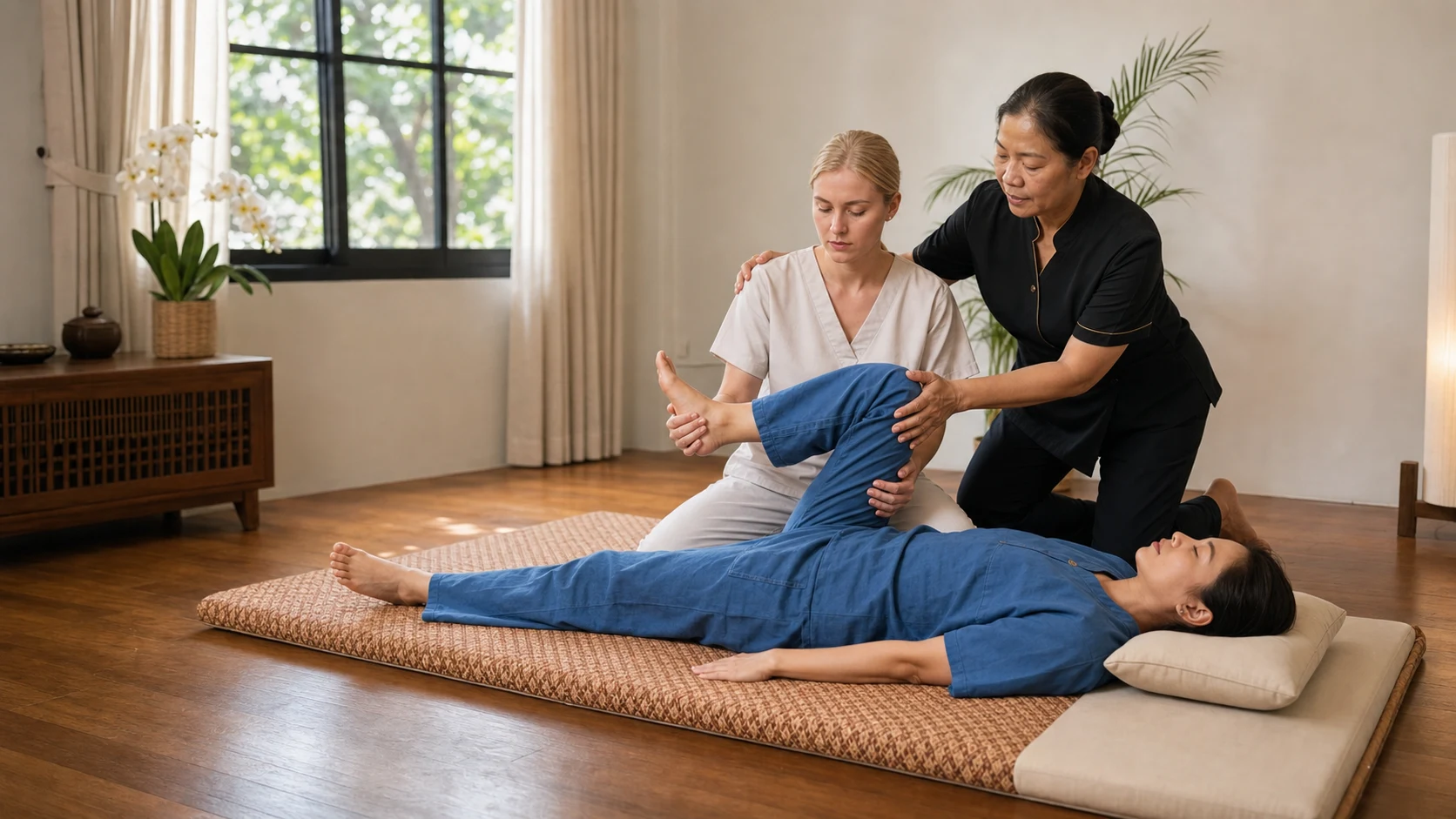
Learn Nuad Thai as Living Heritage
UNESCO inscribed Nuad Thai as intangible cultural heritage in 2019 and describes it as part of the art, science and culture of traditional Thai healthcare.
That context matters. Students should learn the history and traditional concepts presented by qualified teachers while also understanding anatomy, hygiene, contraindications and the limits of non-medical practice.
UNESCO recognition does not certify a school or an individual therapist. It identifies a cultural element whose knowledge and communities require safeguarding.
The Foundation Is More Than a Sequence
Memorising a full-body routine is only one part of training. Students need to understand landmarks, joint range, common risk factors, safe positioning, pressure direction and how to adapt when a standard movement is unsuitable.
Consultation should cover the guest’s goal, current symptoms, relevant history, medication, pregnancy, recent procedures and comfort preferences without pretending to diagnose.
A credible course teaches referral and refusal decisions as seriously as hands-on technique.
Supervised Repetition Builds Usable Skill
Demonstration is not mastery. Students need repeated practice on different bodies, immediate correction and structured feedback on pressure, pace, draping, communication and transitions.
A logbook can record the technique practised, instructor comments, adaptations and unresolved questions. Volume without feedback can simply reinforce poor habits.
Assessment should include consultation and safety decisions, not only the ability to reproduce a memorised routine.
-
01
Observe
Watch the complete technique and hear the purpose, landmarks and exclusions.
-
02
Practise slowly
Repeat with supervision before adding speed, flow or stronger pressure.
-
03
Receive feedback
Correct hand placement, body mechanics, draping and client communication.
-
04
Demonstrate judgement
Adapt or decline a technique when the case does not fit the routine.
Protect the Therapist’s Body
Professional longevity depends on stance, table or mat height, weight transfer, wrist alignment, breathing and recovery between sessions. Forcing pressure through thumbs and shoulders is not a badge of commitment.
Teachers should correct the student’s posture from multiple angles and explain when a forearm, palm or supported position is safer.
Pain during practice deserves review. A therapist who ignores their own symptoms may compensate, lose precision and shorten their career.
Consent, Hygiene and Boundaries Are Core Skills
Professional touch requires clear scope, informed consent, secure draping, confidentiality and a way for the guest to pause or stop. These standards apply regardless of the treatment’s cultural or spiritual framing.
Hand hygiene, clean linens, product handling, equipment disinfection and honest records protect guests and staff. Scent, oil and skincare allergies must be checked before use.
A therapist should never promise a cure, pressure a guest to tolerate pain or claim to read organs through the feet. Refer medical concerns to an appropriately qualified clinician.

Specialisation Comes After the Foundation
Oil massage, foot massage, facial care, herbal compresses, cupping, prenatal work, lymphatic techniques and sports-oriented massage each add different products, risks and decision points.
A weekend collection of certificates does not create competence across all of them. Choose one next modality, document prerequisites and practise it under an instructor who can explain contraindications.
Pregnancy, recent surgery, cancer care, acute injury and complex swelling require especially careful scope and referral. Training should make limitations clearer, not expand claims.
A Current Bangkok Training Example
Nuad Thai School currently lists a 150-hour Professional Thai Massage programme with theory, supervised practice and certification preparation, arranged on request in Bangkok.
Its page describes history, Sen concepts, anatomy, contraindications, consultation, ethics, body mechanics and full-body practice. Those are useful curriculum headings, but prospective students should still confirm dates, instructors, approval status, assessment and certificate use directly.
Prices, schedules and credentials can change. The live school confirmation should prevail over any article summary.
Training, Registration and Employment Are Separate
Completing a course does not automatically guarantee provider registration, employment, insurance, a visa or work authorisation. Requirements depend on nationality, role, establishment and current law.
Before paying for a professional pathway, ask the school which step its certificate supports and verify the remaining steps with the relevant Thai authorities or a qualified adviser.
Employers should then assess practical competence, not rely on paper alone: observe consultation, sanitation, draping, technique, adaptation and communication.
Excellence Is a Practice System
A serious therapist pathway combines recognised education, supervised repetition, ethical conduct, safe body mechanics and continued review.
The goal is not to collect every modality quickly. It is to become reliably safe and useful in one scope, then expand with evidence, mentorship and humility.
“A certificate records a course; professional trust is earned through safe decisions repeated consistently.”
Loft Thai Editorial Team
Continue your research
REFERENCES
Sources & further reading
PRACTICAL GUIDANCE
Frequently Asked Questions
How many hours are needed to become a massage therapist in Thailand?
There is no universal number for every role. Officially recognised course structures vary by modality; verify the exact approved programme, registration goal and current authority requirements.
Is a short Thai massage class professional certification?
Usually not. Short workshops can provide cultural or introductory learning, while professional pathways require more extensive theory, supervised practice and assessment.
How can I check whether a Thai massage course is approved?
Check the school, teaching branch and exact course through Thailand’s Health Establishment Division resources, then ask the school for written confirmation.
Does UNESCO certify Thai massage schools?
No. UNESCO recognises Nuad Thai as intangible cultural heritage; it does not certify individual schools, therapists or spa businesses.
What should a good practical assessment include?
It should evaluate screening, contraindication decisions, hygiene, consent, draping, body mechanics, pressure, sequence, adaptation and communication.
CONTINUE READING
Related stories
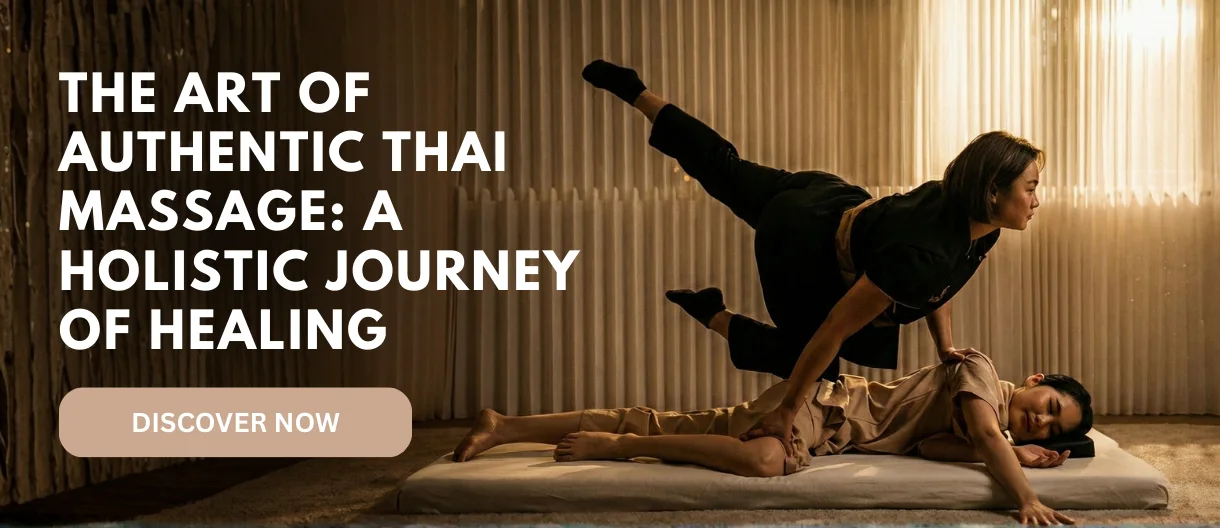
The Art of Authentic Thai Massage: A Holistic Journey of Healing
In the heart of Bangkok, where tradition meets modern sophistication, the art of Thai massage continues to thrive — not merely as a spa treatment, but as a cultural treasure and holistic wellness philosophy that has endured for over 2,500 years. Today, Thai…
Read the guide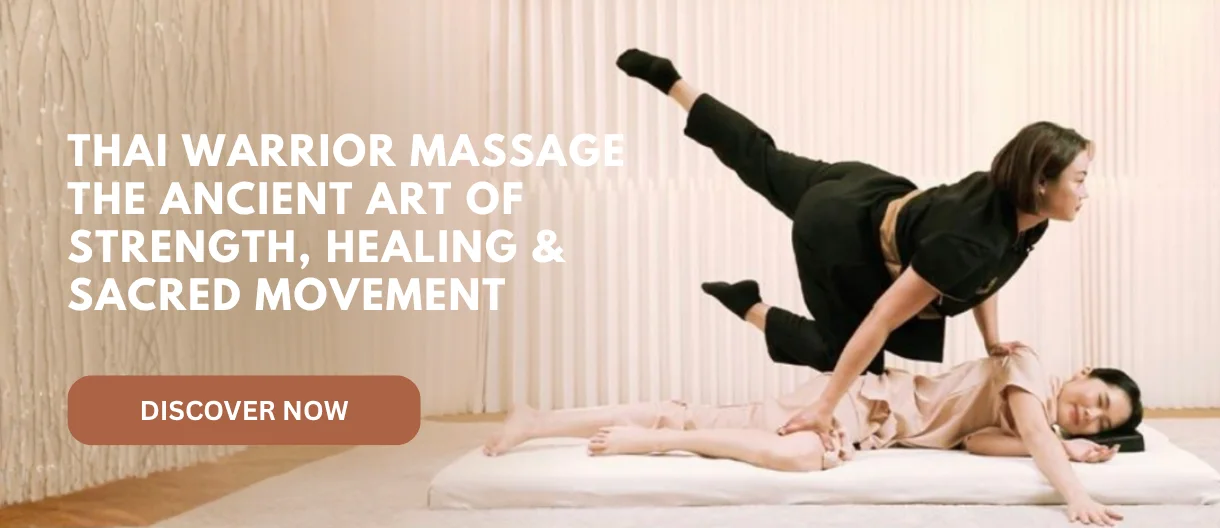
Thai Warrior Massage: The Ancient Art of Strength, Healing & Sacred Movement
Among the ancient healing traditions of Southeast Asia, the Thai Warrior Massage stands alone as a discipline that unites the physical intensity of martial arts with the elegance of therapeutic touch. It is at once a method of recovery, a ceremonial practice,…
Read the guide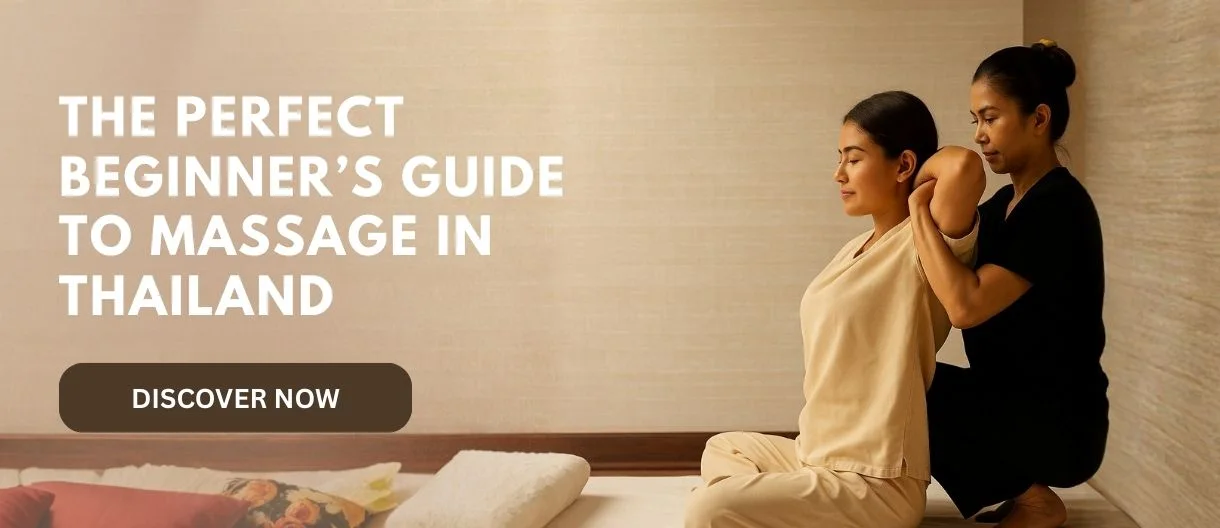
The Perfect Beginner’s Guide to Massage in Thailand
If this is your very first massage experience in Thailand, welcome — you are about to discover one of the greatest gifts Thai culture has shared with the world. Massage in Thailand isn’t just a relaxing activity to try on holiday. It is a deeply rooted…
Read the guide
Nuad Thai School: One of the Best Thai Massage Schools and Spa Training Centers in Bangkok, Operated by Loft Thai Spa
Bangkok has long been recognized as one of the world capitals of massage, spa therapy, traditional healing, and wellness culture. For many international students, professional therapists, spa owners, and wellness entrepreneurs, Thailand is not simply a…
Read the guide