

Water has long been a symbol of renewal, purification, and vitality. In modern wellness and medical practices, hydrotherapy—the therapeutic use of water immersion—has gained recognition for its profound effects on the body. Beyond offering relaxation, hydrotherapy plays a critical role in supporting cardiovascular and circulatory health, making it especially valuable for recovery, stress management, and long-term wellness.
For those seeking innovative treatments, luxury wellness destinations and medical spas in Bangkok increasingly highlight hydrotherapy as part of their comprehensive wellness offerings.
The Science of Circulation and Water
Circulation is the body’s lifeline. It ensures oxygen, nutrients, and hormones are delivered efficiently while waste products are removed. When circulation falters, fatigue, swelling, and even serious health conditions can arise. Hydrotherapy addresses these challenges through the unique properties of water—temperature, buoyancy, and hydrostatic pressure.
Medical Insight
Studies confirm that hydrotherapy improves blood circulation, reduces venous pooling, and enhances oxygen delivery to tissues. This effect is particularly important for recovery after exercise, post-injury rehabilitation, and overall heart health. Immersion in warm water dilates blood vessels, promoting smoother blood flow, while alternating hot and cold therapies stimulate vascular flexibility.
For individuals managing cardiovascular risk factors or seeking to enhance physical performance, hydrotherapy serves as both a preventive and restorative tool.
The Hemodynamic Effects of Hydrotherapy
One of the lesser-known but critical aspects of hydrotherapy lies in its impact on hemodynamics—the dynamics of blood flow. Hydrostatic pressure from water immersion naturally compresses the body, aiding venous return and supporting the heart’s pumping efficiency.
Education and Training
Therapists in Bangkok are trained to understand the hemodynamic effects of water pressure and temperature, allowing them to tailor treatments safely and effectively. For example, cooler water may invigorate and stimulate circulation, while warmer water relaxes blood vessels and muscles. This specialized knowledge ensures that hydrotherapy treatments are not only soothing but also medically sound.
By combining traditional healing wisdom with scientific understanding, wellness practitioners create personalized experiences that align with the individual’s health status and goals.
Hydrotherapy for Recovery and Rehabilitation
Athletes and individuals recovering from injuries often turn to hydrotherapy as part of their rehabilitation programs. The buoyancy of water reduces stress on joints, allowing for gentle movement and exercise without pain. At the same time, enhanced circulation accelerates healing by delivering more oxygen and nutrients to tissues.
In Bangkok, wellness resorts and sports recovery centers have begun integrating hydrotherapy pools and contrast baths into their programs. This not only supports physical recovery but also helps clients build sustainable wellness routines.
Cardiovascular Health and Stress Relief
Hydrotherapy is not limited to physical recovery—it also contributes to emotional balance. Immersion in water, particularly warm baths, lowers sympathetic nervous system activity, helping reduce blood pressure and heart rate. This combination of improved circulation and stress relief creates a powerful preventive effect for cardiovascular health.
Couples and individuals often report deeper relaxation and better sleep following hydrotherapy sessions. Over time, these benefits compound, leading to reduced cardiovascular strain and enhanced overall wellness.
Hydrotherapy in Bangkok’s Wellness Scene
Bangkok has established itself as a hub for luxury wellness experiences, and hydrotherapy is increasingly included in spa and medical retreat offerings. Guests may enjoy thermal pools, contrast hydrotherapy circuits, and even guided aquatic therapy sessions. These services provide not only relaxation but also measurable circulatory benefits.
Whether as part of a honeymoon spa journey, a fitness recovery program, or a therapeutic medical treatment, hydrotherapy in Bangkok reflects the city’s unique blend of traditional healing and modern science.
Conclusion: The Flow of Health Through Water
Hydrotherapy is more than a soothing experience—it is a scientifically backed practice that enhances circulatory health, supports recovery, and safeguards the heart. By improving blood flow, reducing venous pooling, and optimizing oxygen delivery, it offers tangible benefits for long-term wellness.
With skilled therapists who understand the hemodynamic effects of water pressure and temperature, hydrotherapy becomes both an art and a science. In Bangkok, couples, athletes, and wellness travelers alike can experience the life-enhancing power of water immersion, rediscovering balance and vitality through the timeless flow of water.
UPDATED LOFT THAI GUIDE
Additional guidance and current information
The following editorial update expands on the original Loft Thai article with practical context, current treatment guidance and further reading.
Hydrotherapy Is an Umbrella Term
Hydrotherapy can describe warm baths, whirlpools, contrast bathing, cold immersion, aquatic exercise and clinician-led rehabilitation. These are not interchangeable exposures.
A private spa Jacuzzi is primarily a warm-water hospitality feature. Aquatic rehabilitation involves prescribed movement, clinical goals and qualified supervision.
The legacy article moved between spa relaxation, sports recovery, heart health and medical rehabilitation as though one form of immersion proved the others. This update keeps each context separate.
What Water Changes Immediately
Buoyancy reduces the apparent load on submerged joints and can make movement feel easier. Hydrostatic pressure acts on immersed tissues, while temperature changes skin blood vessels and thermal regulation.
Warm water commonly increases skin blood flow and heat transfer. Immersion can also alter heart rate, blood pressure and central blood volume depending on depth, temperature, duration and the person.
These responses are physiology, not an automatic benefit. A change can be comfortable for one guest and unsafe for another.
What the Evidence Does—and Does Not—Show
Research on repeated passive heating has examined blood pressure and vascular outcomes, but protocols vary widely across hot-water baths, sauna, local heating and other methods.
A 2026 systematic review and meta-analysis of randomised trials found no significant pooled effect for most measured cardiometabolic and vascular outcomes. Earlier reviews reported changes in selected blood-pressure or vascular measures but also called for better evidence on dose and clinical use.
A Bangkok spa session should therefore not be marketed as preventing cardiovascular disease, safeguarding the heart, accelerating tissue healing or providing long-term circulatory treatment.

Warm Immersion and Cold Plunges Are Opposite Stressors
Cold water can trigger a rapid cold-shock response with changes in breathing, heart rate and blood pressure. The American Heart Association warns that sudden immersion can place stress on the heart and be dangerous, especially for people with cardiac history.
Warm water creates a different thermal load and can contribute to dizziness or low blood pressure when a person stands. Moving rapidly between extreme temperatures adds another challenge.
Do not infer that evidence about one temperature supports the other. A spa should state the water format, approximate temperature and supervision rather than relying on the word hydrotherapy.
Spa Relaxation Is Not Rehabilitation
A physiotherapist or rehabilitation team may use water to support prescribed exercise after assessing mobility and medical risk. The pool, programme and monitoring are part of clinical care.
A spa attendant manages hospitality and facility safety. They should not claim to treat vascular disease, an injury, postoperative swelling or chronic pain through a Jacuzzi add-on.
Guests seeking rehabilitation should use an appropriately licensed service and share medical information with the treating clinician.
Who Should Seek Individual Advice First
Pregnancy, cardiovascular disease, blood-pressure disorders, fainting, diabetes complications, impaired sensation, open wounds, infection, recent surgery, significant mobility limits and medications affecting temperature or blood pressure can change suitability.
The CDC notes that heat places additional cardiovascular stress during pregnancy. Older hot-tub guidance also advises people with heart disease, diabetes or high or low blood pressure to obtain medical advice before use.
A spa questionnaire cannot replace that advice. When health status is uncertain, skip the heat-based add-on until it is clarified.
Water Hygiene Is Part of the Treatment
Warm, aerated water requires managed disinfectant, pH, filtration, cleaning and maintenance. Clear-looking water is not proof that a system is safe.
The CDC explains that hot-tub mist can spread Legionella when maintenance is inadequate. Cough, shortness of breath, fever or muscle aches after recent hot-tub exposure deserve medical attention, with the exposure reported to the clinician.
Ask whether the facility follows a documented water-management and cleaning schedule. Private use does not remove the need for maintenance between guests.
- Documented disinfection and pH checks
- Filtration and turnover appropriate to the system
- Cleaning between private bookings
- Safe access, handrail and non-slip surfaces
- Clear maximum time and emergency assistance
A Conservative Private Session
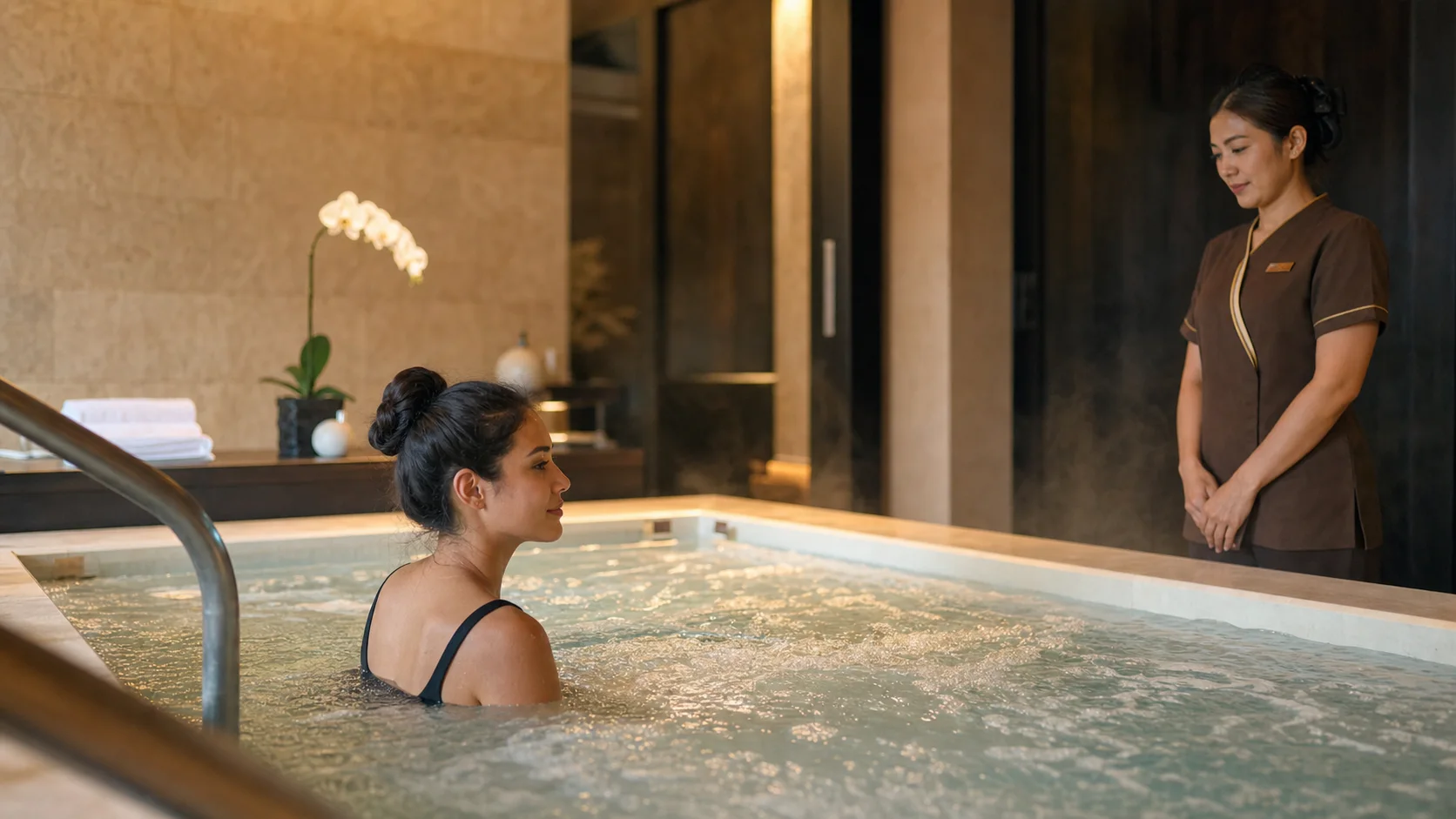
Confirm the water treatment, temperature range, maximum duration and whether the room is continuously attended or monitored. Enter slowly and use the handrail.
Do not use the facility while intoxicated, acutely ill or unable to exit independently without arranged assistance. Avoid submerging open wounds.
Leave if you feel dizzy, faint, nauseated, unusually breathless, confused, overheated or uncomfortable. Sit or lie safely and request help.
-
01
Screen
Review health conditions, medication, pregnancy and heat tolerance.
-
02
Verify
Ask about temperature, cleaning, duration, access and supervision.
-
03
Enter slowly
Use the handrail and avoid abrupt temperature transitions.
-
04
Exit early
Stop at the first sign of dizziness, overheating or breathing difficulty.
Hydrotherapy in the current Loft Thai Context
Loft Thai’s current packages page lists a 30-minute private Jacuzzi add-on at THB 5,000 and describes hydrotherapy, aromatherapy and chromotherapy.
The listing presents a spa experience, not clinician-led aquatic therapy. Guests should confirm which branch offers it, whether the price covers two, current products, water-management procedures and health exclusions.
Aroma and coloured lighting can influence atmosphere but do not provide a separate cardiovascular treatment. The warm-water setting is enough to describe honestly.
Water Can Be Pleasant Without Becoming a Cure
Warm-water immersion changes load, temperature and circulation while a person is in the water. The long-term medical meaning depends on the protocol, population and evidence.
In a Bangkok spa, hydrotherapy is best presented as a carefully maintained, time-limited warm-water ritual. Clear screening and hygiene are more important than ambitious circulation claims.
“A change in blood flow during immersion is not the same as proof of long-term cardiovascular treatment.”
Loft Thai Editorial Team
Continue your research
REFERENCES
Sources & further reading
PRACTICAL GUIDANCE
Frequently Asked Questions
Does a spa Jacuzzi improve cardiovascular health?
Warm immersion changes cardiovascular variables, but a spa session is not established treatment or prevention for cardiovascular disease.
Is hydrotherapy the same as aquatic rehabilitation?
No. Rehabilitation uses prescribed movement, clinical goals and qualified supervision; a spa Jacuzzi is a hospitality experience.
Who should ask a clinician before warm-water immersion?
People with pregnancy, cardiovascular or blood-pressure conditions, fainting, diabetes complications, recent surgery, wounds, infection or relevant medication should seek individual advice.
Why does hot-tub hygiene matter?
Warm aerated water can support microbial growth when disinfection, pH, filtration and cleaning are not properly managed.
Does Loft Thai currently list a private Jacuzzi add-on?
Yes. The packages page reviewed on 28 July 2026 lists 30 minutes at THB 5,000. Confirm current branch availability and terms.
CONTINUE READING
Related stories

Couple Massage in Bangkok: The Romantic Spa Experience Every Couple Deserves
Bangkok has earned its reputation as one of the world’s leading spa capitals, and its magnetic charm draws millions of travelers seeking both adventure and relaxation. Beyond its bustling streets and glittering skyline, Bangkok offers something precious to…
Read the guide
What Makes a World-Class Spa in 2026?
In 2026, the idea of a world-class spa has evolved far beyond plush interiors and premium products. As global travelers become more experienced and wellness-literate, expectations have shifted toward authenticity, intelligence, and emotional depth. Luxury is…
Read the guide
Cupping Therapy Explained: Technique, Marks, Benefits, and Medical Insights
Cupping therapy is one of the most visually recognizable bodywork techniques in the wellness world. Even people who have never tried it often recognize the round red or purple marks that can appear on the back, shoulders, or neck after a session.
Read the guide
Sports Recovery Massage in Bangkok: Best Treatments After Training or Travel (2026)
Bangkok is an amazing city for training—gyms, boxing, running routes, Pilates studios, and that “walk-all-day” lifestyle that quietly racks up 15,000–25,000 steps without you noticing. It’s also a city where travel fatigue hits hard: long flights, heat,…
Read the guide