
Bangkok is an amazing city for training—gyms, boxing, running routes, Pilates studios, and that “walk-all-day” lifestyle that quietly racks up 15,000–25,000 steps without you noticing. It’s also a city where travel fatigue hits hard: long flights, heat, dehydration, cramped taxi rides, and tight hips from sitting.
That’s why sports recovery massage in Bangkok has become a go-to wellness choice in 2026. It’s not just “a strong massage.” Done properly, recovery massage is a targeted therapy that helps your body shift out of stress mode, release overloaded muscle groups, improve movement quality, and feel ready for your next session—or your next day of exploring the city.
This guide breaks down the best recovery-focused treatments after training or travel, what they actually do, what to expect during a real sports recovery session, and how to choose the right approach for your body.
Why sports recovery massage is different from “regular massage”
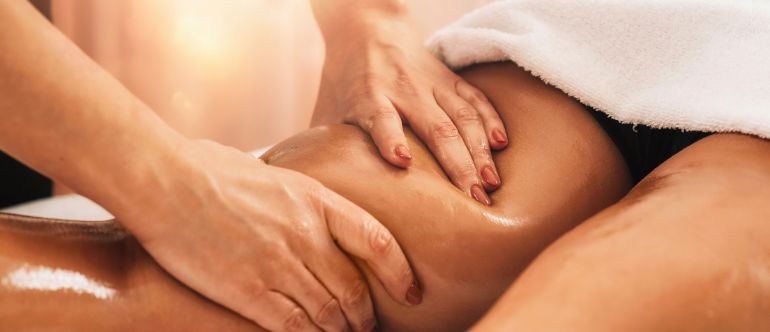
A classic relaxation massage aims to calm you down. A sports recovery massage aims to improve function: reduce tension in overworked muscles, restore range of motion, and help the body recover from repetitive load.
The best recovery sessions usually involve:
- Targeted work on high-load zones (calves, hamstrings, hip flexors, glutes, upper back, shoulders)
- Slower, controlled pressure (not aggressive force)
- Technique that changes with the tissue (not the same strokes everywhere)
- A clear goal: recovery, mobility, injury prevention support, or performance readiness
At Loft Thai Spa, sports massage is positioned exactly this way—an effective therapy focused on releasing muscle tension and restoring balance through soft tissue management and rehabilitation concepts, not just “relaxation.”
Does sports massage really help recovery? What the evidence says
People often ask whether massage is “scientifically proven.” The honest answer: massage tends to help with soreness and perceived recovery, and results vary depending on the person, technique, and timing.
- A 2017 systematic review and meta-analysis reported that massage after strenuous exercise can be effective for alleviating delayed onset muscle soreness (DOMS) and may improve some performance-related measures.
- A 2020 review in BMJ Open Sport & Exercise Medicine discusses mixed results across studies (some benefits, some minimal), which matches real-life experience: many people feel better after massage, but performance outcomes are not guaranteed.
The practical takeaway: if you train hard or travel frequently, recovery massage can be a high-value tool—especially when it’s delivered with proper technique and matched to your body’s needs.
The “Bangkok athlete” recovery problems (and what treatments work best)
Post-training muscle tightness and heavy legs
Common after: leg day, Muay Thai, running, HIIT, spinning, long walks
Best fit: Sports Massage + lower-body focus (calves/IT band/hips)
A proper sports massage supports circulation and reduces the “tight, loaded” feeling—especially in calves and hips, which tend to overload in Bangkok’s walking + heat combo.
Loft Thai Spa offers Sports Massage as a dedicated treatment (90 and 120 minutes) in its menu, emphasizing muscle tension release and restoring balance.
“Office body” meets “training body” (tight hips + tight neck)
Common after: desk work + gym, travel + laptop posture
Best fit: Sports Massage blended with therapeutic upper-body work
Bangkok living can create a mixed pattern: hips and lower back tight from sitting, shoulders and neck tight from screens, then training loads on top. In these cases, a recovery massage should address both ends—hip flexors/glutes and neck/upper back—so your posture doesn’t keep re-triggering the same tension.
Travel recovery and jet lag stiffness
Common after: long-haul flights, back-to-back meetings, airport days
Best fit: Traditional Thai massage (mobility reset) or Sports Massage (targeted release)
If you feel “compressed,” stiff, and heavy after travel, Traditional Thai style mobilization and rhythmic compression can be extremely effective for restoring movement quality and circulation. (It’s a different tool than oil-based relaxation.)
Best treatments after training or travel in Bangkok
Sports Massage
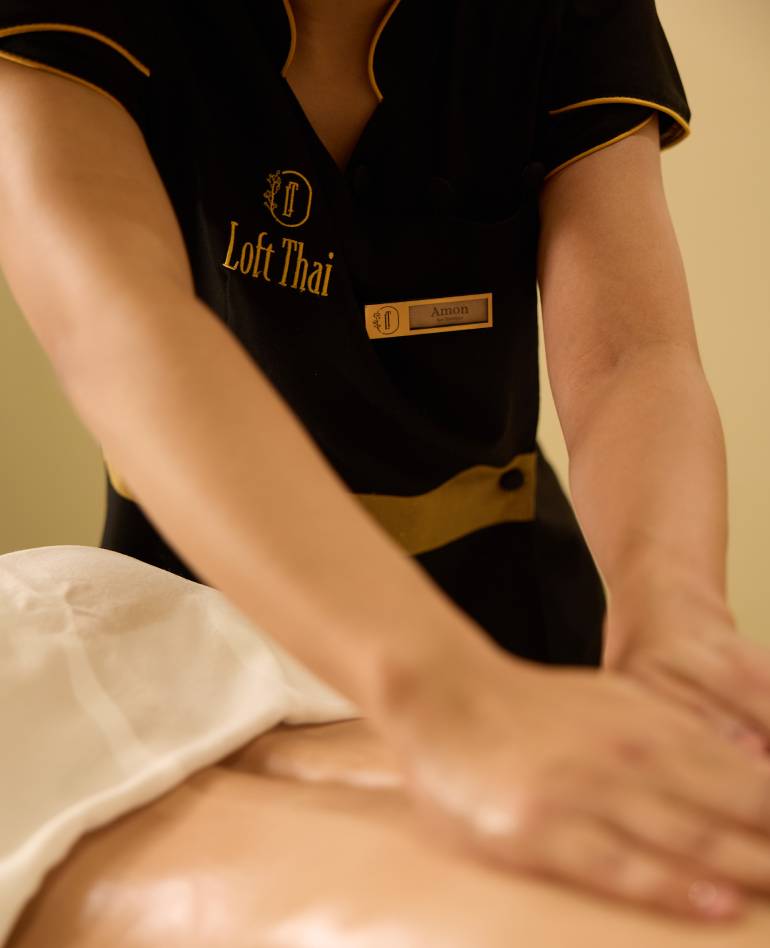
If you want the most direct “recovery tool,” sports massage is the obvious first choice—especially if you’re training during your Bangkok trip.
At Loft Thai Spa, Sports Massage is listed from 2,800 THB (90 min) and 3,600 THB (120 min).
Longer sessions (120 min) are often worth it when you want both lower-body recovery and upper-body/posture work in the same visit.
Deep Tissue Massage
Deep tissue can be excellent when you have stubborn knots or chronic tightness—especially upper back, glutes, or calves. But deep tissue should be slow and precise, not “maximum pressure.” If you bruise easily or feel inflamed from training, a well-controlled sports massage can be a safer recovery fit than overly aggressive deep tissue.
Traditional Thai Massage for mobility
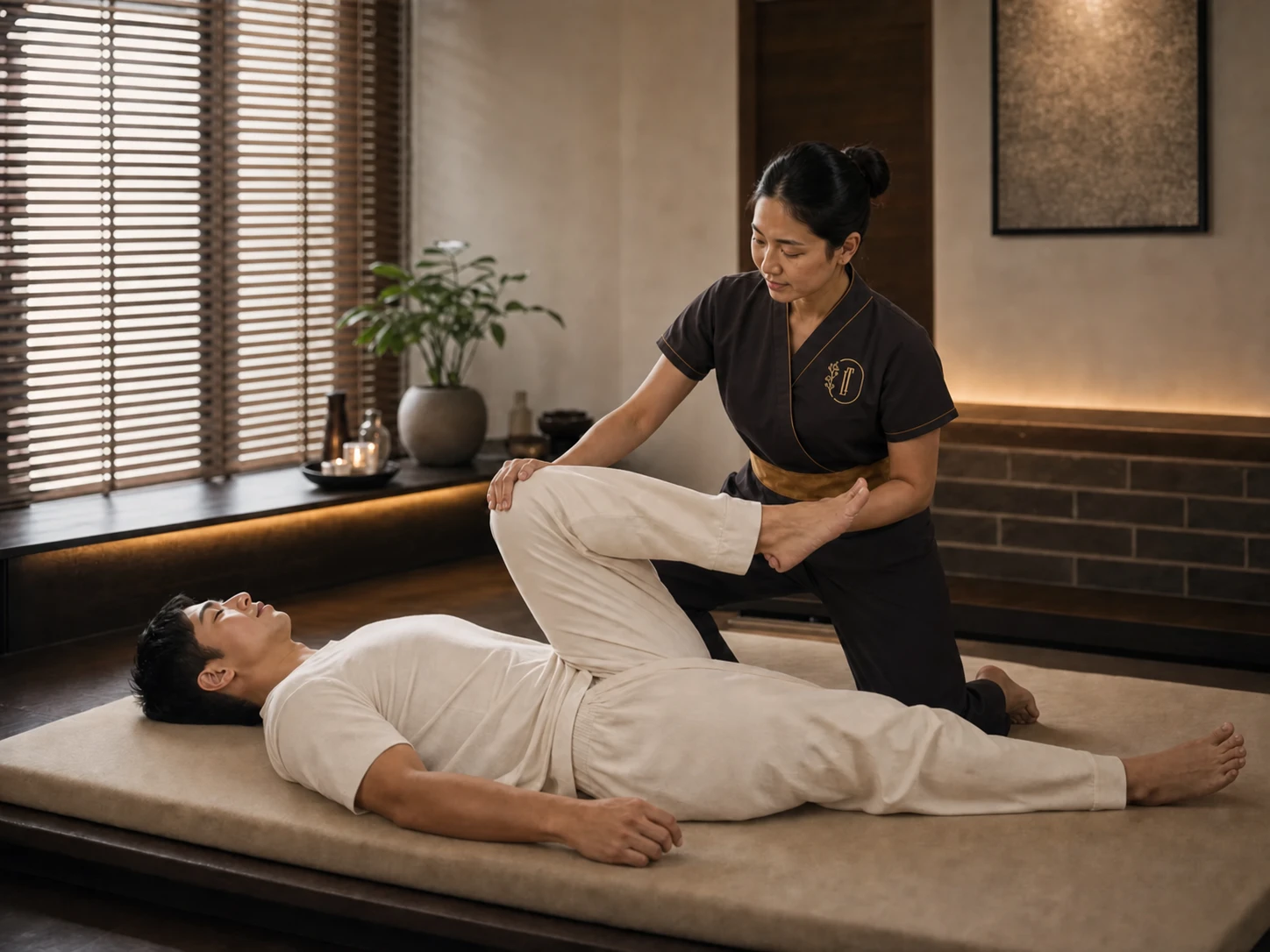
If your biggest issue is stiffness—hips, hamstrings, lower back, shoulders—Traditional Thai massage can feel like a full-body reset because it includes compression and assisted mobilization rather than only localized muscle work.
Recovery packages and multi-step treatments
If you want a full recovery day (not just one technique), a package approach can work well: bodywork + scrub + hydration steps + quiet time. Loft Thai Spa positions its packages as luxury experiences with structured steps (for example, Four Hands massage and curated spa journeys).
What to expect in a real sports recovery massage session
A high-level sports recovery session usually looks like this:
A short check-in
You should be asked what you trained, what feels tight, and whether you’re recovering, preparing, or dealing with pain patterns.
Targeted sequencing
Good therapists don’t treat everything equally. They prioritize: calves and hips for runners/walkers; shoulders and upper back for desk bodies; glutes and hamstrings for strength training; forearms/shoulders for boxing.
Technique changes with the tissue
Sports recovery isn’t one “style.” It may include compression, friction, stretching, and deeper targeted work—applied safely.
You leave feeling looser, not destroyed
A recovery massage should help you move better. Feeling slightly tender in a few spots can happen, but you shouldn’t leave feeling “wrecked.”
UPDATED LOFT THAI GUIDE
Additional guidance and current information
The following editorial update expands on the original Loft Thai article with practical context, current treatment guidance and further reading.
What Makes Sports Recovery Massage Different?
Relaxation massage usually follows a broad calming rhythm. Sports recovery massage begins with a specific question: what has the guest done, how does the body feel now and what would make the next day more comfortable? The answer may involve selected muscle groups, movement, compression or slower deep work rather than treating every area equally.
A runner may want attention around the calves, hips and feet. A Muay Thai practitioner may arrive with loaded shoulders, hips and lower legs. A traveller may feel generally stiff after sitting and walking but have no training injury at all. The therapist should distinguish these patterns through conversation, observation and conservative testing.
Sports massage is not a diagnosis or rehabilitation plan. Pain linked to injury, sudden swelling, weakness, numbness or loss of function belongs with an appropriately qualified healthcare professional.
What Does the Evidence Say About Recovery?
A 2020 BMJ Open Sport & Exercise Medicine systematic review analysed 29 studies with 1,012 participants. It found no overall improvement in strength, sprint, endurance or fatigue, while reporting small benefits for flexibility and delayed-onset muscle soreness. That is a useful correction to claims that one massage automatically improves athletic performance.
An earlier 2017 meta-analysis of 11 randomised trials involving 504 participants reported reductions in post-exercise soreness at 24, 48 and 72 hours. The studies differed in massage timing, technique and exercise protocols, so the figures should not be treated as a guarantee for an individual guest.
A realistic conclusion is that massage may help some people feel less sore, more relaxed or temporarily more comfortable moving. It cannot replace sleep, nutrition, progressive training, injury management or time.
Matching the Session to Your Training
The same massage does not suit every training day. Immediately after an unfamiliar or very intense session, tissues may feel tender and reactive. Moderate pressure and a recovery focus can be more appropriate than aggressive work. On a lighter training week, a guest may comfortably choose more targeted pressure or mobility.
Share what you trained, when you trained and what comes next. A pre-event session should not leave the body tender or fatigued. A post-event session may prioritise comfort and down-regulation. A maintenance session between training blocks can include a broader review of recurring tension patterns.
Pain scale is not a measure of effectiveness. The therapist should be able to explain why a technique is being used and reduce intensity without treating feedback as resistance.
- Running and long walks: calves, feet, hips and posterior chain
- Strength training: recently loaded groups plus global movement balance
- Boxing and racquet sports: shoulders, upper back, forearms, hips and legs
- Desk work plus exercise: neck and upper back alongside hips and lower body
Travel Stiffness Is Not the Same as a Sports Injury
Long flights, airport waiting, air-conditioning and unfamiliar pillows can leave the body feeling compressed and tired. Bangkok walking and heat may then add calf and foot fatigue. A recovery massage can address comfort and movement, but it does not cure jet lag or dehydration.
Traditional Thai massage may suit a guest who enjoys compression and assisted movement. Oil-based sports massage can target selected areas with a quieter table-based approach. If one leg is suddenly swollen, hot or painful after travel, do not book massage as the first response—seek urgent medical assessment.
Tell the therapist how recently you travelled and whether symptoms are equal on both sides. That context changes what is safe and useful.
What Happens During a Sports Recovery Session?
A high-quality session is structured but not mechanical. It begins with goals, recent load and health screening, then moves through observation and treatment. Technique can include compression, gliding, friction, broad forearm work and carefully selected movement.
The sequence should connect local tension to the wider body. Working only on a sore calf without considering the foot, hip, training volume or recent travel may miss useful context. At the same time, a spa therapist should stay within scope and refer rather than diagnose.
-
01
Define the recovery goal
Clarify recent activity, timing, soreness and what the guest wants to feel after the session.
-
02
Screen for red flags
Ask about injury, swelling, bruising, fever, neurological symptoms, surgery and medication.
-
03
Prioritise key areas
Choose a focused sequence instead of giving every muscle the same amount of pressure.
-
04
Adapt technique continuously
Change depth, speed and movement according to tissue response and feedback.
-
05
Reassess comfort
Finish calmly and check how the body feels before the guest stands and leaves.
Safety, Pressure and Reasons to Postpone
Massage should wait over an acute tear, fracture, active infection, fever, open wound, uncontrolled swelling or a recently injured area that has not been assessed. The US National Center for Complementary and Integrative Health notes that serious adverse events are rare but have been reported, particularly with vigorous massage or people at increased risk of injury.
Anticoagulant medication, fragile bones, recent surgery, pregnancy and significant cardiovascular, neurological or inflammatory conditions require individual guidance. Disclose relevant information even if the purpose of the visit seems purely athletic.
Seek medical care for sudden severe pain, loss of strength, numbness, inability to bear weight, chest symptoms or one-sided leg swelling. Recovery massage belongs after appropriate assessment, not instead of it.
Timing, Aftercare and Your Next Training Session
Schedule according to how you usually respond. If massage sometimes leaves you tender, avoid experimenting with deep work immediately before a competition or demanding class. Allow a calmer first session when you are new to sports massage.
Afterwards, stand slowly, drink according to normal thirst and choose gentle movement if it feels comfortable. There is no need to force stretching or consume excessive water to flush toxins. Sleep, food and sensible training load remain the foundations of recovery.
At Loft Thai Spa, a sports-focused session can be adapted around training, Bangkok travel and desk-related tension. The most useful booking includes enough time for consultation and the areas that matter, rather than simply selecting the strongest pressure on the menu.
“Recovery massage should leave movement feeling considered—not prove the therapist’s strength or turn ordinary soreness into a contest of pain.”
Loft Thai Editorial Team
Continue your research
REFERENCES
Sources & further reading
PRACTICAL GUIDANCE
Frequently Asked Questions
Should sports recovery massage be very painful?
No. Some focused work can feel intense, but sharp pain, guarding or distress are not signs of quality. Pressure should remain adjustable throughout.
Can massage remove lactic acid after exercise?
That explanation is oversimplified and commonly misused. Massage may influence comfort and perceived soreness, but recovery also depends on time, sleep, nutrition and training load.
Will sports massage improve my performance?
Research does not show a reliable overall improvement in strength, sprint or endurance. Some studies report small benefits for flexibility and delayed-onset soreness.
Is massage suitable immediately after a long flight?
It may be suitable for ordinary stiffness, but sudden one-sided leg swelling, heat or pain requires urgent medical assessment rather than massage.
How long should a sports massage in Bangkok be?
Duration depends on the number of areas and the goal. A focused session may suit one region, while a longer booking allows lower-body recovery, upper-body work and a calmer overall pace.
CONTINUE READING
Related stories
Cupping Therapy Explained: Technique, Marks, Benefits, and Medical Insights
Cupping therapy is one of the most visually recognizable bodywork techniques in the wellness world. Even people who have never tried it often recognize the round red or purple marks that can appear on the back, shoulders, or neck after a session.
Read the guide
Why Stress and Burnout Are Driving the Luxury Spa Market
Luxury spas used to be framed as “treat yourself” experiences. In 2026, they’re increasingly positioned as stress-management infrastructure—a place people go to downshift their nervous system, recover from high-pressure work cycles, and protect long-term…
Read the guide
Office Syndrome Massage in Bangkok: How to Fix Neck, Shoulder & Back Pain the Right Way
“Office syndrome” isn’t a trendy phrase in Bangkok—it’s real life. Hours at a laptop, constant phone use, commuting, gym imbalance, stress breathing, and long periods of sitting create the same pattern again and again: tight neck, heavy shoulders, stiff upper…
Read the guide
A Deep Dive into the Healing Science of Cupping Therapy Massage and the Loft Thai Spa Experience
In the vast and evolving landscape of holistic health and modern medicine, few modalities bridge the gap between ancient wisdom and contemporary physiological science as effectively as Cupping Therapy. Often recognized by the circular marks left on the skin of…
Read the guide