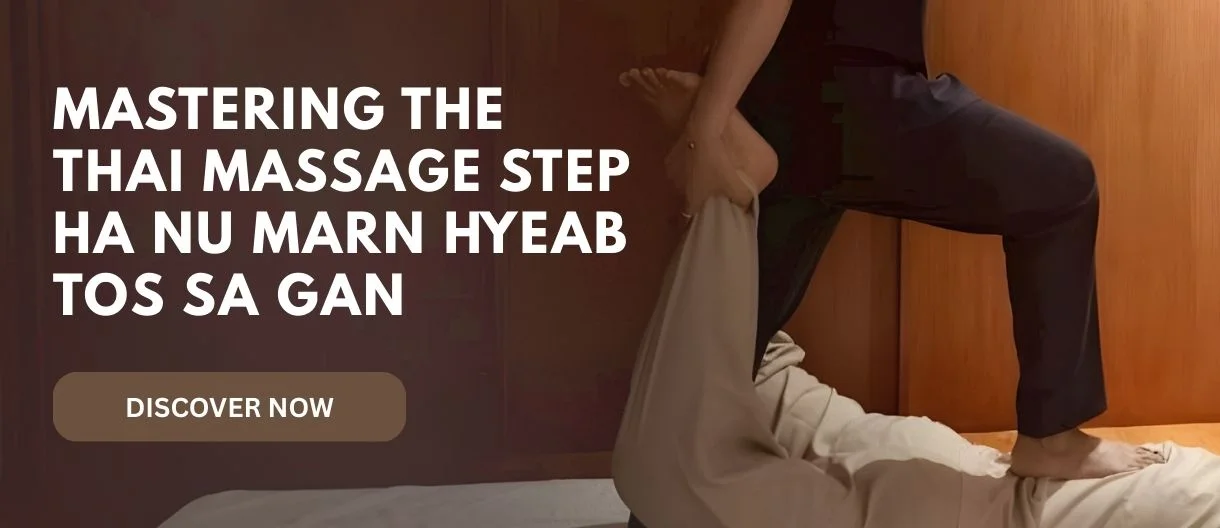
Ha nu marn hyeab tos sa gan (หานู่ มานเหยียบ ทศสะกัน) is a fascinating and visually striking element of Thai massage that focuses on stretching the front thighs (quadriceps) and arms. Often performed in more advanced or specialized Thai massage sessions, this step exemplifies the essence of Thai massage’s unique integration of assisted stretching, deep pressure, and rhythmic rocking. The posture itself, in which the therapist stands over or beside the recipient and gently manipulates the client’s limbs to induce a powerful stretch, can be both mesmerizing to watch and beneficial to experience. In this article, we will delve into the origins and nature of Thai massage, the anatomy involved in Ha nu marn hyeab tos sa gan, the benefits of performing this stretch, and the detailed execution of the posture, while highlighting essential safety measures, cultural context, and variations.
Thai massage, also known as Nuad Thai or Nuad Boran, traces its roots back centuries. It is said to have emerged through the blending of Buddhist monasteries’ healing traditions, Indian Ayurvedic practices, and indigenous Thai folk medicine. Practitioners typically refer to it as a dynamic bodywork practice rather than a simple massage technique because of its emphasis on stretches, joint manipulations, and mindful breathing. Unlike many Western massage traditions that rely heavily on oils and soft strokes, Thai massage is often performed on a floor mat and can involve the use of the practitioner’s hands, feet, elbows, knees, and body weight to achieve therapeutic effects.
Because Thai massage involves a wide range of postures, each posture often has a specific Thai name that reflects its history or the imagery associated with it. Ha nu marn hyeab tos sa gan, the focus of this article, describes a posture that appears both acrobatic and elegant. It helps open up the quadriceps in the front of the thighs, while also providing an essential stretch for the arms and shoulders. In some variations, the recipient’s back experiences a mild extension, thereby benefiting the spinal joints as well. By simultaneously targeting multiple muscle groups and encouraging improved body alignment, Ha nu marn hyeab tos sa gan is a hallmark demonstration of how Thai massage can combine strength, flexibility, and relaxation into a single therapeutic flow.
The Anatomy Behind Ha nu marn hyeab tos sa gan
Although Thai massage incorporates some theoretical frameworks around energy lines (sen lines), a modern anatomical perspective can help us appreciate how Ha nu marn hyeab tos sa gan affects the body. In essence, the posture involves a deep extension of the hip joint while the knee is flexed, placing significant elongation on the front thigh muscles. It also incorporates a traction or extension of the arms, opening up the shoulder girdle.
-
Quadriceps (Front Thighs): The quadriceps femoris is a four-muscle group consisting of the rectus femoris, vastus lateralis, vastus medialis, and vastus intermedius. They occupy the front portion of the thigh and primarily function to extend the knee. The rectus femoris, which runs from the hip area (anterior inferior iliac spine) to the patella, also aids in hip flexion, making it particularly susceptible to tightness. When performing Ha nu marn hyeab tos sa gan, the knee is bent while the hip is extended, placing a significant stretch on the rectus femoris in particular.
-
Shoulders and Arms: The arms are often stretched behind or above the recipient’s head, depending on the therapist’s approach. This can engage the deltoid muscles, biceps brachii, and potentially the pectoralis major if there is a forward extension. The scapular stabilizers, such as the trapezius and rhomboids, also play a role in stabilizing the shoulders as the arms are stretched. In some variations, the arms might be pulled back with an underhand or overhand grip, thus involving different angles of shoulder extension.
-
Hip Flexors: While the quadriceps are certainly one focus of this stretch, another important group is the hip flexors, primarily the iliopsoas (consisting of the iliacus and psoas major muscles). These muscles can be stretched effectively during Ha nu marn hyeab tos sa gan when the hip is extended and the thigh is lifted or pulled back.
-
Spinal Joints and Back Extensors: Certain variations of Ha nu marn hyeab tos sa gan incorporate slight back extension. In these scenarios, the erector spinae, a group of muscles running along the spinal column, can experience a moderate stretch. However, care must be taken to maintain safe spinal alignment.
-
Knee Joint and Surrounding Structures: When the knee is flexed to the degree required in this posture, the tissues around the knee can undergo compression or traction. The patellar tendon, the knee joint capsule, and the collateral ligaments must not be forced beyond a safe range. This is why careful adjustments and checks are crucial when applying the stretch.
Cultural and Historical Context
In traditional Thai massage, postures like Ha nu marn hyeab tos sa gan may have evolved from ancient yogic or martial arts influences. Many believe Thai massage is a living tradition that has long been practiced in temples and monastic settings, especially in northern Thailand. Mentors teach apprentices through a hands-on approach, passing on knowledge about posture, energy lines, and medicinal herbs. The posture in question might have been adapted over time to tackle deep tension in the thighs and arms, particularly beneficial for those who work in physically demanding environments or maintain repetitive movements. Despite the changing times, the roots of Thai massage remain deeply spiritual, blending mindfulness, compassion (metta), and respect for both the therapist and the client’s body.
The Technique: How Ha nu marn hyeab tos sa gan is Performed

Ha nu marn hyeab tos sa gan can appear complex at first glance, but with proper training, it becomes a fluid sequence of movements and adjustments. The technique typically involves the client lying face-down (prone) on a mat, though variations exist in which the client’s torso may be elevated or twisted. Below is a step-by-step narrative that describes how a therapist might perform it effectively:
The session usually begins with a more general warm-up, such as palming or gentle pressing along the sen lines of the recipient’s legs, arms, and back. This helps prepare the muscles for more intense stretches. Once the therapist senses that the recipient’s body is sufficiently relaxed and warmed up, they position themselves to initiate the Ha nu marn hyeab tos sa gan.
The therapist will stand or kneel near the recipient’s hips, carefully lifting the client’s lower legs so that the knees remain in contact with the mat. The client’s arms might be extended overhead, ready to be gently pulled or grasped. Depending on the exact variation, the therapist may step onto the client’s legs or secure them under one foot—this is a hallmark of Thai massage’s clever use of body mechanics. By doing so, the therapist can maintain a stable center of gravity while freeing the arms to engage the client’s upper limbs.
Once the therapist secures the client’s ankles or thighs, they slowly draw the legs toward the client’s back. At the same time, they invite the client to extend their arms backward or upward. The positioning must be controlled and gradual, making sure the client’s knees and shoulders are not over-stretched. Often, the therapist will communicate: “Is this pressure comfortable? Do you feel the stretch here?” Maintaining open communication allows the client to indicate if anything feels too intense.
As the posture deepens, the client’s quadriceps become increasingly stretched. The therapist must carefully monitor the tension around the knees. Once the desired level of stretch is reached, the therapist can hold that position for several slow, deep breaths, encouraging the client to relax into the sensation. The addition of breath work is critical in Thai massage, as each inhale can help oxygenate the muscles and each exhale can help release tension.
In some variations, the therapist shifts their own posture to facilitate an arm stretch. They might lean backward gently while holding the client’s wrists, forearms, or arms, creating a balanced traction from both ends of the body. The combined stretch to the front thighs and arms can be quite invigorating, especially for clients who have tight hip flexors or frequently carry tension in their shoulders.
Upon completing the posture, the therapist gradually returns the client’s limbs to a neutral position, ensuring no sudden or jerky movements occur. A gentle pressing or palming across the thighs, as well as a light shoulder massage, can help the client’s body integrate the effects of Ha nu marn hyeab tos sa gan before moving on to the next step in the Thai massage sequence.
Key Safety Considerations
While Ha nu marn hyeab tos sa gan can be profoundly beneficial, the therapist must remain vigilant about a few safety points:
-
Client Communication: The therapist should frequently ask about the intensity of the stretch and remain attentive to any signs of discomfort. Pain, particularly in the knees or lower back, is an indication that the pressure may need to be reduced.
-
Proper Warm-Up: It is vital that the client’s muscles are sufficiently warmed up before engaging in such a deep stretch. Cold muscles are more prone to injury, making the initial palming and pressing phase non-negotiable.
-
Gradual Progression: The therapist should never force the client’s limbs beyond their natural range of motion. Small increments in depth can yield safer and more sustainable benefits.
-
Therapist’s Body Mechanics: The practitioner must maintain a stable posture to avoid straining their own body. Thai massage can be rigorous for therapists as well, so mindful stances, such as bending the knees instead of rounding the back, can make a significant difference.
-
Contraindications: Individuals with knee, shoulder, or spinal injuries, or serious health conditions like severe arthritis or osteoporosis, may not be suitable candidates for this posture, or may require a highly modified version.
Benefits for the Recipient
Ha nu marn hyeab tos sa gan offers an impressive array of potential benefits. Some of these are common to many forms of assisted stretching in Thai massage, while others are more specific to the posture:
-
Improved Flexibility: Perhaps the most noticeable effect is the increased range of motion in the hips, quadriceps, and arms. Clients who regularly sit at a desk or engage in repetitive motions often find relief as the tight areas along the front thighs and shoulders are opened.
-
Enhanced Blood Circulation: Thai massage often promotes improved circulation. By gently compressing and releasing various muscle groups, new blood flow is stimulated, delivering fresh oxygen and nutrients to the tissues.
-
Stress Relief and Relaxation: The guided nature of the posture, paired with gentle rocking or traction, can have a calming effect on the nervous system. Deep breathing and the mindful approach inherent to Thai massage also help lower stress levels.
-
Joint Mobility: When performed correctly, Ha nu marn hyeab tos sa gan encourages more spaciousness in the knee and shoulder joints. This can gradually reduce stiffness, an especially useful benefit for active individuals.
-
Postural Alignment: Over time, loosening tight quadriceps can have a favorable effect on the pelvis’ alignment, contributing to better posture overall. Similarly, stretching the arms and shoulders can alleviate the habitual hunched stance many people adopt while working at computers or driving.
-
Energetic Balance: In the Thai tradition, subtle energy channels or sen lines run throughout the body. Stretches like Ha nu marn hyeab tos sa gan are thought to clear potential blockages, allowing a freer flow of energy.
Variations and Adaptations
Thai massage is known for its adaptability. The Ha nu marn hyeab tos sa gan posture may be adapted in several ways:
-
Some therapists might choose to remain seated and use a strap or cloth around the client’s ankles to control the depth of the stretch.
-
Others may incorporate gentle oscillations, moving the legs or arms in a back-and-forth pattern to gently encourage further release.
-
A kneeling therapist might use an elbow or forearm to press into the lower back region, deepening the arch while still paying attention to the client’s comfort.
These subtle modifications help tailor the posture to each individual’s needs, making the technique more or less intense as required.
How the Therapist Learns and Masters this Posture
Becoming proficient in Ha nu marn hyeab tos sa gan demands practice, mentorship, and a sound understanding of anatomy. Traditional Thai massage schools often have a specific sequence in which they teach fundamental positions first—like basic foot presses or rhythmic compression—before moving on to more advanced twisting and stretching. Along with the mechanical training, students learn about the energetic aspects of Thai massage, which emphasize groundedness, compassion, and full awareness during practice.
A student learning Ha nu marn hyeab tos sa gan typically begins by practicing with a partner under the supervision of an experienced teacher. The mentor provides feedback on body posture, hand placement, pacing, and breath. Over time, the student learns how to tune in to the client’s body, feeling subtle changes in muscle tension or alignment. This experiential learning is considered a cornerstone of Thai massage education. Many contemporary schools also blend Western anatomy insights with traditional teachings to create a well-rounded, safe, and effective practice.
Creating a Relaxing Environment
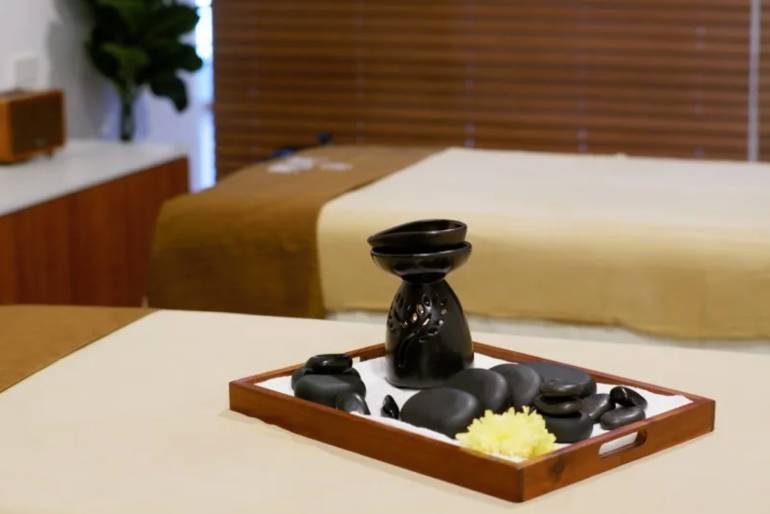
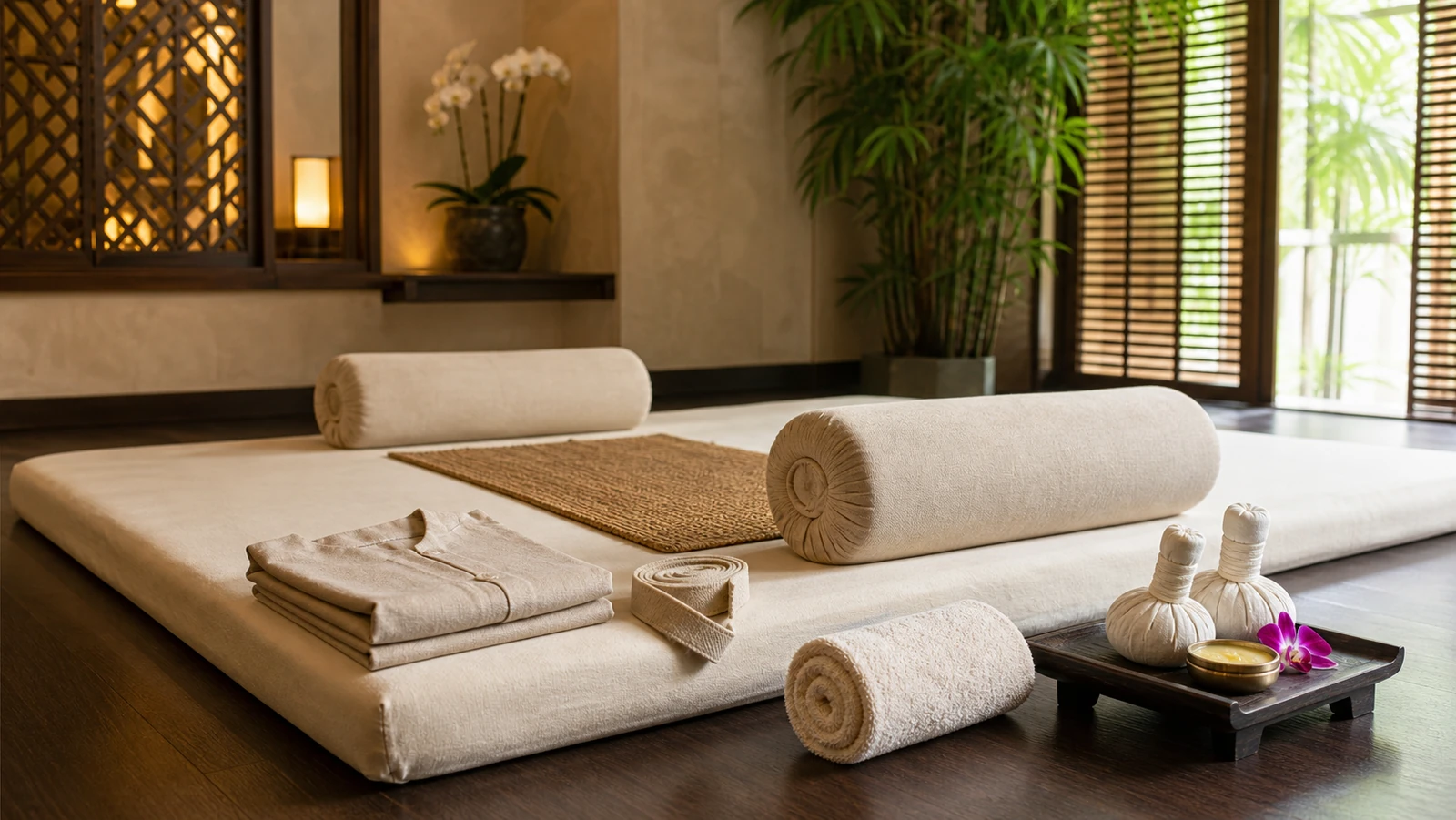
While the technique itself is central, the setting in which Ha nu marn hyeab tos sa gan is performed greatly influences the recipient’s overall experience. Traditional Thai massage is typically practiced in a quiet, serene environment—often on a mat laid out on the floor. Soft lighting, gentle music, and a comfortable room temperature all contribute to relaxation. Aromatherapy oils or herbal compresses may also be used, though Thai massage can be performed without oil, relying instead on the friction of clothes or direct skin contact depending on the style.
Additionally, a strong emphasis is placed on the therapist’s presence. Many Thai massage practitioners cultivate a mindful, meditative state, focusing on the breath and maintaining a calm, unhurried demeanor. This environment fosters a deep sense of trust, allowing the client to surrender more fully into the stretches.
The Spiritual Dimension
Beyond the physical benefits, Thai massage is sometimes called “the lazy man’s yoga” because it places the client in yoga-like postures without requiring them to actively perform the stretches themselves. Traditionally, Thai massage was viewed as a healing practice integrated with Buddhist values, including the principle of “metta” or loving-kindness. The therapist aims to cultivate compassion and empathy, channeling positive energy into the session. Although Ha nu marn hyeab tos sa gan is a physically demanding posture, the undercurrent of loving-kindness is intended to soothe and reassure the client, transforming what might appear as a forceful technique into a nurturing experience.
Ha nu marn hyeab tos sa gan stands as a shining example of what Thai massage can achieve when practiced skillfully: it combines powerful stretching, mindful breathwork, and respectful communication to unveil a profound sense of release and rejuvenation in the body. By targeting the quadriceps, arms, and potentially the hip flexors and shoulders, this technique showcases Thai massage’s ability to address multiple muscle groups simultaneously, weaving together flexibility, circulation, relaxation, and energetic balance in a single posture.
When done properly, the client experiences an invigorating yet soothing sensation, often leaving them feeling lighter, more open, and deeply relaxed. The posture can be adapted to suit various body types and levels of flexibility, provided the therapist remains aware of proper alignment and safe practice. Many spa-goers and massage enthusiasts discover in Ha nu marn hyeab tos sa gan a new dimension of healing that goes beyond just loosening muscles. It offers a window into the heart of Thai massage—a dance of compassion, skill, and creativity performed by a therapist who guides the recipient into a state of balanced wellness.
Whether you are new to Thai massage or a seasoned practitioner seeking to refine your craft, exploring Ha nu marn hyeab tos sa gan can enrich your understanding of how the human body responds to mindful, assisted stretching. Each session can feel like an intimate conversation between therapist and client—one that allows both participants to tap into the restorative power that arises when movement, breath, and kindness come together. And though it may look intense, this posture, approached with respect and attention, can be a profoundly nourishing gift to the body, mind, and spirit.
UPDATED LOFT THAI GUIDE
Additional guidance and current information
The following editorial update expands on the original Loft Thai article with practical context, current treatment guidance and further reading.
The Name Is Evocative, Not Universally Documented
Hanuman is the white monkey warrior allied with Phra Ram in the Ramakien; Thotsakan is the demon king and principal adversary. Thai art and performance use their conflict as a powerful visual vocabulary.
That cultural connection does not prove that the exact massage posture has an ancient Ramakien origin. The romanised phrase appears in the legacy Loft Thai article, but this review did not establish it as a standard name across Thai massage schools.
What the Observable Position Does
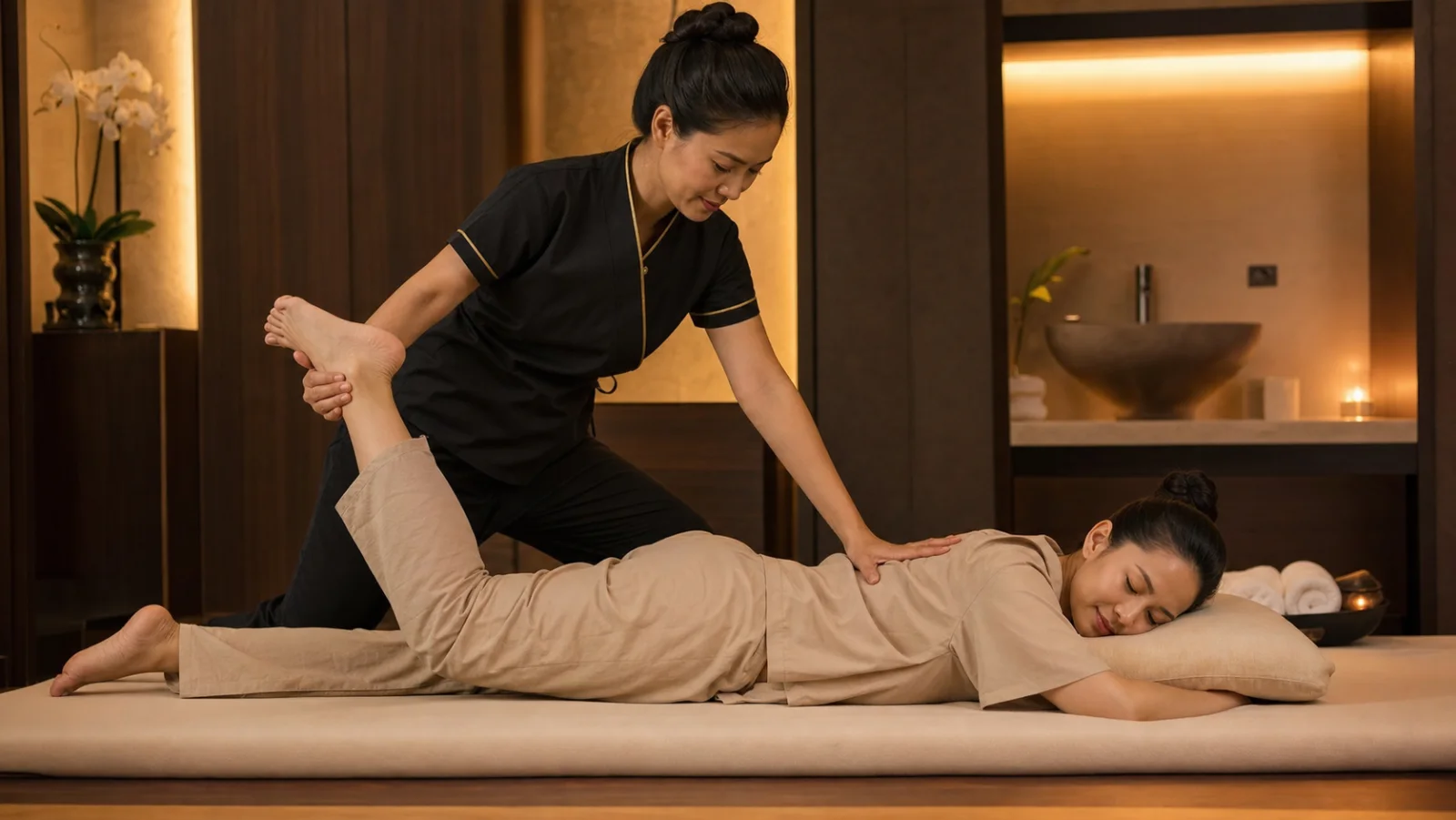
In the lower-body version, the guest lies prone while one or both knees flex and the therapist guides the lower leg. If the thigh moves into extension relative to the pelvis, the front of the hip and thigh may experience a stretch.
More elaborate versions add bilateral knee flexion, greater hip extension, arm contact or trunk extension. Each added component increases coordination and the number of joints that need monitoring.
Rectus Femoris Crosses the Hip and Knee
The quadriceps group extends the knee, while rectus femoris also crosses the hip. Combining knee flexion with hip extension can therefore create a strong sensation through the front of the thigh.
The iliopsoas and other anterior structures may also be involved, but a guest cannot identify one specific muscle from sensation alone. Sharp pain or catching is not a normal target.
The Knee Is Not a Handle
The therapist should guide the lower leg while monitoring the knee, pelvis and lumbar response. Forcing the heel toward the body can increase knee compression without creating a more useful hip movement.
Previous ligament injury, meniscus symptoms, knee replacement, swelling or unexplained pain changes the plan. A shallower angle or another position may be more appropriate.
Pelvic Motion Can Shift Load to the Lower Back
If the pelvis rotates forward as the leg is lifted, lumbar extension may increase. The pose can then look deeper while the movement no longer comes mainly from the hip.
A professional therapist uses stabilising contact, a smaller range and feedback to avoid chasing the photograph. The technique does not permanently realign the pelvis or decompress the spine.
Adding the Arms Changes the Risk Profile
Some descriptions combine the prone leg stretch with the guest’s arms drawn backward, creating shoulder extension and chest opening.
This is not suitable for every shoulder. Recent dislocation, instability, rotator-cuff symptoms, surgery or numbness requires a modified approach and may rule out the combined variation.
How a Professional Sequence Is Built
A therapist screens first, prepares the guest with lower-load contact, establishes a stable starting position, guides one direction at a time and checks response before adding range.
The release is gradual and controlled. A sudden exit can be as uncomfortable as a sudden entry, especially when several joints are loaded.
Why This Is Not a Home Partner Stretch
The therapist may use body weight, leverage and a view of the guest’s whole position. An untrained partner can easily miss pelvic rotation, knee compression, breath holding or a neurological symptom.
Home mobility should use self-controlled movements chosen for the individual. Do not recreate the full pose from an article photograph.
Useful Feedback Is Specific
A broad stretch through the front of the thigh may be acceptable. Sharp knee pain, groin pinching, lower-back compression, shoulder pain, tingling, numbness or radiating symptoms mean stop.
The guest can ask for less range, one leg at a time, no arm component or complete omission. Consent continues throughout the movement.
Stretching Evidence Does Not Prove Postural Correction
Research supports the possibility of short- and longer-term changes in range of motion after stretching, with mechanisms including tolerance and changes in muscle-tendon behaviour.
That evidence does not prove that this named Thai massage pose corrects gait, aligns the skeleton, clears energy blockages as anatomy or prevents injury.
When the Technique Is Commonly Modified or Omitted
Pregnancy, osteoporosis, recent abdominal or spinal surgery, acute back pain, joint replacement, hypermobility, recent lower-limb injury and anticoagulant use all require additional care.
Fever, suspected clot, acute neurological change, severe unexplained pain or a new traumatic injury is a reason to seek medical assessment rather than an advanced spa stretch.
Lower-Load Alternatives Still Belong to Skilled Thai Massage
A therapist may use one leg at a time, side-lying support, a smaller knee angle, gentle hip mobilisation or no stretch at all.
The visual intensity of the posture is not a measure of treatment value. A quieter sequence may offer better comfort and control for the person on the mat.
Technique Quality Lives in the Adaptation
“Ha Nu Marn Hyeab Tos Sa Gan” is a memorable label for a complex stretch family, but its exact historical status remains uncertain.
The reliable part is the practice standard: know the joints involved, control the range, listen to the guest and leave the dramatic version out when it does not fit.
“A poetic posture name can enrich a tradition, but it does not replace anatomy, consent or controlled loading.”
Loft Thai Editorial Team
Continue your research
REFERENCES
Sources & further reading
PRACTICAL GUIDANCE
Frequently Asked Questions
What does “Ha Nu Marn Hyeab Tos Sa Gan” mean?
The wording evokes Hanuman and Thotsakan from the Ramakien, but this review did not verify the exact romanisation or posture name as a universal Thai massage term.
Which areas does the pose load?
Depending on the variation, it may load the quadriceps, front of the hip, knee, lower back and shoulders.
Can the pose realign the pelvis?
No reliable evidence shows that the technique permanently realigns the pelvis or spine.
Can I practise it with a partner at home?
The full pose is not recommended for untrained partner practice because leverage and multi-joint loading are difficult to monitor.
Will every Thai Warrior session include it?
No. The technique is optional and should be adapted or omitted according to consultation, mobility and comfort.
CONTINUE READING
Related stories
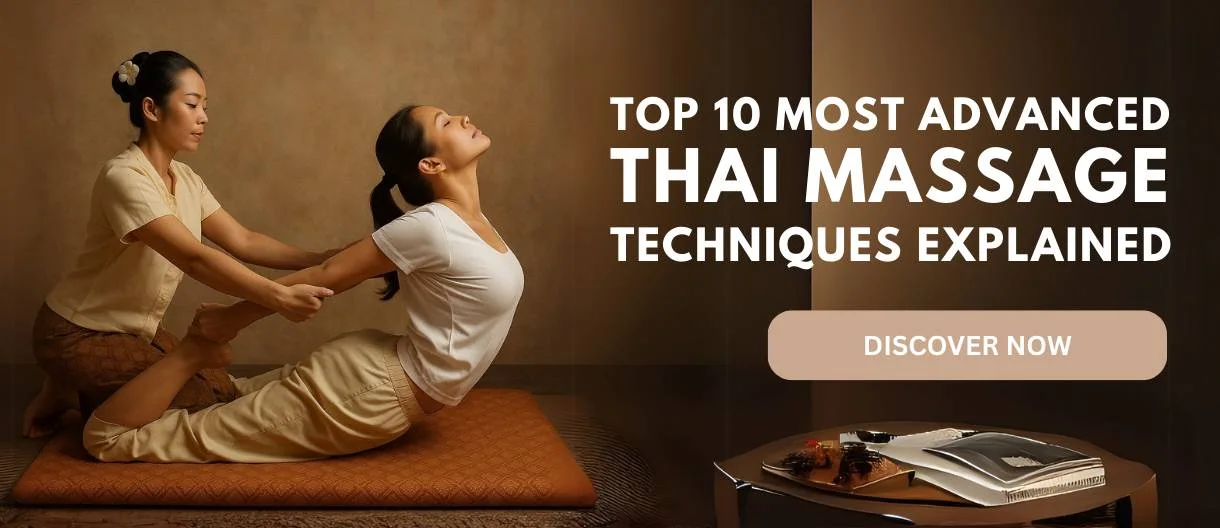
The Top 10 Most Advanced Thai Massage Techniques Explained
Thai massage is one of the oldest forms of healing that blends acupressure, passive stretching, and energy line work rooted in Thai medicine and Buddhist philosophy. Though often viewed as relaxing or spiritual, advanced Thai massage techniques are far more…
Read the guide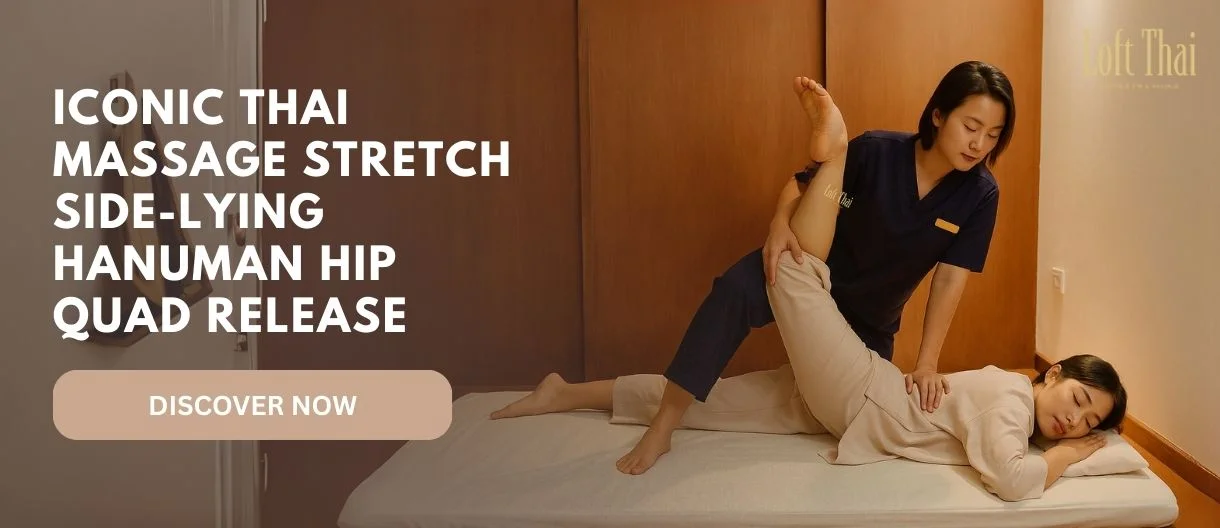
Side-Lying Hanuman Hip-Quad Release iconic Thai-massage stretch
An In-Depth Exploration of a Classic Thai Massage Stretch.Thai massage, or Nuad Thai, weaves together Ayurvedic medicine, Theravada Buddhist mindfulness, and indigenous Thai acupressure traditions. Stretching—Laksana Tok Sen Phong—was historically a way for…
Read the guide
Unlocking the Secrets of Thai Massage in Bangkok
At Loft Thai Spa, massage is more than a wellness service — it is an art form rooted in ancient tradition, guided by anatomical science, and delivered with championship-level precision. In our latest showcase video, we invite you to discover the heart of what…
Read the guide
Best Thai Massage Thailand: The Loft Thai Story
Inside a Loft Thai treatment room, the first language is rhythm. A therapist settles her stance, listens to the guest’s breathing and lets pressure build without hurry. Hands pause before they move again; every stretch is supported, every change of position…
Read the guide