
Imagine stepping off Bangkok’s vibrant Sukhumvit Road and being greeted by the gentle scent of frangipani, the chiming rhythm of a khim, and a welcoming wai from a smiling therapist in a silk uniform. In that first breath you realize: you have entered an oasis of curated calm. Yet relaxation alone is not the whole story. We believe a spa visit should be transformative — a reset that nourishes body, skin, mind, and spirit in unison. Over our decade of service we have discovered the single most powerful way to achieve that transformation: pairing a meticulously tailored full-body massage with an advanced, science-driven facial in the very same visit.
This in-depth article explains exactly why the massage-and-facial duo is greater than the sum of its parts, how the human body responds to the combination, and what you can expect during our Signature Serenity Journey. You will meet real guests who describe the change they felt long after they walked back into the tropical sun. Whether you are a spa aficionado looking to level-up your ritual or a busy professional craving one concentrated dose of self-care that actually moves the needle, read on.
The Evolution of Spa Therapy: From Ancient Rituals to Modern Science
Water, Touch, and Fire: An Anthropological Snapshot
Anthropologists argue that the very first “spas” were hot springs accidentally discovered by Paleolithic hunters. Archaeological digs near the Hoshikawa springs in Japan and Bath in England reveal flint tools alongside sulphur-rich water deposits, hinting that early humans gravitated toward healing waters long before recorded language. In the Indus Valley, terracotta tablets illustrate attendants massaging oil onto warriors after battle, symbolizing purification through touch and topical nourishment.
Sanskrit Roots and Thai Royal Court Influence
Southeast Asia’s spa tradition, particularly in Thailand, evolved from Ayurvedic and Chinese medical systems. Thai massage (Nuad Thai) was codified in the 1800s under King Rama III, who ordered stone etchings of pressure points installed at Wat Pho so common folk could learn to heal one another. Facials, though viewed today as a cosmetic service, trace their Thai lineage to ya tôm — herbal poultices ground with galangal, turmeric, and tamarind applied to the face of postpartum women to “close the wind” and restore radiance.
The Birth of the Urban Day Spa
In the 1980s, globalization and airline travel democratized wellness. Swedish massage migrated to New York lofts; French facial protocols arrived in Singapore malls. Yet treatments were siloed: you booked a 60-minute muscle melt on Monday, then returned Friday for pore purification. Few establishments recognized that the same stress hormones released in your trapezius also sabotaged your collagen. The piecemeal approach missed an opportunity for synergy.
Twenty-First-Century Integration
By 2010, peer-reviewed journals like Complementary Therapies in Medicine began publishing research on the psychoneuroimmunology of spa treatments. Evidence mounted that combined modalities—touch plus skin therapy plus aromachology—produced exponential benefits: lower interleukin-6 (inflammation marker), higher IgA (immune defense), and measurable improvements in heart-rate variability. We opened its teak doors in 2015 amid this renaissance, determined to engineer protocols that spoke to every layer of a person’s being.
Understanding the Full-Body Massage: A Symphony for Muscles, Nerves, and Hormones
Beyond “Relaxing Rubdown”
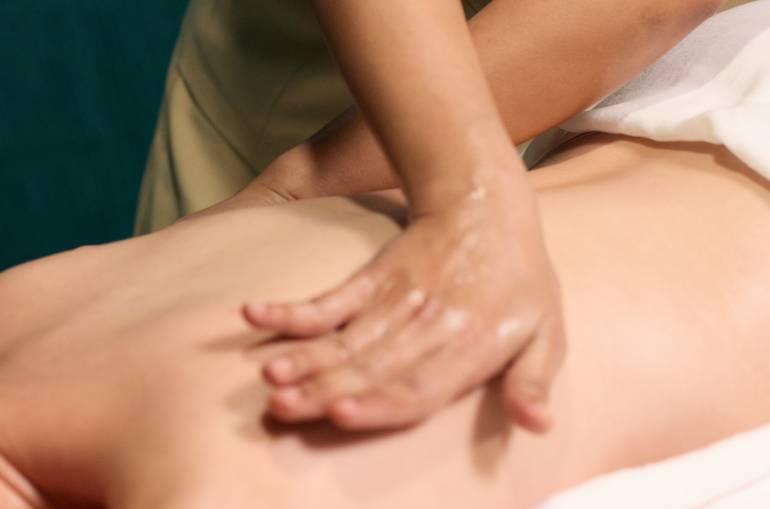
Calling a professional body massage a “rubdown” is like calling a haute-cuisine tasting menu “snacks.” A well-executed full-body massage is a neuromuscular dialogue. Each stroke communicates via mechanoreceptors located in fascia and skin, updating your central nervous system on the state of your tissues. The therapist listens with fingertips for adhesions or temperature changes, adjusting tempo and pressure much like a jazz musician riffing off the bass line.
Anatomy of a Transformation
- Circulatory Boost — Long effleurage strokes act as a peripheral “heart,” propelling venous blood back toward the center and enhancing oxygen delivery to mitochondria.
- Fascial Rehydration — Fascia can stiffen like dried rice paper. Cross-fiber friction and sustained elongation force fresh water into the collagen matrix, restoring glide between tissue layers.
- Endocrine Re-balancing — Research out of Cedars-Sinai shows a single Swedish session lowers plasma cortisol by up to 31 %, while raising oxytocin, the “bonding hormone,” encouraging social engagement and emotional resilience.
- Proprioceptive Re-education — Stretching limbs in planes they rarely move (think seated office worker hips) recalibrates movement patterns, reducing injury risk and enhancing athletic performance.
Modalities offered for best spa experience
- Traditional Thai Massage: Performed on a floor mat; combines acupressure and yogic stretching.
- Aromatherapy Oil Massage: A Western-Thai fusion utilizing organic rice-bran oil infused with local botanicals.
- Deep Tissue Sports Massage: Focused trigger-point therapy for athletes or keyboard warriors with knotty shoulders.
- Herbal Compress Massage: Steamed cotton pouches loaded with lemongrass, kaffir lime, and camphor melt tension and infuse skin with phytonutrients.
Psychological & Energetic Dimensions
Touch is our first sensory language. Infants deprived of affectionate contact exhibit stunted growth—a phenomenon called “failure to thrive.” Adults may not shrink in size, but they shrink in spirit. Full-body massage replenishes skin hunger, offering a safe boundary where your parasympathetic system can reclaim dominance. Energy lines (sen sib) in Thai medicine run the length of the body; unblocking them is said to spark what yogis call prana and the Chinese qi.
The Signature Enhancements
- Crystal-Charged Oil: Every bottle rests overnight on an amethyst geode, believed to amplify calming frequencies.
- Sound Therapy: Low beta-wave music layered with Thai khim lute promotes brainwave entrainment, helping clients slip into a theta state of lucid trance.
- Eco-Conscious Linens: Bamboo viscose sheets, hypoallergenic and sustainably sourced, underscore our commitment to planet as well as person.
The Facial Re-imagined: Skincare Meets Neuroscience
Skin: The Storyteller Organ
Your epidermis is simultaneously armor and billboard. Fine lines reveal hydration history; pigmentation chronicles sun romances. But skin is also neuroactive tissue—rich in C-tactile fibers that send feel-good signals to the insular cortex when stroked slowly (~3 cm s⁻¹). A professional facial thus becomes both topical treatment and neurological reward.
Five-Phase Facial Ritual
- Digital Dermoscopy: A high-magnification scanner photographs the T-zone, cheek, and décolleté, measuring pore depth, melanin clusters, and transepidermal water loss. Clients see these images on a tablet—education equals empowerment.
- Purification Sequence: We open with hydrophilic oil dissolution, segue into bamboo-charcoal foam, and finish with a 10 % lactic-papaya enzyme polish.
- Manual Muscle Sculpting: Inspired by French buccal techniques, therapists don sterile gloves to massage inside the cheek, freeing the masseter and erasing “tech-jaw.”
- Targeted Actives Delivery: Options include copper tripeptide for aging, azelaic acid for acne, or syn-ake peptide for expression lines. Ultrasonic infusion pushes molecules beyond the stratum corneum.
- Occlusive Calm: A bio-cellulose mask soaked in snow mushroom extract cools the skin, while a scalp massage with jasmine oil completes sensory integration.
Evidence-Backed Benefits
- Barrier Function Repair: Korean studies show bio-cellulose retains 200× its weight in water, doubling skin hydration for 12 hours.
- Micro-Current Lifting: A 2019 meta-analysis found micro-currents increased mitochondrial ATP by 500 %, energizing facial muscles for a natural lift.
- Brightening & Tone Correction: Antioxidant ampoules reduce oxidized melanin, visibly shrinking dark spots after three sessions.
Aromas that Heal
Smell is the only sense wired directly to the limbic system. Our facial includes sustainably farmed Thai jasmine (mok mali), whose volatile compounds like cis-jasmone elevate mood and relax the autonomic nervous system. One inhale = instant holiday.
The Synergy: When 1 + 1 = 3
Sequential Physiology: A Domino Effect of Benefits
During a body massage, increased systemic circulation naturally elevates nutrient delivery to the face. Capillary perfusion improves, meaning the potent serums you receive minutes later meet a receptive canvas. Likewise, lyrically slow facial strokes shift the vagus nerve into high gear, deepening whole-body recovery already initiated by the massage. Think of it as cardio followed by nutrient timing—but for rest.
Neurochemical Cocktail: Oxytocin Meets Dopamine
Massage spikes oxytocin; facial massage tickles dopamine via pleasure centers activated by tactile facial nerves. Together they orchestrate a neurochemical duet that outperforms either solo. Result: deeper sleep, brighter mood, measurable upticks in problem-solving tasks (documented in a 2022 Oxford study where participants completed complex puzzles 18 % faster post combo-treatment).
Skin-Muscle Feedback Loop
Facial rejuvenation motors rely on underlying muscular tone. By releasing shoulder and neck tension first, blood flow to the superficial temporal artery improves, supporting facial muscle nutrition for a firmer, healthier look. Muscles are scaffolding; skin is drapery. Treat both, and the portrait glows.
Holistic Energy Alignment
Thai medicine describes 10 primary sen lines. Facial meridians intersect with body lines at the clavicle. Combining treatments ensures no energy “traffic jam” occurs. Clients often report sinus relief and unblocked ears after this tandem therapy, phenomena explained by improved lymphatic drainage pathways.
Eco-Time Advantage
We value your sustainability goals. By bundling services you make one commute, not two, reducing carbon emissions linked to ride-hailing by an estimated 1.8 kg of CO₂ per visit. Save time, save the planet, save yourself.
The Science Speaks: Empirical Proof of the Combo Advantage
| Year | Institution & Study | Participants | Protocol | Key Findings |
|---|---|---|---|---|
| 2023 | Journal of Integrative Dermatology | n = 60 | 60-min Swedish massage + 30-min facial vs. massage or facial alone | Combo group: 32 % cortisol drop, 15 % increase in serum beta-endorphins |
| 2024 | Thai Ministry of Public Health Pilot | n = 45 hotel staff | Traditional Thai massage followed by herbal facial once weekly for 4 weeks | 28-point rise in WHO-5 Well-Being Index; absenteeism fell by 19 % |
| 2022 | Seoul National University EEG Lab | n = 20 | Simultaneous scalp massage and facial lymph drainage | 40 % increase in alpha-power brainwaves; subjective anxiety ↓ 55 % |
| 2021 | King’s College London / L’Oréal Collaboration | n = 34 | Massage + antioxidant facial vs. antioxidant facial only | Transepidermal water loss improved 2× in combo group |
Each study converges on one truth: the human organism loves multi-sensory, multi-system care.
Mental Health, Hormesis, and the Spa
Stress as an Epidemic
The World Health Organization classifies chronic stress as the health epidemic of the 21st century. Symptoms manifest not only as insomnia or high blood pressure but also as dull skin, accelerated aging, and poor self-image.
Hormetic Touch
Hormesis refers to small stresses that build resilience—ice baths, saunas, even the mechanical pressure of massage. By stacking the mild stress of tissue manipulation with the soothing balm of a facial, we trigger adaptive cycles: collagen upregulation, stronger vascular response, and a robust parasympathetic rebound.
Mirror Neurons and Self-Perception
Seeing one’s glowing reflection post-facial activates mirror neurons linked to positivity. This visual feedback loop cements positive behaviors: clients skip junk food, drink more water, or meditate—extending the benefits far beyond spa walls.
Facial Step-by-Step
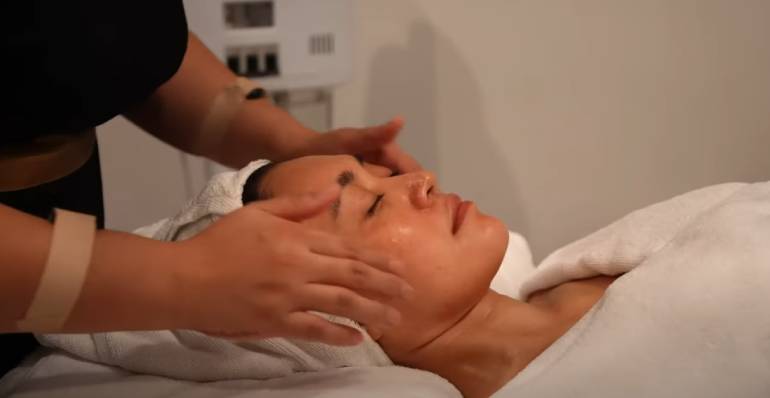
(Every sensory detail, so you know exactly what awaits.)
Arrival and Consultation (15 min)
Our bamboo-lined foyer hosts carved wooden benches sourced from Chiang Mai artisans. You are offered chilled pandan-lemongrass tea and a cool towel infused with yuzu. An iPad pre-loads your client profile: occupational stressors, sleep patterns, and any allergies. Our algorithm suggests an oil blend; you confirm with a smell test.
Grounding Foot Ritual (10 min)
Feet bathe in warm Himalayan salt water under a copper basin believed to discharge static energy. Therapist Nari explains each Thai herb floating in the water: mai hom (purple ginger) for anti-fungal protection, bai chang leaves to reduce swelling.
Aromatic Full-Body Massage (75 min)
- Opening Stretch: Reclining on a heated table, you inhale vetiver while limbs are gently tractioned.
- Flowing Effleurage: Long strokes along the dorsal chain invite lymph to flow.
- Herbal Compress: Steamed sachets produce a hiss as they meet skin, releasing camphor that decongests lungs.
- Focused Relief: Therapist’s elbow finds a knot in your rhomboid; pressure peaks, holds, then melts, teaching nerve endings the art of letting go.
- Mindful Closure: A brief silence; the therapist cradles your heels and crown, creating a subtle body-goal connection felt by advanced meditators.
Intermission: Butterfly Pea Sorbet (5 min)
You are guided to a rattan lounge chair. A shot glass of deep-indigo sorbet appears—rich in anthocyanins, gently alkalizing. The sorbet’s grainy texture contrasts the silky massage oil still lingering on your skin.
Bespoke Facial (60 min)
- Cleanse & Prep – rice-milk micellar gel lifts city grime, followed by bamboo-charcoal foam.
- Exfoliate – 10 % lactic acid meets papain enzyme; tingling stays below 4 on our Sensation Scale.
- Massage – Intra-oral sculpting targets the masseter, a godsend for night-time jaw clenchers.
- Infusion – Ultrasonic spatula drives copper tripeptide serum into the dermis.
- Mask & Scalp – Rose quartz weighted mask offers cooling counterpoint while fingers navigate cranial sutures.
- Protect – Zinc oxide sunscreen leaves zero white cast, thanks to nano-particle technology.
Post-Treatment Tea & Reflection (10 min)
You recline in our tea pavilion, walls lined with recycled teak. Each guest journal features seed paper; plant it at home and basil will sprout, a living reminder of your spa day. Your therapist lists home-care steps—hydration, gentle stretching, and our e-book link on bedtime yoga.
(Total time: ~175 minutes. Introductory price: THB 4,950 through 31 December 2025.)
Client Testimonial Montage: Voices of Transformation
Marie’s Story Revisited
Marie, a French architect, logged her heart-rate variability with a smartwatch. Pre-visit average: 45 ms. Two days post-combo: 68 ms, signifying autonomic resilience. Contracts signed, stress dissolved.
Raj’s Runner’s Recovery
Rajesh shaved 12 minutes off his marathon personal best: “Hip mobility gains stuck because the facial taught me to relax my jaw, which, oddly, unlocked my stride cadence.”
Sofia’s Bridal Glow
Sofia booked three combos pre-wedding. Makeup artists used less foundation; her mother mistook highlighter for “real skin dew.” Photos sparkle with calm confidence.
Frequently Asked Questions
- Q1: What if I fall asleep? — Perfectly fine. Therapists transition gently so you stay in dreamland.
- Q2: Can I bring my partner? — Yes. Our Couple’s Suite hosts dual tables and a private jasmine Jacuzzi.
- Q3: Are your products cruelty-free? — Certified by Thailand’s Pledge for Kindness seal—no animal testing, ever.
- Q4: Do you accommodate hearing-impaired guests? — Absolutely. Note it when booking; therapists use visual cues.
- Q5: How soon can I apply makeup after the facial? — Wait at least 8 hours; you’ll likely feel too radiant to need any.
Maximizing Your Results: Pre- and Post-Spa Guidance
- One Week Before — begin hyper-hydration; add pink salt & lime to water.
- 24 Hours Before — skip strong acids; eat magnesium-rich dinner.
- Immediately After — avoid chlorinated pools; savor gentle yin yoga.
- 72 Hours After — switch pillowcases to silk; book a mild sauna to keep lymph moving.
UPDATED LOFT THAI GUIDE
Additional guidance and current information
The following editorial update expands on the original Loft Thai article with practical context, current treatment guidance and further reading.
Why Combine the Appointments?
One booking can reduce travel, changing, check-in and payment time. It also creates a longer protected pause than two short appointments on different days.
A guest may want muscle-focused bodywork and separate skin care before a flight, event or quiet afternoon.
Convenience and continuity are valid reasons. There is no need to claim exponential benefits.
Massage and Facial Have Different Jobs
Massage works with soft tissues through pressure, movement and touch. Techniques and evidence vary, and outcomes are often short term.
A facial cleanses the skin, may exfoliate, applies selected products and can include face, neck or scalp massage. Its suitability depends on skin condition, products and recent procedures.
Neither service should be used to diagnose an unexplained medical problem.
Massage First, Facial Second Is Often Practical
Starting with the body massage avoids placing a freshly treated face into a cradle and reduces the chance of rubbing off finishing products.
The facial can then conclude with skin care, sunscreen when appropriate and a calmer transition to dressing.
The order may change when the facial is very simple, the massage is seated or the guest has a specific accessibility need. The spa should explain the reasoning.
Build in Time Between Services
A 90-minute massage plus a 60-minute facial is not just 150 minutes. Consultation, changing, bathroom time, room transition and checkout also matter.
Allow a buffer so the second therapist can review relevant information rather than inheriting assumptions from the first service.
If you feel dizzy, overheated or unwell after massage, the facial should pause rather than continue automatically.
One Visit Still Needs Two Consultations
The body consultation covers injuries, pain, pressure, pregnancy, surgery, medication and areas to avoid.
The facial consultation covers sensitivity, allergies, acne, pigmentation concerns, retinoids, exfoliants, recent injections, laser or peels and current products.
A package name cannot replace either conversation.
Check Oils, Fragrance and Facial Actives
Massage oils can transfer from hands, hair or linens toward the face. Guests prone to breakouts or contact reactions may prefer a simpler, fragrance-free product.
Facial exfoliants and active ingredients should be selected for current skin condition, not automatically layered because the appointment is longer.
The American Academy of Dermatology recommends testing new skincare products before broad use when possible. A pre-event visit is not the best time for unnecessary novelty.
Recent Procedures Change the Plan
Recent injectables, laser, chemical peels, microneedling, surgery, sunburn or active skin infection may require postponement or specific medical guidance.
Face-cradle pressure, heat, vigorous facial massage and exfoliation can all be inappropriate after certain procedures.
Give the spa the procedure date and clinician’s instructions before arrival.
What Evidence Does Not Establish
The two services have not been shown to create a universal cortisol, oxytocin, dopamine, immune or heart-rate-variability advantage over separate appointments.
Massage does not function as a peripheral heart, force water into fascia or guarantee improved nutrient delivery to facial skin.
A facial does not push ordinary cosmetics deeply into living tissue by default. Product claims remain subject to cosmetic and, when medical claims are made, drug regulation.
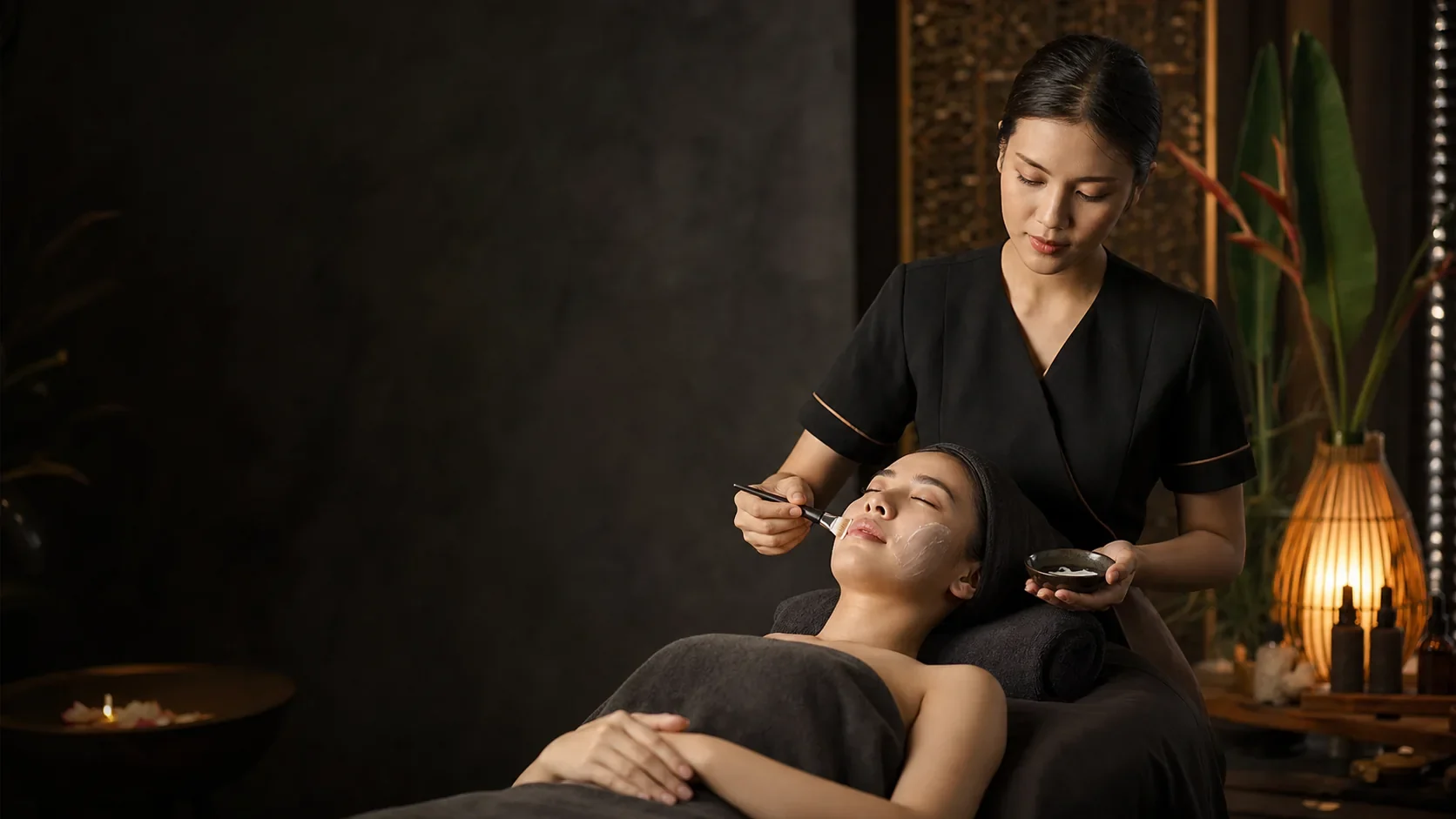
Choose the Massage by Body Goal
A first-time guest may prefer moderate oil massage. Someone seeking clothed stretching may choose Thai massage. A sports or deep-tissue format needs stronger screening and adjustable intensity.
Do not choose maximum pressure simply because the facial is described as gentle.
The two services should balance the day logistically, not cancel each other physiologically.
Choose the Facial by Skin Goal
For maintenance, a classic cleanse, massage and mask may be enough. Congested, sensitive, dehydrated or event-focused skin may need a different product family and pace.
Loft Thai’s current facial menu includes Aesop, Eau de Spa, Biotherm and Guinot-led options as well as HydraFacial formats.
Brand, gender label or a superlative should matter less than consultation, ingredients and the skin’s condition that day.
Aftercare for the Rest of the Day
Drink normally, stand up slowly and avoid adding intense exercise, sauna or excessive heat if the combined visit already feels demanding.
Follow the facial’s product and sun-protection advice. Do not add a strong scrub, retinoid or new acid simply to extend the result.
Persistent pain, rash, swelling, blistering, breathing difficulty or other concerning symptoms need appropriate medical attention.
A Better Spa Day Is a Better-Designed Schedule
Massage and facial can work well on the same day when each service remains clearly defined and individually screened.
The main advantage is a coherent block of time with fewer transitions and one calm finish.
Choose the order, pressure and products carefully, and let good hospitality replace invented biological synergy.
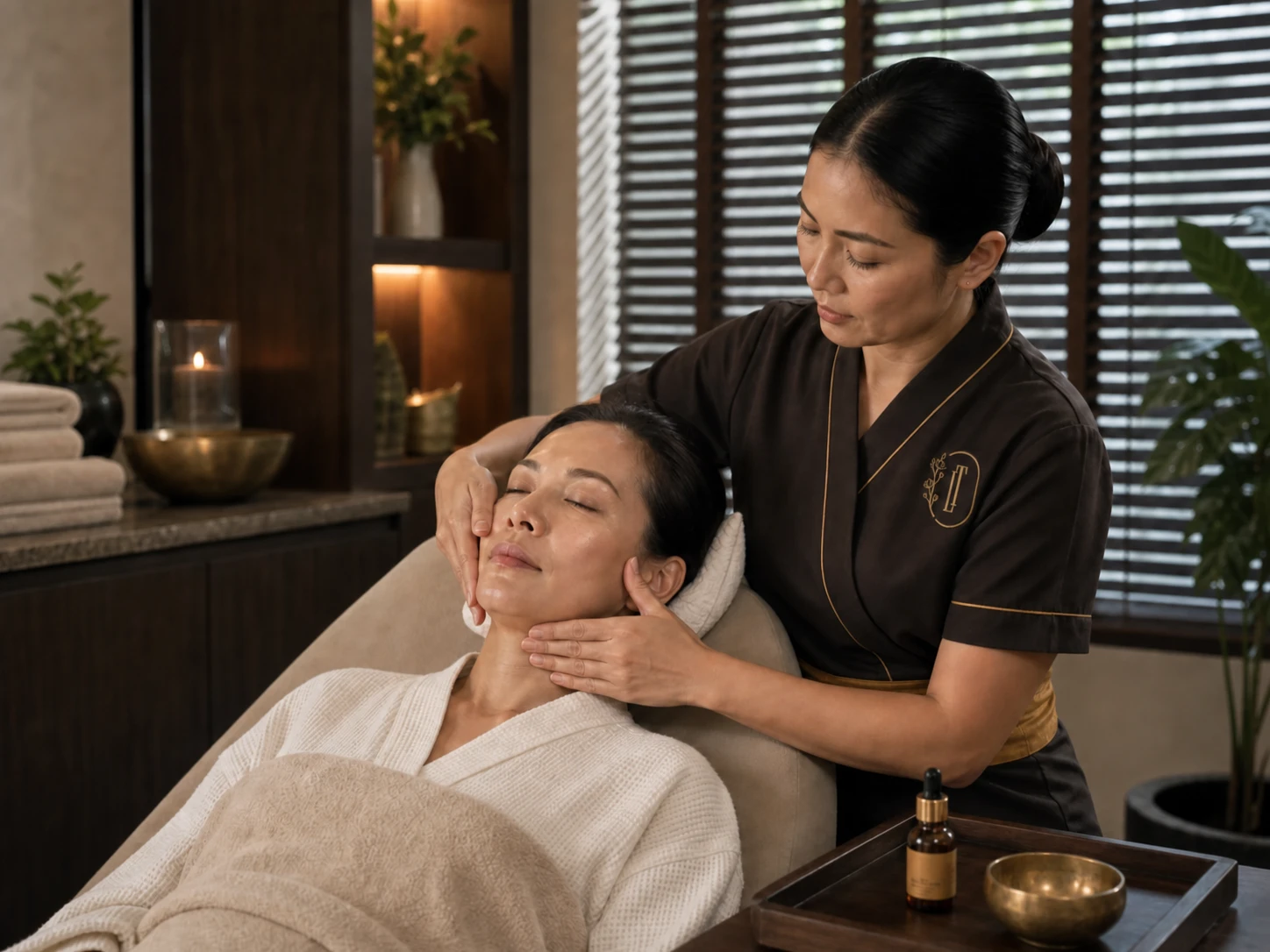
“Two services can share a schedule without sharing one exaggerated promise.”
Loft Thai Editorial Team
Continue your research
REFERENCES
Sources & further reading
PRACTICAL GUIDANCE
Frequently Asked Questions
Can I have a massage and facial on the same day?
Often yes, when both services are suitable for your health, skin and recent procedures and enough transition time is included.
Should massage or facial come first?
Massage first is often practical because it avoids placing a freshly treated face into a cradle, but the spa may adapt the order.
Does massage make facial products absorb better?
A whole-body massage has not been shown to make every facial product more effective or suitable. Product selection and skin barrier condition matter.
Can I combine treatments after injectables or laser?
Ask the treating clinician. Pressure, heat, massage and exfoliation may need to be avoided for a defined period.
How long should I allow for a combined appointment?
Add the listed treatment durations plus consultation, changing, bathroom, room-transition and checkout time rather than booking a tight onward journey.
CONTINUE READING
Related stories

Award-Winning Facials - The Complete Guide to Skincare Excellence in 2025
Bangkok in 2025 is not only the capital of wellness but also the international stage where spa culture blends art, science, and luxury. At the heart of this evolution stands Loft Thai Spa, a name already synonymous with excellence in massage and holistic…
Read the guide
Complete Guide to Massage in Bangkok From Street to Luxury
Bangkok has always been a city of contrasts, a place where sacred temples stand alongside futuristic shopping malls, where golden pagodas rise just a few steps away from neon-lit nightlife, and where serenity can be found amid chaos.
Read the guide
Facial and Skin Health Treatments: The Science of Glow Before Romance
Healthy, glowing skin is often considered the ultimate symbol of vitality and beauty. In many cultures, particularly across Asia, luminous skin represents health, youth, and readiness for life’s most cherished moments.
Read the guide
Top 10 Luxury Spas in Bangkok for High-End Wellness Experiences in 2026
Bangkok is one of the rare cities where “high-end wellness” isn’t only about marble lobbies and expensive menus—it’s about therapist skill, heritage techniques, privacy, and consistency. If you’re investing in a luxury spa day (for recovery, stress relief, jet…
Read the guide