
People often say “I want a Thai massage,” but what they actually mean can be very different.
In Bangkok, you can book a “Thai massage” in a street shop, a hotel spa, a shopping mall, or a luxury wellness destination—and each version can feel like a completely different treatment. That’s because there are two worlds that often get mixed together under the same label: authentic Thai massage and spa massage.
Both can be enjoyable. Both can be relaxing. But they are not the same craft, they don’t create the same results, and they are not performed with the same intention.
If you’re looking for the best Thai massage in Bangkok in 2026—and you want an experience that’s genuinely worth it—understanding this difference will help you choose wisely. Loft Thai Spa is built around Thai heritage and professional technique, while delivering the comfort and refinement guests expect from a luxury spa in Bangkok.
Why the difference matters more in 2026 than ever before
Thai massage has become globally famous. That’s a beautiful thing—but it also creates a problem: as Thai massage gets popular, the word “Thai” gets used as marketing.
In 2026, many treatments labeled Thai massage are actually a spa-style body massage with a few stretches added. Some are performed without proper structure, without understanding body mechanics, and without the traditional Thai system behind them. The guest might still feel relaxed—but they won’t receive what Thai massage is truly designed to do: improve mobility, restore energy flow, release muscular patterns, and reset posture through a full-body technique.
Authentic Thai massage is not simply “stronger.” It’s more technical, more structured, and more purposeful.
Thai massage is a complete bodywork system, not just a relaxation service
A classic spa massage is often built around a simple goal: help you relax through comforting touch, smooth strokes, and a calming atmosphere.
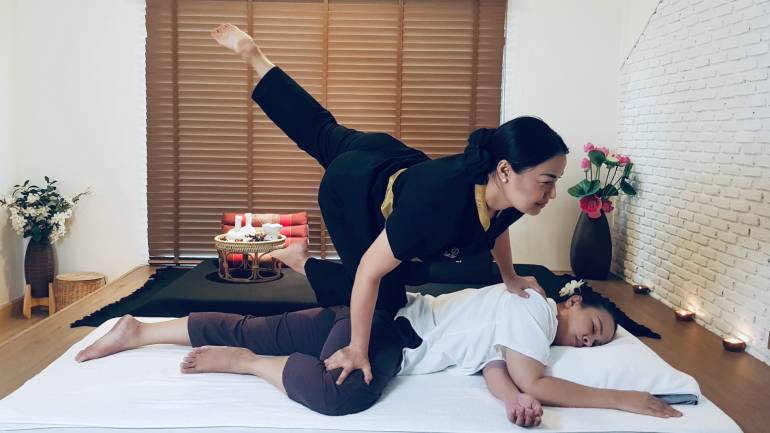
Authentic Thai massage, on the other hand, is a whole bodywork system with its own logic. It combines:
- rhythmic pressure along the body
- assisted stretching and joint mobilization
- positional work designed to release tension patterns
- a flow that moves through the entire body in an intentional sequence
That sequence matters. A true Thai massage isn’t random. It follows a coherent structure that balances both sides of the body, works from foundations (feet and legs) upward, and uses movement and pressure to create a deep sense of openness and alignment.
At Loft Thai Spa, Thai massage is treated as a craft—delivered in a refined environment, but grounded in real Thai technique. You can explore the authentic Thai massage styles and related therapies in the Spa Menu.
“Spa massage” is designed to soothe. Thai massage is designed to change how your body feels and moves.
Spa massage (especially oil massage) is typically about calming the nervous system and easing muscle tension with gliding strokes. It’s often perfect when you want deep relaxation, minimal movement, and a gentle-to-medium pressure experience.
Authentic Thai massage is more interactive. It involves movement. Your body changes position. You may feel lengthening through hips, shoulders, spine, and legs. It can feel energizing as much as it feels relaxing.
That’s why many people describe the best Thai massage as a “reset.” Not only calm—reset.
If you’ve been walking all day in Bangkok, sitting on planes, working long hours, or feeling stiff from training, authentic Thai massage can be a powerful upgrade from a standard spa massage because it addresses mobility and tension patterns—not just surface muscle tightness.
The role of clothing, oil, and technique: a simple way to tell what you’re getting

One of the easiest ways to distinguish authentic Thai massage from spa massage is to look at what the treatment requires.
Traditional Thai massage is often performed without oil, with the guest in comfortable clothing. This is not a “less luxury” choice—it's a technique choice. It allows the therapist to apply pressure more effectively and move your body through stretches safely.
Spa massage is often oil-based. The oil helps the therapist glide smoothly across the skin, which is excellent for relaxation and comfort. But it generally reduces the ability to perform deeper assisted stretches and mobilizations in a traditional Thai way.
At Loft Thai Spa, you can choose both worlds—traditional Thai massage for mobility and alignment, or aromatic oil massage for deep calm—depending on what you need that day. The Spa Menu helps you decide based on outcome.
Pressure is not the defining feature—control is
A common myth is: “Thai massage is just very strong.”
Strength is not the point. Control is.
A high-level Thai therapist is skilled at pressure scaling: soft, medium, firm, or deep, applied in a way that stays comfortable and safe. The therapist uses bodyweight, leverage, angles, and rhythm—not brute force.
The difference between a good Thai massage and a risky Thai massage is technique and training. A well-trained Thai therapist knows how to work around joints, protect sensitive areas, and adjust based on body type and flexibility.
Luxury spas that respect Thai massage treat therapist education as part of the product. That’s one reason why guests who care about quality often look for a spa with a strong training culture and consistent standards—especially when they search for top-rated Thai massage in Bangkok.
Stretching isn’t “extra.” In authentic Thai massage, it’s part of the method.
In spa massage, stretching is sometimes added at the end as a bonus—one or two quick movements.
In authentic Thai massage, stretching is integrated throughout the session as part of a system. It’s not “yoga.” It’s assisted mobilization designed to open the body in a controlled way.
It helps with:
- hip tightness from walking or sitting
- stiffness in the spine and shoulders
- reduced range of motion from stress patterns
- that compressed feeling you get from travel
This is one of the biggest reasons authentic Thai massage can feel like a full-body reconfiguration rather than a soothing rubdown.
The rhythm is different: Thai massage uses “pulse,” spa massage uses “flow”
Another subtle but important difference is rhythm.
Spa massage often uses continuous flowing strokes—long, smooth movements designed to calm the nervous system and create a trance-like relaxation. It’s beautiful when you want to switch off completely.
Authentic Thai massage often uses rhythmic compressions and pulses. That rhythm is part of how Thai massage helps the body let go. It can feel meditative, grounding, and deeply restorative in a different way than oil massage.
Both rhythms can relax you—but they create a different kind of relaxation:
- spa massage = drifting calm, softness, melting
- Thai massage = grounded calm, openness, reset
At Loft Thai Spa, guests often choose Thai massage when they want to feel light, open, and aligned, and choose aromatic oil massage when they want to feel soothed, calm, and comforted. You can explore both paths in the Spa Menu (internal link).
What authentic Thai massage does well that spa massage usually doesn’t
Without turning this into a listicle, it’s worth understanding the unique strengths of authentic Thai massage.
It’s especially effective when you want:
A posture reset. Thai massage often addresses patterns that pull the body out of alignment—tight hip flexors, rounded shoulders, stiff thoracic spine, restricted ankles.
A mobility boost. People often notice improved range of motion in hips, shoulders, and back.
A “travel recovery” effect. Thai massage is excellent after flights because it supports circulation, releases compression, and helps the body feel awake again.
A deeper type of relief for office syndrome patterns. When performed skillfully, Thai massage can work through the whole chain—from feet to hips to shoulders—rather than only rubbing the neck.
Spa massage can absolutely help with tension and relaxation—but it typically focuses more on muscular comfort than mobility structure.
When spa massage is actually the better choice
Sometimes a spa-style massage is exactly what you need, and pretending otherwise is not honest.
If you want:
- maximum relaxation with minimal movement
- warmth, comfort, and slow soothing flow
- a gentle session when your body feels sensitive
- a “mind-off” experience after stress
…then a spa massage—especially a high-quality aromatic oil massage—can be the perfect choice.
The key is not choosing “Thai” because it sounds authentic. The key is choosing the right tool for the right goal.
Loft Thai Spa offers both authentic Thai technique and luxury spa massage experiences, so guests can choose based on what their body needs on that day, not based on labels. Start with the Spa Menu and select by outcome.
How to make sure you’re booking a truly authentic Thai massage in Bangkok
Because Bangkok has so many options, here’s what to pay attention to when you’re searching for the best Thai massage experience:
A clear explanation of the technique. A professional spa describes what Thai massage is—not just “relaxing” but the method, pressure, and structure.
A consultation. Even a quick check-in about pressure, injuries, and goals is a sign of quality.
Consistency. The best Thai massage isn’t a one-off lucky session. It’s consistently good across therapists.
Professional environment. Authentic does not have to mean basic. A luxury spa Bangkok environment can absolutely coexist with true Thai technique.
This is where Loft Thai Spa sits: authentic Thai heritage, elevated to a premium spa experience. To plan your session, check Locations first and reserve via Booking.
The Loft Thai Spa approach: authentic Thai bodywork, elevated as luxury wellness
Loft Thai Spa is known for bringing Thai technique into a luxury spa environment, without diluting the method. That means you can enjoy authentic Thai massage with refined comfort: calm rooms, premium service rituals, and a curated menu that includes classic Thai massage, aromatic oil massage, and advanced therapies.
If you want a complete escape rather than a single treatment, Loft Thai Spa also offers curated Packages that combine massage experiences into a more immersive wellness storyline.
Final thought: authentic Thai massage and spa massage are both valuable—if you choose intentionally
Authentic Thai massage is different because it is a structured bodywork system designed to restore movement, release tension patterns, and reset the body. Spa massage is different because it is designed to soothe, calm, and melt stress away through flowing touch and sensory comfort.
In 2026, the “best” choice isn’t a universal answer. It’s the treatment that matches your goal—delivered by trained therapists in a spa that respects the craft.
If you want to experience authentic Thai massage in a luxury spa Bangkok setting—and understand why so many guests consider Loft Thai Spa among the top rated spa Bangkok destinations—explore the Spa Menu, choose your location, and book your session.
UPDATED LOFT THAI GUIDE
Additional guidance and current information
The following editorial update expands on the original Loft Thai article with practical context, current treatment guidance and further reading.
The Difference Is a Treatment Design, Not a Status Contest
“Spa massage” is an umbrella phrase, not one codified method. It often describes oil-based bodywork using gliding strokes in a private treatment room, with relaxation and sensory comfort at the centre of the experience.
Traditional Thai massage—Nuad Thai—has a distinct cultural lineage and technical vocabulary. A typical session uses rhythmic pressure, supported positioning and assisted movement, often without oil and with the guest clothed.
Both can be professional, luxurious and skilful. A Thai massage does not become more authentic because it hurts, and an oil massage does not become superficial because it feels soothing.
- Traditional Thai: usually clothed, little or no oil, more repositioning
- Spa oil massage: direct skin contact, gliding strokes, fewer large movements
- Either style can use light, medium or firm pressure
- Consultation and therapist control matter more than labels
Nuad Thai Is a Living Heritage, Not a Frozen Routine
UNESCO inscribed Nuad Thai on the Representative List of the Intangible Cultural Heritage of Humanity in 2019. Its description places the practice within the art, science and culture of traditional Thai healthcare and records the use of hands, elbows, knees and feet, together with knowledge passed through communities and formal training.
Traditional theory refers to sen lines and the balance of body elements. These concepts belong to the cultural framework of Nuad Thai; they should not be rewritten as proven anatomical structures or used to promise a medical cure.
A living tradition can adapt to a modern spa environment. Clean rooms, refined hospitality and international communication do not dilute the technique when the therapist preserves coherent positioning, rhythm and safe pressure.
Clothing, Oil and Positioning Change the Therapist’s Options
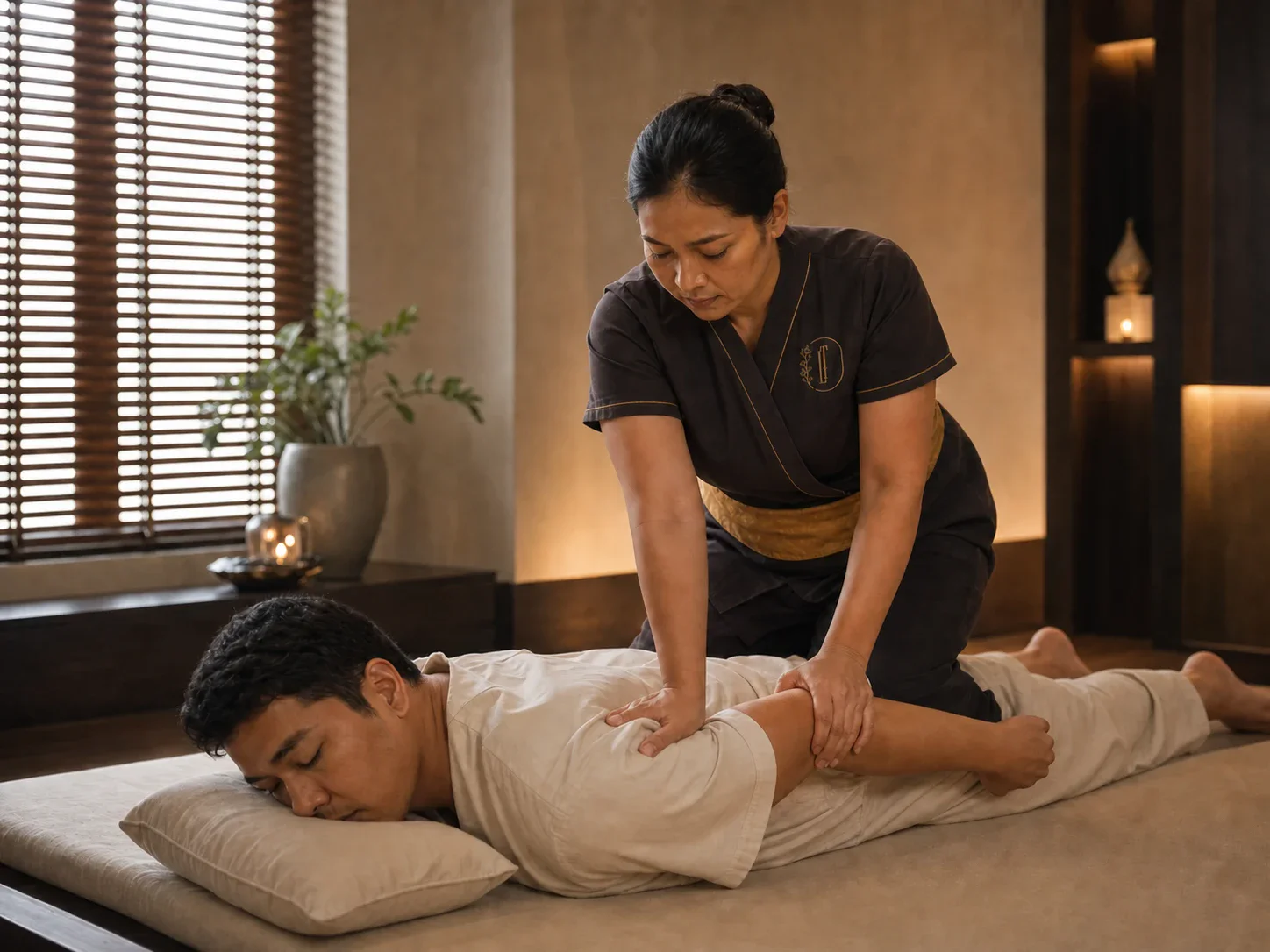
Clothing allows the therapist to stabilise limbs and change positions without relying on skin glide. Traditional Thai sessions may move through supine, side-lying, prone and seated work, depending on the guest and the protocol.
Oil massage creates smooth contact across the skin. Long strokes, kneading and focused muscle work can be delivered with the guest appropriately draped, usually with fewer large assisted movements.
Neither format guarantees a particular pressure level. A clothed Thai session can be gentle; an oil massage can include focused deep-tissue work. Confirm the technique, draping and movement before booking.
Rhythmic Compression Versus Continuous Flow
Thai massage often uses repeated compressions and gradual movement from one body region to another. The therapist works with body weight and leverage rather than pressing harder with small joints.
Oil-based spa massage typically uses more continuous strokes, which can create an enveloping sense of calm and make transitions feel almost seamless.
Assisted stretching is integrated more naturally into many Thai protocols, but it should remain within a comfortable range. It is not a flexibility test, spinal manipulation or promise to correct posture permanently.
-
01
Thai massage begins with stable contact
Broad palm or forearm pressure introduces rhythm before more specific work.
-
02
Positions open different options
The therapist may support a leg, hip, shoulder or torso without forcing range.
-
03
Oil massage builds continuous glide
A suitable medium supports longer strokes and direct muscle contact.
-
04
Both finish through reassessment
Pressure, warmth, dizziness and comfort should be checked before the guest stands.
Pressure Is a Conversation, Not Proof of Quality
Strong sensation is often marketed as authenticity, but a trained therapist scales pressure according to tissue, position, health history and feedback. Sharp, electric, radiating or numbing sensations are not useful achievements.
The Thai government’s health-establishment standards require customer screening and caution for people at risk because of age or existing disease. Service providers must also be registered and hold recognised training credentials.
A guest should be able to request less pressure, skip a stretch or change position without feeling that the session has failed.
Choose the Experience That Matches Today’s Goal
Choose traditional Thai massage when you prefer clothing, rhythmic compression, assisted movement and a more participatory full-body experience.
Choose aromatic oil or another spa massage when you want direct skin contact, smooth continuous strokes, warmth and minimal repositioning.
A combination treatment can blend elements, but ask how. The phrase “Thai combination” should describe a coherent protocol rather than a random collection of stretches added to an oil massage.
How to Choose Thai Massage in Bangkok
Look for a clear treatment description, visible duration and price, pre-treatment screening and a therapist who explains clothing, movement and pressure. Clean facilities and professional draping are baseline standards, not luxury extras.
Disclose recent injury, surgery, pregnancy, anticoagulant medication, fragile bones, neurological symptoms and diagnosed vascular or inflammatory conditions. Massage should not delay assessment for severe or unexplained symptoms.
At Loft Thai Spa, traditional Thai technique can be experienced within a private, hospitality-led setting. Guests interested in the craft itself can also explore how practical training is structured at Nuad Thai School.
“Authenticity is not measured by pain. It is expressed through coherent technique, cultural knowledge, consultation and control.”
Loft Thai Editorial Team
Continue your research
REFERENCES
Sources & further reading
PRACTICAL GUIDANCE
Frequently Asked Questions
Is authentic Thai massage always performed without oil?
Traditional sessions are commonly clothed and use little or no oil, but regional and modern variations exist. Ask the provider to describe the actual protocol.
Is Thai massage supposed to hurt?
No. It can feel intense, but sharp, electric, radiating or numbing sensations should be reported immediately. Pain is not proof of authenticity or effectiveness.
What should I wear for traditional Thai massage?
Wear or use the loose, comfortable clothing provided by the spa. It should allow supported movement without exposing the body.
Is oil massage less therapeutic than Thai massage?
No. It is a different design using direct skin contact and gliding techniques. Suitability depends on the guest’s goal, health context and therapist skill.
Can Thai massage fix posture or improve mobility permanently?
A session may temporarily change comfort and range of movement, but it does not permanently correct posture or replace exercise, rehabilitation or medical care.
CONTINUE READING
Related stories
Best Thai Massage in Bangkok: Traditional vs Aromatic Oil vs Deep Tissue Which One Is Right For You?
Bangkok is one of the few cities in the world where massage is not just a service—it’s culture. You can book a session almost anywhere, at almost any price, and still find talented hands. That’s the magic of Thailand. But it also creates the biggest problem…
Read the guide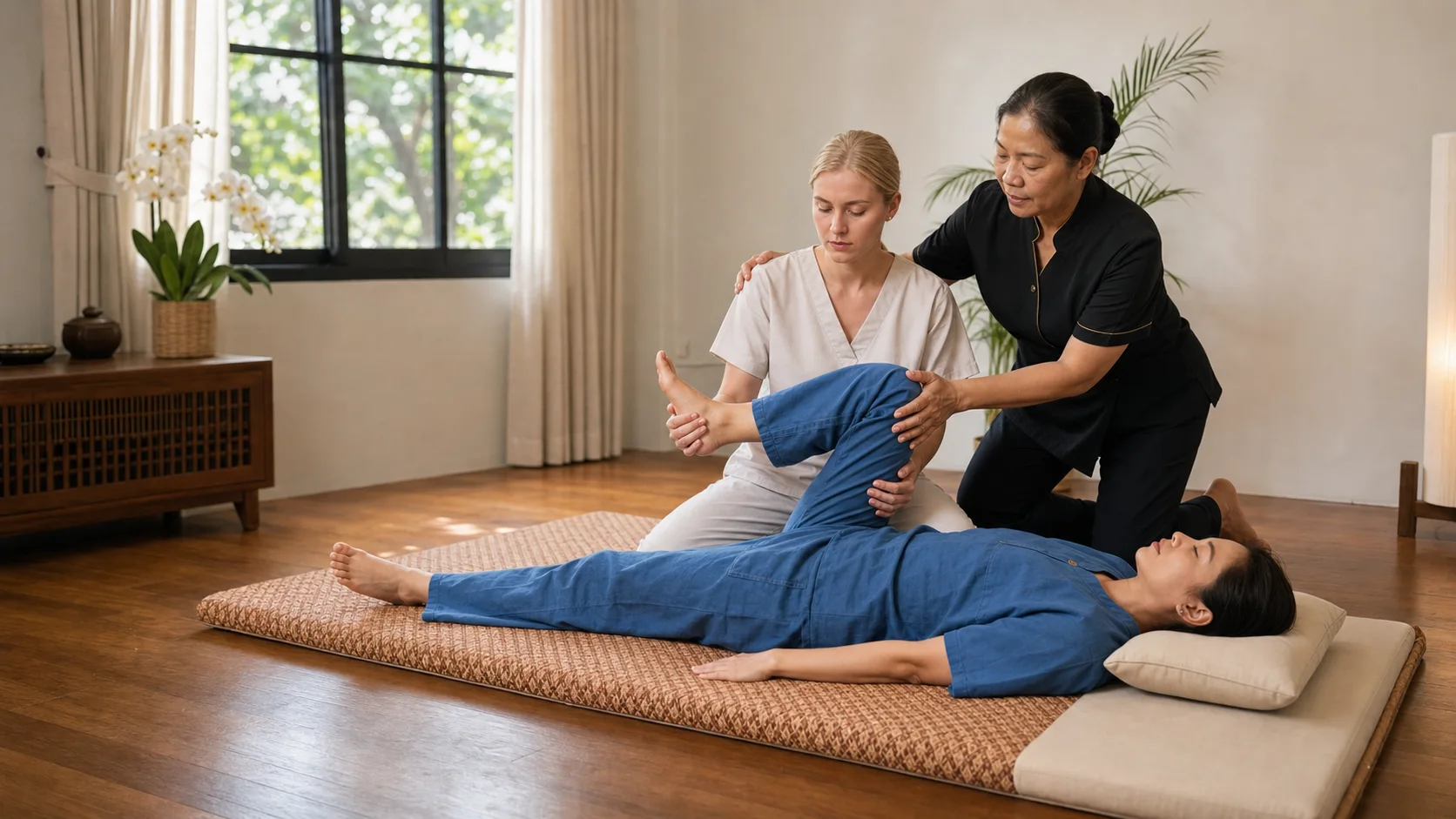
Nuad Thai School: One of the Best Thai Massage Schools and Spa Training Centers in Bangkok, Operated by Loft Thai Spa
Bangkok has long been recognized as one of the world capitals of massage, spa therapy, traditional healing, and wellness culture. For many international students, professional therapists, spa owners, and wellness entrepreneurs, Thailand is not simply a…
Read the guide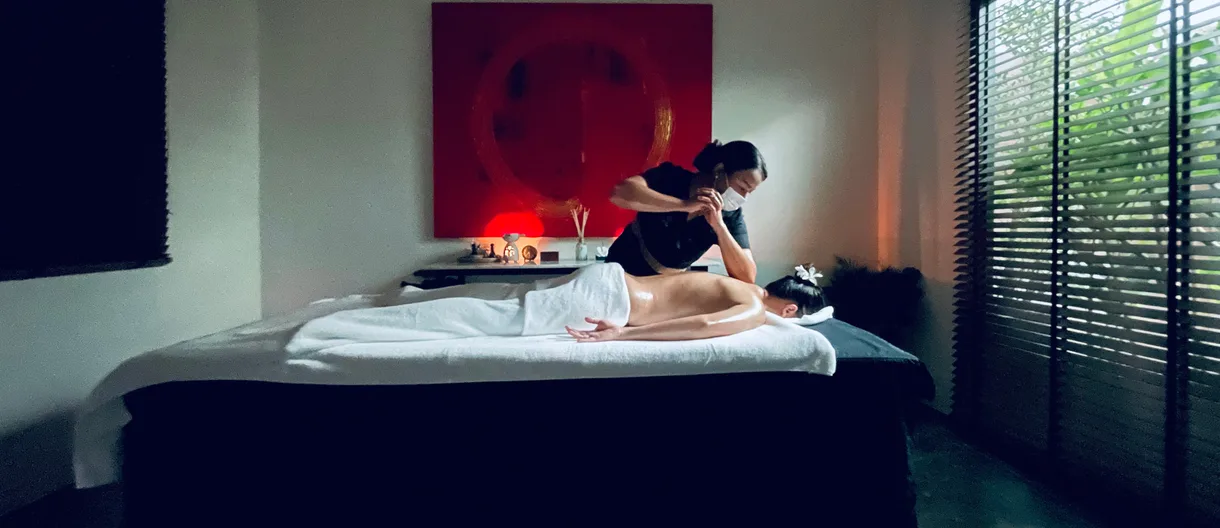
Best Thai Massage Thailand: The Loft Thai Story
Inside a Loft Thai treatment room, the first language is rhythm. A therapist settles her stance, listens to the guest’s breathing and lets pressure build without hurry. Hands pause before they move again; every stretch is supported, every change of position…
Read the guide
Meet the Master Therapist Series: A Private Signature Massage Experience with Khun Pie
There are massages you book because your body feels tired. There are spa rituals you choose because you want to escape the noise of the city for an hour. And then there are rare experiences that feel more like a meeting with living knowledge — a moment where…
Read the guide