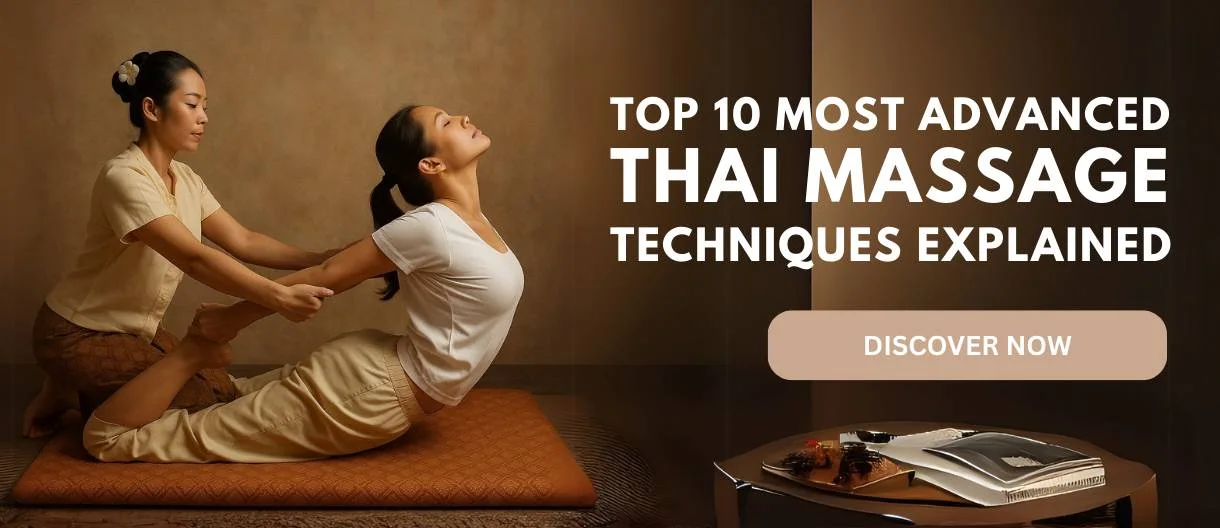
Thai massage is one of the oldest forms of healing that blends acupressure, passive stretching, and energy line work rooted in Thai medicine and Buddhist philosophy. Though often viewed as relaxing or spiritual, advanced Thai massage techniques are far more than a wellness trend. They are systematic, anatomical methods developed over centuries to realign the body, relieve deep muscular tension, and restore energy flow. This article explores ten of the most advanced Thai massage techniques practiced by skilled therapists at Loft Thai Boutique Spa & Massage in Bangkok.
1. Deep Quadriceps and Chest Expansion Stretch
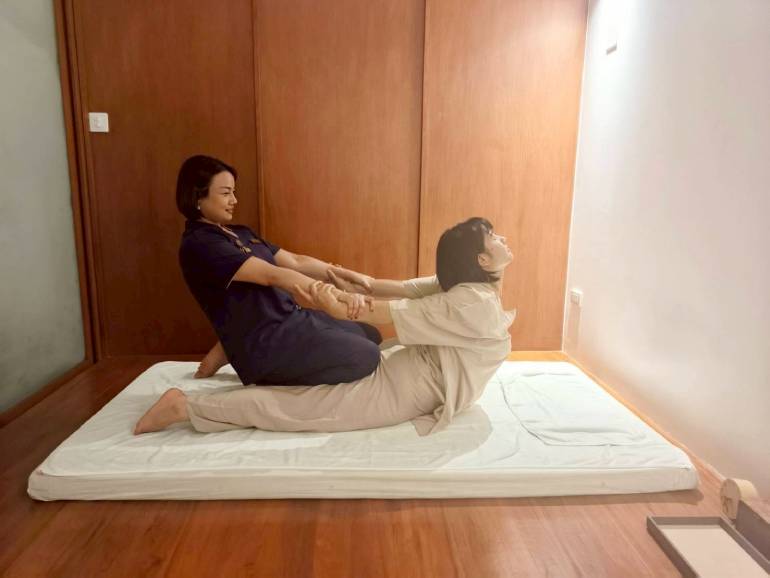
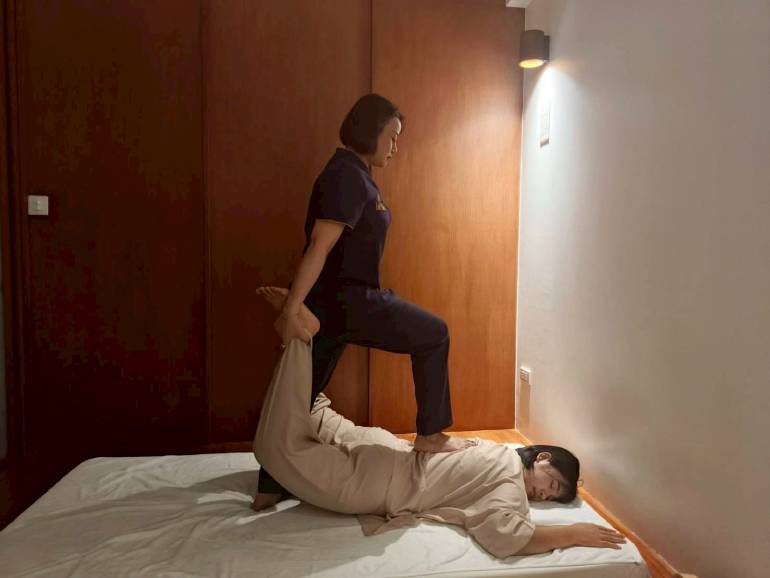
This technique focuses on opening the front side of the body, particularly the thighs, chest, and shoulders. By combining controlled leg extension with arm retraction, the body forms an arch resembling a drawn bow. The recipient lies face down while the therapist stretches the front thigh muscles, pulls the arms backward, and subtly arches the back. This sequence enhances muscle elasticity, improves postural alignment, and relieves tension built up from sedentary habits.
Therapists must pay close attention to spinal curvature and shoulder openness to avoid discomfort. The result is a rejuvenating experience that not only improves flexibility but also promotes better breathing and circulatory function.
2. Controlled Hip and Quadriceps Mobilization
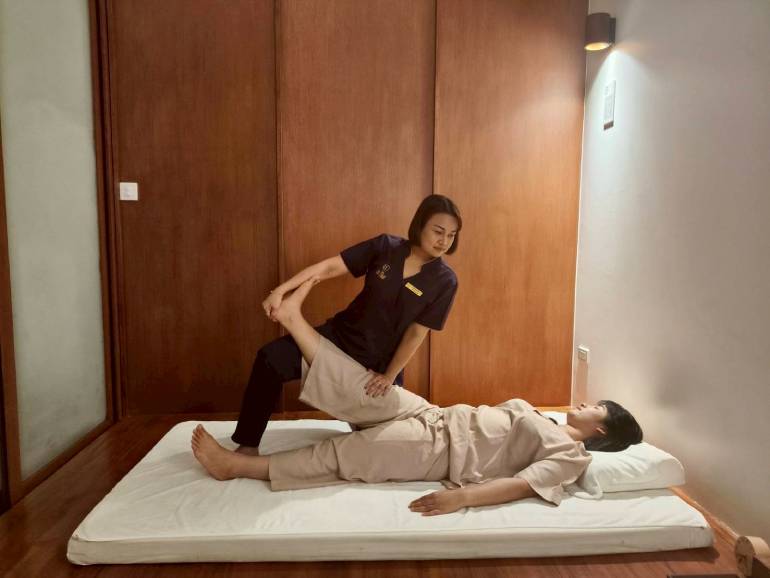
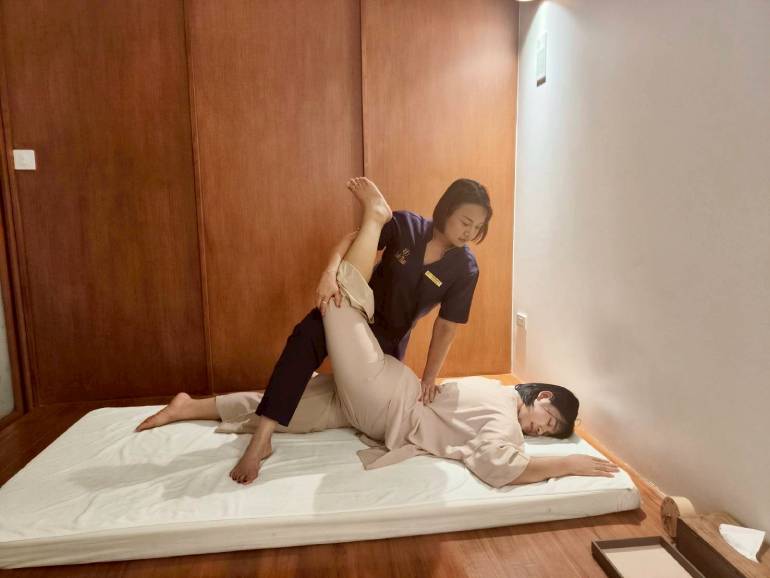
Focusing on the hip flexors and quadriceps, this stretch addresses both flexibility and joint mobilization. The recipient lies on the side or stomach while the therapist bends one leg behind the body, stabilizing the hip and gently elongating the thigh muscle. This technique is especially beneficial for those experiencing hip tightness, lower back strain, or muscle imbalances from prolonged sitting.
It helps restore healthy posture by opening up the hips and releasing tension in the lower body. Regular application can assist in correcting gait issues and improving general movement quality.
3. Supine Hamstring and Pelvic Stretch
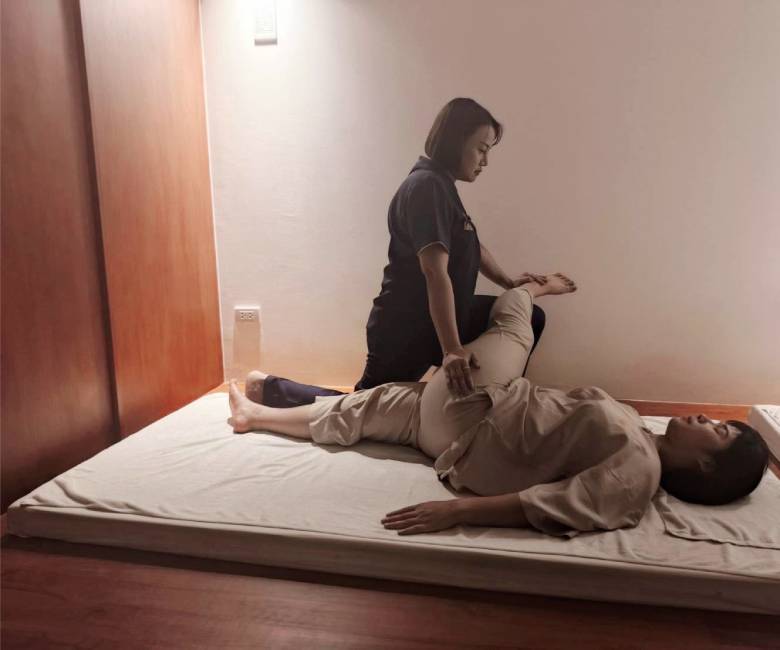
This advanced method is performed with the recipient lying on their back. The therapist lifts one leg toward the chest, keeping the knee straight to engage the hamstring muscles. During the stretch, the pelvis is stabilized, ensuring that the spine maintains a neutral alignment.
Beyond just loosening the hamstrings, this technique addresses issues in the lower back and helps with sciatic nerve relief. Because of its focus on alignment, it also contributes to better posture and core stability.
4. Assisted Sit-Up Stretch with Arm Engagement

Here, the recipient transitions from a lying to a seated position with assistance from the therapist, who holds their hands and gradually pulls them forward. As the upper body lifts, the quadriceps and core muscles activate, while the shoulders and arms receive a gentle stretch.
This technique is holistic in its approach, activating both upper and lower body simultaneously. It’s particularly effective in energizing the body, improving spinal posture, and developing coordination between muscle groups. It mimics natural movement patterns that are often lost in modern sedentary life.
5. Simultaneous Hip, Shoulder, and Arm Expansion
In this multi-directional stretch, the recipient lies on their back while the therapist manipulates both the lower and upper body. The hips are gently pressed and rotated while the arms are extended outward. This controlled stretch engages the hip flexors, shoulders, and chest simultaneously.
Such techniques are useful for individuals dealing with muscular imbalances caused by daily habits like desk work or long periods of standing. By addressing multiple joints and muscle groups in one synchronized motion, the body is brought into a state of equilibrium and openness.
6. Side-Lying Hip and Gluteal Release
Often underestimated, the muscles surrounding the hips and buttocks play a crucial role in mobility. This technique, performed while the recipient lies on their side, isolates the hamstrings and glutes. The therapist bends the top leg backward while applying counterpressure to the hip or lower back.
This approach releases deep muscle tension and enhances hip rotation. It also supports spinal health by preventing misalignment that often stems from weak or tight gluteal muscles. The stretch improves posture and range of motion in the lower half of the body.
7. Lateral Body and Arm Expansion

This method focuses on extending the arms outward while the side of the torso is gently lengthened. By pulling the arms to the side and applying pressure along the ribs and obliques, the therapist creates a feeling of opening across the upper body.
Besides its physical benefits, this technique can help enhance breathing capacity by allowing the rib cage to expand more fully. It is a useful stretch for athletes or individuals who rely heavily on upper body mobility. It also supports emotional release, as tension in the chest and sides often correlates with stress.
8. Head, Neck, and Shoulder Alignment Stretch

Targeting the uppermost part of the body, this technique involves slow manipulation of the head and gentle traction of the neck. The therapist also massages the shoulder blades and the upper traps, working to release tension that accumulates from mental stress or poor posture.
The method promotes a feeling of lightness in the head, encourages better blood flow to the brain, and supports cervical spine health. It's particularly beneficial for people suffering from tension headaches or neck stiffness due to extended screen time.
9. Full-Spinal Rotation and Muscle Release
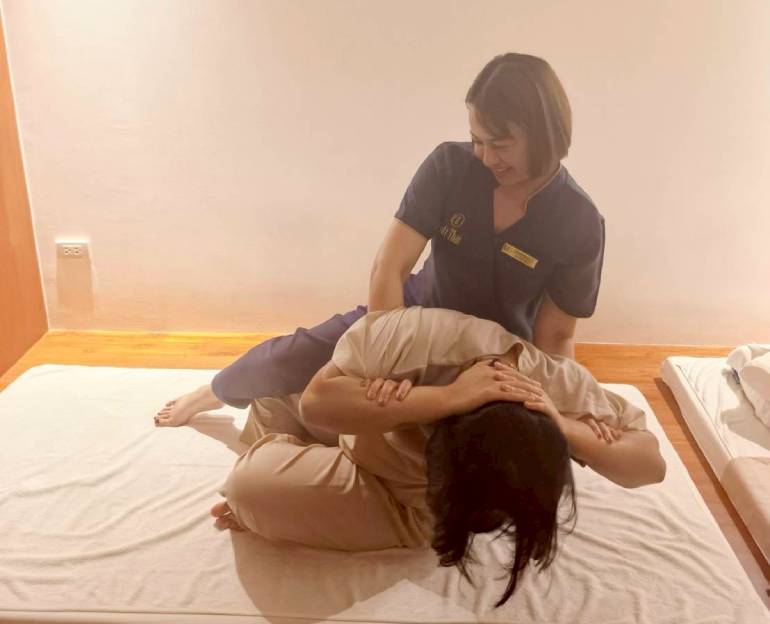
Here, the therapist rotates the recipient’s torso while supporting the arms and stabilizing the hips. The entire back receives a deep yet controlled twist that stretches the muscles surrounding the spine and realigns the vertebrae.
This technique not only improves spinal mobility but also supports digestion and circulation. It’s one of the most grounding and stress-relieving techniques used in Thai massage and is a favorite among people who sit for extended periods.
10. Chest and Arm Elevation Stretch
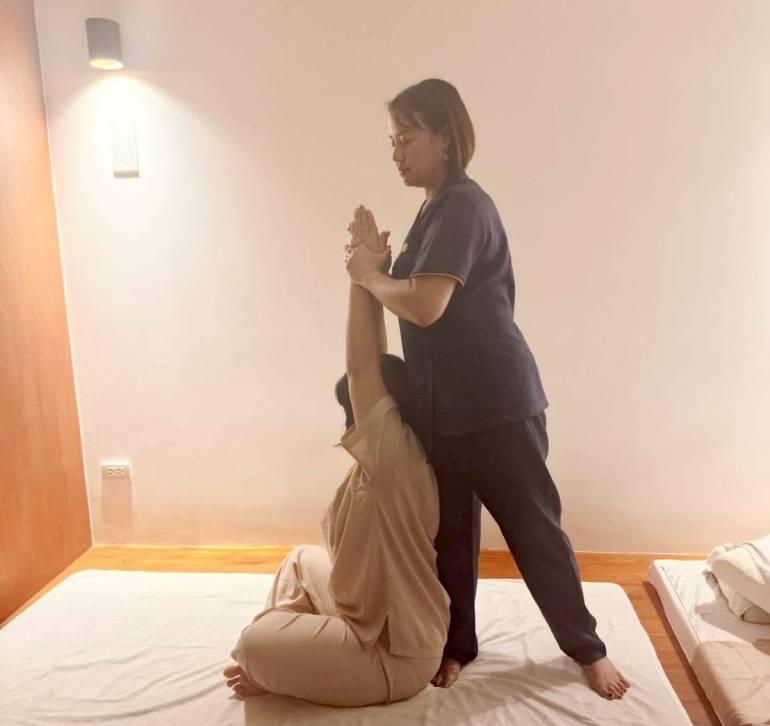
Inspired by postures that resemble a cobra’s rise, this stretch emphasizes thoracic extension. The recipient is guided into a posture that opens the chest, extends the arms backward or upward, and lifts the upper back. This controlled arch enhances respiratory function and counters the effects of slouching.
It is particularly effective for revitalizing energy levels, increasing lung capacity, and reducing shoulder tension. Practiced regularly, it can assist in achieving a more upright posture and an open, confident body language.
For a detailed review of the traditional Thai massage techniques offered at Loft Thai Spa, this posture stands out as a prime example of how movement and mindfulness converge to support deep healing. Advanced Thai massage techniques are not just artistic expressions of physical manipulation—they are informed, purposeful movements grounded in anatomy, energy theory, and healing intent. At Loft Thai Boutique Spa & Massage, our therapists are trained to deliver these techniques with precision, offering a deeply restorative experience that aligns body, mind, and energy.
These ten advanced methods demonstrate the depth of Thai massage as both a science and an art. Whether used to complement athletic training, relieve chronic tension, or support holistic wellness, advanced Thai massage offers powerful benefits for those seeking more than just relaxation.
UPDATED LOFT THAI GUIDE
Additional guidance and current information
The following editorial update expands on the original Loft Thai article with practical context, current treatment guidance and further reading.
Nuad Thai Is Living Heritage, Not a Performance Routine
UNESCO inscribed Nuad Thai on the Representative List of the Intangible Cultural Heritage of Humanity in 2019. Its description presents the practice as traditional healthcare knowledge transmitted through families, schools, associations and professional settings.
The WHO benchmarks describe education and service principles for traditional Nuad Thai practice. Neither source turns every filmed movement into a medical prescription or requires every guest to receive the same sequence.
What “Advanced” Should Mean
An advanced technique demands more judgement from the therapist: how to position the guest, where to stabilise, how to use body weight, what range is available and how quickly to retreat if feedback changes.
It should not mean maximum leverage, surprise, pain or a competition for flexibility. Many excellent sessions omit dramatic movements entirely.
What the Official Film Can—and Cannot—Show
YouTube’s official oEmbed record identifies the film as Loft Thai Spa and Massage content. It provides a useful visual reference for therapist positioning and movement families.
A film cannot show the complete consultation, pressure conversation or medical history. It also cannot prove that a movement treats a named condition, permanently changes posture or suits the viewer.
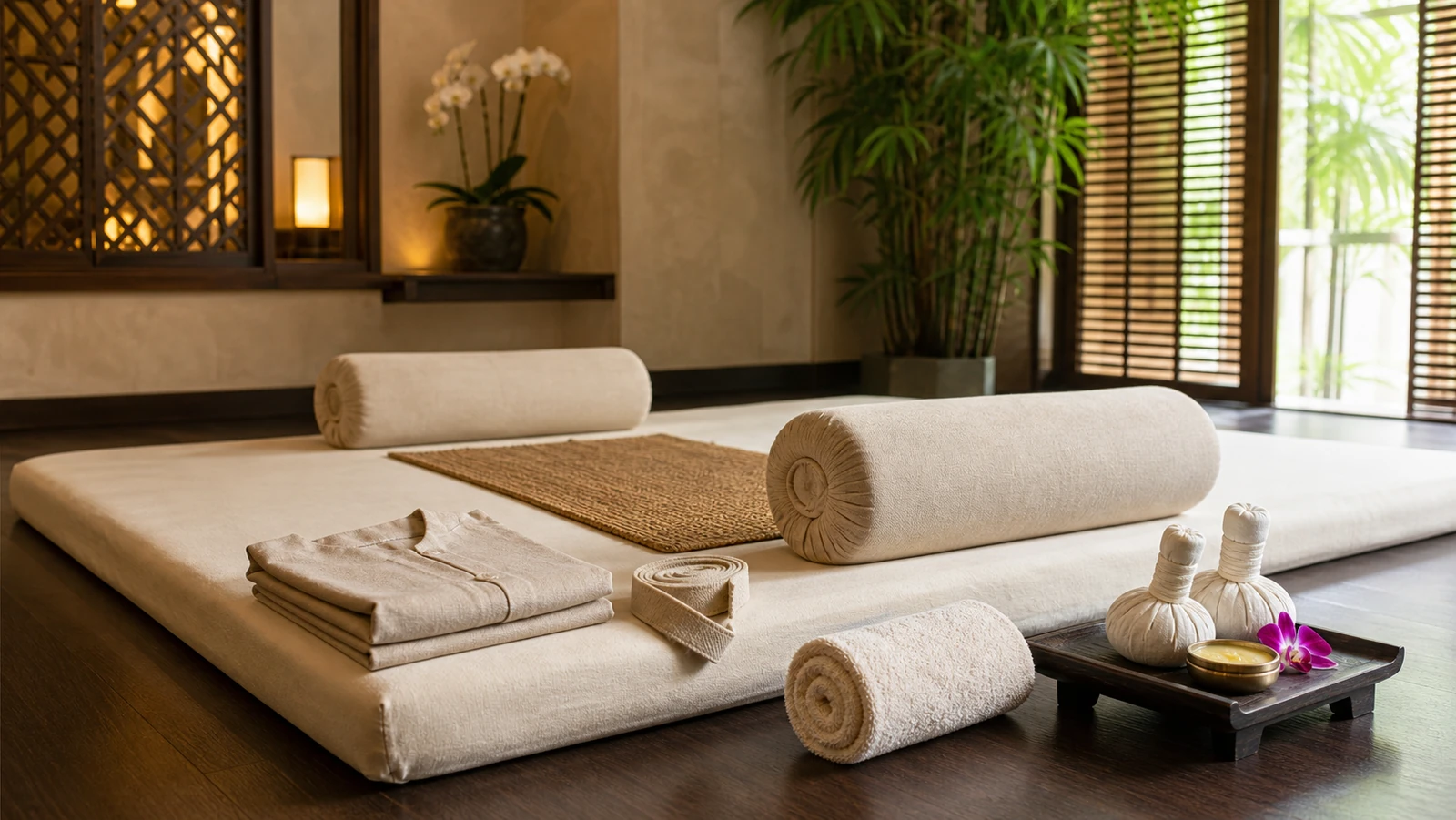
The 10 Technique Families in the Sequence
The following atlas describes what viewers can observe, not a home stretching tutorial. Partner leverage, body weight and joint positioning make these unsuitable for untrained imitation.
Load labels are practical editorial markers, not medical grades. Actual intensity depends on range, speed, support and the guest’s response.
-
01
1. Prone Quadriceps and Chest Extension — Higher load
With the guest face-down, the therapist may support the lower legs while coordinating extension through the knees, hips and front body. The range should remain comfortable at the knees, hips, lower back and shoulders; pregnancy, recent surgery, acute back pain or joint instability may make it unsuitable.
-
02
2. Side-Lying Hip and Quadriceps Mobilisation — Moderate to higher load
Side-lying positioning allows one leg to be guided while the pelvis and torso are supported. The therapist controls the arc instead of pulling the foot toward a visual target. Sharp knee, groin or back sensation is a stop signal.
-
03
3. Supine Hamstring Raise — Moderate load
A supported leg raise may explore the back of the thigh without bouncing. Range varies widely. Tingling, numbness or radiating pain should not be pushed through because a neural symptom is different from ordinary stretch sensation.
-
04
4. Assisted Supine-to-Seated Transition — Higher coordination
The therapist and guest move together from lying to sitting with stable contact. The movement should be paced, never a sudden pull on the arms or neck. Dizziness, shoulder limitation or low trunk control changes the choice.
-
05
5. Supported Hip, Shoulder and Arm Expansion — Moderate to higher load
This combined position can distribute movement across several regions. Because multiple joints are involved, it needs more communication, not less. Shoulder instability, recent dislocation or upper-limb symptoms may require an alternative.
-
06
6. Side-Lying Hip and Gluteal Compression — Moderate load
Broad compression and small hip movements can be applied while the guest is supported on the side. The therapist should avoid direct force over bone, acute injury, inflamed tissue or unexplained pain.
-
07
7. Lateral Torso and Arm Expansion — Moderate load
A side-bending pattern may create a gentle sense of length through the lateral trunk and shoulder. The goal is not to “open” organs or force the ribs; breathing stays comfortable and the arm remains supported.
-
08
8. Seated Neck and Shoulder Sequence — Low to moderate load
Seated palm contact, shoulder work and small active or assisted movements can close a session. Forceful cervical manipulation is not a required part of Thai massage. New dizziness, headache, neurological symptoms or recent neck injury warrants medical advice.
-
09
9. Supported Trunk Rotation — Moderate to higher load
Rotation should be distributed through a comfortable range while the pelvis and shoulders are controlled. It is not a spinal realignment. Osteoporosis, recent surgery, acute back pain or pregnancy can change whether rotation is appropriate.
-
10
10. Advanced Closing Arch or Bow — Higher load and often omitted
The final dramatic extension seen in some demonstrations requires considerable shoulder, hip and spinal tolerance. It is optional, should never be used as proof of treatment quality and is inappropriate for many guests.
Communication Is Part of the Technique
Before loading a joint, the therapist can explain the direction, establish a comfortable starting point and ask for feedback. During the movement, breathing and muscle guarding provide additional information but do not replace the guest’s words.
Use clear language such as “less range,” “pause,” “support my knee” or “skip this.” A professional response is immediate adjustment, not persuasion.
Stretch Sensation Is Not the Same as Pain
A broad, manageable pulling sensation may occur during assisted movement. Sharp, electrical, burning, catching, numb or radiating sensations are reasons to stop.
Pain tolerance is not a quality score. A guest who prefers gentle pressure can still receive skilled Traditional Thai Massage.
Range of Motion Can Change Without Proving “Realignment”
Research on stretching shows that acute and longer-term range-of-motion changes can occur, with mechanisms that may include tolerance and tissue behaviour. That does not establish that one Thai massage technique corrects posture, gait or skeletal alignment.
Massage research for pain is also mixed and often supports only short-term effects. NCCIH notes weak or limited evidence for several pain conditions and cautions against using massage to delay medical care.
Who Needs a Modified Session
Tell the spa about pregnancy, osteoporosis, joint replacement, hypermobility, recent surgery, fracture, disc symptoms, anticoagulants, varicose veins, cancer treatment or a new diagnosis.
Fever, suspected clot, acute neurological change, severe unexplained pain or a recent major injury is not a setting for an advanced spa sequence. Seek appropriate medical assessment.

Good Body Mechanics Protect Both People
A therapist can use a stable base, aligned joints and gradual body-weight transfer rather than small-muscle force. Smooth entry and exit reduce surprise and allow real-time adjustment.
If the therapist appears unstable, reaches beyond control or uses the guest’s limb as a lever without support, the visual drama is not a sign of mastery.
After the Session, Review the Response
Temporary warmth, a sense of ease or mild post-treatment tenderness can occur. Normal daily movement and adequate rest are usually more useful than prescribing a detox ritual.
Severe pain, weakness, numbness, swelling, chest symptoms or symptoms that worsen rather than settle need medical attention.
A Refined Sequence Is Personal, Not Maximal
Advanced Thai massage techniques demonstrate coordination, leverage and deep practical knowledge when they are chosen well.
The mark of quality is a session that feels precise, adaptable and safe—with enough restraint to leave out any movement that does not serve the guest.
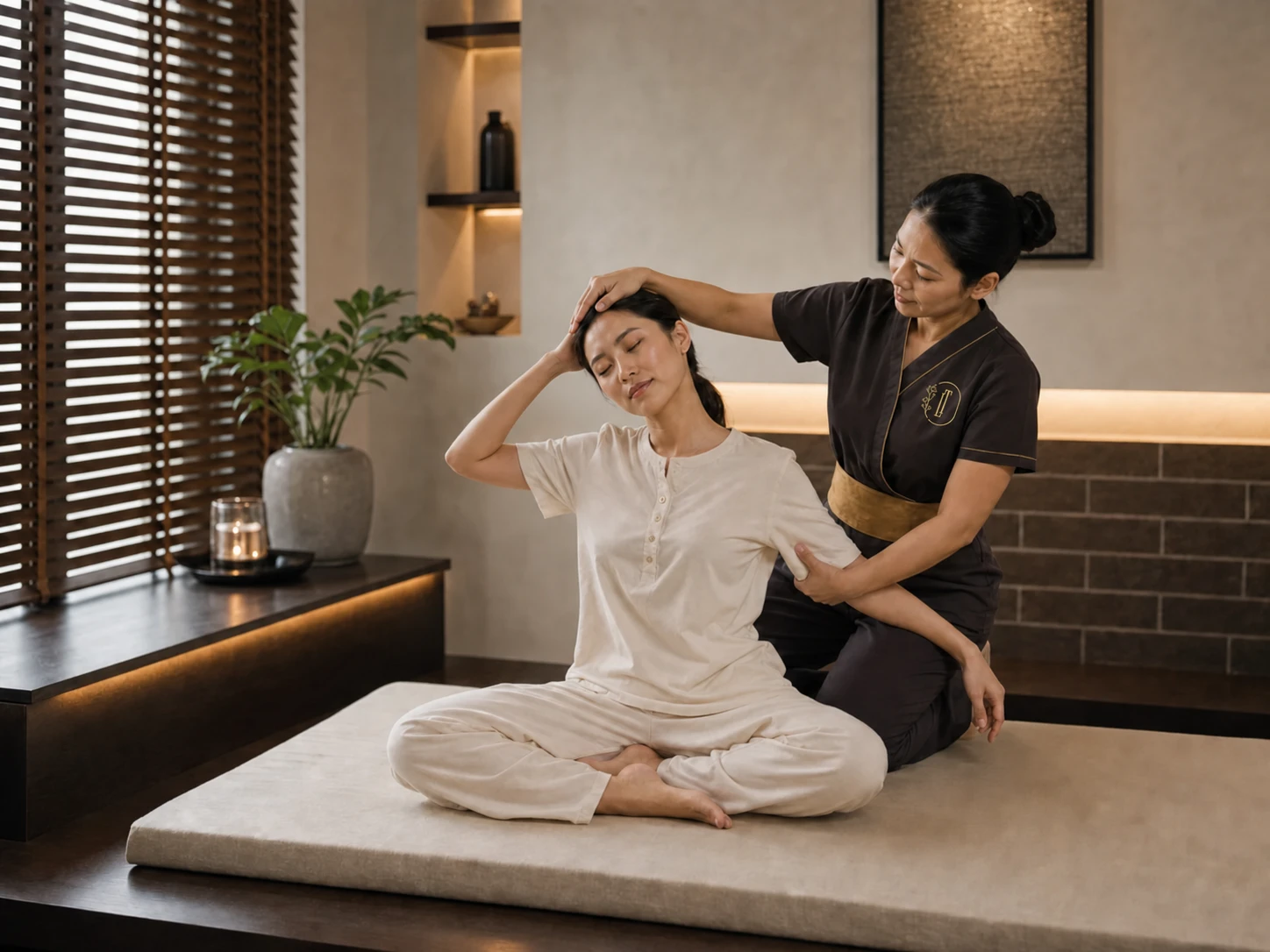
WATCH & LEARN
Bangkok’s Finest Thai Massage in 2025: Your Step-by-Step Experience Unveiled - Champion's Technique
“The advanced skill is not reaching the deepest pose; it is choosing the safest useful range for the person on the mat.”
Loft Thai Editorial Team
Continue your research
REFERENCES
Sources & further reading
PRACTICAL GUIDANCE
Frequently Asked Questions
Are advanced Thai massage techniques painful?
They should not require sharp or escalating pain. Range and pressure can be reduced, and any technique can be skipped.
Can I copy the movements from the video at home?
No. The movements use partner leverage, joint positioning and body weight. The video is an editorial reference, not a self-treatment tutorial.
Do these techniques realign the spine or pelvis?
No reliable evidence shows that the filmed spa techniques permanently realign the skeleton. They may create temporary changes in comfort or range.
Is Thai Warrior suitable for a first Thai massage?
It depends on your goals, history and pressure preference. A consultation may point to Traditional Thai Massage or a modified Thai Warrior sequence.
Should every advanced session include all ten movements?
No. The list is a technique atlas, not a mandatory protocol. Skilled therapists adapt or omit movements based on the guest.
CONTINUE READING
Related stories
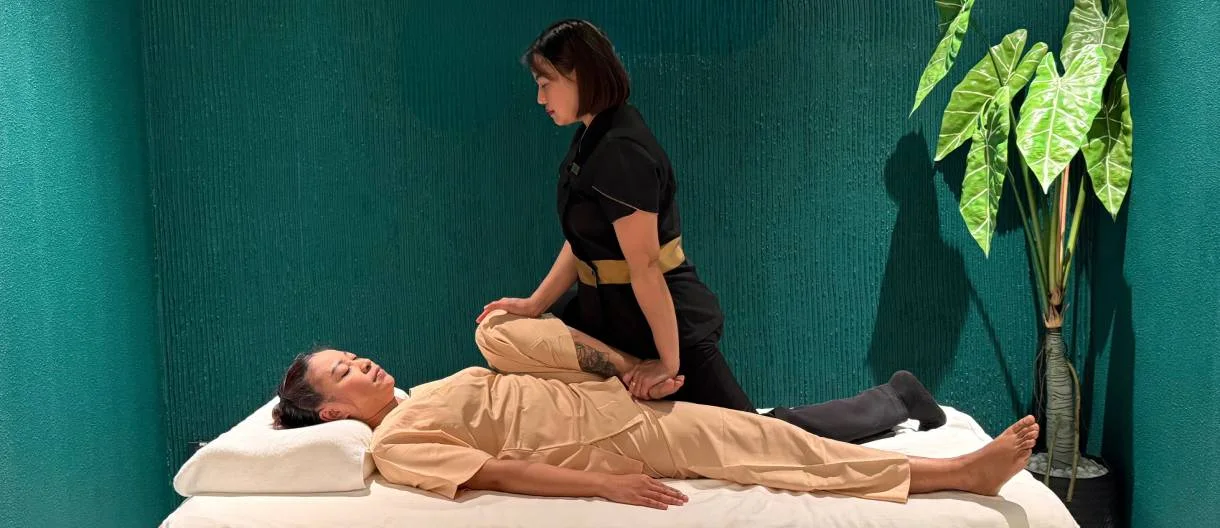
Unlocking the Secrets of Thai Massage in Bangkok
At Loft Thai Spa, massage is more than a wellness service — it is an art form rooted in ancient tradition, guided by anatomical science, and delivered with championship-level precision. In our latest showcase video, we invite you to discover the heart of what…
Read the guide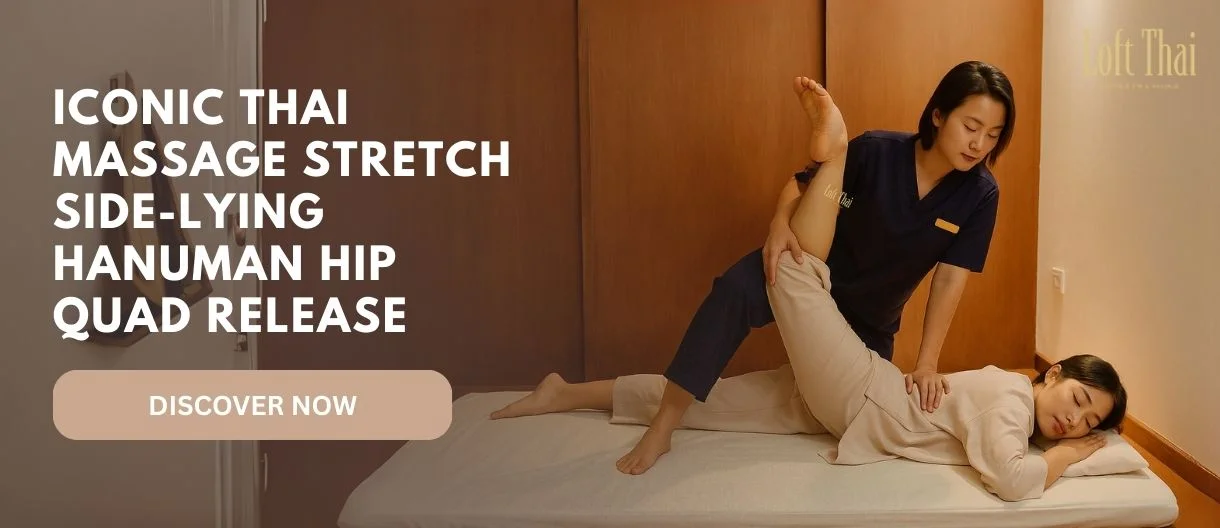
Side-Lying Hanuman Hip-Quad Release iconic Thai-massage stretch
An In-Depth Exploration of a Classic Thai Massage Stretch.Thai massage, or Nuad Thai, weaves together Ayurvedic medicine, Theravada Buddhist mindfulness, and indigenous Thai acupressure traditions. Stretching—Laksana Tok Sen Phong—was historically a way for…
Read the guide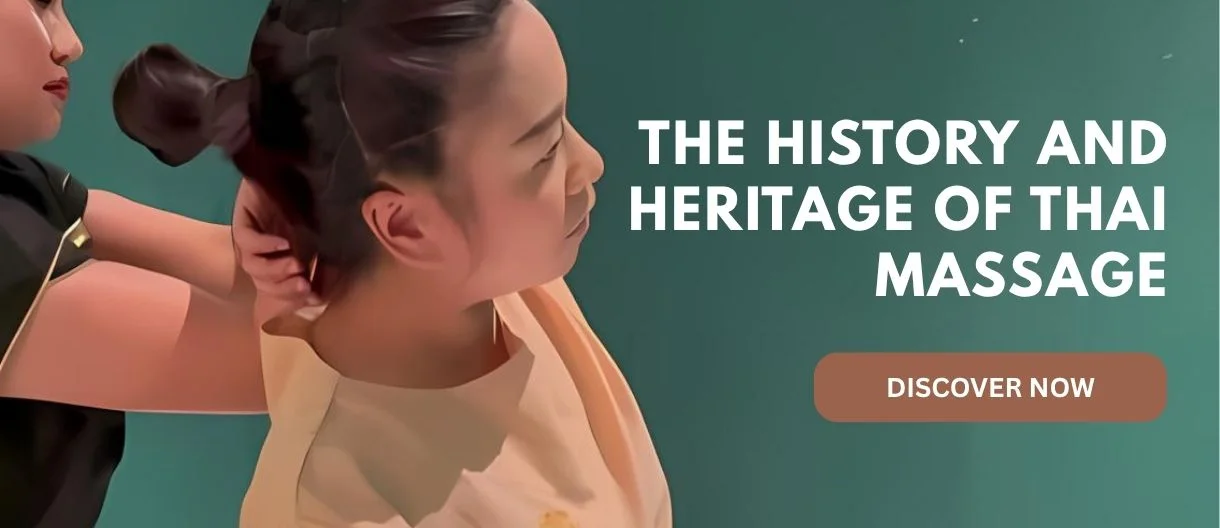
The History and Heritage of Thai Massage
Exploring its Roots in Ayurvedic Medicine, Buddhist Traditions, and the Healing Legacy of Jivaka Kumar Bhaccha
Read the guide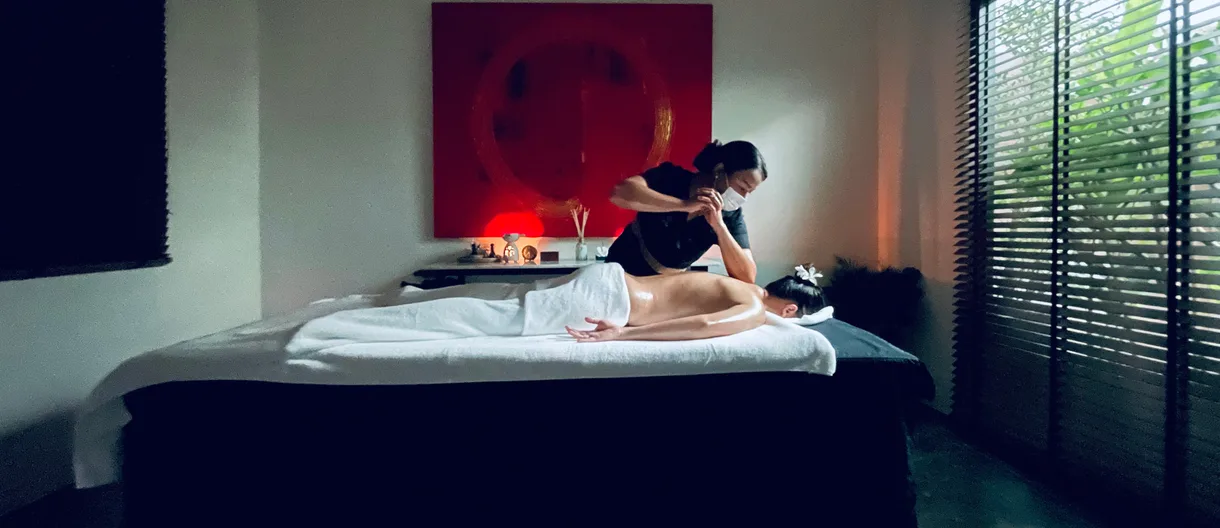
Best Thai Massage Thailand: The Loft Thai Story
Inside a Loft Thai treatment room, the first language is rhythm. A therapist settles her stance, listens to the guest’s breathing and lets pressure build without hurry. Hands pause before they move again; every stretch is supported, every change of position…
Read the guide