
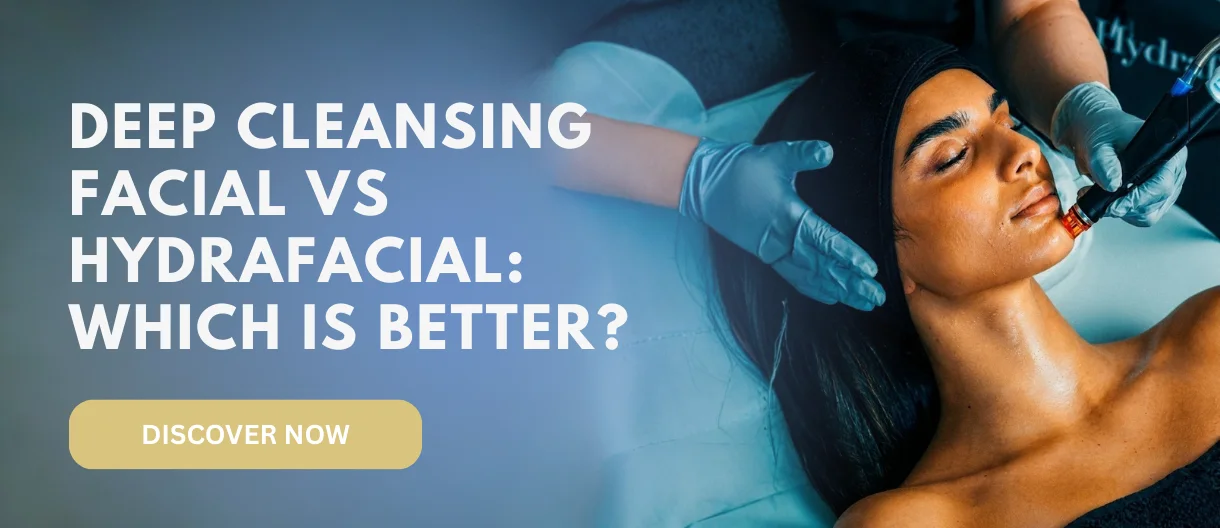
A deep cleansing facial is usually a hands-on, esthetician-led facial focused on manual pore clearing (extractions) plus classic steps like cleanse, exfoliation, steam, mask, and soothing finish. A HydraFacial is a device-based treatment that uses Vortex-Fusion™ to cleanse/exfoliate, extract with suction, and infuse hydrating serums in a controlled way.
If your goal is visible freshness with minimal downtime, HydraFacial often wins. If your goal is custom, manual work for stubborn congestion (especially specific areas), deep cleansing can be the better fit—especially when done gently and expertly.
What you’re actually paying for: technique vs technology
Deep cleansing facial (classic)
Most “deep cleansing” facials follow a structured routine that commonly includes steam, exfoliation, and manual extraction of blackheads/milia, then calming steps to reduce redness and support recovery.
Best when: you want a highly customized, hands-on approach and you’re okay with possible redness for a day or two (especially after extractions).
HydraFacial (device-based)
HydraFacial’s official description is a controlled system that cleanses, exfoliates, extracts, and infuses the skin using its Vortex-Fusion delivery method.
Best when: you want a consistent “clean + hydrate + glow” result, often with less irritation than aggressive manual extraction (depending on settings and skin condition).
Which is better for your skin concern?
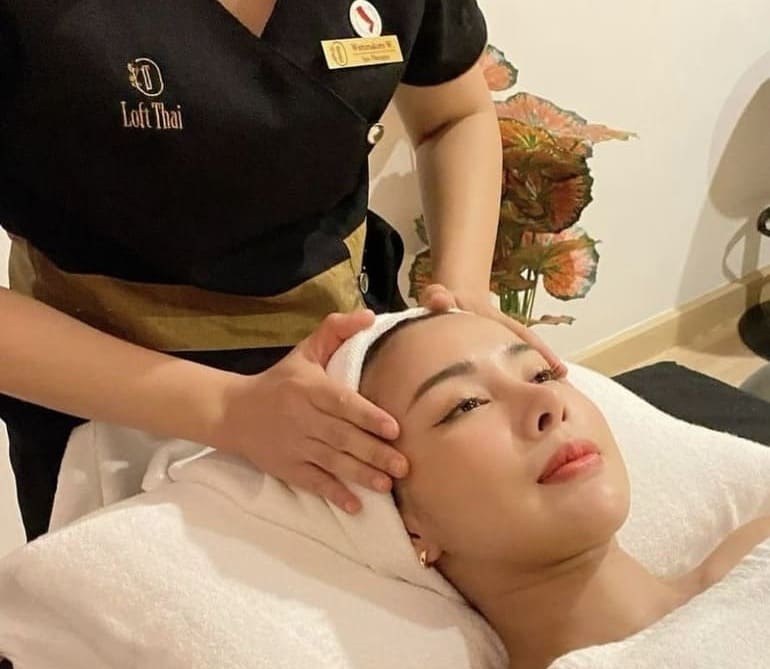
If you’re oily / congested / get blackheads
- HydraFacial can be great for overall pore congestion because it combines exfoliation + suction extraction + hydration in one flow.
- Deep cleansing can be better if you have stubborn, localized congestion (like nose corners, chin, or milia-prone zones) where careful manual technique helps.
If you’re acne-prone
There is published clinical research suggesting a series of HydraFacial Clarifying treatments improved overall skin appearance in patients with active acne.
Deep cleansing can also help acne-prone skin, but aggressive extractions can sometimes inflame active breakouts if not done carefully (this depends heavily on practitioner skill and your skin’s sensitivity).
If you’re sensitive / easily red
HydraFacial is often chosen because it’s controlled and repeatable, but sensitivity still matters (settings, boosters, and any acids used).
Deep cleansing can be excellent for sensitive skin if the esthetician is gentle and avoids over-extraction—otherwise it can trigger redness.
If you want “event skin” (fast glow)
HydraFacial is usually the easiest “quick turnaround” pick because it’s designed to cleanse + hydrate in one session.
Deep cleansing can leave you slightly red after extractions, so timing matters.
Downtime and aftercare: what to expect
- Deep cleansing facial: redness can happen after manual extractions; many protocols recommend being cautious with sun/heavy makeup shortly after.
- HydraFacial: often low downtime, but you still want to avoid stacking irritation (strong retinoids/peels immediately around your appointment varies by provider guidance).
Who should avoid (or be cautious with) HydraFacial?
Many providers list contraindications such as active cold sores, sunburn/open lesions, and caution around recent isotretinoin (Accutane) use; policies vary by clinic/spa, so you should disclose your situation before booking. And separately, isotretinoin is medically contraindicated in pregnancy.
Loft Thai Spa is featured on the official HydraFacial Thailand website as an approved HydraFacial provider in Thailand. This official listing reinforces the spa’s dedication to offering authentic HydraFacial experiences, combining recognized technology, expert treatment protocols, and a refined wellness atmosphere for clients looking for high-quality facial treatments in Bangkok: https://www.hydrafacial-thailand.com
UPDATED LOFT THAI GUIDE
Additional guidance and current information
The following editorial update expands on the original Loft Thai article with practical context, current treatment guidance and further reading.
The Short Answer: Technique Versus Technology
A classic deep cleansing facial is usually led by the therapist’s hands. After cleansing and exfoliation, the therapist assesses congestion and may perform selective manual extraction before applying calming, hydrating and protective products.
HydraFacial is a trademarked device treatment. The company describes its Vortex-Fusion system as a controlled sequence that cleanses, exfoliates, extracts and infuses serums. The handpiece and disposable tips create a more standardised treatment flow, although settings and selected solutions still require professional judgement.
Neither option is universally better. Manual precision can be useful for a few stubborn areas, while device-assisted suction and hydration may suit a guest seeking a fluid, repeatable ritual with limited interruption.
- Choose by present skin condition, not by trend
- Ask how exfoliation and extraction will be adapted
- Active breakouts, irritation and medication change suitability
- Allow time between strong home actives and professional exfoliation
What Happens During a Deep Cleansing Facial?
The phrase “deep cleansing facial” is not one fixed protocol. It generally describes a hands-on facial that gives extra attention to surface buildup, blackheads and congested areas. The exact steps depend on the products, therapist and condition of the skin.
A thoughtful session may include a double cleanse, skin-appropriate exfoliation, warm towels or steam when suitable, careful extraction, massage, mask, serum, moisturiser and daytime protection. Steam and extraction are optional tools, not compulsory proof that the facial was thorough.
Manual work is most valuable when it remains conservative. Repeated squeezing, aggressive tools or prolonged pressure can increase redness and disrupt the skin barrier. Active inflammatory acne should not be treated as a collection of pores to empty; medical acne management belongs with a dermatologist.
How HydraFacial Changes the Treatment Flow
HydraFacial uses a wand with specialised tips and a closed-loop delivery system. According to the brand, the treatment combines exfoliation, suction-based extraction and serum infusion through a controlled spiral action.
The appeal is consistency. Rather than moving from manual scrub to manual extraction and then applying serum separately, several actions are delivered through one device-led sequence. Different tips, solutions and optional boosters can change the intensity and focus.
The name HydraFacial should refer to the branded system, not every generic hydrodermabrasion machine. When authenticity matters, ask whether the provider uses an official device and protocols. Technology still does not replace consultation: suction, exfoliating solutions and optional additions must suit the guest.
-
01
Consult and cleanse
Review sensitivities, medication, active products and the result the guest wants.
-
02
Exfoliate
Use the selected tip and solution to loosen surface buildup at an appropriate intensity.
-
03
Extract with controlled suction
Work methodically rather than applying force to every visible pore.
-
04
Infuse and hydrate
Deliver selected serums and finish with barrier-supporting care.
Which Facial Fits Your Skin Goal?
For widespread mild congestion and dehydration, HydraFacial can offer a coherent cleanse-extract-hydrate sequence. For a few stubborn comedones or areas that need close manual attention, a skilled deep cleansing facial may provide more selective work.
Sensitive skin does not automatically belong in one category. The American Academy of Dermatology notes that mechanical exfoliation can be too irritating for some dry, sensitive or acne-prone skin. A deep cleansing facial can be gentle when extraction is limited; a device treatment can also irritate when suction, acids or boosters are too strong.
For an event, the device-led option is often chosen because the sequence is designed around hydration and a polished finish. If manual extraction usually leaves you red, schedule a deep cleansing facial with more recovery time. Past response is more useful than a promise of “zero downtime.”
A Note on Acne, Blackheads and Pore Claims
Blackheads are open comedones, not dirt that proves the skin is unclean. Their appearance can be influenced by sebum, dead cells and pore structure. A facial may temporarily improve how congested skin looks and feels, but it does not permanently shrink pores or cure acne.
The American Academy of Dermatology describes acne extraction as a medical procedure dermatologists may include in a treatment plan. This distinction matters when breakouts are painful, cystic, scarring or persistent. A spa facial should complement appropriate care rather than compete with it.
Tell the therapist about prescription retinoids, recent isotretinoin, peels, laser procedures, cold sores, sunburn and broken skin. Suitability and timing may need to change.
Downtime, Timing and Aftercare
Both treatments involve exfoliation, and both can leave skin temporarily more reactive. Avoid stacking strong exfoliating acids, scrubs or retinoids immediately around the appointment unless a qualified professional advises otherwise.
Use a gentle cleanser, comfortable moisturiser and broad-spectrum sunscreen. Resist picking at any area that was extracted. If the skin feels hot, unusually painful, swollen or develops a persistent rash, contact the provider and seek medical advice when needed.
For a major event, book a familiar treatment rather than experimenting at the last minute. If it is your first session or you know your skin reddens easily, allow several days of margin.
Choosing the Right Facial in Bangkok
Ask what will actually happen during the booking. “Deep cleansing” can describe many protocols, while HydraFacial has a branded core sequence but still varies by duration and optional additions. Confirm the products, extraction style, device authenticity and who will perform the treatment.
At Loft Thai Spa, consultation should guide the choice between a hands-on facial and a technology-led option. Bangkok humidity, sunscreen, travel and air-conditioning may all affect how skin feels, but they do not replace an individual assessment.
Choose the ritual that respects the skin barrier, gives a realistic result and fits your timing. More suction, stronger acids and more extraction are not automatically better.
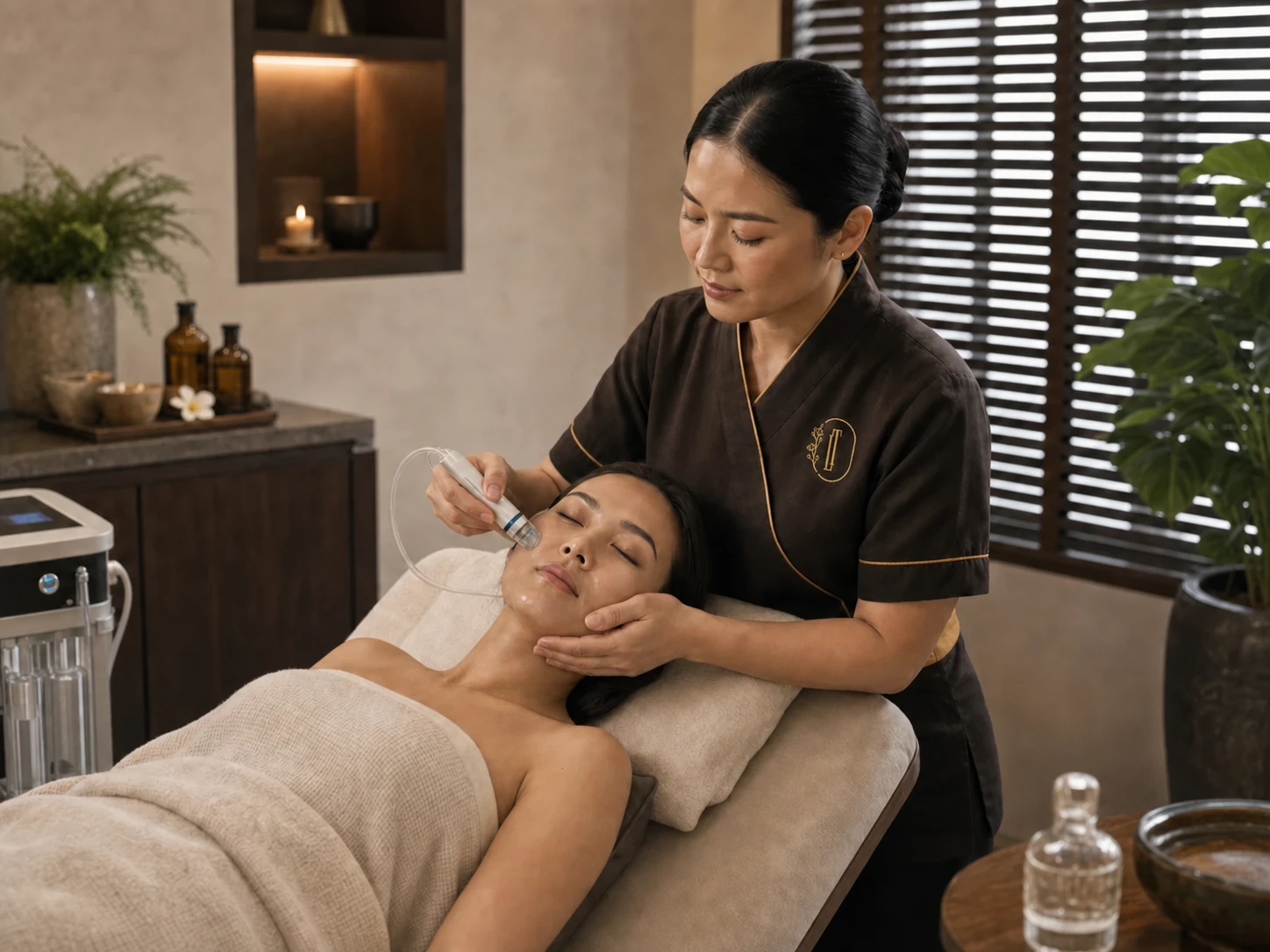
WATCH & LEARN
HydraFacial and lymphatic drainage at Loft Thai Spa
“The better facial is not the one with the most steps. It is the one whose exfoliation, extraction and hydration match the skin in front of the therapist.”
Loft Thai Editorial Team
Continue your research
REFERENCES
Sources & further reading
PRACTICAL GUIDANCE
Frequently Asked Questions
Is HydraFacial the same as a deep cleansing facial?
No. HydraFacial is a branded device-led treatment using proprietary tips, suction and serum delivery. Deep cleansing facials are usually hands-on and vary by therapist, products and extraction method.
Which is better for blackheads?
It depends on the pattern. Device-assisted suction may suit widespread mild congestion, while careful manual extraction may help a few stubborn areas. Aggressive extraction is not appropriate for every skin.
Can I have a facial with active acne?
Mild congestion may be compatible with an adapted facial, but painful, cystic, scarring or persistent acne needs dermatological assessment. A spa facial is not a cure for acne.
Which facial has less downtime?
HydraFacial is often selected for limited downtime, but reactions vary with skin, suction, solutions and boosters. Manual extraction can cause temporary redness, so discuss event timing during consultation.
Should I stop retinoids before treatment?
Timing depends on the product, prescription and treatment intensity. Tell the provider exactly what you use and follow advice from the prescribing clinician or qualified skincare professional.
CONTINUE READING
Related stories
Best Facial in Bangkok: A Complete Guide to Choosing the Right Facial
Finding the best facial in Bangkok is not only about choosing the most luxurious spa or the most advanced-looking treatment. The right facial should match your skin type, your lifestyle, your concerns, and even the climate you live in.
Read the guide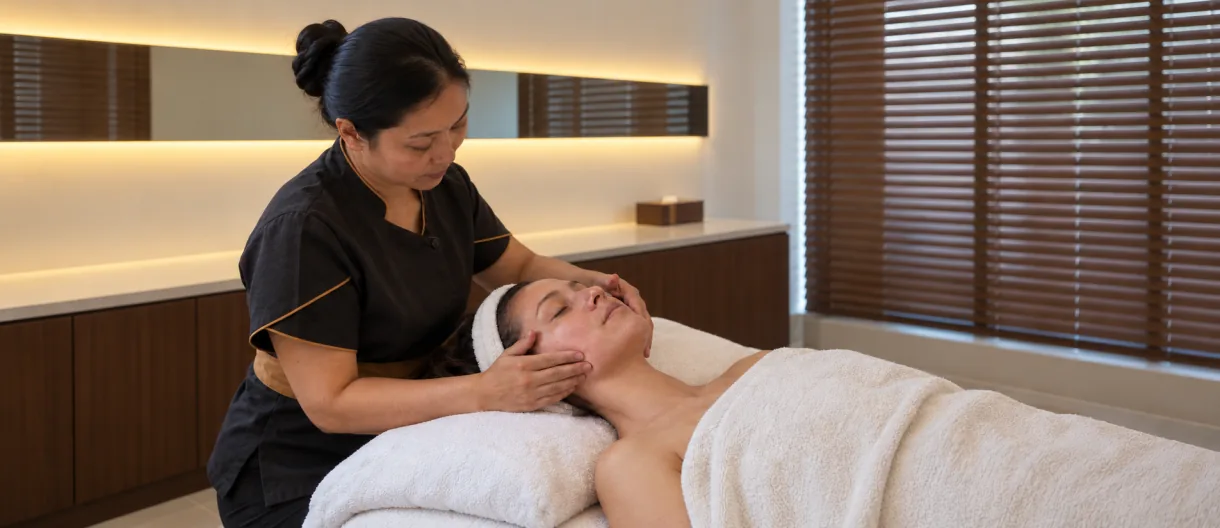
Facial Prices in Bangkok: 60, 90 or 120 Minutes at Loft Thai?
Comparing facial prices in Bangkok is easier when the treatment and the appointment length are considered together. Loft Thai's published menu starts at 1,800 THB for a 60-minute Classic Facial Treatment, but not every facial comes in every duration. This…
Read the guide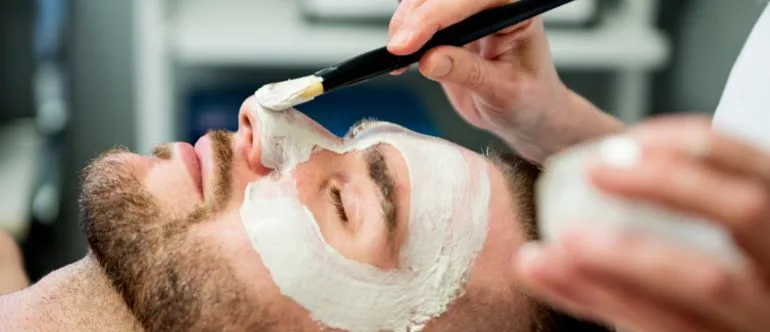
Facial for Men in Bangkok: Deep Cleansing, Hydration & Skin Clarity
A facial for men in Bangkok is not just a luxury treatment. For many men living in or visiting the city, it is a practical way to keep the skin clean, fresh, comfortable, and balanced.
Read the guide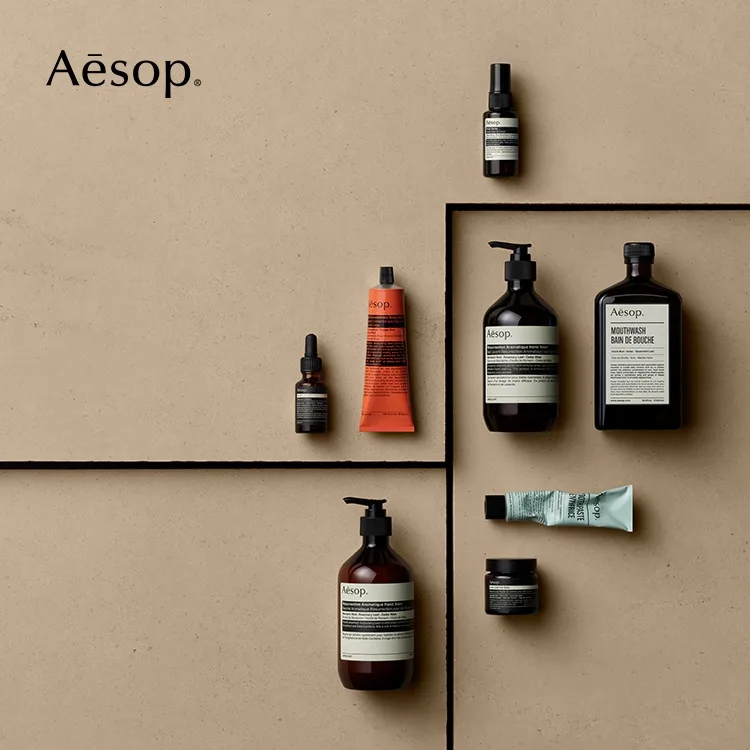
Aesop Facial in Bangkok: A Luxury Ritual for Radiant Skin
Finding the right facial in Bangkok is not only about improving the appearance of your skin. It is also about choosing an experience that feels refined, calming, and truly restorative.
Read the guide